Allegorical Portrait of Dante – Agnolo Bronzino

Charles Burns’s Sugar Skull Reviewed

978-0-307-90790-5

Sugar Skull concludes the trilogy that Charles Burns began four years ago with X’ed Out (I reviewed it here) and its 2012 follow-up The Hive (I reviewed it here).

In X’ed Out, Burns introduces us to his protagonist Doug, a would-be art-punk poet whose Burroughsesque sound-collage performances are misunderstood by everyone but Sarah, a troubled artist whose photographs and installations reverberate with menacing violence. We first find Doug in the aftermath of an unnamed trauma involving Sarah and her tyrannical boyfriend—a trauma that Sugar Skull must and does answer to. The trauma transports Doug from his dead father’s office, where he’s been hiding and popping pills, into a fever-dreamscape reminiscent of William Burroughs’s Interzone. In this world, Doug becomes Nitnit, his own features transmuted to the Tintin mask he wears when performing his cut-ups.

The Hive takes Doug/Nitnit even deeper into Interzone, into its subterranean caverns, gaping like tumorous wombs, while simultaneously moving the “real” Doug forward and backward in time, through his doomed relationship with Sarah and into the fallout of their split, where Doug short circuits.

Sugar Skull completes this circuit, offering readers the complete picture—and an exit out of Interzone—even as it dooms Doug/Nitnit to repeat the past. We find here the traumatic violence of love, death, begetting, and denial.

burnsxedouthive

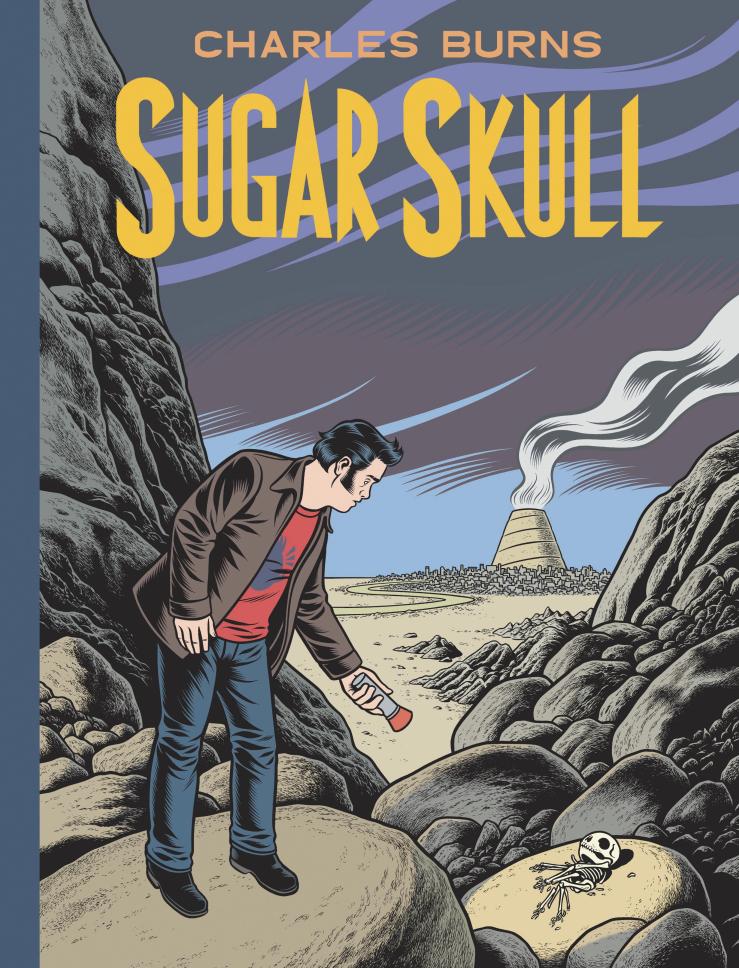
The trilogy’s development evinces in Burns’s rich cover art. X’ed Out shows us young, skinny Doug, his head bandaged, his haircut an echo of Tintin’s cowlick. Wrapped in his dead father’s purple robe and set against utter wreckage, young Doug regards a massive egg, itself a visual echo of Tintin cover. The cover of The Hive shows us an older, heavier Doug, lost and confused in the abject uterine labyrinth of the Hive. In the lower-right corner—the same space the egg occupies on the cover of X’ed Out—lurks one of Interzone’s mutable mutants. This figure repeats in the trilogy, an amorphous being who shifts from Nitnit’s aide and familiar, to a dog stranded in a flood, to a piglet in a jar, to a massive breed-sow, to, perhaps, Doug’s father—and then Doug himself.

The figure opposite an older, fatter Doug on the cover of Sugar Skull condenses these roles into the emblem of death: it is at once the skeleton of the mutant, but also the frame of Doug’s dead father and the emblem of the symbolic infanticide at the core of the trilogy. And so we get the natural progression of life—from egg and embryo to a pink bundle of mobile cells to skeletal remains—set against an uncanny, chaotic backdrop.

Throughout the trilogy, Burns forces reader and Doug alike to navigate that chaos. The first two volumes in the series propelled the reader (and Doug, of course) through different times, different realities, sifting through the awful wreckage for clues, for a pattern, for an answer that might explain poor Doug’s trauma. By the beginning of Sugar Skull, our hero is finally equipped with a map to guide him through the underworld:
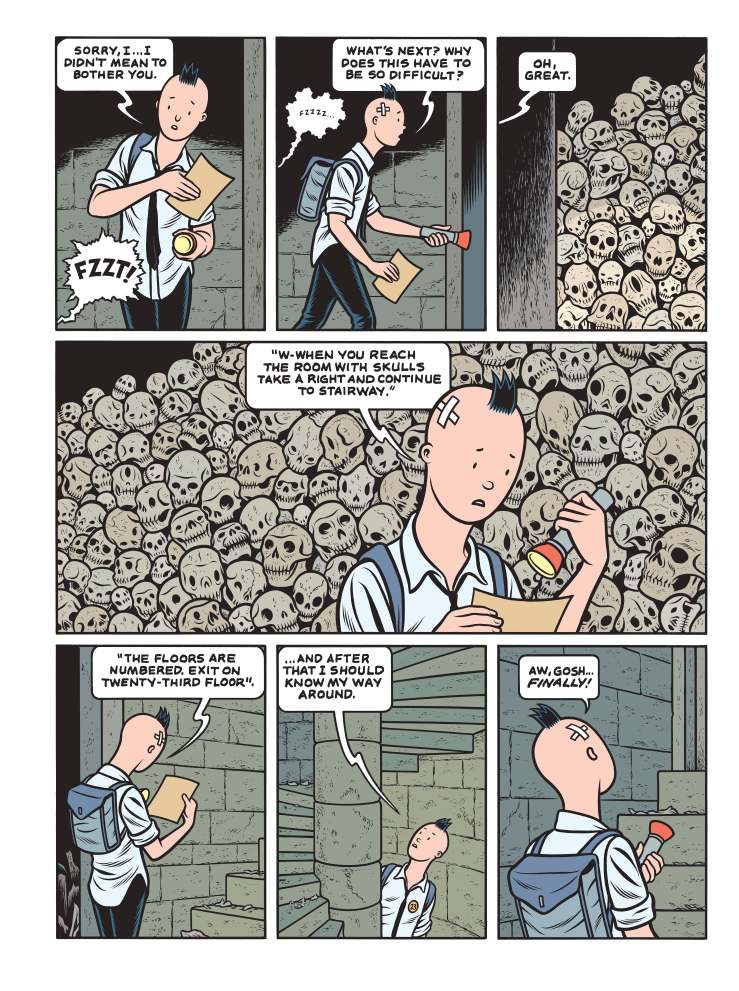
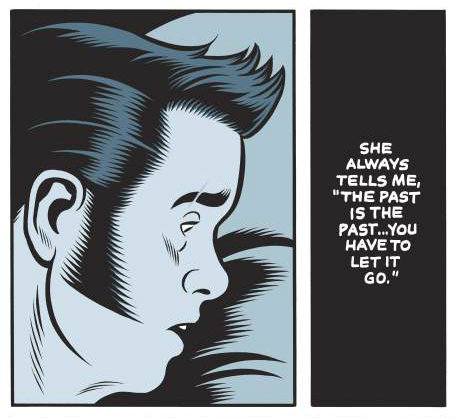
Page 10 from Burns_SUGAR SKULL“Why does this have to be so difficult?” our hero wonders. Because of repressed fear, anger, hurt—and failure. The real trauma, the secret trauma, of the trilogy is Doug’s radical failure. This failure keeps him up at night, both in waking sweat, but also in his Interzone, the fantasy world where the repressed returns, where his alter-ego Nitnit can play boy detective. And yet, as we see in Sugar Skull, Nitnit, dream warrior, is ultimately unequipped to right the wrongs of the past. He can only replay them in a dark, surreal space. The past is never dead. It’s not even past.
b a

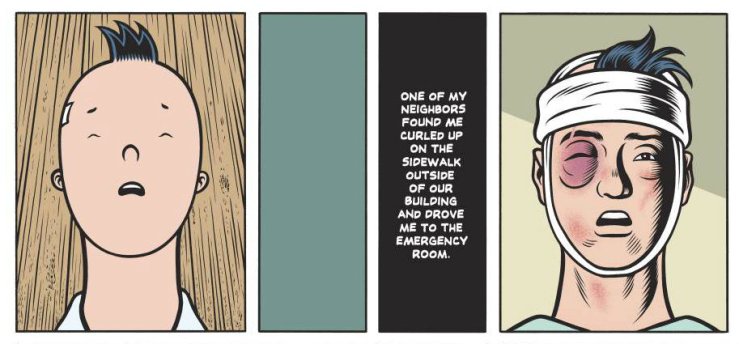
X’ed Out and The Hive point repeatedly to the specter of violence and infanticide, both through implication in the dialogue as well as intense imagery. Both novels ominously arrange events that could only lead to the head wound that our hero sustains before the trilogy begins—a head wound that may or may not be a primary cause of Doug’s excursions into irreality.
d

The infanticidal images that haunt the first two books pointed to a deeper mystery though, one beyond the physical violence Doug suffered. Those books hinted at abortion or miscarriage. But there are other ways to lose children.

Have I over shared the plot? Or am I hinting too vaguely? Reviewing my lines, it seems like I’ve said nothing at all, or perhaps dwelled on the first two books too much.

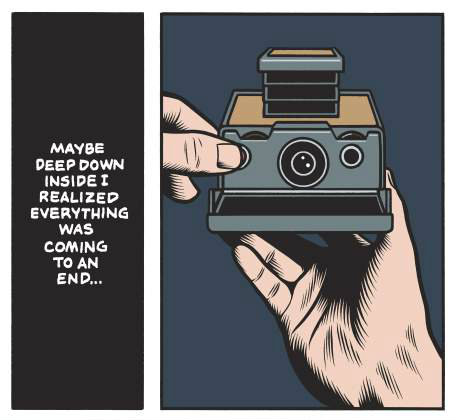
To simplify: Sugar Skull is sad and beautiful and strange and deeply human—this is not the tale of a doppelgänger’s adventures in wonderland, but rather the story of youth’s cowardice, of how we fail ourselves and others, how the versions of ourselves that we try to pin down—like Doug, who takes endless selfies with a Polaroid—are not nearly as stable as we might like them to be. Sugar Skull also explores how we cover over those instabilities and failures—I didn’t do those things; This isn’t happening to me.
c

The final moments of Sugar Skull enact a shock to stability, to sense of self. Burns fulfills a narrative promise to his readers, and to Doug—one that, if I’m honest, was not what I had predicted at all—and then sends Doug’s altered-ego Nitnit into the desert wilds. The last few pages of Sugar Skull seem to borrow as much from McCarthy’s Blood Meridian as they do from Hergés Tintin or William Burroughs.

And yet Doug passes through the wasteland to a refuge of sorts, the dream-double of two other settings that figure prominently in the trilogy, condensed into a place that is and is not. The setting mirrors Doug’s doomed double-consciousness, a consciousness condemned to repeat the same cycle, to respond again and again to the same terrifying call to nightmare-adventure.

I’ve neglected to comment on Burns’s wonderful art, mostly because I think it speaks for itself. His heavy inks and rich colors help unify the shift in styles that mark Doug’s movement between worlds. The trilogy would be worth the admission price alone just for the art, but Burns offers so much more with his storytelling. What’s perhaps most impressive is how thematically precise Burns’s images are—how panels, angles, shots, poses, gestures, and expressions repeat with difference from volume to volume. Burns uses these repeated images to subtly evoke his theme of cycles, doubles, and reiterations. In rereading we see again, recognize again—but from a different perspective.

And if Burns strands Doug/Nitnit in a loop of repetition, he also extends, perhaps, that same chance to his hero—to see again, but from a different perspective. If Sugar Skull forecloses the possibility of escape from the past, it doesn’t cut off a generative futurity. And as our protagonist awakes—again—to follow Inky into the strange wreckage of the past, many readers will feel prompted to follow the pair—again, and then again.

Sugar Skull is available now in hardback from Pantheon.
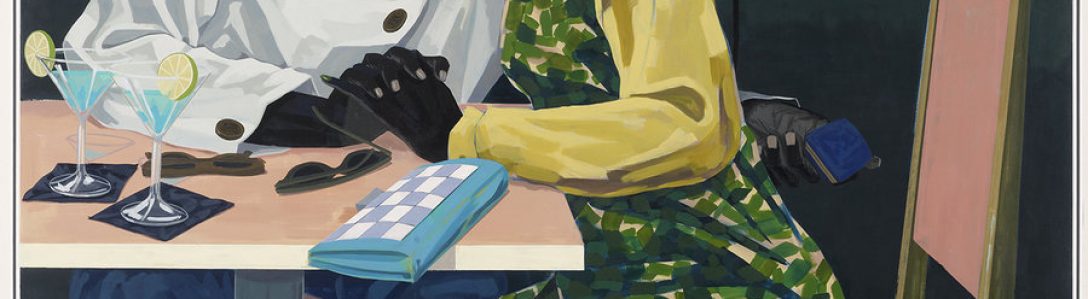
 

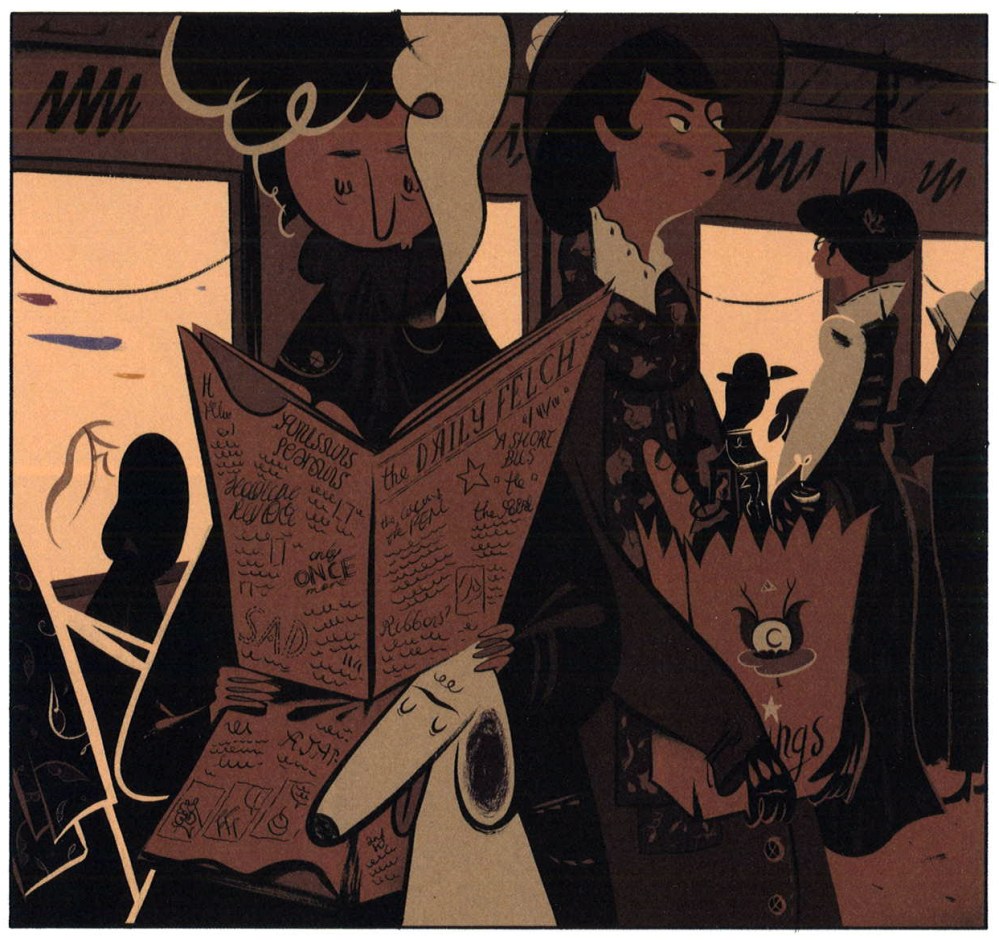
Bus Ride Two — Roman Muradov

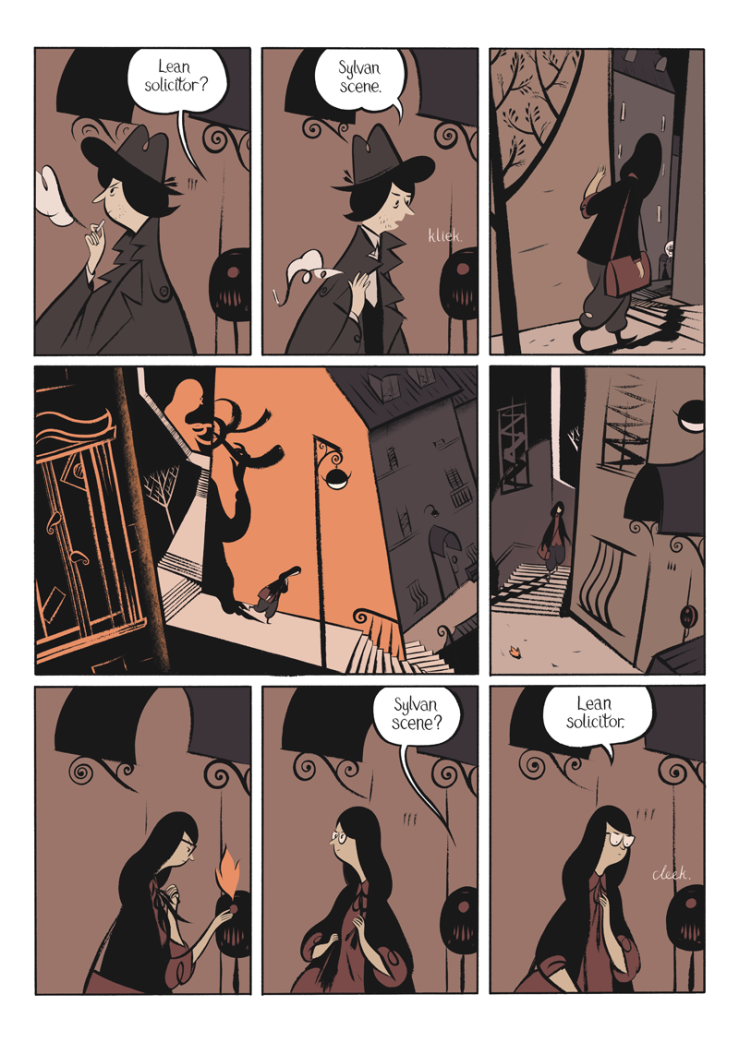
(From Roman Muradov’s novella (In a Sense) Lost and Found).

“Translation is dead. Long live translation!”

After my interview with Ilan Stavans for Biblioklept (Part 1; Part 2), I began working with him on Words in Transit: The Cultures of Translation, a year-long ‘festival’ of translation taking place at Amherst College. Events include a series of talks with translators, a Translation Film Series at the nearby cinema, a performance of monologues by ELL students, theatre and music performances, and more. Throughout the year, we are maintaining a blog devoted to translation at the Amherst College website. I will be posting excerpts from the blog here. 

Melih Levi, an Amherst student and Turkish translator, wrote this first blog post on the philosopher José Ortega y Gasset and poet Orhan Vali Kanik. Read below or check it out here. — Ryan Mihaly

Whenever I start thinking about translation as an enterprise, José Ortega y Gasset’s words come to my mind: “Translation is dead. Long live translation!” This playful maxim outlines the problems of translation in two different ways. First and foremost, it is a farewell to the practice of translation as we know it. The modern age and the technological advancements of today challenge the traditional practice of translation where translators work their way diligently through each word in a given text. Certainly, it is impossible to categorize all forms of traditional translation as one; after all, there can never be a single attitude towards translation. But if we look at how widely and deeply the print culture is influenced by the rapid technological changes of our times, it is perhaps acceptable to say that the cultures of translation, as we know it, are swiftly changing. The old ways are almost “dead.” But does this mean that there won’t be a new culture of translation in the future? Certainly not. Even if Google Translate ends up becoming a major tool in tomorrow’s translation world, a culture will develop. This is one of the ways in which Gasset’s maxim informs translation.

JoseOrtegayGasset.jpg
José Ortega y Gasset 

The second reading of Gasset’s words is perhaps more relevant and important. Gasset is thinking about the fate of literary works in general. That is, he is laying out his idea of what happens to a work when it goes through the process of translation. According to him, the work has to die before it can start to breathe again, in a different language or in a different medium. Thus, a translator is at once a gravedigger and a creator. Gasset poses a pivotal question: “Isn’t the act of translating necessarily a utopian task?”

Continue reading ““Translation is dead. Long live translation!””

The Mystical Body Defined — David Ruhlman

3. The mystical body defined

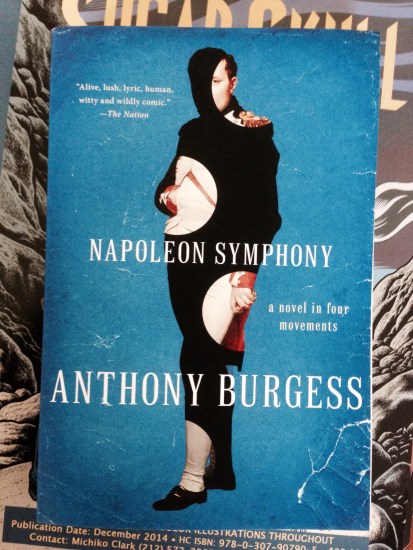
Anthony Burgess’s Napoleon Symphony (Book Acquired, 10.02.2014)

IMG_3446

Anthony Burgess’s 1974 novel Napoleon Symphony gets the trade paperback reissue treatment from Norton. Their blurb:

Anthony Burgess draws on his love of music and history in this novel he called “elephantine fun” to write.

A grand and affectionate tragicomic symphony to Napoleon Bonaparte that teases and reweaves Napoleon’s life into a pattern borrowed—in liberty, equality, and fraternity—from Beethoven’s Third “Eroica” Symphony, in this rich, exciting, bawdy, and funny novel Anthony Burgess has pulled out all the stops for a virtuoso performance that is literary, historical, and musical.

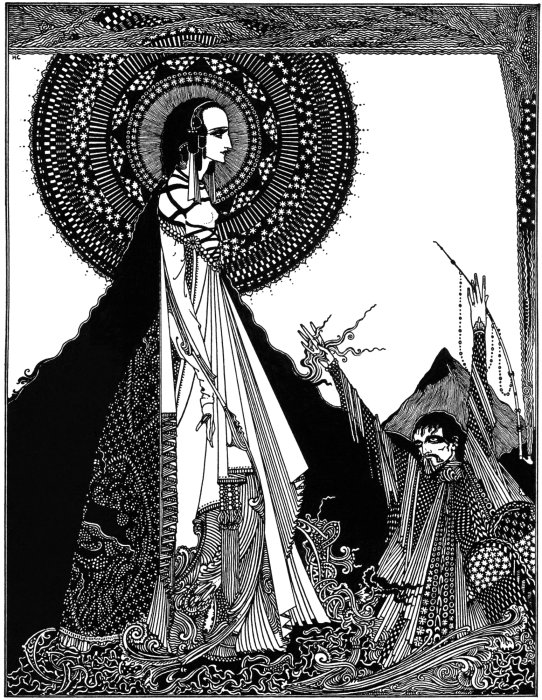
“Ligeia” — Edgar Allan Poe

Ligeia-Clarke

“Ligeia”

by

Edgar Allan Poe

(Illustration by Harry Clarke)

And the will therein lieth, which dieth not. Who knoweth the mysteries of the will, with its vigor? For God is but a great will pervading all things by nature of its intentness. Man doth not yield himself to the angels, nor unto death utterly, save only through the weakness of his feeble will.—Joseph Glanvill.

I cannot, for my soul, remember how, when, or even precisely where, I first became acquainted with the lady Ligeia. Long years have since elapsed, and my memory is feeble through much suffering. Or, perhaps, I cannot now bring these points to mind, because, in truth, the character of my beloved, her rare learning, her singular yet placid cast of beauty, and the thrilling and enthralling eloquence of her low musical language, made their way into my heart by paces so steadily and stealthily progressive that they have been unnoticed and unknown. Yet I believe that I met her first and most frequently in some large, old, decaying city near the Rhine. Of her family—I have surely heard her speak. That it is of a remotely ancient date cannot be doubted. Ligeia! Ligeia! in studies of a nature more than all else adapted to deaden impressions of the outward world, it is by that sweet word alone—by Ligeia—that I bring before mine eyes in fancy the image of her who is no more. And now, while I write, a recollection flashes upon me that I have never known the paternal name of her who was my friend and my betrothed, and who became the partner of my studies, and finally the wife of my bosom. Was it a playful charge on the part of my Ligeia? or was it a test of my strength of affection, that I should institute no inquiries upon this point? or was it rather a caprice of my own—a wildly romantic offering on the shrine of the most passionate devotion? I but indistinctly recall the fact itself—what wonder that I have utterly forgotten the circumstances which originated or attended it? And, indeed, if ever she, the wan and the misty-winged Ashtophet of idolatrous Egypt, presided, as they tell, over marriages ill-omened, then most surely she presided over mine.

There is one dear topic, however, on which my memory falls me not. It is the person of Ligeia. In stature she was tall, somewhat slender, and, in her latter days, even emaciated. I would in vain attempt to portray the majesty, the quiet ease, of her demeanor, or the incomprehensible lightness and elasticity of her footfall. She came and departed as a shadow. I was never made aware of her entrance into my closed study save by the dear music of her low sweet voice, as she placed her marble hand upon my shoulder. In beauty of face no maiden ever equalled her. It was the radiance of an opium-dream—an airy and spirit-lifting vision more wildly divine than the phantasies which hovered vision about the slumbering souls of the daughters of Delos. Yet her features were not of that regular mould which we have been falsely taught to worship in the classical labors of the heathen. “There is no exquisite beauty,” says Bacon, Lord Verulam, speaking truly of all the forms and genera of beauty, “without some strangeness in the proportion.” Yet, although I saw that the features of Ligeia were not of a classic regularity—although I perceived that her loveliness was indeed “exquisite,” and felt that there was much of “strangeness” pervading it, yet I have tried in vain to detect the irregularity and to trace home my own perception of “the strange.” I examined the contour of the lofty and pale forehead—it was faultless—how cold indeed that word when applied to a majesty so divine!—the skin rivalling the purest ivory, the commanding extent and repose, the gentle prominence of the regions above the temples; and then the raven-black, the glossy, the luxuriant and naturally-curling tresses, setting forth the full force of the Homeric epithet, “hyacinthine!” I looked at the delicate outlines of the nose—and nowhere but in the graceful medallions of the Hebrews had I beheld a similar perfection. There were the same luxurious smoothness of surface, the same scarcely perceptible tendency to the aquiline, the same harmoniously curved nostrils speaking the free spirit. I regarded the sweet mouth. Here was indeed the triumph of all things heavenly—the magnificent turn of the short upper lip—the soft, voluptuous slumber of the under—the dimples which sported, and the color which spoke—the teeth glancing back, with a brilliancy almost startling, every ray of the holy light which fell upon them in her serene and placid, yet most exultingly radiant of all smiles. I scrutinized the formation of the chin—and here, too, I found the gentleness of breadth, the softness and the majesty, the fullness and the spirituality, of the Greek—the contour which the god Apollo revealed but in a dream, to Cleomenes, the son of the Athenian. And then I peered into the large eyes of Ligeia. Continue reading ““Ligeia” — Edgar Allan Poe”

Riveted — Kenton Nelson

1305878102349

The New Book — Harold Harvey

8069374850_1796d6e30f_b

George Saunders Reads Stories by Grace Paley and Barry Hannah

At The New Yorker, George Saunders reads “Love” by Grace Paley and “The Wretched Seventies” by Barry Hannah:


Maiden Meditation — Charles West Cope

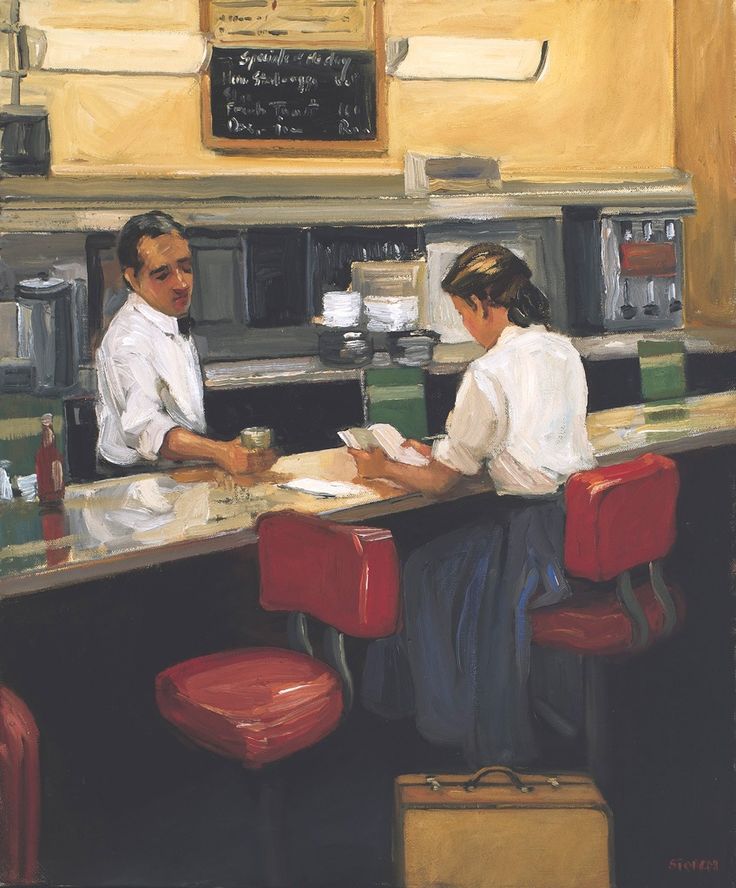
Night Cafe — Sally Storch

06dbbbf1463c62eef9208e4b55d82e65

“The Absence of Any Purpose Is the Starting Point for My Work” | An Interview with Roman Muradov

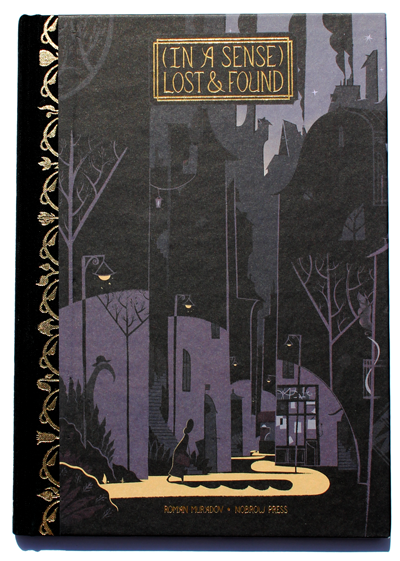
I’ve been a fan of Roman Muradov’s strange and wonderful illustrations for a while now, so I was excited late this summer to get my hands on his début graphic novella, (In a Sense) Lost and Found (Nobrow Press). In my review, I wrote: “I loved Lost and Found, finding more in its details, shadowy corners, and the spaces between the panels with each new reading.” The book is a beauty, so I was thrilled when Roman agreed to discuss it with me over a series of emails. We also discussed his influences, his audience, his ongoing Yellow Zine projects, his recent cover for Joyce’s Dubliners, and his reaction to some of the confused Goodreads reviews his novella received. Check out Roman’s work at his website. You won’t be disappointed.

inasense400photo

Biblioklept: When did you start working on (In a Sense) Lost and Found? Did you always have the concept kicking around?

Roman Muradov: The idea came to me in 2010 in the form of the title and the image of a protracted awakening. I wrote it as a short story, which had a much more conventional development and actually had some characters and plot movements, all of them completely dropped one by one on the way to the final version apart from the basic premise. I didn’t have a clear understanding of what was to be done with that premise, but the idea kept bothering me for some time, until I rewrote it a few times into a visual novella when Nobrow asked me if I wanted to pitch them something. Since then it went through several more drafts and even after everything was drawn and colored I had to go back and edit most of the dialogues, which is a nightmarish task in comics, since it involved re-lettering everything by hand.

Biblioklept: When you say you wrote it as a short story, I’m intrigued—like, do you mean as a sketch, or a set of directions, or as a tale with imagery? Part of the style of the book (and your style in general) is a confidence in the reader and the image to work together to make the narrative happen. When you were editing the dialogues, were you cutting out exposition, cues, contours?

RM: No, I mean a traditional pictureless short story. I was struggling with forms at the time and didn’t feel confident with any of them. In a way this still persists, because my comics are often deliberately deviating from the comics form, partially in my self-published experiments. The story itself was still ambiguous, I never considered showing what she lost, or how. With time I edited down all conversation to read as one self-interrupting monologue.

Biblioklept: I want to circle back to (In a Sense) Lost and Found, but let’s explore the idea that your work intentionally departs from the conventions of cartooning. When did you start making comics? What were the early comics that you were reading, absorbing, understanding, and misunderstanding?

RM: I came to comics pretty late; I only discovered Chris Ware & co around 2009. As a child I spent one summer drawing and writing little stories, ostensibly comics, then I stopped for a couple of decades. I’m not really sure why I started or stopped. In general my youth was marked by extraordinary complacency and indifference. I followed my parents’ advice and studied petroleum engineering, then worked as a petroleum engineer of sorts for a year and a half, then quit and decided to become an artist. I still feel that none of these decisions were made by me. Occasionally certain parts of my work seem to write themselves and I grow to understand them much later, which is weird.

Biblioklept: Was Ware a signal figure for you? What other comic artists did you find around that time?

Ware, Clowes & Jason were the first independent cartoonist I discovered and I ended up ripping them off quite blatantly for a year or so. Seth was also a big influence, particularly his minute attention to detail and his treatment of time, the way he stretches certain sequences into pages and pages, then skips entire plot movements altogether. Reading Tim Hensley’s Wally Gropius was a huge revelation, it felt like I was given permission to deviate from the form. Similarly, I remember reading Queneau’s “Last Days” in Barbara Wright’s translation, and there was the phrase “the car ran ovaries body” or something like that, and I thought “oh, I didn’t know this was allowed.”

saladface

Biblioklept: Your work strikes me as having more in common with a certain streak of modernist and postmodernist prose literature than it does with alt comix. Were you always reading literature in your petroleum engineer days?

RM: That’s certainly true, nowadays I’m almost never influenced by other cartoonists. I wasn’t a good reader until my mid-twenties, certainly not back in Russia. I stumbled upon Alfred Jarry (not in person) while killing time in the library, and then it was a chain reaction to Quenau, Perec and Roussel, then all the modernists and postmodernists, particularly Kafka, Joyce, Nabokov and Proust.

Biblioklept: How do you think those writers—the last four you mention in particular—influence your approach to framing your stories?

RM: From Nabokov I stole his love for puzzles and subtle connections, a slightly hysterical tone, his shameless use of puns and alliteration, from Kafka–economy of language and a certain mistrust of metaphors–it always seems to me that his images and symbols stretch into an infinite loop defying straightforward interpretation by default, from Joyce and Proust the mix of exactitude and vagueness, and the prevalence of style over story, the choreography of space and time. I should’ve say “I’m in the process of stealing,” I realize that all of these things are far too complex, and I doubt that I’ll ever feel truly competent with any of these authors as a reader, let alone as a follower.

Biblioklept:(In a Sense) Lost and Found begins with a reference to Kafka’s Metamorphosis, and then plunges into a Kafkaesque—to use your phrasing—“infinite loop defying straightforward interpretation.” How consciously were you following Kafka’s strange, skewed lead?

RM: I wanted the reference to be as obvious as possible, almost a direct copy, as if it’s placed there as an act of surrender–I’m not going to come up with a story, here’s one of most famous opening lines that you already know. Usually I know the beginning and the ending and I often downplay their importance, so that the work becomes focused mostly on the process and so that readers don’t expect any kind of resolution or satisfactory narrative development. In the password scene the phrases are copied directly from Eliot’s Wasteland, which itself refers to Paradise Lost in these passages. It’s a bit like a broken radio, shamelessly borrowing from the narrator’s visual and literary vocabulary, the way it happens in a dream.

premise_0022_22.psd Continue reading ““The Absence of Any Purpose Is the Starting Point for My Work” | An Interview with Roman Muradov”

A Coffee Thesaurus

A COFFEE THESAURUS — From William H. Ukers’s All About Coffee (1922)

Encomiums and descriptive phrases applied to the plant, the berry, and the beverage

The Plant

The precious plant
This friendly plant
Mocha’s happy tree
The gift of Heaven
The plant with the jessamine-like flowers
The most exquisite perfume of Araby the blest
Given to the human race by the gift of the Gods

The Berry

The magic bean
The divine fruit
Fragrant berries
Rich, royal berry
Voluptuous berry
The precious berry
The healthful bean
The Heavenly berry
The marvelous berry
This all-healing berry
Yemen’s fragrant berry
The little aromatic berry
Little brown Arabian berry
Thought-inspiring bean of Arabia
The smoking, ardent beans Aleppo sends
That wild fruit which gives so beloved a drink

The Beverage

Nepenthe
Festive cup
Juice divine
Nectar divine
Ruddy mocha
A man’s drink
Lovable liquor
Delicious mocha
The magic drink
This rich cordial
Its stream divine
The family drink
The festive drink
Coffee is our gold
Nectar of all men
The golden mocha
This sweet nectar
Celestial ambrosia
The friendly drink
The cheerful drink
The essential drink
The sweet draught
The divine draught
The grateful liquor
The universal drink
The American drink
The amber beverage
The convivial drink
The universal thrill
King of all perfumes
The cup of happiness
The soothing draught
Ambrosia of the Gods
The intellectual drink
The aromatic draught
The salutary beverage
The good-fellow drink
The drink of democracy
The drink ever glorious
Wakeful and civil drink
The beverage of sobriety
A psychological necessity
The fighting man’s drink
Loved and favored drink
The symbol of hospitality
This rare Arabian cordial
Inspirer of men of letters
The revolutionary beverage
Triumphant stream of sable
Grave and wholesome liquor
The drink of the intellectuals
A restorative of sparkling wit
Its color is the seal of its purity
The sober and wholesome drink
Lovelier than a thousand kisses
This honest and cheering beverage
A wine which no sorrow can resist
The symbol of human brotherhood
At once a pleasure and a medicine
The beverage of the friends of God
The fire which consumes our griefs
Gentle panacea of domestic troubles
The autocrat of the breakfast table
The beverage of the children of God
King of the American breakfast table
Soothes you softly out of dull sobriety
The cup that cheers but not inebriates
Coffee, which makes the politician wise
Its aroma is the pleasantest in all nature
The sovereign drink of pleasure and health
The indispensable beverage of strong nations
The stream in which we wash away our sorrows
The enchanting perfume that a zephyr has brought
Favored liquid which fills all my soul with delight
The delicious libation we pour on the altar of friendship
This invigorating drink which drives sad care from the heart


The Angry One — Ferdinand Hodler

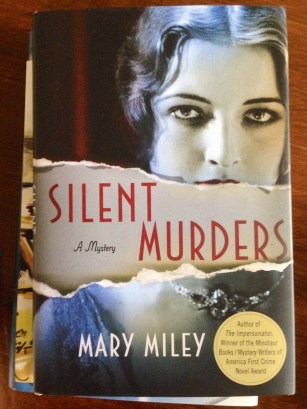
Silent Murders (Book Acquired, 9.02.2014)

IMG_3229

Mary Miley’s Silent Murders. Macmillan/Minotaur’s blurb:

Vaudeville actress Leah Randall took on her most daring role ever when she impersonated missing heiress Jessie Carr in order to claim Jessie’s inheritance inThe Impersonator. Now that the dust has settled around that tumultuous time in her life, Leah has adopted Jessie’s name as her own and moved to Hollywood, where she’s taken a modest but steady job in the silent film industry.

Jessie’s thrilled when Bruno Heilmann, a movie studio bigwig, invites her to a party. She’s even more delighted to run into a face from her past at that party. But the following day, Jessie learns that sometime in the wee hours of the morning both her old friend and Bruno Heilmann were brutally murdered. She’s devastated, but with her skill as an actress, access to the wardrobes and resources of a film studio, and a face not yet famous enough to be recognized, Jessie is uniquely positioned to dig into the circumstances surrounding these deaths. But will doing so put her own life directly in the path of a murderer?

“Titian Paints a Sick Man” — Roberto Bolaño

“Titian Paints a Sick Man”

by

Roberto Bolaño

At the Uffizi, in Florence, is this odd painting by Titian. For a while, no one knew who the artist was. First the work was attributed to Leonardo and then to Sebastiano del Piombo. Though there’s still no absolute proof, today the critics are inclined to credit it to Titian. In the painting we see a man, still young, with long dark curly hair and a beard and mustache perhaps slightly tinged with red, who, as he poses, gazes off toward the right, probably toward a window that we can’t see, but still a window that somehow one imagines is closed, yet with curtains open or parted enough to allow a yellow light to filter into the room, a light that in time will become indistinguishable from the varnish on the painting.

1

The young man’s face is beautiful and deeply thoughtful. He’s looking toward the window, if he’s looking anywhere, though probably all he sees is what’s happening inside his head. But he’s not contemplating escape. Perhaps Titian told him to turn like that, to turn his face into the light, and the young man is simply obeying him. At the same time, one might say that all the time in the world stretches out before him. By this I don’t mean that the young man thinks he’s immortal. On the contrary. The young man knows that life renews itself and that the art of renewal is often death. Intelligence is visible in his face and his eyes, and his lips are turned down in an expression of sadness, or maybe it’s something else, maybe apathy, none of which excludes the possibility that at some point he might feel himself to be master of all the time in the world, because true as it is that man is a creature of time, theoretically (or artistically, if I can put it that way) time is also a creature of man.

2

In fact, in this painting, time — sketched in invisible strokes — is a kitten perched on the young man’s hands, his gloved hands, or rather his gloved right hand which rests on a book: and this right hand is the perfect measure of the sick man, more than his coat with a fur collar, more than his loose shirt, perhaps of silk, more than his pose for the painter and for posterity (or fragile memory), which the book promises or sells. I don’t know where his left hand is.

How would a medieval painter have painted this sick man? How would a non-figurative artist of the twentieth century have painted this sick man? Probably howling or wailing in fear. Judged under the eye of an incomprehensible God or trapped in the labyrinth of an incomprehensible society. But Titian gives him to us, the spectators of the future, clothed in the garb of compassion and understanding. That young man might be God or he might be me. The laughter of a few drunks might be my laughter or my poem. That sweet Virgin is my friend. That sad-faced Virgin is the long march of my people. The boy who runs with his eyes closed through a lonely garden is us.

From Between Parentheses.