

Category: Books
Book Shelves #37, 9.09.2012

Book shelves series #37, thirty-seventh Sunday of 2012
Eggers, Dave. Beloved, reviled, sainted, hated.
I wrote about Eggers at some length here already, so I won’t repeat myself.
“Man Grows Used to Everything, the Scoundrel” — Raskolnikov (Dostoevsky’s Crime and Punishment)
” . . . Man grows used to everything, the scoundrel!”
He sank into thought.
“And what if I am wrong,” he cried suddenly after a moment’s thought. “What if man is not really a scoundrel, man in general, I mean, the whole race of mankind—then all the rest is prejudice, simply artificial terrors and there are no barriers and it’s all as it should be.”
—From Chapter II of Fyodor Dostoevsky’s novel Crime and Punishment.
The Love Letter — Johannes Vermeer

The Surprise — Andre Derain

Eleven A.M. — Edward Hopper

“Cowshed” — Robert Walser
“Cowshed,” a short story by Robert Walser—
I went to see Bonn. I beheld him in his famous checked Sherlock Holmes suit. The sight of his tawny leather spats devastated me. But it is far from my intention to make so bold as to speak of Bonn, whom I also learned to admire as Edmund Kean in the play by Dumas. Today, with the kind reader’s permission, I wish to speak of the Cowshed, an artistic singsong and jinglejangle establishment that lies in the northern reaches of our beloved city, Berlin. At the Cowshed, among other things, I met and learned to revere beyond all measure a Swiss girl who figured as a waitress there. There are figures galore at the Cowshed. I myself am a not unpopular, at times even celebrated regular. When I set foot on the premises, which are redolent of an aging, half-dead elegance, the publican gets up from his seat where he is keeping watch and greets me with great amicability by making a thoroughly courteous, suave bow, the significance of which is that I should buy a round of cognac. Oh, the conduct I display here at the Cowshed. It resembles the conduct of a Prince Dolgoroucki, a Count Osten-Sacken, a Prince Poniatowski. I always treat the artistes assembled upon the small triangular stage, which is stuck in a corner as if lost in indeterminacy and incertitude, to a boot. The significance of the term boot in localities such as the Cowshed is no doubt unfamiliar to most ladies and gentlemen of a literary bent. A boot of this sort is quite simply a tankard of beer shaped like a lady’s boot, made of glass and holding nearly two liters. The music made at the Cowshed is often ear-rending; nonetheless I do adore it and dream of divinely beautiful things whenever it creeps into my ear to ensnare me with melodies. Invariably I have some refreshment placed upon the fortepiano of the bushy-haired, gasconading lout of a band leader. This amenity, which he loses no time in appreciating and, as for the rest, most artfully guzzling, ah pardon, I mean drinking, consists in nothing other than various glasses of beer. Yes, I do have to say that quite a lot of money exits my pockets at the Cowshed. Excellent interest accrues on the capital thus invested, and this interest takes the form of merriments that give me no end of pleasure. For the most part I am a most cleverly respectable fellow, but at times, at times when the mood happens to strike.
Žižek’s Lacan, Houellebecq’s Lovecraft (Books Acquired, 9.7.2012)

The Afternoon — Pierre-Paul Prud’hon

A Mermaid — John William Waterhouse

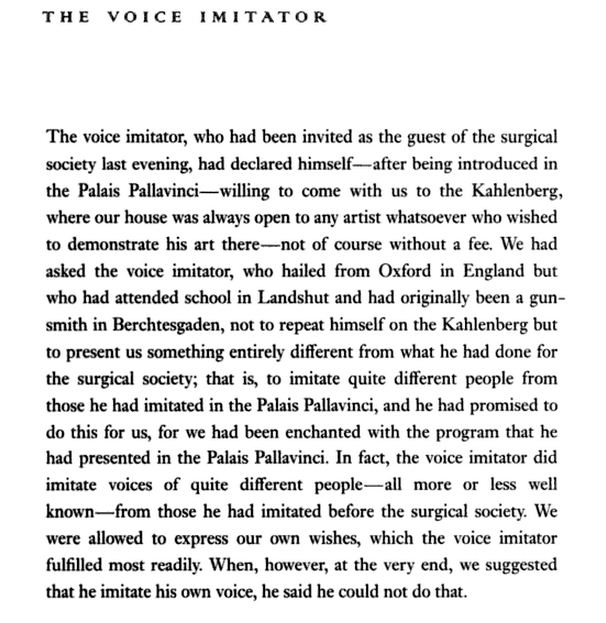
“The Voice Imitator” — Thomas Bernhard
Seated Woman with a Book — Boris Kustodiev

A Cat Dressed as a Woman Tapping the Head of an Octopus — Utagawa Kuniyoshi

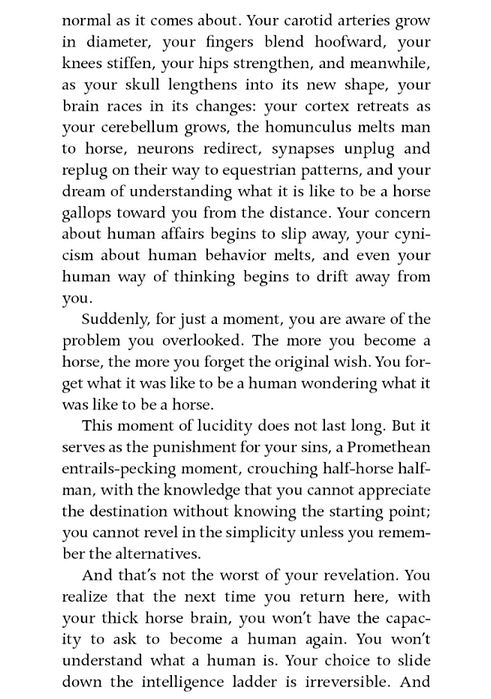
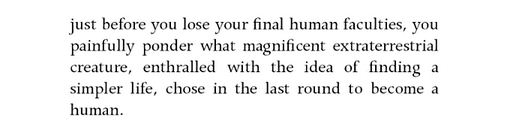
“Descent of Species” — David Eagleman

The People of Forever Are Not Afraid (Book Acquired, 8.25.2012)
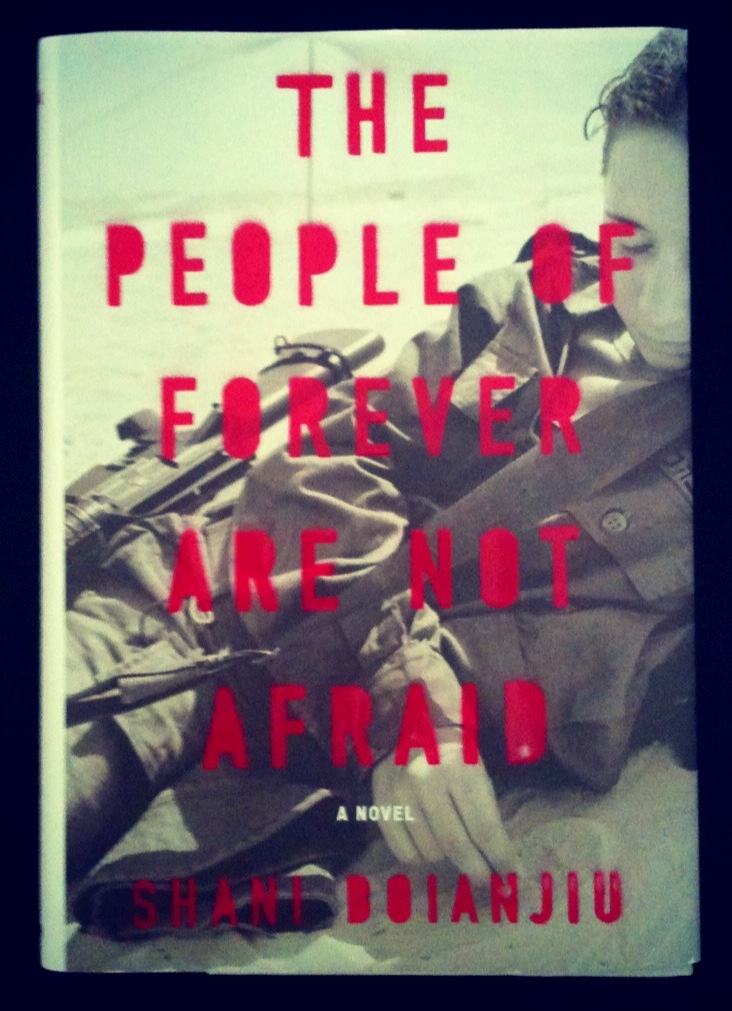
The People of Forever Are Not Afraid by Shani Boianjiu. New in hardback later this week from Random House. Their blurb:
Yael, Avishag, and Lea grow up together in a tiny, dusty Israeli village, attending a high school made up of caravan classrooms, passing notes to each other to alleviate the universal boredom of teenage life. When they are conscripted into the army, their lives change in unpredictable ways, influencing the women they become and the friendship that they struggle to sustain. Yael trains marksmen and flirts with boys. Avishag stands guard, watching refugees throw themselves at barbed-wire fences. Lea, posted at a checkpoint, imagines the stories behind the familiar faces that pass by her day after day. They gossip about boys and whisper of an ever more violent world just beyond view. They drill, constantly, for a moment that may never come. They live inside that single, intense second just before danger erupts.
In a relentlessly energetic and arresting voice marked by humor and fierce intelligence, Shani Boianjiu, winner of the National Book Foundation’s “5 Under 35,” creates an unforgettably intense world, capturing that unique time in a young woman’s life when a single moment can change everything.
Boianjiu is a young’an—she was born in ’87! Anyway, you can read an excerpt at Vice.
Bret Easton Ellis on David Foster Wallace: “The Most Tedious, Overrated, Tortured, Pretentious Writer of My Generation”

Elizabeth Siddall in a Chair — Dante Gabriel Rossetti

 Biblioklept