Sum — David Eagleman

sum

In his new book Sum, neuroscientist David Eagleman proposes forty visions of what an afterlife might be. Each of the tales is a short thought-experiment written in the second-person, a rhetorical device that literally engages the reader — the “you” — in the text. Eagleman’s background as a scientist is evident in many of these short tales. In “Giantess,” for example, he asks us to ponder the whole of the universe as a woman with whom we cannot communicate because of our infinitesimal scale in relation to her. In “Conservation,” Eagleman imagines all of time and space and what we know of it as the traces of a single little quark. Elsewhere, technology informs Eagleman’s depictions of the afterlife, as in “Impulse,” where the minutest of human interactions are compared to a massive computer program; in “Great Expectations” a company offers customers the experience of uploading their digitized souls to their own pre-programmed heavens–the customers are devastated when the upload fails and all that they get is regular old heaven. A bummed-out God wrings his hands, saying, “Your fantasies have cursed your realities…The Company offered you no evidence that it would work; why did you believe them?” Still, in this tale, God goes “to bed at night” knowing that “one of His best gifts — the ability to have faith in an unseen hereafter — has backfired.”

Many of Eagleman’s little stories evoke these moods of sad dissatisfaction and disappointment, repeatedly asking the reader to question their own values. And, as the god of “Great Expectations” shows, it’s not just the everyday folk who get their expectations crushed, but often the deities themselves. Take the god of “Mary,” for example. His favorite book is Frankenstein–he loves the end, where Victor Frankenstein flees his own creation. This is a god who can’t help his creation and chooses to run away from it. Particularly sad is “Descent of Species,” wherein the dead get to choose whatever they like to be. The “you” in this tale unfortunately chooses a horse, believing you’ll enjoy freedom–however, as “you” morph into a horse, so does your consciousness, and you realize that “you cannot revel in the simplicity unless you remember the alternatives.”

Not all of the stories in Sum are bummers (and even the downers are thought-provoking)–many play out like jokes or riddles. In the afterlife of “Quantum,” “everything exists in all possible states at once, even states that are mutually exclusive.” When simultaneously “bowling and not bowling” becomes too much for “you,” an angel helps you out by letting you spend some time “in a closed room, one-on-one with your lover.” You find yourself “simultaneously engaged in her conversation and thinking about something else; she both gives herself to you and does not giver herself to you; you find her objectionable and you deeply love her; she worships you and wonders what she might have missed with someone else.” Finally, you thank the angel, saying, “This I’m used to.”

As “Quantum” shows, most of the tales in Sum are ultimately not so much about a metaphysical afterlife as they are about what we value in this world–what are our expectations, desires, hopes, and dreams–and why do we expect, desire, hope, and dream these things? Eagleman is an astute observer of the human condition with a keen insight into our strange animal psychologies. I found his tales about identity to be the most affecting of the lot, like in “Mirrors,” where Eagleman points out that we are “much better at seeing the truth about others than” we are at “seeing ourselves,” and we therefore rely on others to hold up “mirrors” of our selves in order to know our selves. In “Prism,” Eagleman imagines an afterlife where you exist at every age in your life, only to find out that “you” at seventeen really is not “you” at seventy–your “compound identity” was hardly as unified as you’d imagined; rather, it “was like a bundle of sticks from different trees.” If these lines evoke a whiff of the postmodern philosopher, don’t be surprised. While Pantheon lists the book as “Fiction” it seems it would be just as at home in the Philosophy section.

I enjoyed Sum very much, blowing through its 110 pages in just two sittings, and then re-reading several of the tales again–they’re meant to be re-read, I believe. The cover boasts a glowing bit of praise from Philp Pullman, author of the “His Dark Materials” trilogy (a Biblioklept favorite). Fans of Pullman’s trilogy will find many of the same ideas played with in Sum, only handled in quite a different (but no less inventive) manner. This is the kind of science fiction we love. Highly recommended.

Sum is available 2.10.09 from Pantheon Books.

Convicts and Sailors, Yagé and Nutmeg, Seeing Things from a Special Angle, and the Uncut Kick that Opens Out Instead of Narrowing Down: Don’t Try This at Home, Kids

Do you remember when you were like thirteen or fourteen and you read that bit in Naked Lunch about the supposed mind-expanding properties of nutmeg? Nutmeg! Like your mom baked with! Like, readily-available, no questions asked! And then you took it, just like Burroughs indicated, and it made your stomach hurt and gave you a headache (just like he said it would). And nothing else happened. No visions, no enlightenment, nada. Do you remember that? Oh, wait…that wasn’t you? That was someone else? Sorry…

From “Afterthoughts on a Deposition,” an index to Naked Lunch:

Convicts and sailors sometimes have recourse to nutmeg. About a tablespoon is swallowed with water. Results are vaguely similar to marijuana with side effects of headache and nausea. Death would probably supervene before addiction before addiction if such addiction is possible. I have only taken nutmeg once.

There you go, kids. Knock yourselves out. Actually, don’t. Just rent Altered States instead.

Burroughs, of course, was far more interested in yagé, or ayahuasca, a psychoactive preparation of a South American vine. At the end of his spare, funny, first novel Junky, Burroughs writes:

I decided to go down to Colombia and score for yage. … My wife and I are separated. I am ready to move on south and look for the uncut kick that opens out instead of narrowing down like junk.

Kick is seeing things from a special angle. Kick is momentary freedom from the claims of aging, cautious nagging, frightened flesh. Maybe I will find in yage what I was looking for in junk and weed and coke. Yage may be the final fix.

I’ve read Junky a few times and it seems that these lines are strangely half-hopeful and also deeply ironic. Burroughs’s stand-in, narrator William Lee doesn’t get what the writer William Burroughs seems to realize: there is no permanent solution, no “final fix.” Still, Burroughs sure did have some wacky adventures looking for it. Check out this clip from a documentary, apparently called Ayahuasca, narrated by Burroughs (if anyone out there knows anything about this movie, please let us know):

The Unspeakable Mr. Hart and Ah Pook Is Here– William Burroughs/Malcolm McNeill

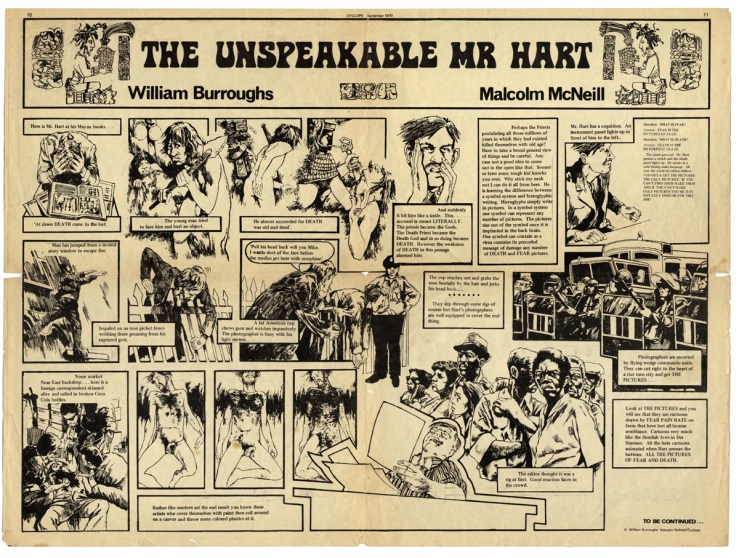
In 1970, William Burroughs was living in London. While there, he collaborated with young English artist Malcolm McNeill on a comic series for a magazine called Cyclops. The series was called The Unspeakable Mr. Hart, and remains uncollected/reprinted to date. Too bad, because it looks like really cool stuff. We got these images via The Virtual Library’s Beats collection, where there’s a really cool interview with McNeill (he discusses Burroughs habit of “going to movies to admire hard-ons and talking about them all afternoon,” which is kinda hilarious):

mcneillmrhart1mcneillmrhart2

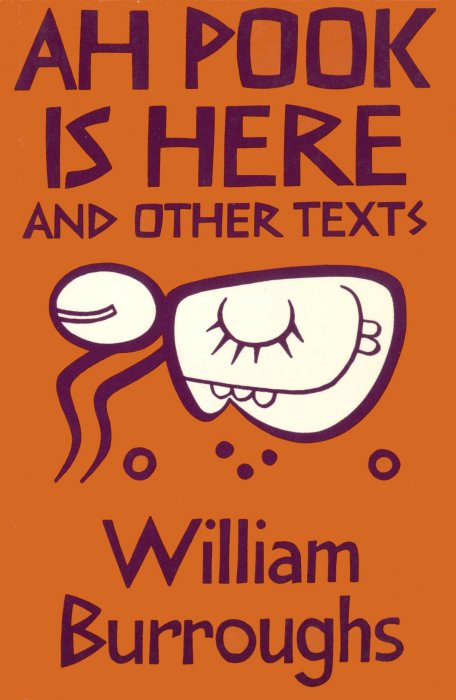
After Cylcops went kaput, Burroughs and McNeill continued the story in a project called Ah Pook Is Here, (a reference to the Mayan death god). Ah Pook Is Here, unfinished, was collected in the early eighties in Ah Pook Is Here and Other Texts which unfortunately is out of print. And very expensive. (Feel free to send it to me, anyone).

ah_pook_is_hereukcalder1979

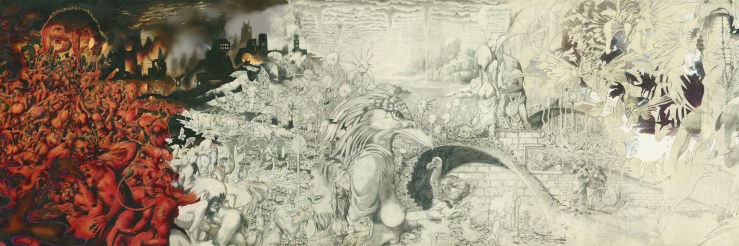
Fortunately, we can at least get a peek at some of McNeil’s hellish art at burroughsmcneillart.com. A few Boschian samples

burroughs_mcneill3

burroughs_mcneill

burroughs_mcneill2

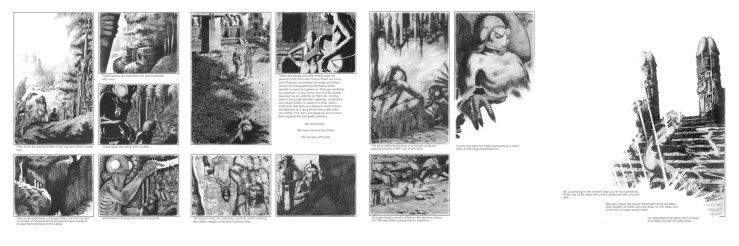
Again, we want this book. Please send us this book. In the meantime, filmmaker Philip Hunt made this 1994 6 minute animated short of Ah Pook Is Here:

The Book Lover – Ali Smith

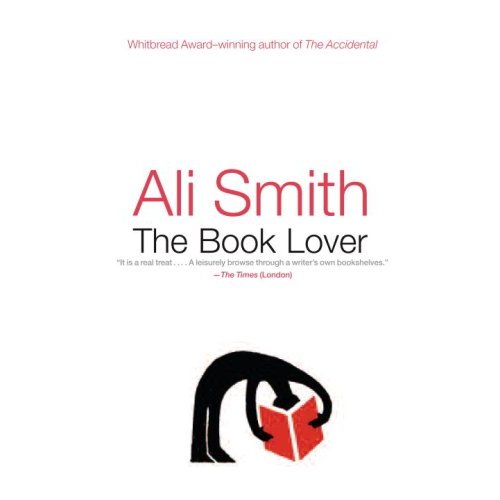
the-book-lover1

Let’s start with a confession–I haven’t finished reading all of Ali Smith’s anthology The Book Lover yet. Like most collections I own, there’s a fair chance that I won’t read every story, essay, or poem collected here, but chalk that up to the nature of anthologies. With any compilation, there are always going to be those great, transcendental moments where you’re suddenly hipped to a new voice, a new sound, a new vision, or re-introduced to an old friend you hadn’t thought about in quite some time. There will also be those texts that fail to grab you at the first sentence (or, rather, you fail to put the work in), and those texts that are simply a bit too long for the gap you’re presently trying to fill. So far, The Book Lover has been mostly filled with bits of shining revelation, startling wit, and plain old great writing, and I’m not going to spoil the meal by forcing it all down at once.

In collecting some of her favorite voices, Scottish author Ali Smith displays a keen understanding that the literary omnibus is peculiarly open to discontinuous and scattered readings. She prefaces The Book Lover with a quote from Virginia Woolf: “Any method is right, every method is right, that expresses what we wish to express, if we are writers; that brings us closer to the novelist’s intentions if we are readers.” Woolf’s words invite us to read the collection in any manner we wish, and I followed suit, picking it up in spare moments, usually at work, where I rarely get the time to concentrate on anything like a novel for a sustained amount of time. Still, Smith has put a great deal of thought into the arrangement of her sources, grouping them into six sections, GIRLS, DIALOGUES, JOURNEYS, THE WORLD, HISTORIES, and BELIEFS. The pieces in the section sometimes speak to each other directly (Hilda Doolittle’s “The Cinema and the Classics: Beauty” followed by Colette on “Mae West” followed by Lee Miller on “Colette”), but more often than not the pieces respond to each other in an oblique, layering fashion. It’s left to the reader to link William Blake’s “Infant Joy” to a section from Anne Frank’s diary, or connect the dots between Tom Leonard’s hilarious poem “baa baa black sheep” and the strange journalism of Lorna Sage’s “Our Lady of the Accident.” These connections were most interesting to me when re-encountering a text I was utterly familiar with, like the “pear tree” passage from Zora Neale Hurston’s Their Eyes Were Watching God, re-contextualized with something I’d never read, like the selection from Billie Holiday’s autobiography, Lady Sings the Blues (note to self: go get Lady Sings the Blues).

Ultimately, The Book Lover is successful in that it doesn’t attempt to be a “greatest hits” collection; instead, we’re treated to a wide selection of diverse and often dazzling writers. Smith’s project will not only introduce you to writers you haven’t yet read, it will make you want to read their works as well. I will, however, admit to being a little bit jealous: I think I’d love to put my own anthology together. After all, I’m a book lover too. In this sense, The Book Lover inspires its readers to think about the value of their own libraries, the way that the authors that they love speak to each other across time and space. Recommended.

The Book Lover is now available in the US from Anchor Books.

Child of God — Cormac McCarthy

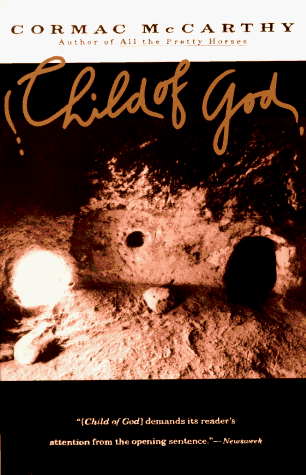
child-of-god

In Greek drama, acts of violence or sex were “ob skena” and had to take place off stage. Thus, the horrific violence of Oedipus gouging out his eyes is not shown, but rather reported by a messenger. We see the same tradition in Shakespeare, of course, as well as the modern novel. And while many writers elide scenes too taboo or offensive to the sensibilities of the general reading public, books like Ulysses, Lolita, and Tropic of Capricorn, demonstrate that novels are often the site of debate over what can and cannot be shown or described or articulated plainly in our culture. Our concept of “the obscene” (the Greek “ob skena” simply translates to “off stage”) demands that certain actions might only be referred to or implied, but not graphically depicted, that the offensive action takes place out of our vision. The great lie or paradox of the obscene then is that in pushing the offensive action off stage, the author necessitates that the audience must envision that very action that was removed, that they must articulate their own understanding or schema or representation of what is taboo. While this strategy can often be quite effective and affecting (think of Tarantino pulling the camera away as Mr. Blonde cuts off the cop’s ear in Reservoir Dogs), in a character-centered novel it can also lead to a larger denial, a larger exclusion. What if one’s whole life was obscene? In his third novel, Child of God, Cormac McCarthy tells the story of a man who has been pushed from life’s stage, who exists in the uncanny and indigent margins of society.

The ersatz protagonist of Child of God, Lester Ballard, is a poor, stooped, abject wretch of a man. The book opens with Ballard losing his house in a humiliating debacle. From there, he wanders the earth, finding an abandoned shack and barely eking out the means to leave. Ballard is an outsider, literally, always looking in at the lives of more normal, more stable people. His voyeurism leads him to creep up to parked cars to spy on the lovers inside. Wanting some connection or sense of love–or perhaps just out of general dejected weirdness–he masturbates against the cars, watching the people inside. His identity as voyeur is magnified in his only apparent skill. Ballard is an ace sharpshooter who carries his rifle almost everywhere he goes, surreptitiously spying on the normal folks through its lethal scope.

wyeth2

As the book develops in McCarthy’s spare, terse prose, Ballard becomes more and more unhinged. Everywhere he goes he is slighted or outright rejected and cheated by his fellow man. The indignities and affronts against Ballard range from being falsely accused of rape to simply being ignored by his neighbors. At the same time, Ballard is a creep, a loser, and seems largely deserving of this treatment. And yet, as McCarthy points out early in the novel, he is a “child of God, much like yourself perhaps.” This early call to identify with Ballard as a fellow human being is constantly strained by his wildly antisocial behavior, and yet it’s McCarthy’s genius as a writer that anchors the novel in some measure of sympathy for such a wretched anti-hero. When a young girl rejects Ballard’s advances, she taunts him, saying, “You ain’t even a man. You’re just a crazy thing.” In many ways, this is the major question of the novel: Is Ballard a man, or a thing? What makes a person a person, and not simply an object estranged from the human race? To test this question, McCarthy has Ballard plumb almost every conceivable taboo, from murder to arson to necrophilia. However, Ballard isn’t the only one in these Tennessee backwoods who behaves despicably: there’s the father who rapes his daughter, the gangster behavior of the Ku Klux Klan, and the mob justice of the townspeople as a whole. Still, Ballard’s descent into violence and madness–graphically portrayed by McCarthy–is the central action in this compelling novel.

Readers looking for redemptive story arcs or tales of heroism will likely be turned off by Child of God, and squeamish readers will probably not get past the first fifty pages. Those interested in McCarthy’s fiction will find more in common here with the visceral grit of The Road or Blood Meridian than the reflective romanticism of his “Border Trilogy” novels (including crowd pleaser All the Pretty Horses). Child of God is in many ways a response to the Gothicisms of Carson McCullers and William Faulkner, and certainly bears favorable comparison to those writers’ works. And like those writers’ works, McCarthy’s novel has its challengers–just as recently as 2007 an English teacher found himself in quite a bit of trouble for loaning the book to a student. Those who see the book as obscene are perhaps right, in the sense that the word implies “that which must be shown off stage.” However, one of the legal definitions of obscenity necessitates that the work “lacks serious literary, artistic, political or scientific value,” a claim that I do not think can be seriously substantiated against Child of God. Don’t believe me? Read it for yourself.

2666 – Roberto Bolaño

2666

Where to start, where to start…

Do I say that the book is good, great, fantastic, a literary achievement? These words don’t seem big enough, or they seem like hackneyed clichés, ugly inadequacies. Here’s a very short review: go get the book and read it. Worried that 900 pages is too long? Don’t worry. They fly by. I read the book in less than a month, usually in forty or fifty page sittings, something I usually don’t make time to do. But hang on, I’m already off to a bad start I admit, there’s no context here, is there? Let me try again.

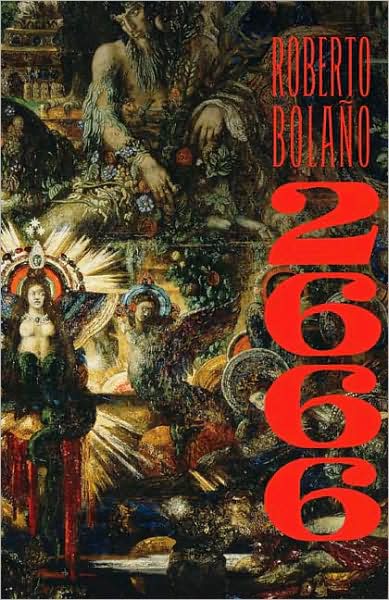
2666 is Chilean exile Roberto Bolaño’s posthumous magnum opus. The book comprises five sections, each focusing on a separate but often overlapping set of characters and locations. The book is, in my paperback edition (composed of three separate books) 893 pages long. The book is excellent, addictive, full of pain and pathos and humanity. Most of the sentences are very, very long. What is it about, then? There are too many answers to that question, but here goes–

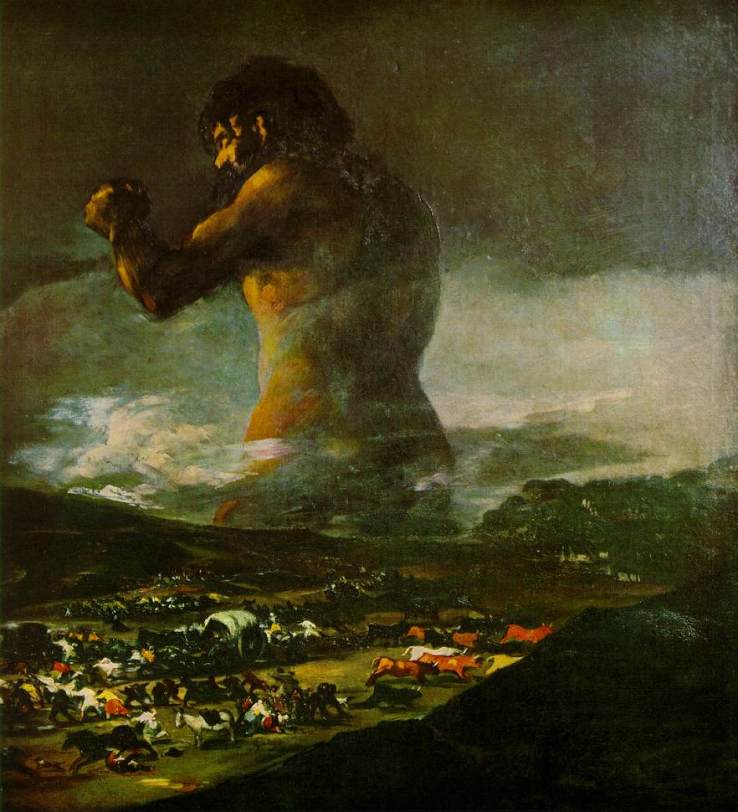
There are two major, intertwined plot threads in 2666, one about a series of gruesome rapes and murders in the fictional city of Santa Teresa, Mexico, and the other concerning an obscure German writer with the improbable name Benno Von Archimboldi. These two threads weave through the labyrinth that is 2666, connecting the many themes and tropes and moods and tones of this massive novel. Bolaño’s styles shift and weave and morph throughout the book, evoking laughter and rage and pity and anticipation and overwhelming sadness. He’s very often philosophical but never abstract, lyrical but grounded, and always entertaining. Bolaño’s command of thousands of different voices is on display here, whether he’s telling the tale of an ex-Black Panther or an exiled Russian sci-fi writer, a Romanian general or a crippled Italian critic. Bolaño’s voices layer upon each other in a strange chorus; often I found myself shocked at how, 300 pages later, a different character in a different place and time will hit on the same note–a comment about semblances and reality, or graveyards, or fate and chance and choice, or mirrors, or dreams and nightmares, or giants, or insane asylums, or aliases and pseudonyms–only this new character will express this note in a new or different tone, adding to the richness and dazzling complexity of the tale. Bolaño’s voices are often framed in a series of tales like Russian nesting dolls, only, where a writer like John Barth might explicitly announce or call attention to this device, Bolaño’s storytelling has a humanistic, natural quality, a quality that provokes and calls attention to the limits of human memory and our collective capabilities to narrativize our lives. But hang on again, I’ve gotten away from plot summary, haven’t I? Do you really need a summary? Yes? Will, “It’s about everything. Life, death, all that shit,” will that not do? Okay. Another attempt, then.
goya-colossus

The first section of 2666, “The Part About The Critics,” tells the story of four critics from four European countries who specialize in Archimboldi; in fact, two of the critics pretty much invent Archimboldi studies. Through their critical endeavors, the obscure, unphotographed writer rises to greater prominence. The four set out to find him, initiating the novel’s detective lit thread. They wind up in Santa Teresa, a city experiencing a seemingly endless slew of murders. In Santa Teresa, they meet a Chilean professor named Amalfitano, who (obviously) features heavily in the next section, “The Part About Amalfitano.” At this point, we start discover more about the unsolved rapes and murders of young women in Santa Teresa, but these crimes linger in the background, the story of Amalfitano, his ex-wife, his daughter, and a geometry book hanging from a clothes line at the fore. Amalfitano’s teenage daughter returns in the third section, “The Part About Fate.” This part of the novel details Oscar Fate, an African-American reporter who travels to Santa Teresa to cover a boxing match only a few days after the death of his mother. “The Part About Fate” builds to a rapid, grotesque, nightmarish climax, where the journalist, alien and impartial visitor, silent observer, becomes implicated in the ugly violence and grim desperation of Santa Teresa. This rhetorical move leads the reader into the longest section of 2666, “The Part About The Crimes,” in which we finally learn about the gruesome murders–hundreds and hundreds of murders–of the young women who work in the factories of Santa Teresa. The final section, “The Part About Archimboldi,” works as a partial bildungsroman, revealing the life story of the man who becomes Benno von Archimboldi. But does “The Part About Archimboldi” wrap up all the riddles, seal the deal, lead us out of the labyrinth and into the light–do we get answers? Let’s see–

Readers enthralled by the murder-mystery aspects of the novel, particularly the throbbing detective beat of “The Part About The Crimes,” may find themselves disappointed by the seemingly ambiguous or inconclusive or open-ended ending(s) of 2666. While the final moments of “The Part About Archimboldi” dramatically tie directly into the “Crimes” and “Fate” sections, they hardly provide the types of conclusive, definitive answers that many readers demand. However, I think that the ending is perfect, and that far from providing no answers, the novel is larded with answers, bursting at the seams with answers, too many answers to swallow and digest in one sitting. Like a promising, strangely familiar turn in the labyrinth, the last page of the book invites the reader back to another, previously visited corridor, a hidden passage perhaps, a thread now charged with new importance. Like Ulysses or Moby-Dick or Infinite Jest before it–and yes, yes, I would class this book with those without batting an eye–2666 is a book that demands multiple readings. Fortunately, despite its grim subject, it’s endlessly entertaining, rich with literally hundreds and hundreds of stories, stories that impel and compel you to read, read, read. But, again like Ulysses or Moby-Dick or Infinite Jest before it, 2666 is not for everyone.
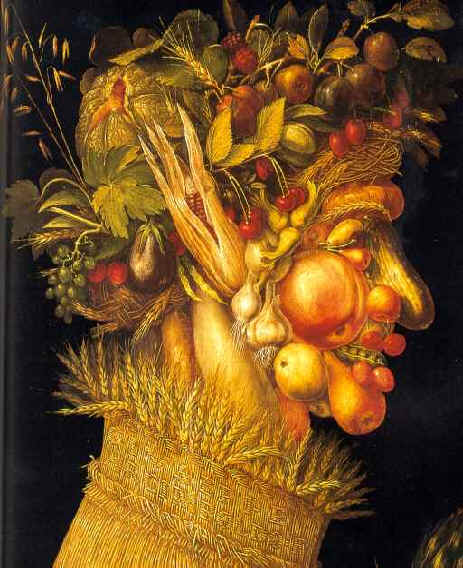
arcimb1

I’ll quote from the only negative review at Amazon right now, by one Mr. Nathan King, who writes, “This is not an enjoyable/pleasurable book to read. . . . this book is a GRUESOME and HORRIFICALLY VIOLENT book. The largest section of the book is basically 300+ pages of autopsy reports. You will read the words “vaginally and anally raped” over and over and over, until it runs through your mind day and night.” King’s review is accurate in several ways, although I fundamentally disagree with his overall assessment, of course. The book’s violence will run through your mind day and night: the book is awfully affecting. One of Bolaño’s missions in the book, it seems, is to continually press on the reader a horrific assemblage of dead, raped, mutilated bodies, bodies found in Dumpsters, trash heaps, ditches, alleys; violated, nameless, unclaimed bodies. While “The Part About The Crimes ” clearly contains most of these horrors, disposable bodies litter the entire book, whether they are Jews to be executed by Nazis in WWII or young men murdered in prison while the wardens watch. Bolaño’s method then is to confront his readers with all these unsolved, perhaps unsolvable crimes, and ask how one can witness to the horrors of life without giving in to despair or madness or suicide. Callous or cynical readers, looking for a simple answer to “Whodunnit?” will miss the multiplicity of answers that Bolaño provides, which might be boiled to: We all did it. We are all responsible for these crimes.

At many points throughout the massive tome Bolaño addresses this central problem, but this passage from “The Part About Amalfitano” sums up one possible solution quite beautifully. Amalfitano, slowly going insane, wondering about existence and movement and sleep and reality, thinks–

Anyway, these ideas or feelings or ramblings had their satisfactions. They turned the pain of others into memories of one’s own. They turned pain, which is natural, enduring, and eternally triumphant, into personal memory, which is human, brief, and eternally elusive. They turned a brutal story of injustice and abuse, an incoherent howl with no beginning or end, into a neatly structured story in which suicide was always held out as a possibility. They turned flight into freedom, even if freedom meant no more than the perpetuation of flight. They turned chaos into order, even if it was at the cost of what is commonly known as sanity.

To systematize, to narrativize then, to try to put order and meaning into one’s life, or the lives around you, to witness to others’ pain by claiming it as your own, these moves then betray one’s ability to accurately, or sanely, perceive the world. It’s this great cost that Bolaño navigates in 2666, and he does so with aplomb and precision and grace.

Have I still not convinced you to read 2666? I could keep going and going, on and on, and I won’t be the only one–Bolaño’s book will be one for posterity, a great work that literary critics (much like the ones he sympathetically parodies and valorizes here) will debate over, ponder over, discuss, write about, love, and be tortured by for ages to come. At the same time, this is not a book that one should feel is only for the “literary élite” (whatever that means)–with its force and vitality and inventiveness, with its rich, detailed dream/nightmare world, 2666 is a book that you, dear reader, should read, must read. Very highly recommended.

Toward A New Zeitgeist

Nothing in all the world is more dangerous than sincere ignorance and conscientious stupidity” — Martin Luther King, Jr.

For the past eight years, inspired by their own dangerous, sincere ignorance and conscientious stupidity, the Bush Gang has perpetuated myriad crimes against humanity and the planet. They didn’t do it alone, of course–the United States is, after all, a Democratic Republic, and its populace–us, we, I mean–stood by like inert zombies after the 9/11 attacks and let Bush and his cronies get away with an illegal war, openly spying on American citizens, detaining prisoners without charging them or giving them legal recourse, and even torturing prisoners. Walt Whitman said that there “is no week nor day nor hour when tyranny may not enter upon this country, if the people lose their roughness and spirit of defiance,” and surely many of us, most of us, were soft and complicit when we should have been rougher and more defiant. Not that many didn’t protest and fight, but the zeitgeist in America this decade was one of hushed zealotry, where the old American values of dissent, protest, and even curiosity were eschewed as the terrain of those awful liberal elitists who might actually, you know, ask questions.

The oughties, or the 2000s, or the noughties, or whatever we’ll call them, really began November 8, 2000, the day after one of the most contested elections in American history. A bad start, really, and many of us will always believe that the neocons stole the election. A year later, after the 9/11 attacks, it became evident that this would be a decade of fear and violence and repression and silence. By the time the neocons were ramping up their illegal war against Iraq–a war that they’d had planned for years before 9/11–many of us felt worn down to cynical little nubs, still in groggy disbelief at what was happening. A 2004 story in The Onion, “Nations Liberals Suffering From Outrage Fatigue,” perfectly captured how I felt, and also signaled that it would be satire and distance and cynicism that would communicate the extraordinarily dangerous ignorance and stupidity of this decade. Getting news of the Bush Gang’s malfeasance from satirical sources like SNL‘s “Weekend Update” or The Daily Show with John Stewart made the cruel realities of this decade somehow more palatable, but at the same time these sources underlined the disengagement that many of us allowed ourselves to fall into, the deep ironic defense reaction against a spirit of the age with which we felt unable to communicate. In short, many of us dropped out; our “Outrage Fatigue” could only last so long. Inertia and cynicism spiked with brief episodes of outrage slowly evolved (or, rather, devolved) into what I would call “The Bush Show,” a long, long cycle of events, each new episode topping the last in terms of its deviousness, ignorance, and stupidity. Am I just railing now, perhaps, recapping what you already know? Sorry.

Here’s my point: Right after the election, I stated in a post I wrote from my gut that the election of Obama shattered my cynical shell, that I felt open and happy and even positive about politics for the first time since I was a kid. I have not and never will lose my skepticism, but, as I pointed out in that post and repeat here, by simply choosing someone so different–and I refer here not to Obama’s dark skin but rather to his knowledge and intellect and openness (in contrast to Bush’s “sincere ignorance and conscientious stupidity”)–by choosing someone like Obama, we have signaled a shift in the spirit of the age. And here is what I propose: Let’s end the decade today, or at 11:59 a.m. tomorrow. Let’s agree that the awful oughties are over, and that a new decade has begun. We don’t have to change any physical documents–calendars, etc.–we just have to all know that a new zeitgeist has been initiated. The New Dark Age of the Bush Years has passed, but we can learn from it as negative example, as an abysmal signal of what not to do ever again.

The Nation Guide to the Nation–Richard Lingeman

the-nation-guide

Part travel guide, part almanac, The Nation Guide to the Nation aims to be the go-to resource for progressive liberals around the U.S. The editors of America’s oldest liberal organ, The Nation, have compiled their Guide to help you answer burning questions: Need to find a “100 percent vegetarian restaurant” in Bloomington, Indiana? Interested in checking out “The world’s only unionized, worker-owned peep show co-op” ? Want to “wear a hemp dress at your wedding”? ( “It’s a cool thing to do,” the text assures us). Look no further. Organized into six sections — Cultural, Social, Environmental, Organizations, Media, and Goods and Services — The Nation Guide to the Nation covers everything from fair trade coffee to anarchist film festivals to organic soul food. Interspersed throughout the book are sections labeled the “Left Heritage Trail,” a shot at attempting to institute a sort of “must-see” registry of sites in the history of the progressive left. The “Left Heritage Trail” sections also serve as a (very brief) history of labor, environmental, and Civil Rights movements in the United States. The editors attempt to further expand the scope of the book by adding sections like “25 Greatest Political Films” (a fairly successful list), “A Left Mystery Tour” (do we really need our mystery novels to have a liberal bent?), and “Anthems of the Left” (Ugh. Their (hopelessly out-of-touch) top ten list includes frat boy favorite “Get Up, Stand Up” by Bob Marley and U2’s “Pride (In the Name of Love)”).

The book’s entries are short and informative, providing addresses, numbers, and websites, and in this sense, it’s really quite successful. However, its overall tone veers into a sort-of “How to Be a Liberal for Dummies” territory. It seems that most progressive thinkers already have the resources or networks to discover this stuff on their own, if they don’t already know about it. For example, do we really need help finding progressive radio stations in Berkeley or San Francisco, and is it especially revelatory to note that New York City has some great bookstores? Still, I will concede that there is probably a young kid in Iowa who would be quite turned on to see what else is out there (no offense to Iowa; apparently the Cedar Falls Farmers’ Market is a great place “to chat, hug, cuddle babies” and just generally have a great Saturday). It is really the uninitiated (or, I suppose, the poseur) who will benefit the most from this guide. Hopefully, as our new President takes office, Americans will begin to see that “liberal” is not a dirty word, and that progressive ideas and radical movements have driven most of the positive social changes in this country, from ending slavery to instituting a 40 hour work week to extending suffrage to women. Those uninitiated in–or resistant to–these historical realities would be well-served by checking out The Nation Guide to the Nation.

Timothy Fadek’s Images of Juárez

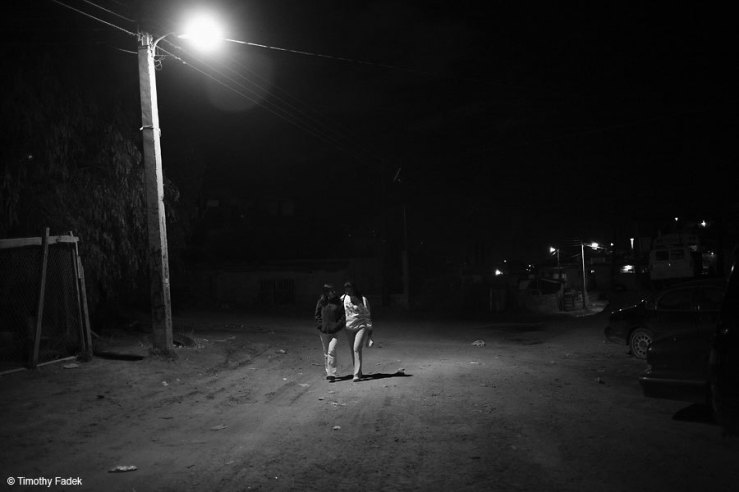
juarez

I’m about 60 pages away from finishing Roberto Bolaño’s posthumous magnum opus, 2666, an astounding, shocking book that you should pick up right now and start reading, unless, of course, you hate the idea of getting hopelessly addicted to a book that coerces you to read it, that lingers in the back of your mind and gut, beckoning, calling you, even as you should be working or spending time with your family or doing errands or chores, etc. But otherwise: read it. A proper review forthcoming.

Anyway. The backbone of the plot, or, rather, the peripheral story that haunts the plot(s) of this massive, heavy novel, involves a seemingly endless string of largely unsolved murders in the fictional Mexican border city of Santa Teresa. An ugly industrial town in the Sonora Desert, Santa Teresa is a thinly disguised stand-in for Ciudad Juárez, where over the past 15 years over 400 young women have been raped and killed, their murders unsolved. While searching the gruesome real-life back story that informs Bolaño’s masterpiece, I came across Fadek’s eerie and sympathetic images of Juárez (this background story on Fadek and the Juárez photos is also quite good). Fadek aims clearly to draw attention to these underreported crimes, but his photographs also capture the doom and foreboding that looms in the blood of 2666. Those who’ve read the novel will no doubt find them evocative of the fourth book of 2666, “The Part About the Crimes,” and those who are flirting with undertaking Bolaño’s big book may find their interest redoubled. In any case, Fadek’s photojournalism is well worth a look. Great stuff.

Joe The Plumber Plunges Into A Puzzling Paradox

Yesterday, CNN’s Political Ticker blog published a short piece on Joe “The Plumber” Wurzelbacher (you know, that dick who landed on our Worst People of 2008 list). Wurzelbacher is covering the Israeli attacks on the people of Gaza for a conservative website called Pajamas Media. In the report, Joe waxes philosophical on the nature of war and freedom of the press:

“I think media should be abolished from, you know, reporting,” Wurzelbacher said. “You know, war is hell. And if you’re gonna sit there and say, ‘well, look at this atrocity,’ well you don’t know the whole story behind it half the time, so I think the media should have no business in it.”

So, let’s figure out Joe’s line of reasoning: War is bad. We don’t know “the whole story” behind the situations and circumstance in which war occurs. Therefore, because we don’t know “the whole story,” we should cease from any “you know, reporting.” To simplify it further: We do not know certain things. News reporters, whose job it is is to determine and then report these certain things we do not know, do not know these certain things. Because reporters do not know these certain things (these certain things there job is to determine), they should be stopped from determining the truth of these unknown certain things.

We all owe Joe a debt of gratitude for demonstrating the rhetorical art of paradox so beautifully. A regular Xeno, this guy. Additionally, Joe here graces us with not only a demonstration of paradox, but also gives us a great model of irony–a reporter (okay, an unlicensed plumber pretending to be a reporter) ostensibly reporting a war calling for the abolishment of the reporting of war! Bravo! Now, if Joe could please give us a better demonstration of a prick by proceeding to fuck himself with a hat pin, I believe we would all be thrilled.

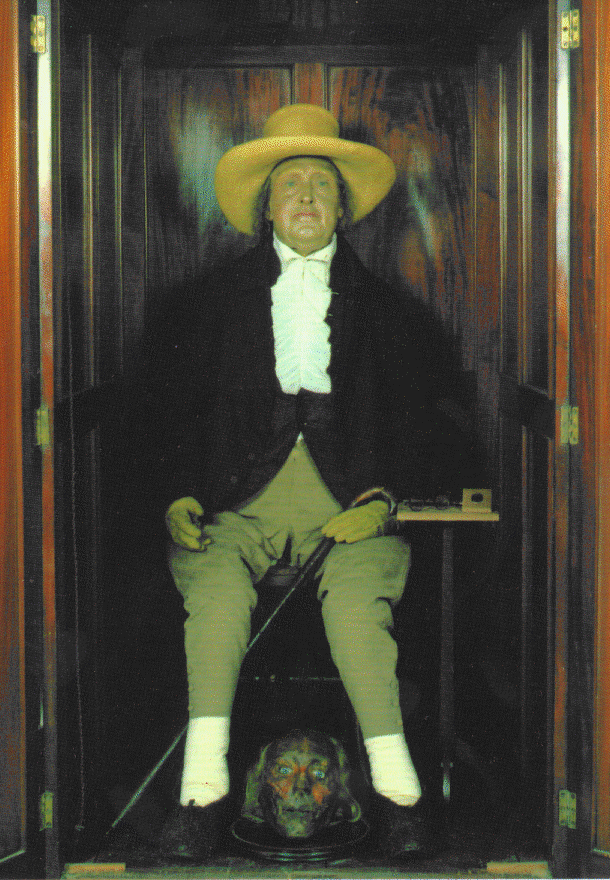
Jeremy Bentham’s “Auto-Icon”

jeremy_bentham_auto_icon

From Simon Critchley’s The Book of Dead Philosophers:

In a text called Auto-Icon: or, Farther uses of the dead to the living, Bentham gave careful instructions for the treatment of his corpse and its presentation after his demise. If an icon is an object of devotion employed in religious ritual, then Bentham’s “Auto-Icon” was conceived in the spirit of irreligious jocularity. The “Auto-Icon” is a godless human being preserved in their own image for the small benefit of posterity. [. . .] As such, Bentham’s body is a posthumous protest against the religious taboos surrounding the dead [. . .] Bentham’s body was dissected and his skeleton picked clean and stuffed with straw. [. . .] Sadly, the mummification process went badly wrong and a wax head was used as a replacement. The original, rotting and blackened head used to be kept on the floor of the wooden box between Bentham’s feet . However, the head became a frequent target for student pranks, being used on one occasion for football practice in the front quadrangle.

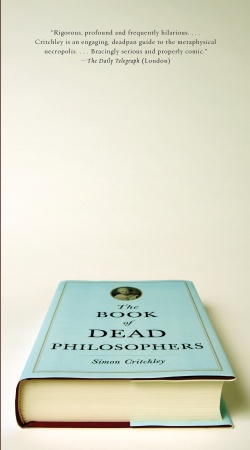
The Book of Dead Philosophers — Simon Critchley

the-book-of-dead-philosophers

A cursory glance at Simon Critchley’s skinny new work, The Book of Dead Philosophers, might lead one to misjudge the book as an ephemeral, superfluous, and even downright jokey sort of “Philosophy for Dummies.” That would be a mistake. While The Book of Dead Philosophers does aim for a broad, popular appeal, Critchley’s wily cataloging of the deaths of nearly 200 philosophers is hardly insubstantial reading. Working from Cicero’s maxim that “To philosophize is to learn how to die,” Critchley sets out to contextualize these philosophers’ writings on death against the very deaths of those philosophers. Ranging from the sophists of ancient Greece to the Classical Buddhists of China to post-modern gadflies like Foucault and Derrida, Critchley’s writing evokes both humor and pathos, and works in some ways as an overview of the history of philosophy without ever becoming didactic or overreaching its central goal.

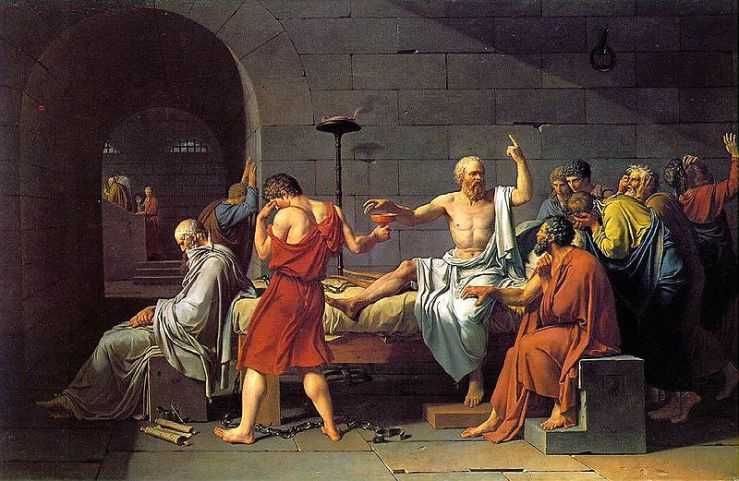
800px-david_-_the_death_of_socrates
The Death of Socrates - Jacques-Louis David

While Critchely’s main purpose in Dead Philosophers seems to be to entertain and perhaps enlighten, he doesn’t shy from injecting his own attitude about his subject. In his introduction he addresses philosophies that emphasize an afterlife, arguing “that they cultivate the belief that death is an illusion to be overcome with the right spiritual preparations. However, it is not an illusion, it is a reality that has to be accepted. I would go further and argue that it is in relation to the reality of death that one’s existence should be structured.” Later, Critchley condemns the metaphysical, Platonist tradition further, and, at the same time, provides a greater rationale for his book: “I hope to show the material quality of the many lives and deaths that we will review disrupts the move to something like “Spirit” and places a certain way of doing philosophy in question. To that extent, there is something intensely arrogant, even hubristic, about a philosopher’s disregard for the lives and deaths of other philosophers.” Critchley’s materialist philosophy leads to an occasionally snarky–and quite humorous–tone when writing about the likes of Anslem, Thomas Aquinas, or even Heidegger and Schopenhauer. His sympathies are more earnestly apparent when he addresses the death of someone whose outlook he shares. Critchley on Bertrand Russell: “Any conception of the immortality of the soul is therefore both iniquitous, because it is untrue, and destructive of the possibility of happiness, which requires that we accept our finitude.”

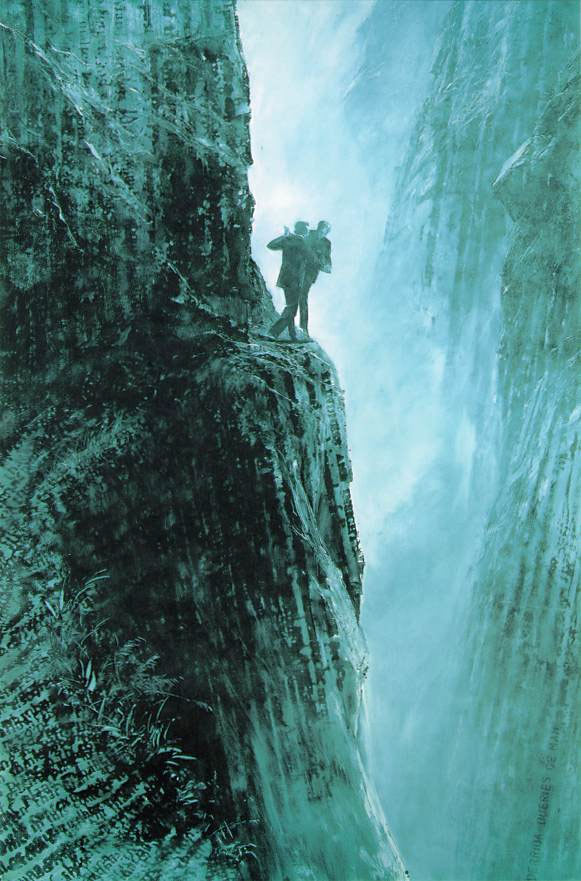
Derrida Queries DeMan -- Mark Tansey

Arranged both chronologically and geographically into short sections ranging from a few sentences to a few pages, Dead Philosophers encourages jumpy, discontinuous, and episodic readings. Still, despite his caveat that he is presenting a “messy and plural ragbag of lives and deaths that cannot simply be ordered into a coherent conceptual schema,” Critchley nonetheless manages to create nuance, layer, and perhaps even a touch of narrative to this work. In one of the final entries of the book, a touching tribute to Jacques Derrida (at three pages, one of the longest in the book–twice as long as the section on Plato), Critchley writes, “the dead live on, they live on within us in a way that disturbs any self-satisfaction, but which troubles us and invites on us to reflect on them further. We might say that wherever a philosopher is read, he or she is not dead. If you want to communicate with the dead, then read a book.” Lovely.

The American publication of The Book of Dead Philosophers is available February 10th, 2009 from Vintage Books.

Many readers will may also be interested in Simon Critchley’s essay on Barack Obama and metaphysical philosophy, “The American Void,” published in last November’s issue of Harper’s Magazine, or the post-victory essay, “What’s Left After Obama?” published last November in Adbusters.

A Scapegoat for Promiscuous Drunks, Friendly Calls, and Humbug Resolutions

mark-twain

From Mark Twain’s January 1st, 1863 column in the Territorial Enterprise:

Now is the accepted time to make your regular annual good resolutions. Next week you can begin paving hell with them as usual. Yesterday, everybody smoked his last cigar, took his last drink, and swore his last oath. To-day, we are a pious and exemplary community. Thirty days from now, we shall have cast our reformation to the winds and gone to cutting our ancient short comings considerably shorter than ever. We shall also reflect pleasantly upon how we did the same old thing last year about this time. However, go in, community. New Year’s is a harmless annual institution, of no particular use to anybody save as a scapegoat for promiscuous drunks, and friendly calls, and humbug resolutions, and we wish you to enjoy it with a looseness suited to the greatness of the occasion.

Amerika — Franz Kafka

amerika

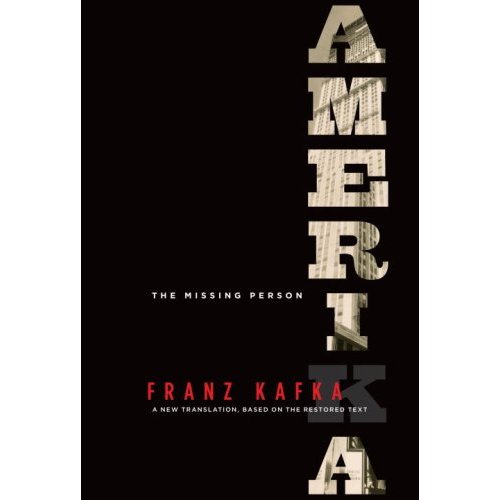
I had a (very, very minor) Kafkaesque moment when Mark Harman’s new translation of Franz Kafka’s unfinished first novel, Amerika first arrived at Biblioklept International Headquarters. Wanting to compare the style of Harman’s translation to Edwin and Willa Muir’s work, I searched for my old copy of Amerika. I figured I’d re-read the first chapter, “The Stoker,” the only part of the novel that Kafka reworked (it was published as a short story). So I looked and looked and it turns out that I don’t own Amerika, despite the obligatory Kafka phase I went through in high school (followed by a post-bac Kafka phase years later). But I knew I’d read “The Stoker,” or at least it seemed likely that I’d read “The Stoker,” and it turned up in a collection of Kafka’s short stories that I own–only it was the Donna Freed translation. So I re-read it, only I’m not sure that I was re-reading it. I didn’t remember any of it, other than the famous opening image of a Statue of Liberty armed with a sword. I’m still not sure that I ever read it before now; that is, I’m not sure that I read the Muir translation that Harman seeks to amend. I guess it doesn’t matter, and it seems appropriate that a Kafka review begin with a meandering false start. Where were we?

Yes. Harman’s translation. With Amerika, Harman continues a project he initiated with his translation of another unfinished Kafka novel, The Castle. (This book was published in 1998, and I listened to the audio book last summer, incidentally, and it was really, really good). Harman’s translations aim to restore some of the humor, ambiguity, and modernism that the Muirs’ early translations occlude in favor of their own religious readings. Harman also takes great pains to remove Max Brod’s editorial interventions, even going as far as to keep many of Kafka’s consistent solecisms (“Oklahoma” is restored to Kafka’s original – and consistent – “Oklahama”). Now, my Kafkaesque confusion over whether or not I’ve read the Muirs’ translation of Amerika prevents me from commenting here on Harman’s apparent restoration of Kafka’s humor, but I do think that Amerika is often funny, and often terrifying. Its protagonist Karl finds himself in a parallel-universe America (one constructed wholly from Kafka’s imagination, and announced in its surreal glory from the opening image of a Statue of Liberty armed with sword), one where he’s consistently misled, swindled, cornered, cramped, and generally mistreated by various enigmatic authority figures (yes, its Kafkaesque, if you’ll allow the tautology). As noted, Kafka never finished writing the book (or any of his three novels, for that matter), and Harman makes no attempt to reconcile the plot, opting instead to simply reproduce (in frank English, of course) the words Kafka wrote.

Amerika is not the starting place for those new to Kafka’s work–I would suggest readers who weren’t turned off by their high school English teacher’s inept bungling of The Metamorphosis start with a collection of the short stories. However, I think Harman’s translation is not only essential for fans who wish to rediscover an old favorite, I also believe that it will quickly become the definitive translation. It’s modern and terse and funny, and it also pays subtle respect to the dialogic interplay between Karl’s point of view and that of the omniscient narrator, often creating moments of intense and delicious irony. Reading a translation of Kafka focusing on his oft-neglected humor brought to mind the late great David Foster Wallace’s essay, “A Series of Remarks on the Funniness of Kafka, from Which Not Enough Has Been Removed” (read it here or get the mp3 of DFW reading it here). Here is Wallace, explaining why American undergrads don’t get Kafka’s humor:

And it is this, I think, that makes Kafka’s wit inaccessible to children whom our culture has trained to see jokes as entertainment and entertainment as reassurance. It’s not that students don’t “get” Kafka’s humor but that we’ve taught them to see humor as something you get — the same way we’ve taught them that a self is something you just have. No wonder they cannot appreciate the really central Kafka joke — that the horrific struggle to establish a human self results in a self whose humanity is inseparable from that horrific struggle. That our endless and impossible journey toward home is in fact our home.

Wallace’s observation stealthily acknowledges why the heroes of Amerika and The Trial and The Castle never get to where they’re going, why Kafka could never wrap up his big stories. Kafka, the first modern writer, embraced the “horrific struggle” of humanity and never sought easy reconciliation or pat conclusions. Harman’s new translation brings this critical aspect of Kafka’s writing to the fore, and he achieves this in the most simplistic manner: unobtrusively letting Kafka’s words stand on their own. Recommended.

Amerika is now available from Schocken Books.

Pessimus Populus: The Worst People of 2008

10. Joe the Plumber

Joseph Wurzelbacher, as manipulated by the McCain campaign, somehow came to stand for the “common man,” the “everyday” American (from real America, of course) who would just totally get dicked-over by a pinko like Obama. If Joe the Plumber does represent the average, everyday common American, that basically means the average, everyday common American is kinda dimwitted, slovenly, and prone to saying stupid stuff. And around Biblioklept Headquarters in Real America, we’re too patriotic to suggest such a thing. Olbermann takes down Joe:

9. Michael Phelps

michael-phelps-speedo

Okay. We get it. You can swim fast. But please. Please. Don’t be such a smug dick–you’re not charming, as your awkward, unfunny appearances on SNL and The Colbert Report attest. Also, your skanky new girlfriend hardly lends you class. Thank god the Olympics only happen every four years.

8. Elisabeth Hasselback

Hasselback’s yapping maw jibber-jabbered at such a consistently shrill pitch for most of 2008, that even those of us who avoid The View like the special little plague it is were subject to take some notice. Someone has thoughtfully distilled Hasselback’s 25 most annoying moments into one dandy poisonous clip:

7. FOX News

6. Voters who voted for anti-gay ballot measures in California, Florida, Arkansas, and Arizona this year.

Evangelical leaders–many who claim to “love” everyone–consistently attempt to turn this fight into a matter of semiotics, into the meaning of the word “marriage.” Hogwash. Years from now–hopefully not too many–we, as a country, will look back on these anti-gay measures with the same sense of shame that now surrounds opposition to the Civil Rights movement. Anyone who claims that the issue is simply about what the word “marriage” means is being dishonest with themselves and everyone else. At least the loonies who follow Fred Phelps are openly and honestly bigoted.
wswed04

5. John McCain

bush-mccain-hug-72

Dear Maverick McCain,

We used to like you, a little bit, way back in 2000, but yeah, we really did see you as an outsider for awhile, and sure, you’re a war hero (if getting shot down and surviving as a prisoner-of-war makes one a hero)–But–

Don’t you think the campaign you ran against Obama was kinda sorta most definitely shameful? I mean, like, aren’t you literally ashamed of the tacit and not-so-implicit and sometimes downright violent xenophobia and (yes) racism that you guys incited in your mobs? Aren’t you worried that any goodwill capital you built over you last 25 years in politics has been more or less spent? And Palin? Jesus! Seriously? Palin? Don’t get me wrong, your choice was truly a delight to watch, but come on, man. Show some sense.

4. Wall Street Investment Bankers

You oily pricks get what you deserve. Never have so many done so little for so much money. Also: Anyone who still believes that unregulated laissez-faire capitalism just “works.” Look around you.

3. The Bush Gang

bush-gang

Let’s lump them all together and let God sort them out. Or, better yet, let’s prosecute them. Or, better yet, tar-and-feather them, and run them out of town on a pole.

2. Sarah Palin

This year, Biblioklept is doling out a first: a special “Cunt of the Year” award, just for Palin. Aw, that’s kind of mean. Actually, it was really entertaining to watch Palin fumble through interviews (she reads “everything”!), wink and consistently drop the word-final “g” sound from her every utterance, and destroy any hopes that the GOP had of winning the ’08 election. And for every time she infuriated us (insinuating that there is a “real America,” one we are not a part of), she always made up for it with some comic gold. (The infamous turkey-pardoning-while-turkeys-get-slaughtered-in-the-background-video is a particular gem from 2008; (How, oh how, can Palin not see the irony here?)):

Of course, had McCain-Palin won–which is to say, if Americans had yet again made a bad, poor, ignorant, stupid, willfully stupid decision about who should lead them–we would not make light of Palin’s idiocy. But they lost. They lost! Ha ha, they lost! So, it’s perfectly fine and dandy to recall all of Palin’s flubs (Remember when that morning shock jock pranked her? Remember the debate?!) With a little luck, the Republican leadership will continue to stand behind Palin (literally!) and ruin any chances the party has to ascend to power again in 2010 or 2012.

1. George Bush

As of this writing, there are only 25 days left in the Bush presidency (keep track here if you want), yet it seems probable that he’ll manage to fuck something else up for the incoming administration. I say the decade officially ends this January. Let’s move on.

Just like last year, we find Dubya dancing:

The Best Books of 2008

We read many, many books this year, but most of the books we read–especially the very best ones–were not published this year. And as usual, we’re always playing catch up. Case in point: we finally finished Roberto Bolaño’s much-lauded-in-2007 hit The Savage Detectives just last month, and despite feeling that it was kinda overrated we couldn’t help picking up his much-lauded-in-2008 hit 2666 at Green Apple Books in San Francisco this weekend (sidebar that will not surprise any San Francisco reader: San Francisco has the best book shops. Sick). So, we will spend at least the first part of 2009 getting through that massive tome.

Bar none, the best book we read in 2008 was Cormac McCarthy’s masterpiece Blood Meridian, published back in 1985. So good we read it twice, and so should you. We also loved loved loved Philip Pullman’s Nietzschean sci-fi trilogy His Dark Materials. Finally, we must highly recommend E.L. Doctorow’s novel Ragtime, which we finally got around to reading this year (last week, so, no review). This book is great, and you will wonder why you haven’t read it before now. A somewhat neglected classic. But. Let us move on.

a-mercy

There were a couple of fantastic highlights in 2008, of course, most notably Toni Morrison’s A Mercy, a novel on which we cannot heap enough praise. In a time of overstuffed, overlong novels, A Mercy is rich and complex yet lean at just over 170 pages, and, as many critics and reviewers have pointed out, the novel serves as a touching counterpoint for her 1988 masterpiece Beloved.

violence

We also loved–and frequently returned to–Slavoj Žižek’s Violence, a work of cultural criticism that managed to be fun and infuriating and serious and frivolous at the same time. Too often reviewers fall back on hackneyed phrases like “thought provoking,” but Žižek’s work really is provoking, often to the point of confrontation. Like Plato, Nietzsche, and Derrida before him, Žižek is the gadfly, the upsetter, the spoiler. He has earned his haters.

The Paris Review Interviews, Volume III and The O. Henry Prize Stories collections were also sublime–great interviews, great stories, lovely tasty morsels. Ralph Ellison, William Carlos Williams, Stephen Millhauser–what’s not to love? We also really were digging Mark Reibstein and Ed Young’s sumptuous children’s book, Wabi Sabi. You’d think a book that included a haiku on each page would be cheesy or cloying or too precious, but no. Great stuff.

wabi-sabi

We’d also be remiss not to give props (again) to Wendell Berry’s essay “Faustian Economics,” published in the May, 2008 issue of Harper’s. Berry’s piece is beautiful and sad and timely, and everyone should read it. It was one of the best things we read all year. Speaking of Harper’s, the latest issue includes–along with a touching memorial to critic John Leonard, who died last month–the remarks of those who spoke (including Zadie Smith and Don DeLillo) at David Foster Wallace’s memorial service this October. Wallace’s suicide was and is awful, and remarking on it in a “Best of 2008” section seems tacky, but we can’t help it. We love his work and are sad that there won’t be any more, or at least much more, or at least any “finished” work from the man, but, as George Saunders puts it in his portion of the memorial: “In time–but not yet–the sadness that there will be no new stories from him will be replaced by a deepening awareness of what a treasure we have in the existing work.” So, if we remark on DFW here, it is only because he was one of the best, and he died this year, and in some sense, we need to remark on it yet again, despite having written too much already.

But let’s not end on a sad or sour note. Plenty of great reads in 2008, and surely we neglected a tome or three in this rehash, but hey, we’re human, we err, etc. We look forward to more reading in 2009, and perhaps, improbably (we lie to ourselves, who doesn’t though?) we may actually defeat that stack of books by the bed, on the night stand, on the coffee table.