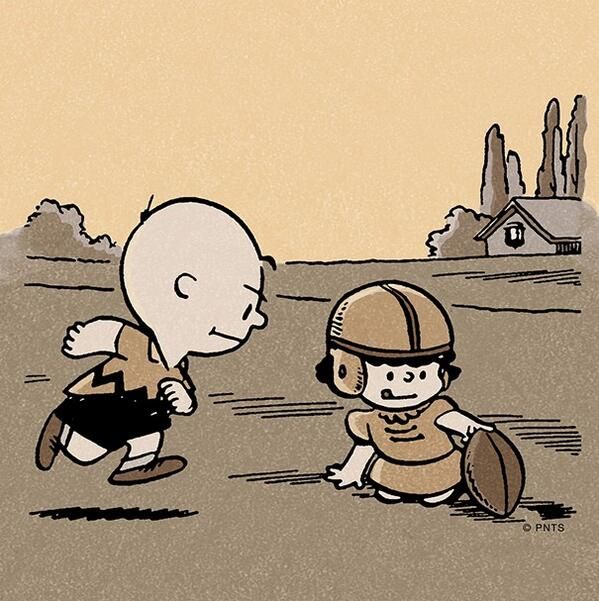
Existentialism has been accused of being defeatist and depressing (and Sartre didn’t help his cause with terms like ‘abandonment’, ‘despair’, and ‘nausea’). But Peanuts also demonstrates the optimism of the philosophy. Why does Charlie Brown continue to go out to the pitcher’s mound, despite his 50 year losing streak? Why try to kick the football, when Lucy has always pulled it away at the last second? Because there is an infinite gap between the past and the present. Regardless of what has come before, there is always the possibility of change. Monstrous freedom is a double edged sword. We exist, and are responsible. This is both liberating and terrifying.
From “Sartre & Peanuts” by Nathan Radke.







 Biblioklept