“It’s almost sexual” | Brian Wilson talks about the theremin in “Good Vibrations”

Fehérlófia

Watch Guilty as Charged, a documentary about Harry Crews

School’s Out

Reviews and riffs of May 2015 (and an unrelated owl)

Reviews and riffs, May 2015

In which I read Playboy for the Pynchon article.

This is not a review of Lydia Davis’s Can’t and Won’t.

What the hell is Pynchon in Public Day?

A review of Jim O’Rourke’s new record Simple Songs.

Han Kang’s The Vegetarian reviewed.

A somewhat contrarian take on Mad Max: Fury Road.

Mad Men’s cynical finale.

Gravity’s Rainbow and Disney’s Fantasia.

Unrelated owl by Durer:


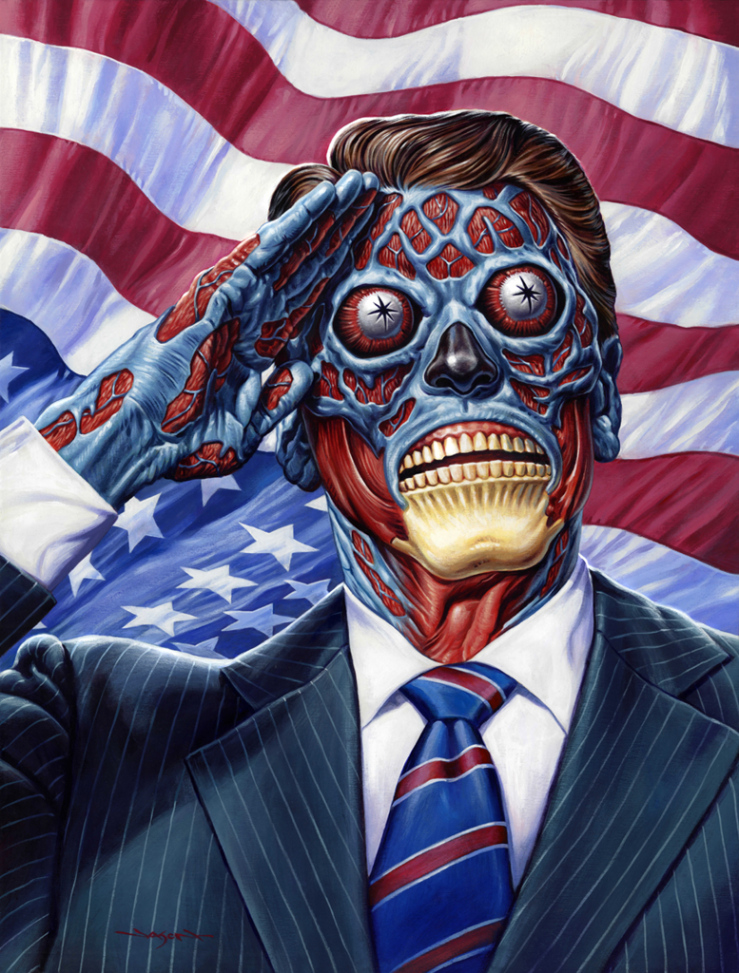
They Live — Jason Edmiston

They-Live-final

A last riff (for now) on Gravity’s Rainbow (and Disney’s Fantasia)

Screenshot 2015-04-24 at 9.27.30 PM

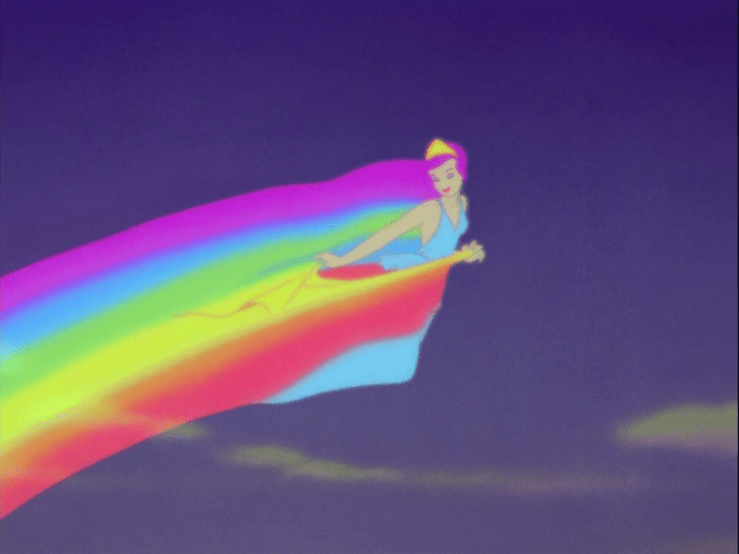
Disney’s Fantasia is one of the better film adaptations of Thomas Pynchon’s novel Gravity’s Rainbow. 

At least this thought zipped into my head a few weeks back, as I watched the film with my wife and kids. I was in the middle of a second reading of the novel, an immediate rereading prompted by the first reading. It looped me back in. Everything seemed connected to the novel in some way. Or rather, the novel seemed to connect itself to everything, through its reader—me—performing a strange dialectic of paranoia/anti-paranoia.

So anyway, Fantasia seemed to me an adaptation of Gravity’s Rainbow, bearing so many of the novel’s features: technical prowess, an episodic and discontinuous form, hallucinatory dazzle, shifts between “high” and “low” culture, parodic and satirical gestures that ultimately invoke sincerity, heightened musicality, themes of magic and science, themes of automation and autonomy, depictions of splintering identity, apocalypse and genesis, cartoon elasticity, mixed modes, terror, love, the sublime, etc.

(There’s even a coded orgy in Fantasia).

But Fantasia was first released in 1940 right, when Pynchon was, what, three or four? And Gravity’s Rainbow was published in 1973, and most of the events in that novel happen at the end of World War II, in like, 1944, 1945, right? So the claim that “Fantasia is one of the better film adaptations of Gravity’s Rainbow” is ridiculous, right?

(Unless, perhaps, we employ those literary terms that Steven Weisenburger uses repeatedly in his Companion to Gravity’s Rainbow: analepsis and prolepsis—so, okay, so perhaps we consider Fantasia an analepsis, a flashback, of Gravity’s Rainbow, or we consider Gravity’s Rainbow a prolepsis, a flashforward, of Fantasia…no? Why not?).

Also ridiculous in the claim that “Fantasia is one of the better film adaptations of Gravity’s Rainbow” is that modifier “better,” for what other film adaptations of Gravity’s Rainbow exist?

(The list is long and mostly features unintentional titles, but let me lump in much of Robert Altman, The Conversation, Richard Kelly’s Southland Tales, Paul Thomas Anderson’s The Master, that Scientology documentary Going Clear, a good bit of stuff by the Wachowksis, The Fisher King (hell, all of Terry Gilliam, why not?), the Blackadder series, which engenders all sorts of wonderful problems of analepsis and prolepsis…).

Gravity’s Rainbow is of course larded with film references, from King Kong and monster movies to German expressionism (Fritz Lang in particular), and features filmmakers and actors as characters. The novel also formulates itself as its own film adaptation, perhaps. The book’s fourth sentence tells us “…it’s all theatre.” (That phrase appears again near the novel’s conclusion, in what I take to be a key passage). And the book ends, proleptically, in “the Orpheus Theatre on Melrose,” a theater managed by Richard M. Nixon, excuse me, Zhlubb—with the rocket analeptically erupting from the past into “The screen…a dim page spread before us, white and silent.” Indeed, as so many of the book’s commentator’s have noted, Pynchon marks separations in the book’s sequences with squares reminiscent of film sprockets —  □ □ □ □ □ □ □. Continue reading “A last riff (for now) on Gravity’s Rainbow (and Disney’s Fantasia)”

Heaven and Earth Magic

Mary Ellen Mark on photographing Frederico Fellini

The trailer for that David Foster Wallace movie

Look, I’m trying not to be a hater. I am (trying). And a lot of film critics who I generally respect the opinions of have said the film is good or even great. I’ve already ranted my No about this whole thing, and I know that a trailer is not the same as a movie, and I know that I didn’t like the book so why should I like the film—but—ugh. No. No. No.

Inherent Vice Film Poster — Steve Chorney

Inherent-Vice-Poster-comp-Small

Problems begin the moment we’re born (Hayao Miyazaki)

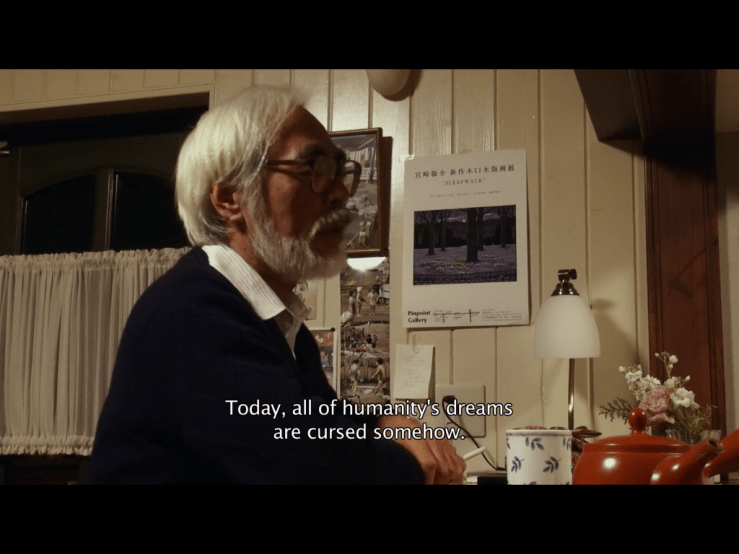
 From The Kingdom of Dreams and Madness. The speaker is Hayao Miyazaki.

Hearing Paul Thomas Anderson

Edited by Jacob T. Swinney. Via AV Club.

Mad Max: Fury Road Reviewed

ZZ70C9C455
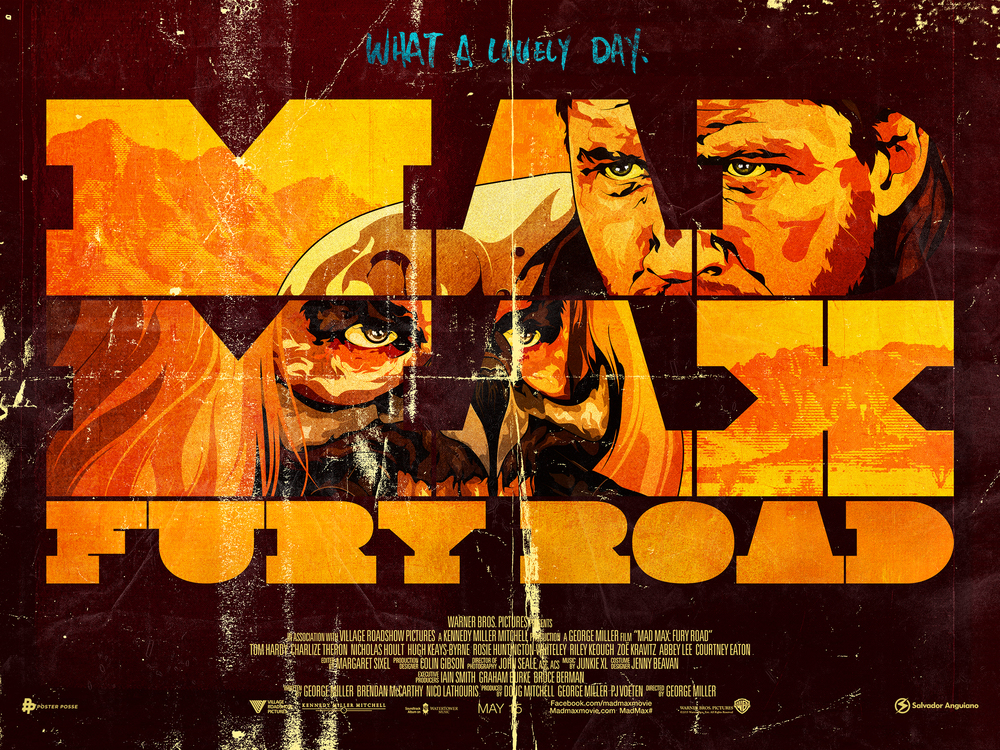
Fury Road film poster by John Aslarona
George Miller’s Mad Max: Fury Road performs exactly what its intended audience demands. Essentially a cartoonish two-hour car chase brimming with violent badassery, Fury Road precludes any real criticism. Poking at the weak dialogue, cardboard characterizations, and muddled motivations would miss the point. Fury Road looks amazing. It’s thrilling. It’s violent. It does what it was made to do. It’s a spectacular entertainment. (Spectacular in the Guy Debord sense).

Those who would contend there’s more to Fury Road, that would protest I’m missing some depth here, might refer me to the film’s feminist motifs. Yes, this is a film that critiques and rebels against patriarchal authority (going so far as to spell out its message in big block letters even). Maybe there’s a Freudian or Lacanian analysis in there too: Charlize Theron’s Imperator Furiosa (she’s the real star of the film—Tom Hardy’s Max is a bland substitute for old crazy eyes Mel), shorn of both hair and an arm (castration symbols, no?) driving an enormous phallus (one dangling a big testicle full of fuel, power, no less) across the desert wastes, plunging it violently ahead to save some concubines (their eminence derives from their non-mutant genes and marvelous cheekbones—like Zack Snyder’s 300, Fury Road always privileges ideal body types over aberrations).

Where was I? It doesn’t really matter.

Ah, yes: I claimed that the movie obviates criticism.

Fury Road is a product, a commodity that successfully camouflages its very commodification. It’s fan service for our post global id.

The film has been nearly universally praised, as a quick tour through the aggregator site Rotten Tomatoes shows. I’ll lazily pull from RT’s pull quotes lazily: “This movie will melt your face off,” promises Christy Lemire. (Uh, okay). For David Edelstein, seeing the film a second time “became about digging the spectacle – not to mention the hilarious sexual politics.” (Were they really “hilarious”?) “An A-plus B-movie that at times feels almost like a tone poem to early-’80s excess,” writes Christopher Orr, who may or may not know what a tone poem is. Mark Kermode, a crank whom I generally admire, calls it “an orgy of loud and louder, leaving us alternately exhilarated, exasperated and exhausted.”

I stuff these quips in  here to show how Fury Road precludes any real criticism. Like I said up front, it does what it intends to do, and what it intends to do is show us something wholly familiar in a way that makes us think that we are not seeing something wholly familiar. But for me, anyway, Fury Road does feel familiar, like any number of movies I’ve already seen. Maybe blame it on Miller’s earlier Mad Max films. Maybe they colonized our cultural imagination so much that any strangeness in Fury Road is difficult to glean, hence the filmmaker’s central trick: Speed the damn thing up. Less character development, less bothersome talking 

I cherry-tomato-picked the Kermode quote above, but his full review is more measured and insightful than that quote alone suggests. He ends with a warning: “…at two hours it’s more of a slog, battle-fatigue teetering on the edge of burn-out and even boredom.” Reader, I’ll admit to that boredom.

The first edges of that boredom actually creep in early, when we see how little is actually at stake in the film. Miller’s gambit is to keep Max constrained for the first quarter of the film—bound, chained, even muzzled. Tied to the prow of a rumbling car like some mythic figure, Max is relentlessly imperiled by spears and bullets and an apocalyptic sandstorm. But like some mythic figure, we know he’ll never die. Like the Roadrunner cartoons it so closely resembles, Fury Road imagines a slapstick world of zany cause-and-effect non-logic, producing kinetic anxieties in its audience that are ultimately relieved (over and over again) with a belief so strong that it cannot be suspended: Max will not die. Max can never die. There must be a sequel.

That promise of a sequel finds its affirmation in the film’s most clichéd final moments. (I’m going to discuss the end of the film now. Spoilers coming up—fair warning, eh?)

mad-max-fury-road-poster-art-collection-from-poster-posse
Fury Road film poster by Salvador Anguiano
Continue reading “Mad Max: Fury Road Reviewed”

Cursed (Hayao Miyazaki)

IMG_0233 IMG_0235

From The Kingdom of Dreams and Madness.

A montage of fragments deleted from Inherent Vice

A deleted scene from Inherent Vice