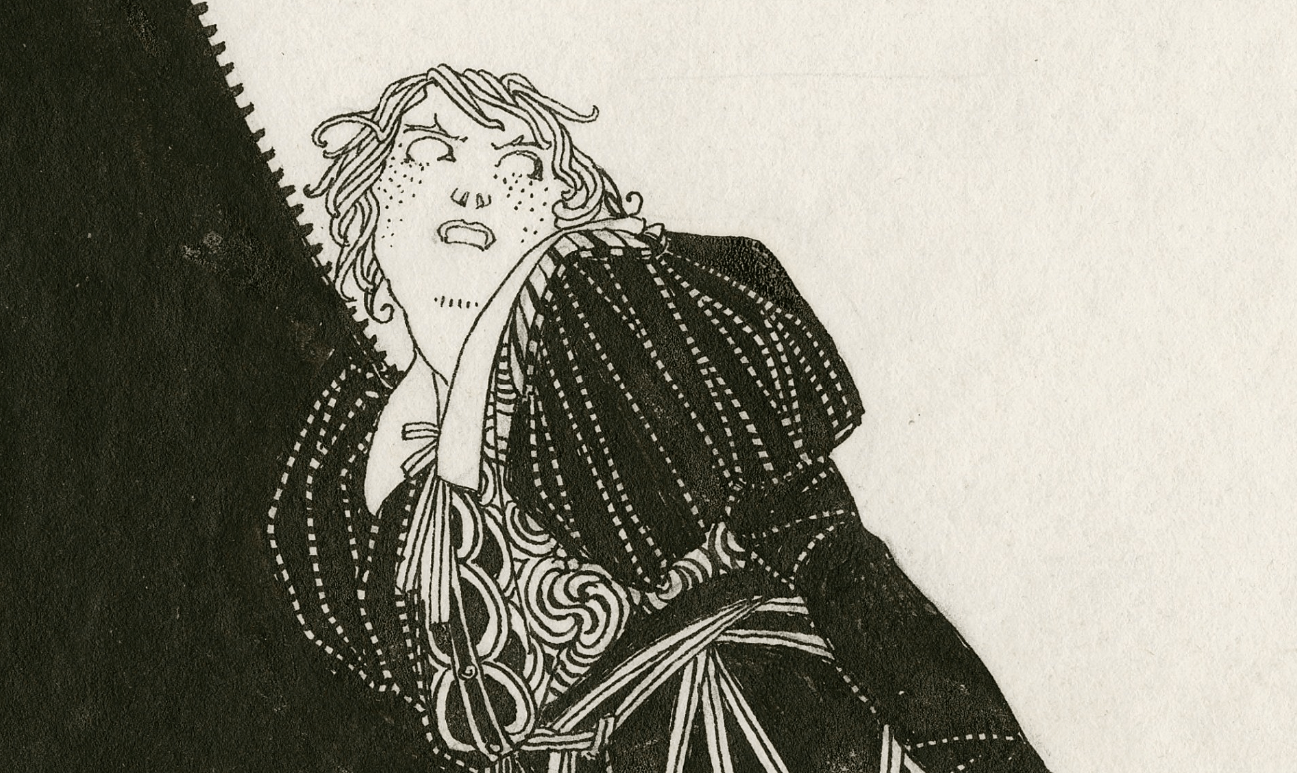
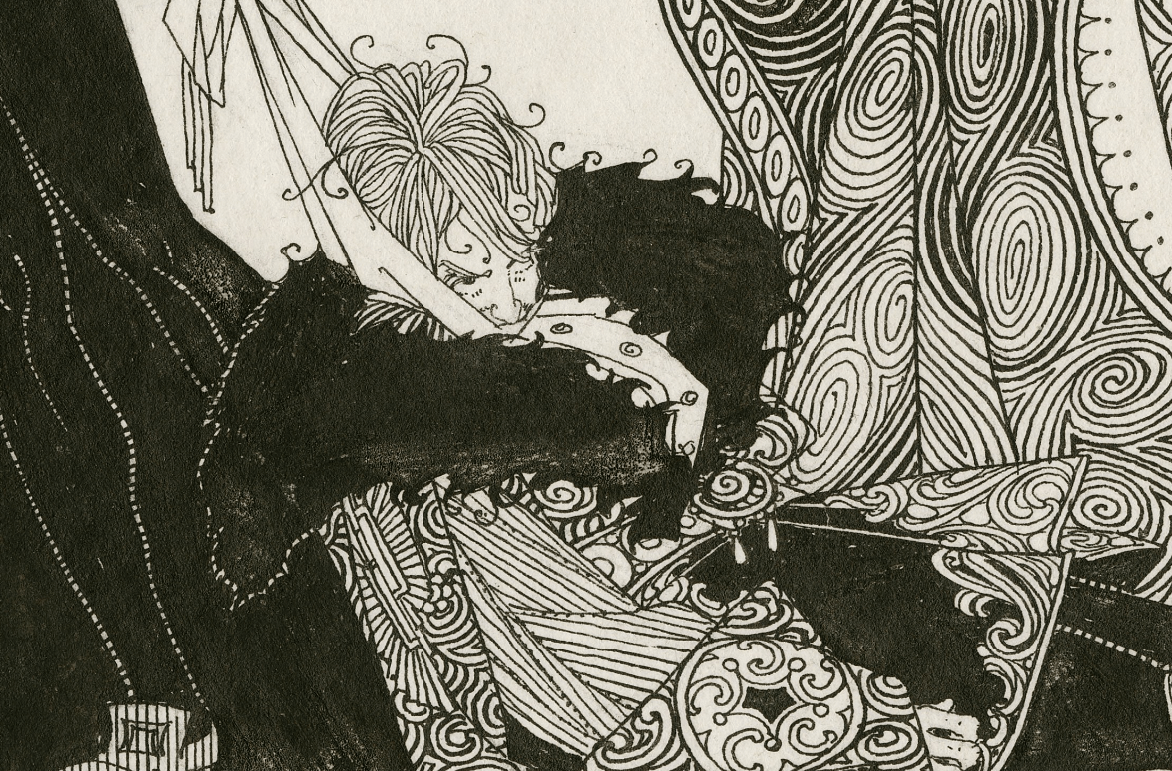
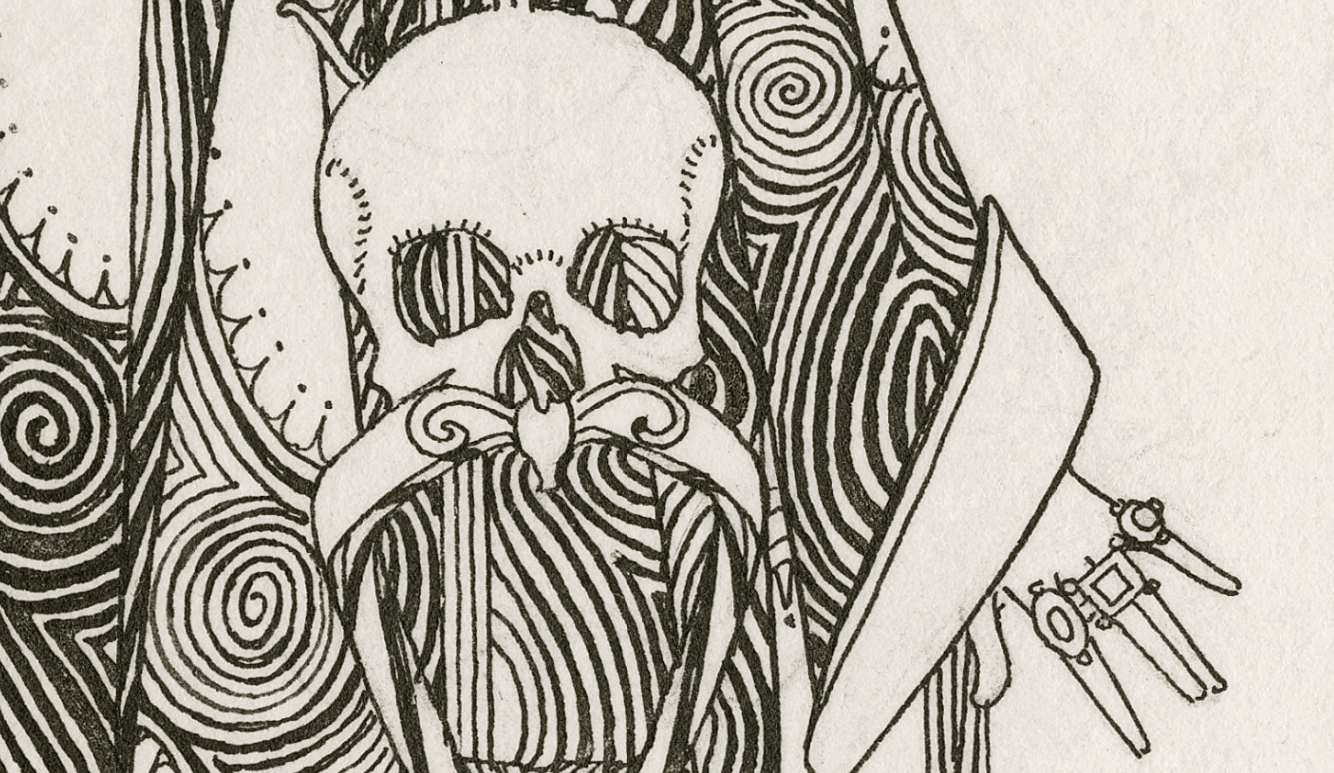
Illustration from The Holy Terrors — Jean Cocteau

Illustration from The Holy Terrors, c. 1929 by Jean Cocteau (1889–1963)

Donald Barthelme’s “The Indian Uprising,” but just the punctuation

. . , . . . . ” ? ” , , – . . ” . ” , . . . , . , , , , – . . . ” ‘ ‘ ‘ ? ” ” ? ” ” . ” ” , ” . ” , , , . ” ” ? ” ” , ” , ” . ” , , , : ? ? – . , , , , . , , , ( ) , , . , , ; ; – ; – – & , , , , , # ; – – ; , – ; ; ; ; ; , , ; – – ; , , ; . . , . . . , , , , , . . . ” , ” , ” , , , , , . , , , . . . . ” . . . , – . , , , , . , – . – . ” , ” . ” . ” , , , , , , . ” , ” . , . , – , , , . . . . , , , . – . . – – . ” , ” . ” , ” . . . , . . ( , ! ! ) . . . . . , , . . , . . , , . , , , , , , , , , . ” ? ” . ” , ” . ” . . ” ” ? ” ” , ” . ” . . . . . ” ‘ , . , , , : ” ? ” . . , . . . ” , , , . ‘ . ” . ” . ( ) , , , , . ” . ” ? ” ‘ . ” , ” . ” . , , . ” , , , , . . , . ” , ” , ” ? ” ” , ” . , , ” . . , , , # , , , , , , . , ” . , ” # . , ” , ” , , , , , , . , ” . , ” . , ” . , ” , , . . ” . , , , . – – . , . ” ! ! ” , , . . . . , , . – – , . , , , . . . , , , , , , , , . , – . . . . , . . . ! . ‘ , . – , ‘ , ? , , ‘ , ? . ( ‘ ) , ( ‘ ) . , ! , . , , , , , . . & . ” ? ” ” , ! ” . . ” ? ” , , – – , . . , , . . ” , ” . , . ” . . ” ( , ) , , , .


Donald Barthelme’s “The Indian Uprising,” but it’s just the punctuation.

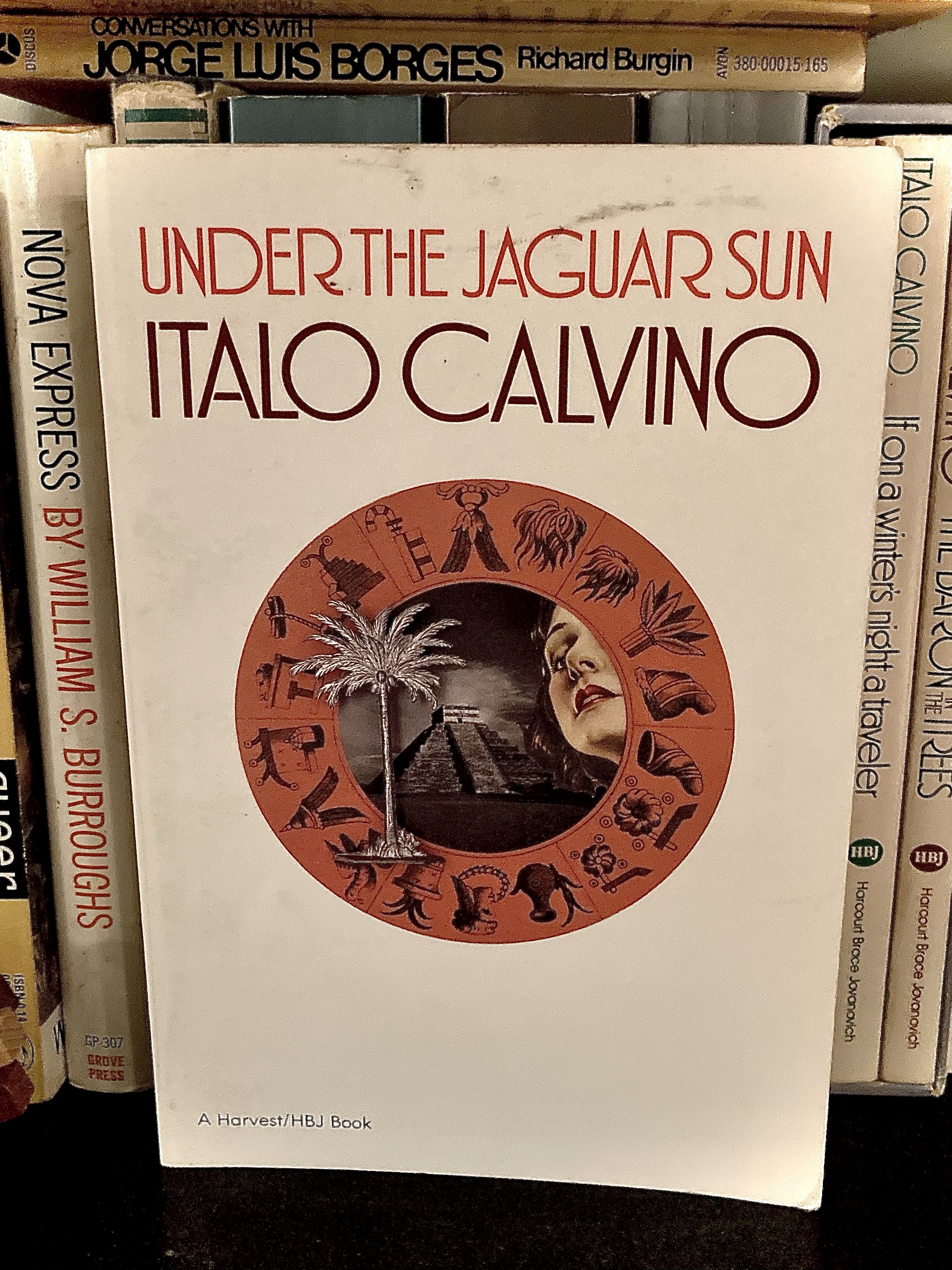
Darker sensations | A review of Italo Calvino’s Under the Jaguar Sun

I read Italo Calvino’s posthumous collection Under the Jaguar Sun over the past three days (in William Weaver’s 1988 translation). When I bought it last month I had no idea that it was a collection of stories (and not a novella), nor posthumous. I didn’t read the summary on the back. I just knew it was a thin Calvino I hadn’t read and I’ve been into thin reads lately. (I have two fat novels in translation staring me down from across the room as I write this. Their accusations linger.)

But Under the Jaguar Sun is posthumous, and it is a collection–a thin collection, sure, but the stories are strong. In her note at the end of the book, Esther Calvino offers the following:

In 1972 Calvino started writing a book about the five senses. At his death, in 1985, only three stories had been completed: “Under the Jaguar Sun,” “A King Listens,” and “The Name, the Nose.” Had he lived, this book would certainly have evolved into something quite different.

Esther Calvino suggests that Italo “would have provided a frame, as in If on a winter’s night a traveler, a frame that amounts to another novel, virtually a book in itself,” but concludes that the book should be read “simply as three stories written in different periods of his life.” That conclusion was the last thing I read in the book, which I think is fortunate–my reading wasn’t colored by a sense of lack, a sense of what could have been.

The first story, “Under the Jaguar Sun” (1982), is the strongest. The unnamed narrator and his companion Olivia (presumably his wife) are traveling through the state of Oaxaca in Mexico. They visit temples, soak in history, but mostly enjoy the food. “Under the Jaguar Sun” is the “taste” episode of Calvino’s would-be five senses novel, and at times the story reads like a gourmand’s travelogue. The couple, led by Olivia, seek newer, stranger flavors. Calvino’s narrator renders the gustatory titillation in fatty detail. Our boy gets his first taste of guac:

… we found guacamole, to be scooped up with crisp tortillas that snap into many shards and dip like spoons into the thick cream (the fat softness of the aguacate — the Mexican national fruit, known to the rest of the world under the distorted name of “avocado” — is accompanied and underlined by the angular dryness of the tortilla, which, for its part, can have many flavors, pretending to have none); then guajolote con mole poblano — that is, turkey with Puebla-style mole sauce, one of the noblest among the many moles, and most laborious (the preparation never takes less than two days), and most complicated, because it requires several different varieties of chile, as well as garlic, onion, cinnamon, cloves, pepper, cumin, coriander, and sesame, almonds, raisins, and peanuts, with a touch of chocolate; and finally quesa-dillas (another kind of tortilla, really, for which cheese is incorporated in the dough, garnished with ground meat and refried beans).

The real flavor the pair (again, led by Olivia) seems to truly hanker after though is, uh, human flesh. There’s a light parody of tourism happening in “Under the Jaguar Sun,” but the story’s core is cannibalism, victors and victims, the predatory past. Olivia repeatedly seeks to learn about “that flavor” — the flavor of humans sacrificed by Aztecs through ritual sacrifice. She even asks if the priests who oversaw the sacrifices left any recipes.

The cannibal motif slithers into the couple’s (perhaps-failing) relationship. The narrator imagines himself as a willing victim to his partner:

It was the sensation of her teeth in my flesh that I was imagining, and I could feel her tongue lift me against the roof of her mouth, enfold me in saliva, then thrust me under the tips of the canines. I sat there facing her, but at the same time it was as if a part of me, or all of me, were contained in her mouth, crunched, torn shred by shred. The situation was not entirely passive, since while I was being chewed by her I felt also that I was acting on her, transmitting sensations that spread from the taste buds through her whole body. I was the one who aroused her every vibration — it was a reciprocal and complete relationship, which involved us and overwhelmed us.

“Under the Jaguar Sun” is unusually dark for Calvino. The sinister pulse in the background and the enthralling unresolved mystery recall the work of one of Calvino’s descendents, Roberto Bolaño—or really any descendent of the Marquis de Sade.

The next story, “A King Listens” (1984) is also uncharacteristically dark for Calvino, although it is composed in the master’s standby, the second-person perspective. Here, the you is a king. Despite its shadowy contours, “A King Listens” finds Calvino in familiar territory, playing with semiotics:

A king is denoted by the fact that he is sitting on the throne, wearing the crown, holding the scepter. Now that these attributes are yours, you had better not be separated from them even for a moment.

That core anxiety—holding onto the attributes of rule, of the symbols and signs of kingness—form the backbone of the fevered plot. The You-King finds himself imperiled by the ever-present specter of a coup. And the ever-present threat of a coup is, of course, part and parcel of the kingness of being king.

“A King Listens” plays out like something out of Poe:

Your every attempt to get out of the cage is destined to fail: it is futile to seek yourself in a world that does not belong to you, that perhaps does not exist. For you there is only the palace, the great reechoing vaults, the sentries’ watches, the tanks that crunch the gravel, the hurried footsteps on the staircase which each time could be those announcing your end. These are the only signs through which the world speaks to you; do not let your attention stray from them even for an instant; the moment you are distracted, this space you have constructed around yourself to contain and watch over your fears will be rent, torn to pieces.

With its paranoid court intrigues and shadowy dream-logic, “A King Listens” reminded me very much of a sketch that might find its way into Mervyn Peake’s Gormenghast trilogy.

The last piece in Under the Jaguar Sun is “The Name, The Nose” is the shortest and earliest (1972). I imagine Calvino might have expanded (and improved on) it had he lived to see (taste smell feel hear) his five senses book to completion. The narrative trick behind the “The Name the Nose” is a fairly straightforward postmodern conceit: three narrators from different eras tell stories that are archetypically identical. Their stories are all versions of Cinderella, only told from the prince’s perspective. Oh, and that glass slipper is a very specific scent. We get a 17th. century French dandy, a 1960s rock star, and a caveman (had Calvino read William Golding’s The Inheritors?) all sniffing after a particular lady’s singular scent. Calvino’s conceit allows him to riff on anthropology and biology, and the conclusion seems to be that all of the manners, modes, and airs that we might put on doesn’t change the fact that we are beings who sense, who smell to survive and procreate. Our caveboy:

 Odor, that’s what each of us has that’s different from the others. The odor tells you immediately and certainly what you need to know. There are no words, there is no information more precise than what the nose receives.

The dark trajectory of each male pursuant is again Edgar Allan Poe territory, gothic ground. In the end, the odor that haunts them is death. (I wonder if Patrick Süskind read this story, which seems like a condensation of his novel Perfume.)

Under the Jaguar Sun is probably the darkest thing I’ve read by Calvino. The stories here suggest that human perception is inexorably linked to death and sex, and that attempts to turn those links into signs and symbols are survival mechanisms. There might not be a soul in this world. But perhaps the darker sensations here are really just senses evading signs, senses just sensing. The world is dark without sense; sensation illuminates darkness. That’s what Calvino has done here.

I don’t think this collection is the best introduction to Calvino for those interested (although I think anyone interested probably knows to start with If on a winter’s night a traveler or Invisible Cities—or, hey, listen to me, start with The Baron in the Trees). I think Under the Jaguar Sun does offer a different flavor, or scent, or tone to Calvino’s oeuvre, though, and I enjoyed my time in these tales.

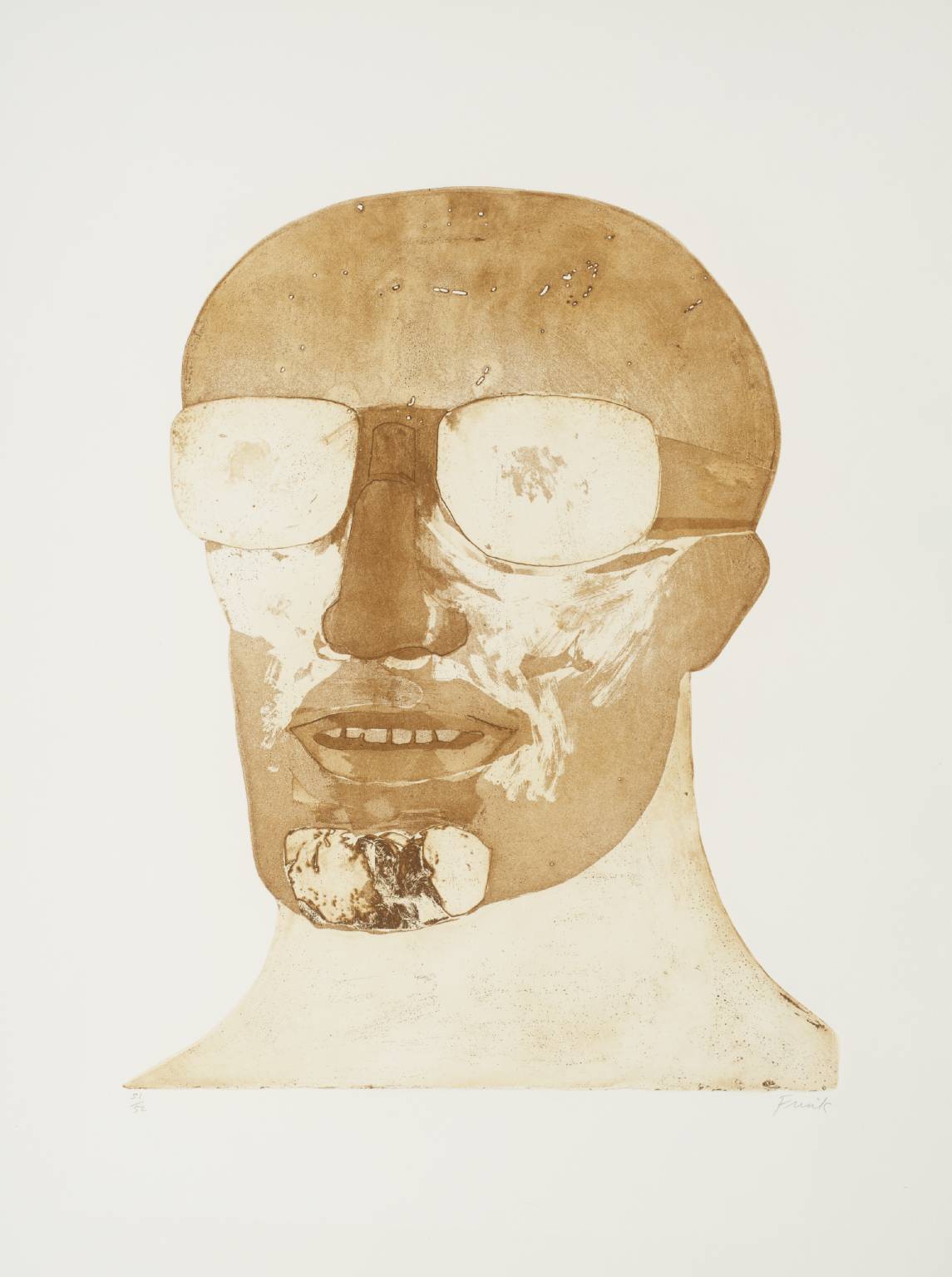
Goggled Head — Elisabeth Frink

Goggled Head, 1973 by Elisabeth Frink (1930-1993)

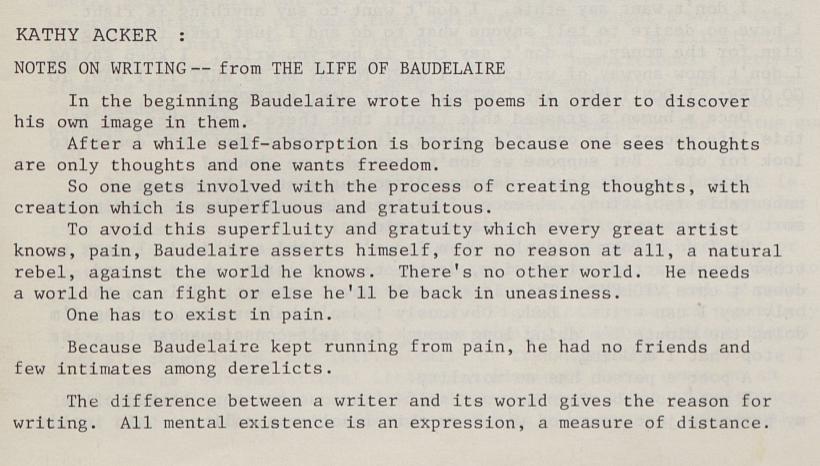
Baudelaire kept running from pain | Kathy Acker

Posted in Art

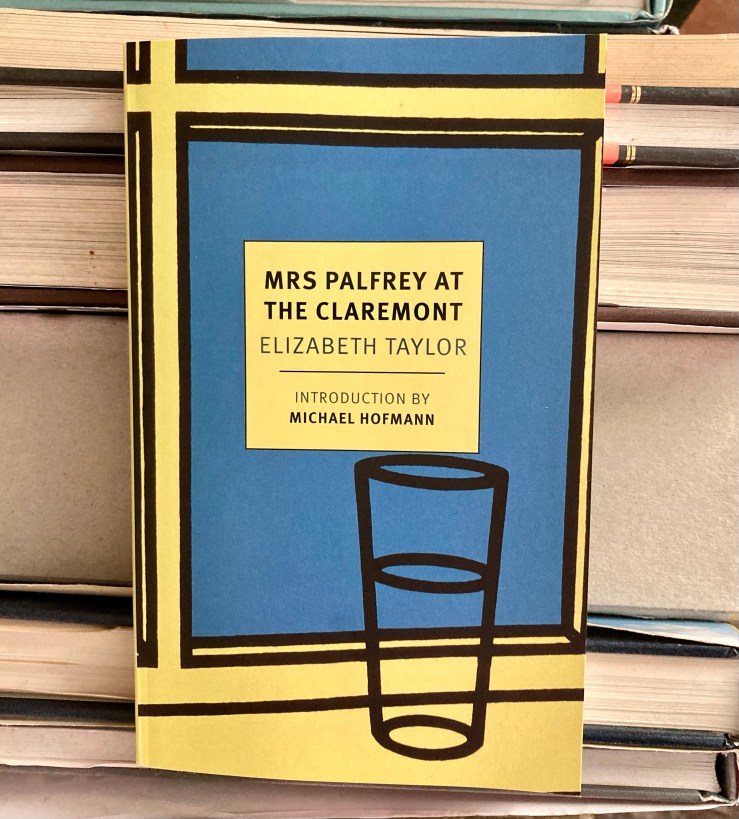
Elizabeth Taylor’s Mrs Palfrey at the Claremont (Book acquired, late Nov. 2021)

NYRB is reprinting the last novel of Elizabeth Taylor (not that one, the other one), Mrs Palfrey at the Claremont. NYRB’s blurb:

On a rainy Sunday afternoon in January, the recently widowed Mrs. Palfrey moves to the Claremont Hotel in South Kensington. “If it’s not nice, I needn’t stay,” she promises herself, as she settles into this haven for the genteel and the decayed. “Three elderly widows and one old man . . . who seemed to dislike female company and seldom got any other kind” serve for her fellow residents, and there is the staff, too, and they are one and all lonely. What is Mrs. Palfrey to do with herself now that she has all the time in the world? Go for a walk. Go to a museum. Go to the end of the block. Well, she does have her grandson who works at the British Museum, and he is sure to visit any day.

Mrs. Palfrey prides herself on having always known “the right thing to do,” but in this new situation she discovers that resource is much reduced. Before she knows it, in fact, she tries something else.

Elizabeth Taylor’s final and most popular novel is as unsparing as it is, ultimately, heartbreaking.

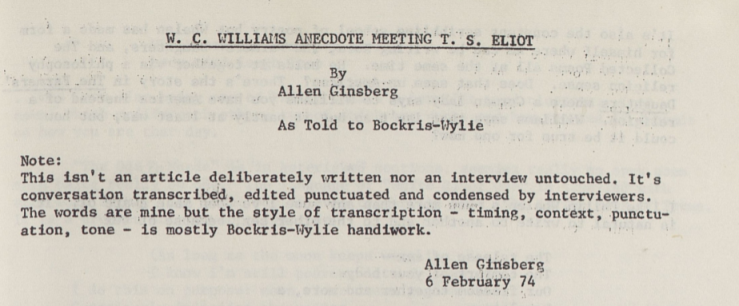
William Carlos Williams’ anecdote on meeting T.S. Eliot / by Allen Ginsberg / as told to Bockris-Wylie

W.C. Williams anecdote meeting T.S. Eliot

by

Allen Ginsberg

as told to Bockris-Wylie


Note: This isn’t an article deliberately written nor an interview untouched. It’s conversation transcribed, edited punctuated and condensed by interviewers. The words are mine but the style of transcription – timing, context, punctuation, tone – is mostly by Bockris–Wiley handiwork.

Allen Ginsberg

6 February 74

I never met Eliot, I just saw him reading at the Y once. Marianne Moore was in the audience and I remember him saying, “and now I have a request from somebody to read Dry Salvages, a request which is in command, coming from so distinguished a poet as Miss Moore, as it does.” Very elegant! And then he read some poems written thirty years before.

It was nice to hear him read them in person, but it was very diplomatic, he was too stiff, or much locked in a single image, it would have been interesting if he had had a little bit of Dali’s element of Surprise. I remember I told Robert Duncan when we (Orlovsky & Kerouac) were going to go and see Dali, and Duncan very sweetly said, “Please give him my respects, and say that he has always enchanted us as the genius of surprise.”

So it would have been interesting to see Eliot pulling out some element of surprise, like coming on the stage half–naked, wearing a grape fig haircut, or coming on dressed like a bishop or some kind of pope in drag, or in an 18th-century courtiers costume, or –improvising a poem right there on the stage. Something really astounding – would have been another Eliot.

Williams had a bony-nosed dislike of Eliot, characterized by Williams statement “Eliot was such a great genius he set American poetry back thirty years.”

What really pissed Williams off, Williams once told me, they met once, (and they’ve been rivals for the aesthetic affections of Pound) — and Williams said that Eliot was introduced to him: “Oh, Dr. Williams, how marvelous to meet you. I read many of your characters, you should write more of them. I do admire the characters you’ve done.” By characters he meant the old english form, it’s an outline of a person, a social picture sketch, character of the happy warrior, etc.

Williams said, “Why that son of a bitch! I’ve never heard . . . Completely patronizing!” I think Williams objection was that Eliot was trying to interpret Williams efforts in terms of English traditionalism — Eliot’s forms and formulas and terminalogic categories – rather than acknowledge the specific thing Williams was trying to do, which was to write something uncategorically American, raw eared and Rutherford-eyed

(That’s the only meeting they ever had apparently. And I don’t think it’s been recorded anywhere.)


This text was published in The World #29, April 1974. “Bockris-Wylie” refers to a writing partnership between Victor Brockis (whose Lou Reed biography is good trashy fun) and Andrew Wylie, who later became a powerful literary agent (I have gotten multiple takedown notices from the Wylie Agency in the past.

I have done my best to replicate the original typography of The World’s piece, including their complete disrespect of the possessive apostrophe.

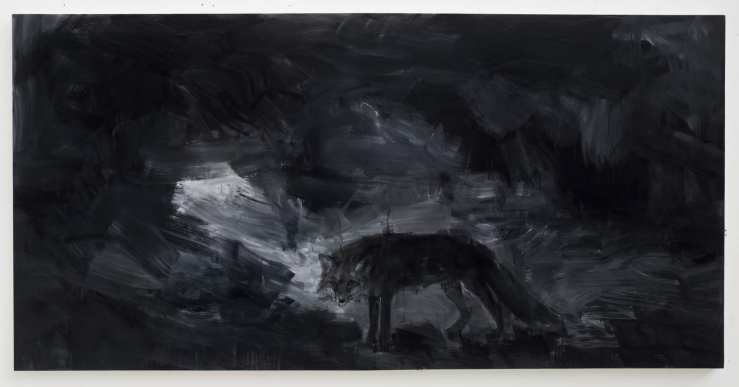
The Fox Cavern — Yan Pei–Ming

The Fox Cavern, 2020 by Yan Pei–Ming (b. 1960)

“After Some Lines of Goethe” — William H. Gass

Posted in Art

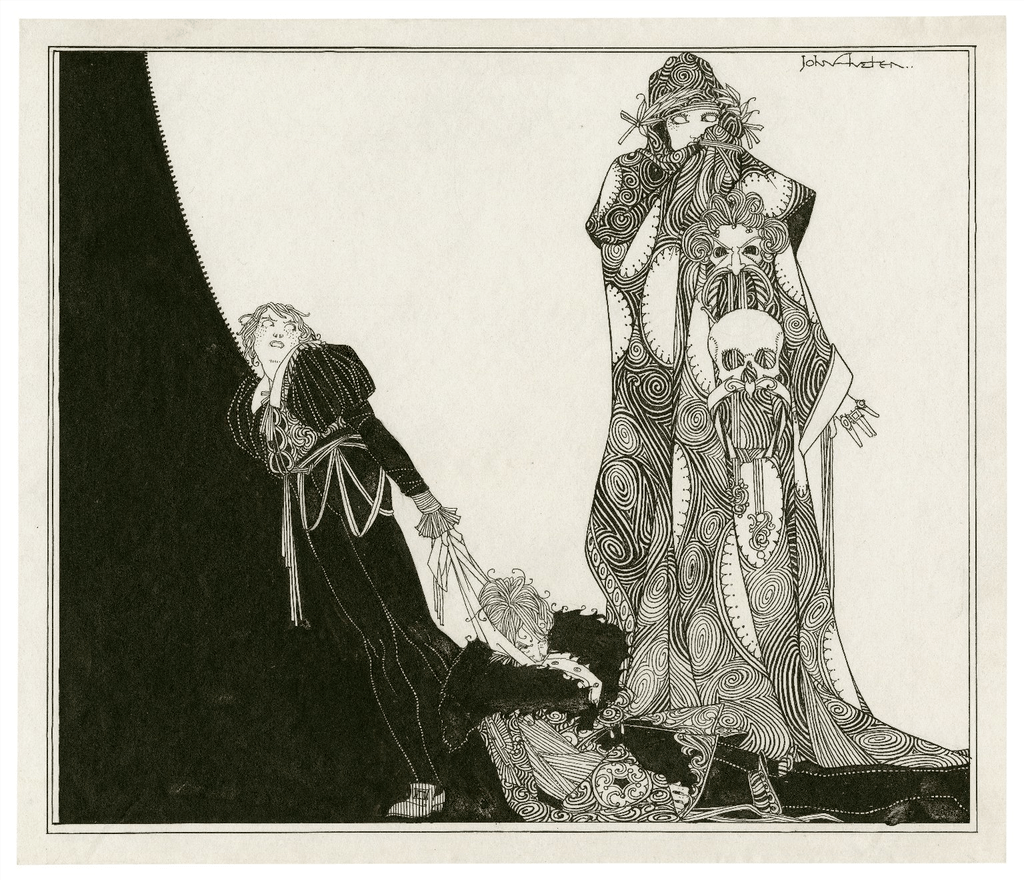
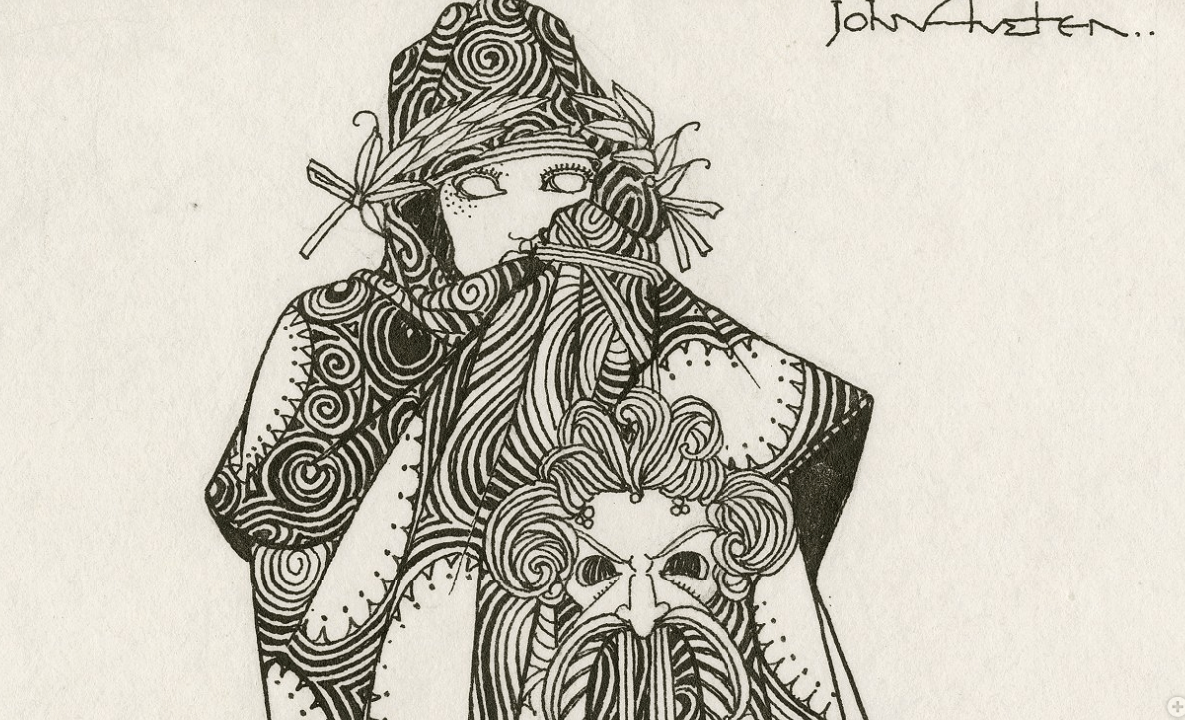
Hamlet — John Archibald Austen

Illustration for Shakespeare’s Hamlet, 1922 by John Archibald Austen (1886-1948)

“Early Cinema” — Elizabeth Alexander

“Early Cinema”

by

Elizabeth Alexander


According to Mister Hedges, the custodian
who called upon their parents
after young Otwiner and young Julia
were spotted at the matinee
of Rudolph Valentino in The Sheik
at the segregated Knickerbocker Theater
in the uncommon Washington December
of 1922, “Your young ladies
were misrepresenting themselves today,”
meaning, of course, that they were passing.
After coffee and no cake were finished
and Mister Hedges had buttoned his coat
against the strange evening chill,
choice words were had with Otwiner and Julia,
shame upon the family, shame upon the race.

How they’d longed to see Rudolph Valentino,
who was swarthy like a Negro, like the finest Negro man.
In The Sheik, they’d heard, he was turbaned,
whisked damsels away in a desert cloud.
They’d heard this from Lucille and Ella
who’d put on their fine frocks and French,
claiming to be “of foreign extraction”
to sneak into the Knickerbocker Theater
past the usher who knew their parents
but did not know them.
They’d heard this from Mignon and Doris
who’d painted carmine bindis on their foreheads
braided their black hair tight down the back,
and huffed, “We’ll have to take this up with the Embassy”
to the squinting ticket taker.
Otwiner and Julia were tired of Oscar Michaux,
tired of church, tired of responsibility,
rectitude, posture, grooming, modulation,
tired of homilies each way they turned,
tired of colored right and wrong.
They wanted to be whisked away.

The morning after Mister Hedges’ visit
the paperboy cried “Extra!” and Papas
shrugged camel’s hair topcoats over pressed pajamas,
and Mamas read aloud at the breakfast table,
“No Colored Killed When Roof Caves In”
at the Knickerbocker Theater
at the evening show
from a surfeit of snow on the roof.
One hundred others dead.

It appeared that God had spoken.
There was no school that day,
no movies for months after.

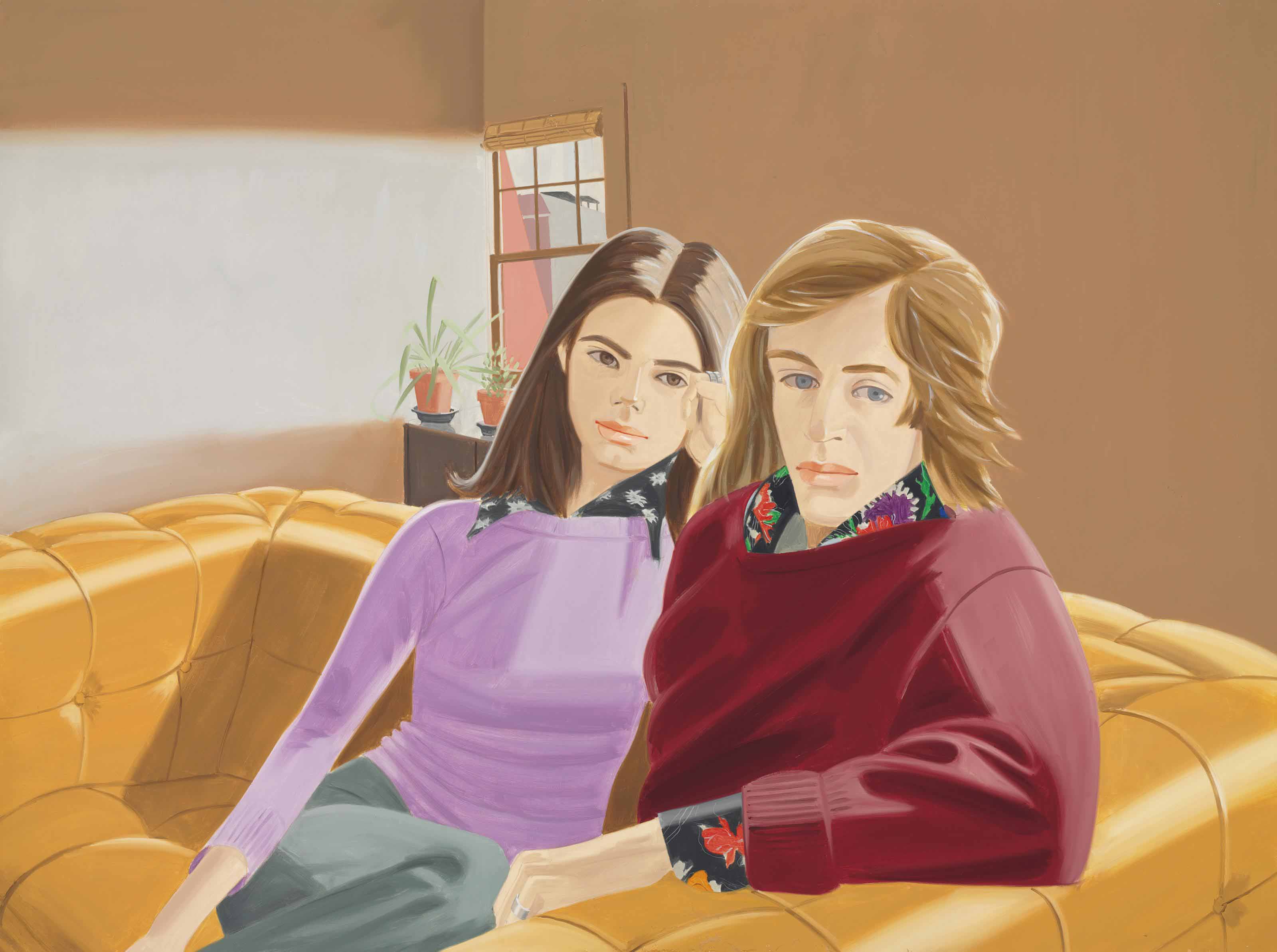
December — Alex Katz

December, 1974 by Alex Katz (b. 1927)

Read Stephen Crane’s story “The Five White Mice”

“The Five White Mice”

by

Stephen Crane


Freddie was mixing a cocktail. His hand with the long spoon was whirling swiftly, and the ice in the glass hummed and rattled like a cheap watch. Over by the window, a gambler, a millionaire, a railway conductor, and the agent of a vast American syndicate were playing seven-up. Freddie surveyed them with the ironica

l glance of a man who is mixing a cocktail.

From time to time a swarthy Mexican waiter came with his tray from the rooms at the rear, and called his orders across the bar. The sounds of the indolent stir of the city, awakening from its siesta, floated over the screens which barred the sun and the inquisitive eye. From the far-away kitchen could be heard the roar of the old French chef, driving, herding, and abusing his Mexican helpers.

A string of men came suddenly in from the street. They stormed up to the bar. There were impatient shouts. “Come, now, Freddie, don’t stand there like a portrait of yourself. Wiggle!” Drinks of many kinds and colors—amber, green, mahogany, strong and mild—began to swarm upon the bar, with all the attendants of lemon, sugar, mint, and ice. Freddie, with Mexican support, worked like a sailor in the provision of them, sometimes talking with that scorn for drink and admiration for those who drink which is the attribute of a good barkeeper.

At last a man was afflicted with a stroke of dice-shaking. A herculean discussion was waging, and he was deeply engaged in it, but at the same time he lazily flirted the dice. Occasionally he made great combinations. “Look at that, would you?” he cried proudly. The others paid little heed. Then violently the craving took them. It went along the line like an epidemic, and involved them all. In a moment they had arranged a carnival of dice-shaking, with money penalties and liquid prizes. They clamorously made it a point of honor with Freddie that he too should play, and take his chance of sometimes providing this large group with free refreshment. With bent heads, like football players, they surged over the tinkling dice, jostling, cheering, and bitterly arguing. One of the quiet company playing seven-up at the corner table said profanely that the row reminded him of a bowling contest at a picnic. Continue reading “Read Stephen Crane’s story “The Five White Mice””

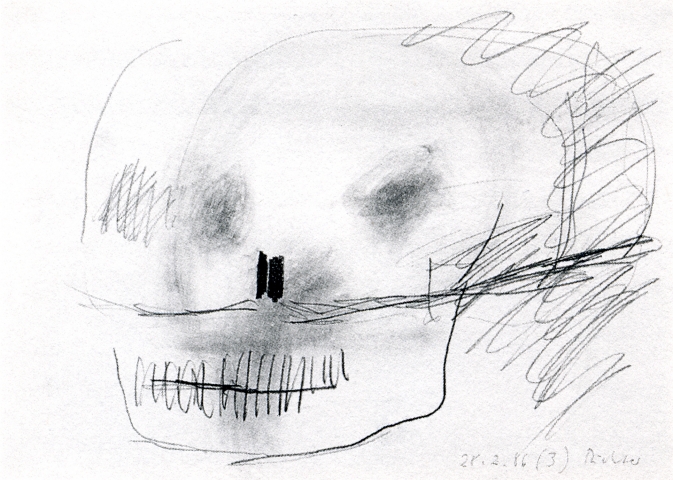
28.2.86 (3) — Gerhard Richter


28.2.86 (3), 1986 by Gerhard Richter (b. 1932)

Coxcomb not to die in it | Stephen Crane

We picture the world as thick with conquering and elate humanity, but here, with the bugles of the tempest pealing, it was hard to imagine a peopled earth. One viewed the existence of man then as a marvel, and conceded a glamour of wonder to these lice which were caused to cling to a whirling, fire-smote, ice-locked, disease-stricken, space-lost bulb. The conceit of man was explained by this storm to be the very engine of life. One was a coxcomb not to die in it.

From Stephen Crane’s long short story/short novella “The Blue Hotel,” which I reread this afternoon, and which I think is a rather perfect specimen.

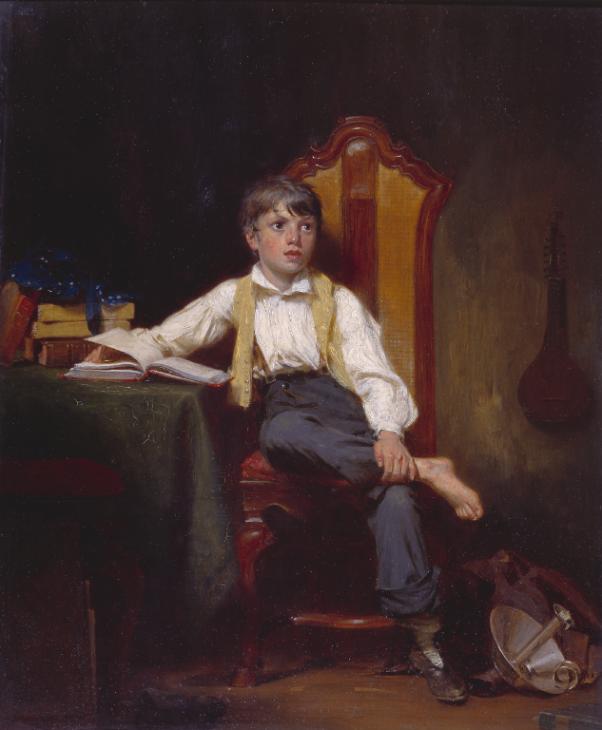
Study of a Boy — Thomas Sword Good

Study of a Boy by Thomas Sword Good (1789-1872)

“Being in Plays” — Ed Skoog

“Being in Plays”

by

Ed Skoog


Ethics are learned from who you sleep with
the first few times, and theater is sex,
almost. Being in it, I mean, and being young,
with a lot of group undressing
and silence in darkness, chaste
permissions of the cast party,
spiked punch in the recreation room.
I was always cast as Old Man
with tennis-shoe polish for white hair
and lines drawn where my lines now are,
forehead haiku, the eyes’ briffits,
and parentheses around the muzzle.
I guess I miss it, achievement’s sense,
the way a show’s run ends
and everyone knows it together,
a social pain, like the death
of a popular imaginary friend.
When lights between scenes dim,
I like to see actors take props offstage
or team up with stagehands to move
the built elements of our fantasy.
I hope they keep going, and sneak
some of the properties home to mix in
with their private dramas. I pass theaters
the way I pass churches, but like
better this foldable theater
half-constructed in the mind,
sometimes thrown away
along with the day’s receipts.
Nothing’s lost. I carry my own
props in—red telephone,
bowl of apples—and then with me draw
back into the unseen.