There is a wisdom that is woe; but there is a woe that is madness | Moby-Dick

Look not too long in the face of the fire, O man! Never dream with thy hand on the helm! Turn not thy back to the compass; accept the first hint of the hitching tiller; believe not the artificial fire, when its redness makes all things look ghastly. To-morrow, in the natural sun, the skies will be bright; those who glared like devils in the forking flames, the morn will show in far other, at least gentler, relief; the glorious, golden, glad sun, the only true lamp—all others but liars!

Nevertheless the sun hides not Virginia’s Dismal Swamp, nor Rome’s accursed Campagna, nor wide Sahara, nor all the millions of miles of deserts and of griefs beneath the moon. The sun hides not the ocean, which is the dark side of this earth, and which is two thirds of this earth. So, therefore, that mortal man who hath more of joy than sorrow in him, that mortal man cannot be true—not true, or undeveloped. With books the same. The truest of all men was the Man of Sorrows, and the truest of all books is Solomon’s, and Ecclesiastes is the fine hammered steel of woe. “All is vanity.” ALL. This wilful world hath not got hold of unchristian Solomon’s wisdom yet. But he who dodges hospitals and jails, and walks fast crossing graveyards, and would rather talk of operas than hell; calls Cowper, Young, Pascal, Rousseau, poor devils all of sick men; and throughout a care-free lifetime swears by Rabelais as passing wise, and therefore jolly;—not that man is fitted to sit down on tomb-stones, and break the green damp mould with unfathomably wondrous Solomon.

But even Solomon, he says, “the man that wandereth out of the way of understanding shall remain” (i.e., even while living) “in the congregation of the dead.” Give not thyself up, then, to fire, lest it invert thee, deaden thee; as for the time it did me. There is a wisdom that is woe; but there is a woe that is madness. And there is a Catskill eagle in some souls that can alike dive down into the blackest gorges, and soar out of them again and become invisible in the sunny spaces. And even if he for ever flies within the gorge, that gorge is in the mountains; so that even in his lowest swoop the mountain eagle is still higher than other birds upon the plain, even though they soar.

From Ch. 96 of Moby-Dick by Herman Melville.

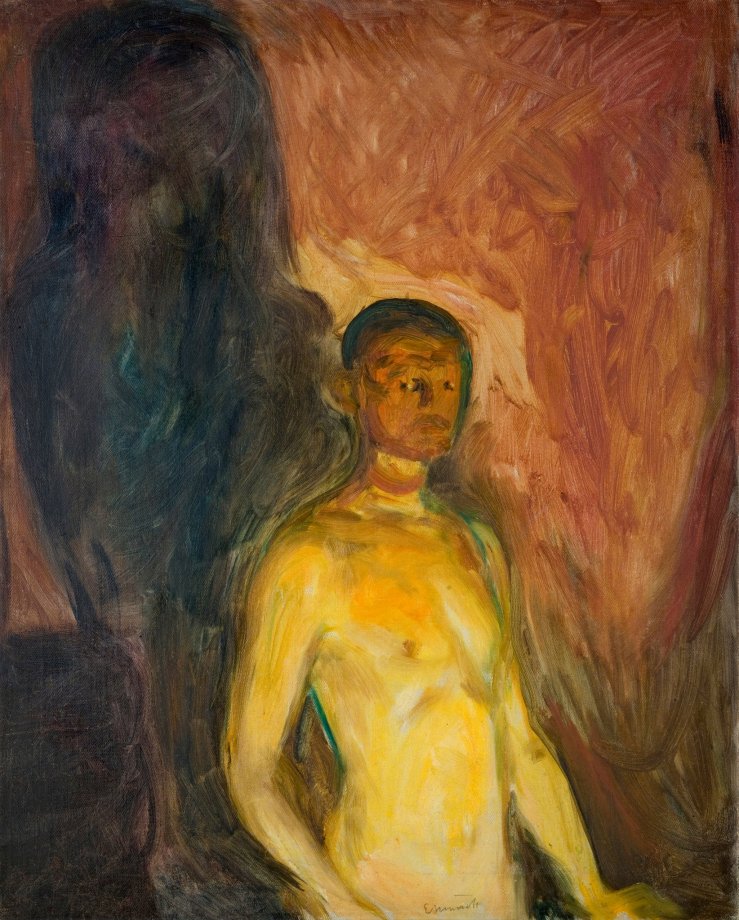
Self Portrait in Hell — Edvard Munch

Self Portrait in Hell, 1903 by Edvard Munch (1863–1944)

North (1971 Ford Torino) — Eric White

North (1971 Ford Torino), 2020 by Eric White (b. 1968)

“The Death of Me” — Gordon Lish

“The Death of Me”

by

Gordon Lish


I wanted to be amazing. I wanted to be so amazing. I had already been amazing up to a certain point. But I was tired of being at that point. I wanted to go past that point. I wanted to be more amazing than I had been up to that point. I wanted to do something which went beyond that point and which went beyond every other point and which people would look at and say that this was something which went beyond all other points and which no other boy would ever be able to go beyond, that I was the only boy who could, that I was the only one.

I was going to a day camp which was called the Peninsula Athletes Day Camp and which at the end of the summer had an all-campers, all-parents, all-sports field day which was made up of five different field events, and all of the campers had to take part in all five of all of the five different field events, and I was the winner in all five of the five different field events, I was the winner in every single field event, I came in first place in every one of the five different field events — so that the head of the camp and the camp counselors and the other campers and the other mothers and the other fathers and my mother and my father all saw that I was the best camper in the Peninsula Athletes Day Camp, the best in the short run and the best in the long run and the best in the high jump and the best in the broad jump and the best in the event which the Peninsula Athletes Day Camp called the ball-throw, which was where you had to go up to a chalk line and then put your toe on the chalk line and not go over the chalk line and then go ahead and throw the ball as far as you could throw.

I did.

I won.

It was 1944 and I was ten years old and I was better than all of the other boys at that camp and probably all of the boys at any other camp and all of the boys everywhere else.

I felt more wonderful than I had ever felt. I felt so thrilled with myself. I felt like God was whispering things to me inside of my head to me. I felt like God was asking me for me to have a special secret with him or for me to have a secret arrangement with him and that I had better keep on listening to his secret recommendations to me inside of my head. I felt like God was telling me to realize that he had made me the most unusual member of the human race and that he was going to need for me to be ready for him for me to go to work for him at any minute for him on whatever thing he said.

They gave me a piece of stiff cloth which was in the shape of a shield and which was in the camp colors and which had five blue stars on it. They said that I was the only boy ever to get a shield with as many as that many stars on it. They said that it was unheard-of for any boy ever to get as many as that many stars on it. But I could already feel that I was forgetting what it felt like for somebody to do something which would get you a shield with as many as that many stars on it. I could feel myself forgetting and I could feel everybody else forgetting — even my mother and father and God forgetting. It was just a little while afterwards, but I could tell that everybody was already forgetting everything about it — that the head of the camp was and the camp counselors were and the other campers were and that the other mothers and the other fathers were and that my mother and my father were and that even that I myself was, even though I was trying with all of my might for me to be the one person who never would.

I felt like God was ashamed of me. I felt like God was sorry that I was the one which he had picked out and that he was getting ready for him to make a new choice and for him to choose another boy instead of me and that I had to hurry up before God did it, that I had to be quick about showing God that I could be just as amazing again as I used to be and that I could do something, do anything, else.

It was August.

I was feeling the strangest feeling that I have ever felt. I was standing there with my parents and with all of the people who had come there for the field day and I was feeling the strangest feeling which I have ever felt.

I felt like lying down on the field. I felt like killing all of the people. I felt like going to sleep and staying asleep until someone came and told me that my parents were dead and that I was all grown up and that there was a new God in heaven and that he liked me better than even than the old God had.

My parents kept asking me where did I want to go now and what did I want to do. My parents kept trying to get me to tell them where I thought we should all of us go now and what was the next thing for us as a family to do. My parents kept saying they wanted for me to be the one to make up my mind if we should all of us go someplace special now and what was the best thing for the family, as a family, to do. But I did not know what they meant — do, do, do?

My father took the shield away from me and held it in his hands and kept turning it over in his hands and kept looking at the shield in his hands and kept feeling the shield with his hands and kept saying that it was made of buckram and of felt. My father kept saying did we know that it was just something which they had put together out of buckram and of felt. My father kept saying that the shield was of a very nice quality of buckram and of felt but that we should make every effort for us not to ever get it wet because it would run all over itself, buckram and felt.

I did not know what to do.

I could tell my parents did not know what to do.

We just stood around with the people all around all going away to all of the vehicles that were going to take them to places and I could tell that we did not, as a family, know if it was time for us to go.

The head of the camp came over and said that he wanted to shake my hand again and to shake the hands of the people who were responsible for giving the Peninsula Athletes Day Camp such an outstanding young individual and such a talented young athlete as my mother and father had.

He shook my hand again.

It made me feel dizzy and nearly asleep.

I saw my mother and my father get their hands ready. I saw my father get the shield out of the hand that he thought he was going to need for him to have his hand ready to shake the hand of the head of the camp. I saw my mother take her purse and do the same thing. But the head of the camp just kept shaking my hand, and my mother and my father just kept saying thank you to him, and then the head of the camp let go of my hand and took my father’s elbow with one hand and then touched my father on the shoulder with the other hand and then said that we were certainly the very finest of people, and then — he did this, he did this! — and then he went away.

“November for Beginners” — Rita Dove

“November for Beginners”

by

Rita Dove


Snow would be the easy
way out—that softening
sky like a sigh of relief
at finally being allowed
to yield. No dice.
We stack twigs for burning
in glistening patches
but the rain won’t give.

So we wait, breeding
mood, making music
of decline. We sit down
in the smell of the past
and rise in a light
that is already leaving.
We ache in secret,
memorizing

a gloomy line
or two of German.
When spring comes
we promise to act
the fool. Pour,
rain! Sail, wind,
with your cargo of zithers!

Halloween is over (Peanuts)

October’s Gone… Goodnight — Barkley L. Hendricks

October’s Gone… Goodnight, 1973 by Barkley L. Hendricks (1945-2017)

Binge watch Garth Marenghi’s Darkplace this Halloween (all six episodes and more)

With bonus Illuminatum!

And season one with “cast” commentary:

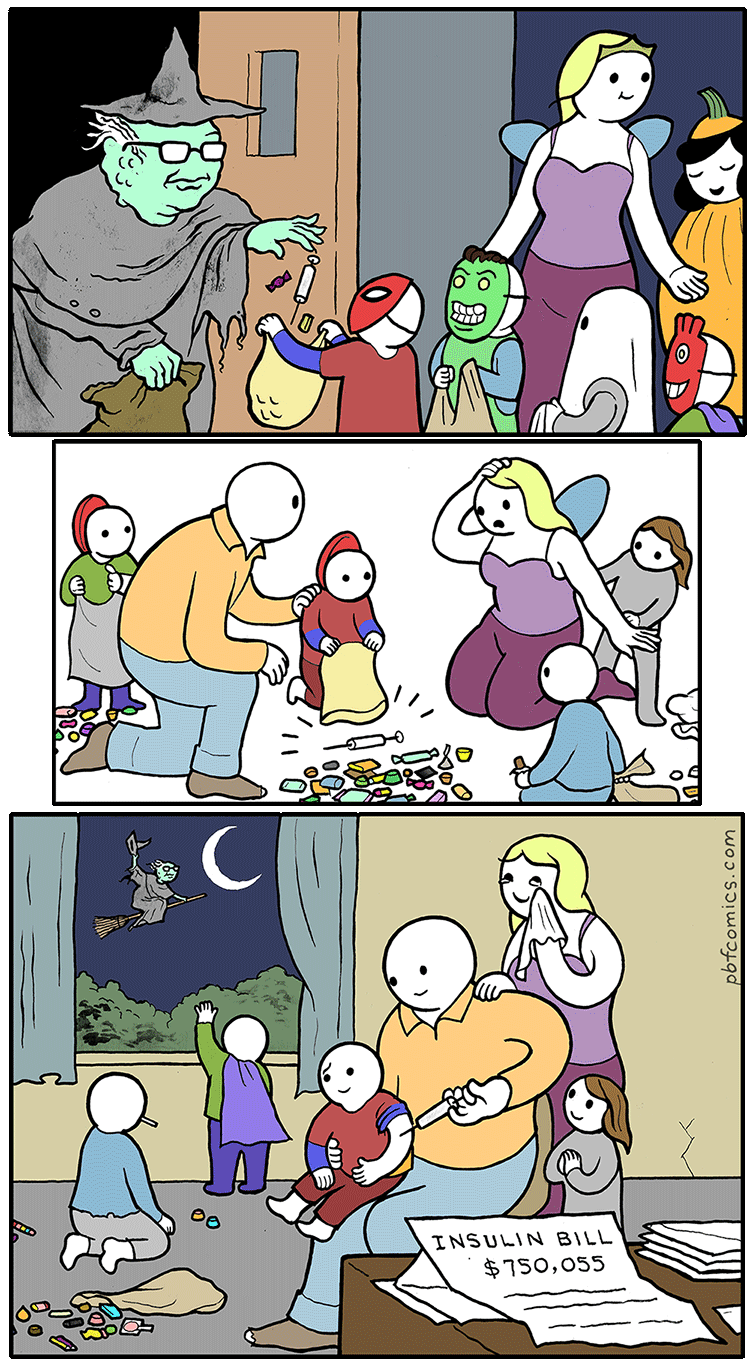
The Treat (Perry Bible Fellowship)

Homer Thing (Bernie Wrightson)

Bernie Wrightson’s Homer Simpson-as-Swamp Thing illustration.

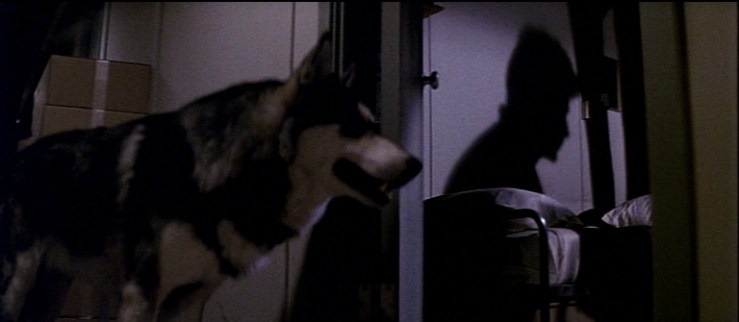
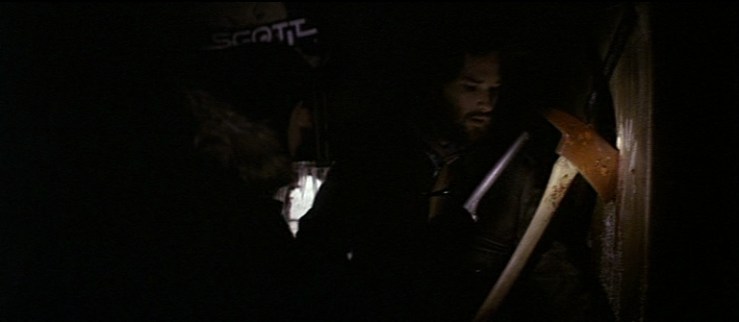
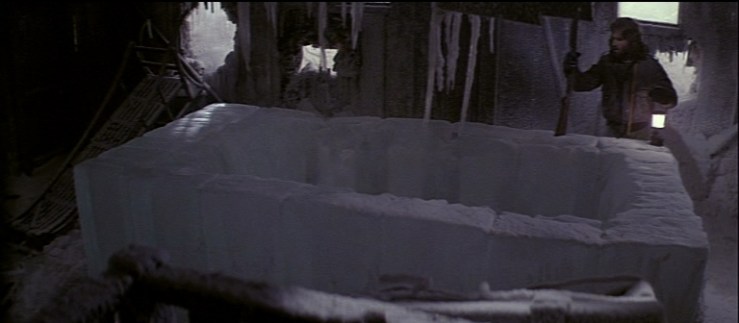
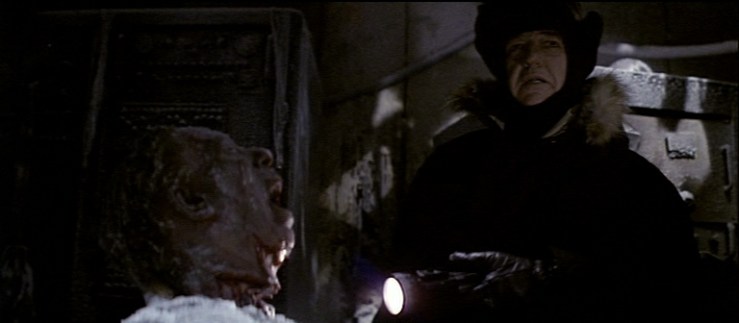
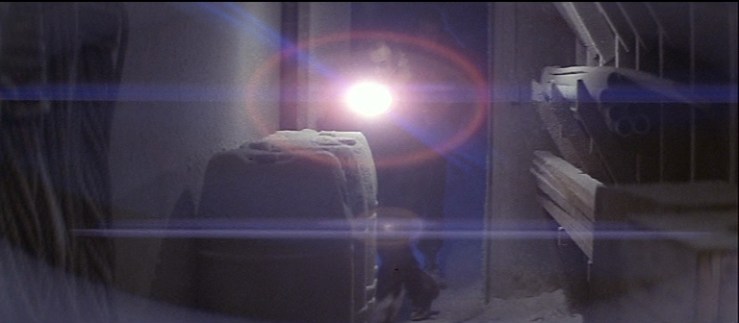
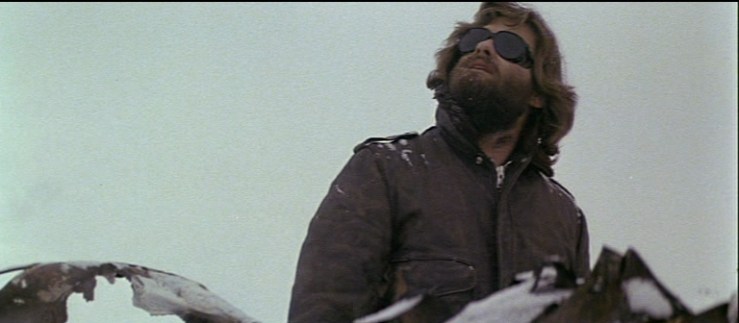
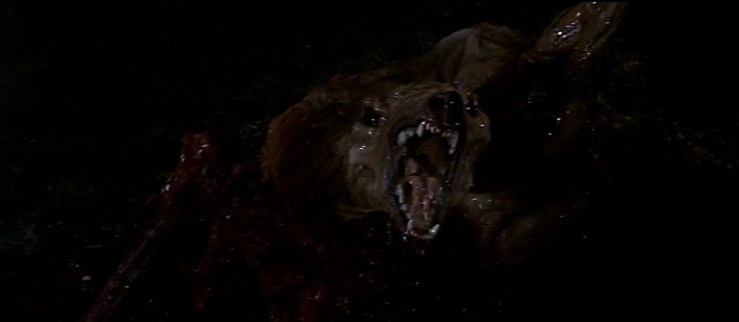
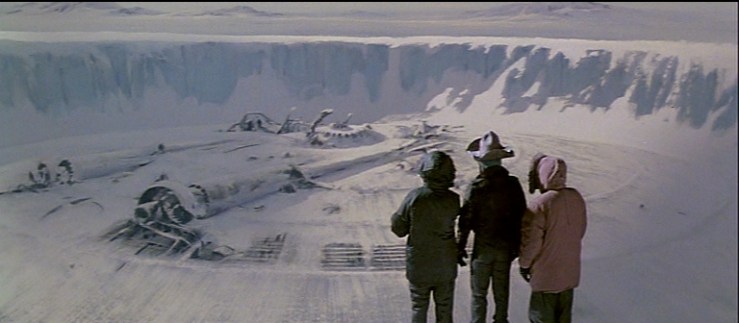
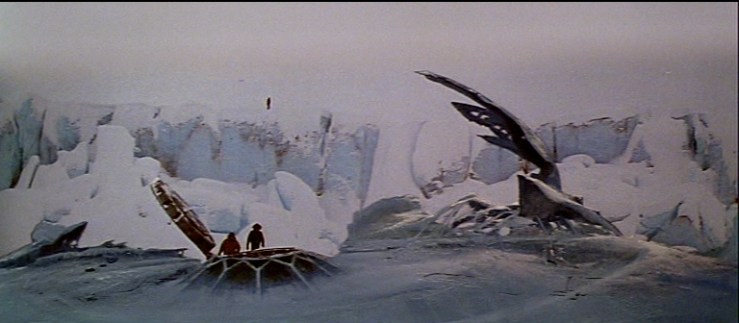
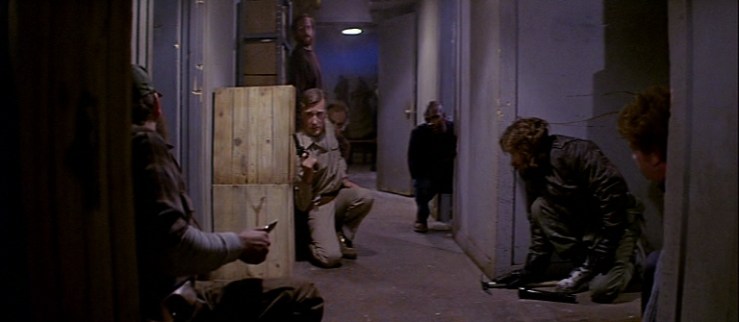
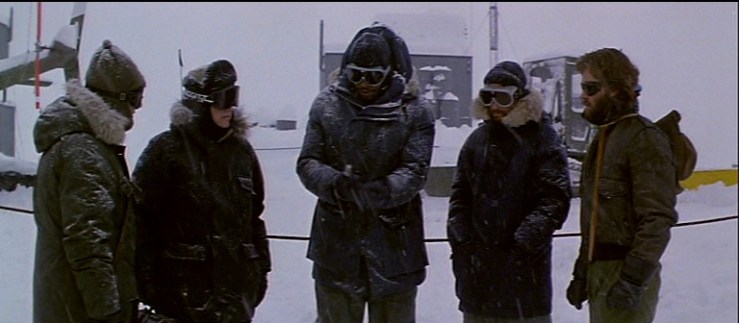
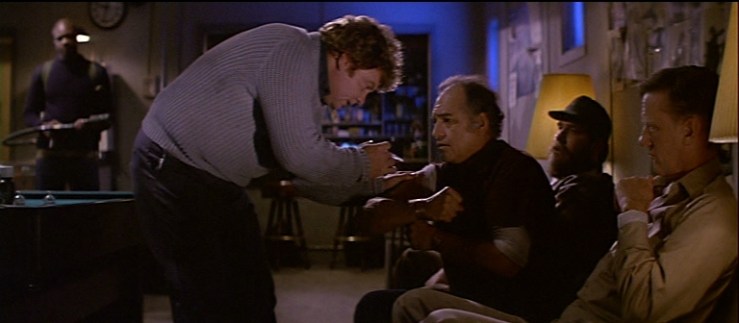
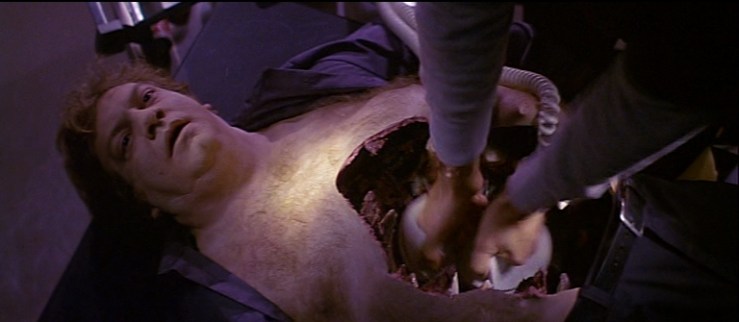
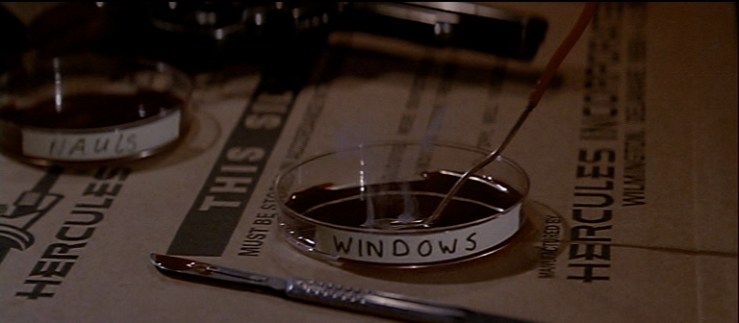
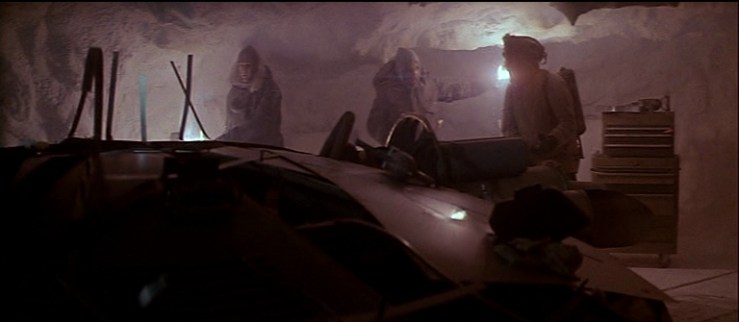
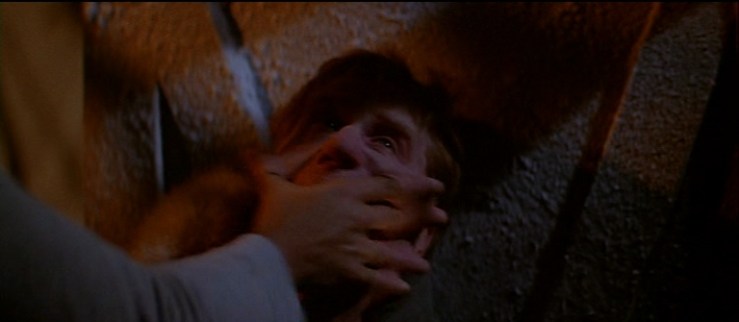
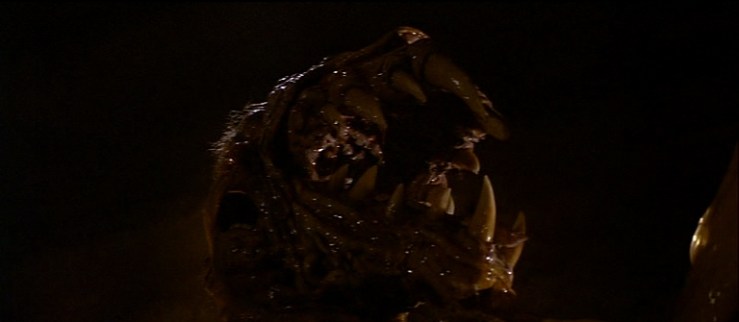
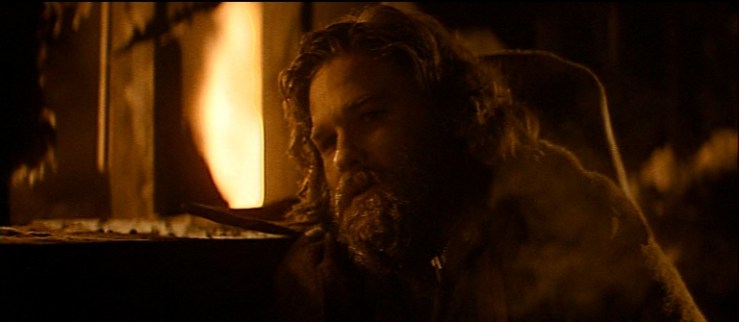
25 still frames from John Carpenter’s The Thing

From The Thing, 1982. Directed by John Carpenter; cinematography by Dean Cundey. Via FilmGrab.

Blog about The Orange Eats Creeps, Grace Krilanovich’s Slutty Teenage Hobo Vampire Junkies novel

Hey, it’s Halloween, spooky times, dark times, right? So here’s a novel recommendation: Grace Krilanovich’s “Slutty Teenage Hobo Vampire Junkies” novel The Orange Eats Creeps.

Here is the first paragraph of The Orange Eats Creeps:

The sun is setting. The hobo vampires are waking up, their quest for crank and blood is just beginning. Over the course of the frigid night they will roam the area surrounding the train stop looking for warm bodies to suck, for cough syrup to fuel a night of debauched sexual encounters with fellow vampires and mortals alike. They distribute sexually transmitted diseases like the daily newspaper but they will never succumb, they will never die, just aging into decrepit losers inside a teenage shell. They have a sense of duty to their habit and their climax — twin addictions that inform their every move. They are lusty, sad creatures, these Slutty Teenage Hobo Vampire Junkies. They traverse the Pacific Northwest’s damp, shitty countryside, forests and big trees, the dusty fields and gravel pits clearing a path of desolation parallel to the rail lines of Oregon and Washington, the half-blown-out signs for supermarket chains in strip malls featuring exactly one nail place, one juice-slash-coffee place, and one freshmex-type grill chain restaurant. Here everything is coated in brown-grey paste like moss at the bottom of a crappy tree…

Krilanovich’s novel is coated in brown-grey paste, an accumulation of scum and cum and blood, a vampiric solution zapped by orange bolts of sex, pain, drugs, and rocknroll. It’s a riot grrrl novel, a psychobilly novel, a crustgoth novel. It’s a fragmented, ugly, revolting mess and I loved it. The Orange Eats Creeps is “A vortex of a novel,” as Steve Erickson puts it in his introduction, that will alternately suck in or repel readers.

The vortex of The Orange Eats Creeps recalls another black hole, Charles Burns’s Black Hole, also set in the Pacific Northwest, also crawling through subcultural punk detritus. Visually and thematically, there are also echoes of Kathryn Bigelow’s 1987 film Near Dark, Tim Hunter’s 1986 film River’s Edge, and Harmony Korine’s 1997 film Gummo. (And yeah, I’m sure a long essay could be worked out in the ways that this book grimes the gilt glam from Joel Schumacher’s 1987 film The Lost Boys.)

As a prose stylist, Krilanovich recalls Kathy Acker or William Burroughs, and the vomitiness and abject bodiness of it all is reminiscent of Julia Kristeva’s theory. Krilanovich’s style seems to have roots in punk rock, in zines, and cut-ups, in theft and weird Xerox collages. The novel is fragmentary, random. We’re trapped—trapped?—in the narrator’s ESP-consciousness, zipping through time and space, drugged out, immortal, wishing to nullify time and space, to achieve a comforting and insensate zero.

All the shooting galleries and basement punk shows and drugstore robberies and gallon buckets of cold coffee won’t be everyone’s cup of tea. Readers looking for a tightly-plotted vampire novel will find themselves frustrated. The lore here is a separate lore: foster families and parking lots and quick scores and quicker sex. The world is boxcars and group homes and 7-Elevens. But there’s plenty of weirdness: vampire boys, punk rock legends and would-be legends, a warlock, a serial killer called Dactyl, the Donner Party, and ESP, ESP, ESP. There’s a core quest: The narrator searches for her sister. Maybe the quest is a metaphor; hell, maybe vampirism itself is a metaphor in The Orange Eats Creeps. It doesn’t matter.

What matters is the aesthetic impression, a swirl of images, words, and motifs coagulating around the reader’s mind’s eye. The Orange Eats Creeps is a survey of consciousness in crisis—the crisis of late capitalism, with vampires making their way through a gig economy, addicted, transient, desperate, enthralled to a particularly Western weirdness. It doesn’t all work, but who cares? Good gross stuff.

“Concerning the Dead” — Zora Neale Hurston

img_2990

“Concerning the Dead”

by

Zora Neale Hurston

from Mules and Men


There are many superstitions concerning the dead.

All over the South and in the Bahamas the spirits of the dead have great power which is used chiefly to harm. it Will be noted how frequently graveyard dust is required in the practice of hoodoo, goofer dust as it is often called.

It is to be noted that in nearly all of the killing ceremonies the cemetery is used.

The Ewe-speaking peoples of the west coast of Africa all make offerings of food and drink ?particularly libations of palm wine and banana beer upon the graves of the ancestor. It is to be noted in America that the spirit is always given a pint of good whiskey. He is frequently also paid for his labor in cash.

It is well known that church members are buried with their feet to the east so that they will arise on that last day facing the rising sun. Sinners are buried facing the opposite direction. The theory is that sunlight will do them harm rather than good, as they will no doubt wish to hide their faces from an angry God.

Ghosts cannot cross water?so that if a hoodoo doctor wishes to sic a dead spirit upon a man who lives across water, he must first hold the mirror ceremony to fetch the victim from across the water.

People who die from the sick bed may walk any night, but

Friday night is the night of the people who died in the dark who were executed. These people have never been in the light.

They died with the black cap over the face. Thus, they are blind. On Friday nights they visit the folks who died from sick beds and they lead the blind ones wherever they wish to visit.

Ghosts feel hot and smell faintish. According to testimony all except those who died in the dark may visit their former homes every night at twelve o’clock. But they must be back in the cemetery at two o’clock sharp or they will be shut out by the watchman and must wander about for the rest of the night. That is why the living are frightened by seeing ghosts at times. Some spirit has lingered too long with the living person it still loves and has been shut out from home.

Pop Drummond of Fernandina, Fla., says they are not asleep at all. They “Sings and has church and has a happy time, but some are spiteful and show themselves to scare folks.” Their voices are high and thin. Some ghosts grow very fat if they get plenty to eat. They are very fond of honey. Some who have been to the holy place wear seven?starred crowns and arc very “suscautious” and sensible.

Dirt from sinners’ graves is supposed to be very powerful, but some hoodoo doctors will use only that from the graves of infants. They say that the sinner’s grave is powerful to kill, but his spirit is likely to get unruly and kill others for the pleasure of killing. It is too dangerous to commission.

The spirit newly released from the body is likely to be destructive. This is why a cloth is thrown over the face of a clock in the death chamber and the looking glass is covered over. The clock will never run again, nor will the mirror ever cast any more reflections if they are not covered so that the spirit cannot see them.

When it rains at a funeral it is said that God wishes to wash their tracks off the face of the earth, they were so displeasing to him.

If a murder victim is buried in a sitting position, the murderer will be speedily brought to justice. The victim sitting before the throne is able to demand that justice be done. If he is lying prone he cannot do this.

A fresh egg in the hand of a murder victim will prevent the murderer’s going far from the scene. The egg represents life, and so the dead victim is holding the life of the murderer in his hand.

Sometimes the dead are offended by acts of the living and slap the face of the living. When this happens, the head is slapped one?sided and the victim can never straighten his neck. Speak gently to ghosts, and do not abuse the children of the dead.

It is not good to answer the first time that your name is called. It may be a spirit and if you answer it, you will die shortly. They never call more than once at a time, so by waiting you will miss probable death.

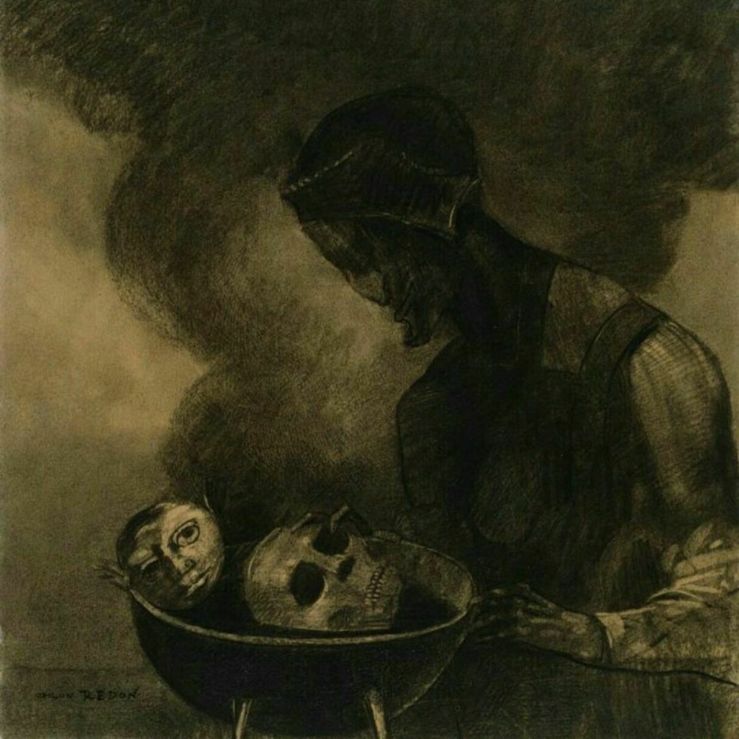
Cauldron of the Sorceress — Odilon Redon

Cauldron of the Sorceress, 1879 by Odilon Redon (1840-1916)

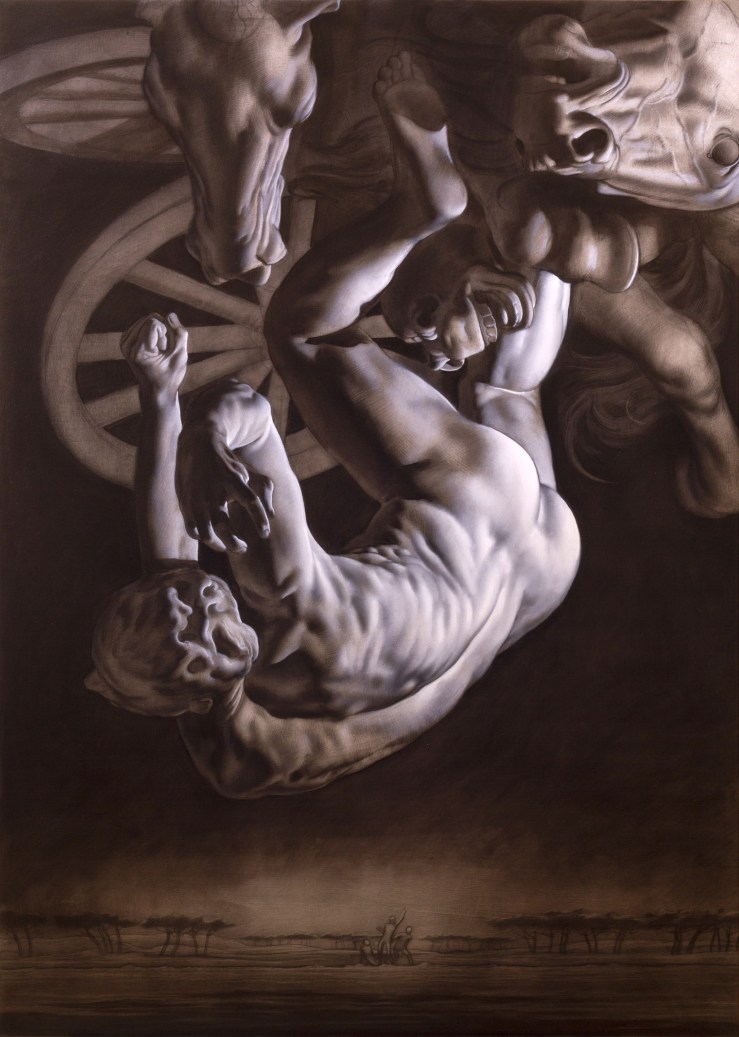
Phaeton — Nicola Verlato

Phaeton, 2020 by Nicola Verlato (b. 1965)

“Who Needs Poets?” — Jorge Luis Borges

“Who Needs Poets?”

by

Jorge Luis Borges


The poet’s trade, the writer’s trade, is a strange one. Chesterton said: “Only one thing is needful–everything.” To a writer this everything is more than an encompassing word; it is literal. It stands for the chief, for the essential, human experiences. For example, a writer needs loneliness, and he gets his share of it. He needs love, and he gets shared and also unshared love. He needs friendship. In fact, he needs the universe. To be a writer is, in a sense, to be day-dreamer–to be living a kind of double life.

I published my first book, Fervor de Buenos Aires way back in 1923. This book was not in praise of Buenos Aires; rather, I tried to express the way I felt about my city. I know that I then stood in need of many things, for though at home I lived in a literary atmosphere–my father was a man of letters–still, that was not enough. I needed something more, which I eventually found in friendships and in literary conversation.

What a great university should give a young writer is precisely that: conversation, discussion, the art of agreeing, and, what is perhaps most important, the art of disagreeing. Out of all this, the moment may come when the young writer feels he can make his emotions into poetry. He should begin, of course, by imitating the writers he likes. This is the way the writer becomes himself through losing himself–that strange way of double living, of living in reality as much as one can and at the same time of living in that other reality, the one he has to create, the reality of his dreams.

This is the essential aim of the writing program at Columbia University’s School of the Arts. I am speaking in behalf of the many young men and women at Columbia who are striving to be writers, who have not yet discovered the sound of their own voices. I have recently spent two weeks here, lecturing before eager student writers. I can see what these workshops mean to them; I can see how important they are for the advancement of literature. In my own land, no such opportunities are given to young people.

Let us think of the still nameless poets, still nameless writers, who should be brought together and kept together. I am sure it is our duty to help these future benefactors to attain that final discovery of themselves which makes for great literature. Literature is not a mere juggling of words; what matters is what is left unsaid, or what may be read between the lines. Were it not for this deep inner feeling, literature would be no more than a game, and we all know that it can be much more than that.

We all have the pleasures of the reader, but the writer has also the pleasure and the task of writing. This is not only a strange but a rewarding experience. We owe all young writers the opportunity of getting together, of agreeing or disagreeing, and finally of achieving the craft of writing.


This essay, adapted from a lecture Borges delivered at Columbia University’s School of the Arts, was published in the 8 May 1971 issue of The New York Times

“hist whist” — e.e. cummings

“hist whist”

by

e.e. cummings


hist      whist
little ghostthings
tip-toe
twinkle-toe
little twitchy
witches and tingling
goblins
hob-a-nob     hob-a-nob
little hoppy happy
toad in tweeds
tweeds
little itchy mousies
with scuttling
eyes    rustle and run     and
hidehidehide
whisk
whisk     look out for the old woman
with the wart on her nose
what she’ll do to yer
nobody knows
for she knows the devil     ooch
the devil     ouch
the devil
ach     the great
green
dancing
devil
devil
devil
devil
        wheeEEE