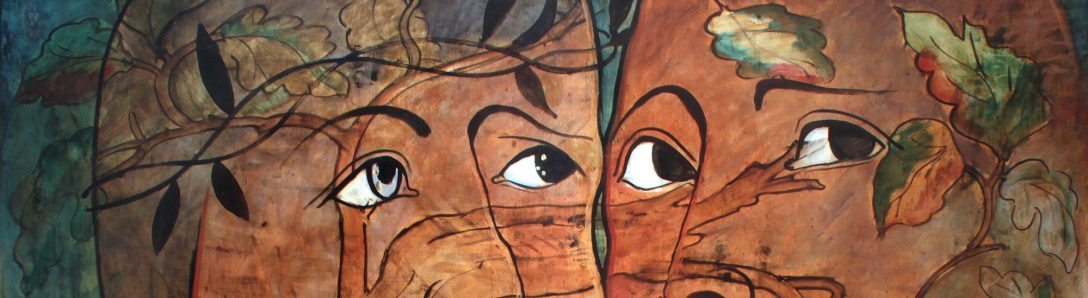
“A Parable Nobody Is Supposed to Get” — Thomas Pynchon

She’s wearing desert-camo fatigues and her signature snood, today a sort of electric green. Her commencement speech turns out to be a parable nobody is supposed to get.

“Once upon a time, there was a city with a powerful ruler who liked to creep around town in disguise, doing his work in secret. Now and then someone recognized him, but they were always willing to accept a small handful of silver or gold to forget all about it. ‘You have been exposed for a moment to a highly toxic form of energy,’ is his usual formula. ‘Here is a sum I trust will compensate you for any damage done. Soon you will begin to forget, and then you’ll feel better.”

“At the time, out and about in the night, there was also an older lady, probably didn’t look too different from your grandmother, who carried a huge sack full of dirty rags, scraps of paper and plastic, broken appliances, leftover food, and other rubbish she collected off the street. She went everywhere, she had lived out in the city longer than anyone there, unprotected and in the open regardless of the weather, and she knew everything. She was the guardian of whatever the city threw away.

“On the day she and the ruler of the city finally crossed paths, he got a rude surprise—when he offered his well-meant handful of coins, she angrily flung them back at him. They went scattering and ringing on the paving stones. ‘Forget?’ she screeched. ‘I cannot and must not forget. Remembering is the essence of what I am. The price of my forgetting, great sir, is more than you can imagine, let alone pay.”

“Taken aback, somehow thinking he must not have offered enough, the ruler began to dig through his purse again, but when he looked up, the old woman had vanished. That day he returned from his secret tasks earlier than usual, in a queer state of nerves. He supposed now he’d have to find this old woman and render her harmless. How awkward.

“Though he was not by nature a violent person, he had learned a long time ago that nobody held on to a job like his unless they were willing to do whatever it took. For years he had sought new and creative methods short of violence, which usually came down to buying people off. Stalkers of imperial celebrities were hired as bodyguards, journalists with nasal-length issues were redesignated ‘analysts’ and installed at desks in the state intelligence office.

“By this logic the old woman with her sack of garbage should have become an environmental cabinet minister and someday get parks and recycle centers all across the realm named after her. But whenever anyone tried to approach her with job offers, she was never to be found. Her criticisms of the regime, however, had already entered the collective consciousness of the city and become impossible to delete.

“Well, kids, it’s just a story. The kind of story you were likely to hear in Russia back in the days when Stalin was in power. People told each other these Aesop’s fables and everybody knew what stood for what. But can we in the 21st-century U.S. say the same?

“Who is this old lady? What does she think she’s been finding out all these years? Who is this ‘ruler’ shes’s refusing to be bought off by? And what’s this ‘work’ he was ‘doing in secret’? Suppose ‘the ruler’ isn’t a person at all but a soulless force so powerful that though it cannot ennoble, it does entitle, which, in the city-nation we speak of, is always more than enough? The answers are left to you, the Kugelblitz graduating class of 2001, as an exercise. Good luck. Think of it as a contest. Send your answers to my Weblog, tabloidofthedamned.com, first prize is a pizza with anything you want on it.”

From Thomas Pynchon’s novel Bleeding Edge. The (commencement) speaker is committed leftist March Kelleher.

Canto XX — Tom Phillips

Canto XX: [no title] 1982 by Tom Phillips born 1937

Canto XX, 1982 by Tom Phillips (b. 1937). From the Dante’s Inferno series.

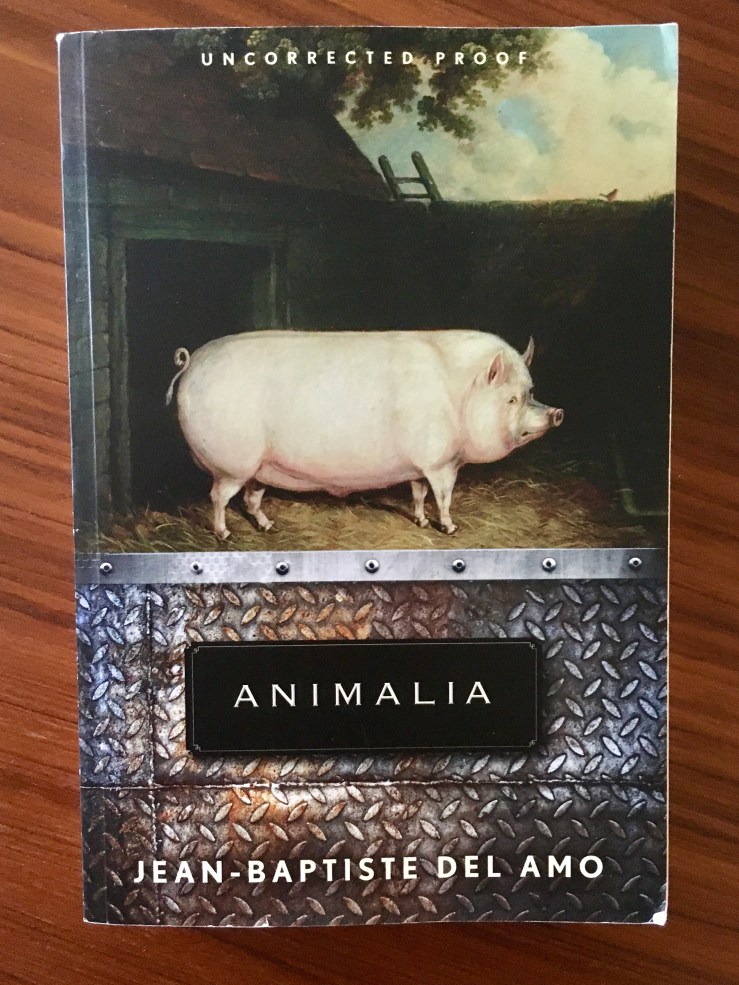
Jean-Baptiste Del Amo’s Animalia (Book acquired 21 April 2020)

img_5359

A number of people whose literary taste I admire and have learned from (including this guy) have told me to read Jean-Baptiste Del Amo’s novel Animalia. (English translation is by Frank Wynne, by the way.)

I avoided any reviews or descriptions (although a bit of chatter and stray lines have led me to believe the book has an abject grimy grittiness to it—and the back of this copy compares it to Cormac McCarthy), but trips to my beloved bookstore never yielded a copy over the past six months or so. I was looking for the Fitzcarraldo Editions edition, which was probably a mistake. Those are hard to come by in the States.

A few weeks—days? —I don’t know man, time has been weird, we all know that right? Like this virus, a post-postmodern moment, has shifted again our human relationship with time/space, revealing that the modernist schedules and movements and timelines and tics that we’d been following, perhaps even believing in, were fictions—which of course, those of us birthed in the postmodern era understood, either fully or at least intuitively—but we had to subscribe to those fictions to like, survive—but now, now, hey, now what is our relationship to time and space?—does anyone else wake up at 3am and then go back to sleep at 7am?—has anyone else ordered a book off the internet, possibly drunk, or possibly in a weird mix of sleep aids and melatonin, or possibly just a bit crazed?—these aren’t real questions—

So—

At some point in the recent past, Fitzcarraldo Editions tweeted about an ebook sale that reminded me to get Animalia. (A basic twitter search reveals that my previous paragraph is as idiotic as you no doubt took it to be, if you bothered to even read it. This happened on 30 March 2020.) Of course, I could not get the ebook in the States.

I’m not sure when exactly I ordered a copy of Animalia from an indie bookseller online. When it showed up the other day I was a bit surprised: first that I’d ordered it, second that it was an uncorrected proof. But I was happy that some idiot version of myself from the past sent me this gift, the first physical book I’ve gotten in what seems like a long time.

From an excerpt of the novel at Granta:

The genetrix, a lean, cold woman, with a ruddy neck and hands that are ever busy, affords the child scant attention. She is content merely to instruct her, to pass on the skills for those chores that are the preserve of their sex, and the child quickly learns to emulate her in her tasks, to mimic her gestures and her bearing. At five years old, she holds herself stiff and staid as a farmer’s wife, feet planted firmly on the ground, clenched fists resting on her narrow hips. She beats the laundry, churns the butter and draws water from the well or the spring without expecting affection or gratitude in return. Before Éléonore was born, the father twice impregnated the genetrix, but her menses are light, irregular, and continued to flow during the months when, in hindsight, she realizes that she was pregnant, though her belly had barely begun to swell. Although scrawny, she had a pot-belly as a child, her organs strained and bloated from parasitic infections contracted through playing in dirt and dungheaps, or eating infected meat, a condition her mother vainly attempted to treat with decoctions of garlic.

One October morning, alone in the sty, tending to the sow about to farrow, the genetrix is felled by a pain and, without even a cry, falls to her knees on the freshly scattered straw whose pale, perfumed dust is still rising in whorls. Her breaking waters drench her undergarments and her thighs. The sow, also in the throes of labour, trots in circles, making high whining sounds, her huge belly jiggling, her teats already swollen with milk, her swollen vulva dilated; and it is here, on her knees, and later on her side, that the genetrix gives birth, like a bitch, like a sow, panting, red-faced, her forehead bathed with sweat. Slipping a hand between her thighs, she feel the viscid mass tearing her apart. She buries her fingers in the fontanelle, rips out the stillborn foetus and flings it far from her. She grips the bluish umbilical cord attached to it and from her belly pulls the placenta which falls to the ground with a spongy sound. She stares at the tiny body covered in vernix caseosa, it looks like a yellowish worm, like the grey and golden larva of a potato beetle ripped from the rich soil and the roots on which it feeds. Daylight filters between loose boards, streaking the sour, dusty air, the bleak half-light that reeks of a knacker’s yard, and falls on the lifeless form lying on the straw. The genetrix gets to her feet, split in two, one hand under her skirt touching the swollen lips of her sex. She steps back, horrified, and leaves the sty, careful to latch the door, leaving to the sow the afterbirth and its fruit. For a long time she leans against the wall of the sty, motionless, gasping for breath. Bright blurred shapes float in her field of vision. Then she leaves the farm and takes the road towards Puy-Larroque, limping through a heavy drizzle that washes her face and the skirt stained brown with lochia. Without a glance at anyone, she crosses the village square. Those who see her notice the soiled skirt she is gripping in one fist, the pallid face, the lips pressed so tightly that the mouth is white as an old scar. Her brown hair has escaped her scarf and is plastered to her face and neck. She pushes open the church door and falls to her knees before the crucifix.

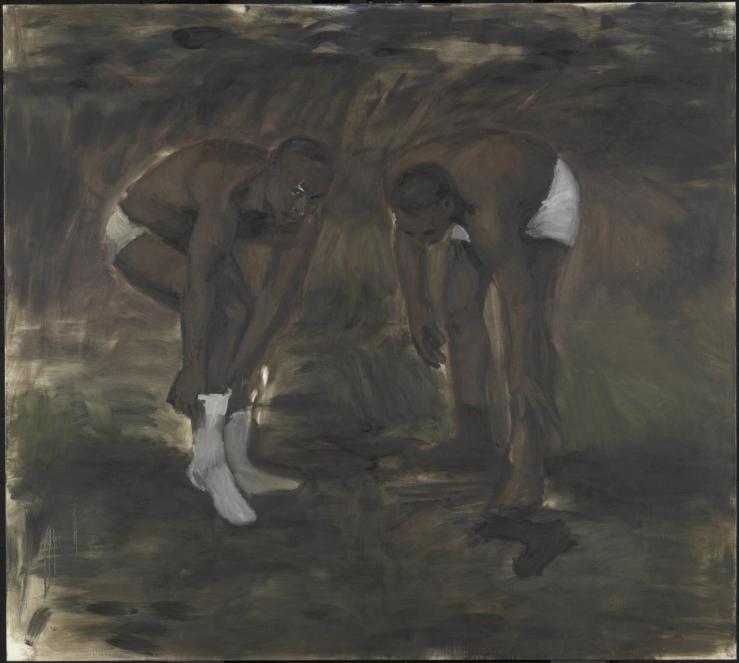
The Generosity — Lynette Yiadom-Boakye

The Generosity 2010 by Lynette Yiadom-Boakye born 1977

The Generosity, 2010 by Lynette Yiadom-Boakye (b. 1977)

“The Peasant and the Cucumbers,” a short fable by Leo Tolstoy

“The Peasant and the Cucumbers”

by Leo Tolstoy

(trans. by Leo Wiener)


A peasant once went to the gardener’s, to steal cucumbers. He crept up to the cucumbers, and thought:

“I will carry off a bag of cucumbers, which I will sell; with the money I will buy a hen. The hen will lay eggs, hatch them, and raise a lot of chicks. I will feed the chicks and sell them; then I will buy me a young sow, and she will bear a lot of pigs. I will sell the pigs, and buy me a mare; the mare will foal me some colts. I will raise the colts, and sell them. I will buy me a house, and start a garden. In the garden I will sow cucumbers, and will not let them be stolen, but will keep a sharp watch on them. I will hire watchmen, and put them in the cucumber patch, while I myself will come on them, unawares, and shout: ‘Oh, there, keep a sharp lookout!'”

And this he shouted as loud as he could. The watchmen heard it, and they rushed out and beat the peasant.


Pieta — Peter Ferguson

pietc3a0-lo

Pieta by Peter Ferguson (b. 1968)

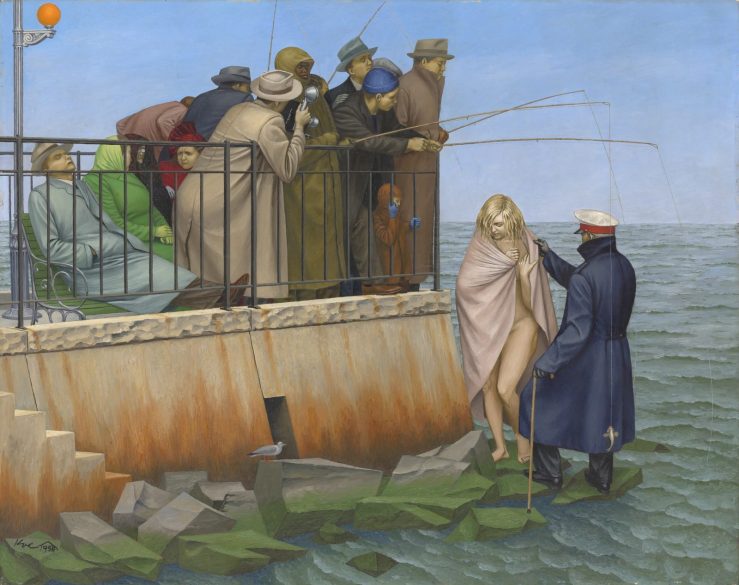
The Sea — Henry Koerner

henry-koerner_the-sea

The Sea, 1949 by Henry Koerner (1915-1991)

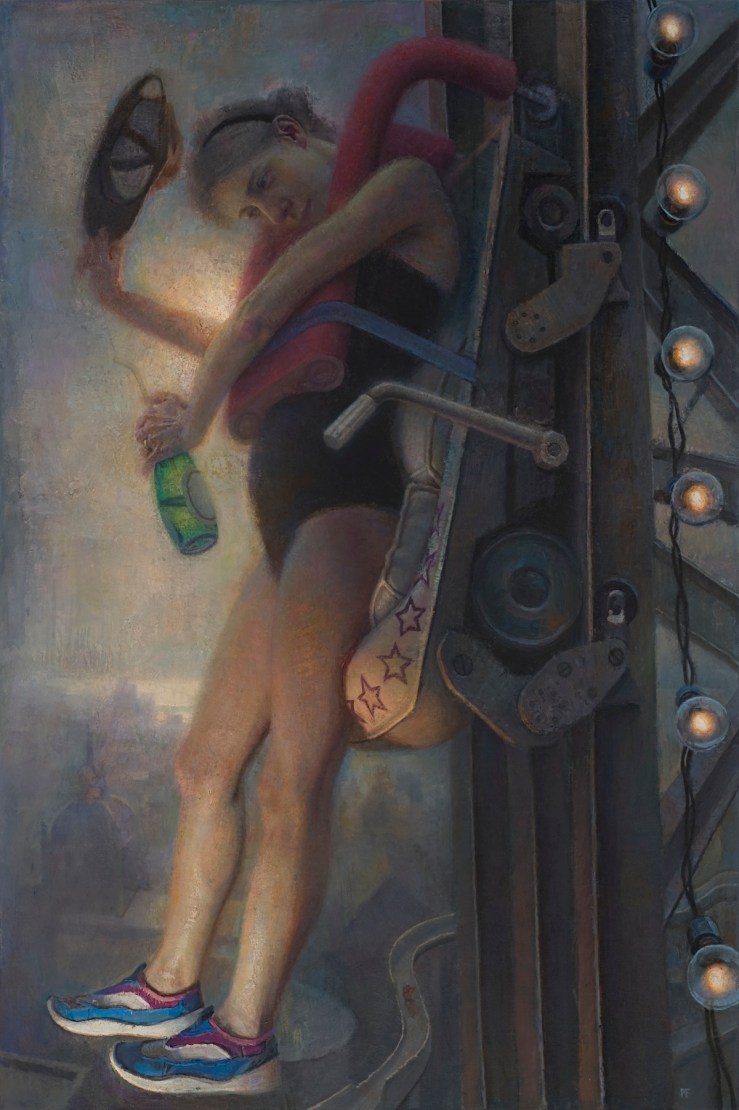
Theme Park Patron — Paul Fenniak 

opt_theme_park_patron

Theme Park Patron, 2014 by Paul Fenniak (b. 1965)

Christian Retreat — Eric Fischl

80_035

Christian Retreat, 1980 by Eric Fischl (b. 1948)

Bamboo Blind, Biting — Ikenaga Yasunari 

b2ef38473930964ad5a1a9a6d96a1ec7

Bamboo Blind, Biting, 2015 by Ikenaga Yasunari (b. 1965)

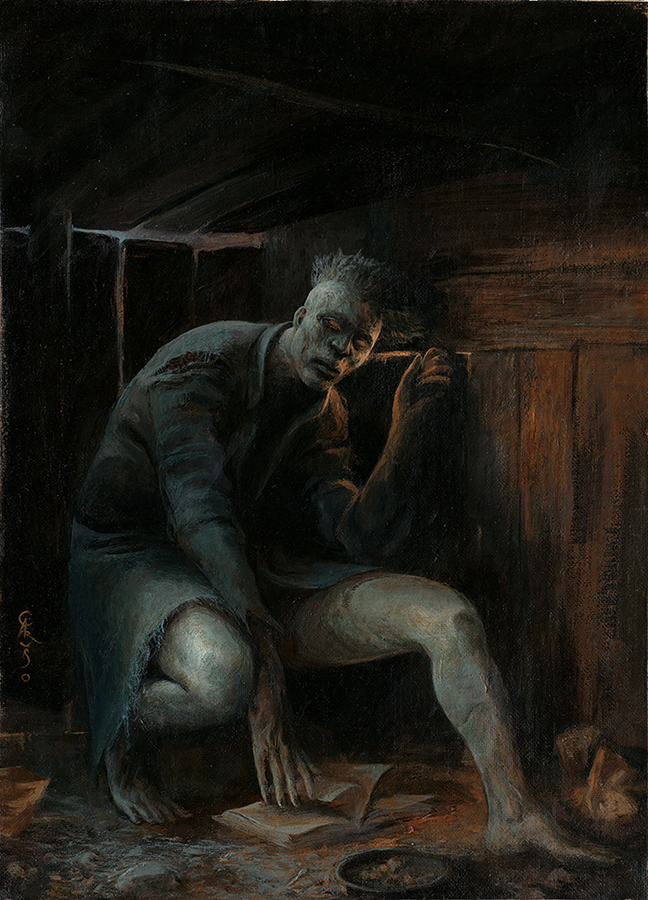
Frankenstein — Santiago Caruso 

frankenstein-11-b

Frankenstein, 2018 by Santiago Caruso (b. 1982)

“Theme for a Tapestry” — Julio Cortázar

2020-03-06_151902_5

(English translation by Paul Blackburn.)

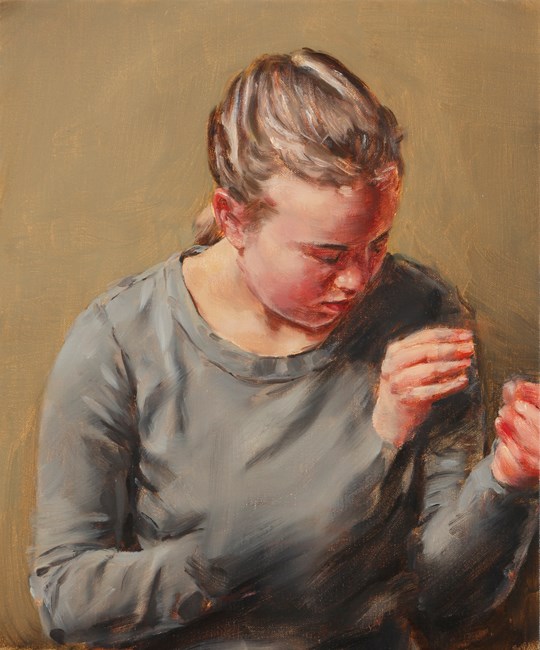
Girl with Hands 9 — Michaël Borremans

e29ab146-98cf-4f41-8d95-098f222eba04_540_650

Girl with Hands 9, 2013 by Michaël Borremans (b. 1963)

Reading Girl — Friedrich von Amerling

friedrich_von_amerling-reading_girl

Reading Girl, 1834 by Friedrich von Amerling (1803-1887)

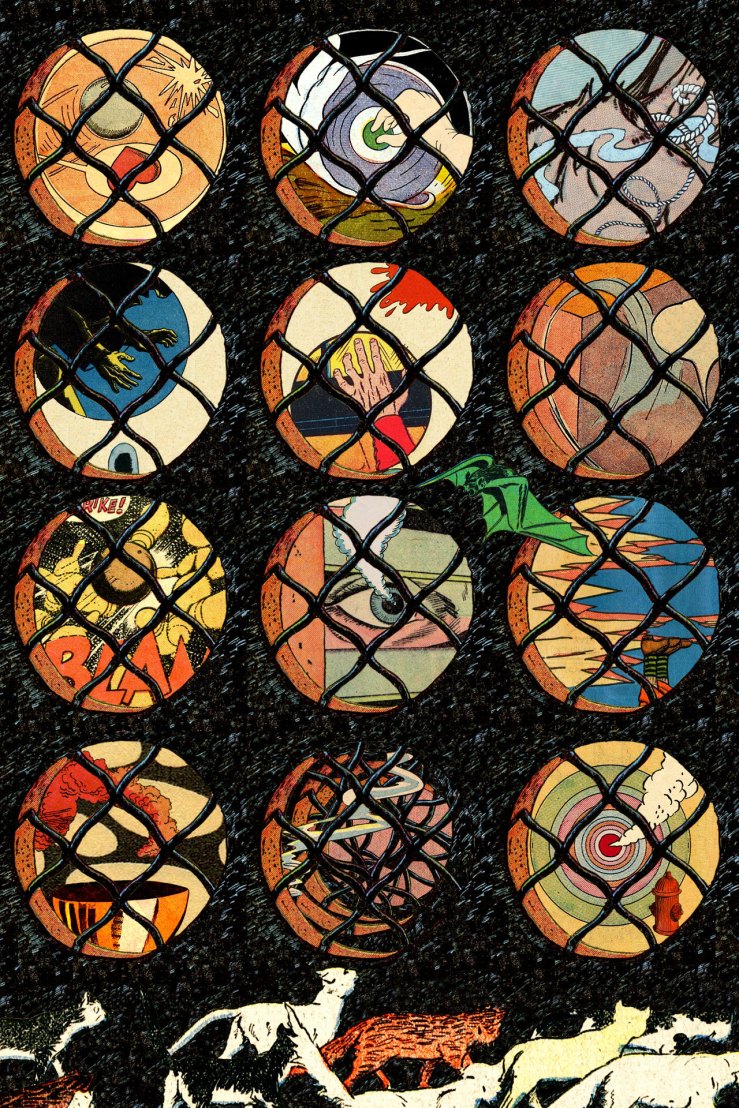
Bats and Cats — Samplerman

25b8d7dff0f9b281ce0c3e1c9f1dfcc2a1b59519

Bats and Cats, 2020 by Samplerman (Yvan Guillo)

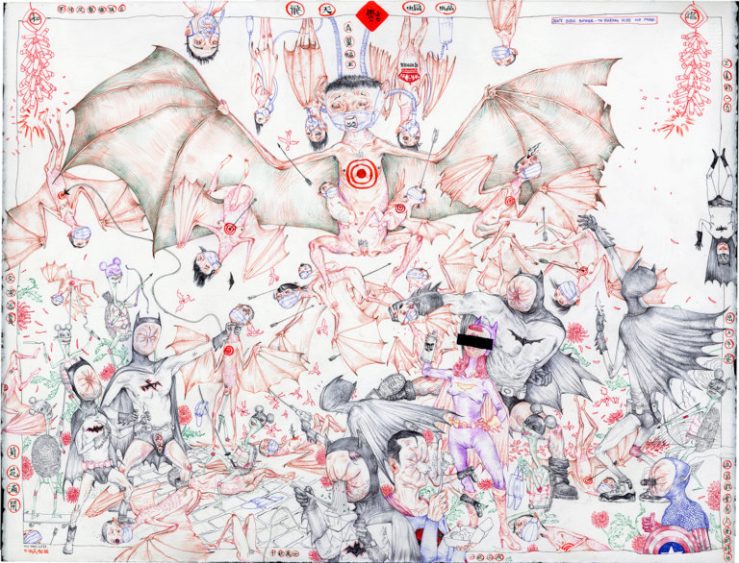
King of the Green-winged Bat — Mu Pan

bat_3web-768x586-1

King of the Green-winged Bat, 2020 by Mu Pan (b. 1976)

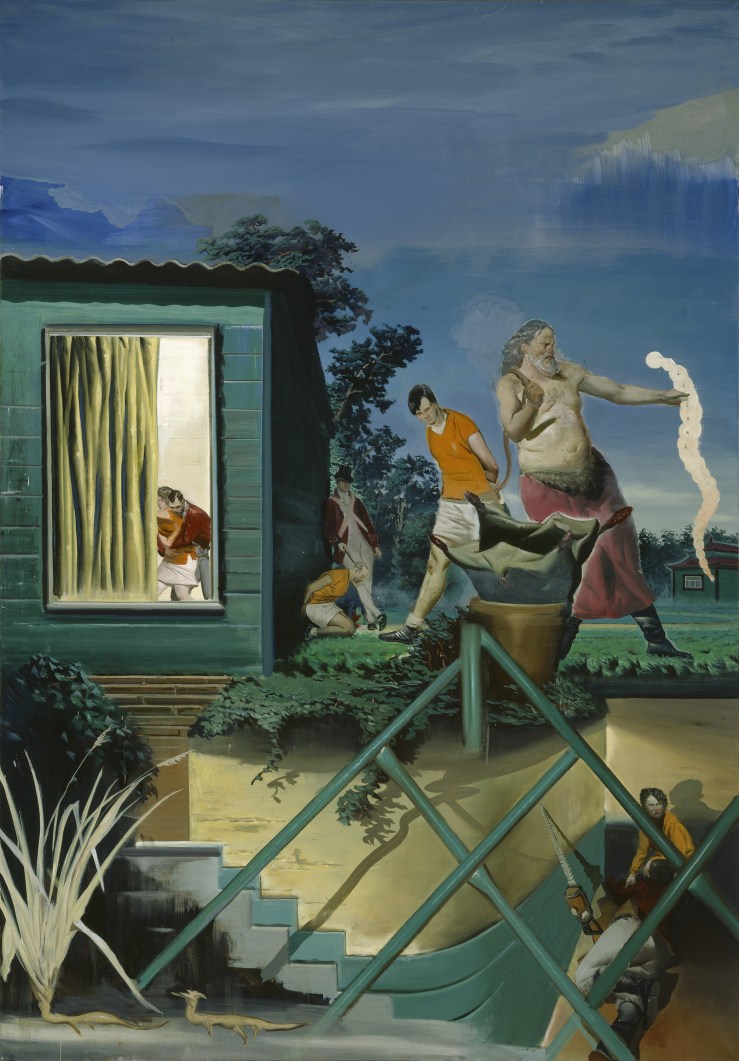
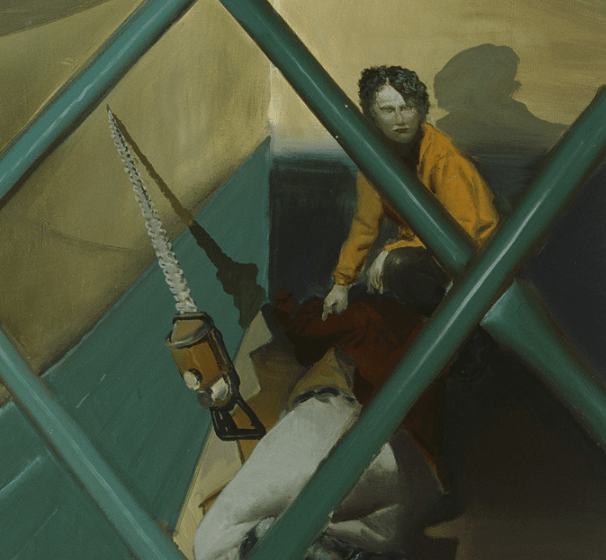
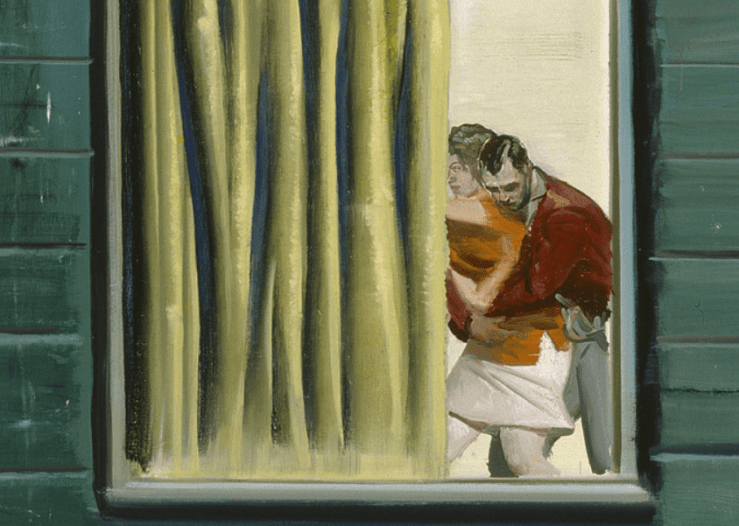
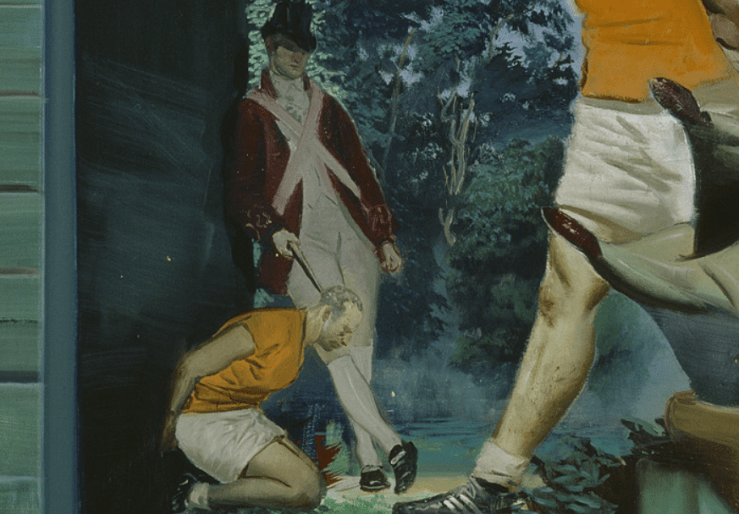
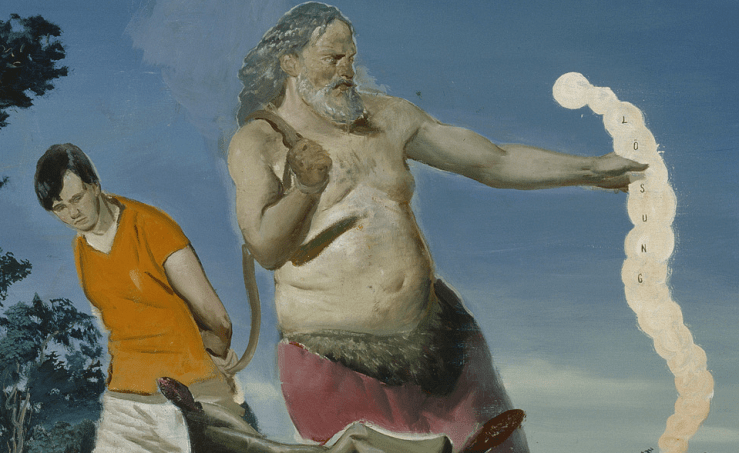
Lösung — Neo Rauch

2005-raune0068-1

Screenshot 2020-04-14 at 3.05.40 PMScreenshot 2020-04-14 at 3.04.59 PMScreenshot 2020-04-14 at 3.04.32 PMScreenshot 2020-04-14 at 3.03.55 PM

Lösung (Solution), 2005 by Neo Rauch (b. 1960)