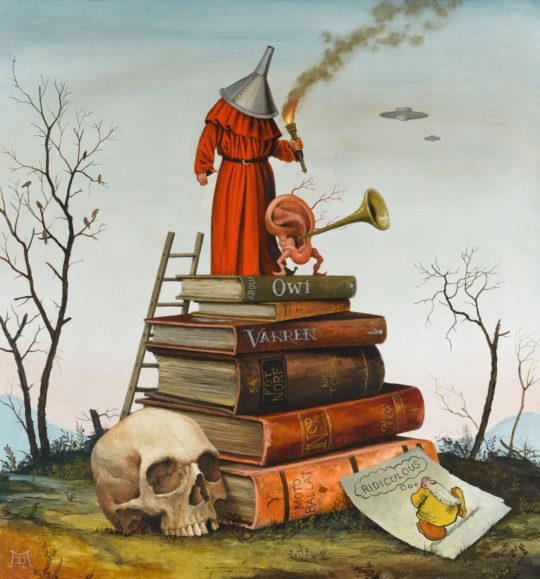
Leader of Legions of Literary Lunatics — Mike Davis

mike-davis-final_low-copy-1050x1126-540x579-1

Leader of Legions of Literary Lunatics by Mike Davis

“Radio” — Tom Clark

“Radio”

by

Tom Clark


Don’t hurt the radio for
Against all
Solid testimony machines
Have feelings
Too

Brush past it lightly
With a fine regard
For allowing its molecules
To remain 100% intact

Machines can think like Wittgenstein
And the radio’s a machine
Thinking softly to itself
Of the Midnight Flower
As her tawny parts unfold

In slow motion the boat
Rocks on the ocean
As her tawny parts unfold

The radio does something mental
To itself singingly
As her tawny parts unfold
Inside its wires
And steal away its heart

Two minutes after eleven
The color dream communicates itself
The ink falls on the paper as if magically
The scalp falls away
A pain is felt
Deep in the radio

I take out my larynx and put it on the blue chair
And do my dance for the radio
It’s my dance in which I kneel in front of the radio
And while remaining motionless elsewise
Force my eyeballs to come as close together as possible
While uttering a horrible and foreign word
Which I cannot repeat to you without now removing my larynx
And placing it on the blue chair

The blue chair isn’t here
So I can’t do that trick at the present time

The radio is thinking a few licks of its own
Pianistic thoughts attuned to tomorrow’s grammar
Beautiful spas of seltzery coition
Plucked notes like sandpaper attacked by Woody Woodpecker

The radio says Edwardian farmers from Minnesota march on the Mafia
Armed with millions of radioactive poker chips

The radio fears foul play
It turns impersonal
A piggy bank was smashed
A victim was found naked
Radio how can you tell me this
In such a chipper tone
Your structure of voices is a friend
The best kind
The kind one can turn on or off
Whenever one wants to
But that is wrong I know
For you will intensely to continue
And in a deeper way
You do

Hours go by
And I watch you
As you diligently apply
A series of audible frequencies
To tiny receptors
Located inside my cranium
Resulting in much pleasure for someone
Who looks like me
Although he is seated about two inches to my left
And the both of us
Are listening to your every word
With a weird misapprehension
It’s the last of the tenth
And Harmon Killebrew is up
With a man aboard

He blasts a game-winning home run
The 559th of his career
But no one cares
Because the broadcast is studio-monitored for taping
To be replayed in 212 years

Heaven must be like this, radio
To not care about anything
Because it’s all being taped for replay much later

Heaven must be like this
For as her tawny parts unfold
The small lights swim roseate
As if of sepals were the tarp made
As it is invisibly unrolled
And sundown gasps its old Ray Charles 45 of Georgia
Only through your voice

Last Look Mirror — Eric Fischl

2017.043pp

Last Look Mirror, 2017 by Eric Fischl (b. 1948)

Drawing by Father Christmas of the Aurora Borealis — J.R.R. Tolkien

aurora-borealis

Drawing by Father Christmas of the Aurora Borealis, 1926 by J.R.R. Tolkien (1892–1973).

From The Morgan Library & Museum’s exhibition “Tolkien: Maker of Middle-earth.”

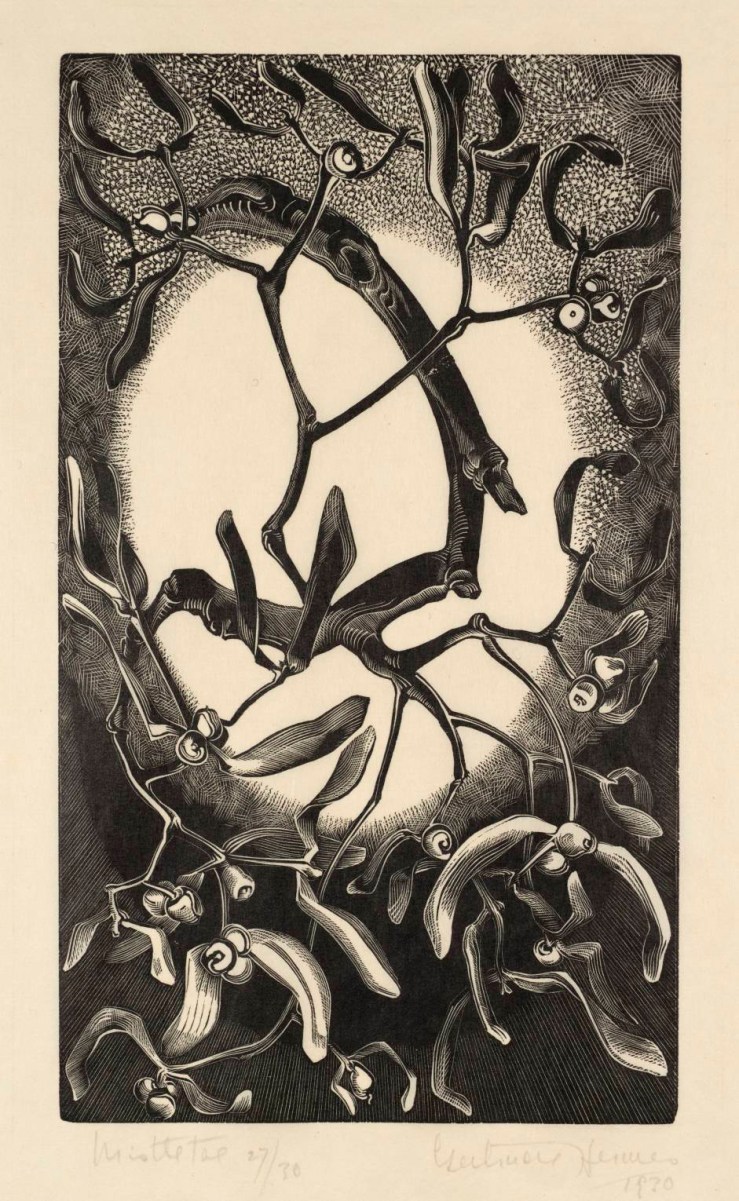
Mistletoe — Gertrude Hermes

thegorgeousdaily.com-gertrude-hermes-12

Mistletoe, 1930 by Gertrude Hermes (1901–1983)

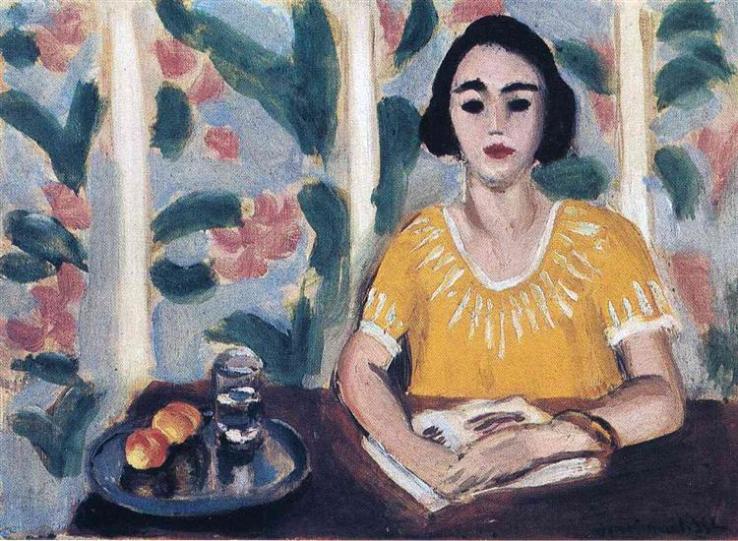
Woman Reading with Peaches — Henri Matisse

woman-reading-with-peaches-1923.jpglarge

Woman Reading with Peaches, 1923 by– Henri Matisse (1869–1954)

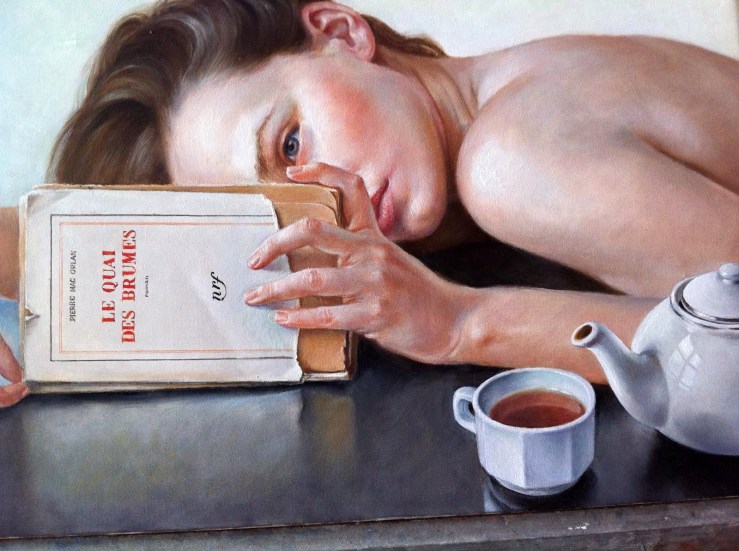
Untitled (Le Quai des brumes) — Francine van Hove

1475134729-007

Untitled by Francine van Hove (b. 1942)

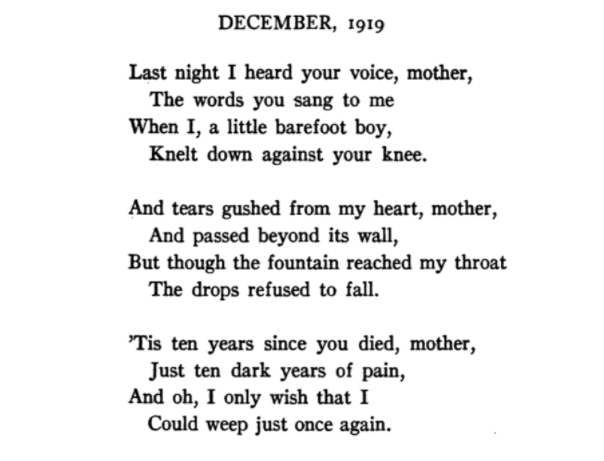
December, 1919 — Claude McKay

Screenshot 2019-12-17 at 5.42.38 PM

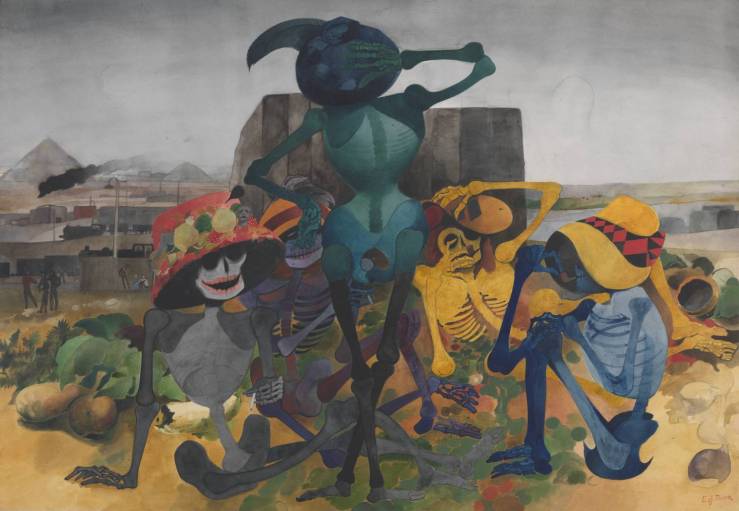
Skeleton Party — Edward Burra

Skeleton Party circa 1952-4 by Edward Burra 1905-1976

Skeleton Party, 1954 by Edward Burra (1905–1976)

List with no name #63

  1. The Tree of Life
  2. Holy Motors
  3. The Master
  4. Upstream Color
  5. Hard to Be a God
  6. Boyhood
  7. Inherent Vice
  8. Inside Llewelyn Davis
  9. The Beach Bum
  10. Blade Runner 2049
  11. Moonrise Kingdom
  12. mother!
  13. Carol
  14. Mad Max: Fury Road
  15. The Tale of the Princess Kaguya
  16. Meek’s Cutoff
  17. Spider-Man: Into the Spiderverse
  18. Blue Caprice
  19. Green Room
  20. Frances Ha
  21. Under the Skin
  22. Samsara
  23. Martha Marcy May Marlene
  24. The Handmaiden
  25. The Hateful Eight
  26. Love & Friendship
  27. The Lobster
  28. Once Upon a Time in Hollywood
  29. Under the Silver Lake
  30. Only Lovers Left Alive
  31. Suspiria 
  32. Zama
  33. Phantom Thread
  34. The Last Jedi
  35. The Favourite
  36. I Heard You Paint Houses
  37. Roma
  38. Edge of Tomorrow
  39. The Turin Horse
  40. Only God Forgives
  41. Lady Bird
  42. Get Out
  43. The Lost City of Z
  44. Your Highness
  45. The Grand Budapest Hotel
  46. Arrival
  47. The Wind Rises
  48. Tale of Tales
  49. Drive
  50. It Follows


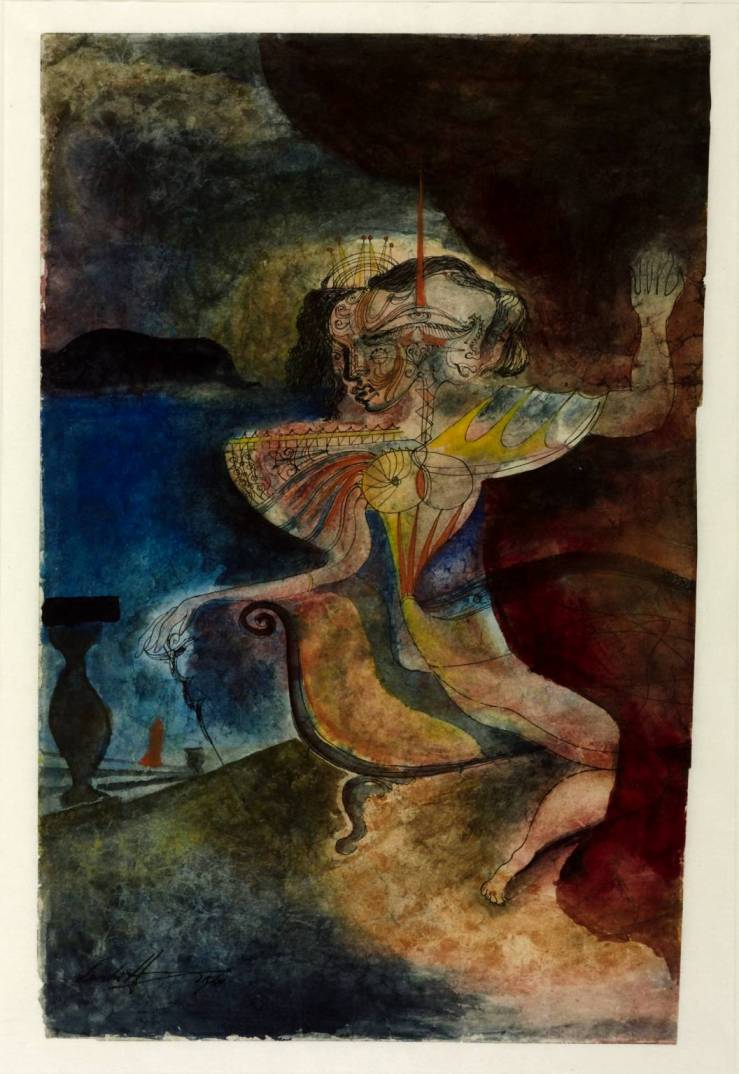
Courtesan — Leslie Hurry

The Courtesan 1941 by Leslie Hurry 1909-1978

Courtesan, 1945 by Leslie Hurry (1909–1978)

Jonathan Buckley’s The Great Concert of the Night (Book acquired, sometime early December 2019)

img_4539

Jonathan Buckley’s novel The Great Concert of the Night is forthcoming from NYRB early next year (like, in a few weeks). NYRB’s blurb:

David has just spent New Year’s Eve alone, watching Le Grand Concert de la Nuit, a film in which his former lover Imogen starred. In the early hours of the new year, consoled and tormented by her ethereal presence, he begins to write. What follows is a brilliantly various journal, chronicling a year in the life of a thinking man. David works as a curator at the ailing Sanderson-Perceval Museum in southern England, whose small collection of porcelain, musical instruments, crystals, velvet mushrooms, and glass jellyfish is as eccentric and idiosyncratic as the long-dead collectors’ tastes. David himself is a connoisseur of the derelict and nonutilitarian, of objects removed from the flow of time. Refusing the imposed order of a straightforward chronology, his journal moves fluidly back and forth in time, filled with fragments of life remembered, imagined, and recorded, from memories of his past life with Imogen or with his ex-wife, Samantha, to reflections on the lives and relics of female saints or the history of medicine. There are quotations from Seneca, Meister Eckhart, and the Goncourt brothers mixed in with the equally compelling imagined words of fictional film directors, actors, and, always, the fascinating Imogen, who is alive now only “in the perpetual present of the sentence.” In The Great Concert of the Night, Jonathan Buckley expertly interweaves sexual despair, cultural critique, the plot lines of one man’s quietly brilliant life, and the problems and paradoxes of writing, especially writing about and to the dead.

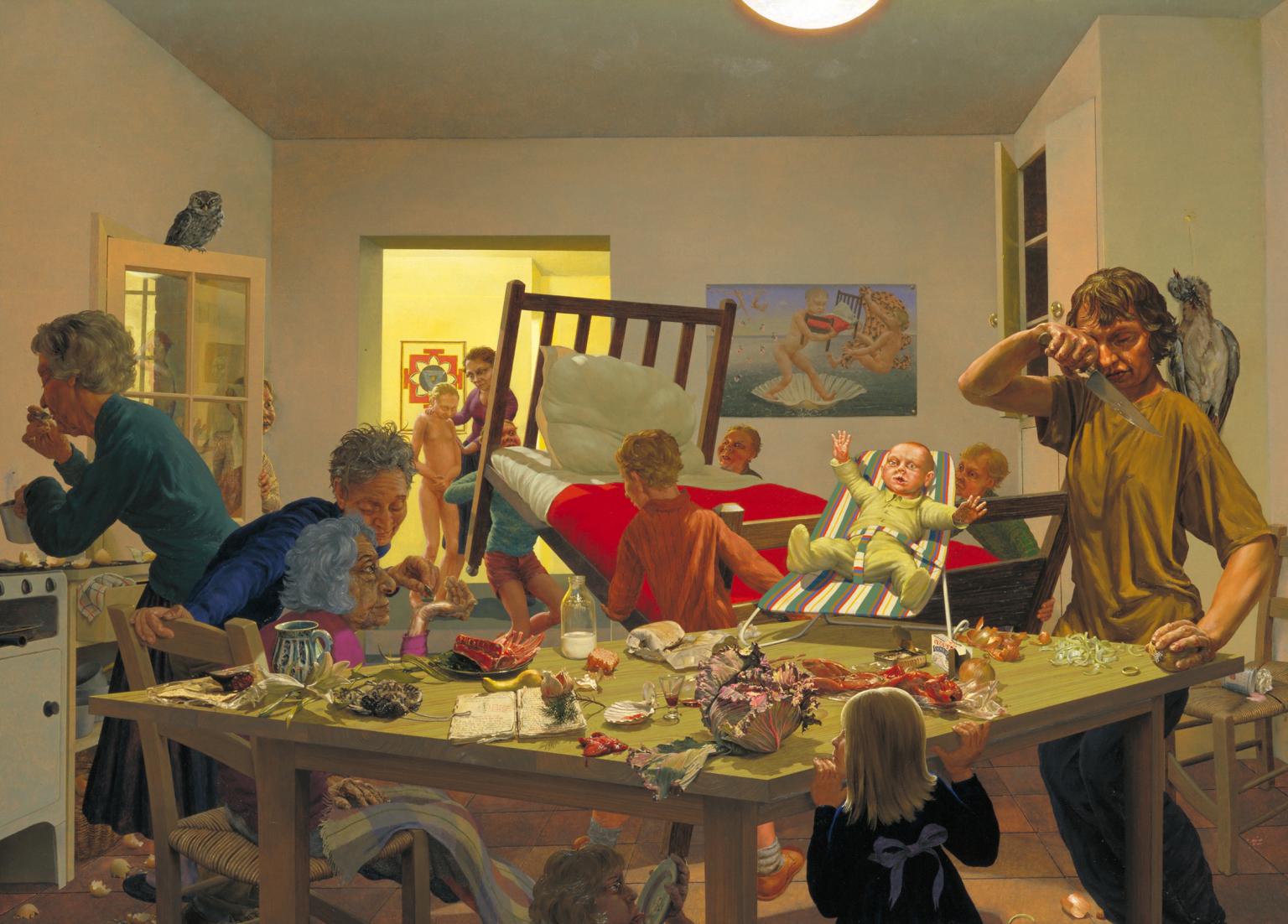
A Jan Steen Kitchen — Jonathan Leaman

A Jan Steen Kitchen 1995-6 by Jonathan Leaman born 1954Screenshot 2019-12-16 at 7.44.35 PMScreenshot 2019-12-16 at 7.44.06 PMScreenshot 2019-12-16 at 7.43.49 PMScreenshot 2019-12-16 at 7.43.22 PM

A Jan Steen Kitchen, 1996 by Jonathan Leaman (b. 1954)

Reclining Man — Mitchell Villa

635480_recliningman-2017-acryliconcanvas-60x48inhces

Reclining Man, 2017 by Mitchell Villa

Blue Bird — Konstantin Somov

blue-bird

Blue Bird, 1918 by Konstantin Somov

Read “The Yellow Rose” a very short story by Jorge Luis Borges

“The Yellow Rose”

by

Jorge Luis Borges

Translated by Andrew Hurley


It was neither that afternoon nor the next that Giambattista Marino died— that illustrious man proclaimed by the unanimous mouths of Fame (to use an image that was dear to him) as the new Homer or the new Dante—and yet the motionless and silent act that took place that afternoon was, in fact, the last thing that happened in his life. His brow laureled with years and glory, the man died in a vast Spanish bed with carven pillars. It costs us nothing to picture a serene balcony a few steps away, looking out toward the west, and, below, marbles and laurels and a garden whose terraced steps are mirrored in a rectangular pool. In a goblet, a woman has set a yellow rose; the man murmurs the inevitable lines of poetry that even he, to tell the truth, is a bit tired of by now:

Porpora de’giardin, pompa de’prato,
Gemmadi primavera, occhio d’aprile…

Then the revelation occurred. Marino saw the rose, as Adam had seen it in Paradise, and he realized that it lay within its own eternity, not within his words, and that we might speakabout the rose, allude to it, but never truly express it, and that the tall, haughty volumes that made a golden dimness in the corner of his room were not (as his vanity had dreamed them) a mirror of the world, but just another thing added to the world’s contents.

Marino achieved that epiphany on the eve of his death, and Homer and Dante may have achieved it as well.

Coffee — Christian Brandl

brandl-kaffee-2006-acryl-on-canvas-160x180cm

Coffee, 2006 by Christian Brandl (b. 1970)