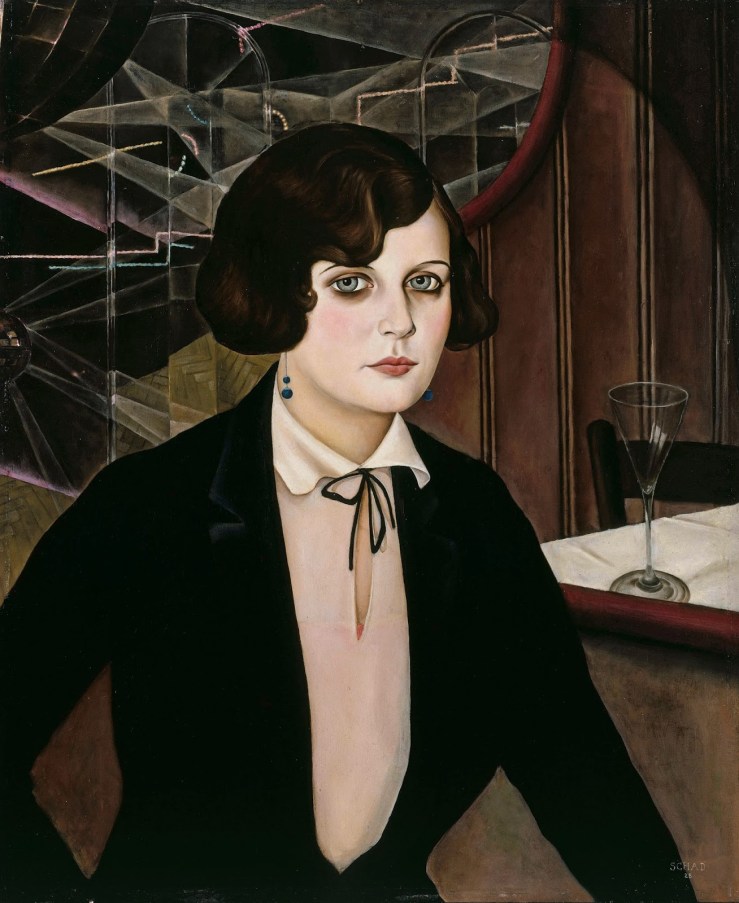
Lotte — Christian Schad

af5c635bae10f0c8657a06484d150516

Lotte, 1927 by Christian Schad (1894-1982)

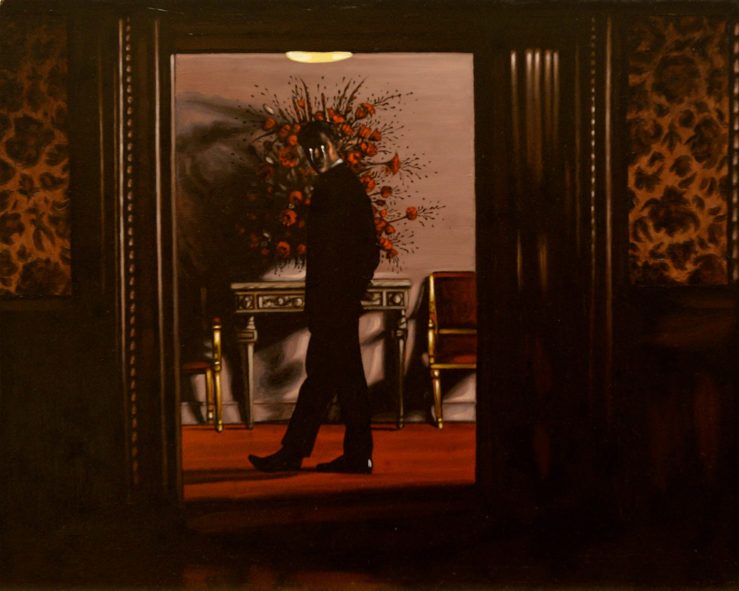
Escaping the Candy Jail with My Good Eye Closed 2 — Drew Simpson

4

Escaping the Candy Jail with My Good Eye Closed 2, 2016 by Drew Simpson

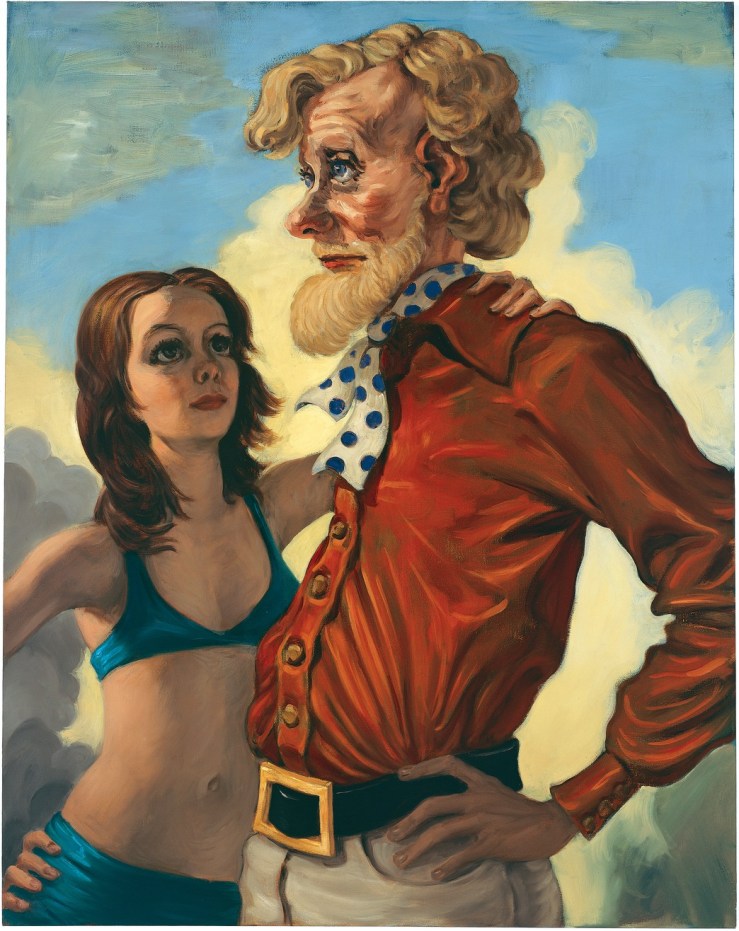
The Neverending Story — John Currin

pen2dwmygtm3_2340x1316

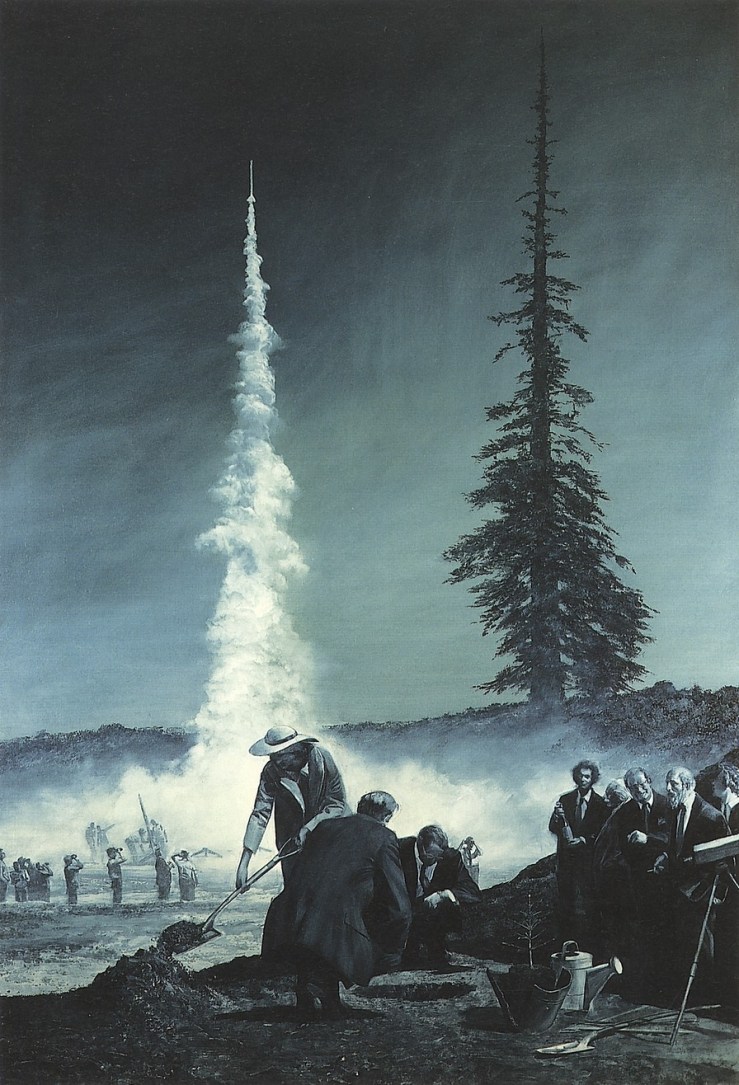
The Neverending Story, 1994 by John Currin (b. 1962)

Read “Crabs on the Island,” sixties Soviet sci-fi by Anatoly Dneprov

“Crabs on the Island”

by

Anatoly Denprov


“Hey, you there! Be careful!” shouted Cookling at the sailors who, standing up to their waists in the water, were trying to drag a small wooden case along the gunwale of the boat. It was the last of ten crates the engineer had brought to the island.

“Phew! Isn’t it hot! Like a furnace,” he groaned, wiping his thick red neck with a bandana handkerchief. Then he pulled off his sweat-soaked shirt and threw it on the sand. “Take your things off, Bud; there’s no civilization here.”

Dejectedly I watched the light schooner rocking gently on the waves at a distance of a mile or so from the shore. It would come back for us in three weeks’ time. “Why the devil did we have to come to this sun-hell with your machines?” I demanded of Cookling as I undressed. “With a sun like this we’ll be peeling like cucumbers tomorrow.”

“Never mind. The sun will come in useful. Incidentally, it’s exactly noon, and it’s just above our heads.”

“It’s always like that at the equator,” I muttered, not taking my eyes off the “Dove”. “All the geography books tell you that.”

The sailors had come over to us and were standing in silence before the engineer. Unhurriedly he put his hand in his trouser pocket and took out a wad of notes.

“Is that enough?” he asked, giving them several. One of them nodded.

“In that case you can return to the ship. Remind Captain Gale we shall expect him in twenty days’ time.”

Then Cookling turned to me. “Let’s get busy, Bud,” he said. “I’m impatient to begin.” I stared at him.

“To tell you the truth, I don’t know why we’ve come here. I understand that it may not have been convenient at the Admiralty for you to tell me about it. But I think you can now.”

Cookling grimaced and looked down at the sand.

“Of course I can. I would have told you all about it even then but there was no time.”

I felt he was lying, but said nothing. Cookling stood rubbing his purple neck with his greasy palm. He always did that when he was going to tell a lie, I knew, and now that was quite sufficient for me.

“You see, Bud, we’re going to perform an interesting experiment to test the theories of that. . . what’s his name. . .?” He hesitated and looked searchingly at me.

“That English scientist. Damn it, I’ve clean forgotten his name. No, I’ve got it— Charles Darwin.”

I went over to him and put my hand on his bare shoulder. Continue reading “Read “Crabs on the Island,” sixties Soviet sci-fi by Anatoly Dneprov”

Super Saian George with Trojan Horse — Mu Pan

trojan_horse_fb

Super Saian George With Trojan Horse, 2018 by Mu Pan (b. 1976)

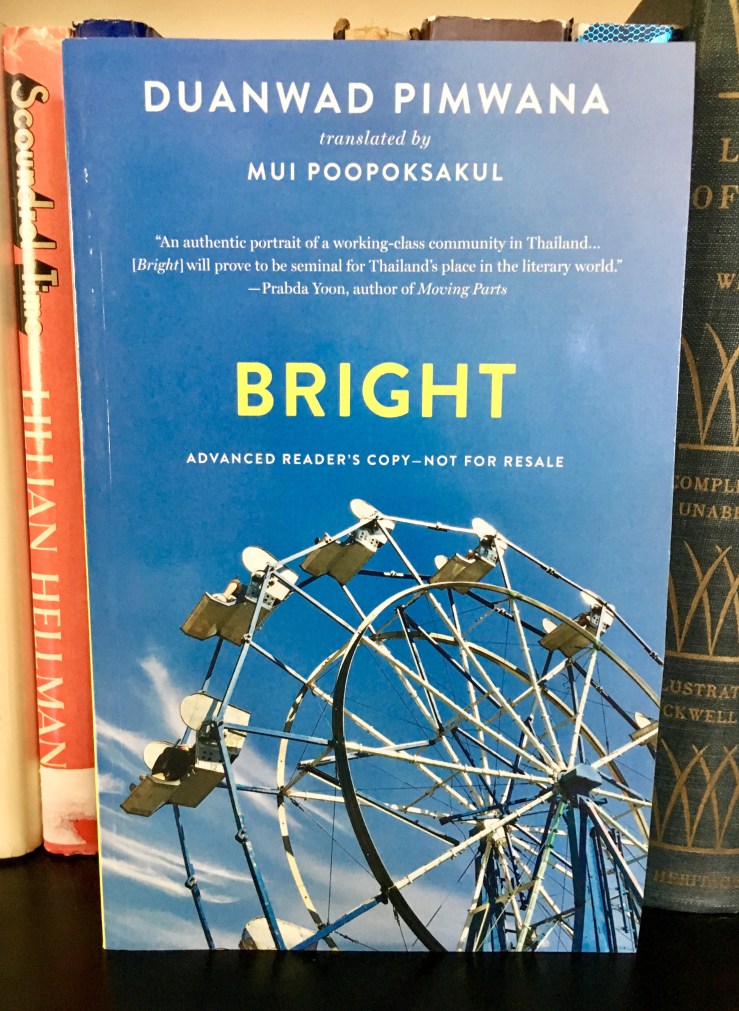
Duanwad Pimwana’s Bright (Book acquired 22 Jan. 2019)

img_2129

Thai author Duanwad Pimwana’s novel Bright is new in English translation by Mui Poopoksakul this spring from Two Lines Press. I hadn’t heard of Pimwana before this reader’s copy showed up on my doorstep, but her work sounds intriguing. Here’s the publisher’s blurb:

When five-year-old Kampol is told by his father to sit in front of their run-down apartment building and await his return, the confused boy does as he’s told—he waits and waits and waits, until he realizes his father isn’t coming back anytime soon. Adopted by the community, Kampol is soon being raised by figures like Chong the shopkeeper, who rents out calls on his telephone and goes into debt extending his customers endless credit.

Dueling flea markets, a search for a ten-baht coin lost in the sands of a beach, pet crickets that get eaten for dinner, bouncy ball fads, and loneliness so merciless that it kills a boy’s appetite all combine into this first-ever novel by a Thai woman to appear in English translation. Duanwad Pimwana’s urban, at times gritty vignettes are balanced with a folk-tale-like feel and a charmingly wry sense of humor. Together, they combine into the off-beat, satisfying, and sometimes magical coming-of-age story of an unforgettable young boy and the timeless legends, traditions, and personalities that go into his formation.

Morgan Neville on Orson Welles’s F for Fake

The Tale of Clouds — Hao Liang

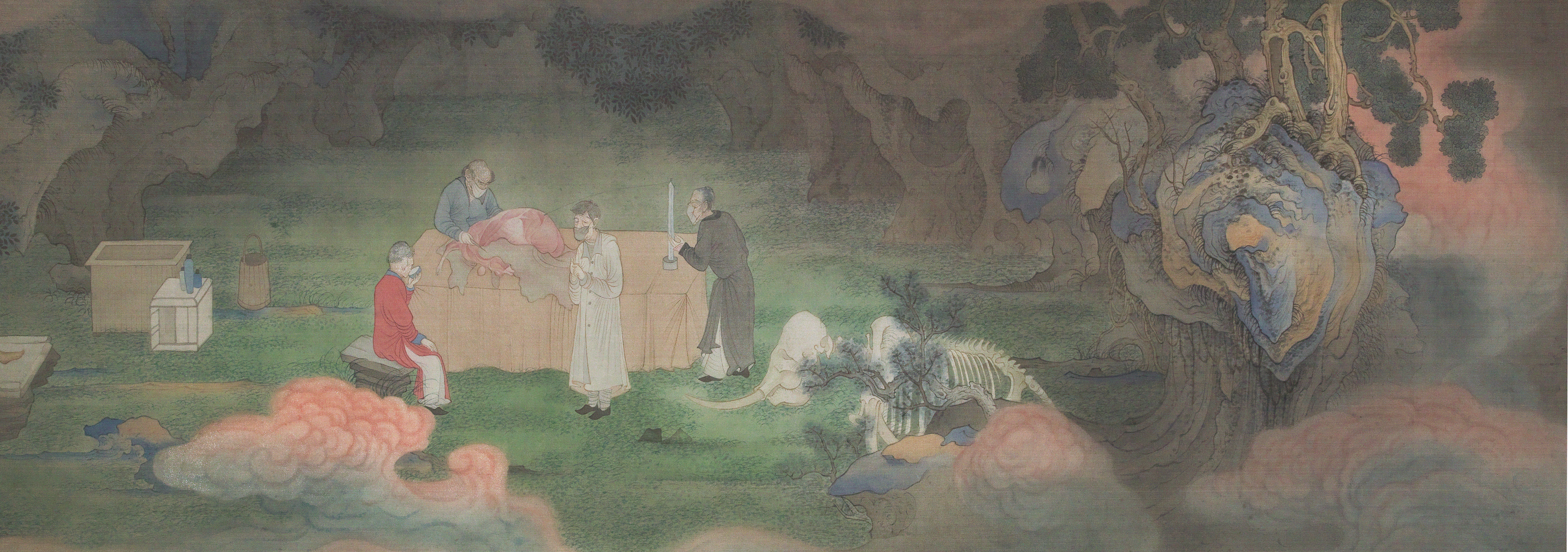
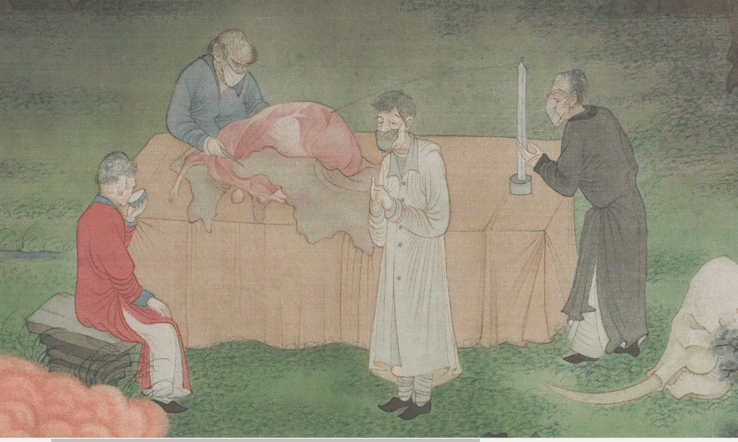
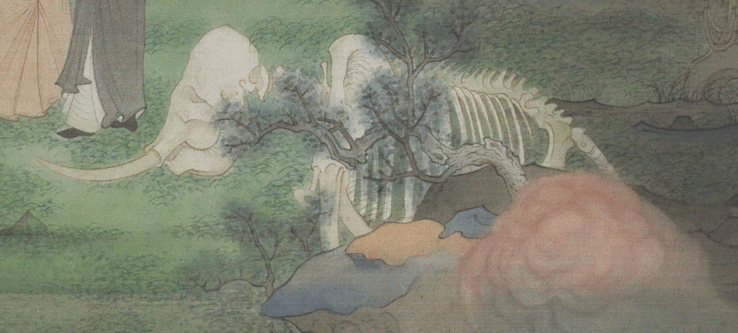
2014_sha_03397_0225_001hao_liang_the_tale_of_cloudsThe Tale of Clouds, 2013 by Hao Liang (b. 1983)

ab

Donner Dames — Helen Verhoeven

image074

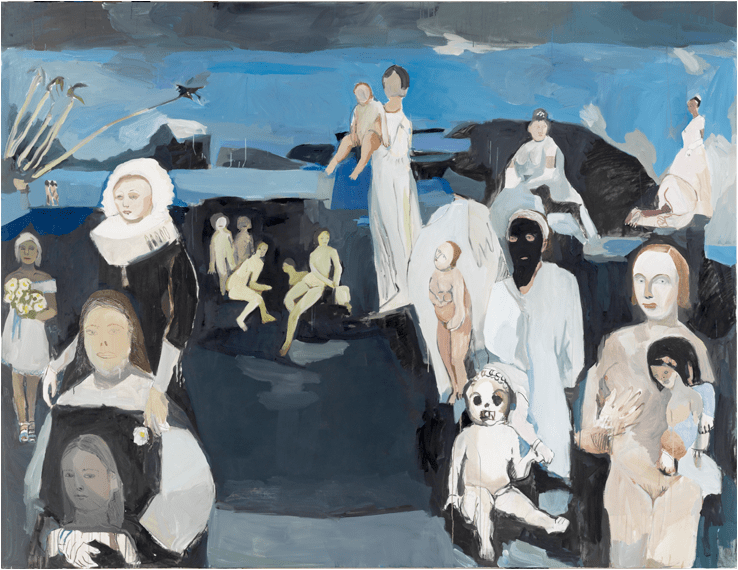
Donner Dames, 2011 by Helen Verhoeven (b. 1974)

Burlesque — Glenn Brown

b0vnnbp2-9sr_2340x1316

Burlesque, 2008 by Glenn Brown (b. 1966)

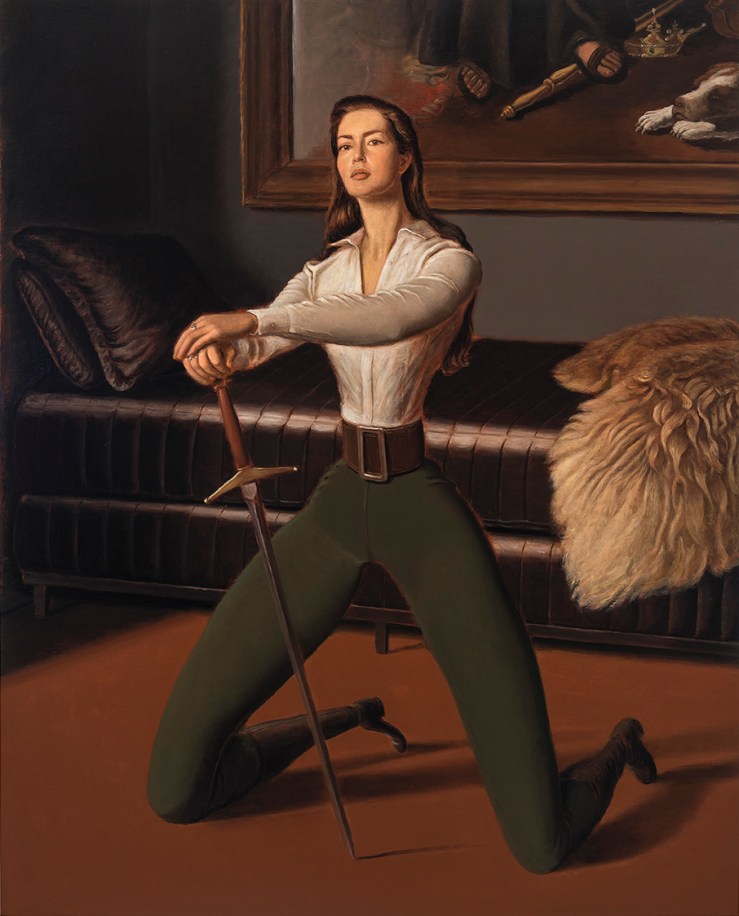
Swordswoman — Jansson Stegner 

swordswomanweb

Swordswoman, 2018 by Jansson Stegner (b. 1972)

Blog about some recent reading

img_2128

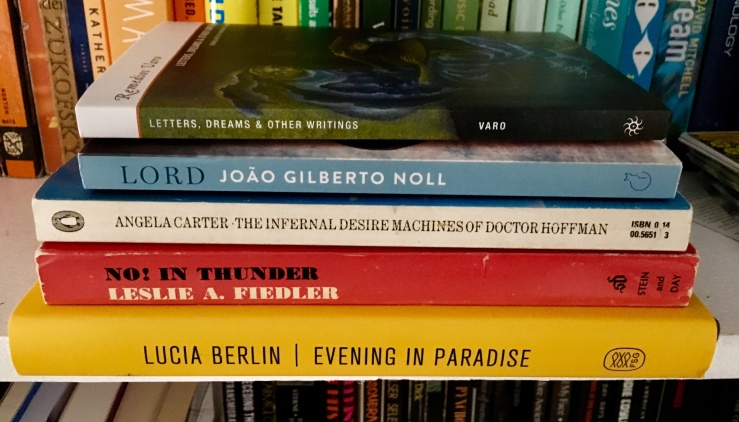
I finished Angela Carter’s surreal fantasia The Infernal Desire Machines of Doctor Hoffman a week or so ago, in a bit of a fever at its depraved horniness. Hoffman sprints along with an out-of-the-frying-pan-into-the-fire energy. The story is essentially a picaresque adventure—our narrator Desiderio sets out on a mission to assassinate Dr. Hoffman, a not-really-mad scientist who’s waging war on reality. Desiderio falls in love with Hoffman’s daughter Albertina though, complicating matters. All kinds of wild shit happens in each episode of the book—indeed, each chapter feels like it could stand on its own as a short story. I loved it, and it deserves a proper review, but for now I’ll lazily compare it to a bunch of other books I loved: Voltaire’s Candide, Réage’s Story of O, Le Guin’s The Farthest Shore, Kafka’s The Castle, Acker’s Don Quixote, any of Robert Coover’s fables, Kristeva’s Powers of Horror, and Swift’s Gulliver’s Travels. Oh, and video games. Someone could make a fantastic video game out of The Infernal Desire Machines of Doctor Hoffman.

I read the first half of João Gilberto Noll’s novel Lord (new in English translation by Edgar Garbeletto) on Sunday. The book is seriously weird. The narrator is “a Brazilian who wrote books that were mostly well received by critics but not the public.” The Brazilian novelist (a strange cipher of Noll himself) arrives in London in the winter on a “mission.” What that mission is is completely unclear, but it seems to involve an English university. Like the other Noll books I’ve read, Quiet Creature on the Corner and Atlantic Hotel,  Lord moves on its own dream logic. The narrator seems unstuck in both time and space. He’s an abject voice trying to reinvent himself from the outside in—but his disintegration seems fatally imminent.

I’ve also started in on the latest Lucia Berlin collection, Evening in Paradise, reading the first three stories. The first two, “The Musical Vanity Boxes” (which I’d read before in Homesick) and “Sometimes in Summer” are memoir pieces set in Berlin’s childhood home of El Paso (or, more properly I suppose, El Paso–Juárez). There’s a frankness to these tales that’s remarkable, an artistry of storytelling that never announces itself as such. The stories read like vivid recollections, and center on a very young Lucia and her best friend Hope, a Syrian immigrant. There’s an underlying menace here, too, a sense that these two friends might fall into disaster at any given moment. (In this way, these stories recalled the young female friends at the center of Elena Ferrante’s My Brilliant Friend who slowly come into consciousness of the real world around them). The third story in the collection “Andado: A Gothic Romance” is written in the third-person, although its hero “Laura” is clearly a stand-in for a teenage Lucia. Laura, like Lucia was, is an ex-pat teenager living in Chile. “Andado” too offers a slow swelling malice, as we perceive the dangers that Laura cannot. The story culminates in an impressionistic dreamlike sequence that matches Laura’s shaken psyche. I’m trying to restrain myself from reading all of these stories too fast.

I’ve poked about in Leslie Fiedler’s collection No! In Thunder, reading first his essay on Walt Whitman, and then his essay on Faulkner (it trapped me with its title: “William Faulkner, Highbrows’ Lowbrow”).

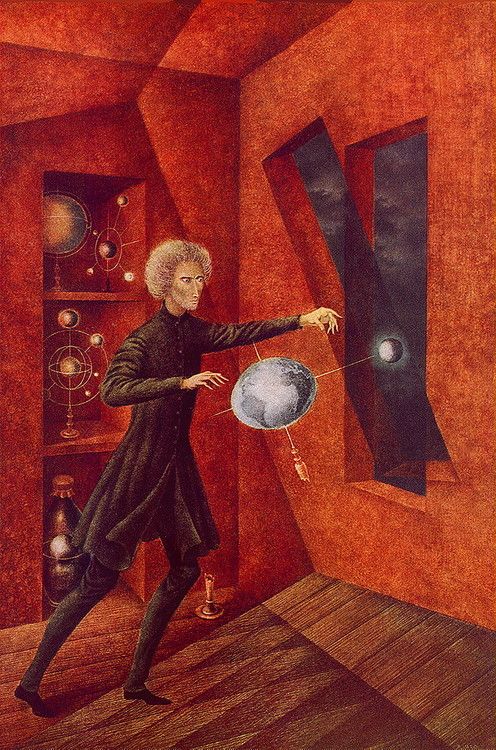
Finally, I’ve been reading Letters, Dreams & Other Writings by Remedios Varo (translated by Margaret Carson) in bits and pieces. I really dig the book and am happy Carson translated it and Wakefield Press published it. There’s a neat section where Varo describes her paintings—like this, for example:

Phenomenon of Weightlessness, 1963

The Earth escapes from its axis and its center of gravity to the great surprise of the astronomer, who tries to keep his balance with his left foot standing in one dimension and his right foot standing in another.

aeb34488236480657dc6aba97fc2d00d

Achilles and the Tortoise — Mark Tansey

w6ykkoobuzck_2340x1316

Achilles and the Tortoise, 1986 by Mark Tansey (b. 1949)

Ishmael Reed at the Brockport Writers Forum, 1974

Untitled (Bat) — Koen De Cock

27fulloil

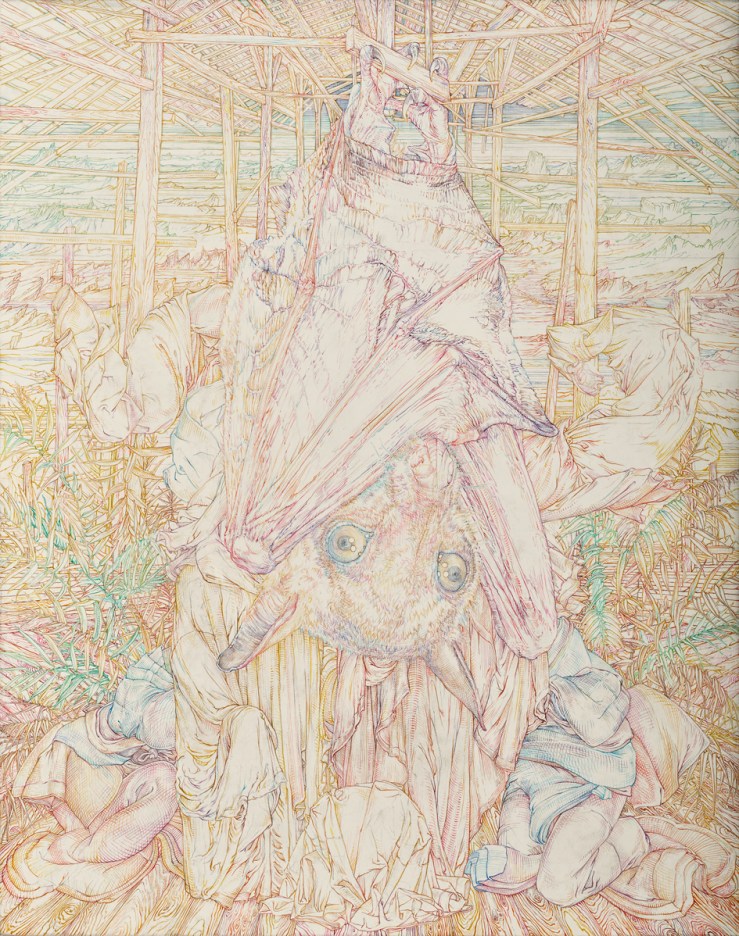
Untitled, 2013 by Koen De Cock

Read Edgar Allan Poe’s doppelgänger tale “William Wilson”


30177927321_1f58ba0c24_o
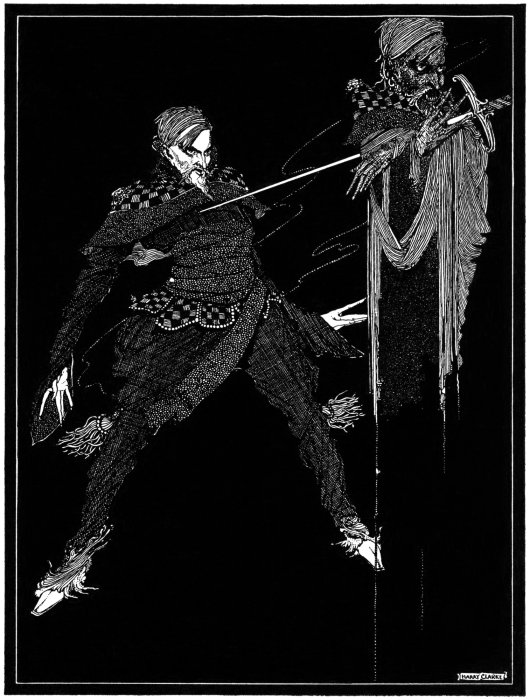
Harry Clarke’s 1919 illustration for “William Wilson”

“William Wilson”

by

Edgar Allan Poe


What say of it? what say of CONSCIENCE grim, That spectre in my path? Chamberlayne’s Pharronida.

LET me call myself, for the present, William Wilson. The fair page now lying before me need not be sullied with my real appellation. This has been already too much an object for the scorn—for the horror—for the detestation of my race. To the uttermost regions of the globe have not the indignant winds bruited its unparalleled infamy? Oh, outcast of all outcasts most abandoned!—to the earth art thou not forever dead? to its honors, to its flowers, to its golden aspirations?—and a cloud, dense, dismal, and limitless, does it not hang eternally between thy hopes and heaven?

I would not, if I could, here or to-day, embody a record of my later years of unspeakable misery, and unpardonable crime. This epoch—these later years—took unto themselves a sudden elevation in turpitude, whose origin alone it is my present purpose to assign. Men usually grow base by degrees. From me, in an instant, all virtue dropped bodily as a mantle. From comparatively trivial wickedness I passed, with the stride of a giant, into more than the enormities of an Elah-Gabalus. What chance—what one event brought this evil thing to pass, bear with me while I relate. Death approaches; and the shadow which foreruns him has thrown a softening influence over my spirit. I long, in passing through the dim valley, for the sympathy—I had nearly said for the pity—of my fellow men. I would fain have them believe that I have been, in some measure, the slave of circumstances beyond human control. I would wish them to seek out for me, in the details I am about to give, some little oasis of fatality amid a wilderness of error. I would have them allow—what they cannot refrain from allowing—that, although temptation may have erewhile existed as great, man was never thus, at least, tempted before—certainly, never thus fell. And is it therefore that he has never thus suffered? Have I not indeed been living in a dream? And am I not now dying a victim to the horror and the mystery of the wildest of all sublunary visions?

I am the descendant of a race whose imaginative and easily excitable temperament has at all times rendered them remarkable; and, in my earliest infancy, I gave evidence of having fully inherited the family character. As I advanced in years it was more strongly developed; becoming, for many reasons, a cause of serious disquietude to my friends, and of positive injury to myself. I grew self-willed, addicted to the wildest caprices, and a prey to the most ungovernable passions. Weak-minded, and beset with constitutional infirmities akin to my own, my parents could do but little to check the evil propensities which distinguished me. Some feeble and ill-directed efforts resulted in complete failure on their part, and, of course, in total triumph on mine. Thenceforward my voice was a household law; and at an age when few children have abandoned their leading-strings, I was left to the guidance of my own will, and became, in all but name, the master of my own actions. Continue reading “Read Edgar Allan Poe’s doppelgänger tale “William Wilson””

L’Alzana — Cagnaccio di San Pietro

cagnaccio-di-san-pietro-lalzana-1926

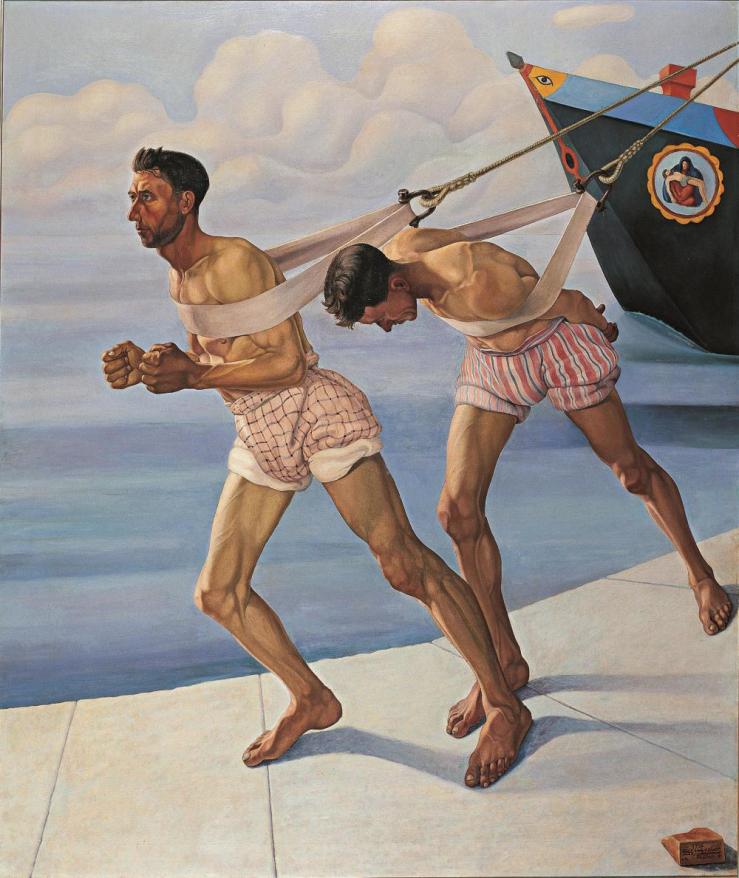
L’Alzana, 1926 by Cagnaccio di San Pietro (1897 – 1946)