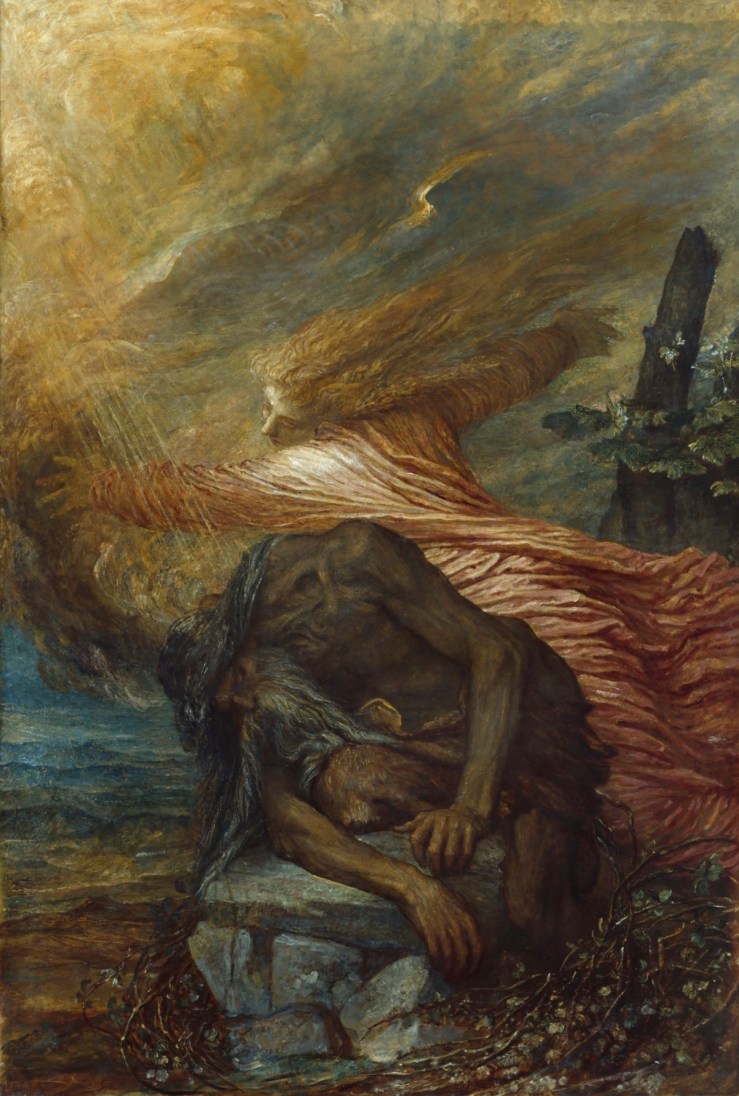
The Death of Cain — George Frederick Watts

mgajwrisi0bkvzidmwha

The Death of Cain, c. 1872 by George Frederick Watts (1817-1904)

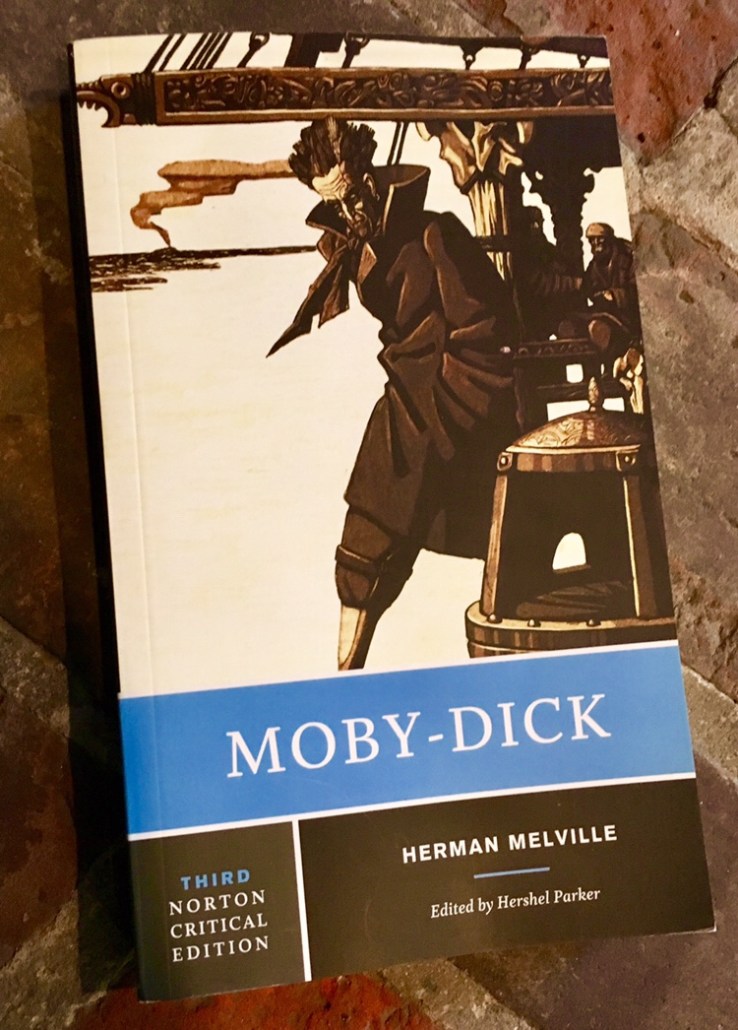
(Another) Moby-Dick (Book acquired, 26 March 2018)

img_9433

While I wasn’t thrilled to return to work after a pleasant Spring Break, I was very happy to find a copy of Herman Melville’s Moby-Dick in the campus mail today. A Norton book rep visited our campus before the break and asked what my favorite book was. It was kind of her to send me their new critical edition.

I wrote a post almost five years ago about the various versions of Moby-Dick that I’ve accumulated (including a Norton Critical Edition). Since that post, I’ve picked up two more illustrated children’s versions, another comic book version, as well as an edition illustrated by Barry Moser. I will almost certainly reread the book this year.

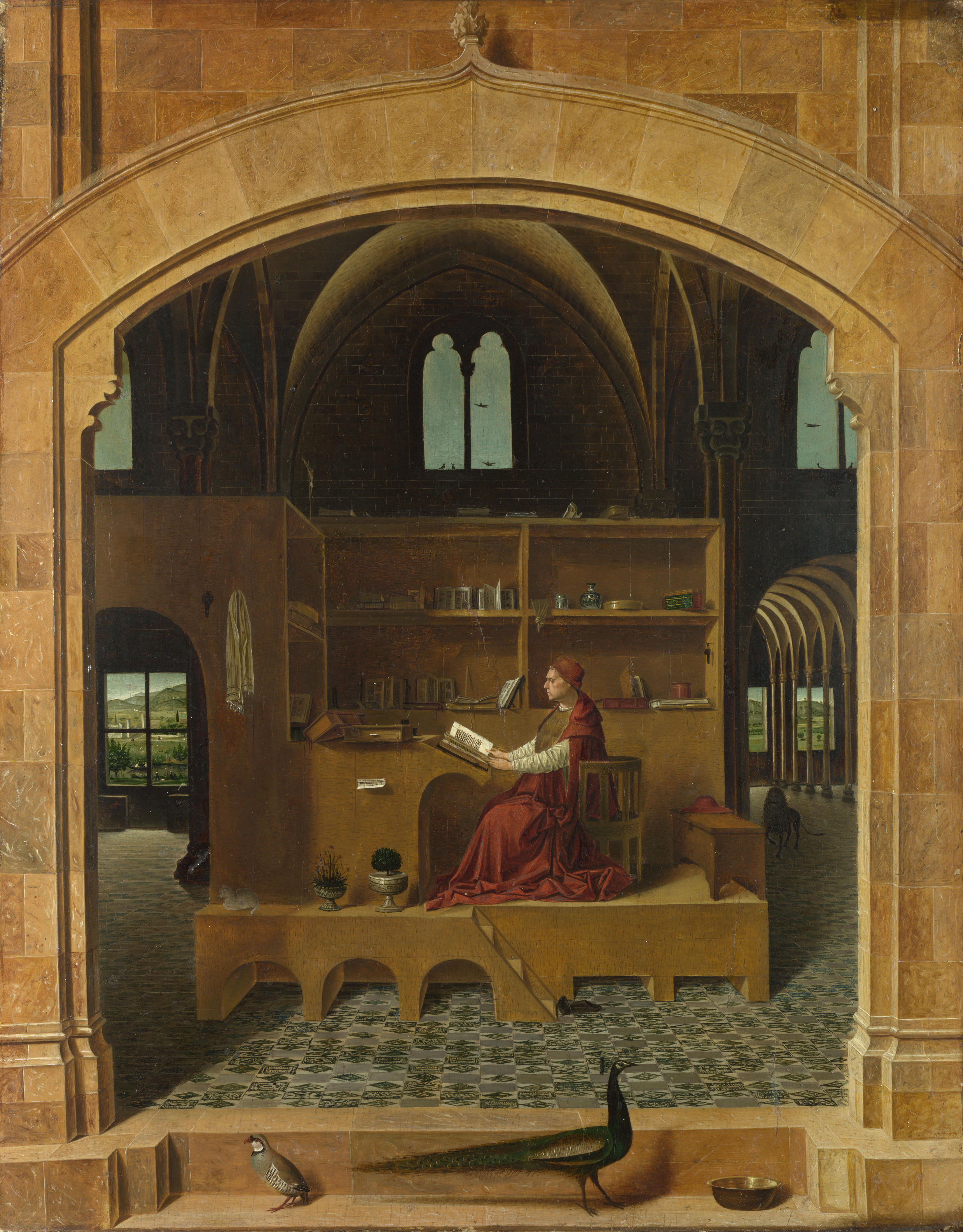
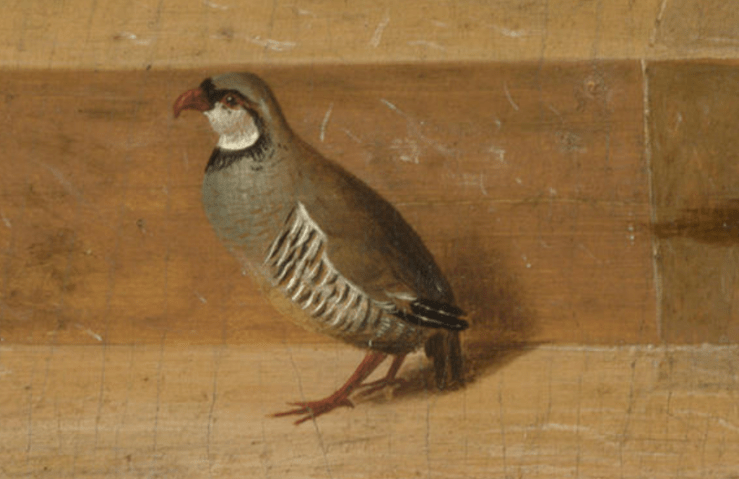
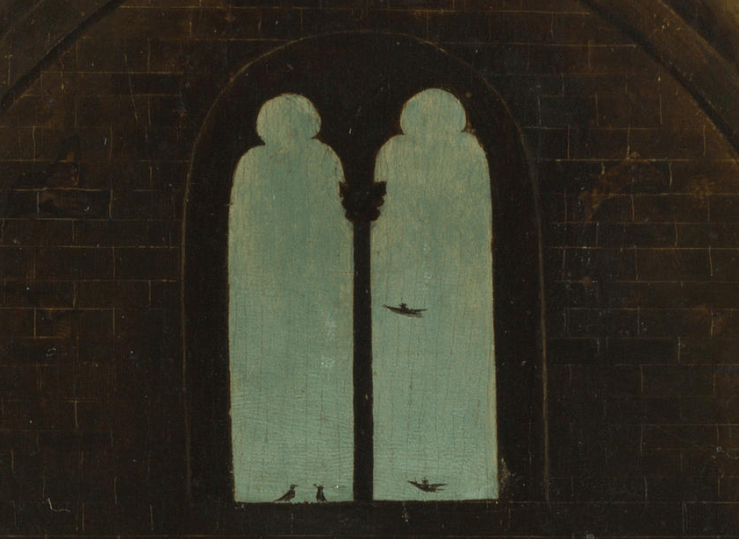
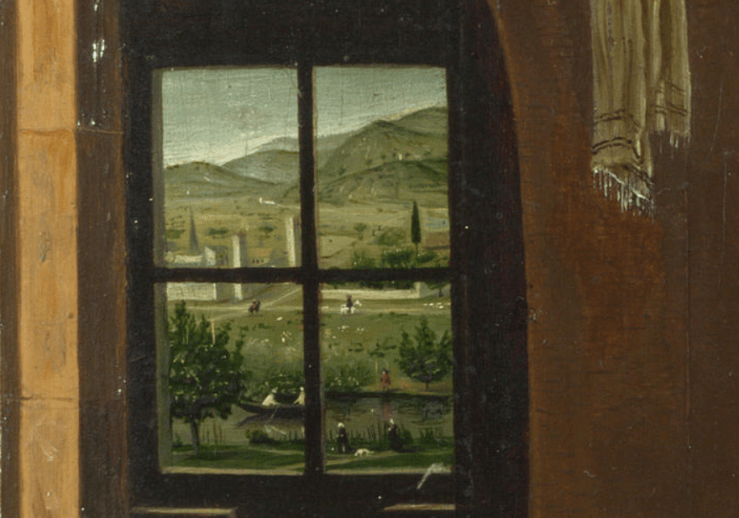
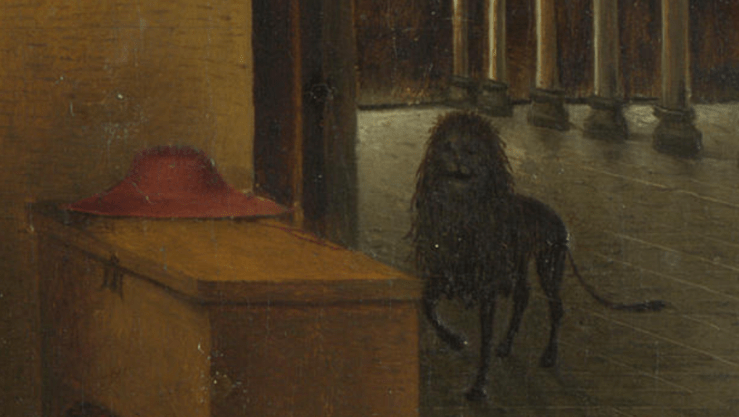
St. Jerome in His Study — Antonello da Messina

about 1475

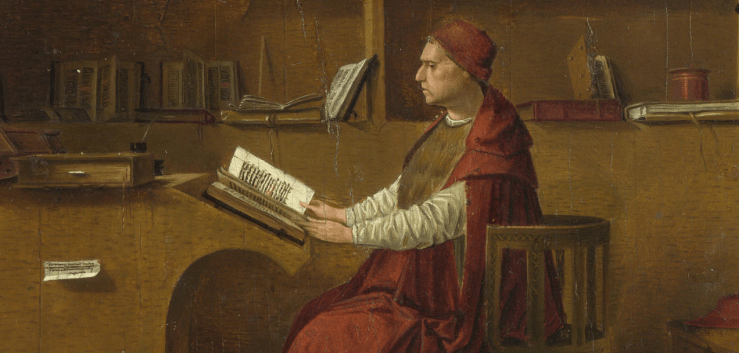
Screenshot 2018-03-26 at 1.38.47 PMScreenshot 2018-03-26 at 1.39.30 PMScreenshot 2018-03-26 at 1.38.21 PMScreenshot 2018-03-26 at 1.39.56 PMScreenshot 2018-03-26 at 1.39.08 PMScreenshot 2018-03-26 at 1.40.59 PM

St. Jerome in His Study, c. 1475 by Antonello da Messina (c.1430 – 1479)

You tell a story because a statement would be inadequate (Flannery O’Connor)

When you can state the theme of a story, when you can separate it from the story itself, then you can be sure the story is not a very good one. The meaning of a story has to be embodied in it, has to be made concrete in it. A story is a way to say something that can’t be said any other way, and it takes every word in the story to say what the meaning is. You tell a story because a statement would be inadequate. When anybody asks what a story is about, the only proper thing is to tell him to read the story. The meaning of fiction is not abstract meaning but experienced meaning, and the purpose of making statements about the meaning of a story is only to help you experience that meaning more fully.

From Flannery O’Connor’s essay “Writing Short Stories.” Collected in Mystery and Manners.

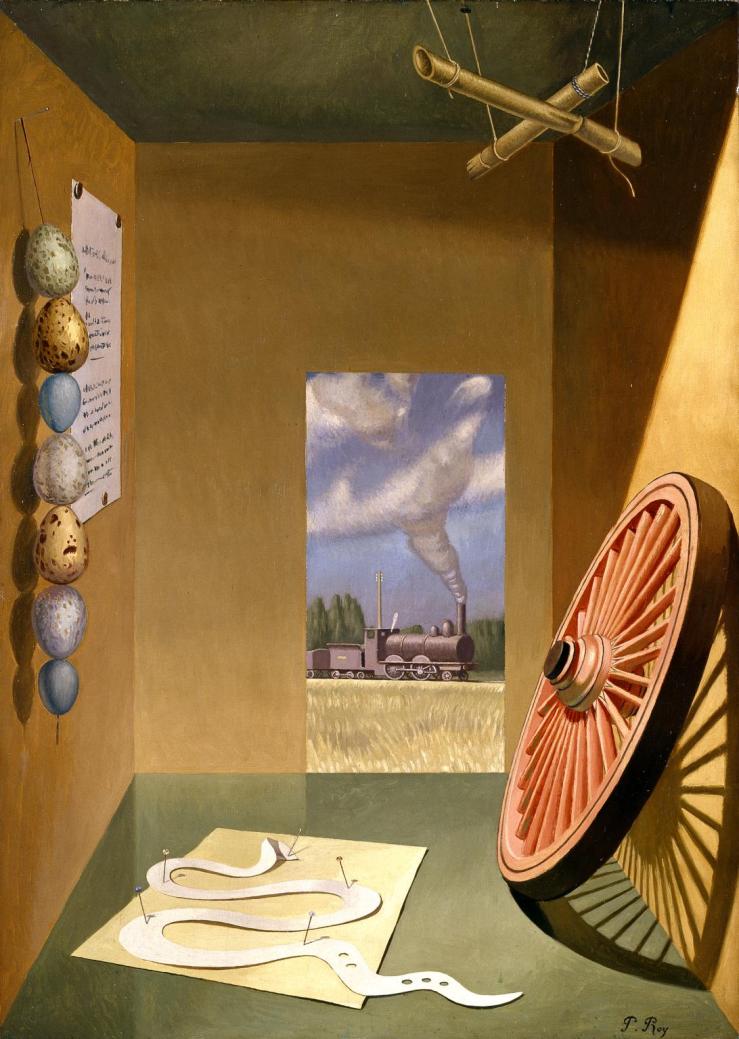
A Naturalist’s Study — Pierre Roy

A Naturalist's Study 1928 by Pierre Roy 1880-1950

A Naturalist’s Study, 1928 by Pierre Roy (1880–1950)

St. Genevieve — Élisabeth Vigée Le Brun

stgenevieve

St. Genevieve, 1793 by Élisabeth Vigée Le Brun (1755—1842)

Like trying to read a hundred poems at once | Nathaniel Hawthorne’s journal entry for March 24th, 1856

We first went into Wolsey’s great Hall, up a most spacious staircase, the walls and ceiling of which were covered with an allegorical fresco by Verrio, wonderfully bright and well preserved; and without caring about the design or execution, I greatly liked the brilliancy of the colors. The great Hall is a most noble and beautiful room, above a hundred feet long and sixty high and broad. Most of the windows are of stained or painted glass, with elaborate designs, whether modern or ancient I know not, but certainly brilliant in effect. The walls, from the floor to perhaps half their height, are covered with antique tapestry, which, though a good deal faded, still retains color enough to be a very effective adornment, and to give an idea of how rich a mode of decking a noble apartment this must have been. The subjects represented were from Scripture, and the figures seemed colossal. On looking closely at this tapestry, you could see that it was thickly interwoven with threads of gold, still glistening. The windows, except one or two that are long, do not descend below the top of this tapestry, and are therefore twenty or thirty feet above the floor; and this manner of lighting a great room seems to add much to the impressiveness of the enclosed space. The roof is very magnificent, of carved oak, intricately and elaborately arched, and still as perfect to all appearance as when it was first made. There are banners, so fresh in their hues, and so untattered, that I think they must be modern, suspended along beneath the cornice of the hall, and exhibiting Wolsey’s arms and badges. On the whole, this is a perfect sight in its way.

Next to the hall there is a withdrawing-room, more than seventy feet long, and twenty-five feet high. The walls of this apartment, too, are covered with ancient tapestry, of allegorical design, but more faded than that of the hall. There is also a stained-glass window; and a marble statue of Venus on a couch, very lean and not very beautiful; and some cartoons of Carlo Cignani, which have left no impression on my memory; likewise, a large model of a splendid palace of some East Indian nabob.

I am not sure, after all, that Verrio’s frescoed grand staircase was not in another part of the palace; for I remember that we went from it through an immensely long suite of apartments, beginning with the Guard-chamber. All these rooms are wainscoted with oak, which looks new, being, I believe, of the date of King William’s reign. Over many of the doorways, or around the panels, there are carvings in wood by Gibbons, representing wreaths of flowers, fruit, and foliage, the most perfectly beautiful that can be conceived; and the wood being of a light hue (lime-wood, I believe), it has a fine effect on the dark oak panelling. The apartments open one beyond another, in long, long, long succession,–rooms of state, and kings’ and queens’ bedchambers, and royal closets bigger than ordinary drawing-rooms, so that the whole suite must be half a mile, or it may be a mile, in extent. From the windows you get views of the palace-grounds, broad and stately walks, and groves of trees, and lawns, and fountains, and the Thames and adjacent country beyond. The walls of all these rooms are absolutely covered with pictures, including works of all the great masters, which would require long study before a new eye could enjoy them; and, seeing so many of them at once, and having such a nothing of time to look at them all, I did not even try to see any merit in them. Vandyke’s picture of Charles I., on a white horse beneath an arched gateway, made more impression on me than any other, and as I recall it now, it seems as if I could see the king’s noble, melancholy face, and armed form, remembered not in picture, but in reality. All Sir Peter Lely’s lewd women, and Kneller’s too, were in these rooms; and the jolly old stupidity of George III. and his family, many times repeated; and pictures by Titian, Rubens, and other famous hands, intermixed with many by West, which provokingly drew the eye away from their betters. It seems to me that a picture, of all other things, should be by itself; whereas people always congregate them in galleries. To endeavor really to see them, so arranged, is like trying to read a hundred poems at once,–a most absurd attempt. Of all these pictures, I hardly recollect any so well as a ridiculous old travesty of the Resurrection and Last Judgment, where the dead people are represented as coming to life at the sound of the trumpet,–the flesh reëstablishing itself on the bones,–one man picking up his skull, and putting it on his shoulders,–and all appearing greatly startled, only half awake, and at a loss what to do next. Some devils are dragging away the damned by the heels and on sledges, and above sits the Redeemer and some angelic and sainted people, looking complacently down upon the scene!

From Nathaniel Hawthorne’s journal entry for March 24th, 1856. From Passages from the English Note-Books.

The boldface emphasis on the sentences in the last paragraph is mine.

The Chintz Couch — Ethel Sands

The Chintz Couch c.1910-11 by Ethel Sands 1873-1962

The Chintz Couch, 1911 by Ethel Sands (1873–1962)

Here was something which her consciousness could not wretchedly devour | From Iris Murdoch’s novel The Bell

the-painter-s-daughters-chasing-a-butterfly-1759
The Painter’s Daughters Chasing a Butterfly, c. 1756, Thomas Gainsborough

Dora had been in the National Gallery a thousand times and the pictures were almost as familiar to her as her own face. Passing between them now, as through a well-loved grove, she felt a calm descending on her. She wandered a little, watching with compassion the poor visitors armed with guide books who were peering anxiously at the masterpieces. Dora did not need to peer. She could look, as one can at last when one knows a great thing very well, confronting it with a dignity which it has itself conferred. She felt that the pictures belonged to her, and reflected ruefully that they were about the only thing that did. Vaguely, consoled by the presence of something welcoming and responding in the place, her footsteps took her to various shrines at which she had worshipped so often before: the great light spaces of Italian pictures, more vast and southern than any real South, the angels of Botticelli, radiant as birds, delighted as gods, and curling like the tendrils of a vine, the glorious carnal presence of Susanna Fourment, the tragic presence of Margarethe Trip, the solemn world of Piero della Francesca with its early-morning colours, the enclosed and gilded world of Crivelli. Dora stopped at last in front of Gainsborough’s picture of his two daughters. These children step through a wood hand in hand, their garments shimmering, their eyes serious and dark, their two pale heads, round full buds, like yet unlike.

Dora was always moved by the pictures. Today she was moved, but in a new way. She marvelled, with a kind of gratitude, that they were all still here, and her heart was filled with love for the pictures, their authority, their marvellous generosity, their splendour. It occurred to her that here at last was something real and something perfect. Who had said that, about perfection and reality being in the same place? Here was something which her consciousness could not wretchedly devour, and by making it part of her fantasy make it worthless. Even Paul, she thought, only existed now as someone she dreamt about; or else as a vague external menace never really encountered and understood. But the pictures were something real outside herself, which spoke to her kindly and yet in sovereign tones, something superior and good whose presence destroyed the dreary trance-like solipsism of her earlier mood. When the world had seemed to be subjective it had seemed to be without interest or value. But now there was something else in it after all.

These thoughts, not clearly articulated, flitted through Dora’s mind. She had never thought about the pictures in this way before; nor did she draw now any very explicit moral. Yet she felt that she had had a revelation. She looked at the radiant, sombre, tender, powerful canvas of Gainsborough and felt a sudden desire to go down on her knees before it, embracing it, shedding tears.

From Iris Murdoch’s novel The Bell.

Art Appreciation Society (Glen Baxter)

img_9409

Books acquired, 15 March 2018

img_9396

Our campus library had a few tables piled down with books—mostly ones that came through donations, but also some discards. I tried not to be too greedy and snapped up these five. Virginia Woolf’s A Writer’s Diary was the one I was probably most interested in, as well as John Gardner’s , which I’ve read parts of before. Colette has always struck me as one of those authors whose prolific output is daunting, and I’m not sure if her Claudine novels are the best place to start…but…free book. Hellman’s memoir of her HUAC testimony, Scoundrel Time, interested me with its simple, dynamic cover. And I’ve wanted to read more Lessing since The Golden Notebook. I’m not sure if I’ll get to any of these soon, but again…free books. 

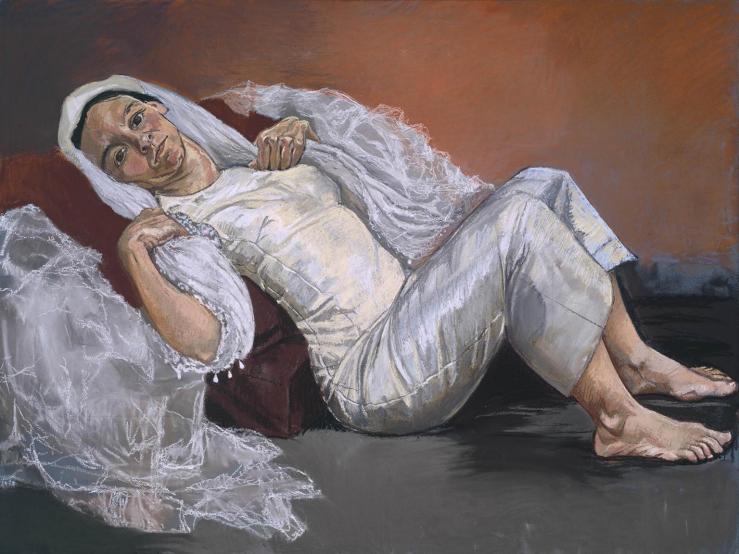
Bride — Paula Rego

Bride 1994 by Paula Rego born 1935

Bride, 1994 by Paul Rego (b. 1935)

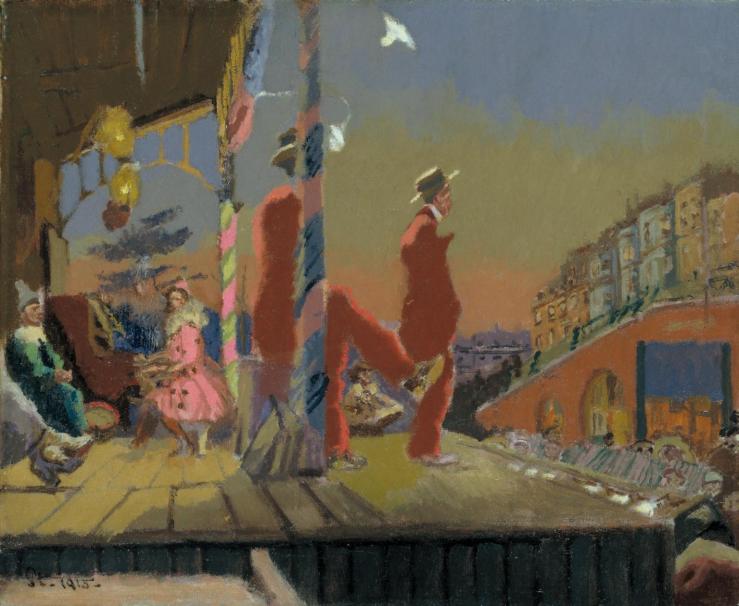
Brighton Pierrots — Walter Richard Sickert

Brighton Pierrots 1915 by Walter Richard Sickert 1860-1942

Brighton Pierrots, 1915 by Walter Richard Sickert (1860–1942)

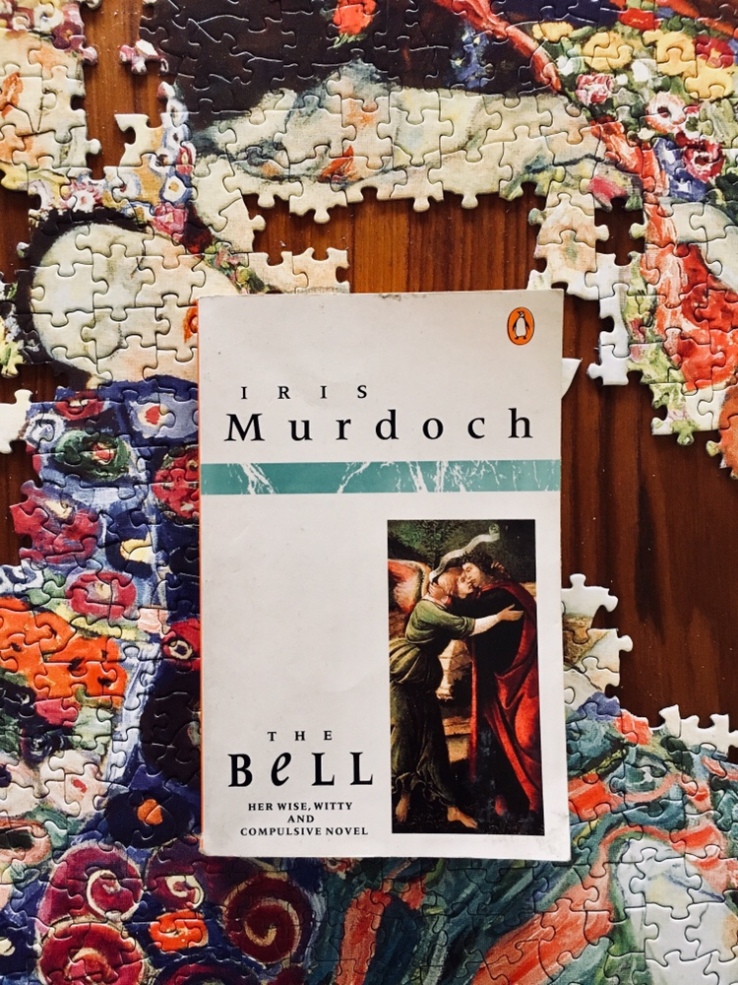
A passage from (and a short riff on) Iris Murdoch’s The Bell

img_9112

Dora got into the train. It was now very full indeed and people were sitting four a side. Before she sat down she inspected herself quickly in the mirror. In spite of all her awful experiences she looked good. She had a round well-formed face and a large mouth that liked to smile. Her eyes were a dark slaty blue and rather long and large. Art had darkened but not thinned her vigorous triangular eyebrows. Her hair was golden brown and grew in long flat strips down the side of her head, like ferns growing down a rock. This was attractive. Her figure was by no means what it had been.

She turned towards her seat. A large elderly lady shifted a little to make room. Feeling fat and hot in the smart featureless coat and skirt which she had not worn since the spring, Dora squeezed herself in. She hated the sensation of another human being wedged against her side. Her skirt was very tight. Her high-heeled shoes were tight too. She could feel her own perspiration and was beginning to smell that of others. It was a devilish hot day. She reflected all the same that she was lucky to have a seat, and with a certain satisfaction watched the corridor fill up with people who had no seats.

Another elderly lady, struggling through the crush, reached the door of Dora’s carriage and addressed her neighbour. ‘Ah, there you are, dear, I thought you were nearer the front.’ They looked at each other rather gloomily, the standing lady leaning at an angle through the doorway, her feet trapped in a heap of luggage. They began a conversation about how they had never seen the train so full. Dora stopped listening because a dreadful thought had struck her. She ought to give up her seat. She rejected the thought, but it came back. There was no doubt about it. The elderly lady who was standing looked very frail indeed, and it was only proper that Dora, who was young and healthy should give her seat to the lady who could then sit next to her friend. Dora felt the blood rushing to her face. She sat still and considered the matter. There was no point in being hasty. It was possible of course that while clearly admitting that she ought to give up her seat she might nevertheless simply not do so out of pure selfishness. This would in some ways be a better situation than what would have been the case if it had simply not occurred to her at all that she ought to give up her seat. On the other side of the seated lady a man was sitting. He was reading his newspaper and did not seem to be thinking about his duty. Perhaps if Dora waited it would occur to the man to give up his seat to the other lady? Unlikely. Dora examined the other inhabitants of the carriage. None of them looked in the least uneasy. Their faces, if not already buried in books, reflected the selfish glee which had probably been on her own a moment since as she watched the crowd in the corridor. There was another aspect to the matter. She had taken the trouble to arrive early, and surely ought to be rewarded for this. Though perhaps the two ladies had arrived as early as they could? There was no knowing. But in any case there was an elementary justice in the first comers having the seats. The old lady would be perfectly all right in the corridor. The corridor was full of old ladies anyway, and no one else seemed bothered by this, least of all the old ladies themselves! Dora hated pointless sacrifices. She was tired after her recent emotions and deserved a rest. Besides, it would never do to arrive at her destination exhausted. She regarded her state of distress as completely neurotic. She decided not to give up her seat.

She got up and said to the standing lady ‘Do sit down here, please. I’m not going very far, and I’d much rather stand anyway.’

‘How very kind of you!’ said the standing lady. ‘Now I can sit next to my friend. I have a seat of my own further down you know. Perhaps we can just exchange seats? Do let me help you to move your luggage.’

Dora glowed with delight. What is sweeter than the unhoped-for reward for the virtuous act?

From Iris Murdoch’s 1958 novel The Bell.

Iris Murdoch’s novel The Bell hooked me with its astonishing opening sentences: “Dora Greenfield left her husband because she was afraid of him. She decided six months later to return to him for the same reason.”

Those two simple, precise sentences foreground one of the major conflicts of The Bell, and also point towards the novel’s anxiety/comedy axis. There’s a comic beat to Murdoch’s rhythm that, paradoxically, simultaneously belies and highlights the terror under those two sentences. The rest of The Bell’s first chapter fills in the gaps between sentence one and sentence two, detailing the relationship between young Dora and her older husband Paul. The details of their troubled marriage reverberate with the same radical ambiguity we see in the first two sentences, a constant push-pull of desire and repulsion.

What’s most compelling for me here is Murdoch’s command of irony and free indirect speech. Murdoch inhabits Dora’s consciousness in a way that shows how the conflict between thought and emotion germinates, mutates, terminates, and often blooms into actions quite divorced from initial intention or desire. When Paul decides to send his departed wife an “allowance,” we get a wonderful syntactic example of how Murdoch captures the ambiguous disjunctions of thought and action: “Dora decided to refuse the money but accepted it.” Murdoch gives us one complete thought here, tacking on the key idea (“but accepted it”) in a dependent clause.

The long passage I’ve excerpted above (part of Chapter One, by the way) shows the same disjunction of thought and action, but at greater length. Not only did it make me laugh aloud, it also made me recognize part of myself in Dora—the extreme social anxiety, the narcissistic sense that others do not see what is happening within a social setting, the sense of selfish entitlement, etc.

The punchline in the episode is worth repeating: “She decided not to give up her seat. She got up and said to the standing lady ‘Do sit down here, please. I’m not going very far, and I’d much rather stand anyway.'” But that punchline is followed by a second punchline—the woman already has a seat. The episode culminates in a kind of callow but sincere moral victory.

I’m about half way through The Bell right now and loving it. As Murdoch layers the novel with perspective characters other than Dora, the overall picture gains depth, breadth, and complexity. Her sentences convey a psychological complexity that seems both raw and truthful, and yet those sentences are polished, refined, and quite funny. More thoughts to come.

Spring — Rene Magritte

8slur6j

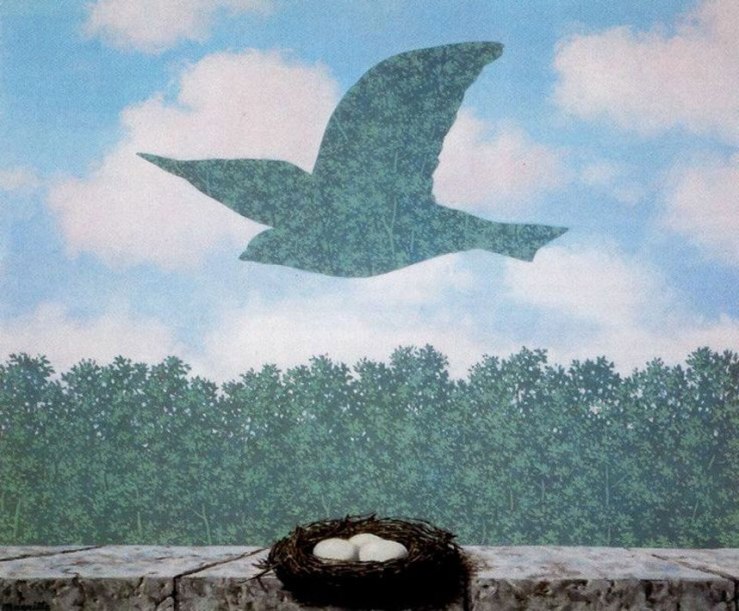
Spring, 1965 by Rene Magritte

Crawl under Your Desktop — Adrian Ghenie

tumblr_ozw0du6wnx1uxbwf5o1_1280

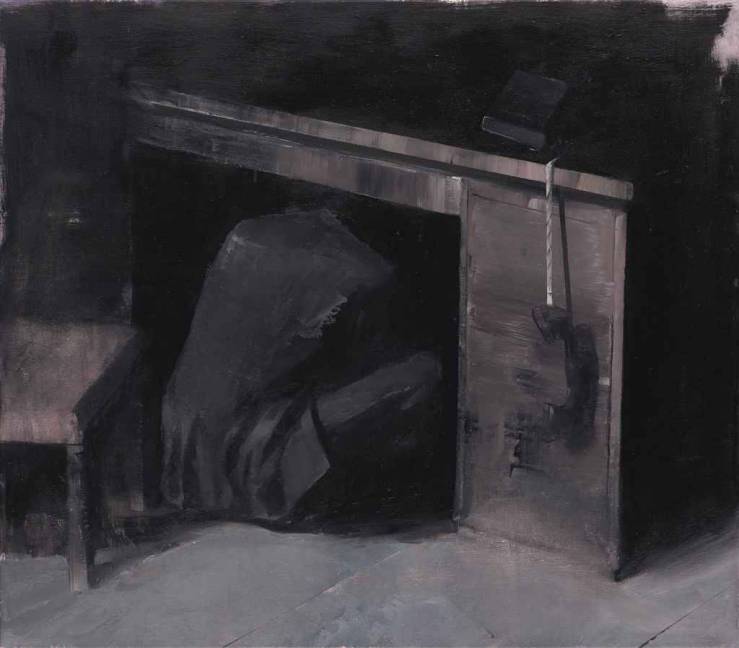
Crawl under your desktop, out of line of windows to avoid heat flash Burns, falling plaster, 2007, by Adrian Ghenie (b. 1977)

“A Haunted House,” a very short story by Virginia Woolf

“A Haunted House”

by

Virginia Woolf


Whatever hour you woke there was a door shutting. From room to room they went, hand in hand, lifting here, opening there, making sure—a ghostly couple.

“Here we left it,” she said. And he added, “Oh, but here too!” “It’s upstairs,” she murmured. “And in the garden,” he whispered. “Quietly,” they said, “or we shall wake them.”

But it wasn’t that you woke us. Oh, no. “They’re looking for it; they’re drawing the curtain,” one might say, and so read on a page or two. “Now they’ve found it,” one would be certain, stopping the pencil on the margin. And then, tired of reading, one might rise and see for oneself, the house all empty, the doors standing open, only the wood pigeons bubbling with content and the hum of the threshing machine sounding from the farm. “What did I come in here for? What did I want to find?” My hands were empty. “Perhaps it’s upstairs then?” The apples were in the loft. And so down again, the garden still as ever, only the book had slipped into the grass.

But they had found it in the drawing room. Not that one could ever see them. The window panes reflected apples, reflected roses; all the leaves were green in the glass. If they moved in the drawing room, the apple only turned its yellow side. Yet, the moment after, if the door was opened, spread about the floor, hung upon the walls, pendant from the ceiling—what? My hands were empty. The shadow of a thrush crossed the carpet; from the deepest wells of silence the wood pigeon drew its bubble of sound. “Safe, safe, safe,” the pulse of the house beat softly. “The treasure buried; the room …” the pulse stopped short. Oh, was that the buried treasure?

A moment later the light had faded. Out in the garden then? But the  trees spun darkness for a wandering beam of sun. So fine, so rare, coolly sunk beneath the surface the beam I sought always burnt behind the glass. Death was the glass; death was between us; coming to the woman first, hundreds of years ago, leaving the house, sealing all the windows; the rooms were darkened. He left it, left her, went North, went East, saw the stars turned in the Southern sky; sought the house, found it dropped beneath the Downs. “Safe, safe, safe,” the pulse of the house beat gladly. “The Treasure yours.”

The wind roars up the avenue. Trees stoop and bend this way and that. Moonbeams splash and spill wildly in the rain. But the beam of the lamp falls straight from the window. The candle burns stiff and still. Wandering through the house, opening the windows, whispering not to wake us, the ghostly couple seek their joy.

“Here we slept,” she says. And he adds, “Kisses without number.” “Waking in the morning—” “Silver between the trees—” “Upstairs—” “In the garden—” “When summer came—” “In winter snowtime—” The doors go shutting far in the distance, gently knocking like the pulse of a heart.

Nearer they come; cease at the doorway. The wind falls, the rain slides silver down the glass. Our eyes darken; we hear no steps beside us; we see no lady spread her ghostly cloak. His hands shield the lantern. “Look,” he breathes. “Sound asleep. Love upon their lips.”

Stooping, holding their silver lamp above us, long they look and deeply. Long they pause. The wind drives straightly; the flame stoops slightly. Wild beams of moonlight cross both floor and wall, and, meeting, stain the faces bent; the faces pondering; the faces that search the sleepers and seek their hidden joy.

“Safe, safe, safe,” the heart of the house beats proudly. “Long years—” he sighs. “Again you found me.” “Here,” she murmurs, “sleeping; in the garden reading; laughing, rolling apples in the loft. Here we left our treasure—” Stooping, their light lifts the lids upon my eyes. “Safe! safe! safe!” the pulse of the house beats wildly. Waking, I cry “Oh, is this your buried treasure? The light in the heart.”