Zombies at the bad restaurant (Barry Hannah)

Raymond suddenly knew it was time to return to the bad restaurant and then his ache for visions would be satisfied. The bad restaurant would stay when only zombies prevailed. It served food for the dead, tired fishermen and humble vacationers worsened the instant they sat down and had the bad water. Thousands like it at state lines, watering holes in the great western deserts, far flung Idaho and Maine. Their owners say, “We just couldn’t help it, we were food people. We never said good food people.”

Raymond was in the pawnshop looking at a delightful saxophone and about to buy it when the feeling hit him. What he would see and be transformed by was right next door to his own cottage, not out in the fars, the wides, the bars or churches. He put the saxophone down and within seconds saw a shadow past the shop. It was a man hobbling and slurring of the few words he could manage, and Raymond was positive it was Mimi’s old ex, what was left of him after the suicide attempt in Vicksburg, rolling and pitching up Market and the pawns to find Raymond. He went out to the walk and saw nothing but a red car leaving. And he followed it in his own. Mimi it was in Miami singing with another band for a couple of weeks. He was alone. He knew this was right. He had not eaten for two days, for no good reason. The moment was pressing.

A zombie had just waited on him in the pawnshop, a man who stood there remarking on the history of this saxophone. In apparently good health, in decent clothes and well groomed, polite, but quite obviously dead and led by someone beyond. You could look at them and know they are spaces ahead into othernewss. Not at all adolescent either, that natural Teutonic drifting or the sullenness without content. They might still be people, but unlikely.

Everything about the zombie is ravaged except his obsessions, thought Raymond, following the red car. Dead to every other touch. They simply imitate when there is movement or sound. They imitate the conversations around them to seem human to one another. He had seen them in scores from the airports to the bandstands imitating one another, mimicking the next mimicker in no time, no space, no place, no history.

The bad restaurant even had bad-food loungers and loiterers, hard to shake when they got a good imitation of you going. The restaurant with its RESTAURANT sign. Its mimicking of the dining life, yet no edible food, bad water and a weak tea to go with that. Refill that beige for you, sir? Every dish served in contempt for what used to be human. Rations for an unannounced war.

From Barry Hannah’s 2001 novel Yonder Stands Your Orphan

September — Theodor Severin Kittelsen

EPSON scanner image

Covenants — Samuel Bak

bk1133_images

Covenants, 2007 by Samuel Bak (b. 1933)

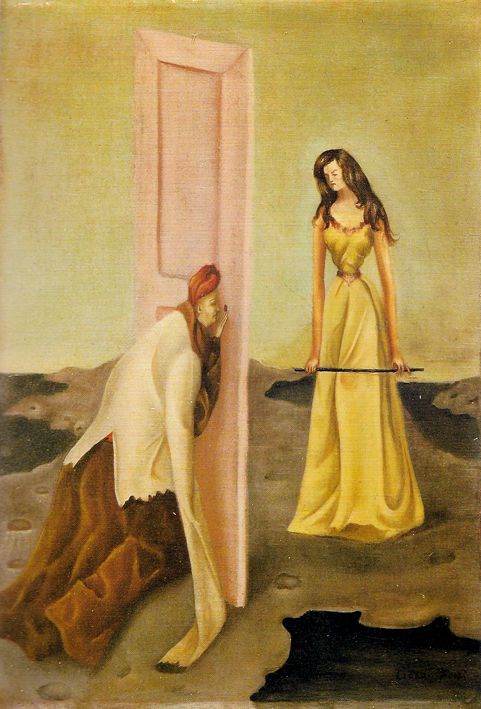
The Curious — Leonor Fini

LEONOR FINI-1936 LA CURIEUSE

The Curious, 1936 by Leonor Fini (1907-1996)

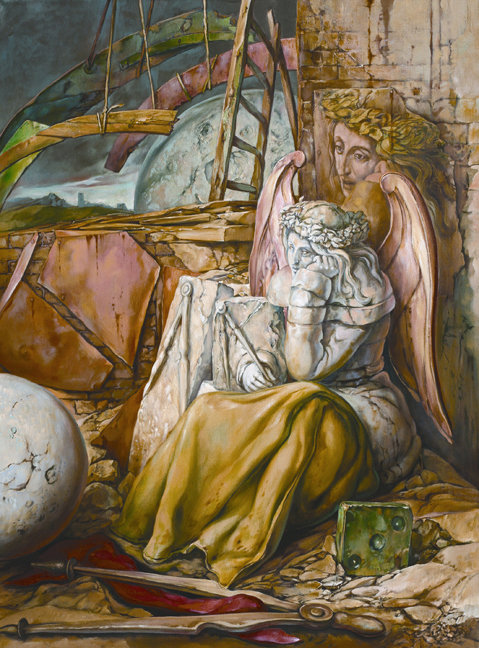
Venus, Mars, and Cupid — Riccardo Tommasi Ferroni

venere_marte_amore_jpg

Venus, Mars, and Cupid, 1972 by Riccardo Tommasi Ferroni (1934-2000)

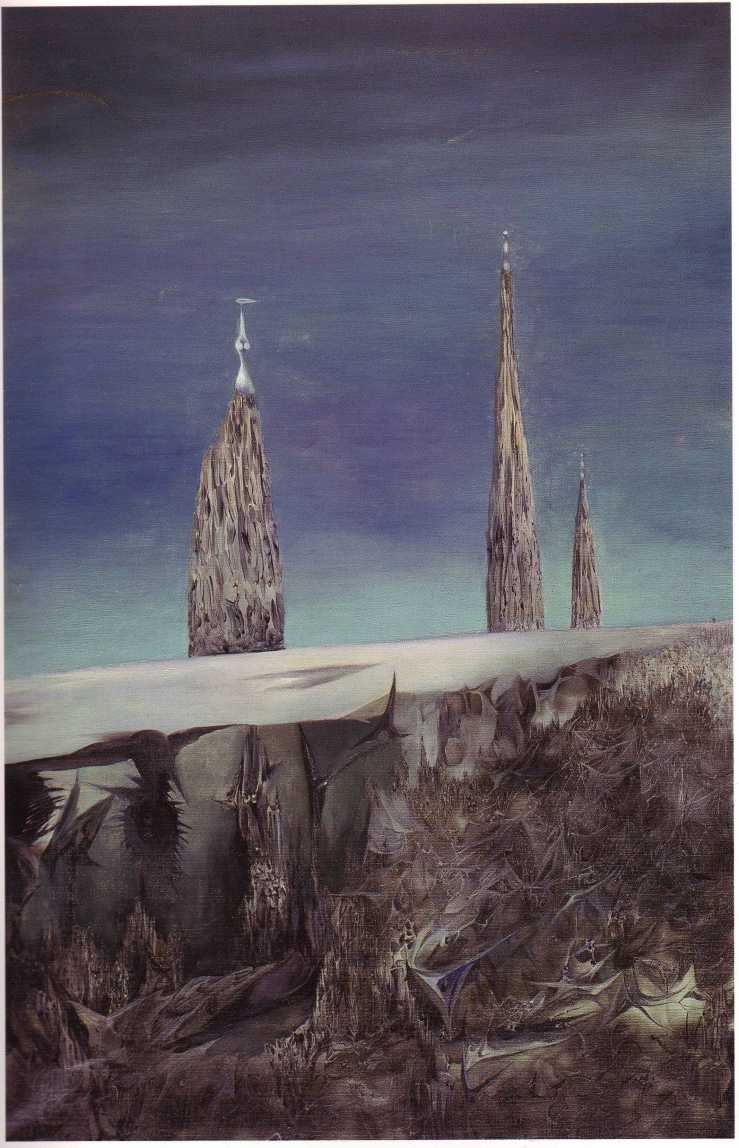
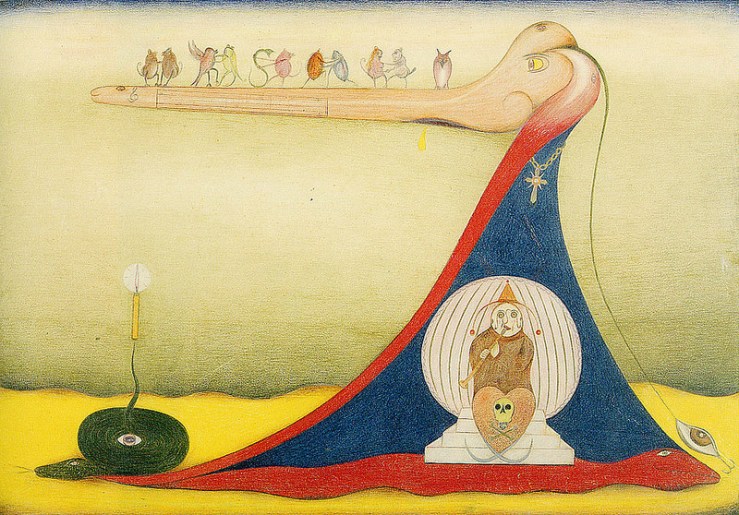
Fata Alaska — Wolfgang Paalen

wolfgang-paalen-fata-alaska-19371

Fata Alaska, 1937 by Wolfgang Paalen (1905-1959)

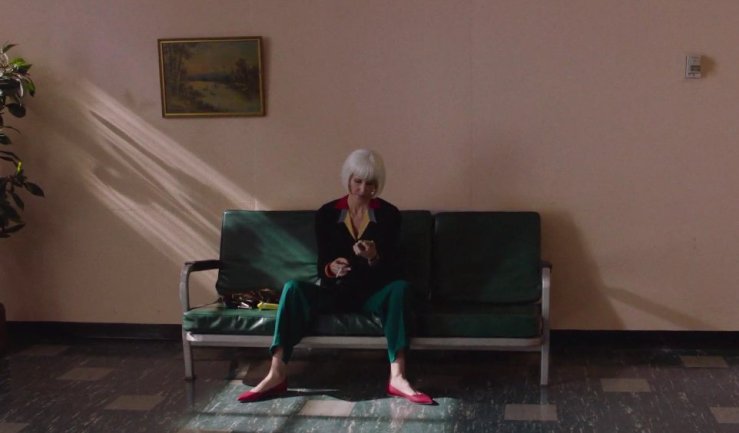
Twin Peaks Finale Week at 3:AM Magazine

DEY05siUwAAOlCD (2)

It’s Twin Peaks: The Return Finale Week over at 3 A.M. Magazine. They’re running a series of essays about the new season for the rest of the week. Yesterday, we got to read Jeff Woods’s “Hurricane Bob: Part 1,” which deftly connects the many frequencies of current energy flows in politics, culture, and visual art in a discussion about The Return. Today, they posted my essay on mediacy & electricity (“Algorithmic Weather: Mediacy in Twin Peaks: The Return“) something that’s fascinated me this new season, and a long-term preoccupation of Lynch’s that perhaps reaches its zenith in The Return. Below is an excerpt:

Drone cameras hover over darkened Douglas (Dougie) firs, panoramic views of Las Vegas and Manhattan. The same point-of-view takes in the apocalyptic mushroom cloud. We are to believe that modern electricity, introduced to our world through innovations in military technology, expressed through wall sockets, telephone lines, Skype calls, and cellular data, has its roots in the creation of both the evil and good forces in the universe of Twin Peaks. The Mother, as she is known, spews out the evil force of BOB; the Fireman counters with the innocence known as “Laura”. A frog-like insect crawls into the mouth of a girl hypnotized into sleep by a Woodsman reciting a poem over compromised radio waves. Media determine the situation.

Bodies are made metaphors for data. In Episode 2, Sam explains to Tracy that all he has to do watch what happens in the glass box. Here, the show winks at us—the glass box of television, but also a metaphor for technologies that mediate and express electricity. Recall that they miss Cooper’s appearance, but are privy to what opens up between worlds: the Mother enters through the glass box and eviscerates them. Additionally, new faces are introduced in almost every episode, many of which rarely return. They are given names and ample screen time. They are there solely to deliver information, they are mere voice recorders.


100 by Jack Kirby

Art by Jack Kirby (et al), 28 Aug. 1917-6 Feb. 1994. The images in this post come from numerous sources, but the majority come from Mars Will Send No MoreMars Will Send No MoreMars Will Send No More, Cap’n’s Comics, and The Jack Kirby Museum.

Dogs are in space and time (Barry Hannah)

“Most animals live a short while,” said Ulrich, “but I had a revelation. That we cannot know the intensity of their lives, which is hundreds of times more attuned than ours. They don’t talk because they don’t need speech. A dog, when it puts its head out a car window, smells almost everything in a county, a world we never even suspect and have no description for. That is why I am daft. I have flown and smelled the smells, Carl Bob. I have known life by my nose. That’s why the dog looks so ecstatic sniffing in the wind. They smell a thousand times more than we do. We could only know it as hallucinatory sense. Dogs are in space and time. We can only know one or the other, plodding, toddling. Not to mention hearing. And taste. Water is fifty times more delicious to them. We must not pity them, a cheap passive hobby. They live huge lives before they die. Watch how happy sleep is to them, and right next to waking. They live both at once. We are predators not only of meat but of essence, my friend. We want to be them because they have spoken to us without speaking and we can hardly bear their superiority.”

From Barry Hannah’s 2001 novel Yonder Stands Your Orphan.

The Moralistic Moon Ballet Culture — Friedrich Schroder-Sonnenstern

15718617902_b6e563fcee_c

The Moralistic Moon Ballet, 1955 by Friedrich Schroder-Sonnenstern (1892-1982)

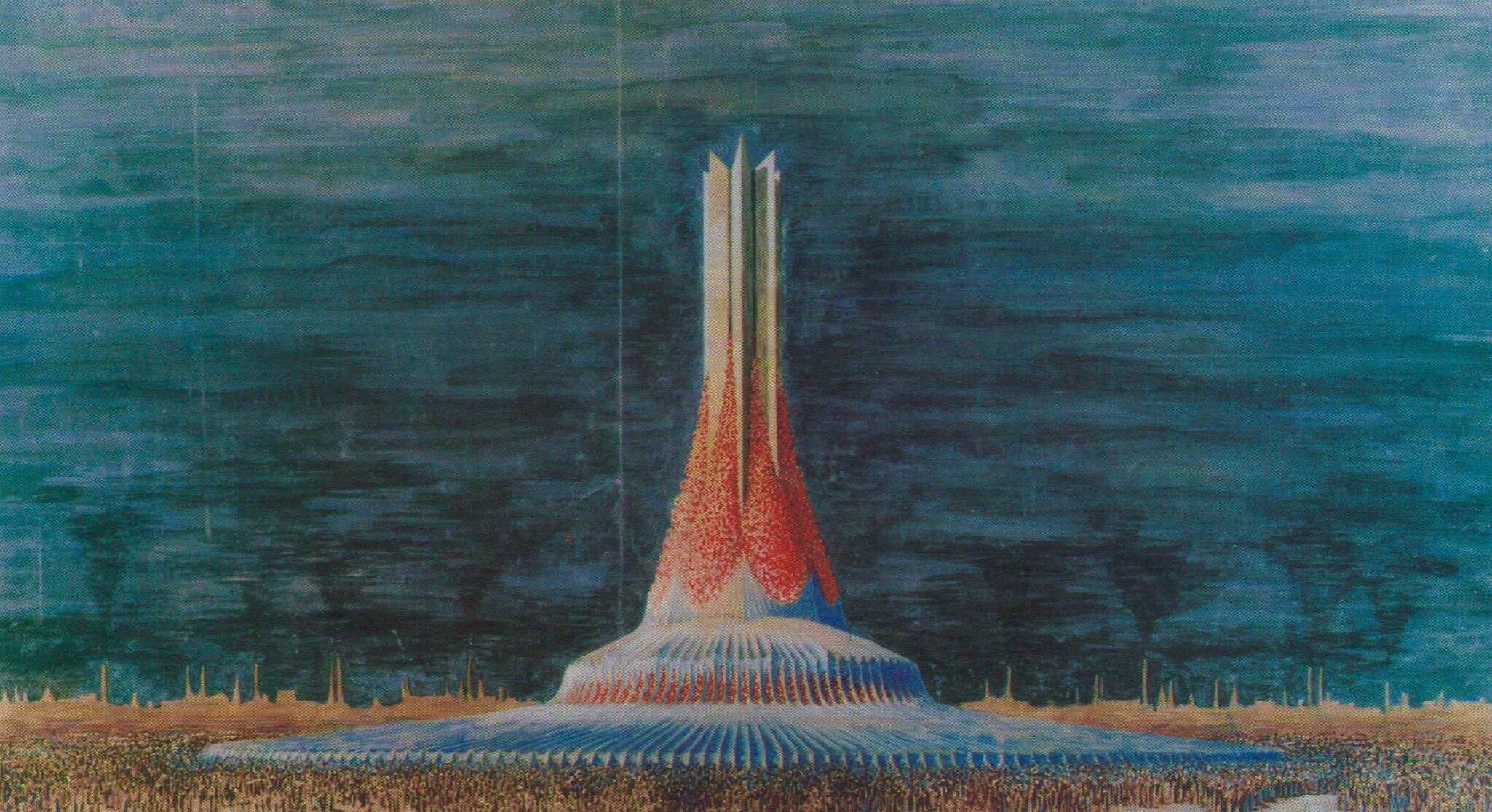
Tower of Joy — Wassili Luckhardt

img_7755

Tower of Joy, 1920 by Wassili Luckhardt (1889-1972)

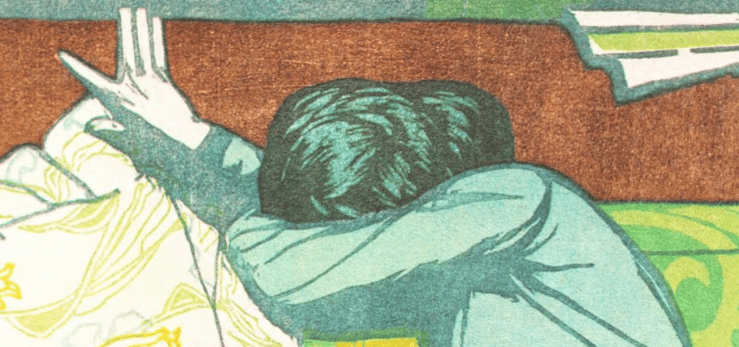
The Cushion — Max Kurzweil

the-cushio-1903Screenshot 2017-08-26 at 4.12.46 PM

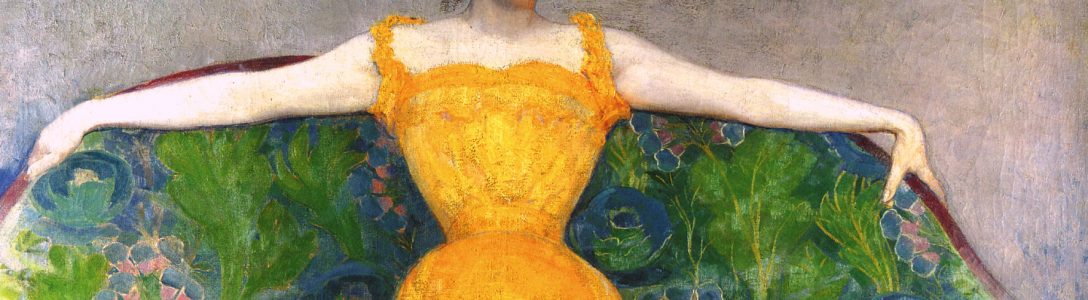
The Cushion, 1903 by Max Kurzweil (1867-1916)

He made a long eulogy on his dog Tiger | Nathaniel Hawthorne’s journal entry for August 26th, 1838

A rough-looking, sunburnt, soiled-shirted, odd, middle-aged little man came to the house a day or two ago, seeking work. He had come from Ohio, and was returning to his native place, somewhere in New England, stopping occasionally to earn money to pay his way. There was something rather ludicrous in his physiognomy and aspect. He was very free to talk with all and sundry. He made a long eulogy on his dog Tiger, yesterday, insisting on his good moral character, his not being quarrelsome, his docility, and all other excellent qualities that a huge, strong, fierce mastiff could have. Tiger is the bully of the village, and keeps all the other dogs in awe. His aspect is very spirited, trotting massively along, with his tail elevated and his head likewise. “When he sees a dog that’s anything near his size, he’s apt to growl a little,”–Tiger had the marks of a battle on him,–“yet he’s a good dog.”

From Nathaniel Hawthorne’s journal entry for August 26th, 1838. Collected in Passages from the American Note-Books.

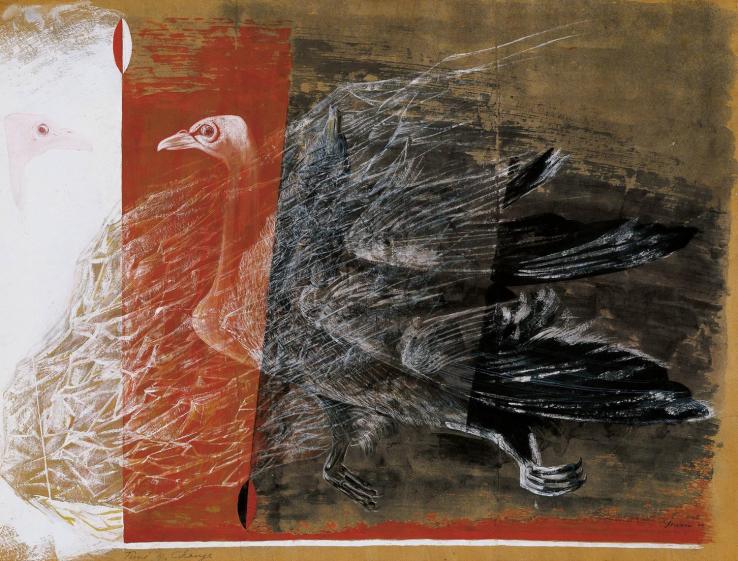
Time of Change – Morris Graves

Morris Graves time-of-change-1943.jpg

Time of Change, 1943 by Morris Graves (1910-2001)

In the passive voice, something happened, somebody was killed and so on (Barry Hannah)

The sheriff was doing a five-minute commentary on the Weekend Review on television Saturday night. Both Dee and Melanie watched.

“The world is full of middle-aged men who seek revenge. The anger passes for most when they see there is no way. The rate of incarceration is very low for first-time offenders of sixty. For some, there is a bigger engine of hate even then, running at the red line and very vigilant toward what they might consider insults or even bossiness. They aren’t just having it, the engine, like the others. They are it. They have not been aware of this, and their acts confound them. Those are ones you see on television or in the newspapers discussing sodomy, rape, kidnapping and murder in the passive voice, something happened, somebody was killed and so on, sometimes even giggling. ‘Mistakes were made, yes, when she was killed. I can’t remember, really.’ Such as that.”

From Barry Hannah’s 2001 novel Yonder Stands Your Orphan.

Over and Above #14 — Clarence Holbrook Carter

img_2066

Over and Above #14, 1964 by Clarence Holbrook Carter (1904-2000)