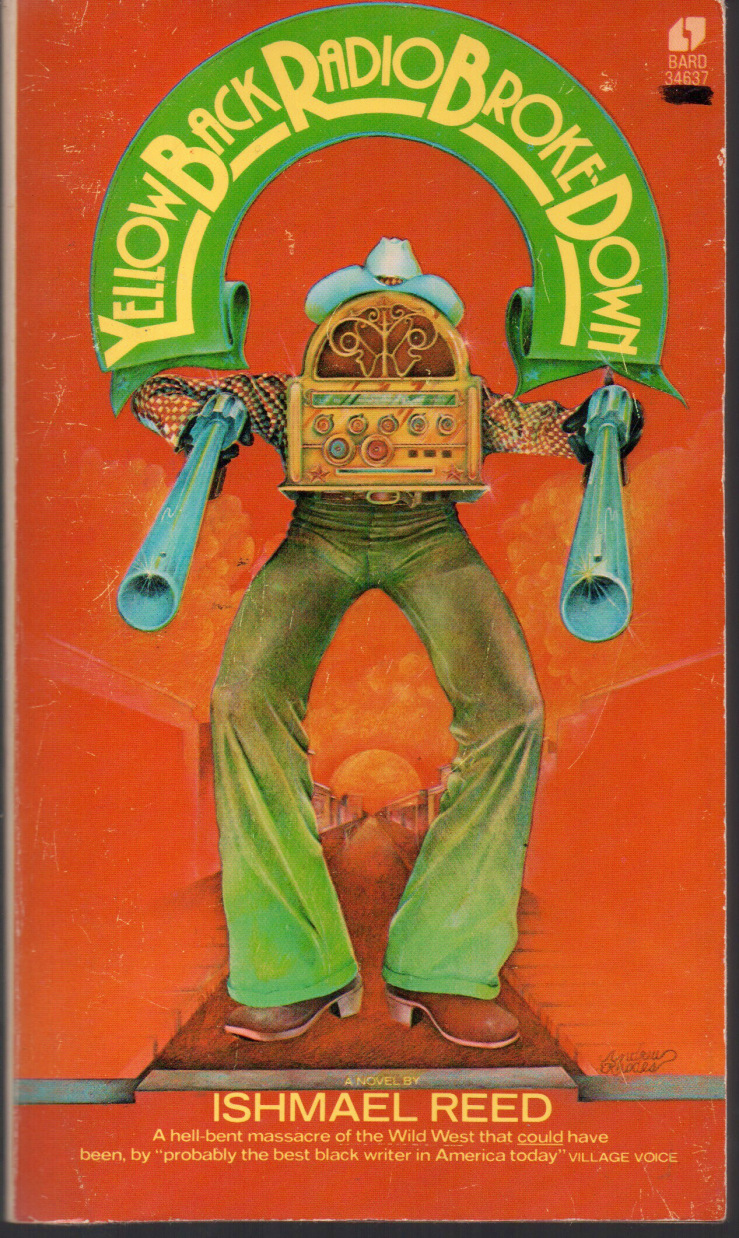
Folks. This here is the story of the Loop Garoo Kid (Ishmael Reed)

img_0548

Folks. This here is the story of the Loop Garoo Kid. A cowboy so bad he made a working posse of spells phone in sick. A bullwhacker so unfeeling he left the print of winged mice on hides of crawling women. A desperado so onery he made the Pope cry and the most powerful of cattlemen shed his head to the Executioner’s swine.

A terrible cuss of a thousand shivs he was who wasted whole herds, made the fruit black and wormy, dried up the water holes and caused people’s eyes to grow from tiny black dots into slapjacks wherever his feet fell.

Now, he wasn’t always bad, trump over hearts diamonds and clubs. Once a wild joker he cut the fool before bemused Egyptians, dressed like Mortimer Snerd and spilled french fries in his lat at Las Vegas’ top of the strip.

Booted out of his father’s house after a quarrel, whores snapped his heels and trick dogs did the fandango on his belly. Me called him brother only to cop his coin and tell malicious stories about his cleft foot.

Born with a caul over his face and ghost lobes on his ears, he was a mean night tripper who moved from town to town quoting Thomas Jefferson and allowing bandits to build a flophouse around his genius.

A funny blue hippo who painted himself with water flowers only to be drummed out of each tribe dressed down publicly, his medals ripped off.

Finally he joined a small circus and happily performed with his fellow 86-D—a Juggler a dancing Bear a fast talking Barker and Zozo Labrique, charter member of the American Hoo-Doo Church.

Their fame spread throughout the frontier and bouquets of flowers greeted them in every town until they moved into that city which seemed a section of Hell chipped off and shipped upstairs, Yellow Back Radio, where even the sun was afraid to show its bottom.

The opening paragraphs of Ishmael Reed’s 1969 novel Yellow Back Radio Broke-Down.
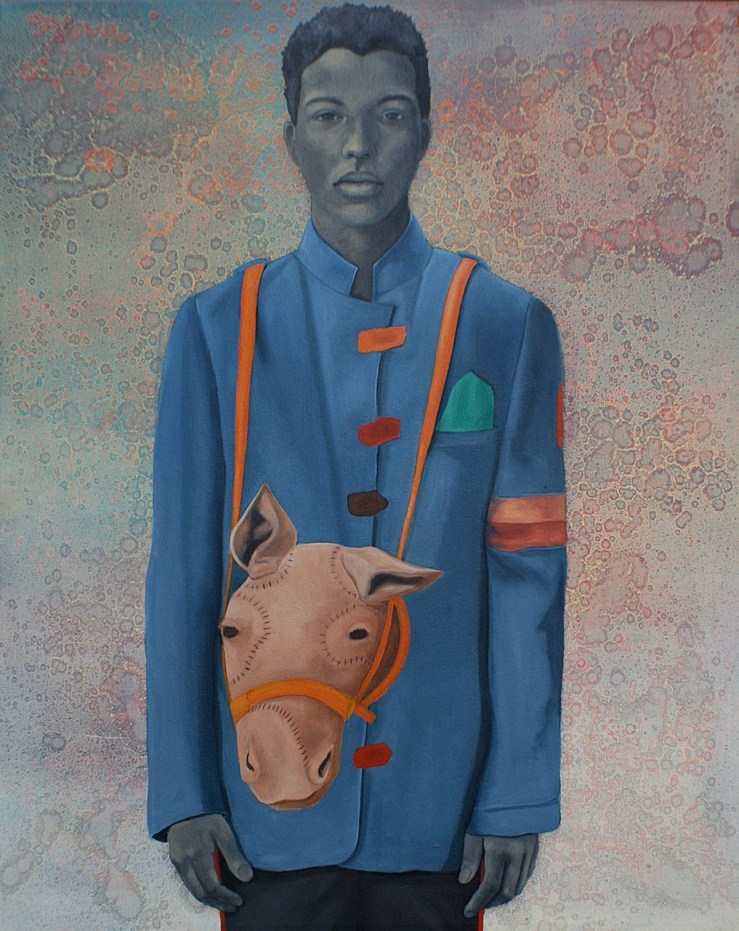
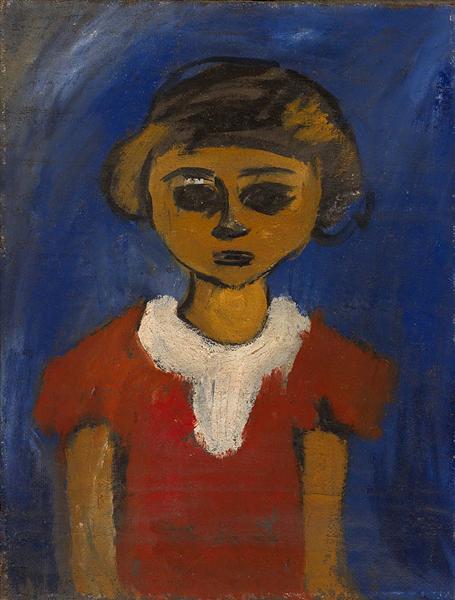
February — Alex Colville

february-1979.jpg!Large.jpg

Thing (Detail) — Jack Kirby

screenshot-2017-01-31-at-4-28-19-pm

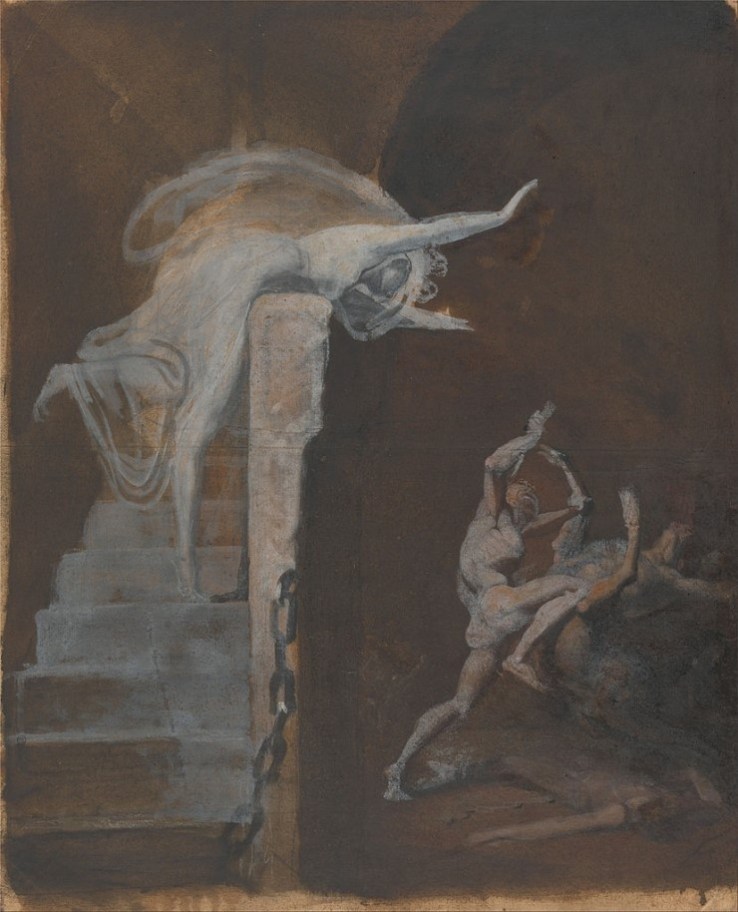
Ariadne Watching the Struggle of Theseus with the Minotaur — Henry Fuseli

6.jpg

Our tyrants always feel in need of excuses (William H. Gass)

Our tyrants always feel in need of excuses. Our enemies are always spying, undermining, arming, plotting, seizing the high ground, inventing new horrors, inventing flashier weapons. This mole, or that rat, is smarter than we ever”“imagined, and it is working day and night against us—cunning and conniving—out of sight, in secret—because beneath deep undergarments it holds a gun, a knife, a bomb, or a book full of dreadful ideas. We must monitor our phones, watch our neighbors—note, film, record, trace, follow, measure every movement, scrutinize every public meeting, overhear every private one, rifle records, ponder every purchase, search through garbage, twist dumb tongues till they scream with the pain of prying pliers.

Tyrannies do not come in ones or twos; tyrannies come in battalions: there is Mother’s heart you mustn’t break or Father’s hopes you dare not dash; there are the reprisals taken by society because you sniffed when you should have sneezed; there are all those looks delivered like blows from someone sitting on his high horse and wielding his scorn like a whip. It does not matter what the party motto is, what flag flies, what history pretends to teach, what rewards will be yours, what hurt feelings will follow; we need to be free to choose our own errors, our own myths, to furnish our souls as we see fit.

Of course, what we believe is important, but that we believe it freely, that we can speak of it openly, that we fear neither disapproval nor contradiction, is essential to the humanness of our being. This freedom—if it is to be freedom and not another fraud—comes at a cost. It is a cost that those who have rarely been free are often reluctant to pay, because they are as unused to the presence of liberty in others as they are of freedom when granted to themselves.

We can be real only when others are allowed to play their radios. It’s odd, but our liberty lies in the liberty of our neighbors. They will be rude; they will cross the street against the light; they will eat offal; they will entertain tyrants at tea; they will be tasteless; they will be other; they will be … That’s it … they will be. They will speak strangely, dress oddly, live quaintly, worship a deity they found in a dime store. Worse: they won’t like Bach or Henry James. Worse: they will live like gnats in annoying clouds. Worse: for us they will have no particular esteem. Worst: they will want us to be nice to them, share our rights, give them room. Worse than worst: they will deny us our desires if they can; they will blame us for their plights; they will give evidence, everywhere, of the same mean-spirited insecurities that have soiled our souls from our birth.

When we deny to others their interior life, we deny ourselves all knowledge of it.

From William H. Gass’s essay “What Freedom of Expression Means, Especially in Times Like These.” Collected in Life Sentences.

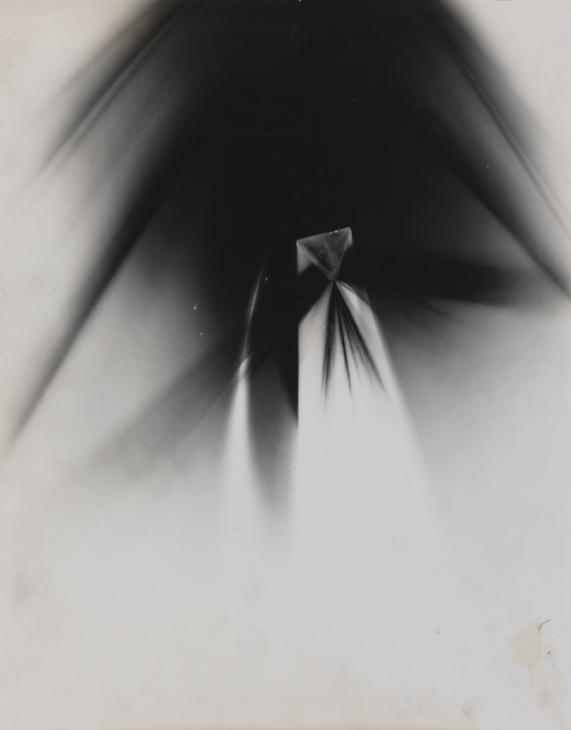
Feathery Light — György Kepes

Feathery Light c. 1939-40 by Gy?rgy Kepes 1906-2001

Hemingway Never Ate Here — Patrick Caulfield

Hemingway Never Ate Here 1999 by Patrick Caulfield 1936-2005

Wittgenstein the Soldier — Eduardo Paolozzi

Wittgenstein the Soldier 1964 Sir Eduardo Paolozzi 1924-2005 Presented by Rose and Chris Prater through the Institute of Contemporary Prints 1975 http://www.tate.org.uk/art/work/P04768

Sunday Comics

img_4969

From Ron Cobb’s 1970 collection Raw Sewage (Sawyer Press).

The Refugee — William H. Johnson

refugee-19351-jpglarge

Market — Ben Tolman

market_web

“The New Colossus” — Emma Lazarus

“The New Colossus”

by
Emma Lazarus

Not like the brazen giant of Greek fame,
With conquering limbs astride from land to land;
Here at our sea-washed, sunset gates shall stand
A mighty woman with a torch, whose flame
Is the imprisoned lightning, and her name
Mother of Exiles. From her beacon-hand
Glows world-wide welcome; her mild eyes command
The air-bridged harbor that twin cities frame.
“Keep, ancient lands, your storied pomp!” cries she
With silent lips. “Give me your tired, your poor,
Your huddled masses yearning to breathe free,
The wretched refuse of your teeming shore.
Send these, the homeless, tempest-tost to me,
I lift my lamp beside the golden door!”

Tribes. They’re a powerful curse laid on you when you get born (From Coover’s Huck Out West)

“Palling around with injuns, Huck, is right down dangersome. You can’t trust ’em. Remember what happened to them poor emigrants we met when we first come out here. You’ll get your throat slit before you know it. And it ain’t right. There’s a war on.”“We made the war, not them,” I says, recollecting what Dan Harper said. “We been bullying in and taking away everything they s’posed was their’n. They’re only just defending theirselves.”

“Well, from where they set, Huck, they got a point. But we ain’t them. We got to stick with our own tribe, even if they ARE all lunatics. If we don’t, we’ll end up crazier’n any of them. You remember that poor preacher up in Minnysota? Even if he was maybe right, his rebel notions was turning him plumb loco, and in the end they probably got him lynched by his own congregation. These lands is become our lands, that’s the story now, and it’s only got just one ending. There ain’t nothing them hoss-tiles can do about it, nor not you nuther.”

“Tribes,” I says. “They’re a powerful curse laid on you when you get born. They ruin you, but you can’t get away from them. They’re a nightmare a body’s got to live with in the daytime.”

Dialogue between Huckleberry Finn and Tom Sawyer from Robert Coover’s 2017 novel Huck Out West.


Akira — Tomer Hanuka

akiraB_72.jpg

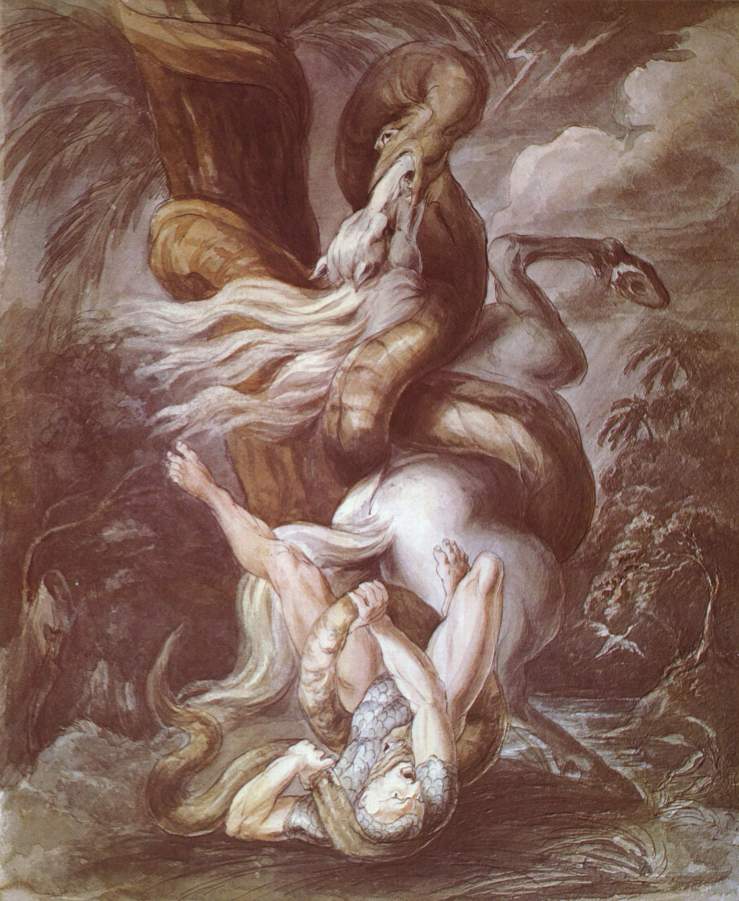
Horseman Attacked by a Giant Snake — Henry Fuseli

johann_heinrich_fussli_059