Reading/Have Read/Should Write About

img_3502

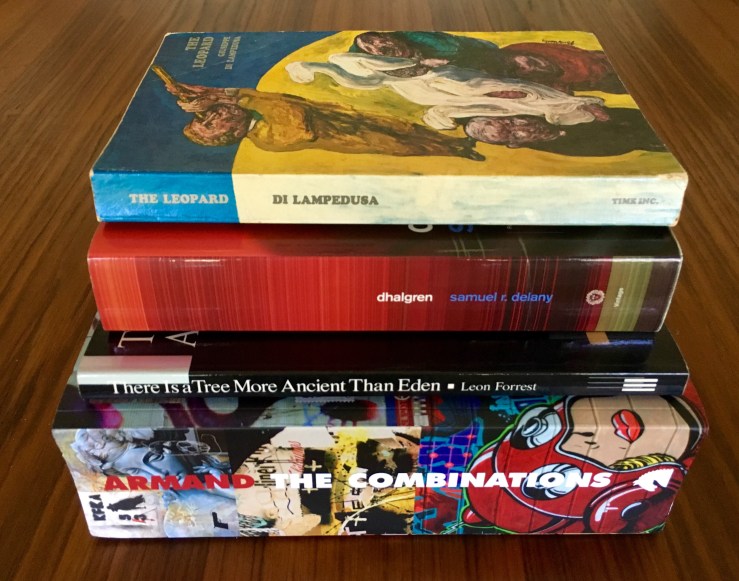
The Leopard, Giusesspe Tomasi di Lampedusa

After a few years of false starts, I finally read Giuseppe Tomasi di Lampedusa’s 1958 novel The Leopard this August. Then I read it again, immediately (It’s one of only two novels I can recall rereading right away—the other two were Blood Meridian and Gravity’s Rainbow). The Leopard tells the story of Prince Fabrizio of Sicily, who witnesses the end of his era during the Risorgimento, the Italian reunification. Fabrizio is an enchanting character—by turns fiery and lascivious, intellectual and stoic—The Leopard takes us through his mind and through his times. He’s thoroughly complex, unknown even to himself, perhaps. The novel is impossibly rich, sad, electric, a meditation on death, sex, sensuality—pleasure and loss. More mood than plot, The Leopard glides on vibe, its action framed in rich set pieces—fancy balls and sumptuous dinners and games of pleasure in summer estates. But of course there is a plot—several strong plots, indeed (marriage plots and death plots, religious plots and political plots). Yet the narrative’s viewpoint characters keep the plots at bay, or mediate them, rather than propel them forward. Simply one of the better novels I’ve read in years, its final devastating images inked into my memory for as long as I have memory. (English translation by Archibald Colquhoun, by the way).

Dhalgren, Samuel Delany

I think The Leopard initially landed on my radar a few years ago after someone somewhere (where?) described it as a cult novel. Samuel Delany’s Dhalgren (1975) really is a cult novel. I’m about 200 pages into its 800 pages, and I’m ready to abandon the thing. Delany often evokes a fascinating vibe here, conjuring the post-apocalyptic city of Bellona, which is isolated from the rest of America after some unnamed (and perhaps unknown) disaster—there are “scorpions,” gangs who hide in holographic projections of dragons and insects; there is a daily newspaper that comes out dated with a different year each day; there are two moons (maybe). And yet Delany spends more time dwelling on the mundane—I’ve just endured page after page of the novel’s central protagonist, Kid, clearing furniture out of an apartment. I’m not kidding—a sizable chunk of the novel’s third chapter deals with moving furniture. (Perhaps Delany’s nodding obliquely to Poe here?)Dhalgren strives toward metafiction, with the Kid’s attempts to become a poet, but his poetry is so bad, and Delany’s prose is, well, often very, very bad too. Like embarrassingly bad in that early seventies hippy dippy way. If ever a novel were screaming to have every third or second sentence cut, it’s Dhalgren. I’m not sure how much longer I can hold out.

There Is a Tree More Ancient Than Eden, Leon Forrest

I had never heard of Forrest until a Twitter pal corrected that. I started Tree (1973) this weekend; its first chapter “The Lives” is a rush of time, memory, color, texture…religion and violence, history, blood…I’m not sure what’s happening and I don’t care (like Faulkner, it is—I mean, each sentence makes me want to go to the next sentence, into the big weird tangle of it all). Maybe let Ralph Ellison describe it. From his foreword:

As I began to get my bearings in the reeling world of There Is a Tree More Ancient Than Eden, I thought, What a tortured, history-wracked, anguished, Hound-of-Heaven-pursued, Ham-and-Oedipus-cursed, Blake-visioned, apocalypse-prone projection of the human predicament! Yet, simultaneously, I was thinking, Yes, but how furiously eloquent is this man Forrest’s prose, how zestful his jazz-like invention, his parody, his reference to the classics and commonplaces of literature, folklore, tall-tale and slum-street jive! How admirable the manner in which the great themes of life and literature are revealed in the black-white Americanness of his characters as dramatized in the cathedral-high and cloaca-low limits of his imaginative ranging.

Typing this out, I realize that I’m bound to put away Dhalgren and continue on into Forrest.

The Combinations, Louis Armand

I read the “Overture” to Armand’s enormous so-called “anti-novel” The Combinations (2016)…the rush of prose reminded me of any number of post-postmodern prose rushers—this isn’t a negative criticism, but I’ll admit a certain wariness with the book’s formal postmodernism—it looks (looks) like Vollmann—discursive, lots of different fonts and forms. I’ll leap in later.
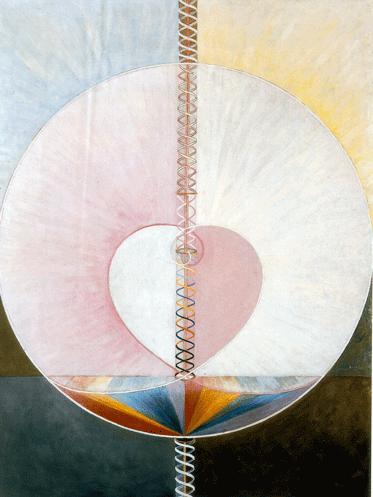
What A Human Being Is — Hilma af Klint

what-a-human-being-is-1910

Imagine the long-dead woodman (Nathaniel Hawthorne’s journal entry for September 7th, 1850)

September 7th.–In a wood, a heap or pile of logs and sticks, that had been cut for firewood, and piled up square, in order to be carted away to the house when convenience served,–or, rather, to be sledded in sleighing time. But the moss had accumulated on them, and leaves falling over them from year to year and decaying, a kind of soil had quite covered them, although the softened outline of the woodpile was perceptible in the green mound. It was perhaps fifty years–perhaps more–since the woodman had cut and piled those logs and sticks, intending them for his winter fires. But he probably needs no fire now. There was something strangely interesting in this simple circumstance. Imagine the long-dead woodman, and his long-dead wife and family, and the old man who was a little child when the wood was cut, coming back from their graves, and trying to make a fire with this mossy fuel.

Nathaniel Hawthorne’s journal entry for September 7th, 1850. From Passages from the American Note-Books.

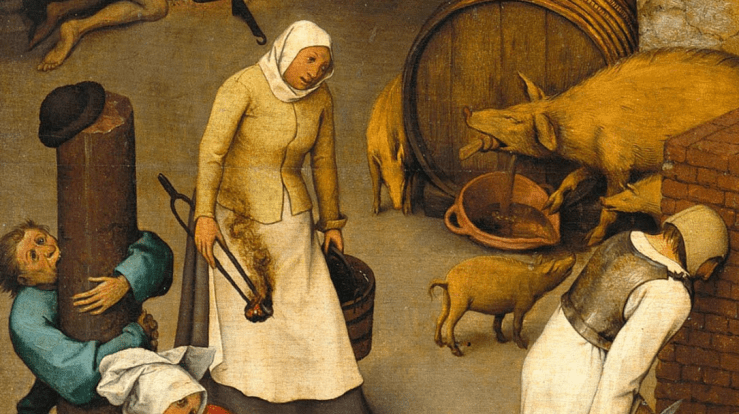
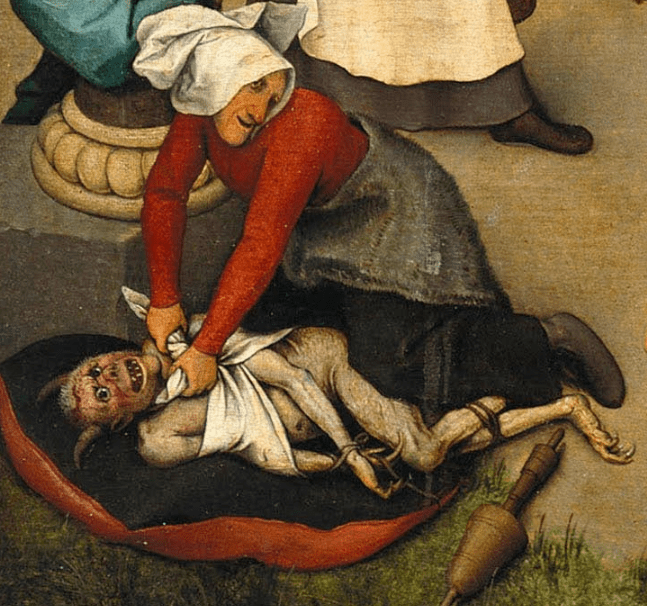
Netherlandish Proverbs (detail) — Pieter Bruegel the Elder

Screenshot 2016-06-26 at 11.01.18 AM

Netherlandish Proverbs (detail) — Pieter Bruegel the Elder

Screenshot 2016-06-26 at 11.18.52 AM

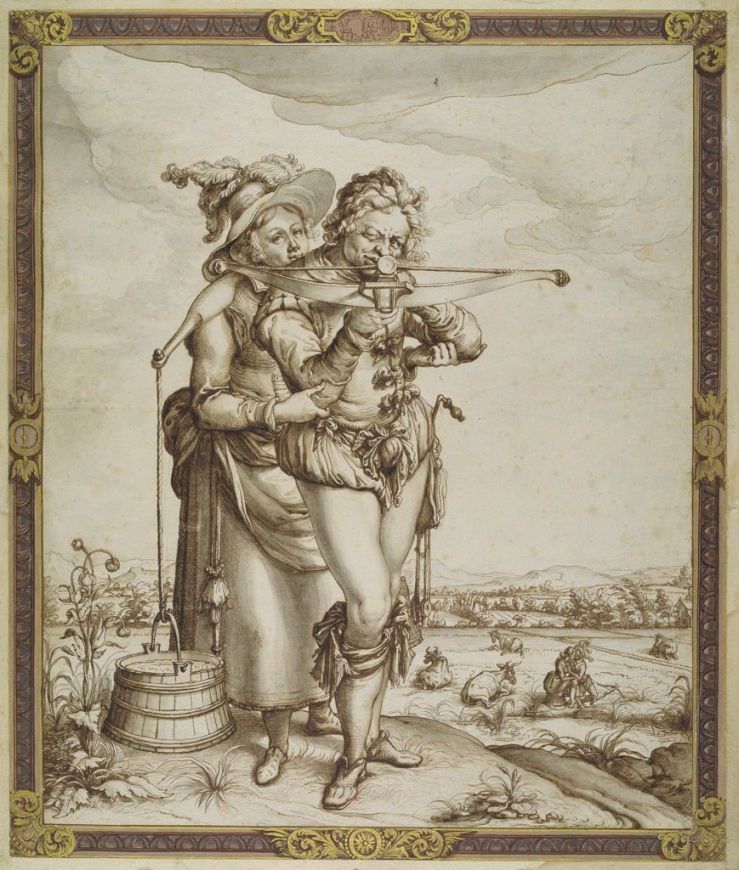
Crossbowman Assisted by a Milkmaid — Jacques de Gheyn II

18773218

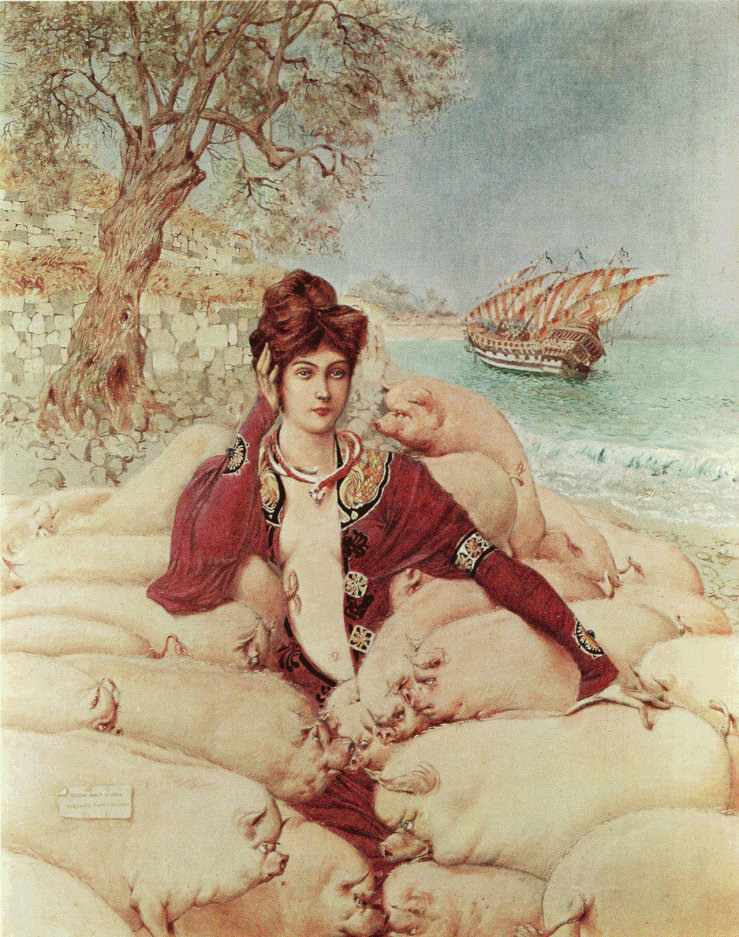
Circe — Gustav-Adolf Mossa

tumblr_na9apljsa81qf8evxo1_1280

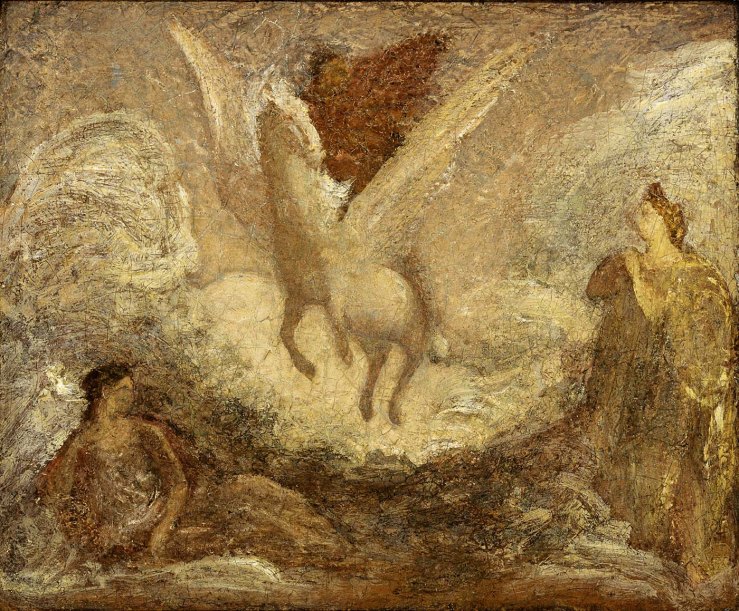
Pegasus Departing — Albert Pinkham Ryder

pegasus-departing-1901

And that is how I have come to discover that I am not pure (Clarice Lispector)

img_3493

Netherlandish Proverbs (detail) — Pieter Bruegel the Elder

Screenshot 2016-06-26 at 10.59.39 AM

(Last) Three Books (Sunday Comics)

This is the last Three Books post.

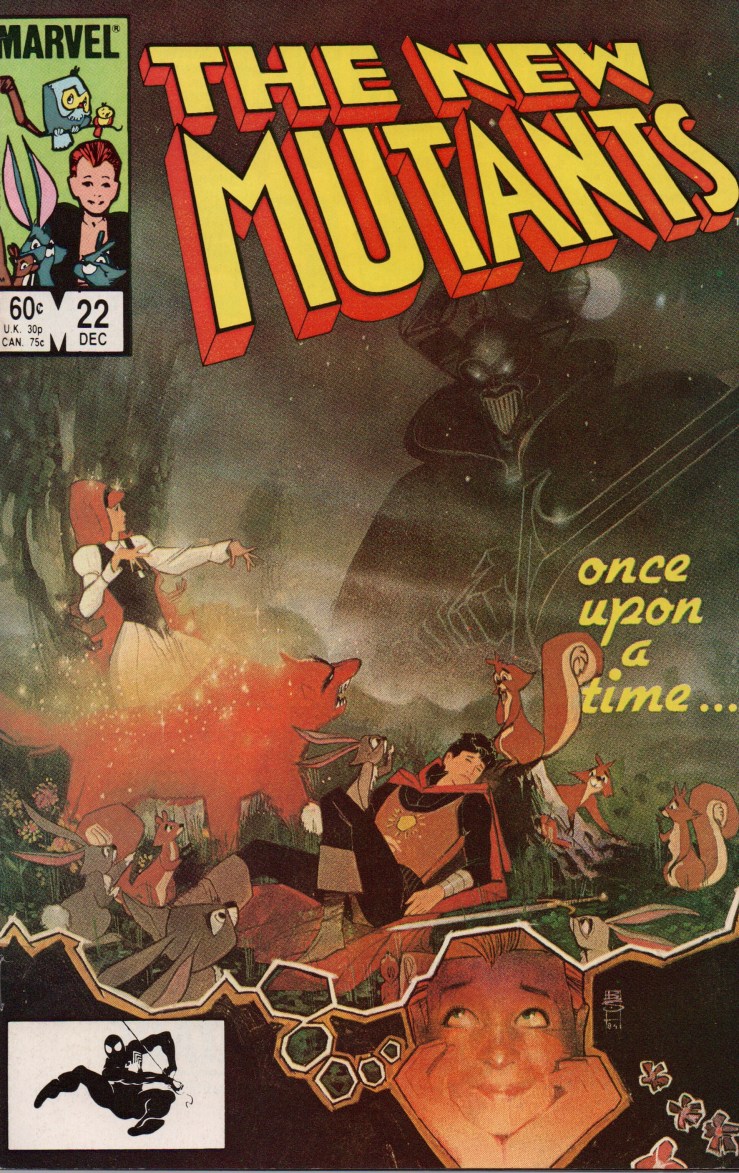
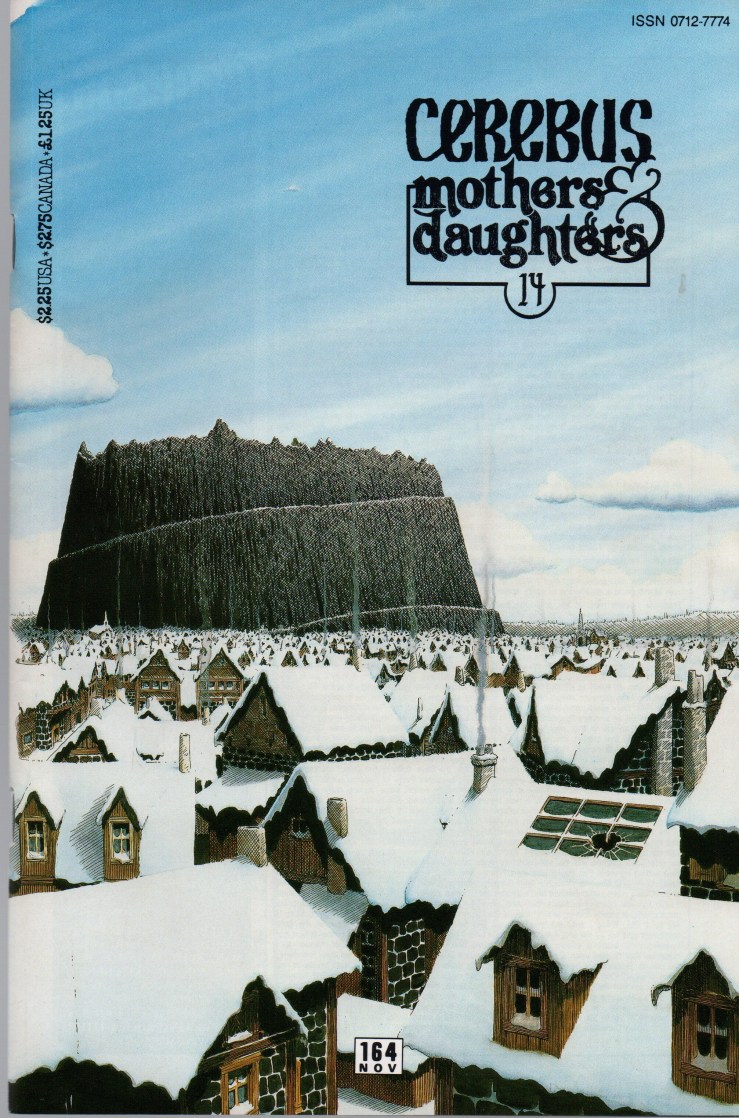
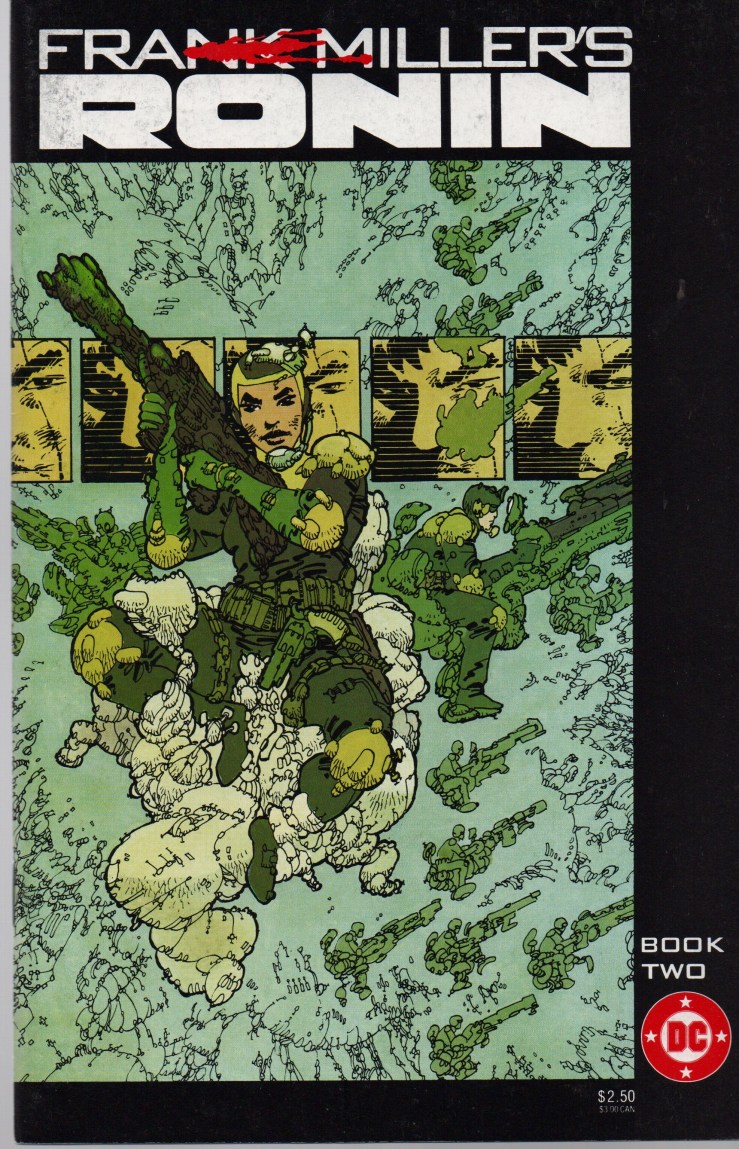
I had fun doing this every Sunday but a year seems like long enough. I do, however, like to do a themed post of some kind on Sundays, so I’ll do something with comics each Sunday for a year. Not just cover scans—panels, strips, etc. But this Sunday, three covers/three books:

img_3465

The New Mutants Vol. 1, #22, December 1984. Marvel Comics. Issue by Chris Claremont and Bill Sienkiewicz. Cover painting by Sienkiewicz.

I got rid of most of my Marvel Comics collection when I was 13 but could never bear to part with Sienkiewicz’s run on The New Mutants, my favorite comic book. (I wish I had kept more of Claremont’s 1980s run on The Uncanny X-Men).

img_3467

Cerebus #164, November 1992. Aardvark-Vanaheim. Issue (and cover) by Dave Sim and Gerhard. This is the second issue of Cerebus that I bought (issue #163’s cover is not nearly so good, so…not featured today). I had no idea what was going on but loved it. I caught up fairly quickly through Sim’s so-called “phonebooks” of the earlier books. I eventually quit reading Cerebus monthly, but still picked up the big collections, albeit more and more intermittently, until I almost forgot about it altogether. A few years ago I realized that Sim must’ve finished the damn thing (he’d always said it would be 300 issues long and conclude with Cerebus’s death), and I got the final volumes and read them. Let’s just say the first half of Cerebus is much, much better than the second half.

img_3468

Ronin Vol. 1, #2, September 1983. DC Comics. Issue and cover by Frank Miller (colors by Lynne Varley).

Before Frank Miller became a cranky old fascist hack, he made some pretty good comic books. I’m pretty sure The Dark Knight Returns was the last really good thing he did, and that was thirty years ago, but my favorite Miller will likely always be Ronin.

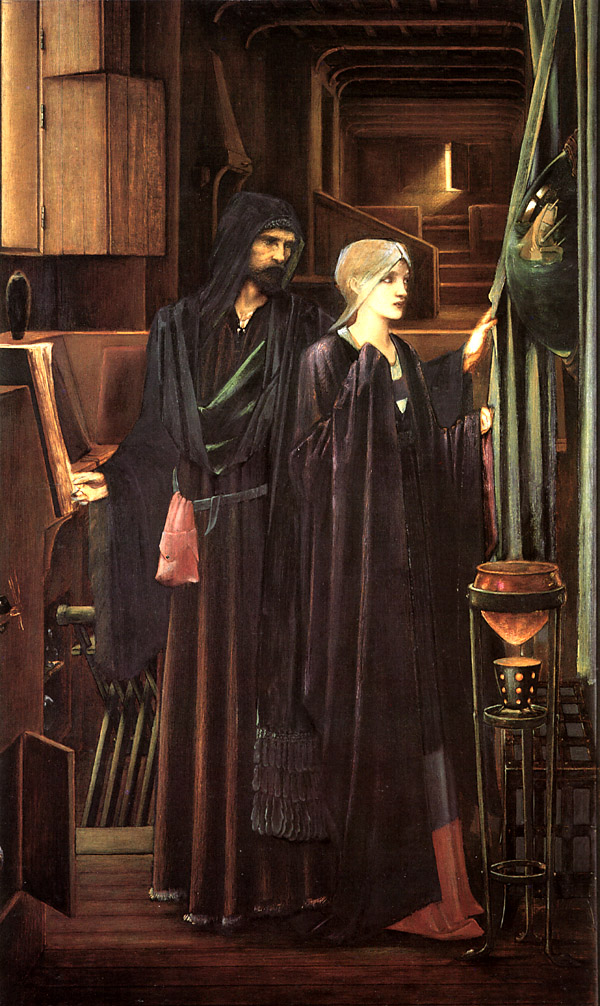
The Wizard — Edward Burne-Jones

the-wizard

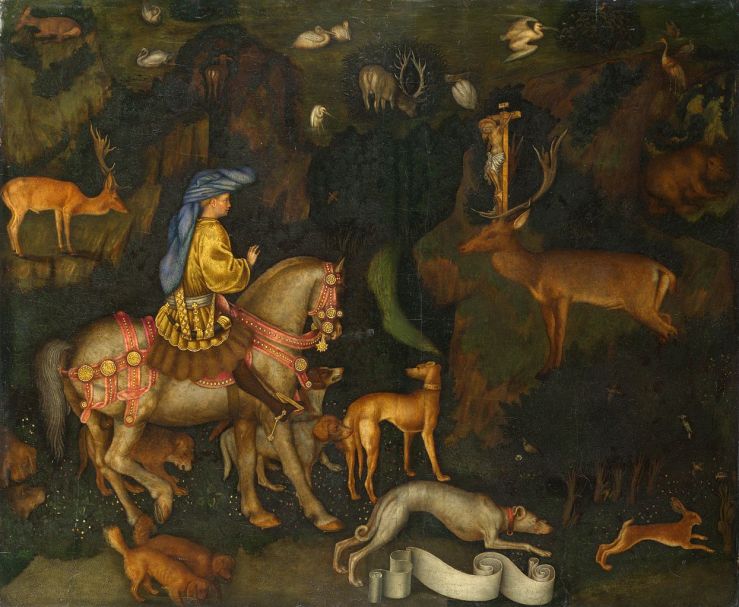
The Vision of St. Eustace — Pisanello

the-vision-of-saint-eustace-1438

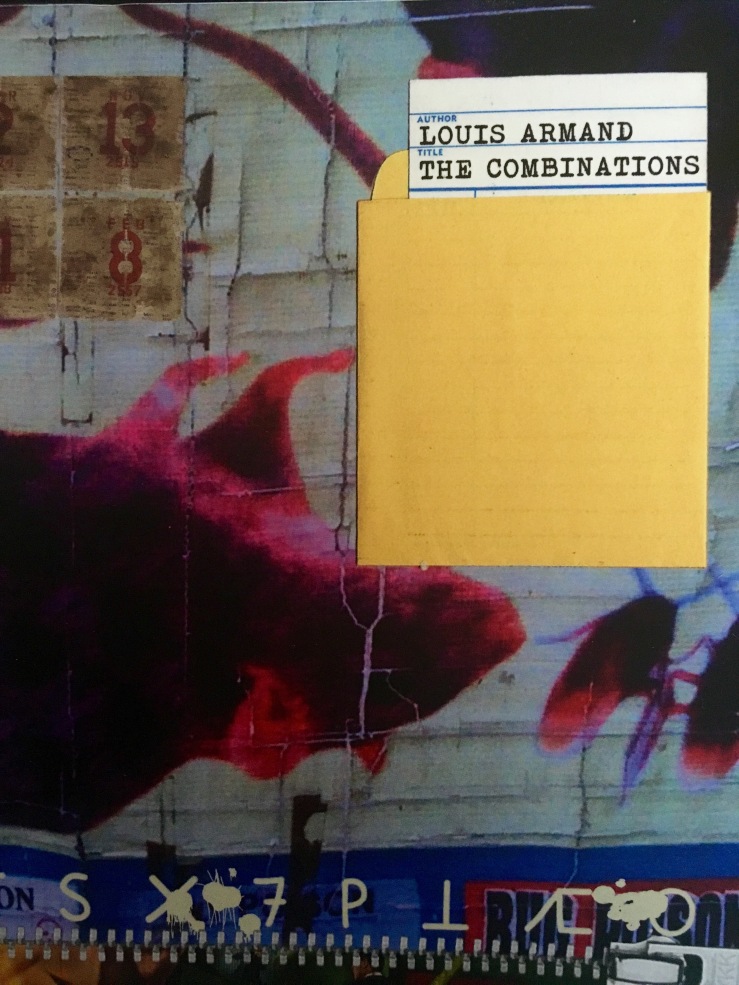
The Combinations (Insanely long book acquired, 9.01.2016)

img_3456

Louis Armand’s novel (or anti-novel, or whatever) is new from Equus Press.

It’s bigger than a brick.

Lots of footnotes, end notes, different fonts, maps, images, etc. The “text proper” (whatever that means) refuses to begin—epigraphs, notes, an “Overture,” etc.

img_3457

Here’s the blurb from Equus:

Fiction. Drama. Art. The “European anti-novel” in all its unrepentant glory is here in THE COMBINATIONS, following in the tradition of Sterne, Rabelais, Cervantes, Joyce, Perec.

In 8 octaves, 64 chapters and 888 pages, Louis Armand’s THE COMBINATIONS is an unprecedented “work of attempted fiction” that combines the beauty & intellectual exertion that is chess with the panorama of futility & chaos that is Prague (a.k.a. “Golem City”), across the 20th-century and before/after. Golem City, the ship of fools boarded by the famed D’s (e.g. John) and K’s (e.g. Edward) of the 16th/17th centuries (who attempted and failed to turn lead into gold), and the infamous H’s (e.g. Adolf, e.g. Reinhard) of the 20th (who attempted and succeeded in turning flesh into soap). Armand’s prose weaves together the City’s thousand-and- one fascinating tales with a deeply personal account of one lost soul set adrift amid the early-90s’ awakening from the nightmare that was the previous half-century of communist Mitteleuropa. THE COMBINATIONS is a text whose 1) erudition dazzles, 2) structure humbles, 3) monotony never bores, 4) humour disarms, 5) relentlessness overwhelms, 6) storytelling captivates, 7) poignancy remains poignant, and 8) style simply never exhausts itself. Your move, Reader.


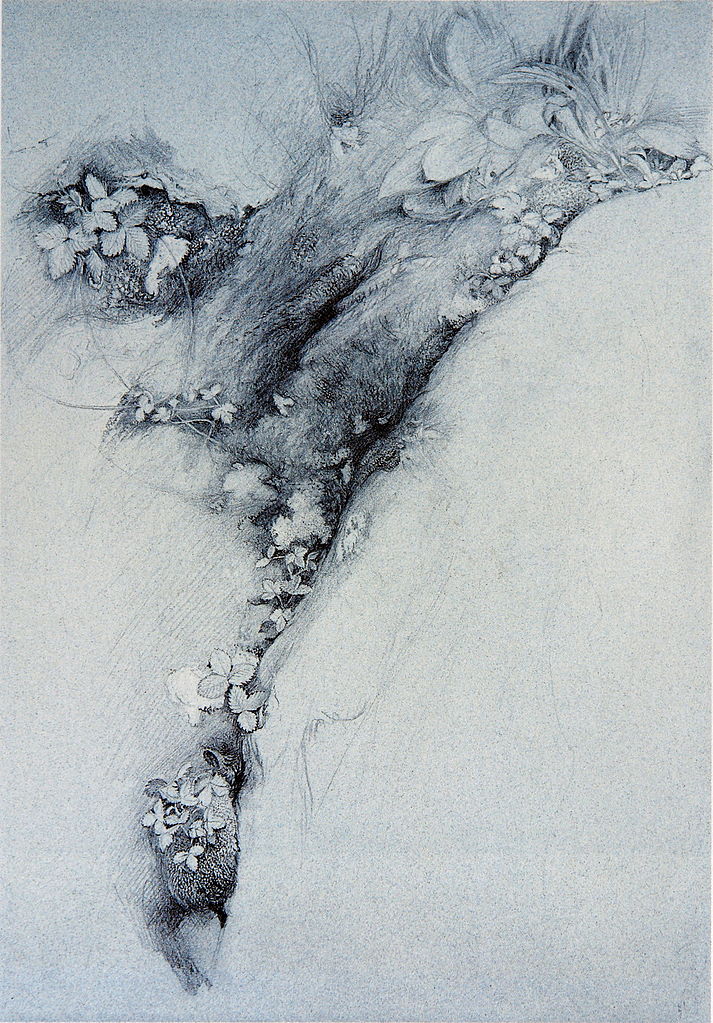
Moss and Wild Strawberry — John Ruskin

moss-and-wild-strawberry-1872

Friends — Helene Schjerfbeck

301244

zero synthesis (J.G. Ballard’s text collage)

text-collages-by-j-add_ms_88938_3_3a

(Via).

Posted in Art