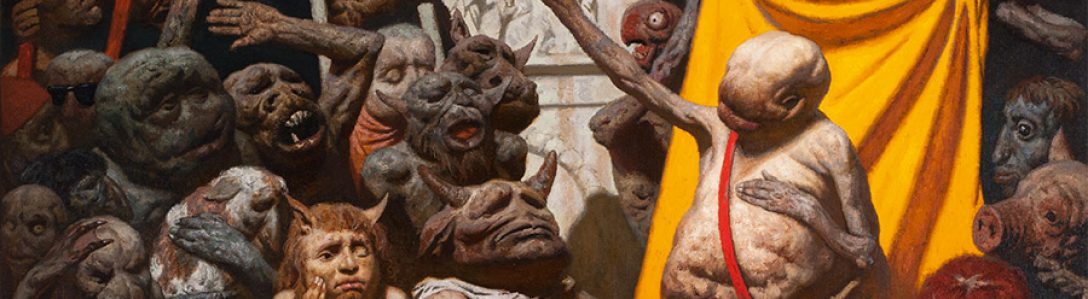
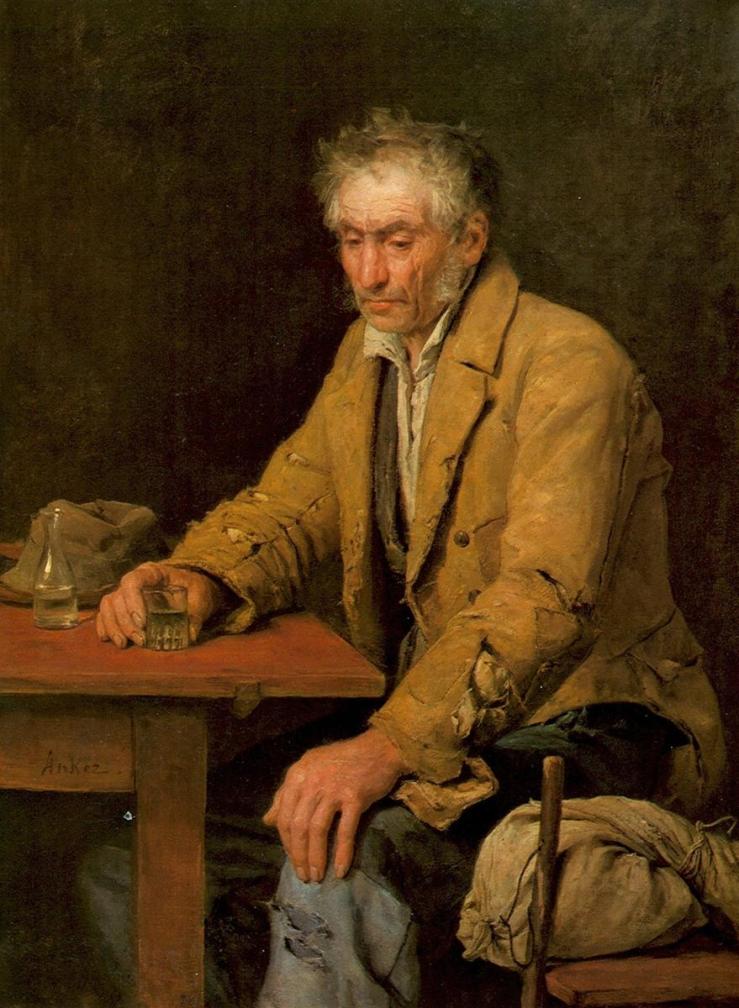
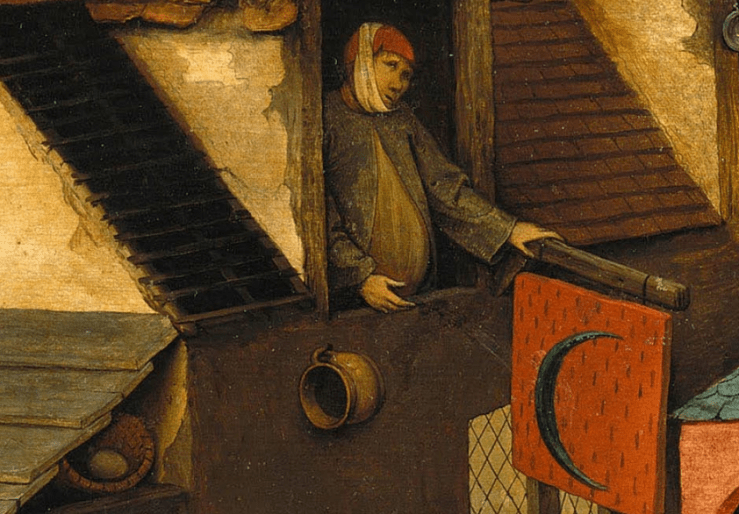
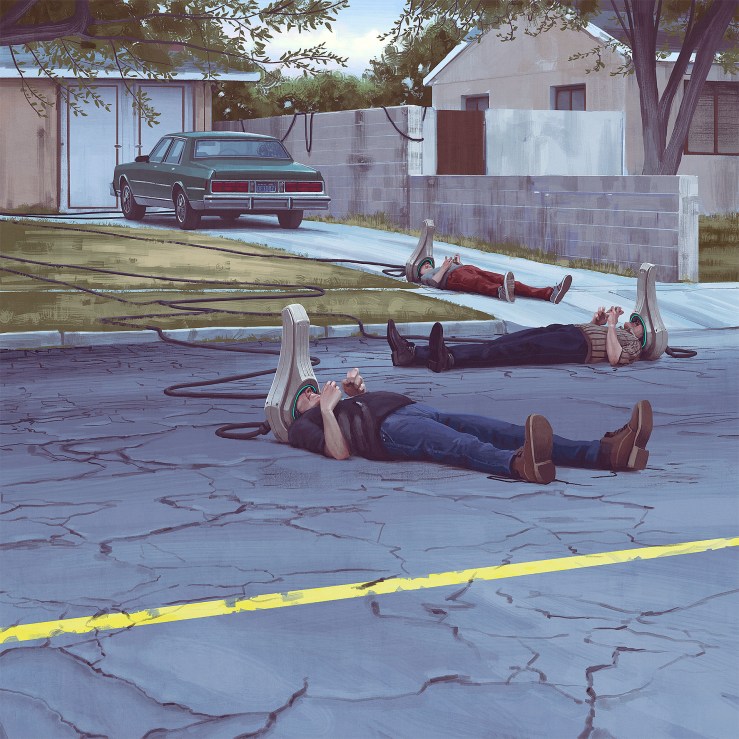
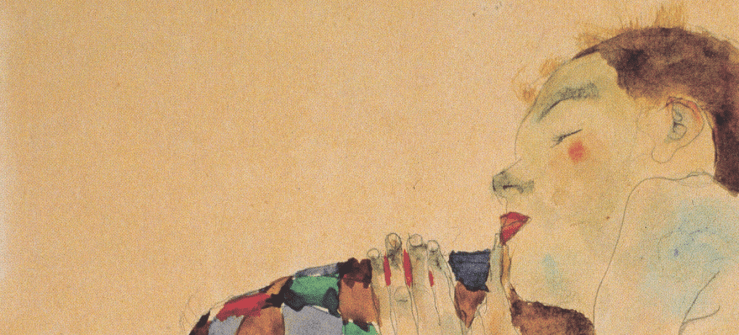
Repin

Degas

Escher
Freud

June 18th.–A walk in North Salem in the decline of yesterday afternoon,–beautiful weather, bright, sunny, with a western or northwestern wind just cool enough, and a slight superfluity of heat. The verdure, both of trees and grass, is now in its prime, the leaves elastic, all life. The grass-fields are plenteously bestrewn with white-weed, large spaces looking as white as a sheet of snow, at a distance, yet with an indescribably warmer tinge than snow,–living white, intermixed with living green. The hills and hollows beyond the Cold Spring copiously shaded, principally with oaks of good growth, and some walnut-trees, with the rich sun brightening in the midst of the open spaces, and mellowing and fading into the shade,–and single trees, with their cool spot of shade, in the waste of sun: quite a picture of beauty, gently picturesque. The surface of the land is so varied, with woodland mingled, that the eye cannot reach far away, except now and then in vistas perhaps across the river, showing houses, or a church and surrounding village, in Upper Beverly. In one of the sunny bits of pasture, walled irregularly in with oak-shade, I saw a gray mare feeding, and, as I drew near, a colt sprang up from amid the grass,–a very small colt. He looked me in the face, and I tried to startle him, so as to make him gallop; but he stretched his long legs, one after another, walked quietly to his mother, and began to suck,–just wetting his lips, not being very hungry. Then he rubbed his head, alternately, with each hind leg. He was a graceful little beast.
I bathed in the cove, overhung with maples and walnuts, the water cool and thrilling. At a distance it sparkled bright and blue in the breeze and sun. There were jelly-fish swimming about, and several left to melt away on the shore. On the shore, sprouting amongst the sand and gravel, I found samphire, growing somewhat like asparagus. It is an excellent salad at this season, salt, yet with an herb-like vivacity, and very tender. I strolled slowly through the pastures, watching my long shadow making grave, fantastic gestures in the sun. It is a pretty sight to see the sunshine brightening the entrance of a road which shortly becomes deeply overshadowed by trees on both sides. At the Cold Spring, three little girls, from six to nine, were seated on the stones in which the fountain is set, and paddling in the water. It was a pretty picture, and would have been prettier, if they had shown bare little legs, instead of pantalets. Very large trees overhung them, and the sun was so nearly gone down that a pleasant gloom made the spot sombre, in contrast with these light and laughing little figures. On perceiving me, they rose up, tittering among themselves. It seemed that there was a sort of playful malice in those who first saw me; for they allowed the other to keep on paddling, without warning her of my approach. I passed along, and heard them come chattering behind.
Nathaniel Hawthorne’s journal entry for June 15, 1838. From Passages from the American Note-Books.

It’s summer so maybe you need some books to read. Indie presses are the bestest.
Extinction by Ashley Dawson from OR Books. This is a devastating little big book about, a sustained attack on “capitalism’s global attack on the commons, the great trove of air, water, plants, and creatures that has been regarded traditionally as the inheritance of humanity as a whole.” We won’t be able to shop our way out of the apocalypse. (I wrote about it in more depth here).
American Candide by Mahendra Singh from Rosarium. I reviewed American Candide earlier this year on Biblioklept, writing:
Singh’s update-reboot-translation of Candide fittingly answers Voltaire’s pessimistic prescience with not just bitter affirmations of contemporary predation and evil, but also with an eye toward entertainment—to the affirmations of laughter.
Quiet Creature on the Corner by João Gilberto Noll (English translation by Adam Morris) from Two Lines Press. In my recent review, I wrote that
Quiet Creature on the Corner is a nightmarish, abject, kinetic, surreal, picaresque read, a mysterious prose-poem that resists allegorical interpretation. I read it and then I read it again. It’s a puzzle. I enjoyed it tremendously.
Vertigo by Joanna Walsh from Dorothy. The stories here hum and hang together, evoking consciousness—consciousness’s anxieties, desires, its imaginative consolations. Vertigo is simultaneously disorienting and familiar, often quite funny, and sometimes a bit sad.
Postal Child by Joey Truman from Whisk(e)y Tit. Not a “bit sad” but “sad sad.” Abject and cruel and terrifying. But also…funny? Maybe?
Crossing the Sea with Syrians on the Exodus to Europe by Wolfgang Bauer with photographs by Stanislav Krupar; (English translation by Sarah Prybus). From And Other Stories. Brutal and moving reportage.
Syrian Notebooks: Inside the Homs Uprising by Jonathan Littell (English translation by Charlotte Mandell). From Verso. Three weeks reporting from hell—terse, precise, and raw. Littell functions as eyes and ears and a body, a concrete sensing thing, an immediate thing, a thing that doesn’t try to synthesize or process or otherwise mediate what is happening to him.

Since I have grown older I have often gone back and tried to analyze the change that came into my life after that fateful day in school. There did come a radical change, and, young as I was, I felt fully conscious of it, though I did not fully comprehend it. Like my first spanking, it is one of the few incidents in my life that I can remember clearly. In the life of everyone there is a limited number of unhappy experiences which are not written upon the memory, but stamped there with a die; and in long years after, they can be called up in detail, and every emotion that was stirred by them can be lived through anew; these are the tragedies of life. We may grow to include some of them among the trivial incidents of childhood—a broken toy, a promise made to us which was not kept, a harsh, heart-piercing word—but these, too, as well as the bitter experiences and disappointments of mature years, are the tragedies of life.
And so I have often lived through that hour, that day, that week, in which was wrought the miracle of my transition from one world into another; for I did indeed pass into another world. From that time I looked out through other eyes, my thoughts were colored, my words dictated, my actions limited by one dominating, all-pervading idea which constantly increased in force and weight until I finally realized in it a great, tangible fact.
And this is the dwarfing, warping, distorting influence which operates upon each and every colored man in the United States. He is forced to take his outlook on all things, not from the viewpoint of a citizen, or a man, or even a human being, but from the viewpoint of a colored man. It is wonderful to me that the race has progressed so broadly as it has, since most of its thought and all of its activity must run through the narrow neck of this one funnel.
And it is this, too, which makes the colored people of this country, in reality, a mystery to the whites. It is a difficult thing for a white man to learn what a colored man really thinks; because, generally, with the latter an additional and different light must be brought to bear on what he thinks; and his thoughts are often influenced by considerations so delicate and subtle that it would be impossible for him to confess or explain them to one of the opposite race. This gives to every colored man, in proportion to his intellectuality, a sort of dual personality; there is one phase of him which is disclosed only in the freemasonry of his own race. I have often watched with interest and sometimes with amazement even ignorant colored men under cover of broad grins and minstrel antics maintain this dualism in the presence of white men.
I believe it to be a fact that the colored people of this country know and understand the white people better than the white people know and understand them.
From Ch. 2 of James Weldon Johnson’s novel The Autobiography of an Ex-Colored Man. First published anonymously in 1912, and later reissued in 1927 under Johnson’s (now famous) name, Autobiography is an under-read classic, a fascinating and complex condensation of racism, colorism, and class in early twentieth-century America. Johnson was born on this day in 1871 in Jacksonville, Florida.


What did Leopold actually do on June 16th, 1904?

Selections from one-star Amazon reviews of Ulysses

A list of Irish heroes (from “The Cyclops” episode of Ulysses)

Another page of Joyce’s notes, plus links to more

William Faulkner’s Joyce anxiety

Biblioklept’s lousy review (the review is lousy, not the book) of Dubliners
Joyce’s entry on the 1901 Irish Census

Biblioklept’s review (not so lousy, the review) of a superior full-cast audio recording of Ulysses
James Joyce explains why Odysseus is the most “complete man’ in literature

Leopold’s Bloom’s recipe for burnt kidney breakfast


June 15th.–The red light which the sunsets at this season diffuse; there being showery afternoons, but the sun setting bright amid clouds, and diffusing its radiance over those that are scattered in masses all over the sky. It gives a rich tinge to all objects, even to those of sombre hues, yet without changing the hues. The complexions of people are exceedingly enriched by it; they look warm, and kindled with a mild fire. The whole scenery and personages acquire, methinks, a passionate character. A love-scene should be laid on such an evening. The trees and the grass have now the brightest possible green, there having been so many showers alternating with such powerful sunshine. There are roses and tulips and honeysuckles, with their sweet perfume; in short, the splendor of a more gorgeous climate than ours might be brought into the picture.
The situation of a man in the midst of a crowd, yet as completely in the power of another, life and all, as if they two were in the deepest solitude.
Nathaniel Hawthorne’s journal entry for June 15, 1838. From Passages from the American Note-Books.

At 3:AM Magazine, I wrote a review about Han Kang’s latest book Human Acts. I wrote about her last book, The Vegetarian, on the blog here.
Below is an excerpt of the new review. Follow the link to the full piece.
Suffering from an unnamed illness, all J. wants is to die—which, as Blanchot describes for us in his essay ‘Literature and the Right to Death’, is her inalienable right—yet the narrator ruins her chances. In the essay, Blanchot takes issue with Sartre’s ‘What is Literature?’ because he offers a definition of literature that only perpetuates the primordial lie of language. The so-called committed work’s language is forced to “designate, demonstrate, order, refuse, interpolate, beg, insult, persuade, insinuate”. Sentences are then specialised and instrumentalised towards a specific end. The grave risk here is articulated a bit differently from Blanchot by Adorno: “The error of the primacy of [commitment] as it is exercised today appears clearly in the privilege accorded to tactics over everything else. The means have become autonomous to the extreme. Serving the ends without reflection, they have alienated themselves from them.”1 Committed literary works lose their object of action because they forget that language first murders, as Hegel might say, its referents in service to mere presence—mere sake of behaving politically. “When even genocide becomes cultural property in committed literature,” Adorno writes elsewhere, “it becomes easier to continue complying with the culture that [gives] rise to the murder.”2 In affect alone, atrocious experiences are straitjacketed into fixed meanings. These kinds of works imagine themselves as counteractive agents to the strategies of violence and domination that governments still practice today, literally murderous and not, and continually risk complicity with the very regimes of brutality themselves. Both Adorno’s and Blanchot’s responses to this literary affectation result in high-modernist works that, through a resistance to exaggerated forms of politicking, appear in reality as apolitical but offer a more political resistance by not participating in the “rigid coordinate system” of authoritarian systems. For both of these thinkers, it is not an author’s or text’s political orientation that is at most risk, but the problem of representation itself.
While Human Acts does not resist denotative meaning like Beckett’s The Unnameable, it sympathises with the question that Blanchot raises in his essay. When J. opens her eyes and seethes at the narrator, it is because he made her open her eyes and refused her right to death. This opens onto a question of place and action: Does the very act of writing itself violate this right to death, or does it constellate a map of the ways in which language attempts to fill the void it instantiates in the first place?