Three More Purple Books

Last week I crammed my thoughts about the death of Prince into one of these “Three Books” posts I’ve doing each Sunday for around 30 Sundays now (I plan to do 52, if anyone cares or counts). I grabbed a bunch of purple books and scanned them, and I still have the scans saved, so today’s Three Books are, I guess, books that I deemed not-quite-purple-enough for last week’s post. My thoughts on Prince remain the same: I’m still vaguely shocked at his death and shocked at my shock at his death. I tried to write a Thing on Prince’s sexy dystopian visions, but I failed.  Give me the electric chair 4 all my future crimes.
img_2144

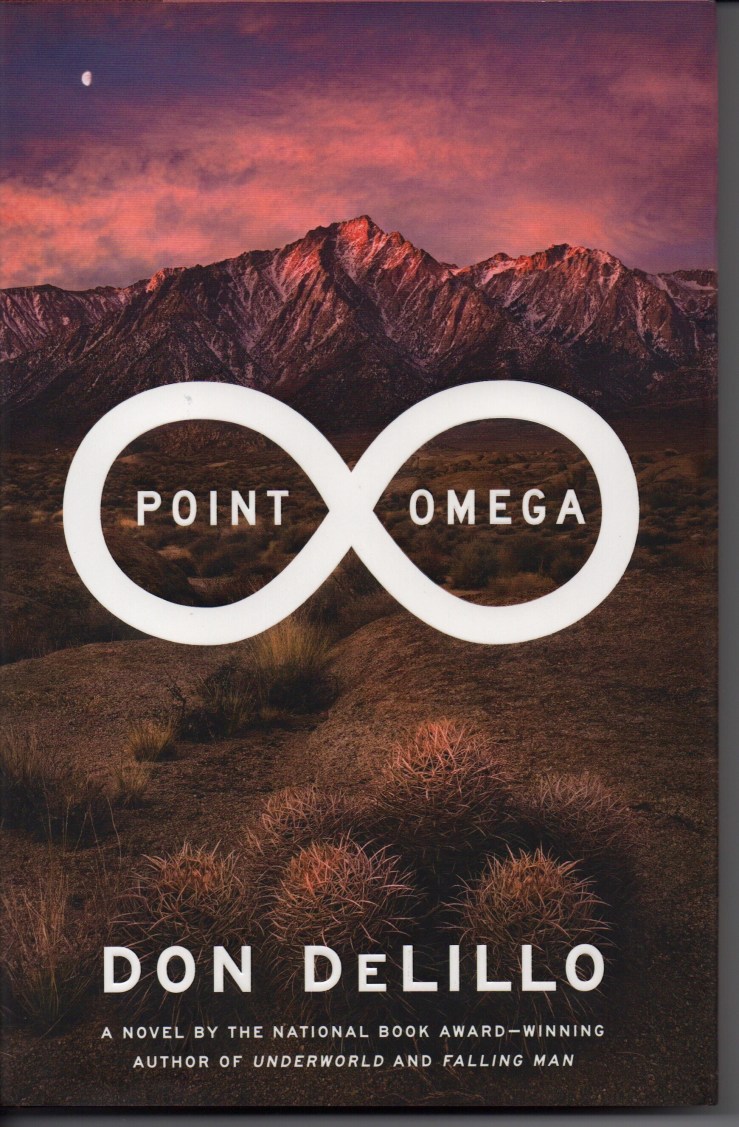
Point Omega by Don DeLillo. First edition hardback, Scribner, 2010. Jacket design by Rex Bonomelli using a photograph by Marc Adamus. I reviewed Point Omega when it came out, noting that it “is not a particularly fun book nor does it yield any direct answers, but it’s also a rewarding, engaging, and often challenging read.” The book got somewhat mixed reviews, but I think in retrospect it’s quite underrated. DeLillo wrote one of the earliest paraphrases of the Bush Wars here (without really writing a summation and without really writing a war novel), and I think about the book often—whenever I read a little digital clipping about Cheney or Wolfowitz or Rumsfeld or any  of the Old Neocon Gang—and the hacks and mouthpieces who supported them.
img_2147

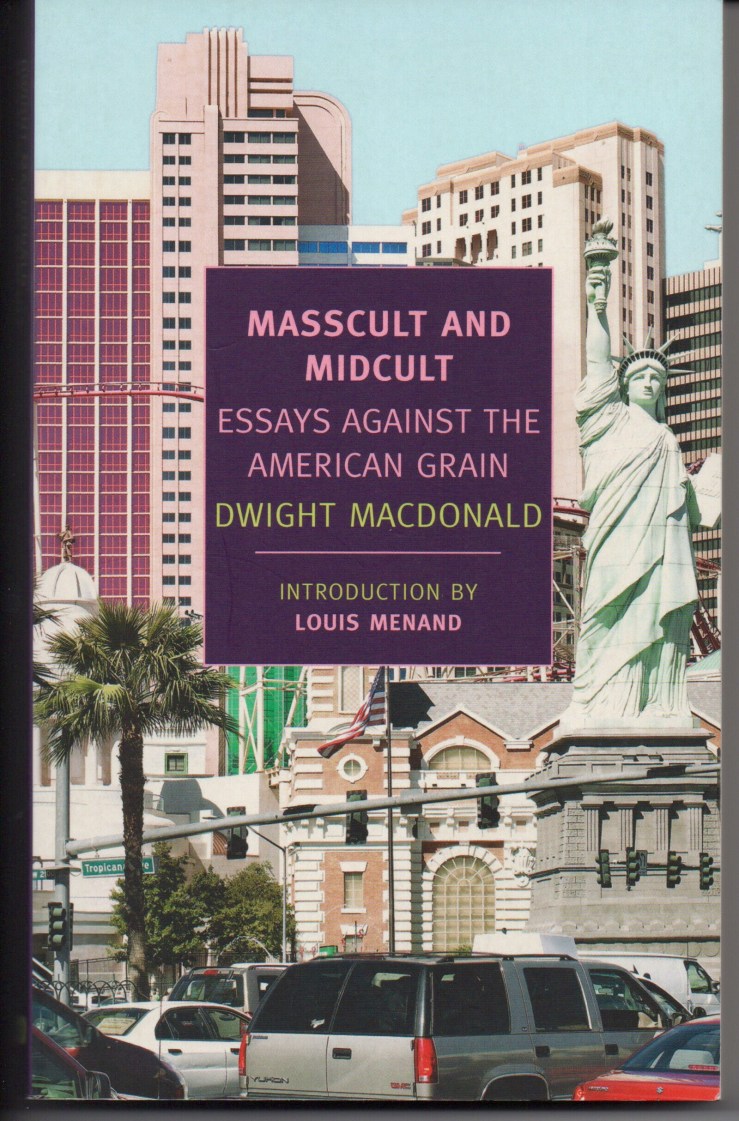
Masscult and Midcult: Essays against the American Grain by Dwight Macdonald. Edited by John Summers. Published by NYRB, 2011. Cover design by Katy Homans; the cover image is a detail of Cedric Delsaux’s photograph 88, Las Vegas Casino 1. I reviewed Masscult a few years ago. The book has some perceptive essays, and its title essay is essential cultural criticism.

img_2146

Native Son by Richard Wright. Mass market paperback edition by Harper Perennial, 1993. Cover design and illustration by David Diaz. This book was part of a class set I used years ago when I taught AP English Literature. It left with me when I left that job.

May Party — Maurice Prendergast

may-party-also-known-as-may-day-central-parkhalfhd

Dream Walking — Imogen Cunningham

dou08

How crowded is the universe (Stanley Elkin’s The Franchiser)

“How crowded is the universe,” his godfather said and moved the plasma arm vaguely. “How stuffed to bursting with its cargo of crap. Consider, Ben. You could have been a pencil or the metal band that holds the eraser to the wood, the wire of lead that runs through it. The black N in ‘Number 2’ stamped along one of its six sides. Or one of its six sides. Or the thin paint on another. You might have been a vowel on a typewriter or a number on a telephone dial or a consonant in books. There are thousands of languages, millions of typewriters, billions of books. You might have been the oxygen I breathe or the air stirred by this sentence. It is a miracle that one is not one of these things, a miracle that one is not a thing at all, that one is animal rather than mineral or vegetable, and a higher animal rather than a lower. You could have been a dot on a die in a child’s Monopoly set. There are twenty-one dots on each die, forty-two in a pair. Good God, Ben, think of all the dice in the world. End to end they’d stretch to the sun. Then there are the rich, the blooded with their red heritage like a thoroughbred’s silks. You might have been a stitch in those silks, a stitch in any of the trillions of vestments, pennants, gloves, blankets, and flags that have existed till now. Let me ask you something. How many people live? Consider the size of their wardrobe over the years. A button you could be, a pocket in pants, a figure on print.

“—I was discussing the rich. There are many wealthy. More than you think. I’m not just talking beneficiaries either, next of kin, in-laws, distant cousins, the King’s mishpocheh, the Emperor’s. But the rich man himself, the wage earner, the founder. Fly in an airplane in a straight line across one state. You couldn’t count the mansions or limousines, you couldn’t count the swimming pools. So many, Ben. You’re not one of them, and not one of the family, and still you exist. I am talking the long shot of existence, the odds no gambler in the world would take, that you would ever come to life as a person, a boy called Ben Flesh.

From Stanley Elkin’s 1975 novel The Franchiser. After a few false starts, I finally got into the rhythm and voices in this strange and very funny novel of Ben Flesh, who “patrolled America” as, well, a franchiser. It was when Ben’s (fairy)godfather goes on a rant about the, uh, miracle of existence that I fell for the novel.

The End of the World — Dado

dado-peintre-findumondeg

The Annunciation (Detail) — Jan van Eyck

annunc9

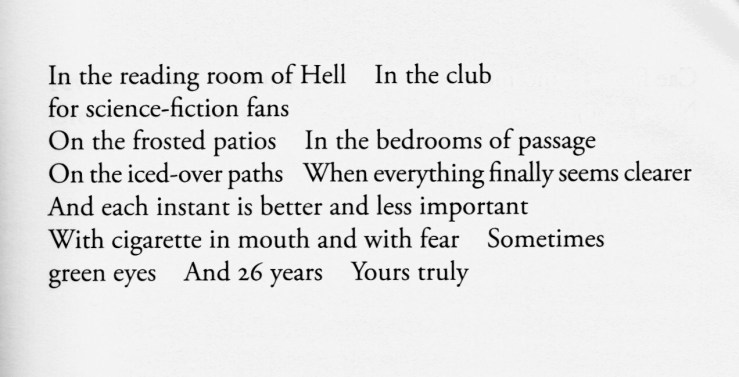
“In the reading room of Hell” — Roberto Bolaño

img_2118-1

Huldra — Per Aase

img_2090

From Jan Bergh Eriksen’s Trolls and Their Relatives, illustrated by Per Aase. Dreyer Bok-Stravanger, Norway, 1983. My grandparents gave me the book, which they bought on a trip in Norway. I think I was 9 when they gave it to me.

She left the orbit, sighing: ‘Eyes of a blue dog. I’ve written it everywhere.’ | Gabriel Garcia Marquez

Then she looked at me. I thought that she was looking at me for the first time. But then, when she turned around behind the lamp and I kept feeling her slippery and oily look in back of me, over my shoulder, I understood that it was I who was looking at her for the first time. I lit a cigarette. I took a drag on the harsh, strong smoke, before spinning in the chair, balancing on one of the rear legs. After that I saw her there, as if she’d been standing beside the lamp looking at me every night. For a few brief minutes that’s all we did: look at each other. I looked from the chair, balancing on one of the rear legs. She stood, with a long and quiet hand on the lamp, looking at me. I saw her eyelids lighted up as on every night. It was then that I remembered the usual thing, when I said to her: ‘Eyes of a blue dog.’ Without taking her hand off the lamp she said to me: ‘That. We’ll never forget that.’ She left the orbit, sighing: ‘Eyes of a blue dog. I’ve written it everywhere.’

Read the rest of Gabriel Garcia Marquez’s very short story “Eyes of a Blue Dog.”

The Annunciation (Detail) — Jan van Eyck

annunc8

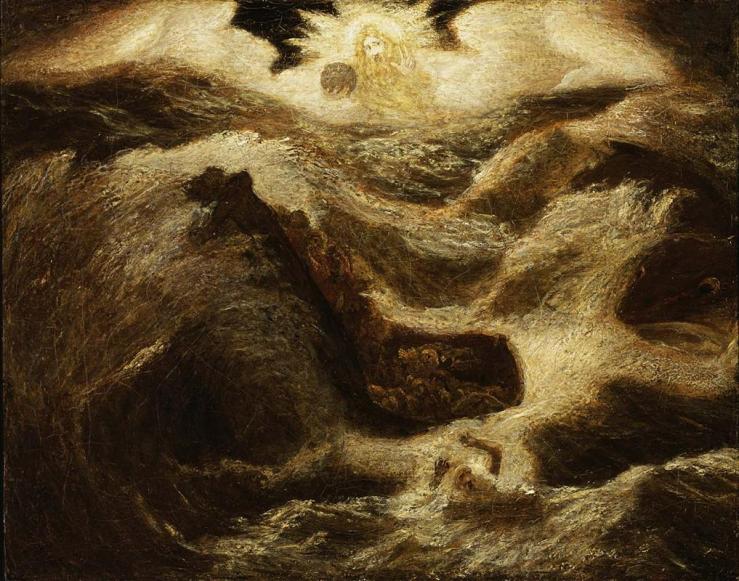
Jonah — Albert Pinkham Ryder

jonah-1895halfhd

And here is “The Sermon,” Ch. IX of Herman Melville’s great novel Moby-Dick, in which Father Mapple gives us the tale of Jonah—


Father Mapple rose, and in a mild voice of unassuming authority ordered the scattered people to condense. “Starboard gangway, there! side away to larboard—larboard gangway to starboard! Midships! midships!”

There was a low rumbling of heavy sea-boots among the benches, and a still slighter shuffling of women’s shoes, and all was quiet again, and every eye on the preacher.

He paused a little; then kneeling in the pulpit’s bows, folded his large brown hands across his chest, uplifted his closed eyes, and offered a prayer so deeply devout that he seemed kneeling and praying at the bottom of the sea.

This ended, in prolonged solemn tones, like the continual tolling of a bell in a ship that is foundering at sea in a fog—in such tones he commenced reading the following hymn; but changing his manner towards the concluding stanzas, burst forth with a pealing exultation and joy—

     "The ribs and terrors in the whale,
     Arched over me a dismal gloom,
     While all God's sun-lit waves rolled by,
     And lift me deepening down to doom.

     "I saw the opening maw of hell,
     With endless pains and sorrows there;
     Which none but they that feel can tell—
     Oh, I was plunging to despair.

     "In black distress, I called my God,
     When I could scarce believe him mine,
     He bowed his ear to my complaints—
     No more the whale did me confine.

     "With speed he flew to my relief,
     As on a radiant dolphin borne;
     Awful, yet bright, as lightning shone
     The face of my Deliverer God.

     "My song for ever shall record
     That terrible, that joyful hour;
     I give the glory to my God,
     His all the mercy and the power."

Nearly all joined in singing this hymn, which swelled high above the howling of the storm. A brief pause ensued; the preacher slowly turned over the leaves of the Bible, and at last, folding his hand down upon the proper page, said: “Beloved shipmates, clinch the last verse of the first chapter of Jonah—’And God had prepared a great fish to swallow up Jonah.'”

“Shipmates, this book, containing only four chapters—four yarns—is one of the smallest strands in the mighty cable of the Scriptures. Yet what depths of the soul does Jonah’s deep sealine sound! what a pregnant lesson to us is this prophet! What a noble thing is that canticle in the fish’s belly! How billow-like and boisterously grand! We feel the floods surging over us; we sound with him to the kelpy bottom of the waters; sea-weed and all the slime of the sea is about us! But what is this lesson that the book of Jonah teaches? Shipmates, it is a two-stranded lesson; a lesson to us all as sinful men, and a lesson to me as a pilot of the living God. As sinful men, it is a lesson to us all, because it is a story of the sin, hard-heartedness, suddenly awakened fears, the swift punishment, repentance, prayers, and finally the deliverance and joy of Jonah. As with all sinners among men, the sin of this son of Amittai was in his wilful disobedience of the command of God—never mind now what that command was, or how conveyed—which he found a hard command. But all the things that God would have us do are hard for us to do—remember that—and hence, he oftener commands us than endeavors to persuade. And if we obey God, we must disobey ourselves; and it is in this disobeying ourselves, wherein the hardness of obeying God consists. Continue reading “Jonah — Albert Pinkham Ryder”

Another misty morning | Nathaniel Hawthorne’s journal entry for April 27, 1843

Thursday, April 27th.–I took a walk into the fields, and round our opposite hill, yesterday noon, but made no very remarkable observation. The frogs have begun their concerts, though not as yet with a full choir. I found no violets nor anemones, nor anything in the likeness of a flower, though I looked carefully along the shelter of the stone-walls, and in all spots apparently propitious. I ascended the hill, and had a wide prospect of a swollen river, extending around me in a semicircle of three or four miles, and rendering the view much finer than in summer, had there only been foliage. It seemed like the formation of a new world; for islands were everywhere emerging, and capes extending forth into the flood; and these tracts, which were thus won from the watery empire, were among the greenest in the landscape. The moment the deluge leaves them Nature asserts them to be her property by covering them with verdure; or perhaps the grass had been growing under the water. On the hill-top where I stood, the grass had scarcely begun to sprout; and I observed that even those places which looked greenest in the distance were but scantily grass-covered when I actually reached them. It was hope that painted them so bright.

Last evening we saw a bright light on the river, betokening that a boat’s party were engaged in spearing fish. It looked like a descended star,–like red Mars,–and, as the water was perfectly smooth, its gleam was reflected downward into the depths. It is a very picturesque sight. In the deep quiet of the night I suddenly heard the light and lively note of a bird from a neighboring tree,–a real song, such as those which greet the purple dawn, or mingle with the yellow sunshine. What could the little bird mean by pouring it forth at midnight? Probably the note gushed out from the midst of a dream, in which he fancied himself in Paradise with his mate; and, suddenly awakening, he found he was on a cold, leafless bough, with a New England mist penetrating through his feathers. That was a sad exchange of imagination for reality; but if he found his mate beside him, all was well.

This is another misty morning, ungenial in aspect, but kinder than it looks; for it paints the hills and valleys with a richer brush than the sunshine could. There is more verdure now than when I looked out of the window an hour ago. The willow-tree opposite my study window is ready to put forth its leaves. There are some objections to willows. It is not a dry and cleanly tree; it impresses me with an association of sliminess; and no trees, I think, are perfectly satisfactory, which have not a firm and hard texture of trunk and branches. But the willow is almost the earliest to put forth its leaves, and the last to scatter them on the ground; and during the whole winter its yellow twigs give it a sunny aspect, which is not without a cheering influence in a proper point of view. Our old house would lose much were this willow to be cut down, with its golden crown over the roof in winter, and its heap of summer verdure. The present Mr. Ripley planted it, fifty years ago, or thereabouts.

Nathaniel Hawthorne’s journal entry for April 27, 1843. From Passages from the American Note-Books.

Illustration for “The Beautiful Girl of the Moon Tower” — Leo and Diane Dillon

img_2091

From The People Could Fly: American Black Folktales told by Virginia Hamilton.

Circe — Claudio Bravo

circe-1986

Human flower-shrubs, if they will grow old on earth | Nathaniel Hawthorne’s journal entry for April 26, 1843

April 26th.–Here is another misty day, muffling the sun. The lilac-shrubs under my study window are almost in leaf. In two or three days more, I may put forth my hand and pluck a green bough. These lilacs appear to be very aged, and have lost the luxuriant foliage of their prime. Old age has a singular aspect in lilacs, rose-bushes, and other ornamental shrubs. It seems as if such things, as they grow only for beauty, ought to flourish in immortal youth, or at least to die before their decrepitude. They are trees of Paradise, and therefore not naturally subject to decay; but have lost their birthright by being transplanted hither. There is a kind of ludicrous unfitness in the idea of a venerable rose-bush; and there is something analogous to this in human life. Persons who can only be graceful and ornamental–who can give the world nothing but flowers–should die young, and never be seen with gray hairs and wrinkles, any more than the flower-shrubs with mossy bark and scanty foliage, like the lilacs under my window. Not that beauty is not worthy of immortality. Nothing else, indeed, is worthy of it; and thence, perhaps, the sense of impropriety when we see it triumphed over by time. Apple-trees, on the other hand, grow old without reproach. Let them live as long as they may, and contort themselves in whatever fashion they please, they are still respectable, even if they afford us only an apple or two in a season, or none at all. Human flower-shrubs, if they will grow old on earth, should, beside their lovely blossoms, bear some kind of fruit that will satisfy earthly appetites; else men will not be satisfied that the moss should gather on them.

Winter and Spring are now struggling for the mastery in my study; and I yield somewhat to each, and wholly to neither. The window is open, and there is a fire in the stove. The day when the window is first thrown open should be an epoch in the year; but I have forgotten to record it. Seventy or eighty springs have visited this old house; and sixty of them found old Dr. Ripley here,–not always old, it is true, but gradually getting wrinkles and gray hairs, and looking more and more the picture of winter. But he was no flower-shrub, but one of those fruit-trees or timber-trees that acquire a grace with their old age. Last Spring found this house solitary for the first time since it was built; and now again she peeps into our open windows and finds new faces here. . . .

It is remarkable how much uncleanness winter brings with it, or leaves behind it, . . . The yard, garden, and avenue, which should be my department, require a great amount of labor. The avenue is strewed with withered leaves,–the whole crop, apparently, of last year,–some of which are now raked into heaps; and we intend to make a bonfire of them. . . –There are quantities of decayed branches, which one tempest after another has flung down, black and rotten. In the garden are the old cabbages which we did not think worth gathering last autumn, and the dry bean-vines, and the withered stalks of the asparagus-bed; in short, all the wrecks of the departed year,–its mouldering relics, its dry bones. It is a pity that the world cannot be made over anew every spring. Then, in the yard, there are the piles of firewood, which I ought to have sawed and thrown into the shed long since, but which will cumber the earth, I fear, till June, at least. Quantities of chips are strewn about, and on removing them we find the yellow stalks of grass sprouting underneath. Nature does her best to beautify this disarray. The grass springs up most industriously, especially in sheltered and sunny angles of the buildings, or round the doorsteps,–a locality which seems particularly favorable to its growth; for it is already high enough to bend over and wave the wind. I was surprised to observe that some weeds (especially a plant that stains the fingers with its yellow juice) had lived, and retained their freshness and sap as perfectly as in summer, through all the frosts and snows of last winter. I saw them, the last green thing, in the autumn; and here they are again, the first in the spring.

Nathaniel Hawthorne’s journal entry for April 26, 1843. From Passages from the American Note-Books.

The Annunciation (Detail) — Jan van Eyck

annunc7

Stanley Elkin and William Gass on the mythic mode, Faulkner, etc.

From Washington University’s marvelous Modern Literature Collection YouTube channel.