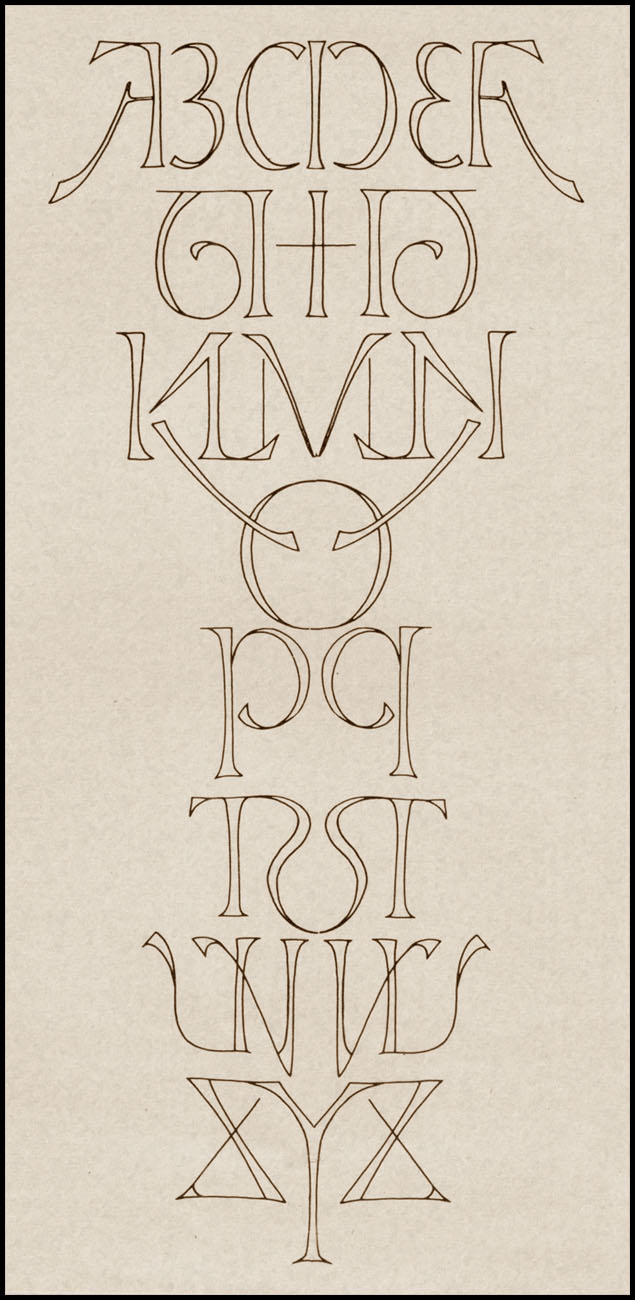
Ambigram Alphabet — Scott Kim

7a6sf

(By Scott Kim; via Stan Carey).

Three Books

img_1640

The Adventures of Huckleberry Finn by Mark Twain. Mass market paperback by Bantam, 10th ed., 1986. No designer credited, but the cover illustration is a 1981 painting by Doug Johnson, and it is the sole reason that I’ve held onto this copy for over a decade now, since I first used it as part of a class set for an eleventh grade English class I used to teach. Perhaps from a technical standpoint, I stole this book.

img_1642

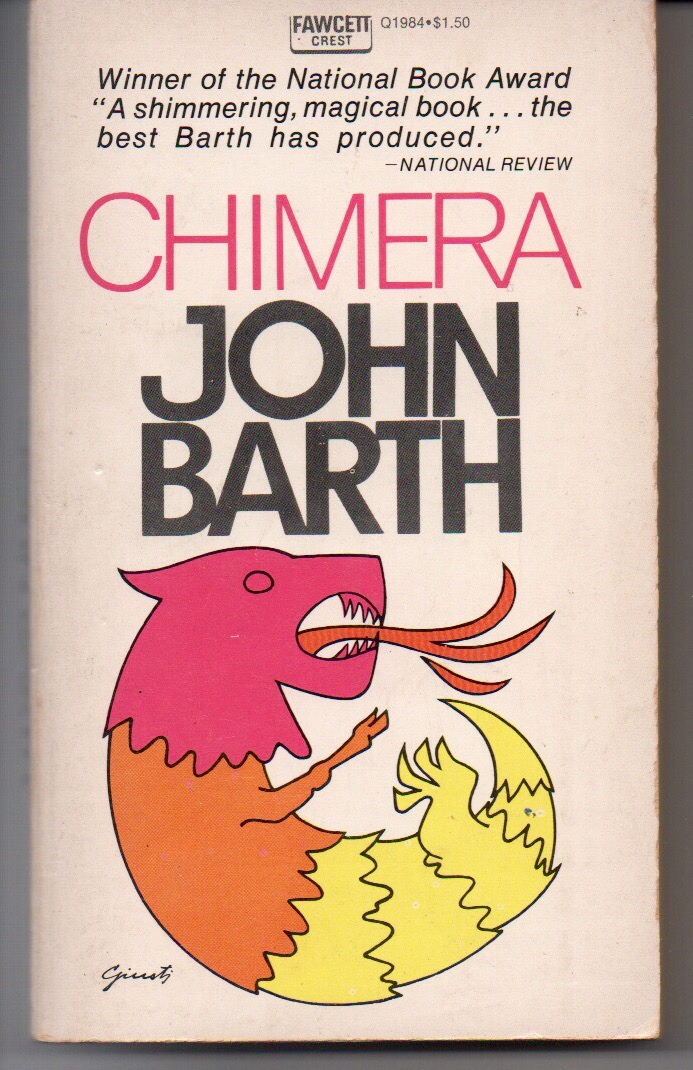
Chimera by John Barth. Mass market paperback by Fawcett Crest, 1973.  No designer credited, and the cover artist isn’t named in the colophon or on the back–but the cover is signed. Perhaps the original hardback, which shares this illustration, credited the artist. I read this book in the right place and at the right time—I was a junior or senior in college, obsessed with postmodernism as a technique (rather than postmodernism as a description), and Chimera’s intense gamesmanship enchanted me. I’m pretty sure I read it after Lost in the Funhouse, and that after Wallace’s Westward the Course of Empire Takes Its Way. I bought this copy eight or nine years ago (having read it first as a library book), and attempted a reread and was…less impressed. Still, it would be hard for me to overstate how much Chimera did for me—how much it showcased the possibilities of literature and storytelling.

img_1639

The Ballad of the Sad Cafe and Other Stories by Carson McCullers. Mass market paperback edition by Bantam. No designer or cover artist credited—which is too bad because I love the image. The most recent date on the colophon is 1971 but I am pretty sure the book was published in 1996. I bought it in 1997. It was assigned reading for a creative writing class, and that—along with Johnson’s Jesus’ Son—were the only good things to come out of that misery. (My instructor would not shut the fuck up about “craft,” and he singled out the simile I was most proud of in one of my stories as “a bit much”).

Today’s Three Books’ mass market paperbacks are part of a small cadre of a once-large selection, winnowed away over the years, usually given away to students, etc. (I have an extra copy of Adventures of Huckleberry Finn in my car, should you need one).

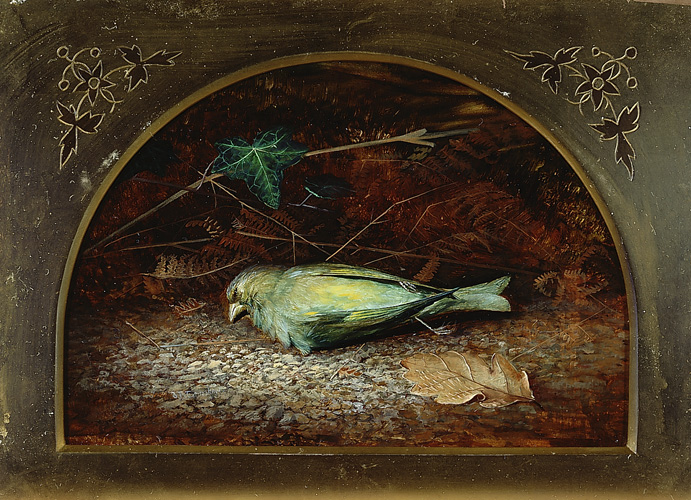
A Dead Linnet — John Atkinson Grimshaw

a-dead-linnet-1862

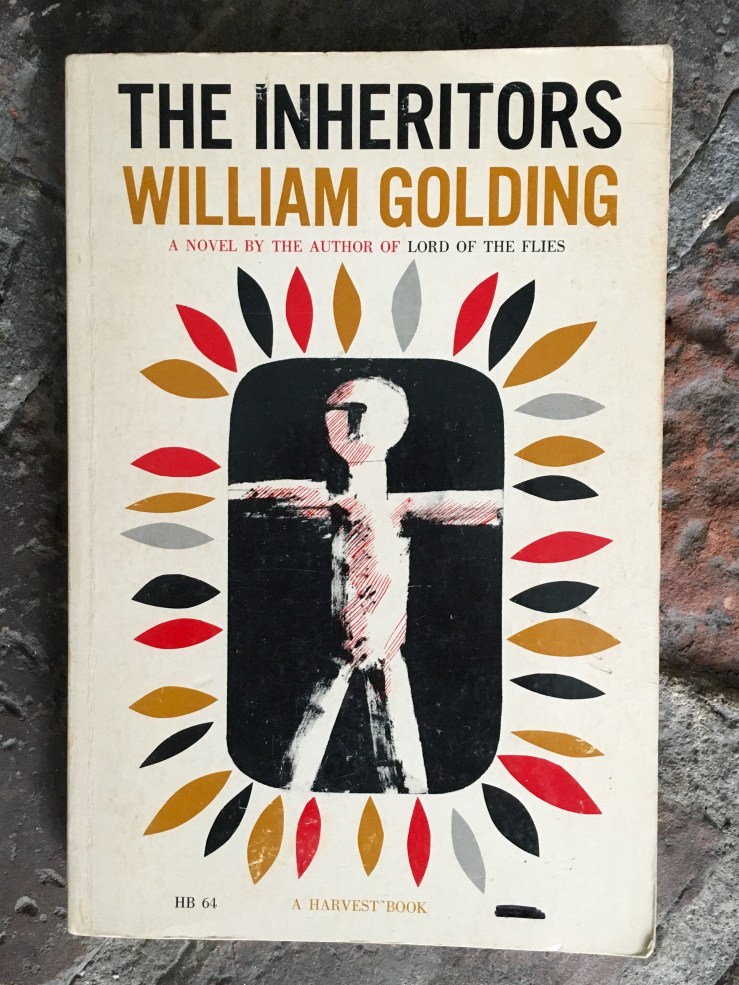
William Golding’s The Inheritors (Book acquired, 2.19.2016, and pretty much finished this week)

img_1633

I picked up William Golding’s 1955 novel The Inheritors last week on a colleague’s recommendation. It’s the story of a band of Neanderthals and their eventual encounter with predatory Homo sapiens. Golding’s Neanderthals seem to possess a near-telepathic power–they share “pictures,” comprising memory, sentiment, words, and ideas. The Neanderthals live fully in the moment, often struggling to recall “pictures” of past events. The viewpoint character Lok is something of a holy fool. His quest to retrieve a missing comrade often finds him laughing in terror.

Golding’s prose is, for the most part, an evocation of concrete contours—sure, there’s a metaphysical dimension to these Neanderthals (they worship Oa, a female spirit)—but Golding’s concern is primarily with capturing how the physical world might be understood through the senses and then converted into “pictures.” A longish passage to showcase Golding’s technique:

The bushes twitched again. Lok steadied by the tree and gazed. A head and a chest faced him, half-hidden. There were white bone things behind the leaves and hair. The man had white bone things above his eyes and under the mouth so that his face was longer than a face should be. The man turned sideways in the bushes and looked at Lok along his shoulder. A stick rose upright and there was a lump of bone in the middle. Lok peered at the stick and the lump of bone and the small eyes in the bone things over the face. Suddenly Lok understood that the man was holding the stick out to him but neither he nor Lok could reach across the river. He would have laughed if it were not for the echo of the screaming in his head. The stick began to grow shorter at both ends. Then it shot out to full length again.

The dead tree by Lok’s ear acquired a voice.

“Clop!”

His ears twitched and he turned to the tree. By his face there had grown a twig: a twig that smelt of other, and of goose, and of the bitter berries that Lok’s stomach told him he must not eat. This twig had a white bone at the end. There were hooks in the bone and sticky brown stuff hung in the crooks. His nose examined this stuff and did not like it. He smelled along the shaft of the twig. The leaves on the twig were red feathers and reminded him of goose. He was lost in a generalized astonishment and excitement.

Lok encounters a new kind of being (a human) wielding a new technology (a bow and poisoned arrows), and tries to fit them into his schema—but his “pictures” are insufficient. The concrete, sense-driven passage concludes in the abstraction of “astonishment and excitement.”

I’m about forty pages from the end of The Inheritors, and I’ve enjoyed it so far. It’s something like a sci-fi novel, really, or even something in the mode of Robbe-Grillet’s nouveau roman. Good stuff.
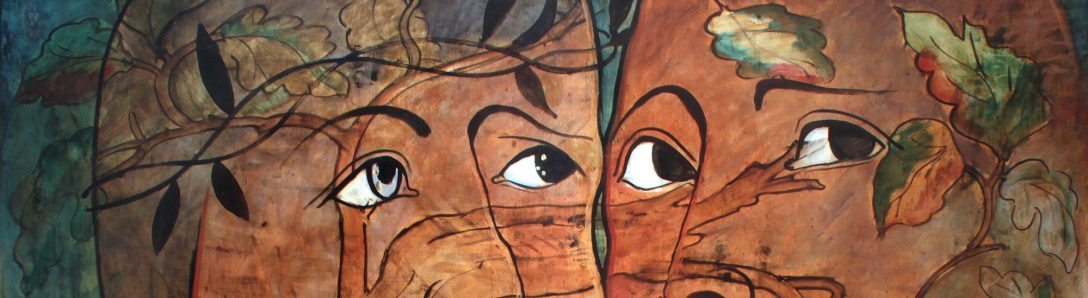
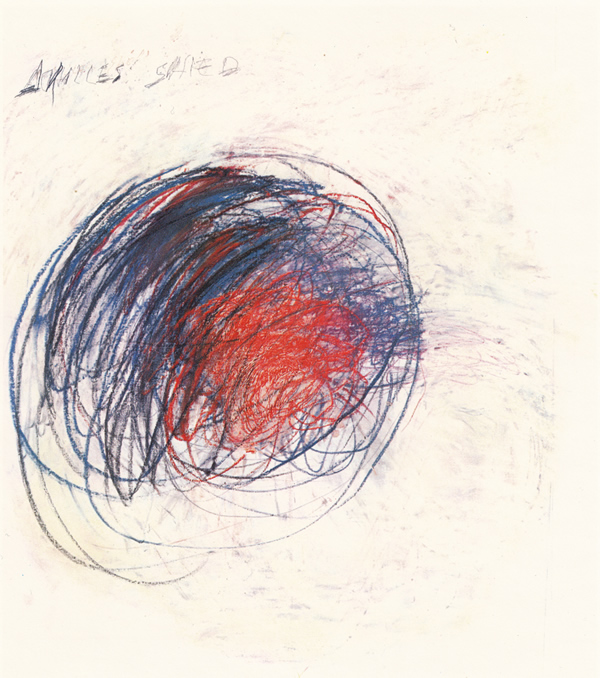
Shield of Achilles — Cy Twombly

fifty-days-at-iliam-shield-of-achilles

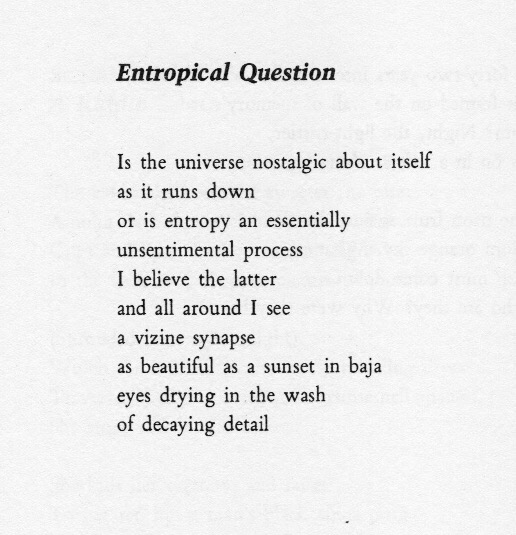
“Entropical Question” — Tom Clark

img_1629

I tried to scratch up a few lines on rereading William Gaddis’s novel The Recognitions this afternoon, but distracted myself by remembering this poem of Tom Clark’s (collected in Paradise Resisted) which is an oblique summary of said novel (or not. Why should it be? It isn’t. There’s only my will here, trying to organize these keystrokes into thoughts of some order. Happy Friday).

Glass of Water — Linnea Strid

glass-of-water

Loot Bag — Martin Wittfooth

lootbag_web

Lousy history (Ron Cobb)

img_1623

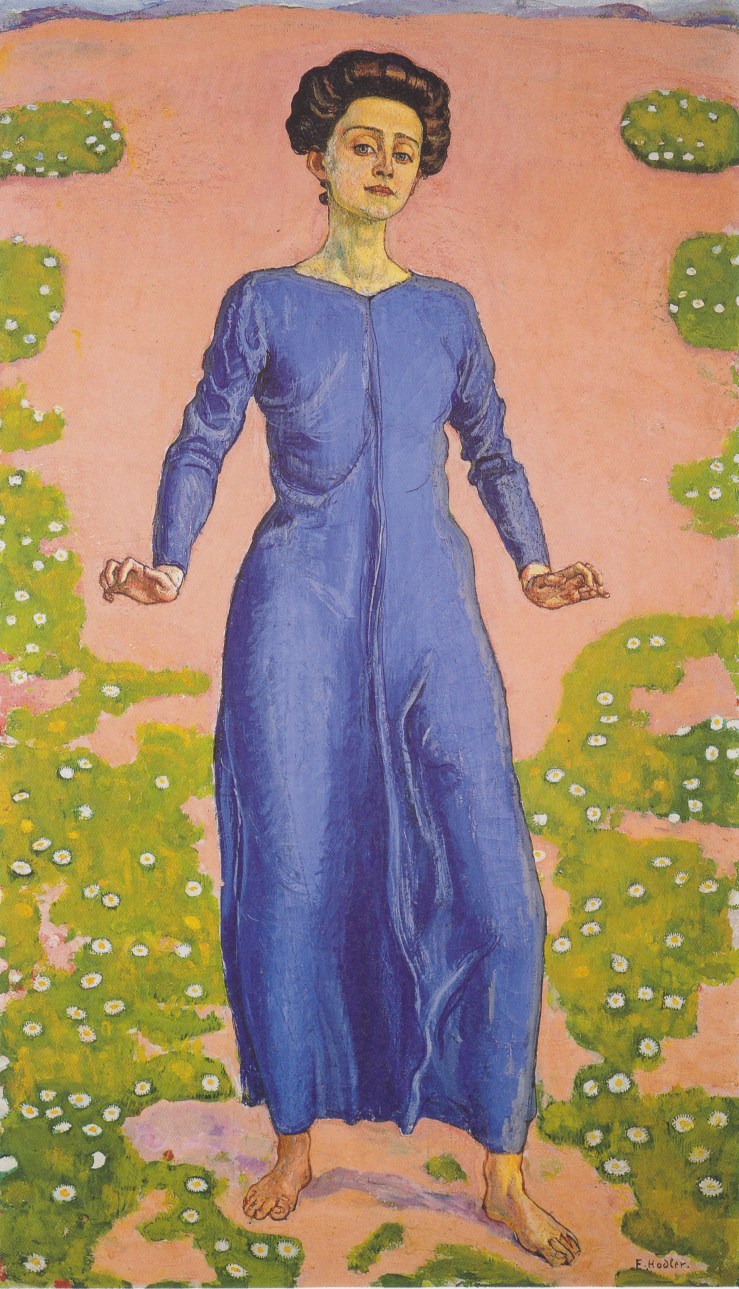
Transfiguration — Ferdinand Hodler

transfiguration

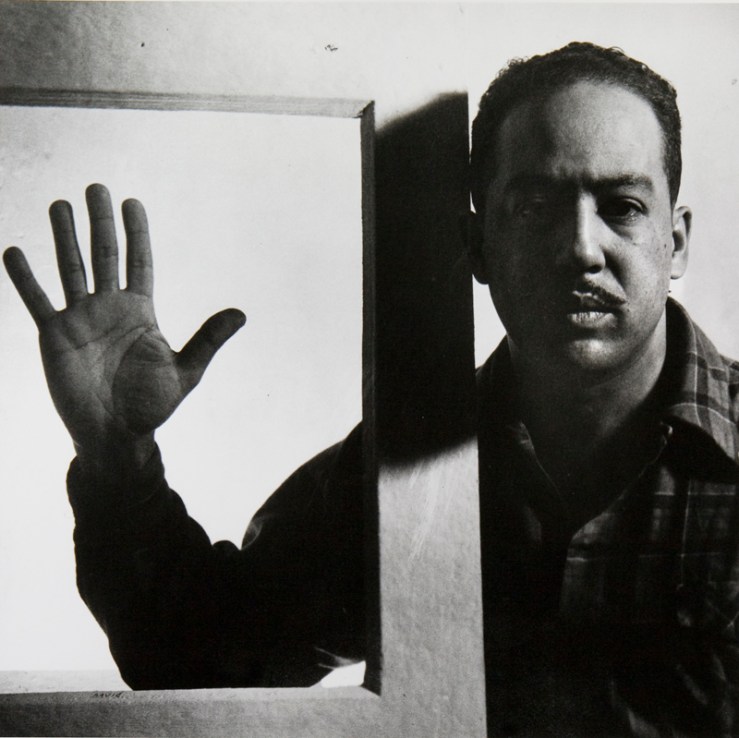
Langston Hughes — Gordon Parks

9

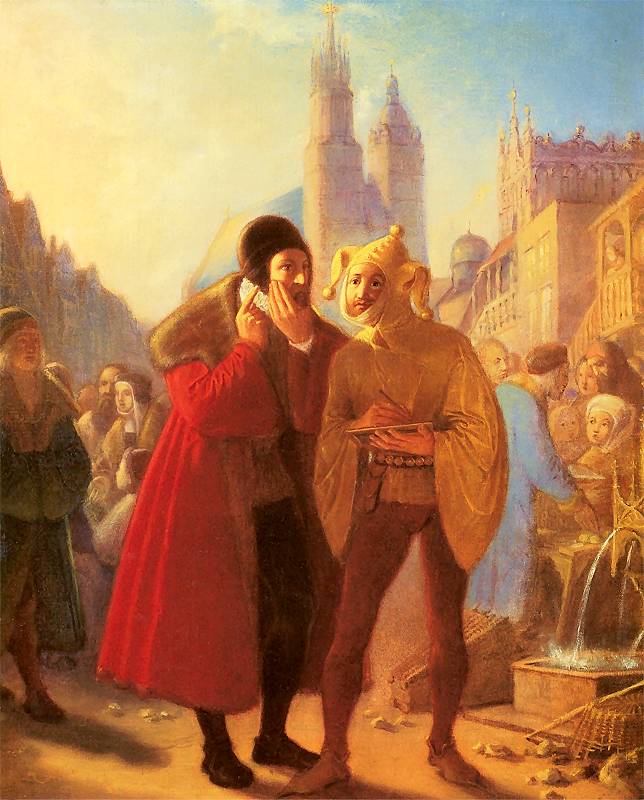
Stanczyk Feigns a Toothache — Jan Matejko

to-stanczyk

Go on, believe! It does no harm (Wittgenstein)

img_1616

From The Wittgenstein Reader, Blackwell (1994). Edited by Anthony Kenny; English translation by Peter Winch.

Tony Visconti takes us through the individual tracks of David Bowie’s song “Heroes”

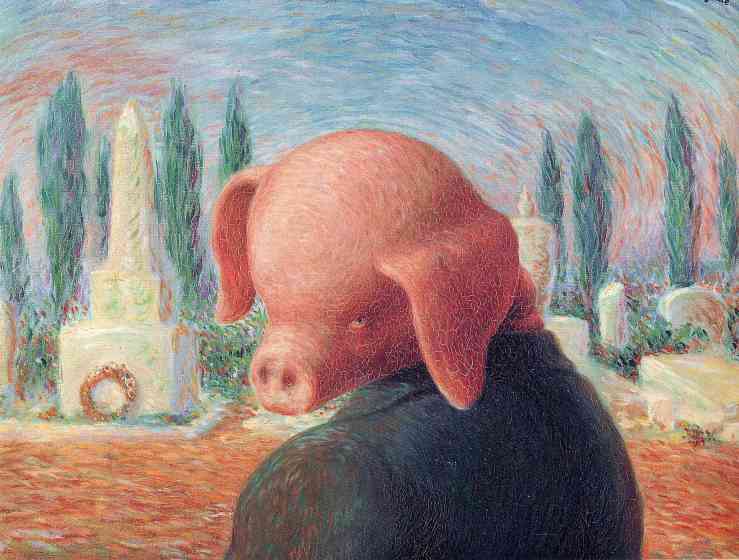
A Stroke of Luck — Rene Magritte

a-stroke-of-luck-19481

RID US OF SPACE BORES