Double Portrait of the Twins Clara and Albert de Bray — Salomon de Bray

Twins

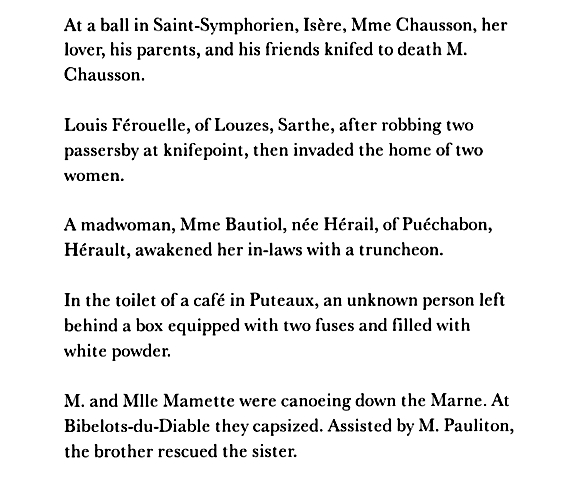
Five from Félix Fénéon

ff

Pandora — Agostino Carracci

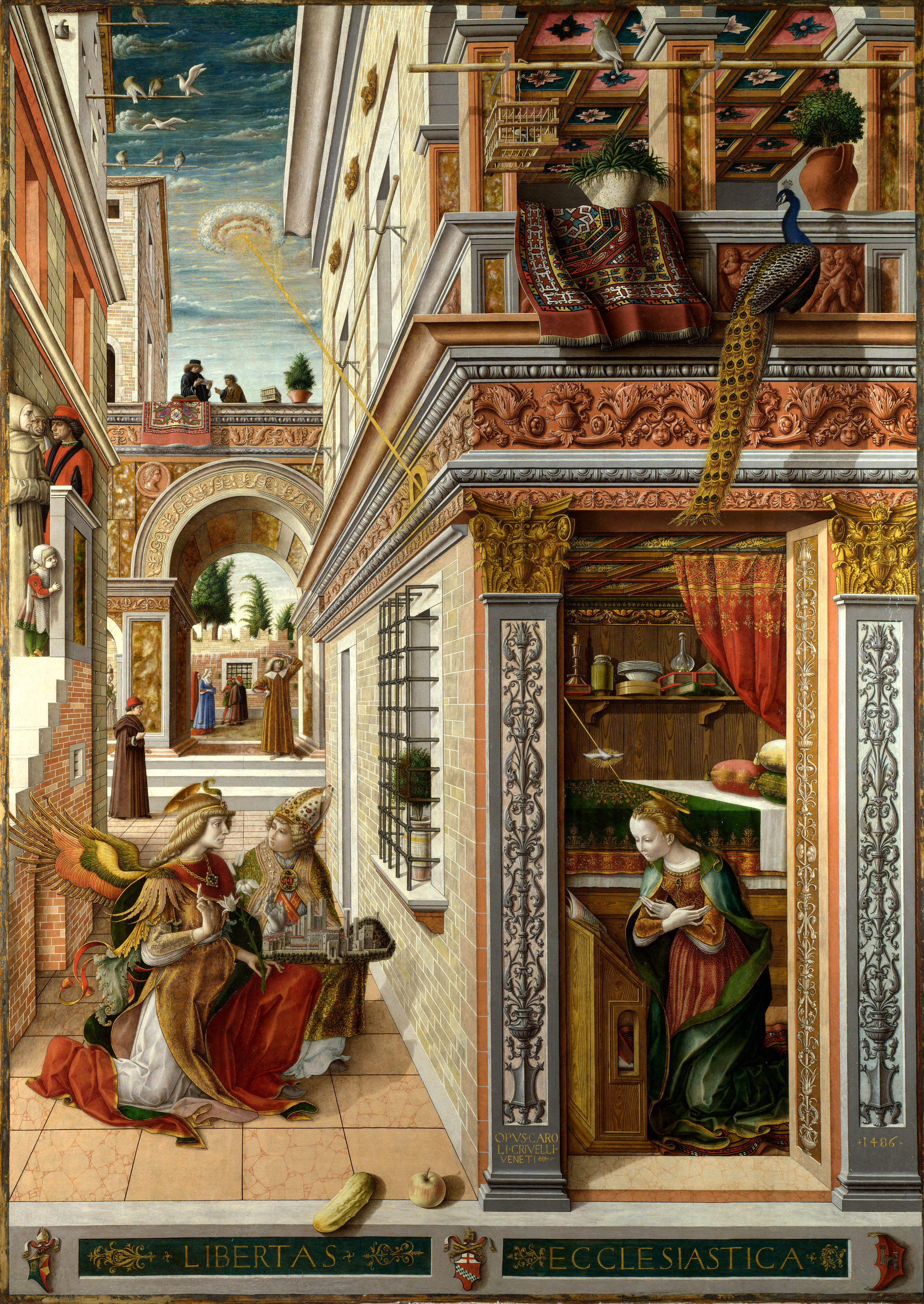
Detail from Crivelli’s Annunciation

Screenshot 2015-07-17 at 2.35.17 PM

Sunday, 19 July, slept, awoke, slept, awoke, miserable life (Kafka)

Sunday, 19 July, slept, awoke, slept, awoke, miserable life. When I think about it, I must say that my education has done me great harm in some respects. I was not, as a matter of fact, educated in any out-of-the-way place, in a ruin, say, in the mountains – something against which in fact I could not have brought myself to say a word of reproach. In spite of the risk of all my former teachers not understanding this, I should prefer most of all to have been such a little dweller in the ruins, burnt by the sun which would have shone for me there on the tepid ivy between the remains on every side; even though I might have been weak at first under the pressure of my good qualities, which would have grown tall in me with the might of weeds.

From Franz Kafka’s July 19th, 1920 diary entry. From The Diaries of Franz Kafka. Translated from the German by Joseph Kresh.

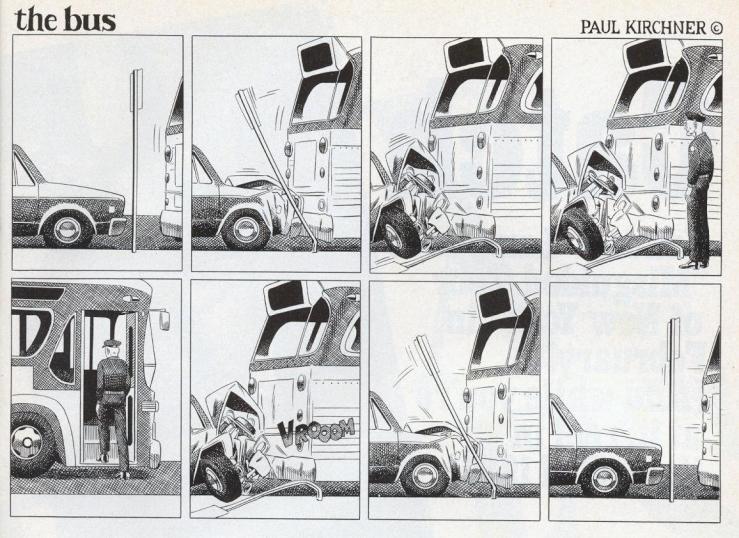
The Bus — Paul Kirchner

AzoBsoj - Imgur

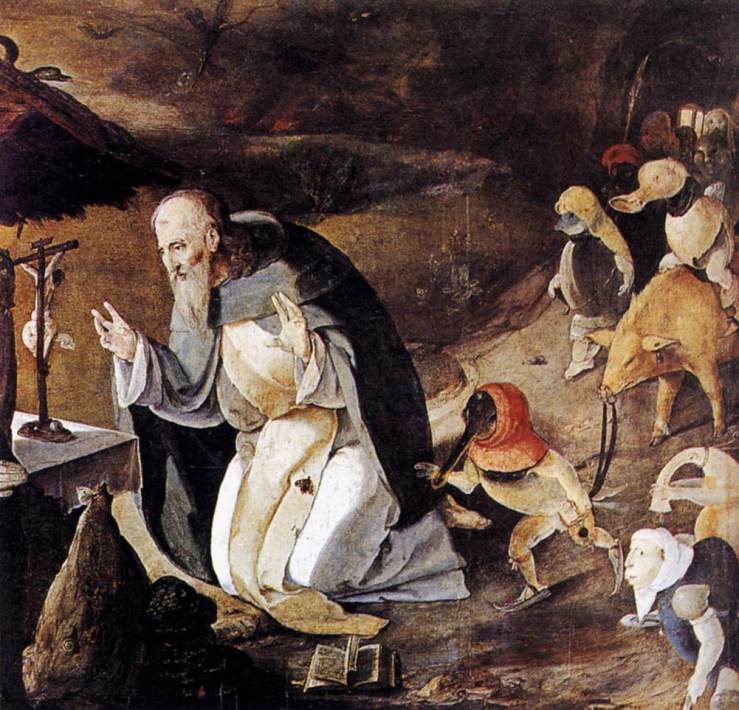
The Temptation of St. Anthony — Lucas van Leyden

anthony

Detail from Crivelli’s Annunciation

Screenshot 2015-07-17 at 2.33.18 PM

Screams from the abattoir | J.G. Ballard on Francis Bacon

In 1955 there was a modest retrospective of Francis Bacon’s paintings at the Institute of Contemporary Arts, followed in 1962 by a far larger retrospective at the Tate Gallery, which was a revelation to me. I still think of Bacon as the greatest painter of the post-war world. Sadly, when I met him in the 1980s I found, like many others before me, that he was not interested in receiving compliments or in talking about his own work. I suspect that he was still sensitive to charges of gratuitous violence and sensationalism that were levelled at him in the 1950s and 1960s. He chose as his official interviewer the art critic David Sylvester, who was careful to steer clear of the questions everyone was eager to hear answered, and only asked Bacon about his handling of space and other academic topics. In his replies Bacon adopted the same elliptical and evasive language, with the result that we know less about the motives of this extraordinary painter than we do of almost any other 20th-century artist. At least Crivelli’s Annunciation in the 1950s was not screened behind endless lectures on Renaissance perspective and the fluctuating price of lapis lazuli.

Bacon’s paintings were screams from the abattoir, cries from the execution pits of World War II. His deranged executives and his princes of death in their pontiffs’ robes lacked all pity and remorse. His popes screamed because they knew there was no God. Bacon went even further than the surrealists, assuming our complicity in the mid-century’s horrors. It was we who sat in those claustrophobic rooms, like TV hospitality suites in need of a coat of paint, under a naked light bulb that might signal the arrival of the dead, the only witnesses at our last interview.

Yet Bacon kept hope alive at a dark time, and looking at his paintings gave me a surge of confidence. I knew there was a link of some kind with the surrealists, with the dead doctors lying in their wooden chests in the dissecting room, with film noir and with the peacock and the loaf of bread in Crivelli’s Annunciation. There were links to Hemingway and Camus and Nathanael West. A jigsaw inside my head was trying to assemble itself, but the picture when it finally emerged would appear in an unexpected place.

From J.G. Ballard’s autobiography Miracles of Life.

Film Poster for The Warriors — Tomer Hanuka

warriors_650

Detail from Crivelli’s Annunciation

Screenshot 2015-07-17 at 2.31.19 PM

Young Man Reading by Candle Light — Matthias Stom

Crivelli’s Annunciation | J.G. Ballard

I am sure that a large part of the enduring mystery of the Renaissance masterpieces in the National Gallery was due to the absence of the explanatory matter that now drains away much of the strangeness and poetry of the Old Masters. I would stare at Crivelli’s Annunciation, charmed by the peacocks, loaves of bread and other incongruous items, the passer-by reading a book on the bridge and the Virgin in her jewel box of a house. I was forced to use my own imagination to stitch these elements into a master narrative that made some kind of sense, rather than read an extended wall caption and be solemnly told that the peacock was a symbol of eternal life. Perish the thought, and let the exquisite bird be itself, and nothing more or less than itself. What could be more natural, and more mysterious, than a peacock and a loaf of bread appearing on the scene to celebrate the forthcoming birth of the Saviour?

From J.G. Ballard’s autobiography Miracles of Life.

The Hurdy-Gurdy Player — Georges de la Tour

Strange to Meet You (Coffee and Cigarettes)

Judith and Her Maidservant — Artemisia Gentileschi

“Palace of the Babies” — Wallace Stevens

palace