Woman Reading — Peter Vilhelm Ilsted

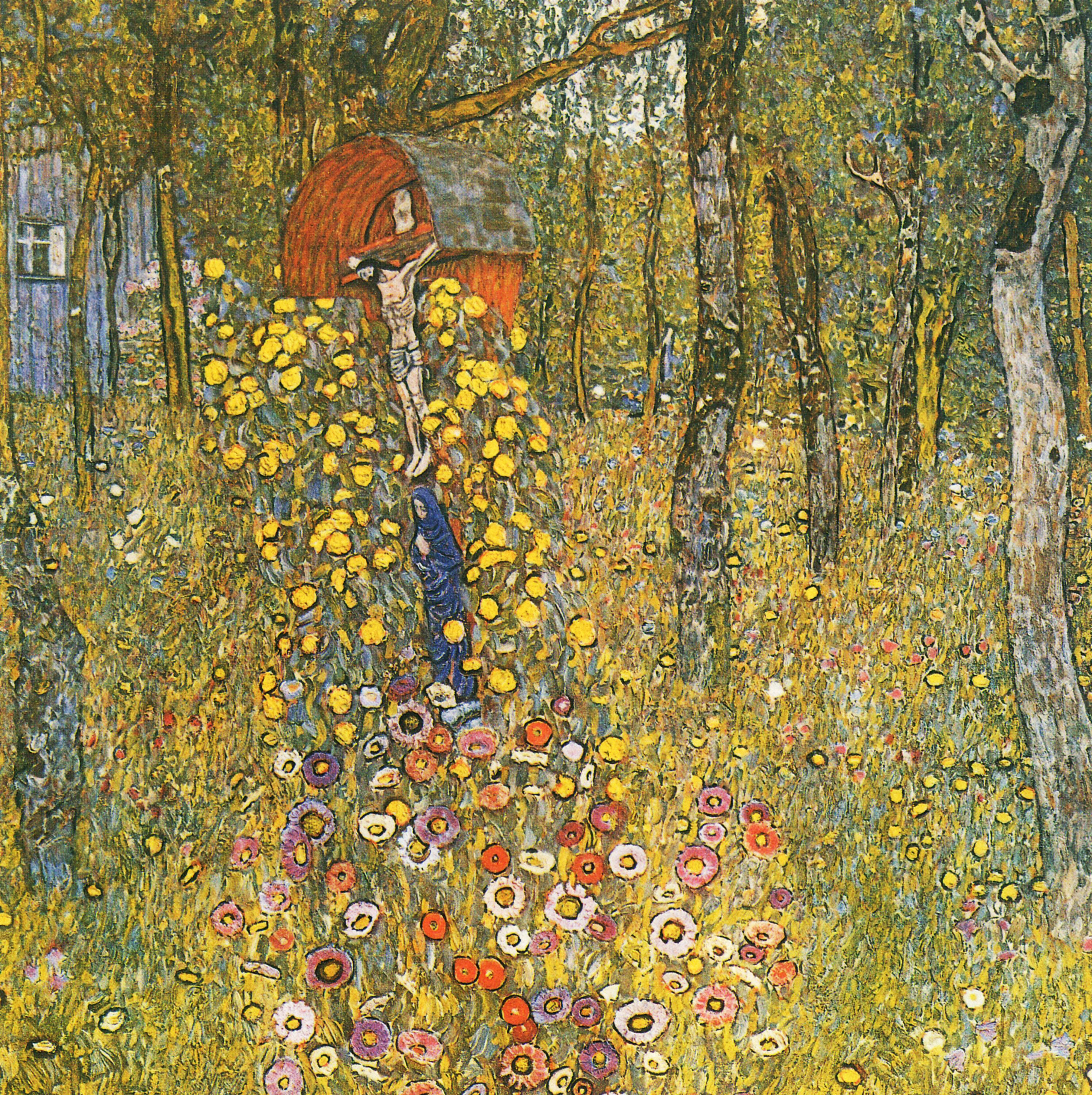
Farm Garden with Crucifix — Gustav Klimt

klimt-farm-garden-with-crucifix

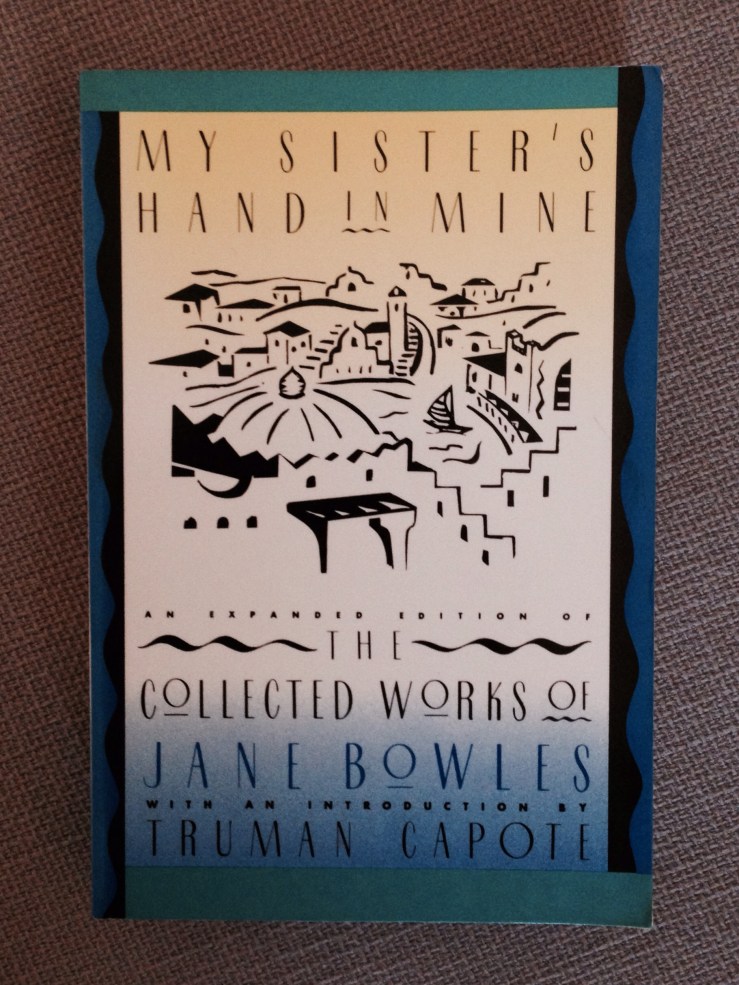
The Collected Works of Jane Bowles (Book Acquired, 12.19.2014)

IMG_4412

I picked up My Sister’s Hand in Mine: The Collected Works of Jane Bowles mostly because I couldn’t find a stand-alone version of the novel Two Serious Ladies. I guess it doesn’t hurt to have, y’know, all of her stuff (or really most of her stuff), but I’m not really a fan of omnibus editions. My interest in Two Serious Ladies was piqued by Ben Marcus, whom I interviewed by phone earlier this month (still transcribing that one; hope to run it in January). He spoke highly of the book and includes it on his writing syllabus.

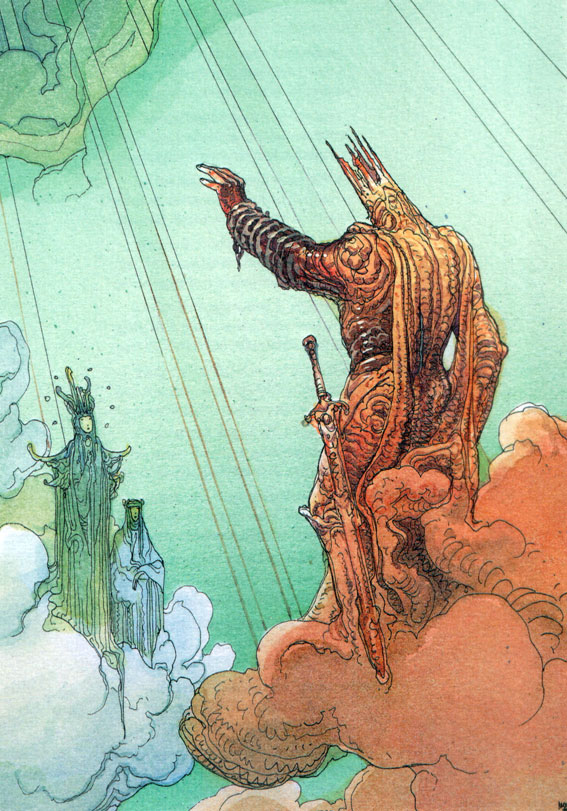
Moebius’s Divine Comedy

moebius

(More/via).

Santa Claus — Kurt Schwitters

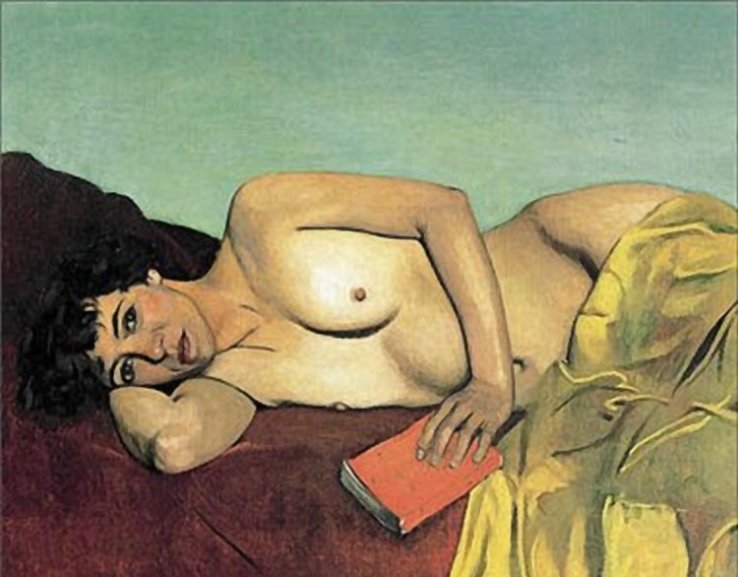
Reading Abandoned — Felix Vallotton

3077617603_1_9_zqLtjbS7

The Fireplace — Pierre Bonnard

Coffee or tea? (Thomas Pynchon’s Mason & Dixon)

Mason is trying to wake up. The nearest coffee is in the cook-tent. “Pray you,” he whispers, “try not to be so damn’d,— did I say damn’d? I meant so fucking chirpy all the time, good chap, good chap,” stumbling out of the Tent trying to get his Hair into some kind of Queue. The Coffee is brew’d with the aid of a Fahrenheit’s Thermometer, unmark’d save at one place, exactly halfway between freezing and boiling, at 122°, where upon the Wood a small Arrow is inscrib’d, pointing at a Scratch across the glass Tube. ’Tis at this Temperature that the water receives the ground Coffee, the brew being stirr’d once or twice, the Pot remov’d from the fire, its Decoction then proceeding. Tho’ clarifying may make sense in London, out here ’tis a luxury, nor are there always Egg-shells to hand. If tasted early, Dixon has found, the fine suspended matter in the coffee lends it an undeniable rustick piquance. Later in the Pot, the Liquid charring itself toward Vileness appeals more to those looking for bodily stimuli,— like Dixon, who is able to sip the most degradedly awful pot’s-end poison and yet beam like an Idiot, “Mm-m m! Best Jamoke west o’ the Alleghenies!”— a phrase Overseer Barnes utters often, tho’ neither Surveyor quite understands it, especially as the Party are yet east of the Alleghenies. Howbeit, at this point in a Pot’s life-cycle, Mason prefers to switch over to Tea, when it is Dixon’s turn to begin shaking his head.

“Can’t understand how anyone abides that stuff.”

“How so?” Mason unable not to react.

“Well, it’s disgusting, isn’t it? Half-rotted Leaves, scalded with boiling Water and then left to lie, and soak, and bloat?”

“Disgusting? this is Tea, Friend, Cha,— what all tasteful London drinks,— that,” pollicating the Coffee-Pot, is what’s disgusting.”

“Au contraire,” Dixon replies, “Coffee is an art, where precision is all,— Water-Temperature, mean particle diameter, ratio of Coffee to Water or as we say, CTW, and dozens more Variables I’d mention, were they not so clearly out of thy technical Grasp,— ”

“How is it,” Mason pretending amiable curiosity, “that of each Pot of Coffee, only the first Cup is ever worth drinking,— and that, by the time I get to it, someone else has already drunk it?”

Dixon shrugs. “You must improve your Speed . . . ? As to the other, why aye, only the first Cup’s any good, owing to Coffee’s Sacramental nature, the Sacrament being Penance, entirely absent from thy sunlit World of Tay,— whereby the remainder of the Pot, often dozens of cups deep, represents the Price for enjoying that first perfect Cup.”

“Folly,” gapes Mason. “Why, ev’ry cup of Tea is perfect . . . ?”

“For what? curing hides?”
From chapter 48 of Thomas Pynchon’s novel Mason & Dixon.

“A Christmas Thought” — Barry Hannah

Donald Barthelme interviewed by George Plimpton (Video)

From The University of Houston and via Jessamyn West.

Seated Woman Reading — François Bonvin

Bonvin,  François Seated woman reading, 1862

Mike Leigh Picks DVDs from the Criterion Collection Closet

Undergrowth with Two Figures — Vincent van Gogh

“To read and to read and to read and to read” (Faulkner’s advice to young writers)

Unidentified participant: Mr. Faulkner, you may have touched on this previously, but could you give some advice to young writers? What advice would you give to young writers?

William Faulkner: At one time I thought the most important thing was talent. I think now that—that the young man or the young woman must possess or teach himself, train himself, in infinite patience, which is to—to try and to try and to try until it comes right. He must train himself in ruthless intolerance. That is, to throw away anything that is false no matter how much he might love that page or that paragraph. The most important thing is insight, that is, to be—to curiosity—to—to wonder, to mull, and to—to—to muse why it is that man does what he does. And if you have that, then I don’t think the talent makes much difference, whether you’ve got that or not.

Unidentified participant: How would you suggest that he get this insight? Through experience?

William Faulkner: Yes, and then the greatest part of experience is in the books, to read. To read and to read and to read and to read. To watch people, to have—to never judge people. To watch people, what they do, with—with—without intolerance. Simply to—to learn why it is they did what they did.

More/audio.

“All art constantly aspires towards the condition of music”

Mary Magdalene Reading — Ambrosius Benson

Will Oldham and Slint talk about shooting the cover of Spiderland