“It’s not just a stream of gibberish” |On Illustrating Finnegans Wake

Wake_in_Progress_31-740x0.jpg

At The Honest Ulsterman, Darran Anderson talks with Stephen Crowe about illustrating James Joyce’s Finnegans Wake in his project Wake in Progress. From the interview:

DA: Do you approach the book as a puzzle or a palette? Do you try to make your artwork close to what Joyce might have meant or do you embrace the possibilities of your own interpretations? Is it possible or even desirable to try to work out what Joyce meant?

SC: Clearly Joyce meant to say something – it’s not just a stream of gibberish. So as an illustrator I think I owe it to the text to try to understand as much of it as I can. I try to figure out at least a couple of different ways to interpret every passage, but I certainly don’t exhaust every avenue. There’s a limit to how much information I can cram into the illustrations anyway. On the other hand, I do think that there are portions of the book where it’s not really important to understand it on a semantic level. Joyce was deeply influenced by music in his writing, and I think it’s fine to appreciate some of the book quite passively, as if it were music. I would agree that there’s no such thing as “understanding” the book entirely. Partial incomprehensibility is part of its design.

“Holy Thursday” — William Blake

A Heap of Language — Robert Smithson

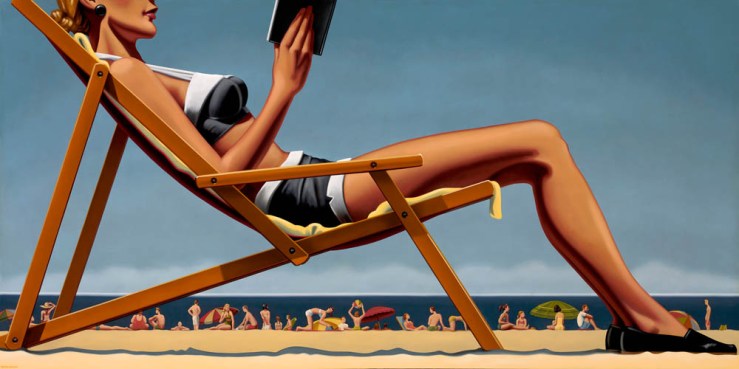
Why Not — Kenton Nelson

Nelson_Competition

Zombie Jamboree — Keith Morrison

William S. Burroughs’s Walking Stick

(Photograph by Udo Breger).

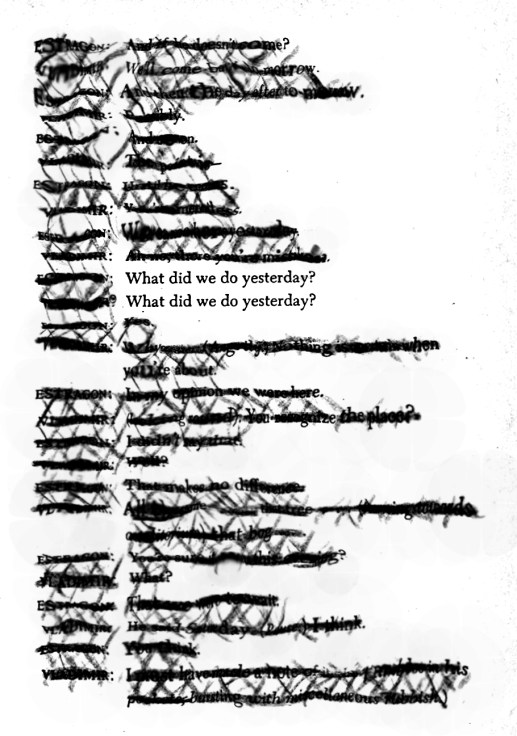
What did we do yesterday? / What did we do yesterday?

sb

Jorge Luis Borges, Forgeries, and Book Theft

jlb

Fascinating story today at The Paris Review about a first edition of Jorge Luis Borges’s early poems stolen—and then returned (perhaps?)—to the National Library of Argentina. Forgeries, facsimiles, and book thefts! The following paragraph points out that Borges himself was once director of the library:

The National Library is as old as Argentina: it was created in 1810, together with the first national government, and its first director was Mariano Moreno, one of the greatest national heroes and the founder of the country’s first newspaper. The library was, at one point, something to be proud of, and Borges’s name is inextricably linked to its history; he was its director for eighteen years, between 1955 and 1973. By then, books were already disappearing from its shelves. When asked whether this was true, he replied, in typical fashion, “I can’t tell whether books are being stolen, because I’m blind.”

Read the essay.

Slavoj Žižek on David Lynch’s Blue Velvet

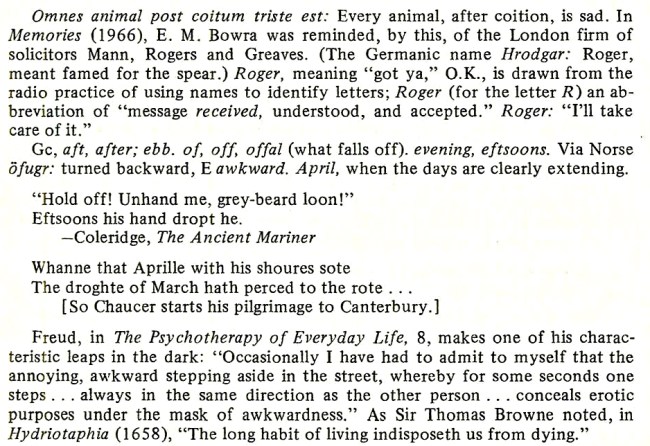
Every animal, after coition, is sad.

etym


From Joseph T. Shipley’s The Origin of English Words: A Discursive Dictionary of Indo-European Roots. I’ve found the book indispensable for years now—its discursiveness is a lunatic joy to get lost in. Anyway, the above passages extend/unwind from the root ap/apo; I found it while looking up the eytmology of poseur.

Gray Rabbit: Old Male, Female, and Young — John James Audubon

Mystic Allegory or Tea — Maurice Denis

The Thin Blue Line — Errol Morris (Full Documentary)

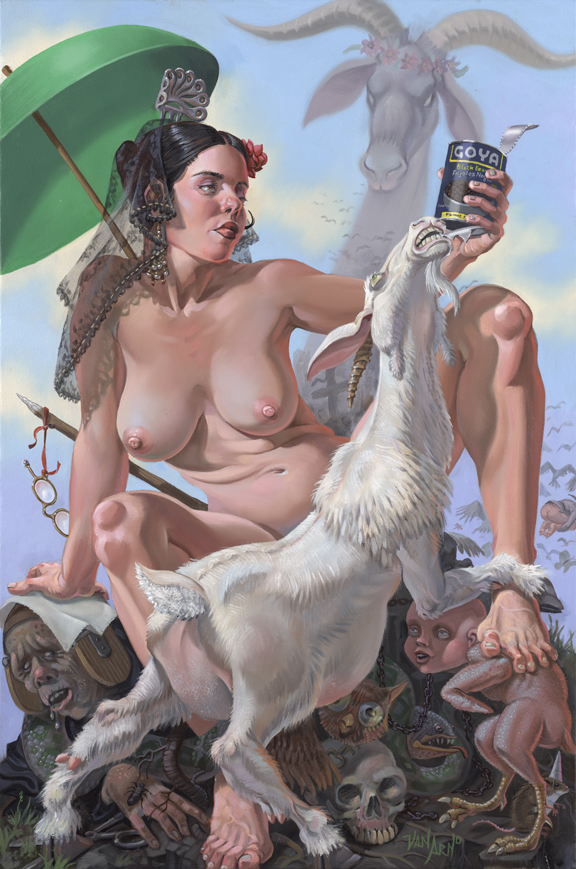
The Pop Art of Goya — Van Arno

GoyaSM

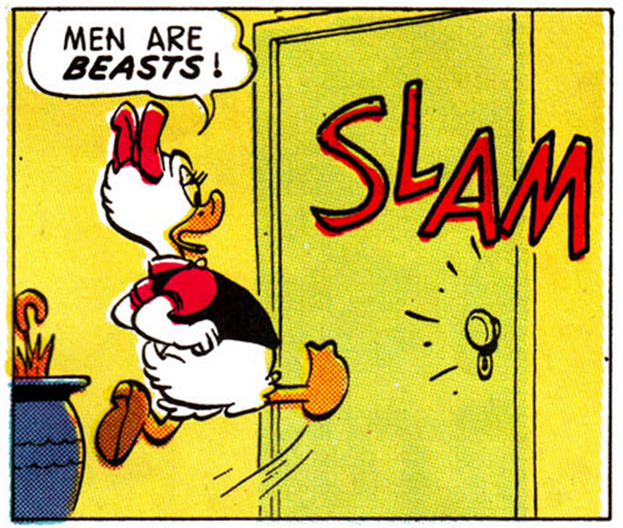
Men are beasts!

beasts

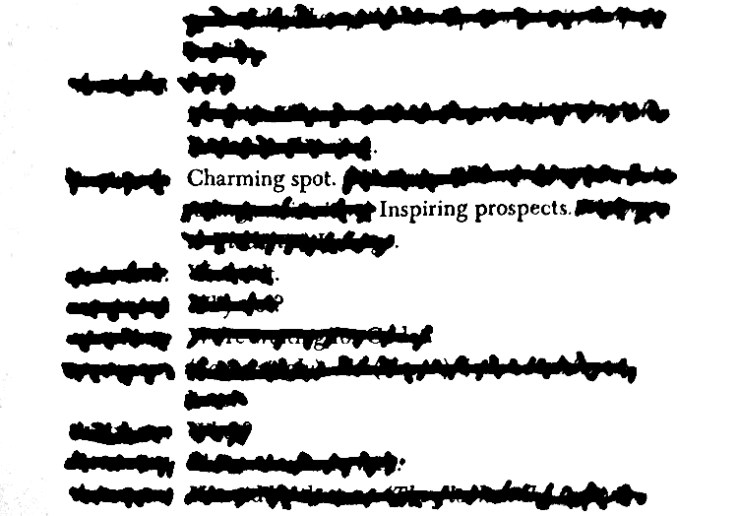
Charming spot. / Inspiring prospects.

charm

A Comet’s Journey — J.J. Grandville

a-comets-journey-by-j-j-grandville-793x1024