People are bloody ignorant apes.

20140414-140032.jpg

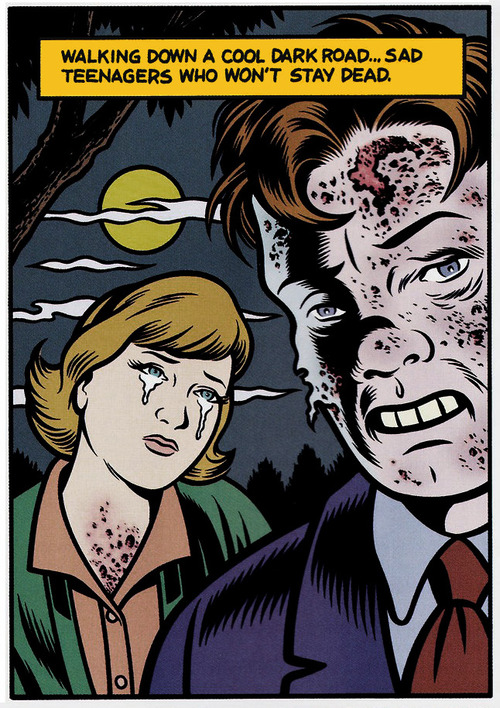
Sad Teenagers Who Won’t Stay Dead (Charles Burns)

burnny

The Simpsons Parodies Mad Men’s Cryptic Teasers

St. Anthony with a Donor — Mabuse

Don Quixote — Gustave Doré

The Kindly Ones is simply “Houellebecq does Nazism” (From Laurent Binet’s HHhH)

A poster on an Internet forum expresses the opinion that Max Aue, Jonathan Littell’s protagonist in The Kindly Ones, “rings true because he is the mirror of his age.” What? No! He rings true (for certain, easily duped readers) because he is the mirror of our age: a postmodern nihilist, essentially. At no moment in the novel is it suggested that this character believes in Nazism. On the contrary, he displays an often critical detachment toward National Socialist doctrine—and in that sense, he can hardly be said to reflect the delirious fanaticism prevalent in his time. On the other hand, this detachment, this blasé attitude toward everything, this permanent malaise, this taste for philosophizing, this unspoken amorality, this morose sadism, and this terrible sexual frustration that constantly twists his guts … but of course! How did I not see it before? Suddenly, everything is clear. The Kindly Ones is simply “Houellebecq does Nazism.”

From Laurent Binet’s novel HHhH; English Translation by Sam Taylor.

Enjoyed the novel tremendously.

I’m not sure if Binet’s remarks (or, Binet’s narrator, who is Binet-performing-author-as-narrator) are exactly a literary dis or not (I’m pretty sure he’s dissing Littell, but unsure how Houellebecq fits in there, or what).

(My thoughts on The Kindly Ones; my thoughts on Houellebecq’s The Elementary Particles).

Black Tegu Lizard — Maria Sibylla Merian

Eudora Welty on Austen, Chekhov, and Woolf

INTERVIEWER

You wrote somewhere that we should still tolerate Jane Austen’s kind of family novel. Is Austen a kindred spirit?

EUDORA WELTY

Tolerate? I should just think so! I love and admire all she does, and profoundly, but I don’t read her or anyone else for “kindredness.” The piece you’re referring to was written on assignment for Brief Lives, an anthology Louis Kronenberger was editing. He did offer me either Jane Austen or Chekhov, and Chekhov I do dare to think is more “kindred.” I feel closer to him in spirit, but I couldn’t read Russian, which I felt whoever wrote about him should be able to do. Chekhov is one of us—so close to today’s world, to my mind, and very close to the South—which Stark Young pointed out a long time ago.

INTERVIEWER

Why is Chekhov close to today’s South?

WELTY

He loved the singularity in people, the individuality. He took for granted the sense of family. He had the sense of fate overtaking a way of life, and his Russian humor seems to me kin to the humor of a Southerner. It’s the kind that lies mostly in character. You know, inUncle Vanya and The Cherry Orchard, how people are always gathered together and talking and talking, no one’s really listening. Yet there’s a great love and understanding that prevails through it, and a knowledge and acceptance of each other’s idiosyncrasies, a tolerance of them, and also an acute enjoyment of the dramatic. Like in The Three Sisters, when the fire is going on, how they talk right on through their exhaustion, and Vershinin says, “I feel a strange excitement in the air,” and laughs and sings and talks about the future. That kind of responsiveness to the world, to whatever happens, out of their own deeps of character seems very southern to me. Anyway, I took a temperamental delight in Chekhov, and gradually the connection was borne in upon me.

INTERVIEWER

Do you ever return to Virginia Woolf?

WELTY

Yes. She was the one who opened the door. When I read To the Lighthouse, I felt, Heavens, what is this? I was so excited by the experience I couldn’t sleep or eat. I’ve read it many times since, though more often these days I go back to her diary. Any day you open it to will be tragic, and yet all the marvelous things she says about her work, about working, leave you filled with joy that’s stronger than your misery for her. Remember—“I’m not very far along, but I think I have my statues against the sky”? Isn’t that beautiful?

From Eudora Welty’s interview with The Paris Review.

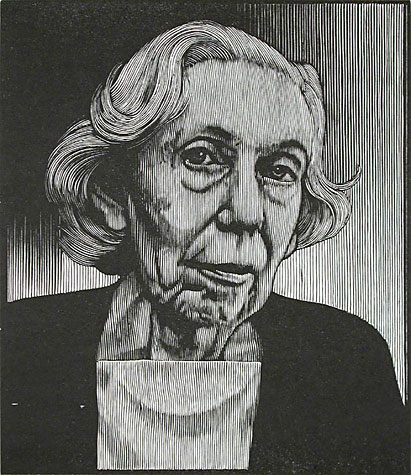
Eudora Welty — Barry Moser

moser-welty

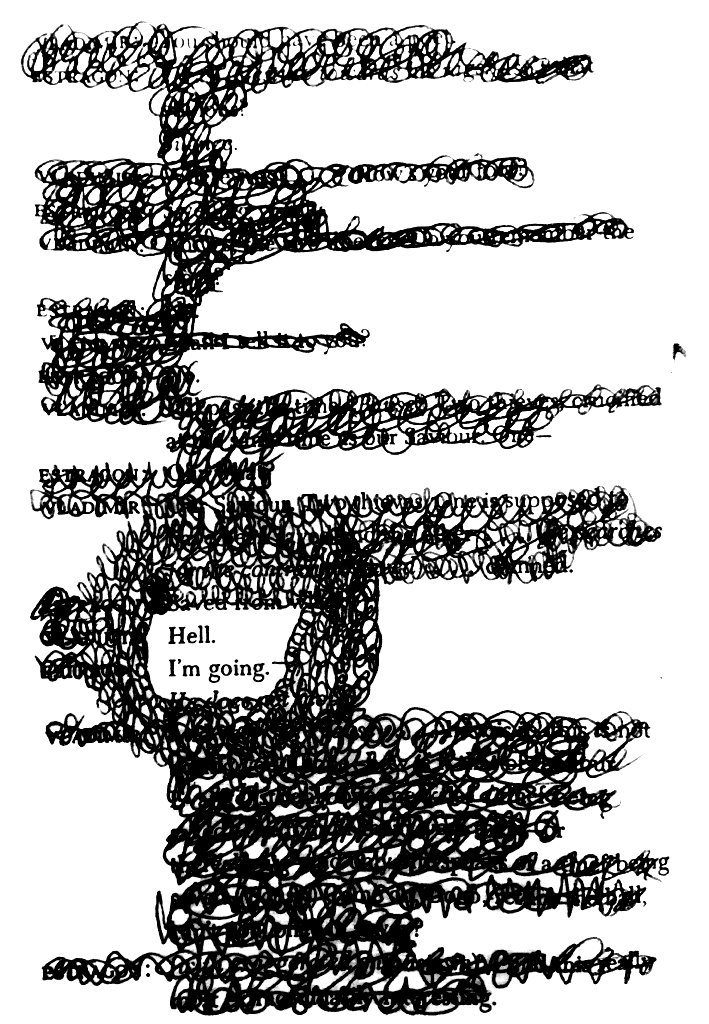
Hell. / I’m going.

hell

A Study of ‘Katia Reading’ — Hisaji Hara

Mares and Foals — George Stubbs

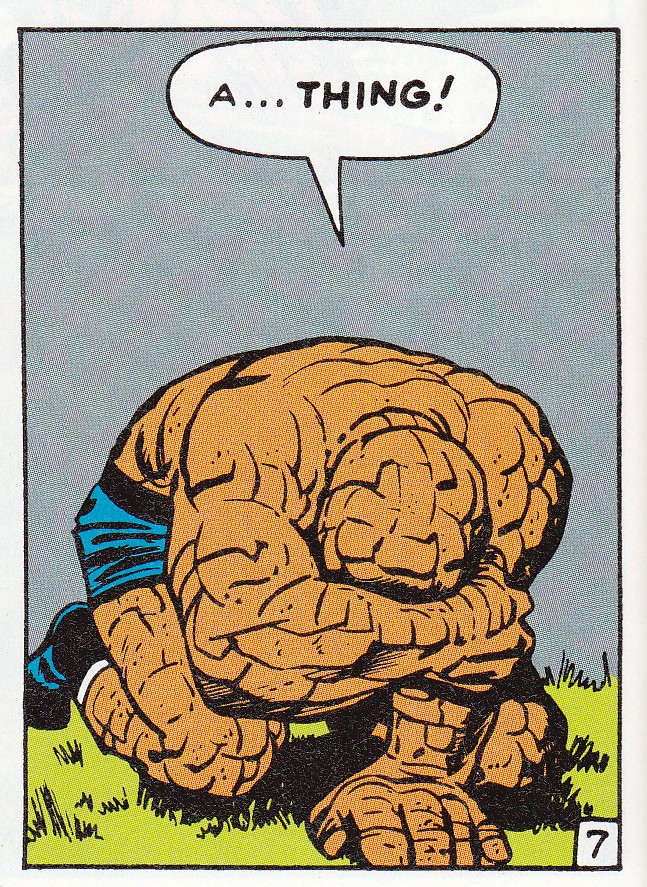
Thing — Jack Kirby

thing

“Five common methods by which sex gains an entrance into literature” (William H. Gass)

So I shall, keeping one in each of my four pockets while one is in my mouth, describe five common methods by which sex gains an entrance into literature . . . as through French doors and jimmied windows thieves break in upon our dreams to rape our women, steal our power tools, and vandalize our dreams. The commonest, of course, is the most brazen: the direct depiction of sexual material— thoughts, acts, wishes; the second involves the use of sexual words of various sorts, and I shall pour one of each vile kind into the appropriate porches of your ears , for pronounc-ing and praising print to the ear is what the decently encouraged eye does happily. The third can be considered, in a sense, the very heart of indirection, and thus the essence of the artist’s art— displacement: the passage of the mind with all its blue elastic ditty bags and airline luggage f r o m steamy sexual scenes and sweaty bodies to bedrooms with their bedsteads, nightstands, water-glasses, manuals of instruction, thence to sheets and pillowcases, hence to dents in these, and creases, stains and other cries of passion which have left their prints , and finally to the painted chalk-white oriental face of amorously handled air and mountains,, lewdly entered lakes. The fourth I shall simply refer to now as the skyblue eye (somewhere, it seems to me, there should be a brief pinch of suspense), and the fifth, well, it’s really what I’m running into all my inks about, so I had better mention it: the use of language like a lover . . . not the language of love, but the love of language, not matter, but meaning, not what the tongue touches, but what it forms, not lips and nipples, but nouns and verbs.

From William H. Gass’s essay-novel On Being Blue: A Philosophical Inquiry.

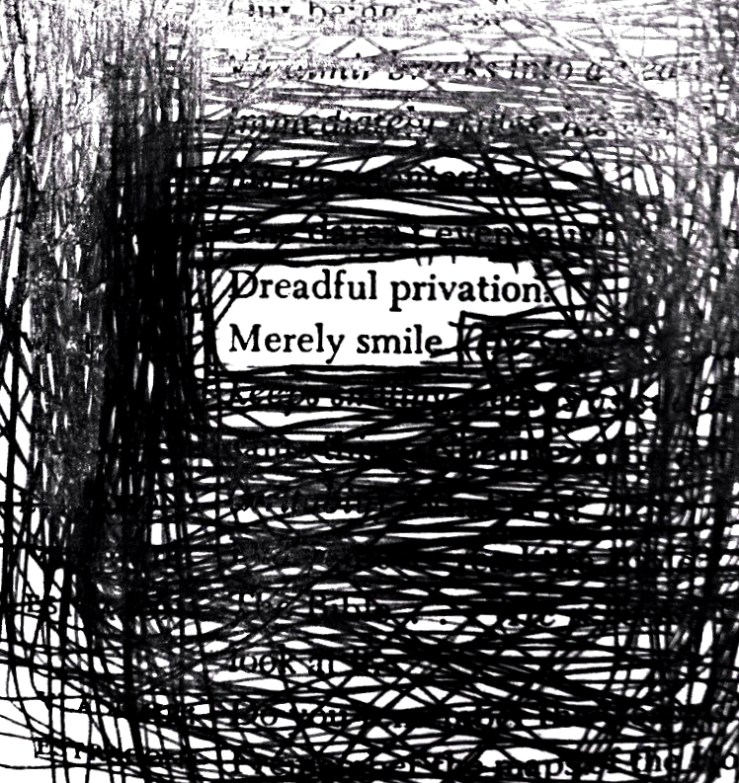
Dreadful privation. / Merely smile.

dreadful

Morning Sun — Edward Hopper

The Painter in his Workshop — Gerrit Dou