Read Kazuo Ishiguro’s Subtle and Unsettling Story “A Village After Dark”

There was a time when I could travel England for weeks on end and remain at my sharpest—when, if anything, the travelling gave me an edge. But now that I am older I become disoriented more easily. So it was that on arriving at the village just after dark I failed to find my bearings at all. I could hardly believe I was in the same village in which not so long ago I had lived and come to exercise such influence.

There was nothing I recognized, and I found myself walking forever around twisting, badly lit streets hemmed in on both sides by the little stone cottages characteristic of the area. The streets often became so narrow I could make no progress without my bag or my elbow scraping one rough wall or another. I persevered nevertheless, stumbling around in the darkness in the hope of coming upon the village square—where I could at least orient myself—or else of encountering one of the villagers. When after a while I had done neither, a weariness came over me, and I decided my best course was just to choose a cottage at random, knock on the door, and hope it would be opened by someone who remembered me.

I stopped by a particularly rickety-looking door, whose upper beam was so low that I could see I would have to crouch right down to enter. A dim light was leaking out around the door’s edges, and I could hear voices and laughter. I knocked loudly to insure that the occupants would hear me over their talk. But just then someone behind me said, “Hello.”

Read the rest of Kazuo Ishiguro’s story “A Village After Dark” at The New Yorker; you can also hear Ben Marcus read and discuss the story on The New Yorker’s fiction podcast.


Woman with a Newspaper — Richard Diebenkorn

Zabriskie Point — Michelangelo Antonioni (Full Film)

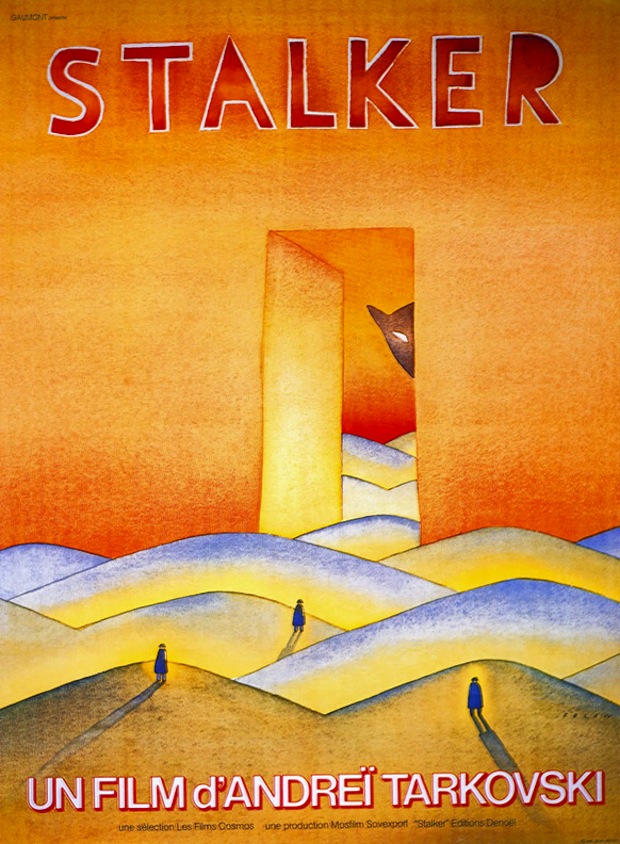
Film Poster for Andrei Tarkovsky’s Stalker (Jean-Michel Folon)

9.-Locandina-francese-di-STALKER-di-Tarkovski-autore-Folon

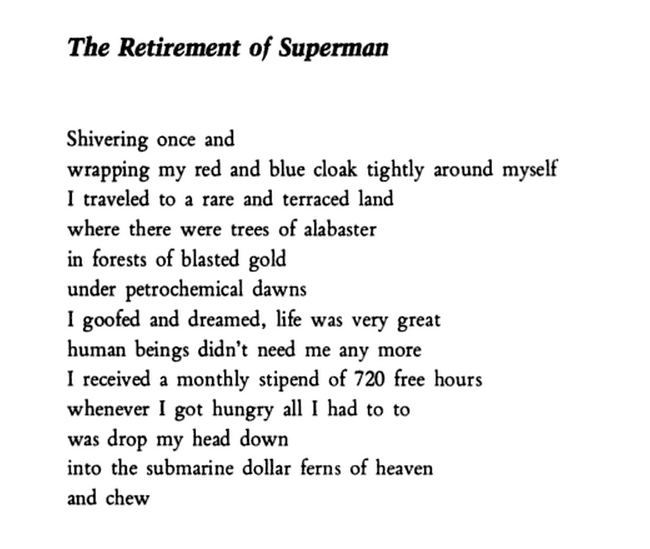
“The Retirement of Superman” — Tom Clark

Capture

Cartwheel (Book Acquired, 9.10.2013)

20130914-084658.jpg

Cartwheel is Jennifer DuBois’ follow up to last year’s hit A Partial History of Lost Causes. It’s out later this month from Random House. Their blurb:

When Lily Hayes arrives in Buenos Aires for her semester abroad, she is enchanted by everything she encounters: the colorful buildings, the street food, the handsome, elusive man next door. Her studious roommate Katy is a bit of a bore, but Lily didn’t come to Argentina to hang out with other Americans.

Five weeks later, Katy is found brutally murdered in their shared home, and Lily is the prime suspect. But who is Lily Hayes? It depends on who’s asking. As the case takes shape—revealing deceptions, secrets, and suspicious DNA—Lily appears alternately sinister and guileless through the eyes of those around her: the media, her family, the man who loves her and the man who seeks her conviction. With mordant wit and keen emotional insight, Cartwheel offers a prismatic investigation of the ways we decide what to see—and to believe—in one another and ourselves.

In Cartwheel, duBois delivers a novel of propulsive psychological suspense and rare moral nuance. No two readers will agree who Lily is and what happened to her roommate. Cartwheel will keep you guessing until the final page, and its questions about how well we really know ourselves will linger well beyond.

Manutara — George Boorujy

Four Story Ideas from Nathaniel Hawthorne’s Note-Books

  1. A girl’s lover to be slain and buried in her flower-garden, and the earth levelled over him. That particular spot, which she happens to plant with some peculiar variety of flowers, produces them of admirable splendor, beauty, and perfume; and she delights, with an indescribable impulse, to wear them in her bosom, and scent her chamber with them. Thus the classic fantasy would be realized, of dead people transformed to flowers.
  2. Objects seen by a magic-lantern reversed. A street, or other location, might be presented, where there would be opportunity to bring forward all objects of worldly interest, and thus much pleasant satire might be the result.
  3. A missionary to the heathen in a great city, to describe his labors in the manner of a foreign mission.
  4. To show the effect of gratified revenge. As an instance, merely, suppose a woman sues her lover for breach of promise, and gets the money by instalments, through a long series of years. At last, when the miserable victim were utterly trodden down, the triumpher would have become a very devil of evil passions,–they having overgrown his whole nature; so that a far greater evil would have come upon himself than on his victim.

Two on the Aisle — Edward Hopper

The Hammock — Giovanni Boldini

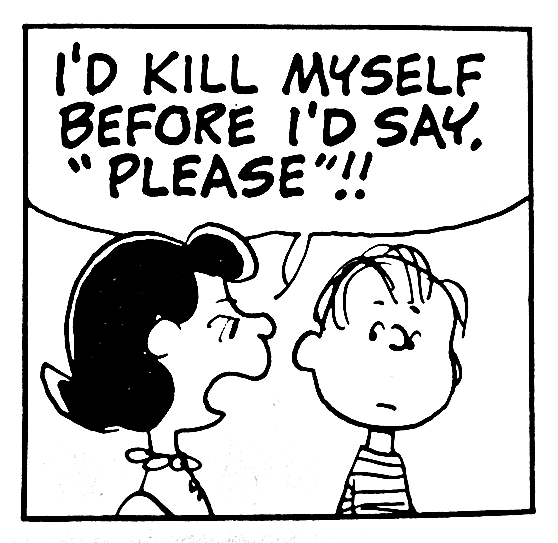
Manners (Peanuts)

kill

THRILLING NARRATIVES OF MUTINY, MURDER AND PIRACY, A WEIRD SERIES OF Tales of Shipwreck and Disaster, FROM THE EARLIEST PART OF THE CENTURY TO THE PRESENT TIME, WITH ACCOUNTS OF Providential Escapes AND HEART-RENDING FATALITIES.

Capture

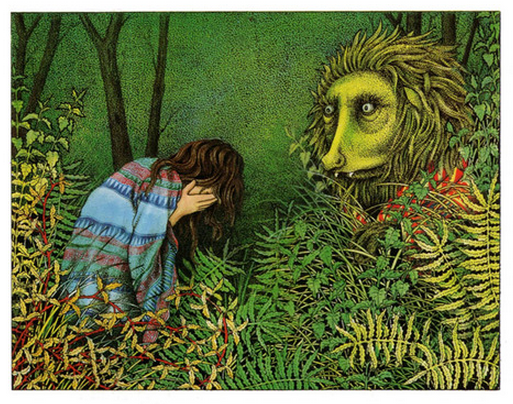
Beauty and the Beast — Alan Baker

Capture

“The conventional means of attaining the castle” (Donald Barthelme)

80. The conventional means of attaining the castle are as follows: “The eagle dug its sharp claws into the tender flesh of the youth, but he bore the pain without a sound, and seized the bird’s two feet with his hands. The creature in terror lifted him high up into the air and began to circle the castle. The youth held on bravely. He saw the glittering palace, which by the pale rays of the moon looked like a dim lamp; and he saw the windows and balconies of the castle tower. Drawing a small knife from his belt, he cut off both the eagle’s feet. The bird rose up in the air with a yelp, and the youth dropped lightly onto a broad balcony. At the same moment a door opened, and he saw a courtyard filled with flowers and trees, and there, the beautiful enchanted princess.” (The Yellow Fairy Book)

From Donald Barthelme’s short story “The Glass Mountain” (read it here).

Cluster No. 11– John Latham

Fallen — Fred Kelemen (Full Film)

National Day of Encouragement Reading List

Today, a dollar store calendar my grandmother gave me tells me, is National Day of Encouragement, which is totally a real thing. So here is a National Day of Encouragement Reading List, which is also totally a real thing. Much encouragement to you, citizens!

  1. King Lear, William Shakespeare
  2. Blood Meridian, Cormac McCarthy
  3. “Before the Law,” Franz Kafka
  4. Candide, Voltaire
  5. First Love and Other Sorrows, Harold Brodkey
  6. “Rappaccini’s Daughter,” Nathaniel Hawthorne
  7. Camp Concentration, Thomas Disch
  8. “The Lottery,” Shirley Jackson
  9. “The Raven,” Edgar Allan Poe
  10. The Awakening, Kate Chopin
  11. Things Fall Apart, Chinua Achebe
  12. The Bell Jar, Sylvia Plath
  13. Correction, Thomas Bernhard
  14. Butterfly Stories, William Vollmann
  15. “A Good Man Is Hard to Find,” Flannery O’Connor
  16. The Road, Cormac McCarthy
  17. 2666, Roberto Bolaño
  18. “The Fall of the House of Usher,” Edgar Allan Poe
  19. Wuthering Heights, Emily Brontë
  20. From Hell, Alan Moore & Eddie Campbell
  21. The Flame Alphabet, Ben Marcus
  22. The Painted Bird, Jerzy Kosinski
  23. Heart of Darkness, Joseph Conrad
  24. “The Wasteland,” T.S. Eliot
  25. Hamlet, William Shakespeare
  26. The Pearl, John Steinbeck
  27. Distant Star, Roberto Bolaño
  28. Notes from Underground,  Fyodor Dostoyevsky
  29. The Yearling, Marjorie Kinnan Rawlings
  30. The Kindly Ones, Jonathan Littell
  31. “The Life You Save May Be Your Own,” Flannery O’Connor
  32. Gargoyles, Thomas Bernhard
  33. The Plague, Albert Camus
  34. “The Yellow Wallpaper,” Charlotte Perkins Gilman
  35. Frankenstein, Mary Shelley
  36. Where the Red Fern Grows, Wilson Rawls
  37. A Farewell to Arms, Ernest Hemingway
  38. “Good Old Neon,” David Foster Wallace
  39. 1984, George Orwell
  40. Nausea, Jean-Paul Sartre