Man Reading — Eduard von Gebhardt

New Refrigerator — Antonio López García

Summer Afternoon on a Lake — Jean-Leon Gerome

Gente del Po, Michaelangelo Antonioni’s Short Film on the People of the Po Valley

Peter Doig’s Studio Film Club Posters

From Peter Doig’s piece for Frieze Magazine’s Life in Film series:

When I moved to Port of Spain in Trinidad five years ago, there was a small Caribbean film festival on, which I went to see. They showed a documentary, A Hard Road To Travel(2001, directed by Chris Browne), on the making of The Harder they Come (1972, directed by Perry Henzell, Browne’s uncle), the classic film starring Jimmy Cliff. I realized that many people of a younger generation in Port of Spain had never seen The Harder They Come. As there’s no cinema in town that shows old films, I decided to screen it. It was a one-off idea, but it was popular, so we started the StudioFilmClub. I now run it with a Trinidadian artist, Che Lovelace. Initially we wanted to show films that we thought were appropriate to a Trinidadian audience, where the narrative might have some connection to the place, but in the end we realized that was somehow patronizing; instead, we decided to show films that we simply liked or thought important or interesting – we only do one film a week and jump around between genres and countries and directors, covering the spectrum from art-house to mainstream. For example, the second film we showed was Agnès Varda’s The Gleaners and I (2000), and after that Jim Jarmusch’s Ghost Dog: The Way of the Samurai (1999). I don’t think we’ve ever put on a bad film.

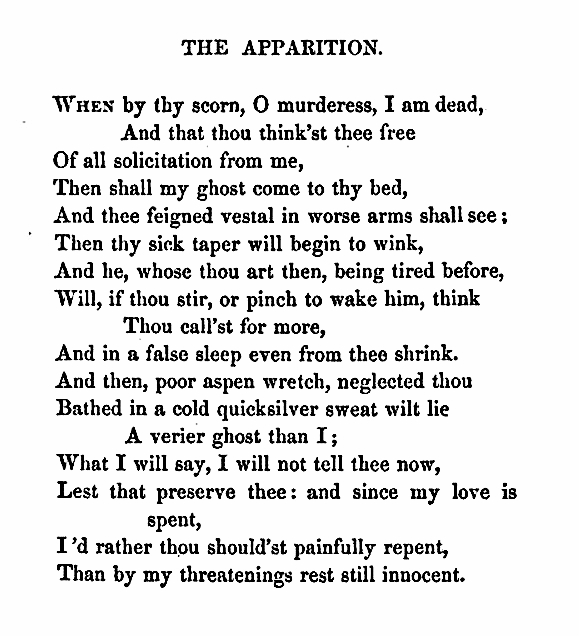
“The Apparition” — John Donne

jd

“The Bookkeeper’s Wife” — Willa Cather

“The Bookkeeper’s Wife” by Willa Cather

Nobody but the janitor was stirring about the offices of the Remsen Paper Company, and still Percy Bixby sat at his desk, crouched on his high stool and staring out at the tops of the tall buildings flushed with the winter sunset, at the hundreds of windows, so many rectangles of white electric light, flashing against the broad waves of violet that ebbed across the sky. His ledgers were all in their places, his desk was in order, his office coat on its peg, and yet Percy’s smooth, thin face wore the look of anxiety and strain which usually meant that he was behind in his work. He was trying to persuade himself to accept a loan from the company without the company’s knowledge. As a matter of fact, he had already accepted it. His books were fixed, the money, in a black-leather bill-book, was already inside his waistcoat pocket.

He had still time to change his mind, to rectify the false figures in his ledger, and to tell Stella Brown that they couldn’t possibly get married next month. There he always halted in his reasoning, and went back to the beginning.

The Remsen Paper Company was a very wealthy concern, with easy, old-fashioned working methods. They did a longtime credit business with safe customers, who never thought of paying up very close on their large indebtedness. From the payments on these large accounts Percy had taken a hundred dollars here and two hundred there until he had made up the thousand he needed. So long as he stayed by the books himself and attended to the mail-orders he couldn’t possibly be found out. He could move these little shortages about from account to account indefinitely. He could have all the time he needed to pay back the deficit, and more time than he needed. Continue reading ““The Bookkeeper’s Wife” — Willa Cather”

Portrait of E.G. Mamontova Reading — Ilya Repin

The Cabinet of Dr. Caligari

“Helen” — H.D.

“Helen” by H.D.—

All Greece hates
the still eyes in the white face,
the lustre as of olives
where she stands,
and the white hands.

All Greece reviles
the wan face when she smiles,
hating it deeper still
when it grows wan and white,
remembering past enchantments
and past ills.

Greece sees, unmoved,
God’s daughter, born of love,
the beauty of cool feet
and slenderest knees,
could love indeed the maid,
only if she were laid,
white ash amid funereal cypresses.

Wild and Primitive (Fletcher Hanks)

20130809-123851.jpg

“The Coffee-House of Surat” — Leo Tolstoy

“THE COFFEE-HOUSE OF SURAT” by Leo Tolstoy

(After Bernardin de Saint-Pierre)

In the town of Surat, in India, was a coffee-house where many travellers and foreigners from all parts of the world met and conversed.

One day a learned Persian theologian visited this coffee-house. He was a man who had spent his life studying the nature of the Deity, and reading and writing books upon the subject. He had thought, read, and written so much about God, that eventually he lost his wits, became quite confused, and ceased even to believe in the existence of a God. The Shah, hearing of this, had banished him from Persia.

After having argued all his life about the First Cause, this unfortunate theologian had ended by quite perplexing himself, and instead of understanding that he had lost his own reason, he began to think that there was no higher Reason controlling the universe.

This man had an African slave who followed him everywhere. When the theologian entered the coffee-house, the slave remained outside, near the door, sitting on a stone in the glare of the sun, and driving away the flies that buzzed around him. The Persian having settled down on a divan in the coffee-house, ordered himself a cup of opium. When he had drunk it and the opium had begun to quicken the workings of his brain, he addressed his slave through the open door:

“Tell me, wretched slave,” said he, “do you think there is a God, or not?”

“Of course there is,” said the slave, and immediately drew from under his girdle a small idol of wood.

“There,” said he, “that is the God who has guarded me from the day of my birth. Every one in our country worships the fetish tree, from the wood of which this God was made.”

This conversation between the theologian and his slave was listened to with surprise by the other guests in the coffee-house. They were astonished at the master’s question, and yet more so at the slave’s reply.

One of them, a Brahmin, on hearing the words spoken by the slave, turned to him and said:

“Miserable fool! Is it possible you believe that God can be carried under a man’s girdle? There is one God—Brahma, and he is greater than the whole world, for he created it. Brahma is the One, the mighty God, and in His honour are built the temples on the Ganges’ banks, where his true priests, the Brahmins, worship him. They know the true God, and none but they. A thousand score of years have passed, and yet through revolution after revolution these priests have held their sway, because Brahma, the one true God, has protected them.” Continue reading ““The Coffee-House of Surat” — Leo Tolstoy”

A Lady Reading a Newspaper — Carl Larsson

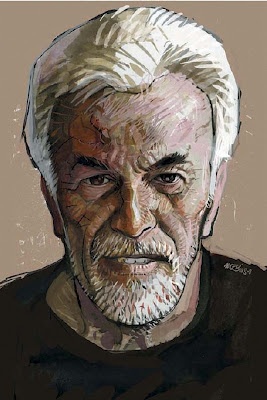
Portrait of Alejandro Jodorowsky — Moebius

jodorowsky moebius

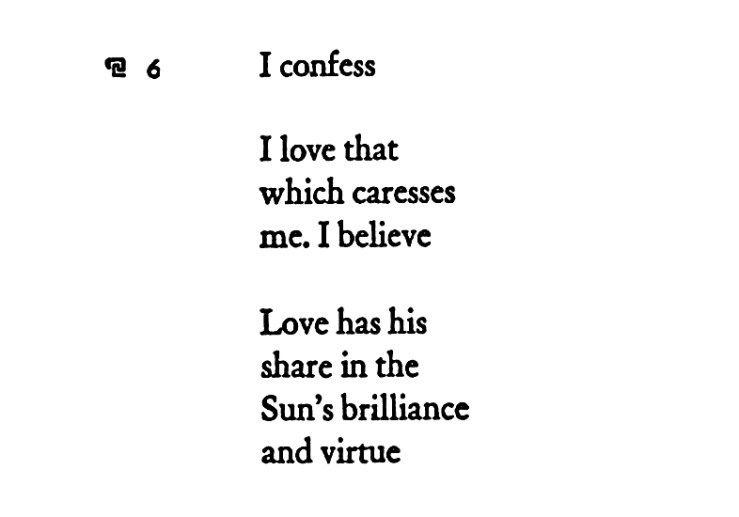
I confess (Sappho)

confess

A Monkey Encampment — David Teniers the Younger

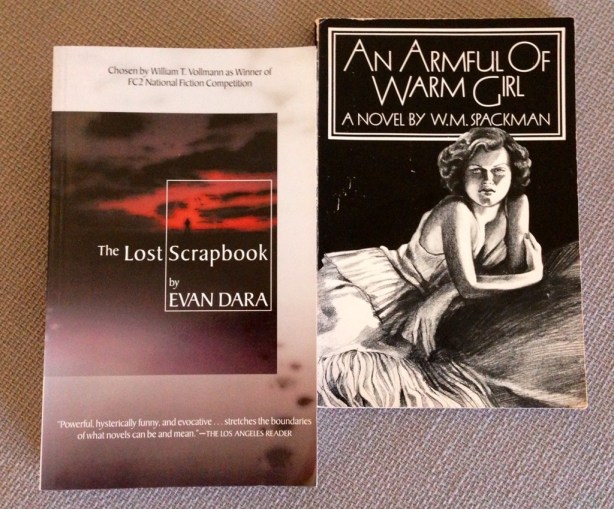
Books Acquired, 8.06.2013

20130809-114547.jpg