W.H. Auden Comic (Tom Gauld)

3364580035_c3b19ce349_o

“On a Notebook” — Hilaire Belloc

“On a Notebook” by Hilaire Belloc

A dear friend of mine (John Abdullah Capricorn, to give him his full name) was commandeered by a publisher last year to write a book for £10. The work was far advanced when an editor offered him £15 and his expenses to visit the more desperate parts of the Sahara Desert, to which spots he at once proceeded upon a roving commission. Whether he will return or no is now doubtful, though in March we had the best hopes. With the month of May life becomes hard for Europeans south of the Atlas, and when my poor dear friend was last heard of he was chancing his popularity with a tribe of Touaregs about two hundred miles south of Touggourt.

Under these circumstances I was asked to look through his notebook and see what could be done; and I confess to a pleased surprise…. It would have been a very entertaining book had it been published. It will be a very entertaining book if it is published.

Capricorn seems to have prepared a hotchpotch of information of human follies, of contrasts, and of blunt stupidities of which he intended to make a very entertaining series of pages. I have not his talent for bringing such things together, but it may amuse the reader if I merely put in their order one or two of the notes which most struck me.

I find first, cut out of a newspaper and pasted into the book (many of his notes are in this form), the following really jovial paragraph:

“Archdeacon Blunderbuss (Blunderbuss is not the real name; I suppress that lest Capricorn’s widow should lose her two or three pounds, in case the poor fellow has really been eaten). Archdeacon Blunderbuss was more distinguished as a scholar than as a Divine. He was a very poor preacher and never managed to identify himself with any party. Nevertheless, in 1895 the Prime Minister appointed him to a stall in Shoreham Cathedral as a recognition of his great learning and good work at Durham. Two years later the rectory of St. Vacuums becoming vacant and it being within the gift of Archdeacon Blunderbuss, he excited general amazement and much scandal by presenting himself to the living.”

There the paragraph ends. It came in an ordinary society paper. It bore no marks of ill-will. It came in the midst of a column of the usual silly adulation of everybody and everything; how it got there is of no importance. There it stood and the keen eye of Capricorn noted it and treasured it for years.

I will make no comment upon this paragraph. It may be read slowly or quickly, according to the taste of the reader; it is equally delicious either way.

The next excerpt I find in the notebook is as follows:

“More than 15,000,000 visits are paid annually to London pawnbrokers.

“Jupiter is 1387 times as big as the earth, but only 300 times as heavy.

“The world’s coal mines yield 400,000,000 tons of coal a year.

“The value of the pictures in the National Gallery is about £1,250,000.” Continue reading ““On a Notebook” — Hilaire Belloc”

A Woman Reading — Claude Monet

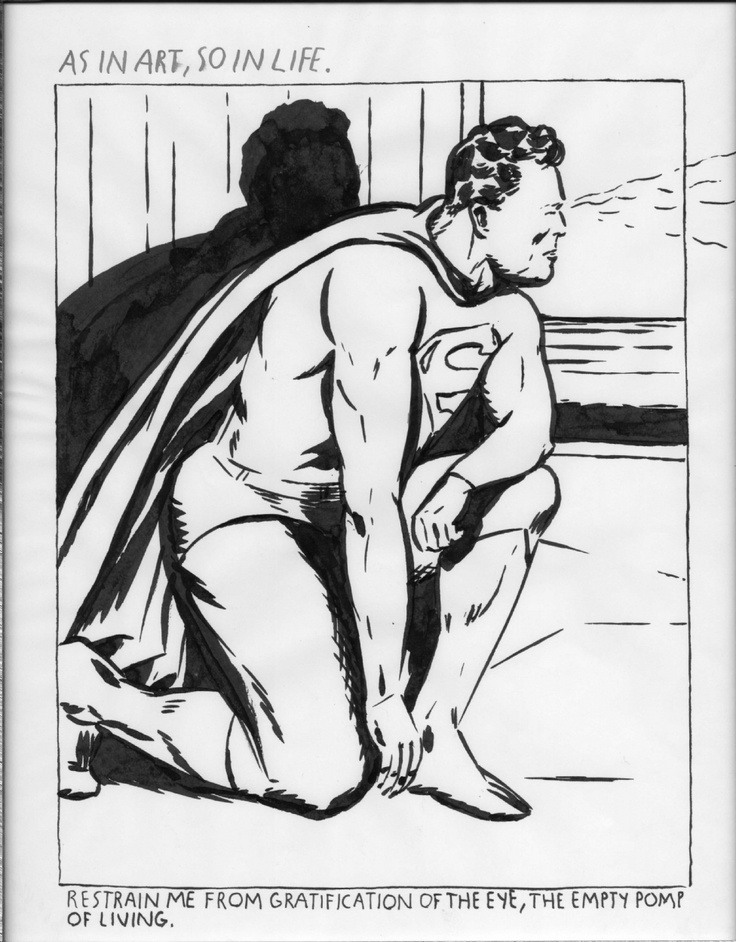
Superman — Raymond Pettibon

superman

(Via).

Ennui — Walter Sickert

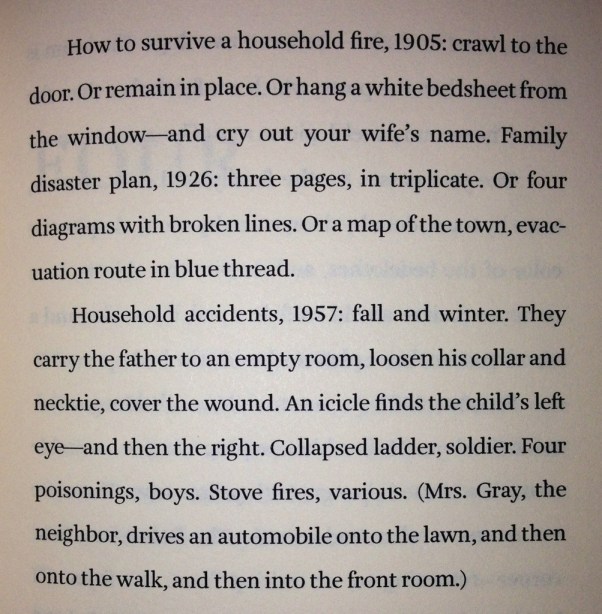
“How to survive a household fire, 1905” (Jason Schwartz)

20130718-115243.jpg

From Jason Schwartz’s forthcoming novel John the Posthumous, which I am trying to write about at present.

Beatles: California Über Alles — Kota Ezawa

Seven Entries from Anton Chekhov’s Note-Books

Mankind has conceived history as a series of battles; hitherto it has considered fighting as the main thing in life.

Solomon made a great mistake when he asked for wisdom.

Ordinary hypocrites pretend to be doves; political and literary hypocrites pretend to be eagles. But don’t be disconcerted by their aquiline appearance. They are not eagles, but rats or dogs.

Those who are more stupid and more dirty than we are called the people. The administration classifies the population into taxpayers and non-taxpayers. But neither classification will do; we are all the people and all the best we are doing is the people’s work.

If the Prince of Monaco has a roulette table, surely convicts may play at cards.

Aliosha: “My mind, mother, is weakened by illness and I am now like a child: now I pray to God, now I cry, now I am happy.”

Why did Hamlet trouble about ghosts after death, when life itself is haunted by ghosts so much more terrible?

Notations from Anton Chekhov’s Note-books.


Woman Reading — Henri Matisse

Made-up Flowers from Boris Vian’s Novel Heartsnatcher

In the order they appear:

Amizaltzes

Powaroses

Marienbud

Yellowplush

Dreamrape

Fenellacas

Ninastangas

Astrakhan

Marazardins

Seacrocus

Bruinzozos

Bazabobos

Petaleaves

Translated from the French by Stanley Chapman

Painters Painting, a 1973 Documentary Featuring Andy Warhol, Jasper Johns, Willem de Kooning, and More

“An Immortal” — Robert Walser

walser

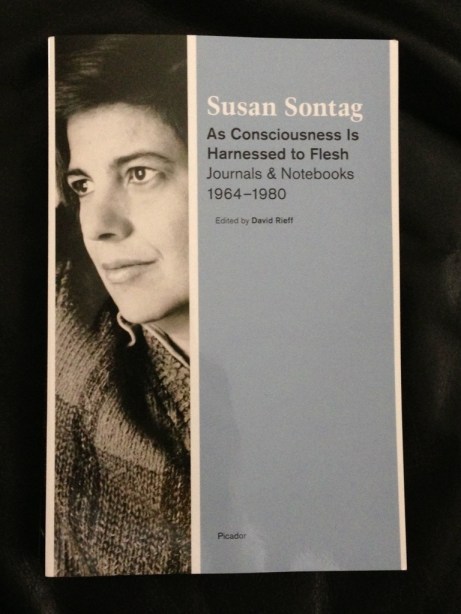
Susan Sontag’s Notebooks, 1964-1980 (Book Acquired, 7.09.2013)

20130717-120722.jpg

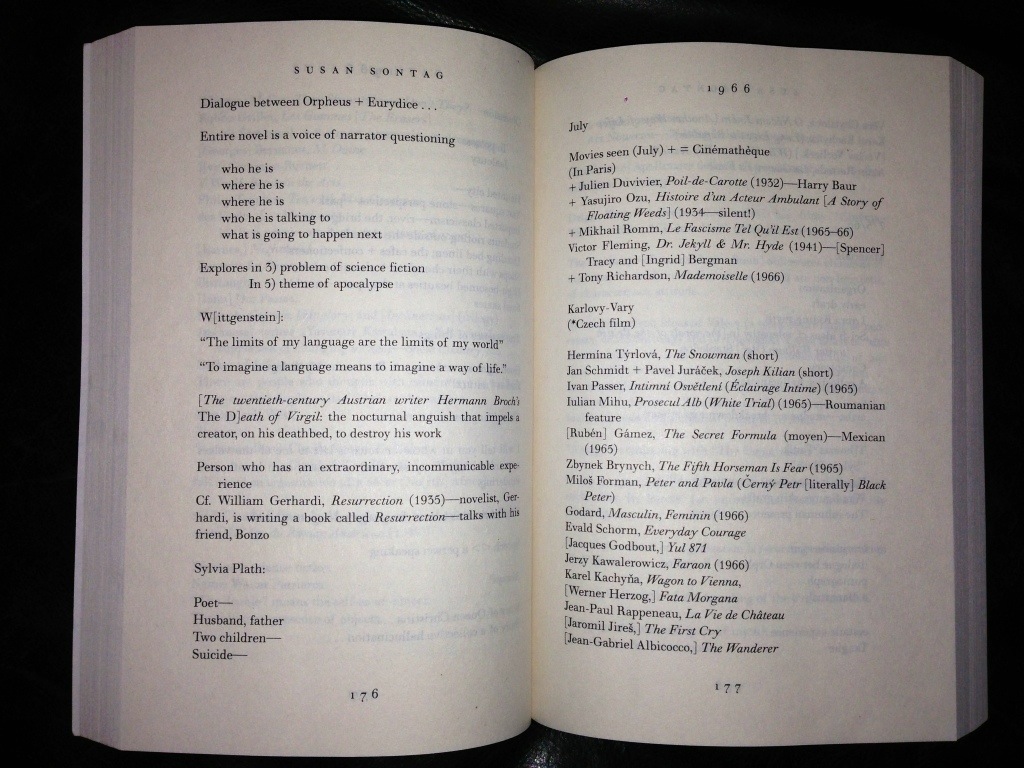
I’ve been—I don’t know—strolling through Susan Sontag’s journals and notebooks this past week. Collected as As Consciousness Is Harnessed to Flesh and new from Picador, this volume picks up where Reborn left off. I’ll be doing a full write up some time this month—really more about writer notebooks (I love Hawthorne’s in particular). Until then—a sample spread from the summer of ’66:

20130717-120729.jpg

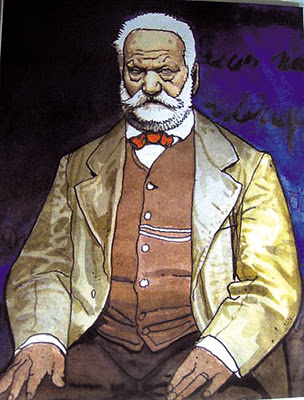
Portrait of Victor Hugo — Moebius

23993e0e301661297cd7e1d072471f1c

“Scandal” — Willa Cather

“Scandal” by Willa Cather

Kitty Ayrshire had a cold, a persistent inflammation of the vocal cords which defied the throat specialist. Week after week her name was posted at the Opera, and week after week it was canceled, and the name of one of her rivals was substituted. For nearly two months she had been deprived of everything she liked, even of the people she liked, and had been shut up until she had come to hate the glass windows between her and the world, and the wintry stretch of the Park they looked out upon. She was losing a great deal of money, and, what was worse, she was losing life; days of which she wanted to make the utmost were slipping by, and nights which were to have crowned the days, nights of incalculable possibilities, were being stolen from her by women for whom she had no great affection. At first she had been courageous, but the strain of prolonged uncertainty was telling on her, and her nervous condition did not improve her larynx. Every morning Miles Creedon looked down her throat, only to put her off with evasions, to pronounce improvement that apparently never got her anywhere, to say that tomorrow he might be able to promise something definite.

Her illness, of course, gave rise to rumours—rumours that she had lost her voice, that at some time last summer she must have lost her discretion. Kitty herself was frightened by the way in which this cold hung on. She had had many sharp illnesses in her life, but always, before this, she had rallied quickly. Was she beginning to lose her resiliency? Was she, by any cursed chance, facing a bleak time when she would have to cherish herself? She protested, as she wandered about her sunny, many-windowed rooms on the tenth floor, that if she was going to have to live frugally, she wouldn’t live at all. She wouldn’t live on any terms but the very generous ones she had always known. She wasn’t going to hoard her vitality. It must be there when she wanted it, be ready for any strain she chose to put upon it, let her play fast and loose with it; and then, if necessary, she would be ill for a while and pay the piper. But be systematically prudent and parsimonious she would not. Continue reading ““Scandal” — Willa Cather”

Mufti Reading in His Prayer Stool — Jean-Leon Gerome

Explication/Confusion of Pacific Rim in Ten Images

Delacroix
Goya
Voltron
Voltron
Dürer
Blake
original-godzilla
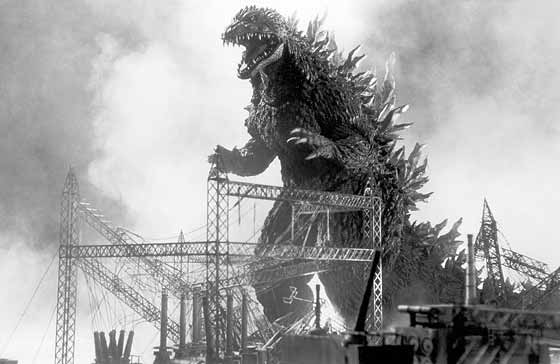
Godzilla
Matejko
Burne-Jones
Adams
Adams
Corinth