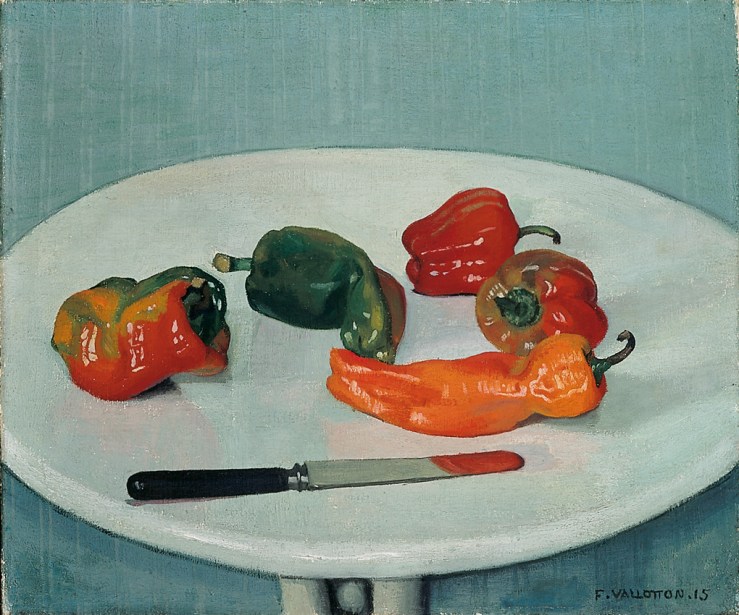
Still Life with Red Peppers on a White Lacquered Table, 1915 by Felix Vallotton (1865-1925)

Still Life with Red Peppers on a White Lacquered Table, 1915 by Felix Vallotton (1865-1925)
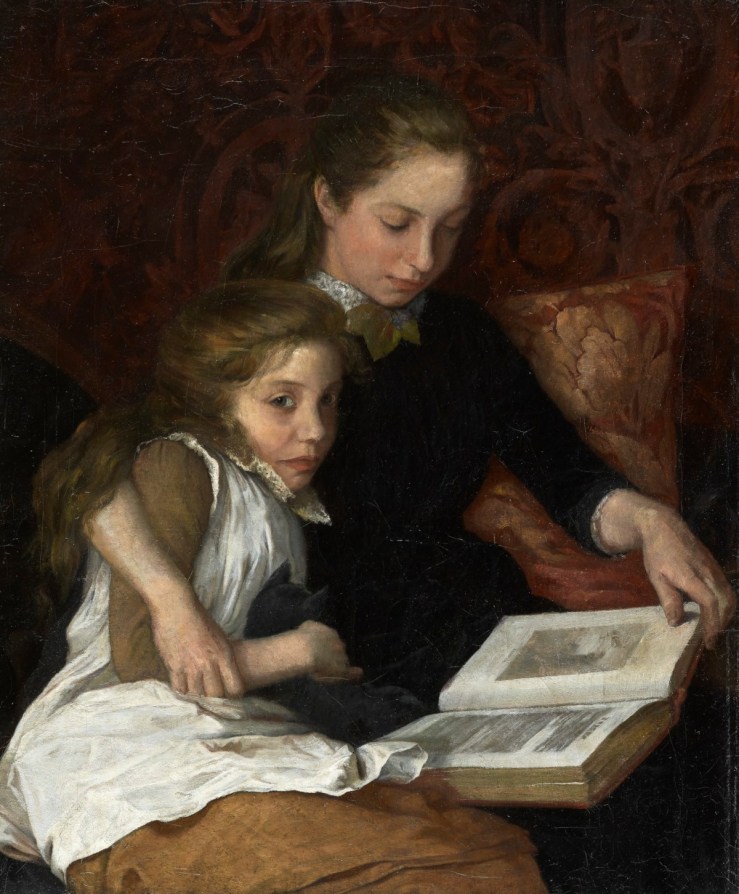
Two Girls Reading, early 20thc. by Arthur George Walker (1861 – 1939)
; , . . . , . . , . , — — . . ; , . ; , , , . ? , , . , . ; . , , ; , . — — , , — — ; , , . , . ? ; , . , . , , , , . , , , , ; , , , . , ; , — — . . . , ‘ . , . , , , ‘ . , , , . , ; . , . , . . , , . . – ; , , , ; , , , . – , . , , ; . , , ? ; . , ! ; , . , : , , . . ; , , , – . , , — — ; , . – . . ; , , – . ; ? , , ? , , , , . , , . , , . , , . , . . . . , . , , — — . , ! . , ; , , . ; . , : , ; , . , ; . ; . , , . , , , , . ! , . – : , ‘ . ; , . – , . , ; ( ) ; , . , ; , , . , , . , , ; : , , . , , , . : , . , . , , . , , , : ; , , . , . , , . , , ; – , . ; , , , , , , . , , . , ; , – , ‘ . , ; , , , . ” ! ” . ; : , , , , . , , , . ; . ; , ; . : , . . , , . , ” ” ; , , ” ” ? ; . , , , . , . — — – ; — — : — — , , , , , . . , , ? , . : . . , . , . . . , . , , — — . , , . ; , , , . , , : , ; , , . ; , , , , . . , , ; . , . , , , . , , . . ? , : . ? ? . . ! . . . . , . , — — . , , . ( ) , , , – . , . , . ‘ , , , , . , , , . , , , : , , , . , . . , , ; , , . , , , , . , ; , . , , , . . , , , , , . , , , , , . ; , . , , , . , , ” , . ” , , . ” , ” , ” ? ” , . , , . , . ! , , . , . . ; , . , , . , . , , . ; . , , . : , ; , , , , , . ; , . , , ; , . , , , ? ; , ” . ” ” ? ” ” . ” ” ; , , , . ” ‘ ; , , . , , , — — ” , , , ; . ” ” ; . ” ” ; . ” ? , ; , ; . . , ; , . , . . , , . , , . , ; . , . , , ; , , . , . , — — . . . , ? , ; ; , , . , , . , , , . , . , . , ; ; , , , , , . ‘ ; . , ‘ . ; ; , , — — . ; — — , : — — ” ! ? ? , — — , ! ” , , ; , . , ; , . . : . — — ; , . ” , ” ; ” , , , , — — — — . , , , , . , , . — — , . ” , , . , . , . , , , . : , ; , , , , . ? , . , , , ; . , . ; – ; , ; , – . . — — . , ” , , . , , ; . , ; , . ; , , , ; , . . , , ; , – : — — . ” ; . , , , . . ” , ” , ” , ; . , . , ” , ; ” , , ; : , . ” , . . , , , , . , . : , , , ! , , – ; ; , . ; , — — ! . ; . ; . , . ; , . , . , , , , , . , , , . , , , , . , . . , . ; . , , , . , . ; , ‘ . , , ; , ; , , . ; , . ; . ; ; . . ; ; ; , . ; ‘ , , . , ; , , . . , . ‘ , . – , . , , , , , , . . , , , . , , . ; , , . . , , , . . , . ‘ , ‘ , . , — — , , , , . , , , , – , , . . , . , , . . , , ; , , — — , , — — . , , – , . , , , , . , , , . . . – , ; , . , , , . , , , , – , . , , . , . , . : . , . , — — , . . , , . , . , , – . , , — — , . . . . ; , . , , ‘ — — — — . . , , . , , — — ” — — – . ” , , , , , , — — , , . , . . , — — , . . ; . . , . ; , , , . ; — — ; ; ; , , — — . , . . , , , , . , , , . , , , . , . , . , , ; . . . , , , . . , . , , , , . . . , . , , . , ; , , , . , , , . ; , , , , , . , , . , , , ; , . – . ; , , , . : , , . — — ? — — , — — , , . , , . , , , , : , , , , ; , , , , . ; , , , . , : . . ; , , . ; , , . , , ” ! ! , ; . ” , , , , , , , ; , , , , . , . ; . , , . ; . . , . . , ‘ , . , . . , . , , ; , , . , . , . , . ; , , , . , ‘ , ‘ . , ‘ ; . ; , , ! . , ; , , . , , , , , , . , – . ; . , , . , , ; , , . , . , . . . , , , , . , , , ; . . . , , ; ; – , . , , , . , . , — — , . , . , . ; . , . . , . ; , , . ; , , — — , , . ; , . , . , , ; , . , — — , — — , . ; , . – . : — — ” , ” , ” . . , , . ! ; , , ? ; , . ” ; . ; ; . , , , — — , , , , . ; , . ? , ? , ; , , . , ; , , . , , . . , , , . , . ; , , . , . , . . , . . . . , ; . – , . . ; , , . . . , ” ! ” ; , : ‘ , — — , , , . , . , , , . , , , . ; . , , ; ” ; ” . ; , . . , , , , . , , , . , . . , , . , . — — , , ‘ — — . , . , . . ; , , . : ” , ” , ” ? ” . ” , ” . , ” . . ! , , , , ? , , . , . ” , , , ; , , . , – , . , , ; , . . , ; , , . , , . , . , , , . , . , ; , , : . . . , , . , . . , . , , . , , , . . . , ; , . , ; . , , . , . , , : — — ” , ” , ” , . ; , . , , , . , . : , . ; , , . ” ‘ — — , . , ; : , , , . , , — — , , : , , , . . ; , . , ‘ , . , ‘ . , . , . . ; , . – . , , . . , ” . , , , , . , , . ” , ; , ; , , ( ) . . ” , ” . , ” ; , . : ; . . , , , . ” , ; , . ; . : . . , , , . , , . , , ; . , , , , . . . ; , . , . ; , , . , . , . , , ? . – . , , , , , . . , ; . , , ; , , , , , , , . , , , , . , , , . , , ? , ; , . , . , , . , . : ; . . , . ; , , , . , – . . ; ; . , , , , — — , , , , , . , . , . , . , ; , , . . , , . , , . . , , : , . , , , , . , , , ; : , . , , . , , , , , . , . , , , , , . , ; . ; . ; , : , , . . . , , , ; , , . , , . , , . , , . ; . . , , , ( ) . , . , . , , ; . ; , , , – . , , ? , ; , , , ; . , , , . – ; , , . , , , , : – . – ; , , , . , , . ; , : . , . ; : ” , , . . ” ‘ ; , , . , , , , . , ; . , . . , , , , . ; , ; ; ; . ; . , . , , ; — — — — . ; . , , , . , ; , – . ; : , ; . . , . , , . ; , , , – , ; , . ” – , , ; , , . . . . ” , ? , . ! — — ! ; , ; ; , , . . , . . ; , , . , , , . ; , . : , , . , , . , ; , ; , ; , – . ; , , : , , , — — . ; , , . , , . , ; , , , . ; , , , . ! . . ; ; , . . , ; , . , ; ; , ! , , , , , . , , , , . , , . , , , . , , . ; , : — — ” , , , , , , ; . ” [ ] , . , ; . , : ; , , , , , . ” , ” , ” ! ! ” ; , , . , ; , , . , , , . , . ” , ” , ” – ; , , , : — — ‘ , . ‘ , . ” ” ; , , . ” ” , , . , . — — , , ” , , , ” ; ; . ” ” ; , , : , , , . ” ; , , . , . , , , , . ; . , , , . . ; . , ; . : ; – . ; , , . , ; . ; , . ; , , . ; , ; , , , . ” , ” , ” , ‘ , ? . ! ? ” ” , ” , , ; ” . — — , ! ! ” ; , . ! ? , , . ; , , . , . . , ‘ , , , . ; , , , , . ; . , . : ; , . , , , . , , . ; . ; , . ” , ” , ” , . , , , . ? ; . ” ” , , ; , , ? ” . ! ? ? ” , ” , , ” , ; . , . ” ” , ? , , . ” ” , , : , . ” . . : — — ” , ” , , . — — ; , , . , . ; ! , , . : . . ” — — . , , . ‘ , , — — ; . ! , . , ; , . ; . ; — — , . , , . ” , , . , – , ; — — , . , , . , . ? ; , , . , , , . ; , , , , . , . ; , , . . ; , , . . , , ; , , , . ” , , ; , – , , — — – . , . ; : ; ; . , , . , , . ” , , . ; . ” , ; , , . ; . ; . , , . ! ; ; , . ‘ . . , . , , . , . ; . , ; , . ” , , . ; , , , . , , . , , . ” , , . , , . , , . , , . , , . , , . , ; , . ” , ; . , , — — — — . , , : . ! ; ; , , ! ” . ” , , — — . ” ” , ! ” , , ” , . ” , ; , . . . , , . , , , . , . , . ; . . . , , . ; , , , , , , . ? , . , , . , . , , , , , ; . , . , ; , , . . ; , , . . ” — — ! ” ; ” , . , . , ; . , , , ; , . — — , , ” , , ” . ; . , , . : ; . ” . , . ; . , . , , . , , , . , , , – , . , , , . , . , , . , , — — , . ! , ; , , , . ; . , , . , , ; , . , , , . : , . : , , , . – , ; ; , . ! , ! , ; , , , . , . . ; , . , , . , : , . : ; , , . , , . : , . , . . , : — — ” , ” ; , . , . , , , , , ? , , ? ; ? , ; , . ” ! — — , , , ! , ! ” ; . ” ( ) , , , , . , . ; , , . . , : , , , , , . ” , , . . , ; , , ; . , , : ‘ . ” , . . ; , , , , ‘ ! ! ‘ ” , . , . , . , . , ; ! ” , ; . , ; . ; , , ? ! , ! , , ! ” , ; , , , , . , , , . ” , ” . ” , , — — . ” , , . , . ” , ” , , ” ? , ? ” , . , . ” , , ” ; ” . ? ” ” : , , . ” , ; – . ” ! ” , ” , ! , ! ; ‘ ! , ! ! ; , . , . , . ; . ” ; , . , , , . . , ; , . . , . ! ; , , , . ; , , . , . : ; ; , ” , ” . , . , . , . . ” ! ! ? ; . , ? ” , , ; , . , ! , , , , ! , , . ; , . , . ! , , , . ; ; , . ; , , . , . . ; , , , . ; , , . , , , . , , ; , , ; , . , , . , . ; , . , , . ; , , ” , ! , ! ” , ; , : . , ; , , , , , . ? ( ) ? , ; , . , . . ! . . ; , , . , . . ; , . : ; ; . ; ? ! , ; ? , , , . ; . , , , , , . ; . , ‘ . , . . , , . , . , . , , . ? ? , . ‘ . , . , , . ! . , – . , ‘ , , . , ; , . ; . , : , . : ” , , ” . ” ! , . ; , , , ; – . — — ! ! ” , , ‘ ; . , ; , , . ; , . ” , ” , ” ; , . — — ” ” ! ! ? ? ; , – . ; ! ” ” , ” , , ” . ; , . , , , , , ? ” ” ! , , ? ; ; , , ? ” ” ; , ; , , , . – , . ” , , , . , , , , . , , , ; , , . , . , ; , ” ; . , , , . ” . , ; , , , , ” , ! . ” ” , , ” ; ” . ” ” , ; . ” ” , . – , , , . ” . , , . , , . ; . , , , , , ? . ; . , , . . ” , , ” , ” . . ! , ? . ; , , , . , . , ; , . ” ” , , ” , ” ; , . ” ” ! , , : . ” . ” , ” , ” . , , , , . ” . , ‘ , . , . . , – : , ; , . , : ; ! ; , , . . ; , , , , . , , ; , . , ; , . , , . ; , . ; , , . , . , – . ; , . ‘ ; , , , . , , . , ; , , , , , . . , . , , . ; , , , , , . ” , ” , ” . : ; , . ” , , , . , ‘ , , . , , , , , . ; ; , . , , . , . – , , . . ” , ” , ” , ; , . . , . ? ; , , , ? ” , . ; , , . ” , , ; , , , . , , , , , . ” , ” , ” , , , , . ; – , , . . , , . . , , , ; , ; ‘ , . , . , , , , . : , , ; . ” ‘ ; , , , . , . . ; . , ( ) , ? ; , , , . ; , , . . ; . ; , . ; , . . ; , – . , . ” , ” , ” , ; , , , . ” ; ? ? , ? , . ” , ” , ” ; , . . ” , ‘ . ” ! ” , ” ? , , ? , . ” . ; , . ” , ” , ” , ; , , : . ” , . – , ; , . ; , , . . ” , ! ” , ” ? ; , . ” ” , ? , ? ” . ” , , ” , ” , ? ; , , . , , ; , , , . ” ” ; . , ; . ! , ; , . , . , ; . ? ; . ” , , — — ” , , , , , . ! ! , ; , . ” ” , ! . ? , . . , . . ! — — , – , , , ! ! ! . ” . ” , ” ; ” . , . ; , , . , , ! ” – , . ! ? , , , . , , . . , , , ” , ; , , ? ” . ” , , ” ; ” ; , . ” ” . . ! ; , , , . ” . . , , – , . , ; ‘ , , , . ; , . ; . ” , ” , ” ; . ” , . , , – , ” , , , ; , , ; ! , , . ” . ‘ – . . , , . , . ! , . ! ‘ , — — – ! , ; ! , ! , , , , – ; — — , — — , — — — — ; , , ! , , , , , , . . , , , , . ; ; . , , . ; , , , ( ) , . , . , , – . : , – , , , , . , . ; ; — — , , . , , , . ” , , ” , ” ? ; ” ( ; ) ” , ? ; , , . ” , , ; , , , . , . . . ‘ , , . . , , , . , , ; , , , . , , — — , , — — , , , . , , , . , : ? , . . . ; , . , , . , . . , , , . , . , , , . , , . . ‘ . ; ; ; . , , . , , . ” , , ” , ” , . , , , , ; , ; , ‘ . . ; , . , , , ! ; . . , ; , . ! , , ? , , . , ; , . , . ” . , , , . , , , ” , . , ; . , , , . , . , . ? ! — — , , , , — — ? ” , ? , ; . , , , : . . , , — — . : , , . , , , , , , . . . : — — . . , – , . : , ; . . — — , , — — , , . , , . ; , , . , , , . , , , , . . , , , . ; . ; , . , , , . – . , , , – . , . — — , . , , , , , — — , , , , . . . , , , . : , ; , . . . , , , . ; ; ; – , , , , , , , , . . ; , . , , . ; , , . ; – , , , ; , — — , . ? – , . , , . , . ? , . – . , , . , . , , . , , . . , ; , , , . , , , ; , , , . , , . ; , , , , . ! ; . , , , ; , . ; . ; ‘ . , , ; , , ; : , , . ‘ ‘ ; ! . . . , . , , , . , . . , ; , . , . , , , . . , , ; — — ” , , , , , , . ” , , , . , ; , , , . : , ; . , ( ! ) . , , . ; , , . ; , . ” , ” , ” ? ? , ! , , ! , ! , , ! ” ” , ” . ” ; , , , ! , , , , . . ? , . , ; , , . ” ” ! ! . ! ; , , . ” ; , . , — — ” ! , . , ? , , , . , ; ; . . , , , . , , , , , , . , ; ; , . , . ; . , . ” ” ! . ; . , , . ” ” ? , ? , : ; : , ? , , ; – , ? . . ; , , , . , – . , , . ? . , . , , , , . , . : , , . . , , , . , . ; , , . , ! : ; , , , . ” ” , ” , ” , , ? , , ! ( ) ! . , . ! . ” ” , , ” , , ; ” . , . , . ; , ; . ; , , , . , , , – , . ” , : . , ; , , , . , . , . , , , . . , , . , : , , , . ; , , . . ” : . , , , , , ; , , . , , , . , ; , , , , . , , , ; . , , ; , . ; , , . ; , . , , . ; , . ” ; , – , , . , , ; . , , ; , , ; , . ” , . , . [ ] . , ; . , , , . ; . , , , ; , : , . ” , , . , . , , . , , , . , . , . ” , , , , . , , , . , ; , , , . , . ” , , , . , . , , ! , . ; , . , . , . ; , , , , , . , , . , ; , , , . ” , . , . , , . , , , ; ; , . , , , . , . ” , , ; . , , . , , . ; ; , , . , . , ; , . ” , ; , , . ; . , . , , . ; , , , , , . , , , . : ; ; . ‘ , , , , ; , , . , , , . ” ; , , , ; , ‘ , , . ! , , , . , , . ; , , . ; , , , , , , , . , , ; , , . , , . , , , , ; , . ” , , , , . ” , , , . , – . , ; , : , . ” , , ; , , . , , , , , , , . , , . ” , , . , , , – , . , , , , , , . , , – . , ; , : , . ; , , . , , , . , , . , . , , ; , , . ” , , . , . , , . , , , . ; , , , , , , . , , ! . , . , , , ; , , , . , , : , , , ; , . ” , . , , , , ; , . , , , . , , . , , . ” , , ; , , , . . ; , . . , : , ; . ; , , . ” ; , , , . , ; . , , , , ‘ : , . ” , , , , , . ” . ” , . . ; , . , , , , , . ” . , ; . ” . , . , , . . ; . ” . , . ; . , , , . ? ( ) ; , ; ; , , ‘ , . ? ? ; . ” : ; . , , , . , , , ; , . ” . , , ; , , , , , . ” . ; , , , , . ” , , , , . , , . , , , , . ” . . , , , . , . . ; , , . , , , ; , , , , . . , , . , ; , , . , . , ; , , . ” . : , ; , . ; , . , , , , . , . , , ; . . ; , , . , , . ” , , , . , . , , – , , – , , , . , , , , , . ; , , . ” ; , , , . , , , ; , ? , , , , : , , ; ; . ” — — , , : , ! , ; , . ! . ” , , , . ; – . , , , ; . , ; . ” , , , , . ; , . ” . , ; , : . , , – , , . , , , . , , ; , , , ; . ” , ; , . ( ! ) . , , , , , . , . , . , , , , . ” , . , ; , . – ; , , . ” . , , , . , . , ! , , , , , . ; , , , . ” . ” . , , , . ” ; , . , . , . ” , — — , — — ; ; , ‘ . , , . ” , . , . ; , , . , . , ; , , , . , ; , , ; , , . ” , , , ; , ; . ; , , , , , . , . , , . ; ‘ , , , . ” , , , , , . ; , . , . , – , ; , , . , , , , . , , ; , . , , , , . ” , . , , , ‘ , . ‘ , ; , , . , , . ” ; , , , , , , . , , , . ” , , . , , . , , , . ” , , . ; , . ” , , , ; , ; , ; , . ” , ; , , , . ” , , ; . ” ‘ ‘ . ‘ , , , . , , . , ; , , . ; ; — — — — ; , , . , . ” . , , , , , ? , , . ; , , , . , ; , , . ” . , . , ; , , . ” . – , . ; , , , , , ! ? ; , , . , , ; . , ; ; . , . , , , ? ” : , . , , , , ! ” ! , , . ; , — — . , ; , , , . , , . , , . , ! ” . ; ; , ; ; ; , , . ” ? , ; , , . . , . ? , . ” ; , , , , ( , , – , ) . ” . ” . , , . ” . , , , . ; . , , , , , , , , . ” . , , , , . . , . ; ; , , . ” ; , . , , , . , , ; , , . , . , , . ; , , , , , , . ” , , . ; . ” , , , , , . ; . ” ; , , ; . , , ; , , . ” , , ; , , . , , , . , , , . ; , , , , , . , , . ” ; , , , . , , . , , , , , . ” , , . ” , ; ; , . , ; . ” , , . ; , ; , . , . . ” , . , . , . , , , , . . , , ; , , , , . ” . ; , . ” , . , – , , , , , , , . ” , , , . ; , : , , . . ” , , , . ; , , . ” , ‘ , , , ; , , . , , . ” , . ; . , , , . , . , , , , , . ” , . ; , , , . , , . ; , , . ” . ” . . , , , . ” ; , . , , . ” , , , , , . , . , ; ‘ , ‘ ‘ ‘ , ‘ ‘ . ‘ ; , . ” . , , . ‘ , ‘ , , , – . , , , , . ; , . . , , , . ” , , . , , . , , ; , . ‘ ; ‘ . , ? ? ? ? ? ? , . ” ‘ ‘ , ‘ , . ‘ . ‘ ‘ : ; , . . , , , . , . ; . , . , , , , , . , , , , , . ; , , , . ” ‘ ‘ . , , . , . , , . , ; . , , ; , , : , , . ; , , , . ” . , . ; , . . ; . , , . . ; , ; , , . . ‘ ! ‘ . ‘ ! ? , , , ; , . , – , ; . ‘ ” ; , , , , . , , ? , , , . ; . , ‘ , . ” , , . ; . , . , ; , . . , ; , , , . ” , ; , , , , ; . ; , ; . ‘ . ? , , . ” . , , , . ; . , , ; , . . , ; , , . , ; : , . . . , , : ; . ” , . , , . ; , . , . , , ; , , , , – , , , . ” , , , , , , , , , . , , , . , , , ; , , . ” ; , , . . : ; , , , . ; , , . , , , . ” . ‘ ? ‘ — — ‘ . ‘ ” ; ‘ , ‘ : ‘ ; , . ‘ ” ‘ , ‘ ; ‘ ; , , , , , . ‘ ” ‘ , , ; . ‘ ” , . , ; — — ” ‘ , , ; — — ? ‘ ” ‘ ; , . , , . ‘ ” ‘ ? ‘ ” ‘ , . . ; , . , . ; , . ‘ ” ‘ . ; , – , . , , ; , . ‘ ” ‘ — — ; , , . ; , ; , , . ‘ ” ‘ ; , ? ‘ ” ‘ ; . ; , , ; , . ‘ ” ‘ ? ‘ ” ‘ . ‘ ” , , ‘ , . , , , . , ; . ‘ ” ‘ ! , . ; , , – . ‘ ” ‘ ! ; , . ; , : , , . ‘ ” ‘ , ? ; ; . ‘ ” ‘ ? ‘ ” . , , , , . , ; , . . ; , , , ‘ ! — — ! . ! ‘ ” ‘ ! ‘ , ‘ ? ‘ ” , , , . ? ; , , . , , : , , . , . , . , , , , . ” . ” , ! ? , , ? ; ; . , . ” , , ; , , . ; , – . ! ! , : . , , : , – , ; , , , , . ” ; , . ; ? : , , , , . ” ; , . , . ” , , ; , . . , . , , . ; , , , , . ” , ; . ; , ‘ . ; , , – , . ” , – . . , . , , . , . , ; . ” ; , , , ; , , . , , : , , , , . ” ‘ , ‘ , ‘ ‘ , ? , . ‘ ” ‘ , ‘ ; ‘ . , . . . , . ‘ ” . , , . . ” . , . , ; , , . , , , , , . , , , ; , , . , ; , , . ” , , : , , . , , , . , ; , , , , , , . , , , . ” , , . ” , , ? ; , , . . , ; ? , : . ; . ” ? – ; . , ; . , . , ! , . , . ” , . . , . , ; ; ; , , . , ! ! , . , . , ; . , ; . : ; , , , . ” , . , , , ; , , . , , . , ; , , . , . ” , , , , . , , , . , , , . , , . – ; , , , . ; , , , , . , , , . , ; , , , , . , , , . ” ! , , , , . , , . , . ; , . ” , . , ; . . — — , . ” , . ; , , . ” ; , , . ” , – , . , , . ” , , , . , , , , . , , , , . ” , , . , , : , , ‘ , ? ; . ‘ ” . ‘ , ‘ ; ‘ ! ! , — — — — , . ‘ ” ‘ , ; . ‘ ” ‘ ! . — — . — — . . ‘ ” ‘ ! — — ; . ‘ ” , ; , . ” , : , , ‘ , , ; ; , . ‘ ” , . ; . , . , , ; : ; , , . ” ? , , , . ” , , – , . ; : ; , . , , – . , ‘ , , — — : , ! ‘ ” ; . , , , ? , , . ; — — , : , . : ! , . , . , . ” ; , . , , . . , ; ; . , . . ” . , . , , . — — ” , . ; . ” , , , . ” , ” ; ” . , . , . ! ; , . ” ” , ” ; ” , , . . ? , , , ; , ? , – , , . , ? ; , , . ; . . : , ; – , , . : , , . ” ; ; — — ” . ; . , ; ‘ , ! . ; , ; , , . , , ; . , , . ! , ; ! ; ! ” . ; . , , ; , ? , — — ” , : . ; ; . , . ; , . , . , ; , . ” ” , ” , ” , . , , ? , , ; , . : , . ” ” ! , ? , , , , , , , . , ! , , , . ” . , ; , , , . ; , , . ” , ” , ” ; ? . ” ” ? : . , ; , , . ; . , , . ” , . , . : – , , . , – . , , — — ” , , , . ” ” , ” , ” , , , , . , : ; . ” , , , , . , . ; . , ; , . , , , . , – – , . , ; , : , . ; , , ” ! , , : , ; ; , , , . ” ; , , . ; , . — — ‘ , . , , . ; , . — — — — . ; , . ; . . , , ; . , . . , , ‘ ; , . : , , ; , , . , , , . . , , , . ; , , . , , , : — — ” , , , . , . ; , , . , . ” , — — ” , , , . ; , , , . , , . , , , . , ; , , . ” ” , . . , , . . ” ” , , . , , . , . , , . , – . ; , , . , , , . , , , . ” , . , . ! . , , ; , , ! , . , , . , , . : , ‘ , . , . – , . . , , . , . ( ) , . . ; , , , . , , , , , . ; , , . . , , , . ; , , . , . , , , ? , , , . ‘ . , — — ; , , , . ; , . , , . ; ? , , . . , ; , . . , , , : , , . — — , ‘ . , — — , . , , . , , . , ; . , . , , , . . , ! ; , , . , . ” , ” , ” ! , , ! ” , , , . — — , , , , . , , . , . , , . , , , . . , , , , . , , . , , . , , ; , , , , , . , , . , , , . , , , . , ? – , . ” , ” , ” ; , , , , ; , , – ; , , ; , : , , . ; , . ; , ; ; . , , , , . ” ! ! , . ” . ” . , – . . , , : — — — — — — ” : , , , , ; , , , , ‘ ” [ ] ? ? , , , , ; — — ? ? , ; , , , . ; , , . . ; ; , . ; , . , , . ; , , . , ; , , , . , . ‘ , . . ; . ; ; , , . , . , . ; , ; , . . – ; ; . ; , . . . , , , . . ; . , , , . , , . , . , , . , , . , , . ; , , , – . , . . , , , , , . , , . , , . ; , , , . . , . . . , . , , , , , , , . , . , . ; ; , , , , , , . ; , . . ; , , , , . ; ; , — — , , . , , . . , . , – , . , ; , , , . , , . , , ; , , . , , . , ; , . , , . . , , , . , . ; , . ” , ” ; ” . ” ‘ . ; , , , . , , , . . , ‘ . , . , . : , , ; , , . , . , , , . , . , , . ; . : . , , , , ‘ , . ‘ , , , . . , , . ‘ , , , . , ; . ” , ” , ” , . ; , : ; , , . ” ; , , . . ” , ” , ” , , : , , , , . ” , , . , , . , . , , . , , , , . , , , , . , . . , . , , . , , ; , , , . , , ; . ; , , , . – . ; . , . ; , , , . ; , , . ; . , , . , ; , . , . , , , ; . . , , . – , . , . , , , . . ; , ; , , , . , , . , , . , ; , , , . , ; ; , , . ; , ? ; , , . , , , , . , , ? ; : , , ; , , , . , ; , , , , . , . , ; , , ; , . , . , , . , , , . , , , ; , , . ; , . , ; , , . , , . , , , . , , . ; , ; , , , . ; , . , , , — — ” ; ? ? : ; , , . , . , , ; ? ” ” ! ; , . ” ” , , . ; , . , ; — — ! ” ” , . ; . , , , ? ! , . ” , . ” , ” , ” , , ? , . ! ; ! , . , ? ; — — , ! ; , , . ; , . , . , . ” ” , ; . , . ; . ” ” . ; , – . ” , , ” ! – , . ” ; , . , , . ; . , . , . , ? , . . — — ” – . ” . , . ; , — — , , — — , , , . , ; , . , ‘ , , – ; , . , , , . , , . , , . , , , . , , . ; , , ; – , , . , , , , , – , ; , , . ; . ; , , , . , , , , . , . , , , : ; , , . , , , . – , , , . , . ; ; , , , , ; , . . , , , ; , , , . ; , . , ; . ; , , . : , . , – . , , , , : , . ; , – . , , ; , , . , , , ; , . , . , . – , . , , , . , . . , , . , , . , , . , , : , . ” , ” , ” ! ” , , ; , . , , , , . ; , , , . : , , . , , , , , . , ! , . ; , , . , . , . , , . . , , , . , . ; , , . , ; : ” , ” , ” , ? ” ” , ” . ” ; , . ” ; . ” ? ” ; ” . ” ” , ” , ” ; . ” , . , , . ; . , ; – , , , ” , , . ‘ , . ” ” . ? ? ? ” ” , , . . ; . ” ; . ; : , . ; , , , . , . ; , , . . , , . , , : , , . ; , , , – – , , , ‘ , , . , ; , , , . , , . , , . ; , , , . , , ; , , , . , , , . , . ; , . ; , , ; , , . , . ‘ : , , , , , ; , , . , , , , , , , . ; . , ; , . ; , , , , . , , , , * * * . . , , , . . , , . ; , , . , . ? , . , , , . ; , , , ” , , ? ; : , , , — — — — ” , . . : , , ; , , . ; , , . , , . ; . ? , ? , : , ! , , , , ? ; , , , , , , , , . , , : , ; , , , , . . , , . , . ; , : — — ” , ? ” . , , ” ; , , . ” ” , ” , ” , , ! , ‘ ; , ; ; . ” , ; , . ; , . , ; : ; . , ; , . , ? ; . . ( ) ; . , ; , , . , , , ; , . , , , , . , . , , . , , . . ; , — — ” ; ? ” ” ; : . ” ” . , , ; , , . ” ” : , , . , ? ” ” . , , , ; , . , , , , . ” . , , . ; . — — ” , , . , , , . : . — — ; : . ” ” : , ? ” ” , ” . , ; ” , , . ” , , , , . , — — ” ! ! ; ‘ , ! ” . . , , — — ” , , , . ” ” ! ” , : ” ? , ! , ? ” ; , . , , . , , . , — — ” — — — — ? ” , , , ; . ” , ! ” , , . ” , . — — ” ; . ” ! , , ” ; ” , , . ” , . . , . , . , , . , . . ! ? , . , ! , , ; , , . , ; , . . ; , , – , . . , . , . , ; . , , . ; . ; , , , . , , , ; , , . . , — — ; . , , ; , , ; , , , : , ; . ; . , . , ; , , , , , . , : , — — . . ; . , , . – – , . . , , . ; . ; , , , , , , . , , ; , , . , , , . ; , . , ; . , , . ; . – ; ‘ , ; . , , , ; : ; : , , , , . . . , . , . ‘ ; , . . . , ! , , , . . , , . , , , , , ! , . , . ” ! , ” , ” . , , . , , , ; ; — — . , , — — . ” , , ; , , , , , , . , . ; . , , , . , , , . , . ; . , , ” , ? , . ” ” , ” ; ” , , . ; . , , ; , , . ” , , . , , . : , ; . – , , ; . , : — — ” , ” ; , . , ! . , ; , . ” , . , ; . ” ! ; ? , , . , , ; , , , , , . ” , , . , . , , , . , , ? , . , , , — — ? ” ; ; , , , , , , , . . , , , . , , , . , , , , , . , , , . ! , . , ; , . ” ; – , , , . ; , , . ” . ” , , — — . ” , — — ” ! ” , , . . , ; , , . , . ! ? , , , , , , , . , ; ! , . ! – , , ; , ‘ . . , ; , , . ; , , , . – , ; , , . , , ‘ , ‘ . . . ” , , ” , ” ; . ; , . , , ; , , , , . ; , , . , , . , . ” ‘ , . ; , . . , ; , , . . ; , ; , ; . , , , . ; , . , . , , . ! , . . , . . ” , , ? ” ” . , . ; , , . ” ” , . ; , , . , . , . ” . : , , , ; , ” – , ” . , ; , , , , , , , . ! , , , . , , ; , . , , . , , – . , , , , , . ; ; . , , , , . ‘ , . . , , , . , . , ; . , , , , , , . ; . , , ; . , , , . , ‘ ; , , . , , . . : , , , , , , , , , ; , , . : ” , . ! , , , . ” ” , , ” ; ” , , ; , . ; . , , , . , . ! ! ” . ; , . ; , , . , . , . , , ; , , . ; , , , . . ‘ ; , , , , , , , . , , . , ; , , , . . ; , . , ; ; , , , . ; , , ” , ? ? ” ” ! , , , ” ; ” , : , . ” , , , . , , . , ; . . , , , ; , . ; , . ! ! , ? , , , , . — — . , ? ! , . ; . , ; : , . , , , , , . ; , , , , . , ; , . ‘ , . , . , . ; , , . ; , . , , ; , , , , . . , ; , . , , . , , . , ; , , ; , . , , ; , . , , , , . — — , — — ; , , . . , , , ; ; , . , . , . , ; , . , , . , ; . , , . ; , . , , . . , ; . . , : . : ; . ? ; , . , , ; . ; , , . . ; . , ! , — — , , , , , . , , ! ; : , . ? ; , . , , ; , . , , . ; , , . , , , , , . , — — , . , . ; ; , , , ; ; . : — — ” , , ” , ” . ” ” , ” ; ” , , . , , , , . , . ” , , , ; ; , . , , , , . , ; , , , . , , ” , . , . ” . ; , . , , , ” ; . , ? , , , . ” ” ; , , . : , . ” , ; : — — ” , ” , ” ; , . , , ; , , . ” ” ; . ; , , . , , , . : ; , , . ” ; , , , . , , . , . ” , ” , ” ! ; . ” , . . . ; ; , , . ; , , , , , , . , , . , . , , , . ; , . ; , . , . ; , . , , , . , . , , ; ; . , , , . . , ; , . , , , ” , , , ; , , , , , . : , , , . , ; , , . ; . ” , ; , . . ; – , . , , , . ; – , , — — ” : ! , . ” ; . , , . ; . , , . ; , , , . ; , . , , . , , ; , , , . , . , , , , ? , , , ; , ; ; , , . , , , , , . , , , ; . , , , , , , . , , ; , . ; . , ; , , , . , , , . ! , , , . , , , . , . : , , ; , ‘ , . , , , . ! , , ! , , , , , , . . , , , , , . ” , ” ( ; ) ” , . ; , , . , , ; , . , ; ; . ” ! ; , , . , ; , , ! , , . , – . , ; . . : — — ” ! : , ; . ” ; ; , , , , . ! ! , . , . ; , , , , ‘ , . , . ; , , : , , ‘ , . , , , – . , . , , , ; , . , , , , , , – , ; , . , . ; , — — , , , . , , , , . , , , . – ; , . ; , . , , . , . , ; , , . , . , – , , , , , . , , – . ! ! , , ; , , , . : , ; , ‘ , , , . ; , – . ; , ‘ , , . , , , . ; , , . , . ; ; , , , . : , , , . ; ; , , . , . ; , , – . , , . . . , — — . ! , , ; , ? , , , ; , . , ? ; . , , ; , — — , . ; : . , . ; , , , , , , . , . , . , — — . , ; , ? , , ; , , , . , , . , , ; , , , . , ; , , , , . ! ; . ‘ : . ” , ? ” ; ” ? ? , ! , . ” : , ; . ” , ” , ” . ” , . , , , , , . ; , , ? , ! . , : , , , , , , . . . , . ; , , , . , ! , . ” , ” , ” . ; . , ; – . , , . , , . ; , , . , ; , . , , . , , . ; ! ! , , . ; , , , . ” ? ; . , ; , , , . , . ” , , ” , ” ; , , ? ; ? , , . , , , ; . , , , , , , , . , , ; , , , . ; . , – , . ; ; , . ” . , , , , . , , . , , ; . , . . , . , , ? , . , , . ! , – , , . , ; : , ! . ; . , , , , . : , ; , , , – , . ; , . . , , . , . , . : ; , , , . . , — — , , — — , . , . , , , , . , ; , , , , , , . , , , . . ; , . , , , ? ; , , , , , ; , . , — — ” ? ? ? ? ? , ; , , , ; , . , . ; , , . , , , , , , , ; , , , – . , ; , , . ! , . , . ; , , . . , , . ” , , ? , . ; , : , ; , , . , ; , . , ; , — — . ; , , . . ; , . ; . , . . ; . ; — — . , ; , , , . , , , . ; , , , , . , ; , . , , , – . , , , . ” , ” , ” . ” ” ? ” ” ! ; . , . ” ” , ; . , , . ; . ” , , ; , . ; . ; , . , . , . ; , . , ; , ; , , , — — ” ! ; , , , . , , , , ; . ; . , , , , – . ; . , . , , , . , : ; , , ; . , , . , . , ; , . ” , ; , , . , , ; . , . ” ; , , , . , . , ! , , . ? , . ” ; , , . , ; , , . , ? , ? . ; . , . . ? ; , . ; , ; . , . , . ! ! . ; . , – . ; , . , ; , . , , . , , . , . . , ; , , , . ” ! ” : ” ; ! , ! – ! ? , . ! , . ” ; , , , . ; , . , . – . : ” , ” , ” . , , , . ” ? ” ; ” ? — — , ” , , ” — — ! – . , . ? ; , , , . ” , , – . ; : . , , ; , , . , . ; , , , , . ! — — , . , , . . , . . ; ! ” ; , , , . ” ! ” , ” . ; , , , . ! , , , . ; . ” ” , — — , ” ; ” . – . . , , , . , , , ? , : , . , , . , , , . . . , , , , . , . ; . ; . ” , , . , , , . , . ; , . ? , ? , ? ? , ! , , , , , . . ” . ; , . , , ; . , . ; . ; , , . ” . . ‘ , ; . . – , ; , , , . . , , . ; , . , . , , ; . , , , , , ; . , , ? ” ! , . , ! , , . ; , ; , , , . , ; . ” , ” , , ” , . . , . ; . ; , . . ” – , , – . , . .
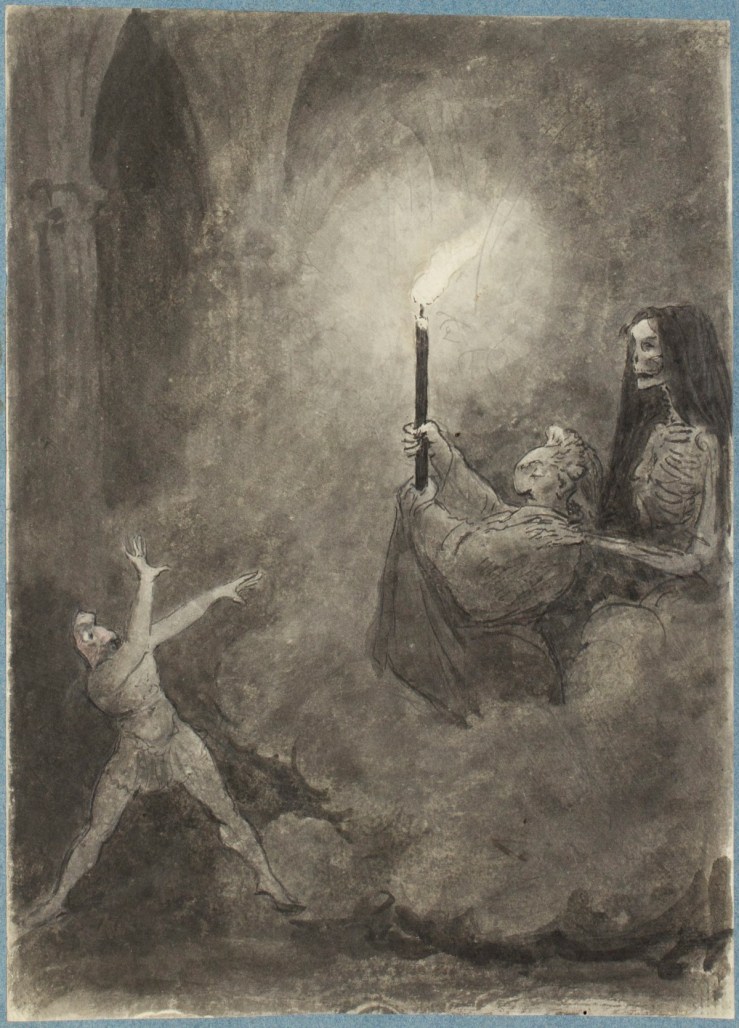
A Skeleton and Two Figures in a Gothic Building by George Dance (1741 – 1825)
“The Nobel Prize”
by
Robert Walser
translated by Tom Whalen
Today, thank God, I’m back in the pink again, which I definitely deserve because I’m a nice person. How was it for me yesterday? I was emotionally ill. Full of thoughts, I ran about vehemently and at the same time galled. And why was that? I believed my colleague Hopeful had won the Nobel Prize in Literature. A notice in the paper had fooled me. How gullible I am! I took my countryman High-hope for the happiest person and myself in consequence for the unhappiest. I imagined all the pretty girls had already composed the most talented satirical poems about me. Yet nevertheless, with what strength, what grandeur I conducted myself! With what composure I strode forth. I can barely describe it. In any case I’m satisfied with myself. I had received an apparently hard blow, but inwardly I did not refuse, not even for a minute, to accept the perfidy of fate. This morning I checked and learned that Persistence, not Hopeful, had received the Nobel Prize. Persistence is someone whom I do not begrudge the honor. The sensations one has. Regarding my dear compatriot Hopejoy, I can calm myself. This pleases me, and since I’m full of joy, I can allow myself to be seen again. Yesterday I thought I had become impossible to my countrymen. Thankfully this unpleasant notion had to retreat. My friend Hopeful is at work. I want to be as well. I can now. I’m capable of this anew. To the same extent that Persistence was crowned with the Nobel Prize, I am crowned with the most cheerful serenity. Yesterday I was like a snapped-off plant, while today I’m a sturdy tree. What illusions can do to us! Brain power, you’re weird! Now that this Nobel Prize business no longer weighs on me, how noble I seem. Yes, the world is gay and serious.
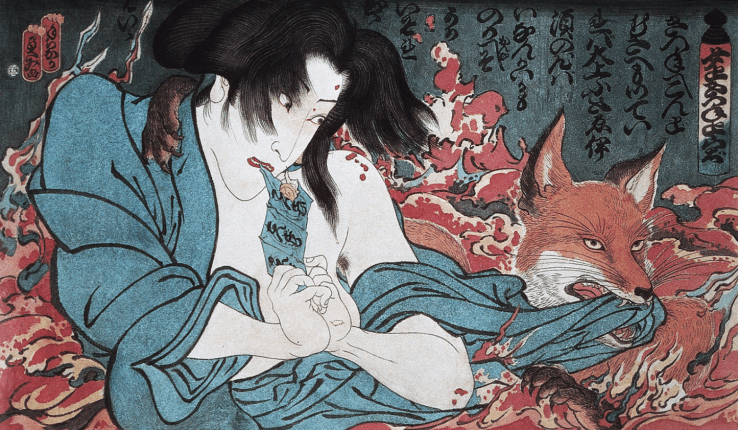
Geisha and Fox, 1988 by Masami Teraoka (b. 1936)
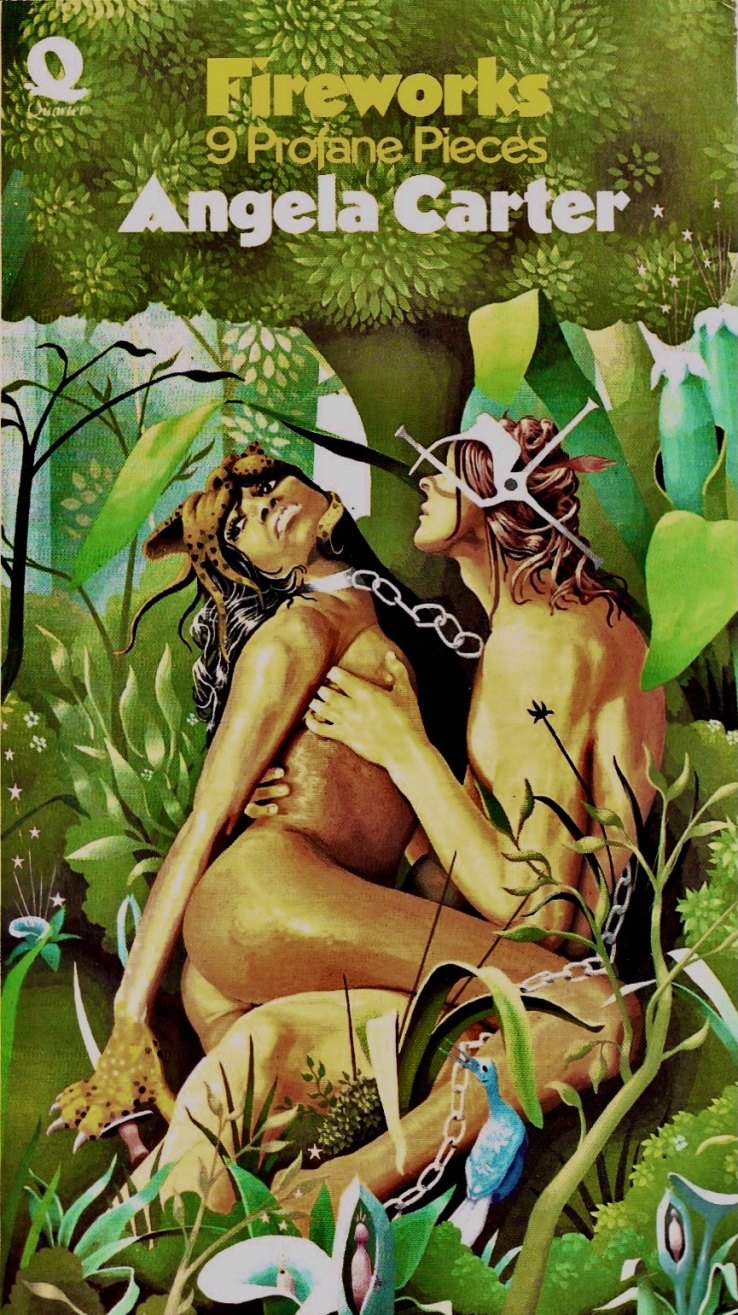
It’s October, and maybe you want some light heavy reading, something titillating but deep, sharp, maybe a little gross at times, always unnerving, right?
How about reading Angela Carter’s 1974 collection Fireworks?
Subtitled Nine Profane Pieces, the collection features nine profane pieces. Actually, I don’t think profane is the right adjective (although I’d always cede to Carter’s judgment in matters of diction). Many, no, most, of these stories approach the spiritual—albeit in a roundabout, okay, profane, manner. In the phallically-titled “Penetrating to the Heart of the Forest,” for example, Carter reimagines Adam and Eve in a new garden through a lens that ironizes both Rousseau’s notion of the noble savage as well as the European colonial project in general. There’s also some mild incest in the tale, to boot—so, okay, sure, profane.
The noun in Carter’s subtitle, pieces, is wholly accurate: the selections in Fireworks have a unified tone, but are disparate in form. There are fabulous thrillers here (“The Loves of Lady Purple,” the story of a puppet prostitute who sucks the life out of her ventriloquist master), morality tales (“Master,” a riff on the Great White Hunter with a figurative middle finger pointed in the general direction of Defoe’s Crusoe), and reminiscences that approach so-called autofiction (“A Souvenir of Japan” and “The Smile of Winter,” mementos of the years Carter lived in Japan). “Flesh and the Mirror” expands on Carter’s years in Japan, but swerves into Borgesian territory; “Reflections” goes straight through the Borgesian mirror into Burroughs world (William S., with just a touch of Edgar R.).
The strongest piece in the collection, at least in my estimation, is “The Executioner’s Beautiful Daughter,” which reads like a travelogue into incestuous abjection. “Here we are, high in the uplands,” our detached narrator begins, before offering up an anthropological catalog of life in that upland. The barest ghost of a plot clutches onto “The Executioner’s Beautiful Daughter,” and the piece is all the stronger for it. Instead, we get a cold, ugly study in cruelty and horror.
Readers new to Carter might prefer to start with her seminal 1979 collection The Bloody Chamber, a book whose inverted fairy tales eviscerate the adjective I used in the previous clause, that adjective seminal. The Bloody Chamber is great! (Check out “Wolf-Alice” for a taste.) (And while I’m hanging out in parentheses, I’ll point out that Burning Your Boats collects pretty much all of Carter’s short fiction.) But back to Fireworks—if the pieces here are not as refined and unified as the anti-fairy tales that comprise Carter’s more-celebrated collection The Bloody Chamber, they are all the more fascinating as studies in sadomasochism, alienation, and the emerging of a new literary consciousness. Great stuff.
“The Executioner’s Beautiful Daughter”
by
Angela Carter
Here, we are high in the uplands.
A baleful almost-music, that of the tuneless cadences of an untutored orchestra repercussing in an ecstatic agony of echoes against the sounding boards of the mountains, lured us into the village square where we discover them twanging, plucking and abusing with horsehair bows a wide variety of crude stringed instruments. Our feet crunch upon dryly whispering shifting sawdust freshly scattered over impacted surfaces of years of sawdust clotted, here and there, with blood shed so long ago it has, with age, acquired the colour and texture of rust . . . sad, ominous stains, a threat, a menace, memorials of pain.
There is no brightness in the air. Today the sun will not irradiate the heroes of the dark spectacle to which accident and disharmony combined to invite us. Here, where the air is choked all day with diffuse moisture tremulously, endlessly the point of becoming rain, light falls as if filtered through muslin so at all hours a crepuscular gloaming prevails; the sky looks as though it is about to weep and so, gloomily illuminated through unshed tears, the tableau vivant before us is suffused with the sepia tints of an old photograph and nothing within it moves. The intent immobility of the spectators, wholly absorbed as they are in the performance of their hieratic ritual, is scarcely that of living things and this tableau vivant might be better termed a nature morte for the mirthless carnival is a celebration of a death. Their eyes, the whites of which are yellowish, are all fixed, as if attached by taut, invisible strings upon a wooden block lacquered black with the spilt dews of a millennia of victims.
And now the rustic bandsmen suspend their unmelodious music. This death must be concluded in the most dramatic silence. The wild mountain-dwellers are gathered together to watch a public execution; that is the only entertainment the country offers.
Time, suspended like the rain, begins again in silence, slowly. Continue reading ““The Executioner’s Beautiful Daughter” — Angela Carter”
“Ghosts”
by
Robert Walser
translated by Tom Whalen
I don’t know if it can be to my advantage to review a kind of dime novel in which, as far as I can remember, there stood in a pretty little town a haunted tower.
In my opinion ghosts are very modern. It seems to me it’s become fashionable to believe, with a certain persistent willfulness, in inexplicable appearances.
One must admit this takes courage. As for me, I lived temporarily, if I dare say so straight out, in a bright, wide, two-windowed room. One night I awoke in bed and saw, on one of the armchairs or stools that came with the room, someone sitting.
Something nonexistent was existent, for when I had gone nearer to inspect or examine the place, the something (undoubtedly I was dealing with a ghost here) had evaporated.
To return to my little booklet in which, among other things, a young woman danced: it’s been quite some time since I perused this work, which dealt mainly with an ingenious Hans who, in all innocence and innocuousness, pulled off, as it were, a stroke of genius.
The landscape seemed to me delightfully sketched; the subject matter revolved as much around money as around love. A little river that stretched around the town the author had charmingly entrusted to blab mysterious things. The brooklet in this regard proved to be immensely talented, since it busily burbled and babbled night and day.
Attentively I listened in on the engaging story. Roles were swapped, young sophisticated girls sat in the pleasing interiors of music stores, into which one glanced in passing.
Hans proved to be a complications-disentangler.
I like to imagine my up-to-the-minute diction as tabloidish. I hope this will be judged kindly.
A beautiful woman sat interestingly ghostlike, I mean conspicuously thin, thus in fashion, at a window. Hans bestowed upon her his interest. In his eyes lay so much justifiable or baseless melancholy that the woman leapt up in bewilderment.
These and similar events occurred in the little volume whose author I don’t name because he hardly wishes it. There are little books we read as if we’re eating something delicious. We quickly forget them. After a certain amount of time, perhaps we recall them again. They’re like people we’re capable of loving because they’re not difficult. I also wish this for what I have written here.

Vladimir Sorokin’s novel Their Four Hearts (in English translation by Max Lawton) made me physically ill several times. To be clear, the previous statement is a form of praise. I finished it a few weeks ago and put it on a high shelf where no one in my family might come across it.
I picked up Their Four Hearts on the strength of the first Sorokin novel I read, Telluria, and the third, Blue Lard (both also in translation by Max Lawton). The kinetic energy of those novels evoked cinema in my mind’s eye—something akin to Alejandro Jodorowsky’s surreal Holy Mountain or Luis Buñuel’s comic masterpiece L’Age d’Or—narratives that engender their own new visual grammars. In Their Four Hearts, I again found a cinematic comparison, this time in Pier Paolo Pasolini’s study of depravity and cruelty, Salò, or the 120 Days of Sodom.
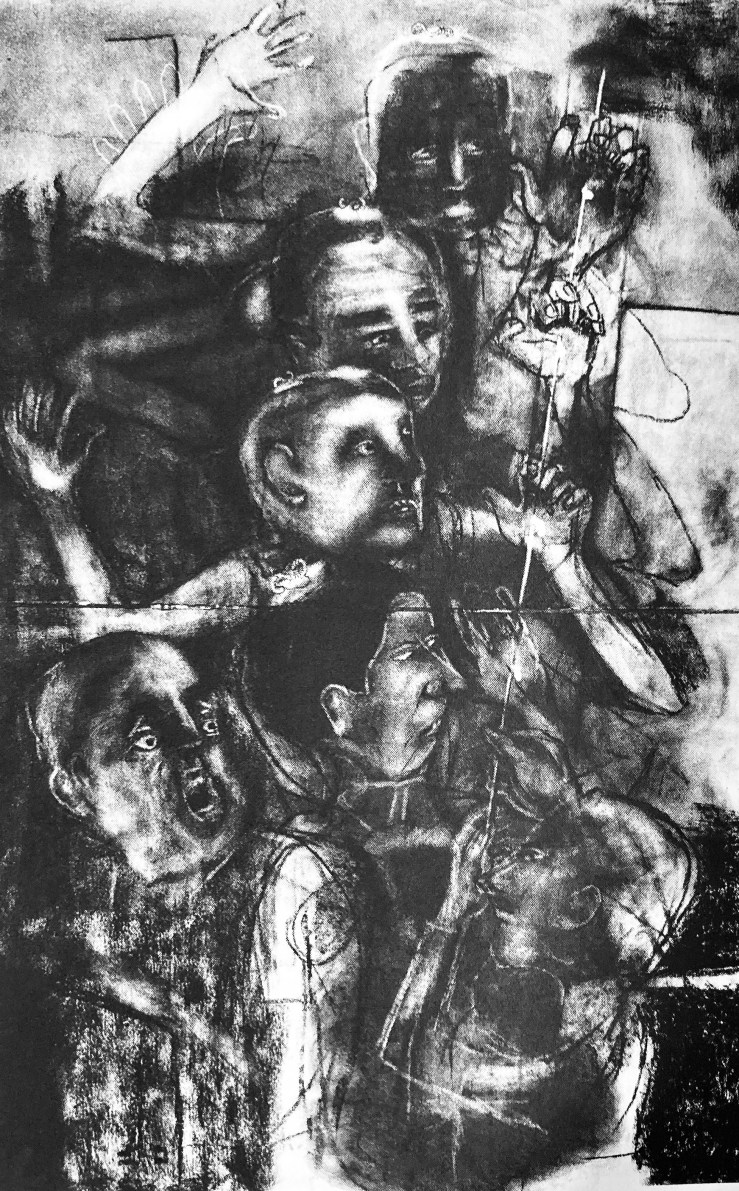
Like Salò, Sorokin’s Their Four Hearts explores seemingly every form of depravity in extreme detail. It is not for the faint of heart or stomach. (Sorokin’s potent language, in Lawton’s sharp translation, would eviscerate the cliches that precede this parenthetical aside.) Their Four Hearts is fairly short—200 pages, including over 30 pages of charcoal illustrations by Greg Klassen—but I had parcel it out over four distinct sittings. (After the second time I had to put it down because of nausea, I decided to avoid reading it close to mealtimes.)
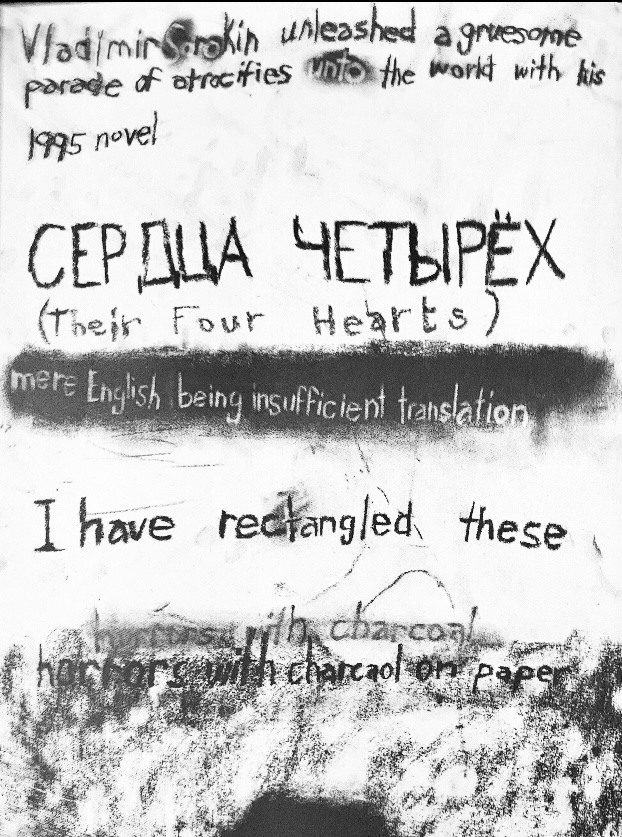
Before I touch briefly on that depravity, it might be useful to interested readers to offer a gloss on the plot of Their Four Hearts. There is no recognizable plot. Or, rather, the plot hides behind the accumulation of violent, abject details, forever unavailable to a reader, no matter how keen a detective that reader might be. It is a cannibalizing plot, both literally and figuratively, stochastic, absurd, consuming its own horrific iterations.
But, like, what is it about?, hypothetical you might ask. In lieu of a list of depravities, let me cannibalize the back cover copy:
Their Four Hearts follows the violent and nonsensical missions carried out by a group of four characters who represent Socialist Realist archetypes: Seryozha, a naive and optimistic young boy; Olga, a dedicated female athlete; Shtaube, a wise old man; and Rebrov, a factory worker and a Stakhanovite embodying Soviet manhood. However, the degradation inflicted upon them is hardly a Socialist Realist trope. Are the acts of violence they carry out a more realistic vision of what the Soviet Union forced its “heroes” to live out? A corporealization and desacralization of self-sacrificing acts of Soviet heroism? How the Soviet Union truly looked if you were to strip away the ideological infrastructure? As we see in the long monologues Shtaube performs for his companions––some of which are scatological nonsense and some of which are accurate reproductions of Soviet language––Sorokin is interested in burrowing down to the libidinal impulses that fuel a totalitarian system and forcing the reader to take part in them in a way that isn’t entirely devoid of aesthetic pleasure.
Libidinal forces . . . totalitarian system . . . forcing the reader . . . aesthetic pleasure?
Aesthetic pleasure? Pleasure is doing a lot in that phrase, although I was admittedly alternately rapt by Their Four Hearts even while I was (quite literally) disgusted. I’ve read enough Sorokin to this point that I didn’t have to be forced into the surreal, jarring logic of the plot, finding instead deeply dark humor in it, where possible (although more often than not, horror without humor).

I have resisted turning this ostensible “review” into a catalog of the horrors Sorokin offers in Their Four Hearts. These horrors are all the more horrible for their sensory evocation set against their seemingly senseless (lack of) meaning. When the foursome, very early in the novel, drug and murder Seryozha’s parents, remove the glans from his father’s penis, and pop into the kid’s mouth to suck on, does that mean something exterior to the novel’s own aesthetics? That the quartet continues to trade the glans off, taking turns sucking on it throughout the novel—are we to plumb that for some kind of allegorical gloss? Or do we simply ride with it? Their Four Hearts confounds its readers, creating not only its own inventions of vocabulary, but its own grammar of storytelling.
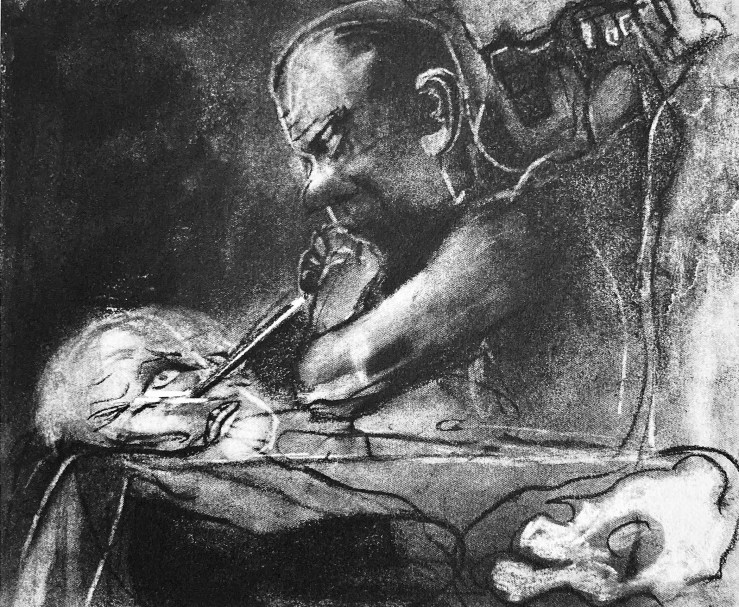
Instead of my describing further the horrors of Their Four Hearts (murder, pedophilia, parricide, torture, mutilation, coprophagia, rape, cannibalism, etc. ), it might be more profitable for interested readers to inspect the illustrations by Greg Klassen I’ve included in this review. Reminiscent of George Grosz or Hans Bellmer, Klassen’s charcoals capture the tone and vibe of Their Four Hearts. They add to the text’s cinematic quality. (Publisher Dalkey Archive should have given Klassen the cover.)
By now you likely have a clear idea if Their Four Hearts is For You or Not For You. I found the experience of reading Sorokin’s novel paradoxically compelling and repellent. (One of the closest experiences I can compare reading it to was eating beef chitterlings at a Korean restaurant in Tokyo. The waitress brought the raw gray intestines to our table, where we grilled them ourselves over charcoal, dipping them in sauces. We ate three orders.)
Telluria and the forthcoming Blue Lard are much better starting places for those interested in Sorokin, but his translator Lawton suggested in an interview that,
…any new reader of Sorokin [should] immediately chase TELLURIA with THEIR FOUR HEARTS: those two combined give something like a complete picture of the master at work.
It’s a strange chaser, and it leaves a flavor unlike anything else I’ve ever tasted. Highly recommended.

Picnic at Wittenham, 1948 by George Warner Allen 1916-1988

October, 1893 by William Merritt Chase (1849-1916)
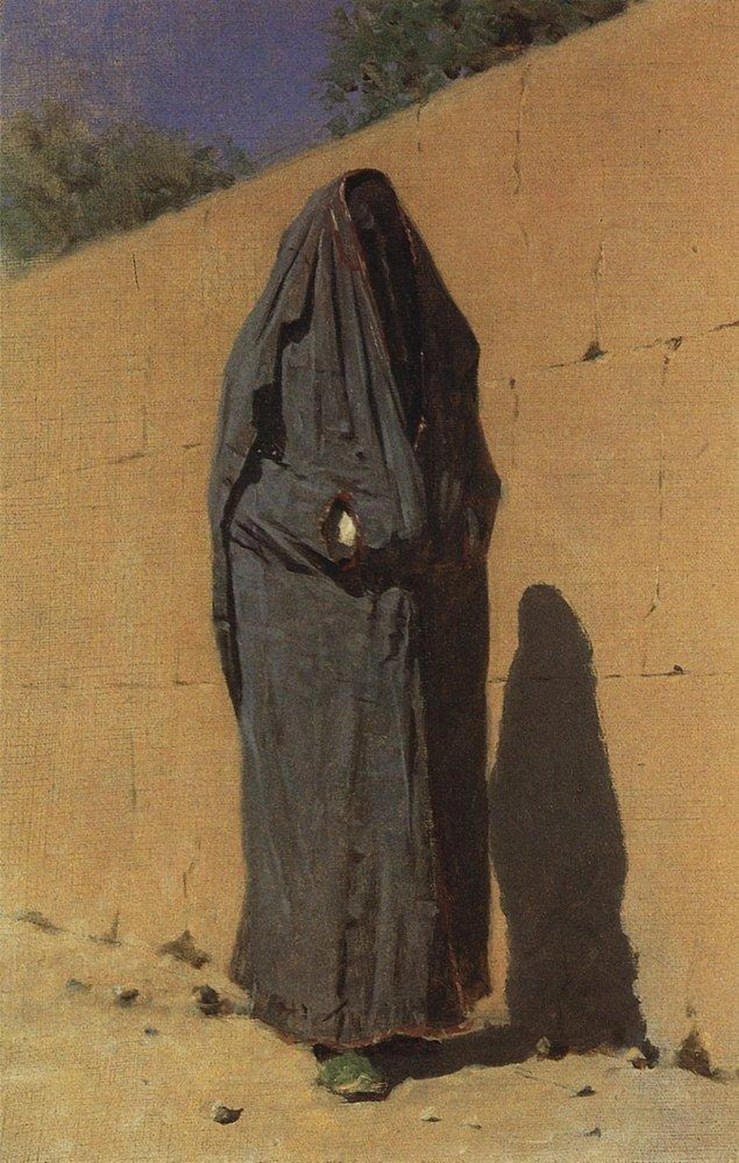
Uzbek Woman in Tashkent, 1873 by Vasily Vereshchagin (1842-1904)
McCarthy’s works have been termed “experimental” by most critics but he thinks that can be said of most serious writers. “Any serious writer is experimental in that he’s trying to do something new or better.” A serious writer, he adds, sits down and begins to write and develop the story as he goes along. “He doesn’t just sit down and 70,000 or 80,000 words come full blown into his head.” He suggests that anyone who intends to write “read to know what’s been written before—both good and bad.” This point complements the theory of author as experimenter, for, as McCarthy said, “you will see things in other writers you admire and that you think you can do better.”
From a November, 1968 feature on Cormac McCarthy published in The Lexington Herald-Leader. The article is included in “Cormac McCarthy’s Interviews in Tennessee and Kentucky, 1968–1980,” published in The Cormac McCarthy Journal. The last feature in the collection centers on McCarthy’s efforts to adapt William Faulkner’s novel As I Lay Dying into a film.

The day after that he experienced what at first he thought might be some variation of déjà vu. He’d finished lunch and stood at the door of a corner restaurant, able to see, at a severe angle, the lean elderly man who frequently appeared outside Federal Hall holding a hand-lettered political placard over his head for the benefit of those gathered on the steps. He, Lyle, was cleaning his fingernails, surreptitiously, using a toothpick he’d taken from a bowl near the cash register inside the restaurant. The paradox of material flowing backward toward itself. In this case there was no illusion involved. He had stood on this spot, not long ago, at this hour of the day, doing precisely what he was doing now, his eyes on the old man, whose body was aligned identically with the edge of a shadow on the façade of the building he faced, his sign held at the same angle, it seemed, the event converted into a dead replica by means of structural impregnation, the mineral replacement of earlier matter. Lyle decided to scatter the ingredients by heading directly toward the man instead of back to the Exchange, as he was certain he’d done the previous time. First he read the back of the sign, the part facing the street, recalling the general tenor. Then he sat on the steps, with roughly a dozen other people, and reached for his cigarettes. Burks was across the street, near the entrance to the Morgan Bank. People were drifting back to work. Lyle smoked a moment, then got up and approached the sign-holder. The strips of wood that steadied the edges of the sign extended six inches below it, giving the man a natural grip. Burks looked unhappy, arms folded across his chest.
“How long have you been doing this?” Lyle said. “Holding this sign?”The man turned to see who was addressing him.
“Eighteen years.”
Sweat ran down his temples, trailing pale outlines on his flushed skin. He wore a suit but no tie. The life inside his eyes had dissolved. He’d made his own space, a world where people were carvings on rock. His right hand jerked briefly. He needed a haircut.
“Where, right here?”
“I moved to here.”
“Where were you before?”
“The White House.”
“You were in Washington.”
“They moved me out of there.”
“Who moved you out?”
“Haldeman and Ehrlichman.”
“They wouldn’t let you stand outside the gate.”
“The banks sent word.”
Lyle wasn’t sure why he’d paused here, talking to this man. Dimly he perceived a strategy. Perhaps he wanted to annoy Burks, who obviously was waiting to talk to him. Putting Burks off to converse with a theoretical enemy of the state pleased him. Another man moved into his line of sight, middle-aged and heavy, a drooping suit, incongruous pair of glasses—modish and overdesigned. Lyle turned, noting Burks had disappeared.
“Why do you hold the sign over your head?”
“People today.”
“They want to be dazzled.”
“There you are.”
Lyle wasn’t sure what to do next. Best wait for one of the others to move first. He took a step back in order to study the front of the man’s sign, which he’d never actually read until now.
RECENT HISTORY
OF THE WORKERS OF THE WORLD
CIRCA 1850–1920 Workers hands cut off on Congo rubber plantations, not meeting work quotas. Photos in vault Bank of England. Rise of capitalism.
THE INDUSTRIAL AGE Child labor, accidents, death. Cruelty = profits. Workers slums Glasgow, New York, London. Poverty, disease, separation of family. Strikes, boycotts, etc. = troops, police, injunctions. Bitter harvest of Ind. Revolution.
MAY 1886 Haymarket Riot, Chicago, protest police killings of workers, 10 dead, 50 injured, bomb blast, firing into crowd.
SEPT 1920 Wall St. blast, person or persons unknown, 40 dead, 300 injured, marks remain on wall of J. P. Morgan Bldg. Grim reminder.
FEB 1934 Artillery fire, Vienna, shelling of workers homes, 1,000 dead inc. 9 Socialist leaders by hanging/strangulation. Rise of Nazis. Eve of World War, etc.
There was more in smaller print fitted onto the bottom of the sign. The overweight man, wilted, handkerchief in hand, was standing five feet away. Lyle, stepping off the sidewalk, touched the old man, the sign-holder, as he walked behind him, putting a hand on the worn cloth that covered his shoulder, briefly, a gesture he didn’t understand. Then he accompanied the other man down to Bowling Green, where they sat on a bench near a woman feeding pigeons.
From Don DeLillo’s novel Players.
 Biblioklept