Teddy Roosevelt’s Death Mask

I Review Def Jam 25, the Overstuffed Illustrated Oral History of a Record Label that Helped Change American Culture

It’s hard to underestimate the influence that Def Jam Records brought to bear on contemporary culture. Not only did the label help to legitimize rap and hip hop as commercially viable (and artistic) art form, it also helped to redefine attitudes about fashion, culture, race, and even business. At its core, the early days of Def Jam were an energetic experiment in synthesis, combining the DIY spirit of punk rock with the nascent rhythms of hip hop, all twisted up in a graffiti writer’s aesthetic. Def Jam 25, a huge, overstuffed illustrated oral history of the label’s first quarter century, details the fascinating beginnings, successes—and many, many troubles—of the strange child of Rick Rubin and Russell Simmons.

Rick Rubin Hard at Work

Def Jam 25 focuses its initial energy on Rick Rubin, who comes across as the dark, eccentric spirit whose aesthetic and temperament would come to define the label’s early successes. Rubin started the label out of his NYU dorm to release a single by his artcore band Hose. Rubin was soon introduced to Simmons (by Vincent Gallo, of all people), and the duo would go on to produce and release huge hits from the Beastie Boys, L.L. Cool J, Run DMC, and a host of others.

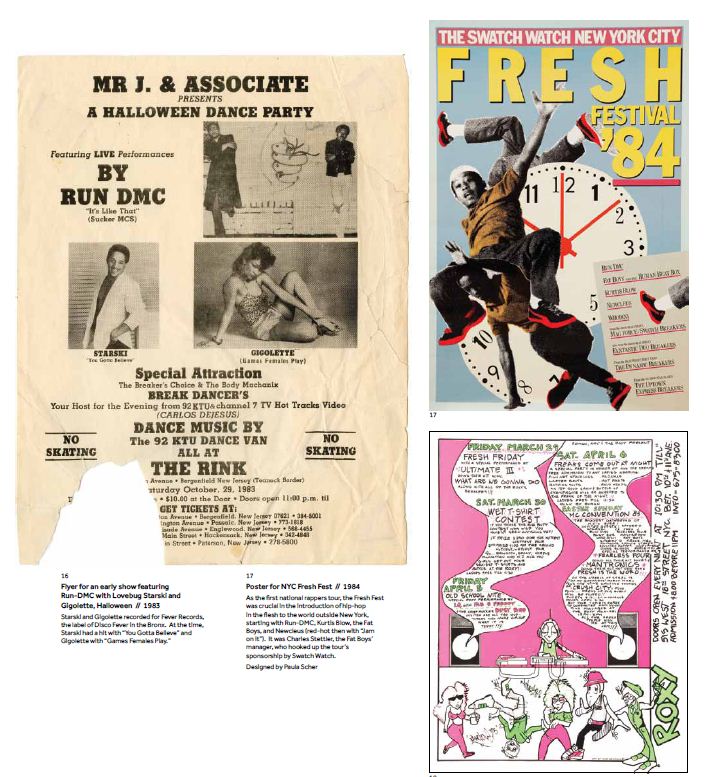
Early Flyers

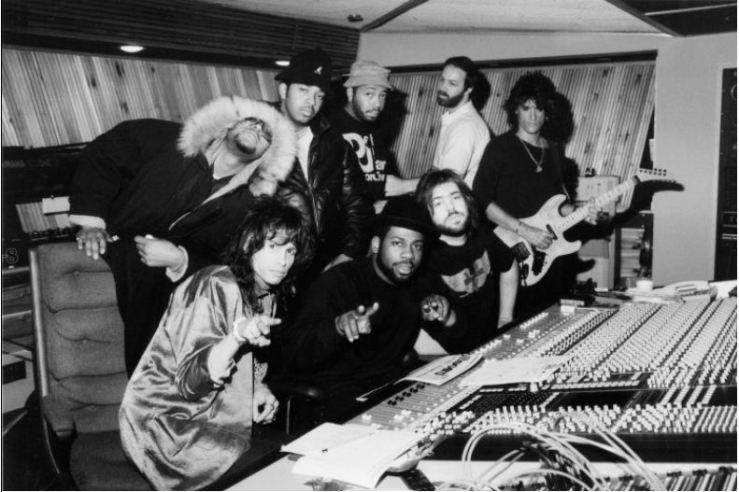
Def Jam 25 combines photographs and essays with shorter eyewitness commentaries from the artists, designers, musicians, producers, and business guys who helped define Def Jam. The effect is intriguing, often insightful, occasionally funny, and especially fascinating when folks share very different accounts of how things went down. The early years of the label are documented with an energy that matches the verve of Def Jam’s pioneering work in the ’80s, and if I dwell on the first thirds, it’s only because there’s something so electrifying about those early years, when Slayer and Public Enemy were labelmates and Aerosmith and Run DMC could craft a top ten hit together.

From the "Walk This Way" Sessions

Def Jam’s success continued unabated after Rubin’s departure in 1988, and it’s hard to argue that a label putting out records by EPMD, Nas, De La Soul, Public Enemy, and the Roots was somehow less artistic and more commercial after that point. Still, Rubin’s strange punk rock energy was clearly irreplaceable, and while it remains part of the Def Jam template to this day, it’s hard to get as psyched about Rihanna and Ja Rule as it is about Slick Rick or even Onyx. But that has little to do with the actual book I suppose, which is lovingly crafted and impeccably designed.

Def Jam 25 is a great big coffee table book for people who actually like to read (and for your guests who don’t like to read, the book explodes with vivid imagery). The book reveals (and reflects) Def Jam Records as a marvelous synthesis of art, design, fashion, and business, a label that was (and is) dramatically unstable and also wildly innovative. The book will appeal to fans of music and culture alike. Def Jam 25 is new in hardback from Rizzoli.

Rubin and Simmons, 2009

“Winter Wonderland” — SNL Original Cast

The original SNL cast’s take on “Winter Wonderland” is one of my favorite Christmas recordings ever. It’s from the first season of Saturday Night Live; Candice Bergen is hosting, and you can see her singing along with Gilda Radner, Jane Curtin, and Laraine Newman. The underrated Garrett Morris delivers the powerful lead vocal, and there’s something magical about the moment when the boys — Chevy, Aykroyd, Belushi — come in for support.

When I was a kid, I was always puzzled by the clip. I saw it several times on Comedy Central reruns; this is back when Comedy Central was a fledgling network that ran SNL about 8hrs a day, along with lots of bad ’80s stand up shows, MST3K, and a show I loved called Short Attention Span Theater hosted by some guy named John Stewart. Anyway, I guess what puzzled me so much was that it seemed so damn sincere, and so good. I suppose Morris’s vocal provides much of the earnest authenticity that so baffled me when set against the goofy, ironic sloppiness of those (very) early SNL skits. I guess I was looking for a joke and couldn’t find one. They didn’t seem to be mocking the song. In retrospect, I can see that there’s something of a loving parody at work in their version of “Winter Wonderland,” a gentle poke at old, hokey Christmas musicals, but the emphasis is on loving — it’s almost bizarre in its tenderness and earnest emotion.


(An Incomplete) List of Writers Who Died in 2011

Vaclav Havel

Christopher Hitchens

Russell Hoban

Ken Russell

Joe Simon

Stetson Kennedy

Sidney Lumet

George Whitman

Lilian Jackson Braun

Edwin Honig

Michael S. Hart

Gil Scott-Heron

Bill Keane

Jerry Leiber

Diana Wynne Jones

Bert Jansch

Leonora Carrington

Brian Jacques

Barbara Grier

Edouard Glissant

Dwayne McDuffie

Hisaye Yamamoto

Phoebe Snow

Anne McCaffrey

Leonard B. Stern

Vincent Cronin

Tony Geiss

MK Binodini

Kenneth Grant

Joe Gores

Maria Elena Walsh

Del Reisman

Christopher Trumbo

Loreen Rice Lucas

Diana Norman

Reynolds Price

John Ross

David Hart

B.H. Friedman

Dick King-Smith

Susana Chavez

Park Wun-suh

Wilfrid Sheed

Jean Dutord

Sun Axelsson

Ruth Cavin

Max Wilk

Hans Joachim Alpers

Donald S. Sanford

Peter J. Gomes

Ion Hobana

Rudi Bass

Anson Rainey

Perry Moore

Sean Boru

Bo Carpelan

Elaine Crowley

Martin Quigley Jr.

Charles E. Silberman

Andree Chedid

Iakovos Kambanelis

Sara Ruddick

Doris Burn

Steven Kroll

May Cutler

Thor Vilhjálmsson

H.R.F. Keating

Joe Bageant

Jean Liedloff

Bill Blackbeard

Alberto Granado

Hazel Rowley

Al Morgan

Raymond Garlick

John Haines

Ernesto Sabato

Abdul Hameed

Rafael Menjívar Ochoa

John Sullivan

Sidney Michaels

Madelyn Pugh

Sol Saks

Arthur Marx

Bill Brill

L.J. Davis

Ulli Beier

Kevin Jarre

Joanna Russ

David Wilkerson

Beverly Barton

Craig Thomas

Ira Cohen

W.J. Gruffydd

Anne Blonstein

Paul Violi

Johanna Fiedler

Dick Wimmer

Oniroku Dan

Hans Keilson

Martin Woodhouse

Newton Thornburg

Patrick Galvin

Wallace Clark

Carlos Trillo

Kate Swift

Arthur Laurents

Frans Sammut

William Kloefkorn

Thierry Martens

E.M. Broner

Tom Hungerford

Kathryn Tucker Windham

Harry Bernstein

Joel Rosenberg

Simon Heere Heeresma

David Rayfiel

Oscar Sambrano Urdaneta

Robert Kroetsch

Josephine Hart

Gloria Sawai

Anne LaBastille

Blaize Clement

Sissel Solbjørg Bjugn

Francis King

Agota Kristof

Henry Carlisle

Iain Blair

Hideo Tanaka

Michael Legat

Ruth Thomas

Colin Harvey

David Holbrook

Simona Monyová

William Sleator

Samuel Menashe

Selwyn Griffith

Sara Douglass

Ida Fink

Sergio Bonelli

Arthur Evans

Hella Haasse

David Croft

David Zelag Goodman

Emanuel Litvinoff

José Miguel Varas

Jo Carson

Cengiz Dağcı

Frank Parkin

Hugh Fox

Herbert Lomas

Florence Parry Heide

Stanley Mitchell

Uno Röndahl

Mildred Savage

Mick Anglo (LINK)

Alvin Schwartz

Sri Lal Sukla

Piri Thomas

Gerald Shapiro

Vittorio Curtoni

Morio Kita

Andrea Zonzotto

Taha Muhammad Ali

Georg Kreisler

Daniel Sada

H.G. Francis

Helen Forrester

Čestmír Vejdělek

Hal Kanter

Les Daniels

Leonid Borodin

Franz Josef Degenhardt

Morris Philipson

Ana Daniel

Ruth Stone

Peter Reading

Ruslan Akhtakhanov

Ivan Martin Jirous

Tomás Segovia

Kabir Chowdhury

Hans Heinz Holz

Ke Yan

Mario Miranda

Jean Baucus

Gilbert Adair

Jerry Robinson

Ambika Charan Choudhury

Matti Yrjänä Joensuu

Louky Bersianik

Christopher Logue

Christa Wolf

Elisabeth Young-Bruehl

“Death Is a Very Liberating Thought” — RIP Christopher Hitchens

Capitalism, Innovation, McNuggets (The Wire)

RIP Joe Simon

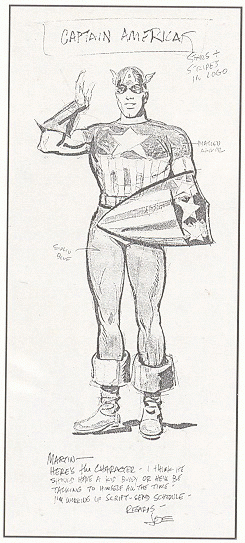
Early Captain America Design Sketch by Joe Simon

RIP comic book legend Joe Simon.

Book Acquired, 12.12.2011

20111214-204653.jpg

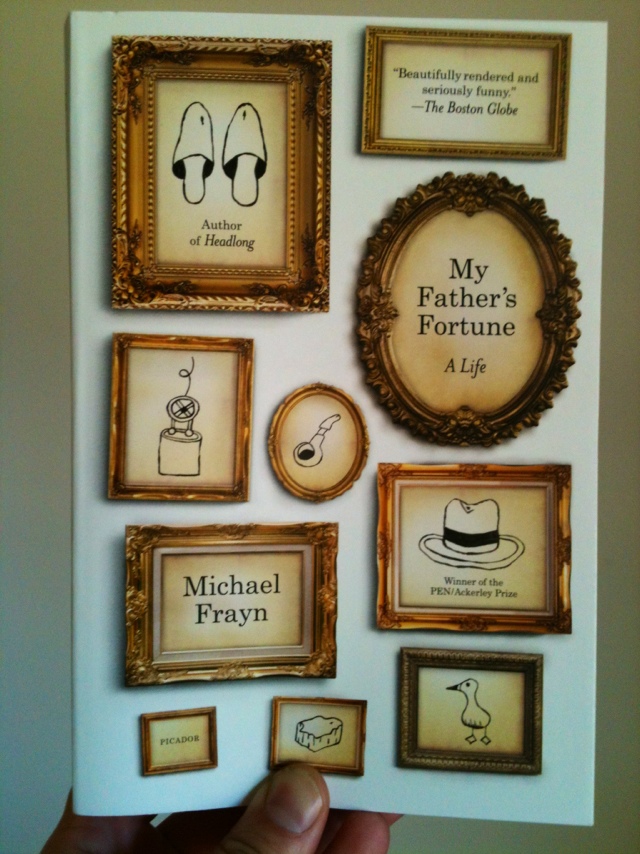
Michael Frayn’s memoir My Father’s Fortune. Publisher Picador’s (trade paperback) description:

Winner of the PEN/Ackerley Prize

Award-winning playwright and novelist Michael Frayn “makes the family memoir his own” (The Daily Telegraph) as he tells the story of his father, Tom Frayn. A clever lad, an asbestos salesman with a winning smile and a racetrack vocabulary, Tom Frayn emerged undaunted from a childhood spent in two rooms with six other people, all of them deaf. And undaunted he stayed, through German rockets, feckless in-laws, and his own increasing deafness; through the setback of a son as bafflingly slow-witted as the father was quick on his feet; through the shockingly sudden tragedy that darkened his life. As Peter Kemp wrote in The Sunday Times (London), “Frayn has never written with more searching brilliance than in his quest for his past.”

Costanza’s Christmas Card

“Here You See Some of the Clutter but You Can’t See the Danger” — Russell Hoban’s Writing Room

(From The Guardian’s Writer’s Rooms series)

RIP Russell Hoban

Russell Hoban, author of Riddley Walker and other cult classics, died last night at the age of 86. The first “review” I ever wrote on this site was for Riddley Walker (the review is so bad that I won’t link to it out of shame); that was back when Biblioklept’s primary mission was to document stolen books. I stole the book from a dear friend and subsequently lent it to a student who never returned it. Oh, the circle of theft! Riddley Walker is the sort of book that begs to be stolen (or never returned, or passed on to another). It’s an apocalyptic Huckleberry Finn, a coming of age story set against the backdrop of a new dark age. Riddley Walker is deeply weird and strongly strange; I don’t know what a “cult” novel is, but I know of no better example.

Riddley Walker might be Hoban’s most famous work (aside from his children’s works, including the Frances the Badger series), but readers who stopped there would do well to pick up some of his earlier books. The Lion of Boaz-Jachin and Jachin-Boaz is a fantasy piece about fathers, sons, and map-making; Kleinzheit, a baffling schizophrenic novel, explores death and illness in an animistic world; Pilgermann plumbs the medieval intersection of Judaism, Christianity, and Islam, narrated through the eyes of the ghost of a castrated European Jew on a bizarre holy quest—it’s like Hieronymous Bosch on LSD.

The Guardian has a short but lucid biographical obit for Hoban, which ends with Hoban contemplating how death might affect his career:

Death, Hoban predicted in 2002, would “be a good career move”. “People will say, ‘yes, Hoban, he seems an interesting writer, let’s look at him again’,” he said.

The grim humor there was always part of Hoban’s program, and I hope that he’s right: I hope that folks who haven’t heard of Hoban will pick up Riddley Walker, and perhaps those who haven’t read beyond that book will make time to read another.

Analog Lebowski

The Dude Abides -- Erika Iris Simmons

(I know we all saw this a few years ago, but damn, I just love it).

The Best and Worst Film Titles of 2011

The Best Film Titles of 2011

The Tree of Life: Solid, evocative, stately.

Melancholia: Simple and meaningful, but also easy to remember.

Star Watching Dog: I have no idea what this movie is, but I love this as an idea or as an image, or as a plot for a film. It makes me want to find out which of those three it actually is. If I’m lucky it will be all three.

We Need to Talk About Kevin: This has the right kind of loaded evocation to it. It’s great as a long-but-not-too-long title.

Tyrannosaur: Awesome. One word with a huge amount of weight, probably the best title of the year except for the obvious problem that it probably confused people into thinking the film was about dinosaurs. But other than that it doesn’t get better than this.

Your Sister’s Sister: I don’t really know what this means. Is it wordplay? Is there plot relevance? It makes me want to know though.

Another Earth: A brilliant combination of two words that manages in three syllables to open up hours upon hours of thoughts and possibilities.

Outside Satan: I would compare to the previous entry. A great two words that sounds good and suggests a lot of weird things, many of which I can’t quite put my finger on. Definitely makes me want to see what happens in the movie.
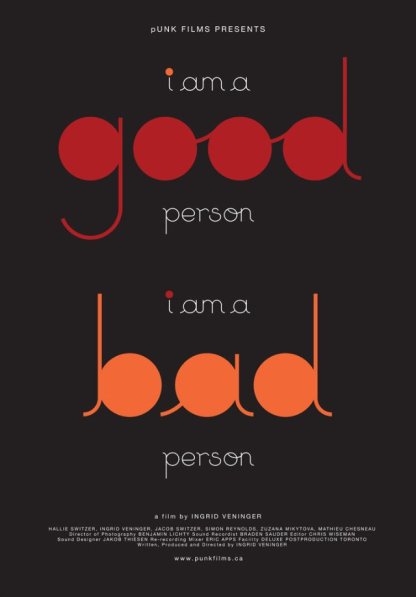
I Am A Good Person/I Am A Bad Person: Maybe it’s too long. And maybe it’s totally confusing. But I would watch something called this for sure.

The Rabbi’s Cat: Well it sounds like I know upfront two things I can expect to see. And I like both of these things.

The Catechism Cataclysm: Alliteration sucks. Here’s an exception that proves the rule.

Blackthorn: I would buy a cut of meat called Blackthorn, I would buy a bottle of wine called Blackthorn, I would vacation in a mountain city called Blackthorn, I would buy an album from a doom metal band called Blackthorn. Blackthorn would be a good word for many things. This time it is a movie.

Gingerdead Man 3: Saturday Night Cleaver: Double puns! Really? Okay fine, sure. It’s better than all the Air Bud titles combined.

Red State: Two evocative words, a sort of double-entendre but still easy to remember.

The Future: I would eat a burger called The Future, I would name my car The Future, I would name my dog The Future, I would love for my friends to give me the nickname The Future. So yeah I would watch a movie called The Future.

I Melt With You: Memorable and emotional, it tells me nothing about the film in any literal way, but it gives me some kind of sense of expectation.

Hobo With a Shotgun: Perfect. Truth in advertising; we’re all on the same page here.

***

The Worst Film Titles of 2011

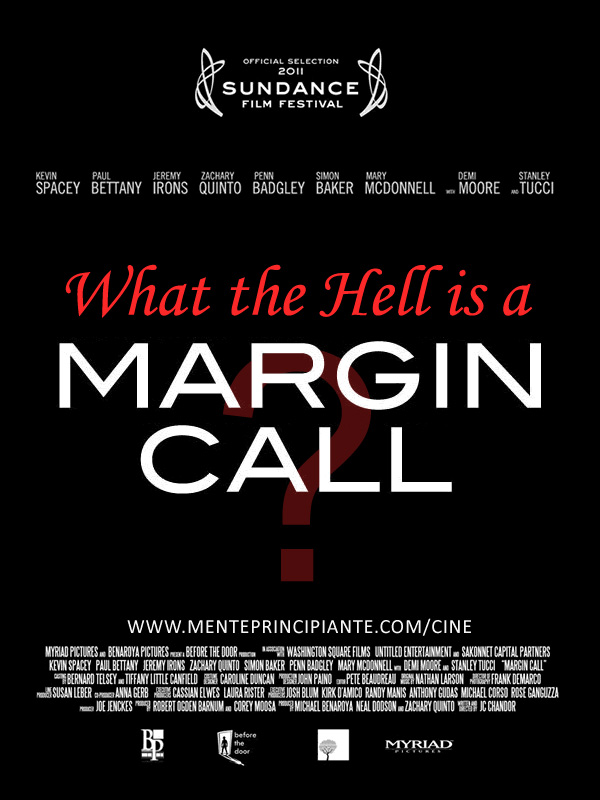
Margin Call: What the hell is a Margin Call? Why would I voluntarily pay for anything called Margin Call. It sounds like something your accountant would suggest, but that’s why you hire that guy: to deal with boring stuff like Margin Calls. I would rather be watching a good movie than worrying about a Margin Call. If there are two things, and one is called Tyrannosaur and the other is Margin Call, which do you think I will be buying?
Hugo: Hugo is a stupid little word and I don’t like saying it or hearing it.  The only thing worse is the original title, The Invention of Hugo Cabret. Gross. Cabret is far too close to Cabaret and Cabaret is least appealing noun I can think of.

Weekend: Wow, title your indie movie the same thing as a famous art film. Always a good idea when your only potential audience is the miniscule slice of people who know this. Watch for the director’s next small festival hit, sure to be called The 400 Blows.

The Brooklyn Brothers Beat The Best: Alliteration is the worst.

A Beautiful Belly: Further proof of the above sentiment, only this one is also gross sounding. The only way I can even imagine saying this out loud is if it was the humorous name of a menu item at the best BBQ joint in Atlanta or something.

The Skin I Live In: I blame the second-language aspect here, but something about this sentence is annoying.

Martha Marcy May Marlene: AKA Marble-Mouthed Nonsense. I will concede that this one may be actually brilliant, as everyone who sees the film seems to universally love the title after the face. Still, there is definitely something idiotic about giving yr film a title no one can remember.

Crazy, Stupid, Love.: I hate seeing this written down, I hated typing it, I hate hearing it out loud and I can’t imagine speaking it. There is a weird kind of perfection here. Three words that are just fine on their own, but somehow in this order they make me want to die.

Take This Waltz: And shove it.

No One Killed Jessica: Oh well that’s a relief, you had me worried for a second there. I guess I can skip watching the movie altogether and go eat some lunch or something.

Water for Elephants: This sounds like part of some little piece of wisdom like “pearls before swine” or something, except that you think about it for five seconds and realize that it isn’t and that it’s just dumb sounding.

Twixt: This is one of those words that maybe girls under the age of 16 could get away with saying. Or like the name of new line of sexy dolls, like the new Bratz or something.

Soul Surfer: Soul Surfer sounds like the shittiest tattoo idea possible.
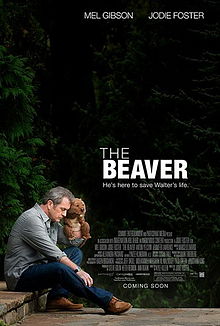
The Beaver: This immediately undercuts the notion that it can be at all serious by virtue of the obvious vulgar connotations. Unless of course the writer only chose the word “Beaver” because he thought it would be such a riot to see it written everywhere and to have serious actors say it a million times for two hours. So either way what we have here is totally ignorant or absurdly immature. Count me out either way.

Our Idiot Brother: If I wanted to watch a shitty ’90s sitcom I would have stayed home.

This Is Not A Movie: Yes it is.

Benjamin Sniddlegrass and the Cauldron of Penguins: This is so stupid that maybe it belongs on the “Best” list. Nah, maybe not.

Cowboys & Aliens: This and Hobo With a Shotgun are two sides of the same coin. This side is the shitty one that loses all the time.

I Am Number Four: The only way this could be worse is if it was I Am Number Two.

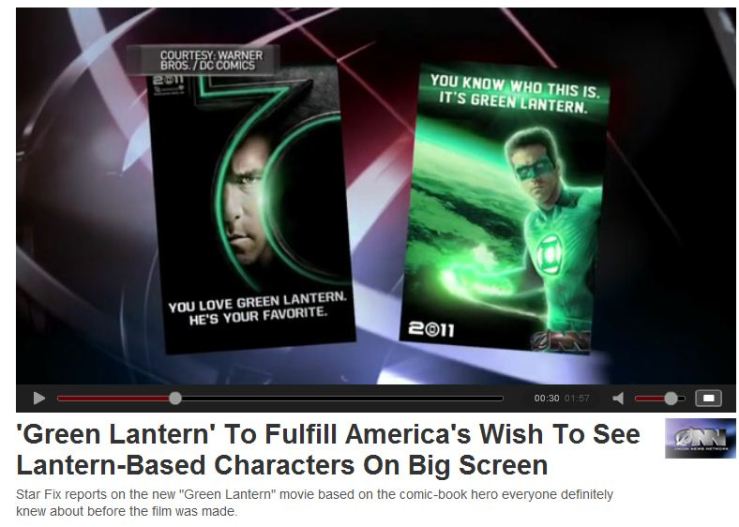
Green Lantern: The discussion surrounding this movie’s failure brought up a lot of valuable points: 1) Ryan Reynolds is The Worst, 2) The movie was a piece of shit and 3) Martin Campbell is not an auteur. But the big point I think everyone missed is that The Green Lantern is also just a stupid combination of three English words. I don’t care how long he’s been a comic book hero, please compare the title of this movie to the other famous DC tentpole franchises: Batman and Superman. And please analyze the various connotations involved in three titles: One is a man who is also a bat, alright cool. The other is a man who is super, yeah alright I bet he’s pretty tough. This is a lantern that is somehow green… is this meant to surprise or excite me? “No shit!? All my lanterns are blue, this guy must be AMAZING!” Even The Green Hornet is a better title because it has the word Hornet in it and everyone knows that Hornet is basically the coolest word in all of entomology, with the obvious exception of “Scorpion.” No movie with the word Lantern in the title will ever gross 500 million dollars, unless preceded by the words “Harry Potter” or “Twilight.” Lanterns suck and somehow this fact is known deep in the hearts of all Americans.

A Good Old Fashioned Orgy: The obvious sarcasm just tells me right away that this is insincere bullshit.

Straw Dogs: As the title for some weird VHS tape you find at the video store and rent on a lark only to be blown away by how gnarly and intense movies were allowed to be in the ’70s: Yes Straw Dogs is a great title, and it’s implacable weirdness somehow fully encapsulates everything strange an unnerving about that movie. But as the title for a contemporary product on the market for people who have no built-in context I can’t imagine anything worse. It might as well have been called Marble Lanterns, it would have done just as well.

Another Happy Day: Either the movie is actually about a succession of days that are happy, or it is very obviously the exact opposite. Both options annoy me and put me off for different reasons. They could have called it Are We Having Fun Yet? and it might have been a bigger hit, but that is equally stupid and probably taken already.


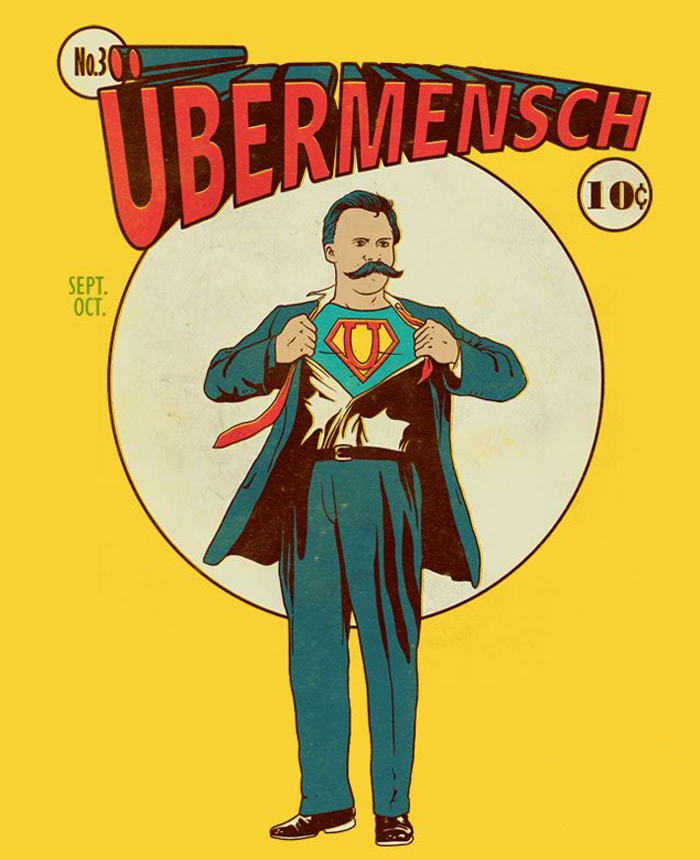
Übermensch Comics #3

Read Nathaniel Hawthorne’s Short Story “The Christmas Banquet”

“The Christmas Banquet,” a tale from Nathaniel Hawthorne (from Mosses from an Old Manse; it might be, like, an allegory or something):

“I HAVE HERE attempted,” said Roderick, unfolding a few sheets of manuscript, as he sat with Rosina and the sculptor in the summer-house–“I have attempted to seize hold of a personage who glides past me, occasionally, in my walk through life. My former sad experience, as you know, has gifted me with some degree of insight into the gloomy mysteries of the human heart, through which I have wandered like one astray in a dark cavern, with his torch fast flickering to extinction. But this man–this class of men–is a hopeless puzzle.”

“Well, but propound him,” said the sculptor. “Let us have an idea of him, to begin with.”

“Why, indeed,” replied Roderick, “he is such a being as I could conceive you to carve out of marble, and some yet unrealized perfection of human science to endow with an exquisite mockery of intellect; but still there lacks the last inestimable touch of a divine Creator. He looks like a man, and, perchance, like a better specimen of man than you ordinarily meet. You might esteem him wise–he is capable of cultivation and refinement, and has at least an external conscience–but the demands that spirit makes upon spirit, are precisely those to which he cannot respond. When, at last, you come close to him, you find him chill and unsubstantial–a mere vapor.”

Continue reading “Read Nathaniel Hawthorne’s Short Story “The Christmas Banquet””

“Fleck the Walls” — Ren & Stimpy

“Letter from Santa Claus” — Mark Twain

Hey, didn’t we just accuse Mark Twain of dissing Santa? Dude had a heart, of course. Here’s a letter he ghost wrote for St. Nick to his beloved daughter Susie:

Palace of St. Nicholas
In the Moon
Christmas Morning

MY DEAR SUSIE CLEMENS:

I have received and read all the letters which you and your little sister have written me by the hand of your mother and your nurses; I have also read those which you little people have written me with your own hands–for although you did not use any characters that are in grown peoples’ alphabet, you used the characters that all children in all lands on earth and in the twinkling stars use; and as all my subjects in the moon are children and use no character but that, you will easily understand that I can read your and your baby sister’s jagged and fantastic marks without any trouble at all. But I had trouble with those letters which you dictated through your mother and the nurses, for I am a foreigner and cannot read English writing well. You will find that I made no mistakes about the things which you and the baby ordered in your own letters–I went down your chimney at midnight when you were asleep and delivered them all myself–and kissed both of you, too, because you are good children, well trained, nice mannered, and about the most obedient little people I ever saw. But in the letter which you dictated there were some words which I could not make out for certain, and one or two small orders which I could not fill because we ran out of stock. Our last lot of kitchen furniture for dolls has just gone to a very poor little child in the North Star away up, in the cold country above the Big Dipper. Your mama can show you that star and you will say: “Little Snow Flake,” (for that is the child’s name) “I’m glad you got that furniture, for you need it more than I.” That is, you must write that, with your own hand, and Snow Flake will write you an answer. If you only spoke it she wouldn’t hear you. Make your letter light and thin, for the distance is great and the postage very heavy.

There was a word or two in your mama’s letter which I couldn’t be certain of. I took it to be “a trunk full of doll’s clothes.” Is that it? I will call at your kitchen door about nine o’clock this morning to inquire. But I must not see anybody and I must not speak to anybody but you. When the kitchen doorbell rings, George must be blindfolded and sent to open the door. Then he must go back to the dining room or the china closet and take the cook with him. You must tell George he must walk on tiptoe and not speak–otherwise he will die someday. Then you must go up to the nursery and stand on a chair or the nurse’s bed and put your car to the speaking tube that leads down to the kitchen and when I whistle through it you must speak in the tube and say, “Welcome, Santa Claus!” Then I will ask whether it was a trunk you ordered or not. If you say it was, I shall ask you what color you want the trunk to be. Your mama will help you to name a nice color and then you must tell me every single thing in detail which you want the trunk to contain. Then when I say “Good-by and a merry Christmas to my little Susie Clemens,” you must say “Good-by, good old Santa Claus, I thank you very much and please tell that little Snow Flake I will look at her star tonight and she must look down here–I will be right in the west bay window; and every fine night I will look at her star and say, ‘I know somebody up there and like her, too.’ ” Then you must go down into the library and make George close all the doors that open into the main hall, and everybody must keep still for a little while. I will go to the moon and get those things and in a few minutes I will come down the chimney that belongs to the fireplace that is in the hall–if it is a trunk you want–because I couldn’t get such a thing as a trunk down the nursery chimney, you know.

People may talk if they want, until they hear my footsteps in the hall. Then you tell them to keep quiet a little while till I go back up the chimney. Maybe you will not hear my footsteps at all–so you may go now and then and peep through the dining-room doors, and by and by you will see that thing which you want, right under the piano in the drawing room-for I shall put it there. If I should leave any snow in the hall, you must tell George to sweep it into the fireplace, for I haven’t time to do such things. George must not use a broom, but a rag–else he will die someday. You must watch George and not let him run into danger. If my boot should leave a stain on the marble, George must not holystone it away. Leave it there always in memory of my visit; and whenever you look at it or show it to anybody you must let it remind you to be a good little girl. Whenever you are naughty and somebody points to that mark which your good old Santa Claus’s boot made on the marble, what will you say, little sweetheart?

Good-by for a few minutes, till I come down to the world and ring the kitchen doorbell.

Your loving SANTA CLAUS
Whom people sometimes call “The Man in the Moon”