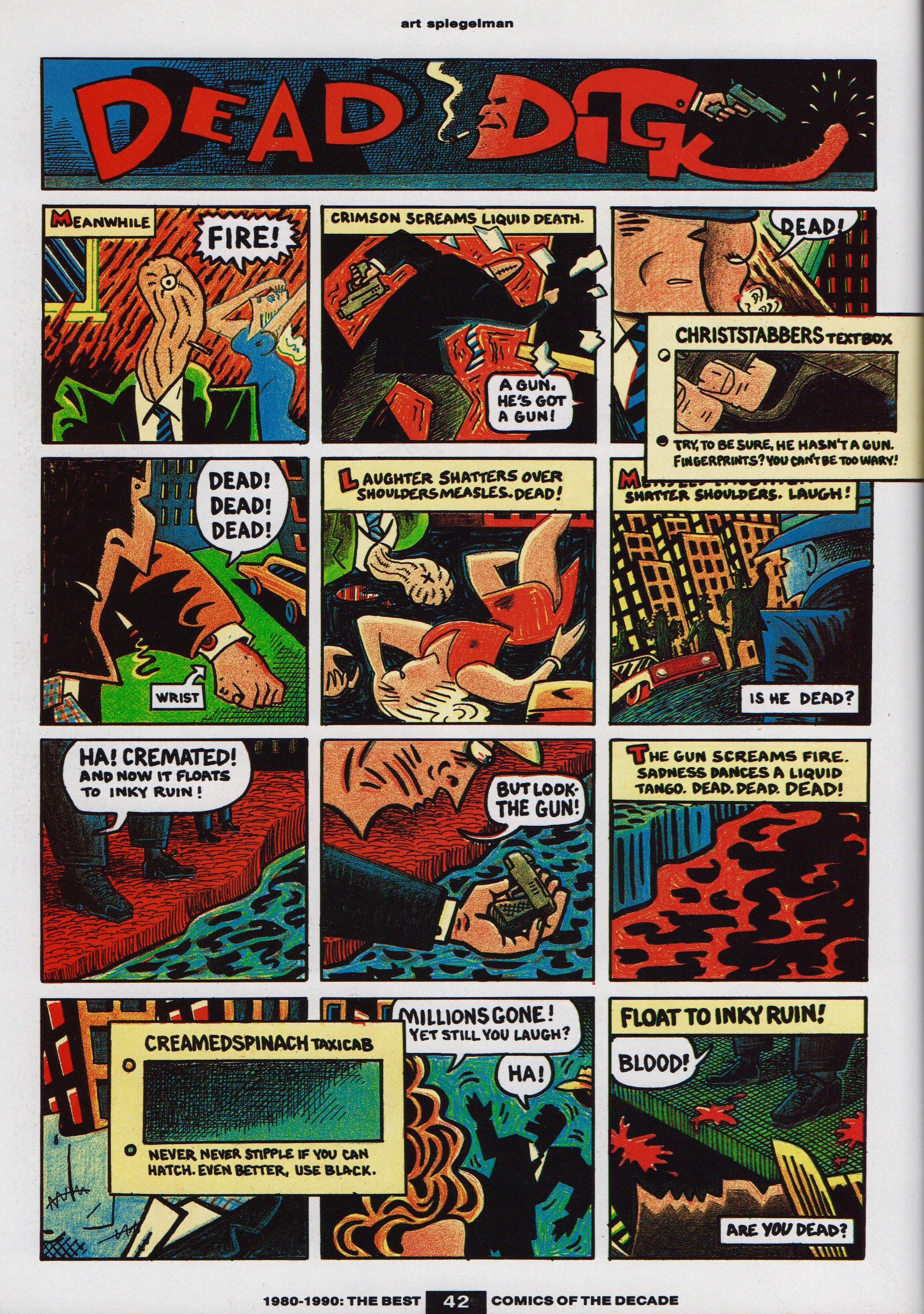
“Dead Dick” by Art Spiegelman, 1989. From The Best Comics of the Decade: 1980-1990, Vol. 1, Fantagraphics Books, 1990. Originally published in RAW vol. 2, #1, 1989.

“Dead Dick” by Art Spiegelman, 1989. From The Best Comics of the Decade: 1980-1990, Vol. 1, Fantagraphics Books, 1990. Originally published in RAW vol. 2, #1, 1989.
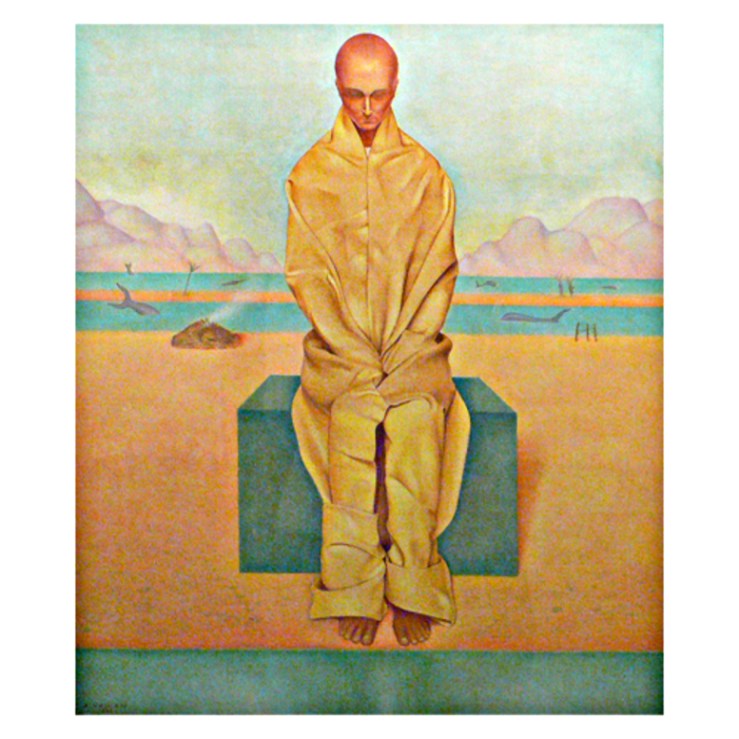
L’esiliato (The Exiled), 1928 by Arturo Nathan (1891-1944)
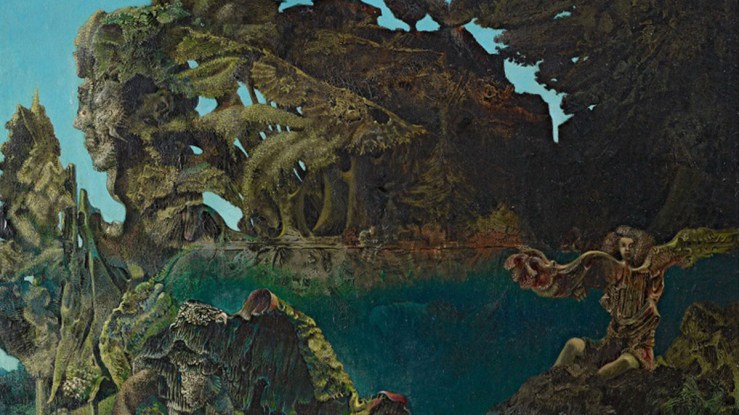
Swampangel, 1940 by Max Ernst (1891-1976)

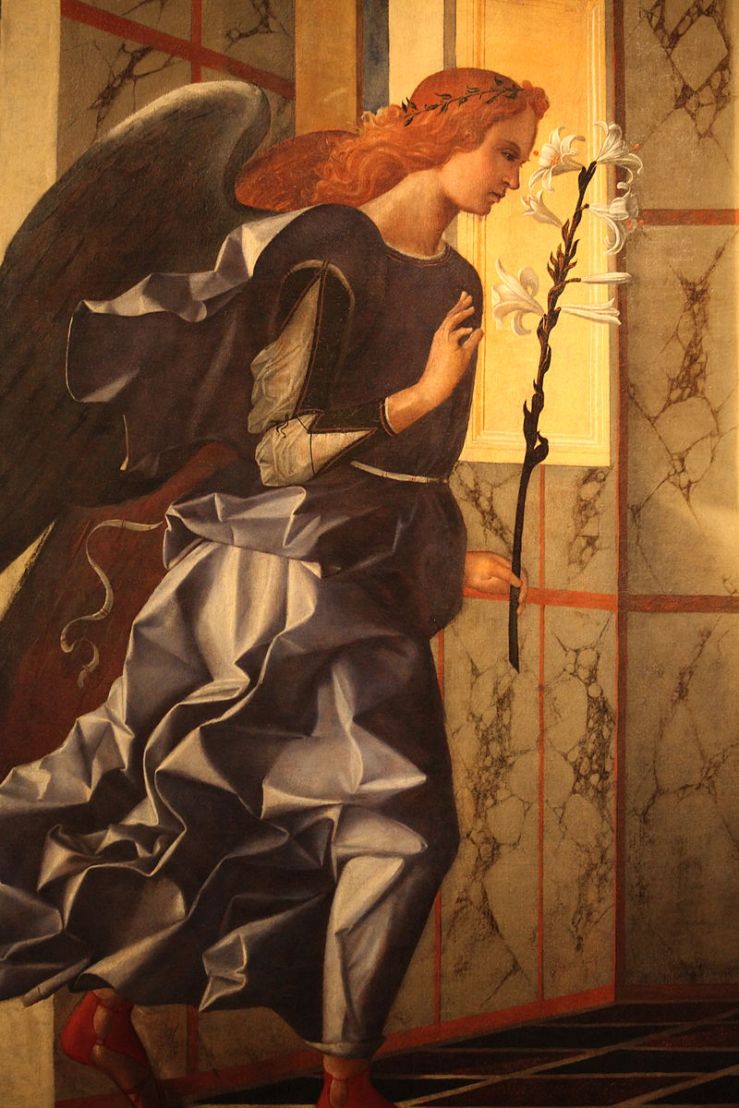
Angel of the Annunciation (detail), c. 1500 by by Giovanni Bellini and workshop (c. 1430-1516)

Still Life with a Figure 1940 by Balthus (1908–2001)

Eve Tempted by John Roddam Spencer Stanhope (1829–1908)
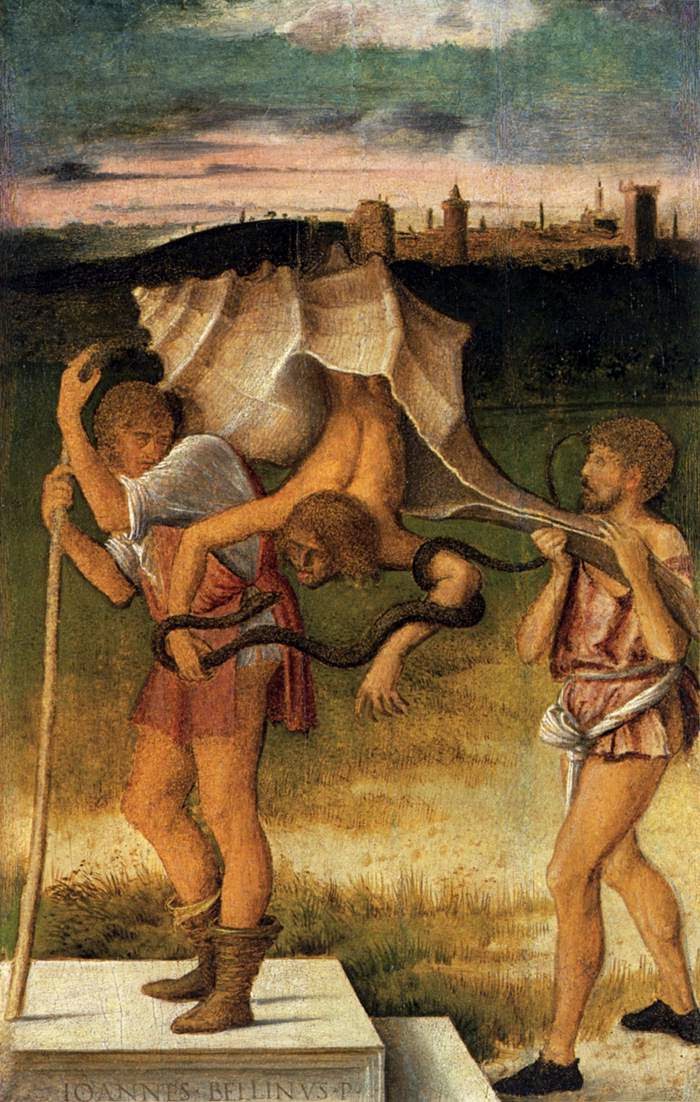
Falsehood (or Wisdom) from Four Allegories, c. 1490 by Giovanni Bellini (c. 1430-1516)
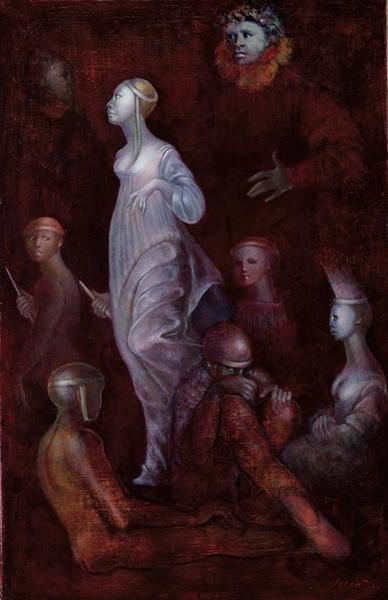
Mémoire Des Fragments Passés (Memory of Past Fragments), 1984 by Leonor Fini (1908-1996)
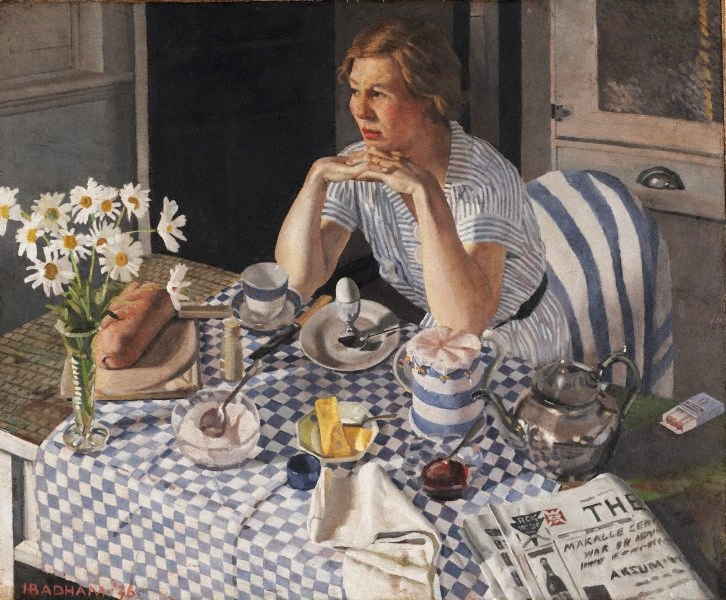
Breakfast Piece, 1936 by Herbert Badham (1899-1961)

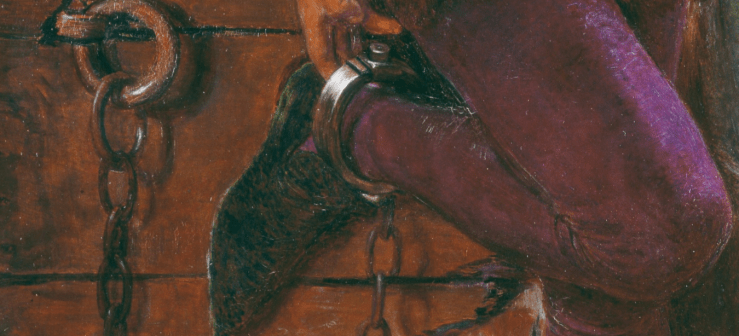
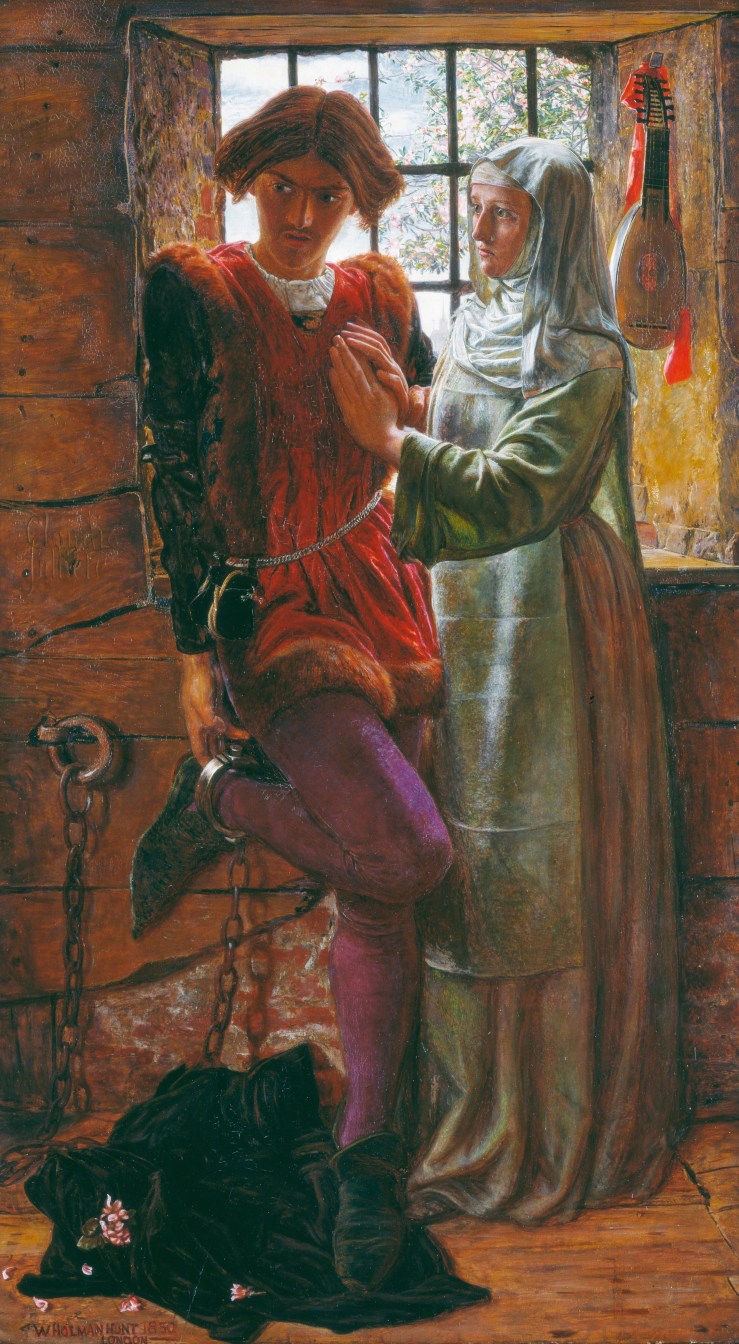
Claudio and Isabella, 1850 by William Holman Hunt (1827–1910)
From William Shakespeare’s Measure for Measure, Act 3, Scene 1:
ISABELLA
Be ready, Claudio, for your death tomorrow.
CLAUDIO
Yes. Has he affections in him,
That thus can make him bite the law by the nose,
When he would force it? Sure, it is no sin,
Or of the deadly seven, it is the least.ISABELLA
Which is the least?
CLAUDIO
If it were damnable, he being so wise,
Why would he for the momentary trick
Be perdurably fined? O Isabel!ISABELLA
What says my brother?
CLAUDIO
Death is a fearful thing.
ISABELLA
And shamed life a hateful.
CLAUDIO
Ay, but to die, and go we know not where;
To lie in cold obstruction and to rot;
This sensible warm motion to become
A kneaded clod; and the delighted spirit
To bathe in fiery floods, or to reside
In thrilling region of thick-ribbed ice;
To be imprison’d in the viewless winds,
And blown with restless violence round about
The pendent world; or to be worse than worst
Of those that lawless and incertain thought
Imagine howling: ’tis too horrible!
The weariest and most loathed worldly life
That age, ache, penury and imprisonment
Can lay on nature is a paradise
To what we fear of death.

I’LL SEE YOU AGAIN IN 25 YEARS
Chevron tiles swirl into swaying lush red curtains, into an impressionistic recap, into the framed and cabineted picture of Our Girl, into the opening bars of Angelo Badalamenti’s “Falling,” and we are back in Twin Peaks.
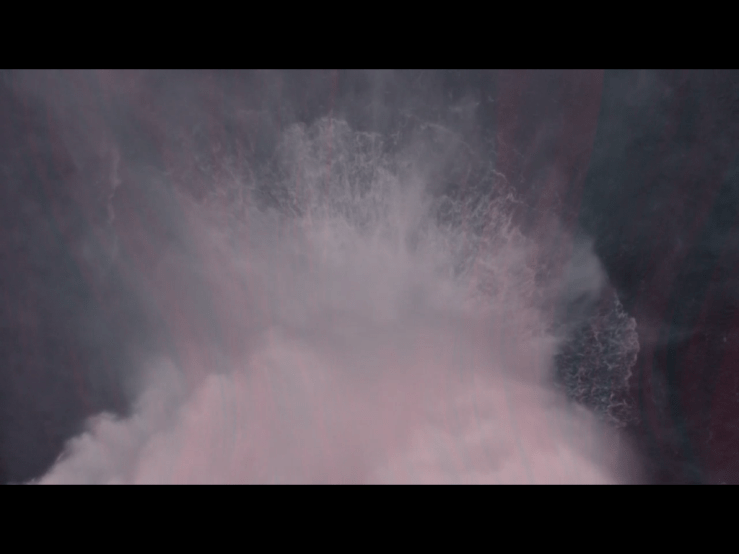
THE OPENING TITLES
Well, I shivered. I wish the opening titles had gone on longer.
The twin waterfalls cascade into silk fire curtains, and then we’re back on the dizzying floor, chevrons swirling into black. The red room.
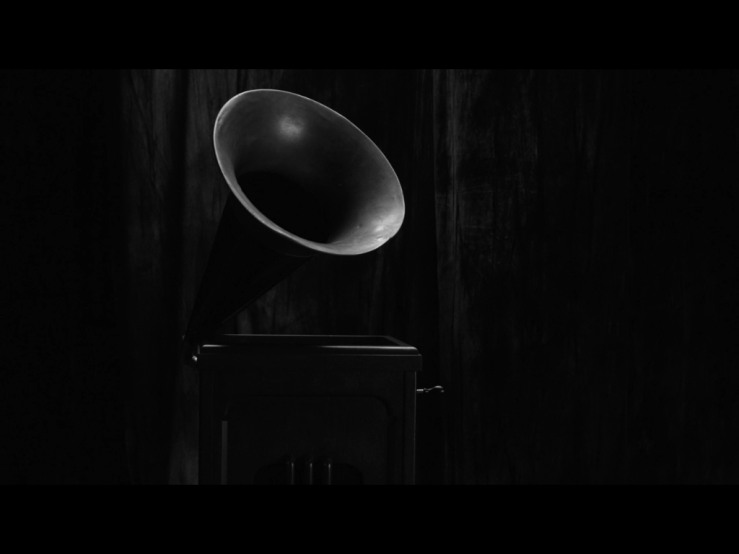
THE GIANT
The Giant speaks to Special Agent Dale Cooper. He tells him to “Listen to the sounds,” strange scrapings emanating from an old phonograph.” Is this the Black Lodge? “It is in our house now,” we learn. (But what is the “It”?). The Giant seems to send Cooper on a mission: “Remember 430. Richard and Linda. Two birds…with one stone.”
SHOVELS
Dr. Lawrence Jacoby, still sporting spectacles of varying hues, obtains shovels in a remote mountain forest location. The scene is slow, the sound of the wind in the tall trees seems just as important as the few lines of dialogue here. We’re not really in Twin Peaks yet, but we’re not far.
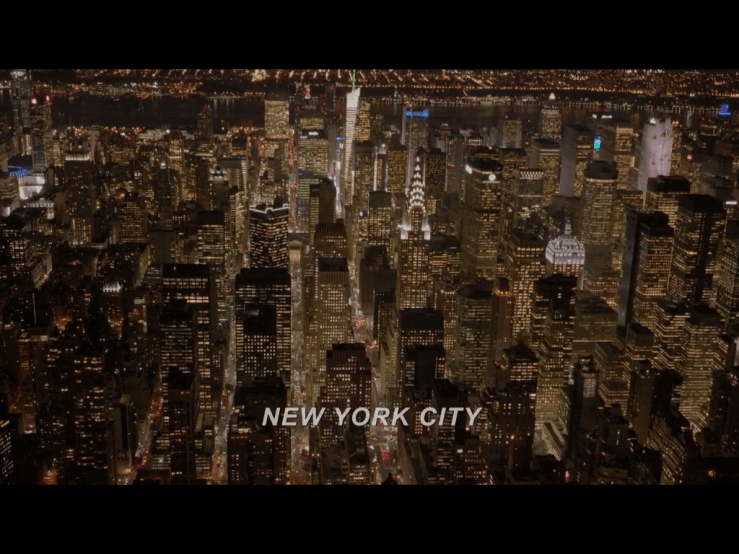
NEW YORK CITY
Oh, we’re in New York City.
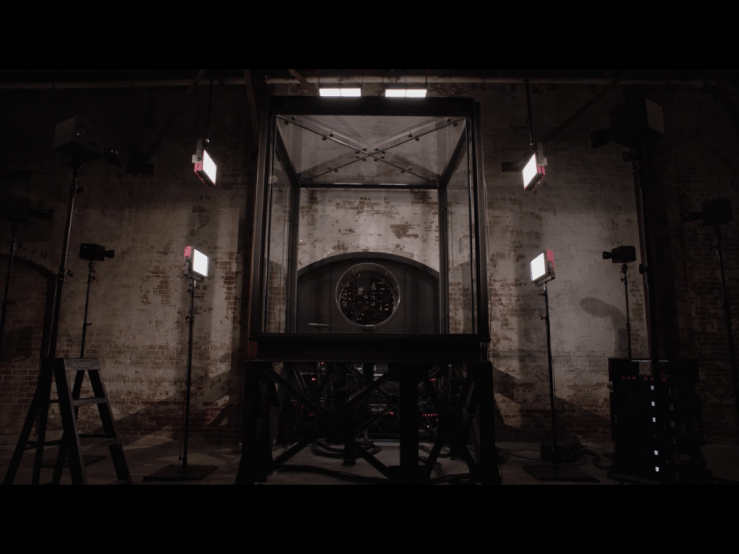
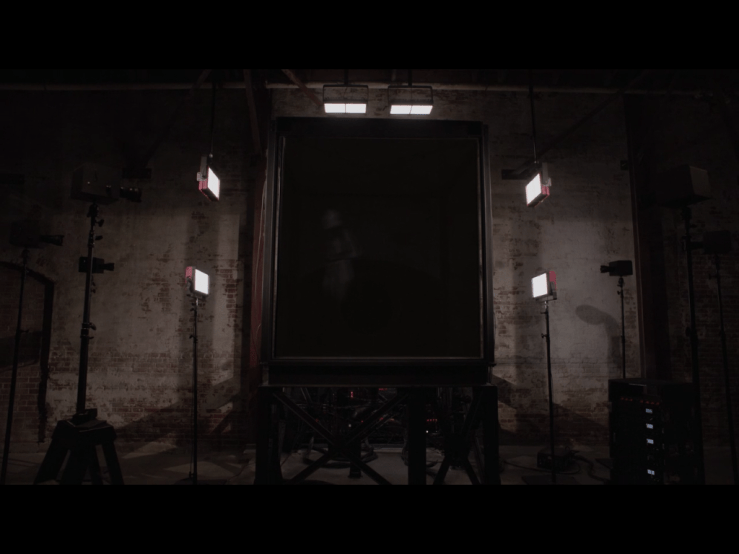
THE GLASS BOX
We’re out of Twin Peaks. The lighting, staging, colors, the low rumbling hum in the background—Lynch paints something here closer to his films after Fire Walk With Me—something sharper, blacker, browner than the soft edges of the original Twin Peaks run.
COFFEE
Tracey brings coffee. Tracy’s curious about what’s behind all those locked doors. Pandora. “You’re a bad girl Tracey.” There’s no pie in the scene, and the coffee is not in the wholesome mugs we might find at, say, the Double R Diner.
THE GREAT NORTHERN HOTEL
The Horne Brothers are back. Ben survived the last episode of Season 2, apparently (But what about Audrey Horne?!). Ashley Judd is in Twin Peaks now. Jerry Horne has a weed business. There’s a zaniness to the scene, notes of preciousness even—we are back in Twin Peaks, in Twin Peaks.
THE TWO SHERIFF TRUMANS
There are two Sheriff Trumans. “One is sick and the other is fishing,” Lucy—still the receptionist of the Twin Peaks Sheriff’s Office a quarter of a century later–informs us. The quirky vibes of The Great Northern Hotel carry over. But really, Where is Sheriff Truman? Could “sick” and “fishing” be taken as metaphors? Are there literally two Trumans, somehow both Sheriffs?
INTO THE NIGHT
Twin Peaks’s zany daymode could be read as a parodic inversion of television tropes; a quarter century later, it’s harder to see these inversions, simply because television as a medium (in storytelling, but more importantly, in aesthetics) has caught up to Twin Peaks. The zaniness has a twin—the sinister night, often equally manic, often casually brutal.
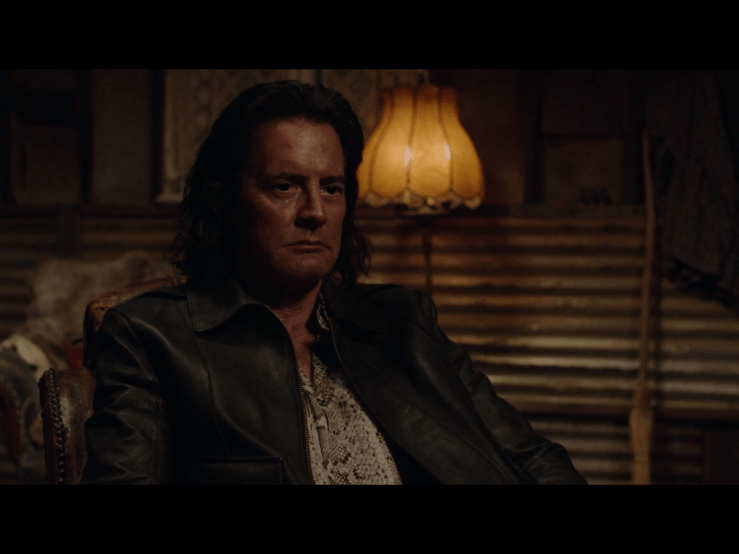
DARK COOPER
Hooboy.
David Foster Wallace once described Kyle MacLachlan as “potato faced,” and I’ll admit that I have a hard time seeing him as a sinister figure. He’s no Leland Palmer (or Bob), but he wears his weight well in a scene that tip toes the line between grotesquerie and cartoonish parody. Distortion is necessary.
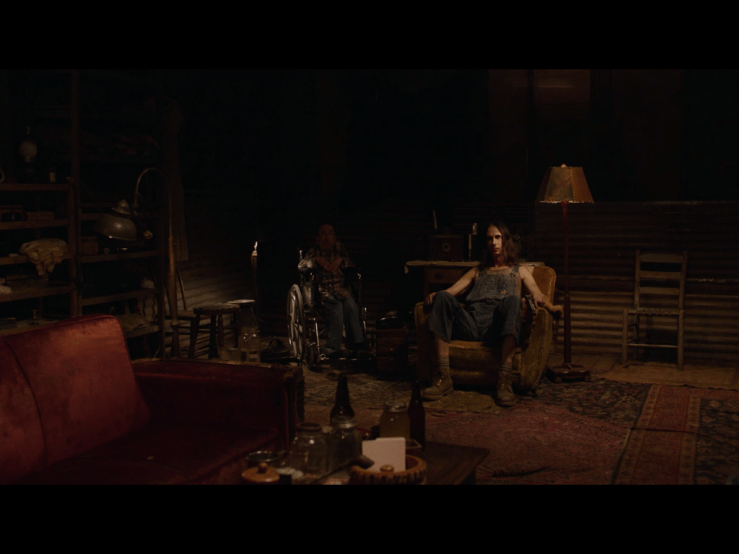
Dark Cooper—“Mr. C,” as moonshine-swilling addresses him—comes to collect two teens–Ray and Darya—for what? Are these doppelgängers of Richard and Linda? They go into the night, and we are in Twin Peaks.
MORE COFFEE
We’re back in New York.
Tracey returns with coffee and sneaks her way into the locked room with the glass box and young man. We get something resembling exposition—a billionaire pays the young man to watch the glass box. “We’re not supposed to say anything about this place or that glass box.”
SEX & VIOLENCE
Tracey and the young man imbibe a bit of coffee, make out, and then she disrobes. Sex ensues. We are clearly in the realms of premium pay cable, and not the American Broadcasting Company.

The glass box fills with a black atmosphere, and a ghostly humanoid appears. The wraith descends on the couple and attacks them. Was Tracey allowed in to the locked room as a kind of bait?
This is perhaps the goriest thing I can recall in a scene directed by Lynch.

BUCKHORN, SOUTH DAKOTA
We are not in Twin Peaks, but parts of Buckhorn definitely feel like Twin Peaks—there’s a quirkiness here, an at-times belabored zaniness, and even a slowness to the South Dakota scenes. At this point in “My log has a message for you,” we perhaps realize that Mark Frost and David Lynch have no intention of milking nostalgia; they’re going to tell a new story, one with strange new strands. There’s a lot of material on the table by now, here in the episode’s second half. Jane Adams, who I think is a fantastic actress, is the detective who shows up to investigate a murder scene—a woman’s head, missing an eye, paired with a headless male body. Somehow Buckhorn and New York City will connect back to Twin Peaks.
MY LOG HAS A MESSAGE FOR YOU
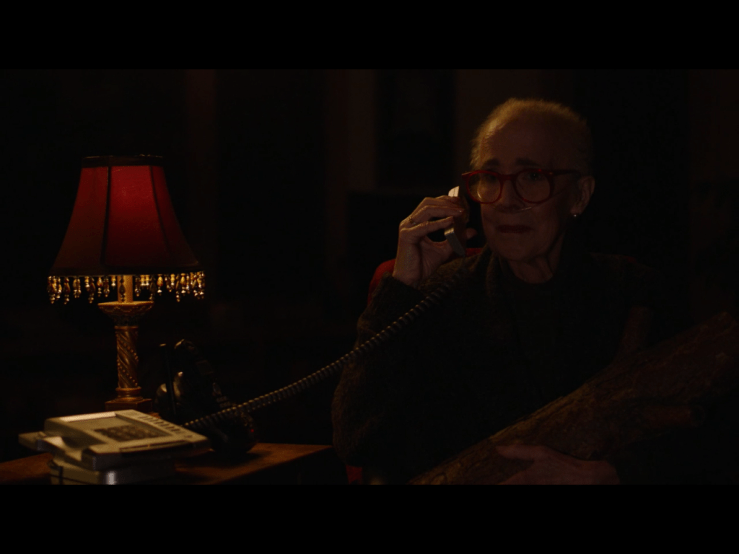
“Something is missing and you have to find it. It has to do with Special Agent Dale Cooper,” the Log Lady tells Deputy Hawk. She tells him that he will find it by way of “something to do with your heritage.” A reference to the Black and White Lodge? The Giant sends Cooper on a mission; the Log Lady sends Hawk on a mission.
BACK IN BUCKHORN
Jane Adams is really underutilized here. She turns up Principal Hastings as a murder suspect. Hastings is played by Matthew Lillard (who seems so much older here than my memory has preserved him).
SOMETHING IS MISSING
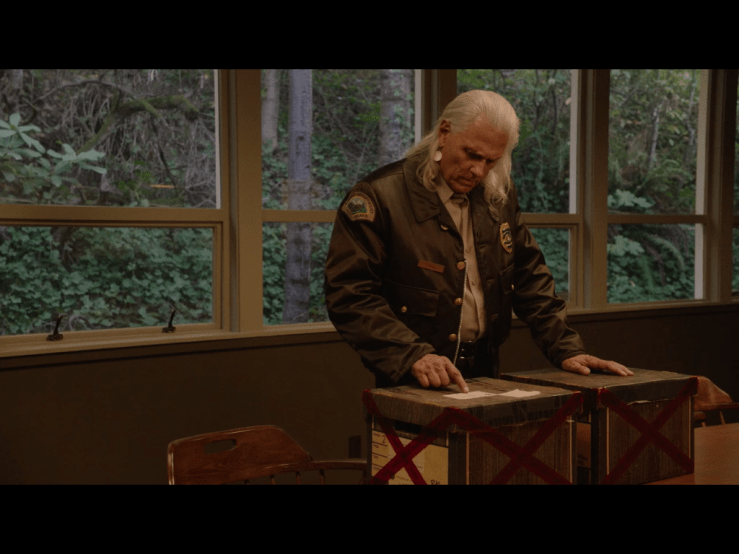
“But Agent Cooper is missing,” Lucy informs Hawk. She helpfully reminds him, in what I take to be a piece of jokey exposition that falls in line with the original series’ jabs at television tropes, that Agent Cooper has been missing for 24 years, since before the birth of her son Wally. (Recall that the second season ended with Lucy very, very pregnant). Hawk, who appears to be in charge of the Sheriff’s Office, tells Andy to pull out all the old files on Cooper. Hawk promises to bring coffee and donuts the next morning.
BACK IN BUCKHORN
Principal Hastings is interrogated and he comes across guilty as hell. The cops get a search warrant. Detectives, one with an oh-so-Lynchian broken flashlight, search Hastings’s Volvo. In the truck, under a cooler, they discover a scrap of flesh. (I can’t help but see here an echo of MacLachlan’s Jeffrey Beaumont finding a severed ear in Blue Velvet.
DID I WATCH THE NEXT EPISODE RIGHT AWAY?
I wanted to but no, my wife had to go to sleep, but I’ll watch it tonight.
FEELINGS
Lynch’s great strength is his evocation of color, light, and sound to create mood. The estrangement this mood often produces can threaten to overwhelm the narrative, and can also create the impression of tonal disjunctions—between characters, characterization, dialogue, motivation, and all of the other things we expect a television show should do. My primary interest in Lynch’s work is the feeling it produces in me, and the finest moments in “My log has a message for you” produced those feelings—feelings that words don’t refer to so easily.
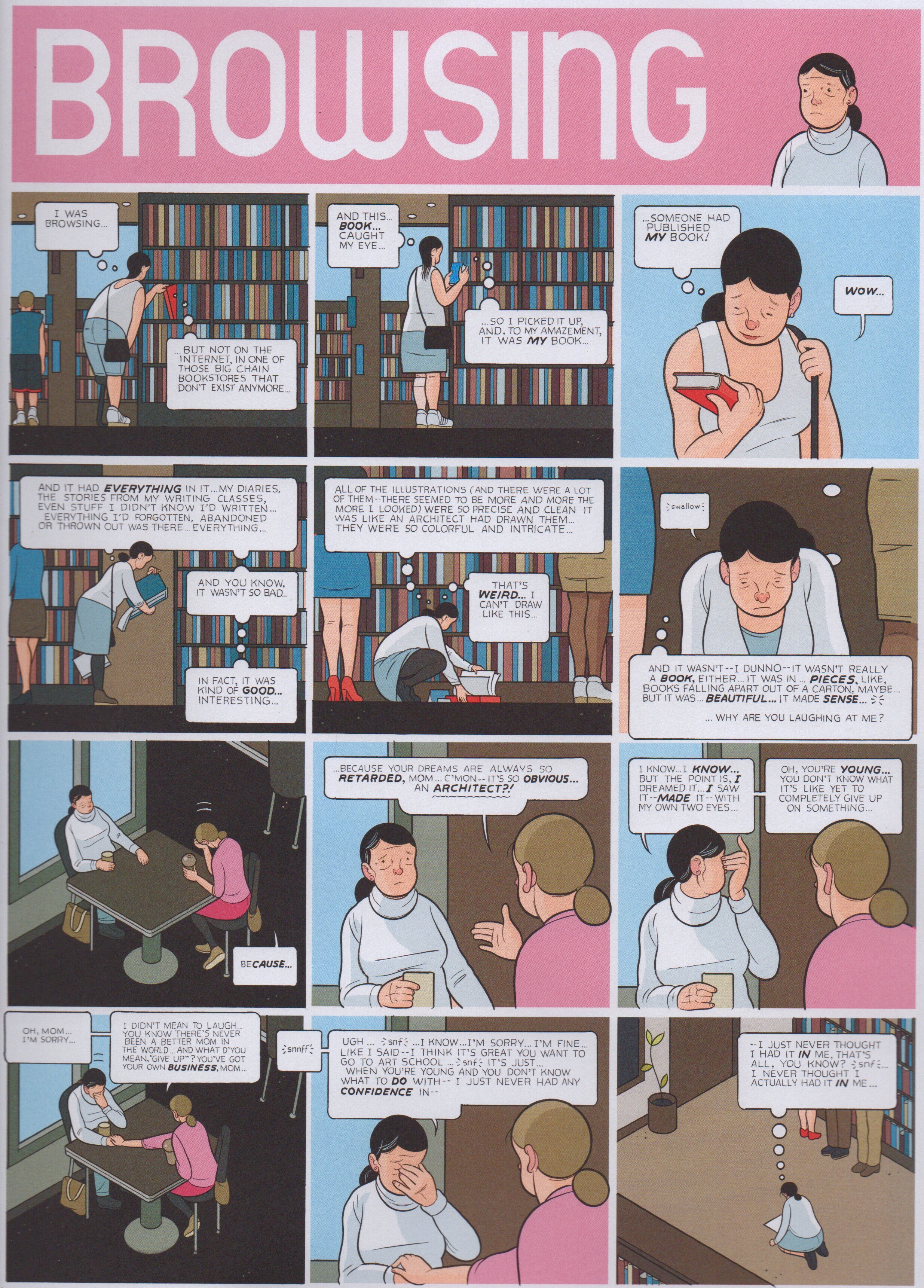
Today’s Sunday Comics entry is a page from Chris Ware’s magnificent 2012 novel Building Stories (Pantheon Books).

I had occasion to look through Building Stories again this week. I had to paint a room, which required moving books from shelves, which meant unshelving Building Stories, which unwieldy beast that it is, has been covered in other books for a few years. Building Stories takes the form of 14 different sized books in a box—it’s pretty hard to shelve in any accessible way, which is a shame (but also a pleasure). Ware’s opus seems to me one of the best American novels of the past decade, but I think its greatness tends to get overlooked because a) people are still prejudiced against comics and b) it challenges all the “reading rules” we bring with us to novels—there’s not a “right way” to read the novel. You have to put it together your self, in a sense. Anyway, for me the page above, which is the last page of the chapter called “Disconnect,” is the “conclusion” of the novel, a sort of metacommentary epilogue that (somehow) ties the narrative threads together in a moving and satisfying “end.”


Zatruta studnia z chimerą (Poisoned Well with Chimera), 1905 by Jacek Malczewski (1854-1929)



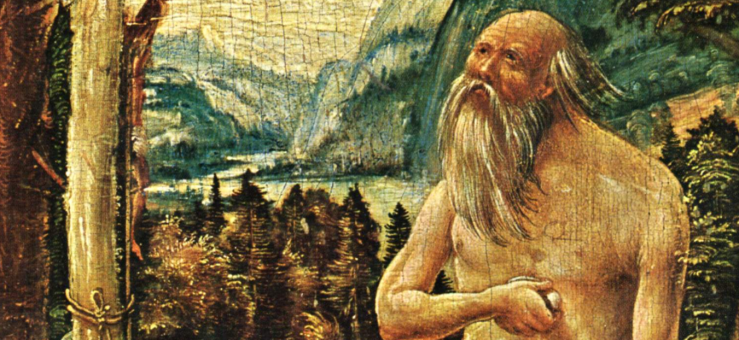
Büssender Hl. Hieronymus (Penitent St. Jerome), 1507 by Albrecht Altdorfer (c. 1480-1538)

Portrait of Edith Schiele, the Artist’s Wife, 1915 by Egon Schiele (1890-1918)

Strawberries, 1906 by Octav Bancila (1872-1944)


 Biblioklept