The Mediterranean Cat — Balthus

Pasolini’s Decameron

Moonsiren — Leonora Carrington

tumblr_llug6mAJKX1qcnlh2o1_1280

Little Nemo Visits the Moon — Winsor McCay

Little_Nemo_moon

Romancing the Casserole — Mary Pratt

Gothic Novel — Georgy Kurasov

Georgy Kurasov Gothic Novel 40 x 30

Seated Figure of Summer — Giuseppe Arcimboldo

The Finery of the Storm — Rene Magritte

The Creation of the World and the Expulsion from Paradise — Giovanni di Paolo

Have you met a typical nonperson lately? (William H. Gass)

Have you met met a typical nonperson lately? Then say hello, now, to your neighbor. He may be male, but his facial expressions have been put on like lipstick and eyelashes. His greeting is inevitable; so is his interest in the weather. He always smiles; he speaks only in cliches; and his opinions (as bland as Cream of Wheat, as undefined, and—when sugared—just as sweet) are drearily predictable. He has nothing but good to say of people; he collects his wisdom like dung from a Digest; he likes to share his experiences with “folks,” and recite the plots of movies. He is working up this saccharine soulside manner as part of his preparation for the ministry.

These are the “good” people. “Bad” people are unreal in the same way.

Nonpersons unperson persons. They kill. For them no one is human. Like cash registers, everyone’s the same: all will go ding and their cash drawers slide out when you strike the right key.

So I don’t think that it’s the message of a work of art that gives it any lasting social value. On the contrary, insisting on this replaces the work with its interpretation, another way of robbing it of reality. How would you like to be replaced by your medical dossier, your analysts’s notes? 

–More from William H. Gass’s essay “The Artist and Society” (1968). Collected in Fiction and the Figures of Life.

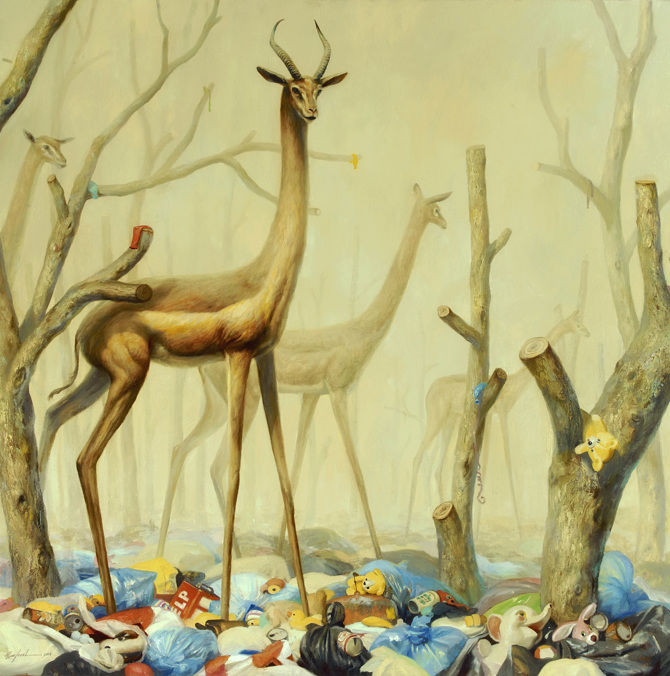
Stilts (Adaptation) — Martin Wittfooth

stilts_web

A Midsummer Night’s Dream — Giovanni Boldini

Why are works of art so socially important? (William H. Gass)

Why are works of art so socially important? Not for the messages they may contain, not because they expose slavery or cry hurrah for the worker, although such messages in their place and time might be important, but because they insist more than most on their own reality; because of the absolute way in which they exist. Certainly, images exist, shadows and reflections, fakes exist and hypocrites, there are counterfeits (quite real) and grand illusions – but it is simply not true for the copies are as real as their originals, that they meet all of the tests which I suggested earlier. Soybean steak, by God, is soybean steak, and a pious fraud is a fraud. Reality is not a matter of fact, it is an achievement; and it is rare – rarer, let me say – than an undefeated football season. We live, most of us, amidst lies, deceit, and confusions. A work of art may not utter the truth, but it must be honest. It may champion a cause we deplore, but like Milton’s Satan, it must in itself be noble; it must be all there. Works of art confront us the way few people dare to: completely, openly, at once. They construct, they comprise, our experience; they do not deny or destroy it; and they shame us, we fall so short of the quality of their Being. We live in Lafayette or Rutland – true. We take our breaths. We fornicate and feed. But Hamlet has his history in the heart and none of us will ever be as real as vital, as complex and living as he is – a total creature of the stage. 

–More from William H. Gass’s essay “The Artist and Society” (1968). Collected in Fiction and the Figures of Life.

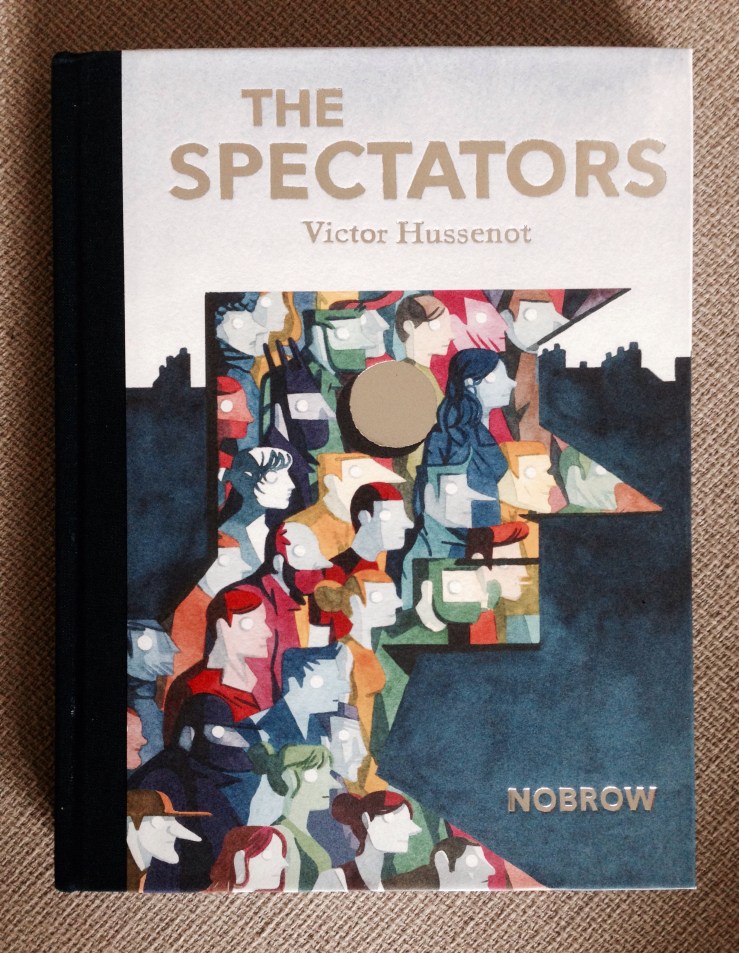
The Spectators (Beautiful book acquried 6.11.2015)

image

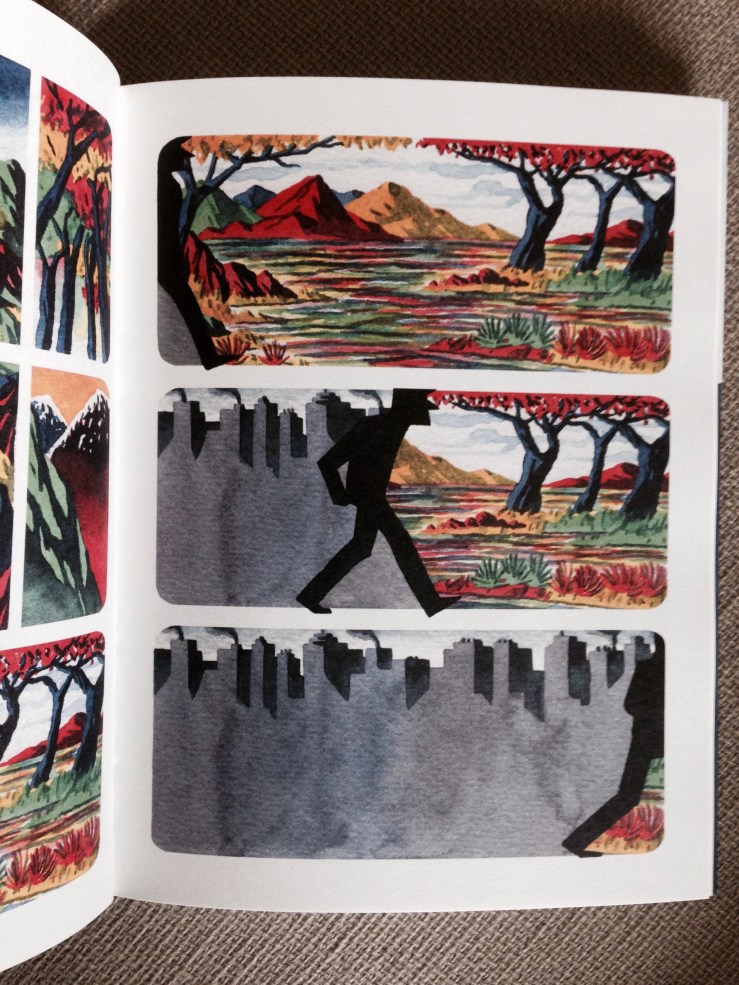
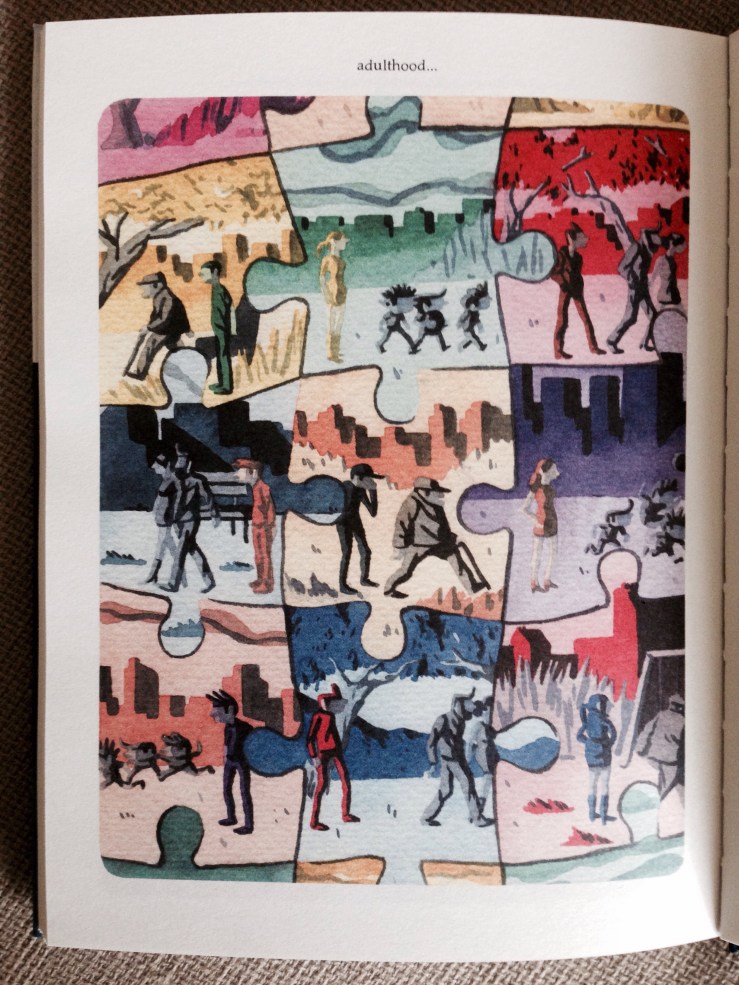
Victor Hussenot’s The Spectators is a gorgeous new graphic novel from Nobrow. I’ve read it twice now (“read” as a verb seems inadequate but—), and will get to a proper review later this week. Excellent stuff. Nobrow’s blurb:

What if we are merely shadows, our characters defined by a simple inflection of light? The realm of possibilities opens up, because in our world we are nothing but spectators.

The Spectators unfolds as a poetic and philosophical introspection on the nature of man. Victor Hussenot‘s palette is awash with subtle colour, gently carrying the narrative and allowing the reader to envelop themselves in the lyricism of the work. Reminiscent of French New Wave cinema with its clipped dialogue, gentle pacing and departure from a classic narrative structure, The Spectators is an exciting new graphic novel.

image image

Portrait of the Artist’s Father

Repin

Degas

Escher

Freud

Continue reading “Portrait of the Artist’s Father” →

The Bus — Paul Kirchner

l3MHMNS - Imgur