Riff on Goya’s Painting Highwaymen Attacking a Coach

highwaymen-attacking-a-coach-1787

1. Francisco Goya’s Asalto de ladrones — Highwaymen Attacking a Coach in Ingles, 1786-87. Oil on canvas. 169 by 127 cm. Currently in some lucky soul’s private collection.

2. I love this painting.

3. It’s easy—and probably correct—to call Goya’s work dark. We can see that in his engraving series The Disasters of War and Caprichos, or his famous works Third of May 1808 or Saturn Devouring His Son. And the darkness, the heaviness, in these works, isn’t just in the subject but also on the canvas, in the grooves of the etchings. The blacks and browns blister; the acid goes to work.

4. It would be wholly wrong to suggest that Goya only painted the dark—but even his most joyful paintings, like Playing at Giants or The Swing contain a dark kernel. (Or, perhaps, maybe I find that kernel there, suggested by his oeuvre).

5. The blue skies of Playing at Giants and The Swing both pale in comparison to the top third of Highwaymen Attacking a Coach.

1

That beautiful bright blue sky is somehow the darkest aspect of this very dark painting, a terrible, terrible joke, an ironic reminder of glorious nature’s inglorious indifference to misery, suffering, murder, rape.

6. Moving down—the tree: long, twisting, phallically jutting into the blue sky. It seems to crookedly shift in the wind. Softly echoed by those happy little clouds it takes us down to the vernal forest floor, where we seem to be just-off-the-beaten-path.

2

7. I’ll admit to a certain fascination with the concept of highway robbery—the perils of the path, the road as a dangerous place, Barry Lyndon, Robin Hood, etc.—but what Goya gives us here is shock and horror.

8. If we continue to move our eyes down from that blue sky, we find, just off-center, a gun-wielding usurper perched on a lovely gilded carriage, its mules patiently stalled.

3

9. Left to right: Murder victim number one, his jacket open, torn, his ribs and breast bloodied—he’s already a corpse, but his naked skin suggests something even more sinister.

4

10. Just beside victim number one, a passenger fights for his life against a bandit brandishing a knife. Their twisted, violent grappling prefigures the threat of rape that lurks under the painting.

5

11. To the right of this strange couple, another couple—aristocratic mother-father team—plead for their lives, their palms facing up to that blue sky. The man’s cloak is earth-brown, and the woman’s cape black, but between them rests—I don’t know? Some pink bundle. The hem of the woman’s dress? Something bloodied? The suggestion of infanticide?

6

12. We find their guard uselessly sprawled to the right, his worthless sword neatly parallel to the gun under the grappling couple, blood trickling from under his blood-red coat. As Robert Hughes points out in his long biography of Goya, the guard’s corpse figures “the same pose that Goya would repeat several times in future drawings and paintings to indicate a dead body, so that it became part of his shorthand for death”; Hughes goes on to remind us that this sprawl is the same one we can see of “the dead man facedown to the left of the French firing squad in the Tres de Mayo, his hands scrabbling palms-down to the earth.”

7

13. Immediately above the guard, and to the viewer’s left of him, stands his likely assassin, his chest bared and his gun (jutting from the pelvis) now confidently trained on our hapless couple.

8

14. Gunman #2 is not half so menacing though as his partner who occupies the low dark center of the painting.

9

His hat cocked ever-so-slightly to the right, this central bandit, clothed in greenish-gold garb, raises a rope in his left hand. The rope signifies every awful kind of horror the viewer cares (“cares” is not the right verb) to imagine, but it’s the action that bandit performs with his right hand that is somehow the most menacing gesture of the painting: We can almost hear him coo, “Shhhhhhhh…”

15. And our poor victims? Their hands up, in supplication, what do they have to look to? Perhaps, like the attendant viewer, they return to the sky blue sky.

z

Seated Figure of Summer — Giuseppe Arcimboldo

Stork — Albrecht Dürer

Admiral Fudge Comes Back to Earth Again (Harry Grant Dart)

explorigator-2

(Via; On The Explorigator’s connection to Thomas Pynchon’s Against the Day).

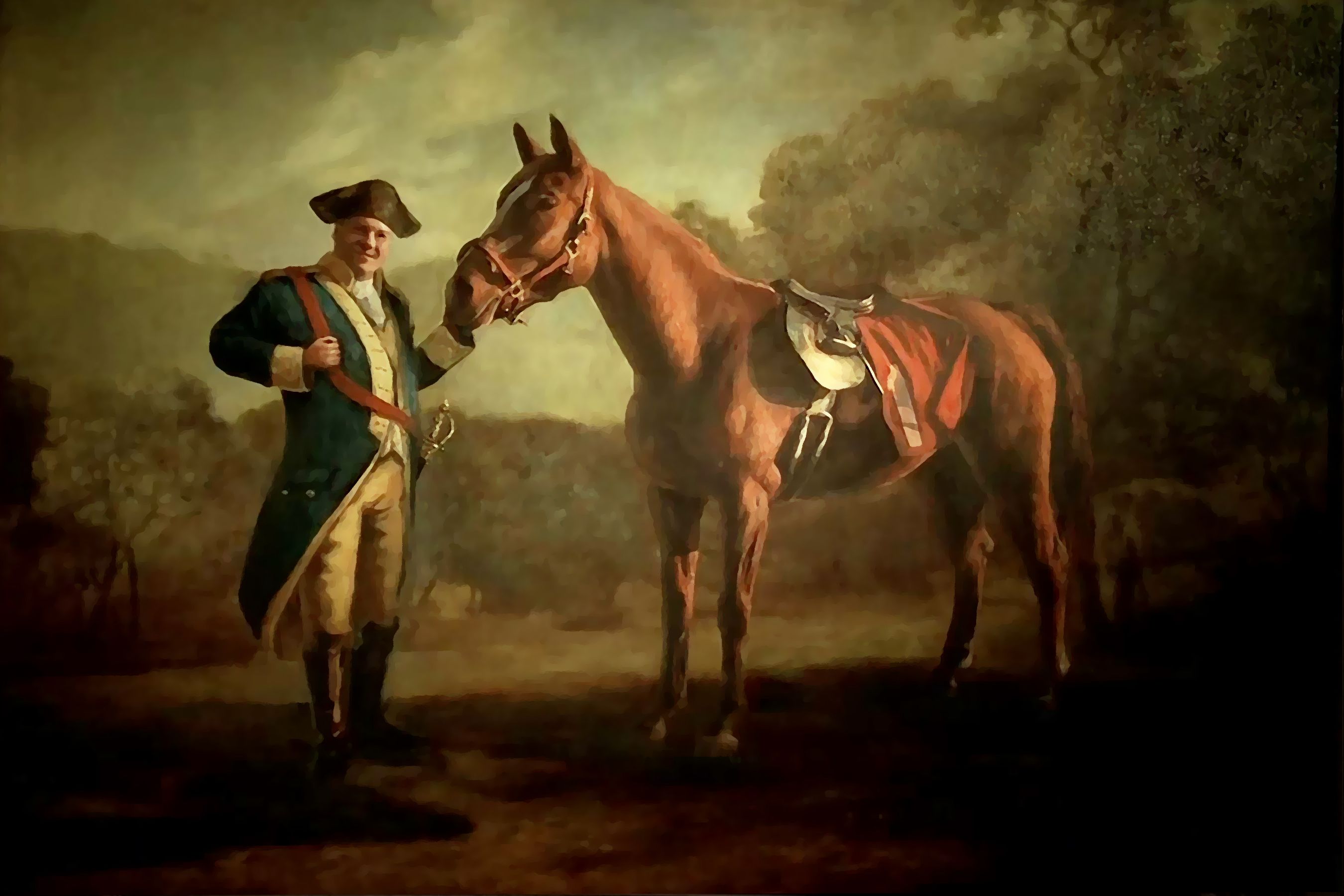
Portrait of Tony Soprano as Napoleon Bonaparte Accompanied by His Steed Pie-O-My

tony

The Dream — Eva Gonzales

RIP James Gandolfini

ducks

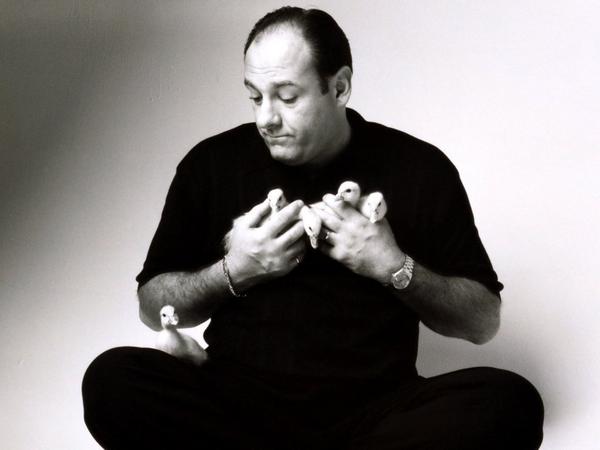
RIP James Gandolfini, 1961-2013

RIP to James Gandolfini, who brought sensitivity and depth to the roles he played. I don’t think The Sopranos could have existed without him. He made me laugh and cry so often in that role, never more than at the end of The Sopranos, where I experienced what I could only describe as catharsis.

Fool’s House — Jasper Johns

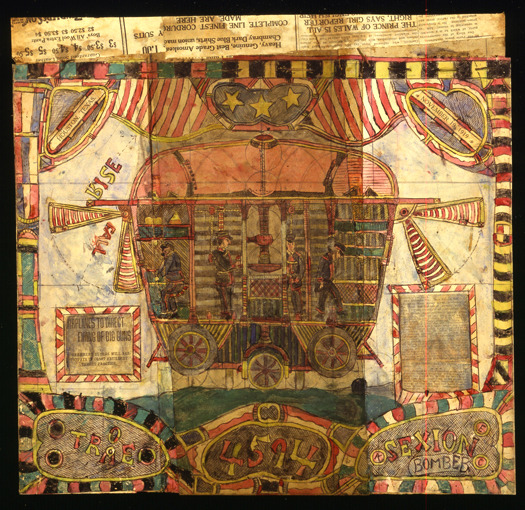
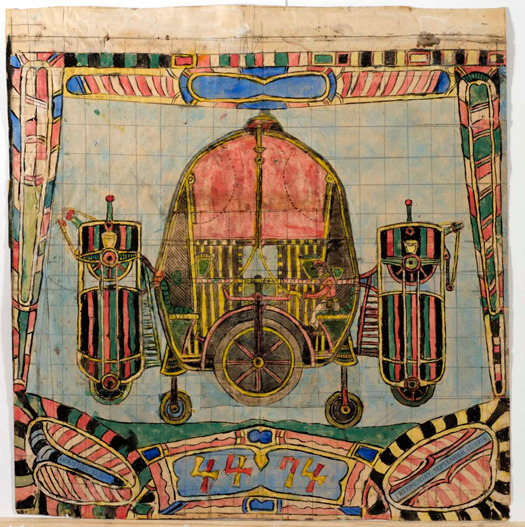
The Weird and Wonderful World of Charles A. A. Dellschau

03.17.13.17_525

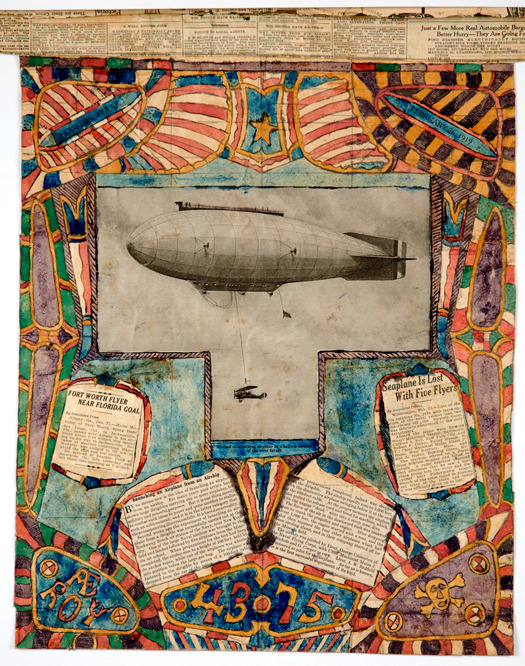
I was looking for an image to accompany a riff I wrote on Thomas Pynchon’s novel Against the Day. The riff circles around the skyship adventurers The Chums of Chance, characters who are both “real” in the novel and also “literary” — that is, they are the stars of dime novels that other characters in the novel read. I was hoping that maybe some creative soul had created a Chums of Chance book cover that I could use with the post. Through a few basic searches and a Metafilter board, I found my way to something far more intriguing—the strange watercolor and collage pieces of Charles August Albert Dellschau.

a

Here’s a little background on Dellschau (from John Foster’s excellent article–chock full of images!—at Observatory):

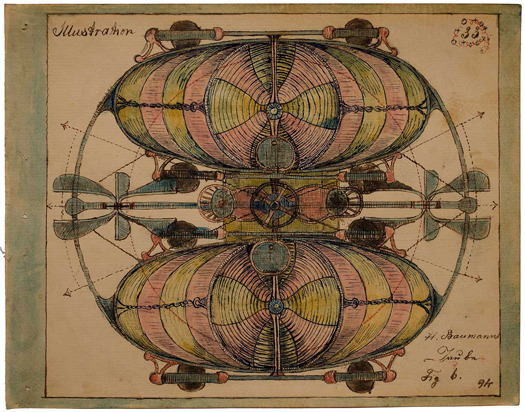
It turns out that the drawings/watercolors were the work of one Charles August Albert Dellschau (1830 – 1923). Dellschau was a butcher for most of his life and only after his retirement in 1899 did he begin his incredible career as a self-taught artist. He began with three books entitled Recollections which purported to describe a secret organization called the Sonora Aero Club. Dellschau described his duties in the club as that of the draftsman. Within his collaged watercolors were newspaper clippings (he called them “press blooms”) of early attempts at flight overlapped with his own fantastic drawings of airships of all kind. Powered by a secret formula he cryptically referred to as “NB Gas” or “Suppa” — the “aeros” (as Dellscahu called them) were steampunk like contraptions with multiple propellers, wheels, viewing decks and secret compartments. Though highly personal, autobiographical (perhaps!), and idiosyncratic, these artworks could cross-pollinate with the fiction of Jules Verne, Willy Wonka and the Wizard of Oz. The works were completed in a furiously creative period from 1899 to 1923, when air travel was still looked at by most people as almost magical. Newspapers of that period were full of stories about air travel feats and the acrobatic aerial dogfights of WWI were legend.

b

Verne, Oz, and steampunk are all clear comparisons. I’d add to them the manic spirit of Kurt Schwitters’s collages, the buzzing claustrophobia of Joseph Cornell’s boxes, and the cartoony contours of turn-of-the-century comics.It also reminds me of Luigi Serafini’s surreal cryptoencyclopedia, Codex SeraphinianusAnd of course, Dellschau’s work resonates strongly with Pynchon’s novel Against the Day, more ludic than lunatic. His work shows an obsession fueled by science and science fiction alike, as well as a frankly adolescent sense of line, proportion and color. I love it. See more here and here.

c

Dick Whittington’s Cat — Ub Iwerks

Afternoon Tea — Marie Bracquemond

Twain & Einstein in “Good Grief! Still More Wuthering Heights” (Mike Kupperman)

tumblr_mn2oqx0bnd1rw25u4o1_1280

(Via/more).

Pineapple and Cockroaches — Maria Sibylla Merian

The Execution — Carel Willink

Nu Ornithologique — Lucien Clergue

nu-orinthologique

Must we no longer believe in words? Since when do they express the contrary of what the organ that utters them thinks and wants?
Herein fies the great secret:

Thought is made in the mouth

— Tristan Tzara, from Dada Manifesto of Feeble Love and Weak Love

Surface Tension — Hollis Frampton

Studies on the Proportions of the Female Body — Albrecht Dürer