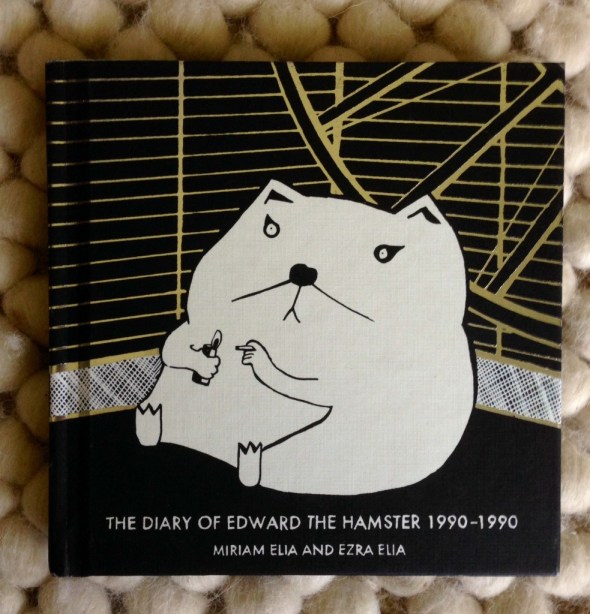
The Diary of Edward the Hamster 1990-1990 (Book Acquired, Some Time Last Month)

20131006-154358.jpg

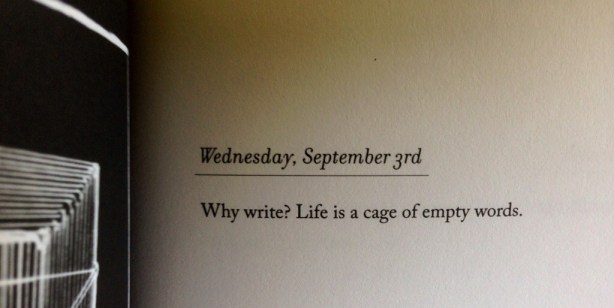
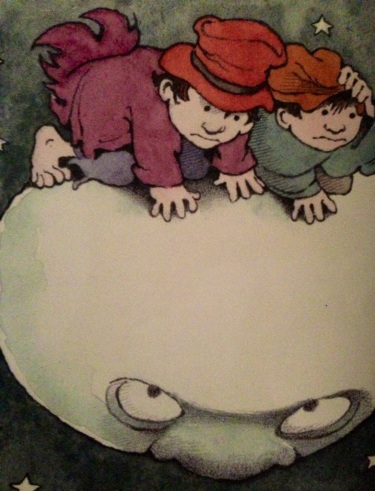
“What’s this cute little book?” my wife asked, picking up Miriam Elia and Ezra Elia’s short hardback novelty The Diary of Edward the Hamster 1990-1990. I’m sure this is the hoped-for reaction from the publishers and producers: the reader, attracted to the aesthetics of this small, square (and shiny!) picture book will pick it up and then laugh at its content—see, this hamster thinks, he feels, he writes. And he experiences ennui, existential boredom. Here is the book neatly summed up:

20131006-154406.jpg

The Diary of Edward the Hamster 1990-1990 is a one-note affair that delivers the same joke over 80 pages. The art is nice and the packaging is lovely, but the premise isn’t really that funny—certainly not funny enough to sustain over the book’s length (which is already pamphlet-short).

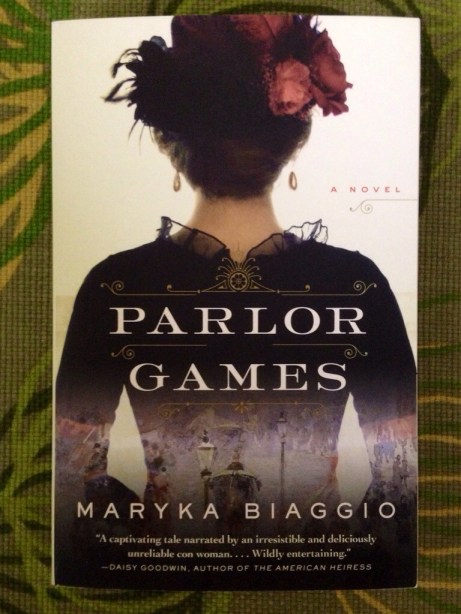
Parlor Games (Book Acquired, 9.15.2013)

20131006-154302.jpg

Parlor Games by Maryka Biaggio. Publisher Random House’s blurb:

It’s 1887, and eighteen-year-old May Dugas has ventured to Chicago in hopes of earning enough money to support her family. Yet when circumstances force her to take up residence at the city’s most infamous bordello, she chooses to use her feminine wiles to extract not only sidelong looks but also large sums of money from the men she encounters. Insinuating herself into high society, May lands a well-to-do fiancé—until, that is, a Pinkerton detective named Reed Doherty intervenes.

Reed has made it his mission to bring May to justice, and he pursues her across the world, from Shanghai to London and back, until he makes one last daring attempt to corner her. But May still has a few tricks up her sleeve, tricks that just might prove she’s one tough woman to catch.

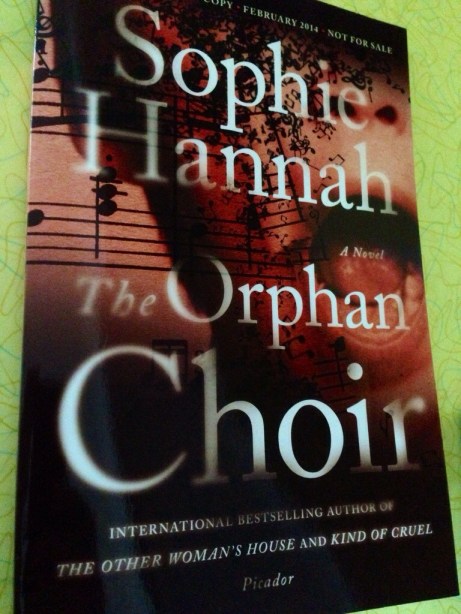
The Orphan Choir (Book Acquired, 9.17.2013)

20130924-200511.jpg

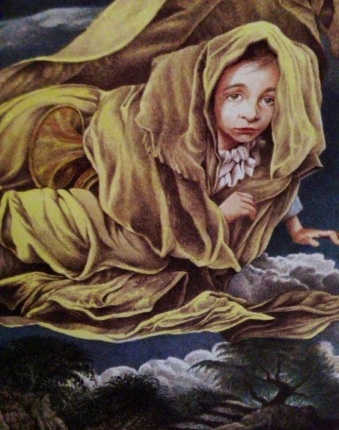
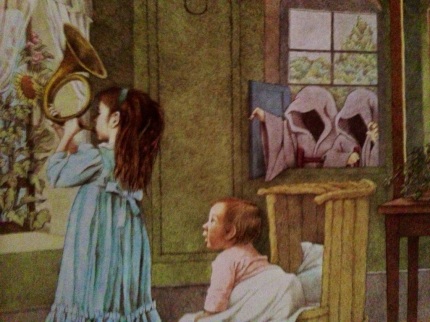
Sophie Hannah’s The Orphan Choir gets a U.S. release from Picador next year, so I grabbed the Australian blurb (Picador’s site doesn’t even list the book yet):

Louise is bereft. Her seven-year-old son Joseph has been sent away to boarding school against her wishes, and she misses him desperately. And the neighbour from hell is keeping her awake at night by playing loud, intrusive music. So when the chance comes to move to the country, she jumps at it as a way of saving her sanity. Only it doesn’t. Because the music seems to have followed her. Except this time it’s choral music, sung by a choir of children that only she can see and hear…

Never read Sophie Hannah but I’ve seen many of the spines of her books at the used bookstore I go to when I’m looking for Barry Hannah books.


The Séance Society (Book Acquired, 9.18.2013)

20130924-200501.jpg

Michael Nethercott’s The Séance Society. Blurbish review from Publisher’s Weekly:

Nethercott’s first full-length novel, a classically styled Holmesian whodunit set in 1956, introduces Lee Plunkett, an underemployed PI following reluctantly in his late father’s detective footsteps, and Mr. O’Nelligan, a charmingly low-key and literary-minded Irishman. Together they investigate the death of Trexler Lloyd, a rich eccentric, egomaniac, and patron of the arts of spirit communication, who appears to have been electrocuted at a private demonstration of “the Spectricator,” a device for speaking with the dead, at his home in Braywick, Conn. The plot manages to be twisty while proceeding logically, though the unanalyzed clues are often obvious enough that the reader must assume that Plunkett is none too clever and the smarter O’Nelligan is holding his cards close before the grand gathering and reveal. The household’s collection of psychics, servants, and ghosts are a colorful lot, but in the end are merely quirky where they could have been hilariously bold. Agent: Susan Gleason, Susan Gleason Literary Agency

The Antagonist (Book Acquired, 9.23.2013)

20130924-200527.jpg

The kind people at Random House sent a copy of Lynn Coady’s The Antagonist, which is new in trade paperback next month. Their blurb:

A piercing epistolary novel, The Antagonist explores, with wit and compassion, how the impressions of others shape, pervert, and flummox both our perceptions of ourselves and our very nature.

Gordon Rankin Jr., aka “Rank,” thinks of himself as “King Midas in reverse”—and indeed misfortune seems to follow him at every turn. Against his will and his nature, he has long been considered—given his enormous size and strength—a goon and enforcer by his classmates, by his hockey coaches, and, not least, by his “tiny, angry” father. He gamely lives up to their expectations, until a vicious twist of fate forces him to flee underground. Now pushing forty, he discovers that an old, trusted friend from his college days has published a novel that borrows freely from the traumatic events of Rank’s own life. Outraged by this betrayal and feeling cruelly misrepresented, he bashes out his own version of his story in a barrage of e-mails to the novelist that range from funny to furious to heartbreaking.

With The Antagonist, Lynn Coady demonstrates all of the gifts that have made her one of Canada’s most respected young writers. Here she gives us an astonishing story of sons and fathers and mothers, of the rewards and betrayals of male friendship, and a large-spirited, hilarious, and exhilarating portrait of a man tearing his life apart in order to put himself back together.

The book got a strange review from Ron Charles in The Washington Post that’s worth reading if your interest is piqued; from that review:

It’s an extraordinarily clever and sympathetic exploration of the cross-currents of male friendship, the intense relationships we make and abandon in school. How ill-fitting those intimacies feel years later whenever a college reunion or some chance encounter forces us to try them on again. Who owns our adolescent memories, our forgotten brutalities, our drunken confessions of affection and dread? (By the way, there are three Lynn Coadys on Facebook, but you were easy to find.)

The O. Henry Prize Stories 2013 (Book Acquired, Sometime Last Week)

20130914-084712.jpg

Here are the table of contents for the 2013 O. Henry Prize Stories:

Your Duck Is My Duck, by DEBORAH EISENBERG
Sugarcane, by DEREK PALACIO
The Summer People, by KELLY LINK
Leaving Maverley, by ALICE MUNRO
White Carnations, by POLLY ROSENWAIKE
Sail, by TASH AW
Anecdotes, by ANN BEATTIE
Lay My Head, by L. ANNETTE BINDER
He Knew, by DONALD ANTRIM
The Visitor, by ASAKO SERIZAWA
Where Do You Go? by SAMAR FARAH FITZGERALD
Aphrodisiac, by RUTH PRAWER JHABVALA
Two Opinions, by JOAN SILBER
They Find the Drowned, by MELINDA MOUSTAKIS
The Mexican, by GEORGE MCCORMICK
Tiger, by NALINI JONES
Pérou, by LILY TUCK
Sinkhole, by JAMIE QUATRO
The History of Girls, by AYŞE PAPATYA BUCAK
The Particles, by ANDREA BARRETT

My favorite thing about the list is that I’ve only heard of a handful of the writers here. Read the introduction here.

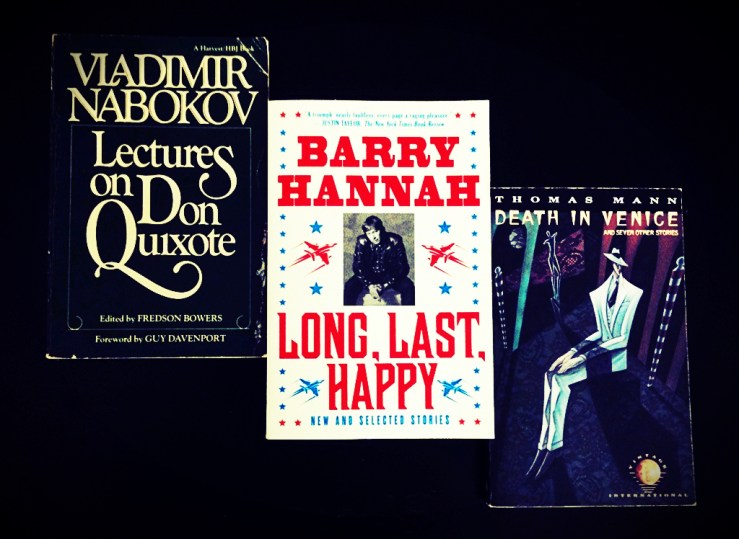
Hannah/Nabokov/Mann (Books Acquired, 8.30.2013)

20130905-153520

Paradise City (Book Acquired, 8.26.2013)

20130830-073951.jpg

The name of this writer is Archer Mayor, which is like two professions and is too good to be made up. Paradise City is “A Joe Gunther Novel,” and I assume it somehow involves Axl Rose. Har har. Actually it’s set in Vermont. Publisher’s blurb:

Joe Gunther and his team at the Vermont Bureau of Investigation are alerted to a string of unrelated burglaries across Vermont. Someone, in addition to flatscreens, computers, and stereos, has also been stealing antiques and jewelry.

Meanwhile, in Boston, an elderly woman surprises some thieves in her Beacon Hill home and is viciously murdered. The Boston police find that not only is the loot similar to what’s being stolen in Vermont, but it may have the same destination. Word is out that someone powerful is purchasing these particular kinds of items in the “Paradise City” of Northampton, Mass.

Gunther, the Boston Police, and the vengeful granddaughter of the murdered old lady convene on Northampton, eager to get to the bottom of the mystery and find the “responsible parties”—although each is motivated to mete out some very different penalties.


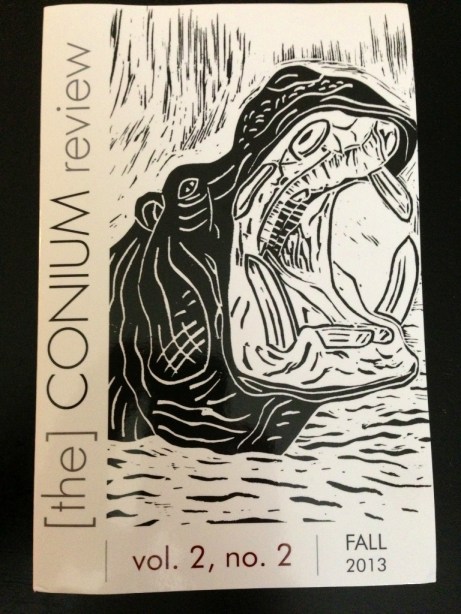
The Conium Review, Vol. 2, No. 2 (Book Acquired, 8,19.2013)

20130824-102848.jpg

This came in the mail a few weeks ago; I read a few of the poems and flash fictions, but haven’t had made time for the stories or the novella. From the The Conium Review’s website:

This issue of The Conium Review contains seventeen poems, five pieces of flash fiction, four short stories, and one novella. The contributing poets and writers are Elena Botts, Valentina Cano, Paola Capó-García, Patrick Cole, Darren C. Demaree, Thomas Dodson, Edward A. Dougherty, Ginger Graziano, Alamgir Hashmi, Kyle Hemmings, Nicholas Kriefall, Connie A. Lopez-Hood, Carlo Matos, Gretchen McGill, Robert McGuill, Thomas Mundt, Catherine Owen, Natalie Peeterse, Richard King Perkins II, Octavio Quintanilla, Charles Rafferty, Scott Ragland, Jonathan H. Roberts, M. A. Schaffner, Jacob Schepers, Claude Clayton Smith, and Emily Strauss. The cover art is courtesy of Loren Kantor.


But Where Is the Lamb? (Book Acquired, 8.23.2013)

20130824-102817.jpg

But Where Is the Lamb? by James Goodman. The book is about Genesis ch. 22, the story where God says to Abraham, kill me your son. Good design on this one:

20130824-102824.jpg

Publisher Random House’s blurb:

“I didn’t think he’d do it. I really didn’t think he would. I thought he’d say, whoa, hold on, wait a minute. We made a deal, remember, the land, the blessing, the nation, the descendants as numerous as the sands on the shore and the stars in the sky.”

So begins James Goodman’s original and urgent encounter with one of the most compelling and resonant stories ever told—God’s command to Abraham to sacrifice his son Isaac.

A mere nineteen lines in the book of Genesis, it rests at the heart of the history, literature, theology, and sacred rituals of Judaism, Christianity, and Islam. For more than two millennia, people throughout the world have grappled with the troubling questions about sacrifice, authority, obedience, and faith to which the story gives rise. Writing from the vantage of “a reader, a son, a Jew, a father, a skeptic, a historian, a lover of stories, and a writer,” Goodman gives us an enthralling narrative history that moves from its biblical origins to its place in the cultures and faiths of our time. He introduces us to the commentary of Second Temple sages, rabbis and priests of the late antiquity, and early Islamic exegetes (some of whom imagined that Ishmael was the nearly sacrificed son). He examines Syriac hymns (in which Sarah stars), Hebrew chronicles of the First Crusade (in which Isaac often dies), and medieval English mystery plays. He looks at the art of Europe’s golden age, the philosophy of Kant and Kierkegaard, and the panoply of twentieth-century interpretation, sacred and profane, including the work of Bob Dylan, Elie Wiesel, and A. B. Yehoshua. In illuminating how so many others have understood this story, Goodman tells a gripping and provocative story of his own.


The Red Queen Dies (Book Acquired, 8.22.2013)

20130824-102919.jpg

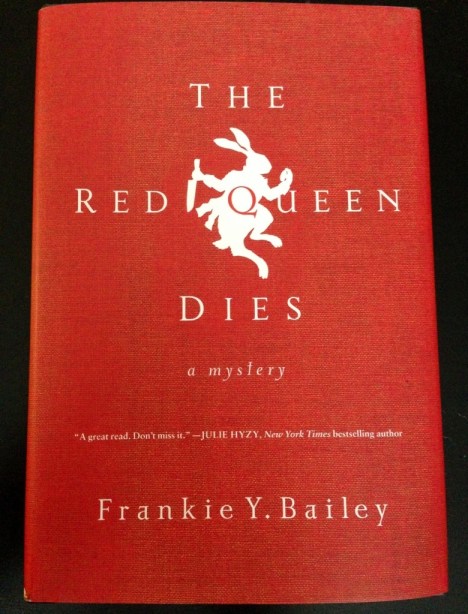
Great cover design for Frankie Y. Bailey’s new set-in-the-future-kinda-sci-fi-definitely-mystery The Red Queen Dies: elegant, minimal, and very striking. Wish there was more of this in genre fiction. Publisher Macmillan/Minotaur’s blurb:

Frankie Bailey introduces readers to a fabulous new protagonist and an Alice in Wonderland-infused crime in this stunning mystery, which kicks off an exciting new series set in the near future.

The year is 2019, and a drug used to treat soldiers for post-traumatic stress disorder, nicknamed “Lullaby,” has hit the streets. Swallowing a little pill erases traumatic memories, but what happens to a criminal trial when the star witness takes a pill and can’t remember the crime? When two women are murdered in quick succession, biracial police detective Hannah McCabe is charged with solving the case. In spite of the advanced technology, including a city-wide surveillance program, a third woman is soon killed, and the police begin to suspect that a serial killer is on the loose. But the third victim, a Broadway actress known as “The Red Queen,” doesn’t fit the pattern set by the first two murders.

With the late September heat sizzling, Detective Hannah McCabe and her colleagues on the police force have to race to find the killer in a tangled web of clues that involve Alice in Wonderland, The Wizard of Oz, and Abraham Lincoln’s assassination. Fast-paced and original, this is a one-of-a-kind mystery from an extremely talented crime writer.

S.D. Chrostowska’s Permission (Book Acquired, 8.10.2013)

20130814-174008.jpg

Sylwia Chrostowska’s novel Permission—got it in the mail on Saturday. I’d been swimming in the river, in the relentless August sun, for most of the day, and when I got home I just wanted to watch a film and drink some wine and pass out.

But I started reading. And reading. And then I looked up and and I was like fifty pages in.

Here’s publisher Dalkey Archive’s blurb:

Composed of anonymous e-mail messages sent by the author to an acclaimed visual artist over the course of a year, Permission is the record of an experiment: an attempt to forge a connection with a stranger through the writing of a book. Part meditation, part narrative, part essay, it is presented to its addressee as a gift that asks for no thanks or acknowledgment—but what can be given in words, and what received?Permission not only updates the “epistolary novel” by embracing the permissiveness we associate with digital communication, it opens a new literary frontier.

And here’s novelist Teju Cole’s blurb, from the back of the book (for some reason not posted at Dalkey):
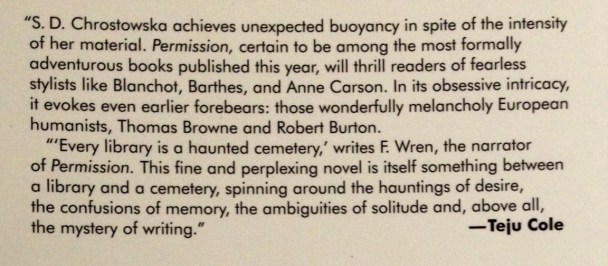
20130814-174328.jpg

Permission’s central premise (if such a work so soaked in deconstruction could be said to have a center) immediately recalled to me Jacques Derrida’s discussions of the paradox of giving:

To rephrase my experimental question: can I give away what is inalienable from me (my utterance, myself) without the faintest expectation or hope of authority, solidarity, reciprocity? Can my giving be unhinged from a sense of both investment and pointless expenditure?

The first few “chapters” — the narrator’s weekly missives to the unnamed artist — are thoroughly soaked in deconstruction and continental philosophy; this is a novel that cites Blanchot and Deleuze in its first twenty pages. However, the narrator promises that her book, “through its progressive dissolution, towards the final solution of this writing (my work) . . . becomes progressively less difficult, less obscure.”

This promise seems true, as subsequent passages flow into personal memory, reflection—storytelling. We get a brief tour of cemeteries, a snapshot of the narrator’s father (as a child) at a child’s funeral, a recollection of the narrator’s first clumsy foray into fiction writing, a miniature memoir of a failed painter, color theory, the sun, the moon.

Strange and lovely stuff. More when I finish.

Books Acquired, 8.06.2013

20130809-114547.jpg

Son of a Gun (Book Acquired, 8.5.2013)

20130806-162848.jpg

Son of a Gun, Justin St. Germain’s memoir, explores the life and death of his mother, who was killed by her fifth husband. Here’s publisher Random House’s blurb:

Tombstone, Arizona, September 2001. Debbie St. Germain’s death in her remote trailer, apparently at the hands of her fifth husband, is a passing curiosity. “A real-life old West murder mystery,” the local TV announcers intone before the commercial break, while barroom gossips snicker cruelly. But for her twenty-year-old son, Justin St. Germain, the tragedy marks the line that separates his world into before and after.

Justin decides to confront people from his past and delve into the police records in an attempt to make sense of his mother’s life and death. All the while he tries to be the type of man she would have wanted him to be. Brutally honest and beautifully written, Son of a Gun is a brave, unexpected and unforgettable memoir.

Here’s Publishers Weekly’s write-up:

A young man wrestles with his heartache over his mother’s murder in this lacerating memoir of family dysfunction. St. Germain was a 20-year-old college student when his mother Debbie was shot to death in 2001 by her fifth husband in a desolate trailer in the Arizona desert, a disaster that threw into sharp relief the chaos of his working-class background. St. Germain revisits Debbie’s unstable life as an Army paratrooper and businesswoman, the string of men she took up with (some physically abusive), and his own boyhood resentment at their presence and at incessant domestic upheaval. Intertwined is a jaundiced, somewhat self-conscious meditation on St. Germain’s claustrophobic hometown of Tombstone—all sun-bleached ennui, arid hardpan, and tourist kitsch—and its presiding spirit, Wyatt Earp, archetype of the violent, trigger-happy machismo that he blames for killing his mother, yet feels drawn to as a touchstone of manhood. St. Germain makes harsh judgments of the men in his past (as well as of his sullen, callous adolescent self), but as he seeks them out later, he arrives, almost against his will, at a subtler appreciation of their complexities. At times his trauma feels more dutiful than deeply felt, but his memoir vividly conveys the journey from youthful victimization toward mature understanding.


Books Acquired, 7.26.2013

20130726-150353.jpg

20130726-150358.jpg

20130726-150402.jpg

20130726-150415.jpg

20130726-150421.jpg

Mother Daughter Me (Book Acquired, 7.08.2013)

20130709-141434.jpg

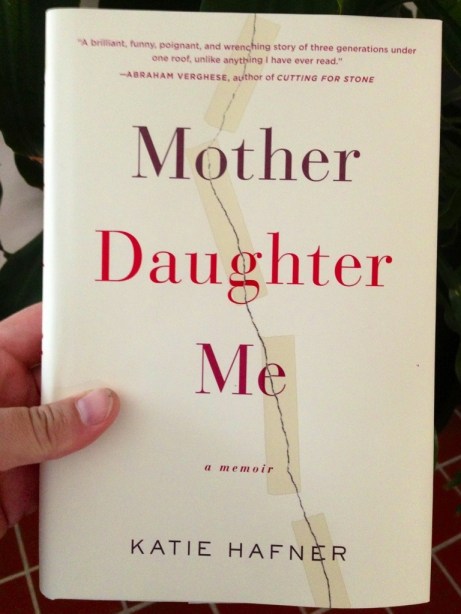
Mother Daughter Me is Katie Hafner’s memoir, new in hardback from Random House. Their blurb:

The complex, deeply binding relationship between mothers and daughters is brought vividly to life in Katie Hafner’s remarkable memoir, an exploration of the year she and her mother, Helen, spent working through, and triumphing over, a lifetime of unresolved emotions.

Dreaming of a “year in Provence” with her mother, Katie urges Helen to move to San Francisco to live with her and Zoë, Katie’s teenage daughter. Katie and Zoë had become a mother-daughter team, strong enough, Katie thought, to absorb the arrival of a seventy-seven-year-old woman set in her ways.

Filled with fairy-tale hope that she and her mother would become friends, and that Helen would grow close to her exceptional granddaughter, Katie embarked on an experiment in intergenerational living that she would soon discover was filled with land mines: memories of her parents’ painful divorce, of her mother’s drinking, of dislocating moves back and forth across the country,  and of Katie’s own widowhood and bumpy recovery. Helen, for her part, was also holding difficult issues at bay.

How these three women from such different generations learn to navigate their challenging, turbulent, and ultimately healing journey together makes for riveting reading. By turns heartbreaking and funny—and always insightful—Katie Hafner’s brave and loving book answers questions about the universal truths of family that are central to the lives of so many.

Bride of New France (Book Acquired, 7.09.2013)

20130709-141512.jpg

Bride of New France, an historical novel by Suzanne Desrochers, was a hit in Canada, where it was published by Penguin. Norton is publishing it in the States in trade paperback. Their blurb:

A Canadian bestseller, this richly imagined novel is about a young French woman sent to settle in the New World.

Transporting readers from cosmopolitan seventeenth-century Paris to the Canadian frontier, this vibrant debut tells of the struggle to survive in a brutal time and place. Laure Beausejour has been taken from her destitute family and raised in an infamous orphanage to be trained as a lace maker. Striking and willful, she dreams of becoming a seamstress and catching the eye of a nobleman. But after complaining about her living conditions, she is sent to Canada as a fille du roi, expected to marry a French farmer there. Laure is shocked by the primitive state of the colony and the mingling of the settlers with the native tribes. When her ill-matched husband leaves her alone in their derelict hut for the winter, she must rely on her wits and her clandestine relationship with an Iroquois man for survival.