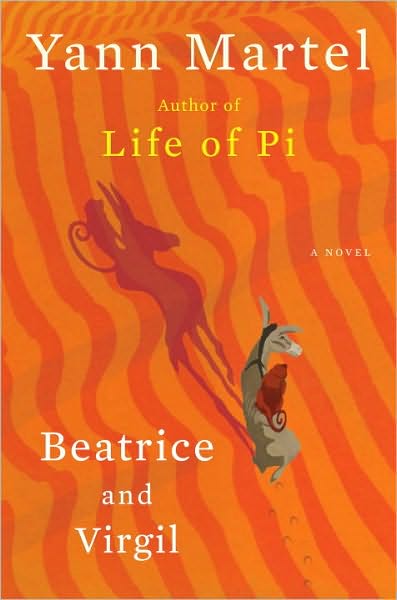
Yann Martel’s Beatrice and Virgil tells the story of a writer named Henry whose follow-up novel to a surprise smash hit is rejected. He moves to a large metropolitan city, gets a dog and a cat, takes clarinet lessons, joins an amateur theater group, and slowly forgets about writing fiction altogether. One day a stranger sends Henry a short story by Gustave Flaubert called “St. Julian the Hospitator.” The sender has highlighted passages about Julian’s delight in slaughtering animals and also included a few pages of an original manuscript, a Beckettian play featuring two characters, Beatrice and Virgil. There’s also a note asking for help. Intrigued, or maybe bored, Henry visits the mysterious author, an old, creepy taxidermist (also named Henry). His play features two characters, Virgil, a howler monkey, and Beatrice, a donkey, who are trying to come to terms with a series of events they call The Horrors. The taxidermist’s project reignites Henry’s passion for writing and he’s soon helping the would-be playwright with revisions, blind to the inconsistencies and gaps in the old man’s strange behavior.
Beatrice and Virgil is a page turner, engaging, propulsive, and quite easy to read. It injects the philosophical and artistic concerns of literary fiction into the frame and pacing of a book designed for broader audiences. Martel displays his keenest literary skill in the early part of the novel, flitting through the kinds of subjects that bookish nerds of a certain postmodernist bent tend to obsess over: the possibilities and challenges of writing in a particular language, the complexity of pseudonymous fame, the intellectual allure of the essay versus the power of fiction to narrativize higher truth. To address this latter problem, Henry proposes that his new book comprise two sections–a work of narrative fiction and an essay to explicate that work. Why the need for an essay? Henry proposes to write an artful, fictive account of the Holocaust. The essay, which Henry wants published on the flip side of the fiction, thus eliminating a front/back cover distinction, is meant to explicate the fiction. In many ways the first section of Beatrice and Virgil functions as counterpoint to Henry’s proposed essay, concisely addressing the problems of using anything other than historical facts to represent the Holocaust.
After Henry gets the taxidermist’s package and reads “St. Julian the Hospitator,”Beatrice and Virgil moves into a faster rhythm and continues to accelerate to its end, never sagging. At times, Martel relies on stock phrasing and overt exposition to afford this pacing. I found myself wishing a few times that he would trust his audience a bit more. Is it really necessary to directly explain the titular allusion to Dante’s Divine Comedy? He could also be a bit less free with his narrator’s everyman style of questioning, a device employed often to propel the plot, but one somewhat inconsistent with Henry’s obvious intellectual acumen. Martel’s occasional use of lazy devices of the Dan Brown school directly contrasts the more experimental or postmodern aspects of his book. There’s the book’s initial section, which reads very much like a lyric essay; there’s the exegesis of “St. Julian”; there’s the taxidermist’s play, Beatrice and Virgil; there’s the book’s final section, “Games for Gustav.” This final section comprises thirteen short epigrams written in second-person perspective. “Games for Gustav,” Henry’s Holocaust art, demands audience identification with the victims of the Holocaust. Its brevity and ambiguity correlate to the narrative’s ahistorical engagement with the Holocaust and communicate a sense of apprehension and distance toward the subject. Is that subject Martel’s or Henry’s? In a piece I wrote last month about Beatrice and Virgil and the challenges of an aesthetic response to the Holocaust, I suggested that “Henry, a young French Canadian with no Jewish roots is utterly divorced from any authentic response to the Holocaust. He could write an academic essay on the subject, or a navel-gazing bit of metafiction that dithered over storytelling itself, but he essentially already has an answer to his own question of why there are so few artistic responses to the Holocaust–that to re-imagine or re-interpret or otherwise re-frame the real events of the Holocaust in art is to, at once, open oneself to dramatic possibilities of failure.”
Is Beatrice and Virgil an authentic response to the Holocaust? I won’t accuse Martel of using the Holocaust as a mere prop in his novel; indeed, anticipation of such an accusation is precisely what leads Henry to suffer over an essay to explicate his fiction. Martel’s book is about murder, horror, and how one might witness to or otherwise narrativize murder and horror; Henry’s “Games for Gustav” is just one of those attempts to witness. The novel engenders multiple readings then. We can take Henry’s “Games” as part and parcel of Martel’s program, read them perhaps as Martel’s own attempt at poetry after Auschwitz. This reading would subscribe to a traditional narrative arc–Henry faces a challenge, endures a perilous task, and finds resolution in his art: a valid artistic response to the Holocaust is possible. I think, however, that there is another, more complicated reading available, one far more ambiguous, one that places any aesthetic response to the Holocaust under suspicion. If we scrutinize the elements of traditional narrative fiction at work in the novel, we can see multiple ironies in Henry’s “hero arc,” ironies outside of Henry’s otherwise perspicacious gaze. To write an authentic aesthetic response to the Holocaust, Henry must face some kind of deathly extreme that will license such art. But is such a licensing, a conferring of authority possible? I won’t point to spoilers here but will say that I read the novel’s climax ironically. I believe it complicates Henry’s (and perhaps Martel’s) attempt to engage the Holocaust via metaphor and artifice and calls the novel’s resolution into question.
But these matters are probably better reserved for the detailed dialogues the book will no doubt inspire. Beatrice and Virgil raises essential questions of post-postmodernity, exploring the porous boundaries between autobiography and fiction, history and myth, and the limits of allegory. Its rewards are not in its answers but in its questions.
Beatrice and Virgil is new in hardback from Spiegel & Grau on April 13, 2010.
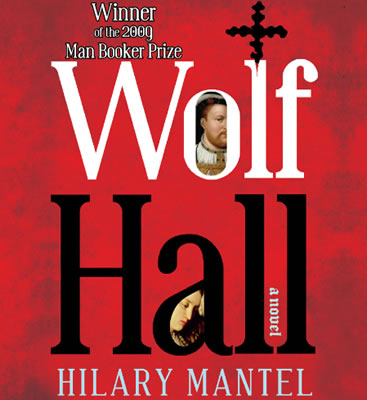 Started a new audiobook: Hilary Mantel’s Wolf Hall, read competently by Simon Slater. Wolf Hall tells the familiar story of Henry VIII, only Mantel focuses (at least so far) mostly on Thomas Crownwell and Cardinal Wolsey. Most of the men in the story have the first name “Thomas.” I’m not particularly interested in the Tudor saga but I’m enjoying Mantel’s novel so far–its clean, precise style, its pacing, and, particularly Mantel’s sparing use of details. Historical novels sometimes succumb to the weight of the author’s passion with her subject. Thankfully, Mantel does not overload her prose with superfluity; instead she appoints detail in her narrative with care and precision, giving character and plot room to grow. Good dialogue too. More later.
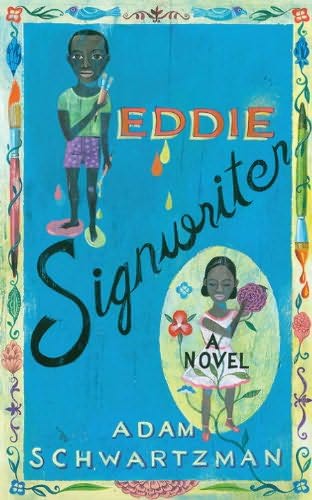 I got a review copy of Adam Schwartzmann’s début novel Eddie Signwriter last week and haven’t had a good chance to read any of it until today. The novel tells the story of Kwasi Edward Michael Dankwa aka Eddie Signwriter, who journeys from his native Ghana to Senegal, and then to France, where he takes up a new life as an illegal immigrant in Paris. The story opens in a burst of action. Nana Oforwiwaa, a village elder has died and authorities are blaming Kwasi. So far, I find Schwarzmann’s prose a bit heavy. Sentences need pruning–too many redundant verbs and clauses in his sentences for my taste. Eddie Signwriter is better when Schwartzmann moves the narrative of young Kwasi along in shorter, declarative sentences. Eddie Signwriter is available now from



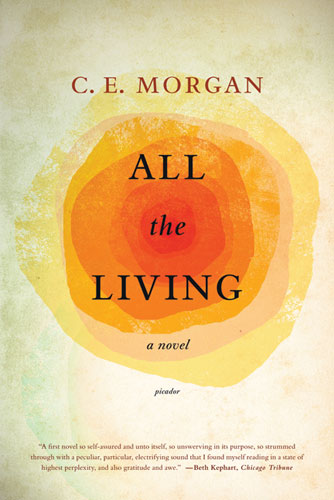 In her debut novel, All the Living, C.E. Morgan tells the story of Aloma, a would-be pianist who forgoes her dreams of artistic freedom to play wifey to her young lover Orren who must take sole responsibility of running the family tobacco farm after his family dies in a car accident. Aloma knows nothing about farming and even less about the grief Orren suffers. She’s an orphan herself, but with no memory of her own parents, she finds it hard to connect to overworked Orren as he slowly slips away. A nearby minister who hires her to play church services paradoxically relieves and exacerbates Almoa’s despair when he enters her life. Morgan’s novel is a slow-burn, often painful, sometimes slow, but also guided by a poetic spirituality that resists easy interpretations. (Oh, and she’ll also make you run for a thesaurus every few pages). All the Living is new in trade paperback from
 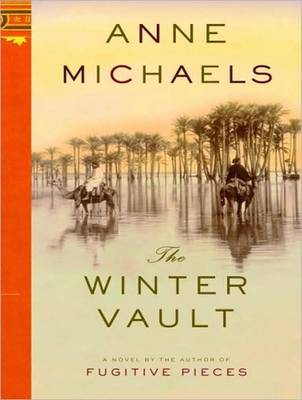 Anne Michaels’s The Winter Vault begins in Egypt, in 1964, where Canadian engineer Avery Escher is part of a team trying to help the Nubians who will be displaced by the Aswan High Dam. He and his wife Jean share a houseboat on the Nile, but what might have been a year of romantic adventure devolves into the tragedy of a culture displaced and a family eroded. The pair separate and return to Canada, where Jean takes up with Lucjan whose stories of Nazi-occupied Warsaw inform the novel’s second half. The Winter Vault is poetically dense and often overly-lyrical, sometimes offering self-important and ponderous dialogues in place of concise plotting. And while Michaels treats the tragedies of the occupied Poles and Nubians with a certain sensitivity, her engagement veers awfully close to what Lee Siegel has termed “
 Jenniemae & James is Brooke Newman‘s new memoir about her father’s unlikely relationship with the family maid. James Newman was a brilliant mathematician (he coined the term “googol”); Jenniemae Harrington “was an underestimated, underappreciated, extremely overweight woman who was very religious, dirt poor, and illiterate.” Newman wants us to see a unique–and deep–friendship between the pair that defies 1940s/50s norms in Washington D.C., but it’s hard not to think that there’s at least some whitewashing going on here. Undoubtedly the two shared an affinity and connected through a love of numbers, but it’s hard to see more in this than an employer-employee relationship–and one still colored by the politics of the pre-Civil Rights era. Jenniemae, black mammy, sassy, Southern, larger-than-life, quick with folk wisdom and colorful quips–it all seems like a one-sided vision, a take on the
 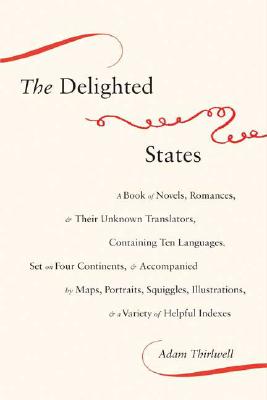 This weekend, I read and thoroughly enjoyed the first volume of Adam Thirlwell’s The Delighted States (new in a handsome trade paperback edition from
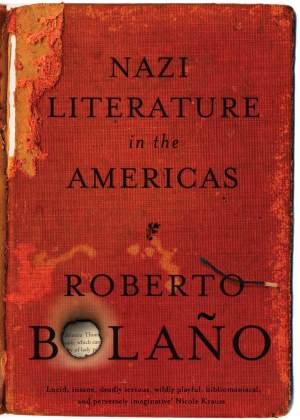 On that book specifically (and Bolaño’s work in general)–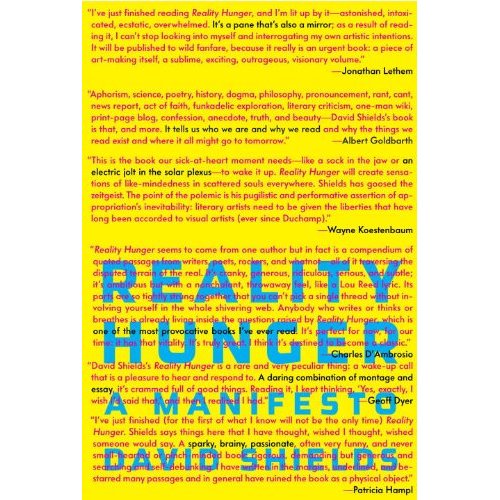
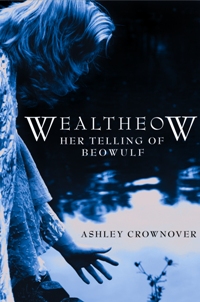 In her novel Wealtheow, author Ashley Crownover retells Beowulf from Queen Wealtheow’s point of view. In the original epic poem, Wealtheow doesn’t have much of a voice. Her marriage to King Hrothgar is more a matter of politics than love, and her role in the poem is largely limited to an episode where she speaks up to secure her own genealogical futurity. Adopting a first-person voice, Crownover portrays Wealtheow as a young, somewhat naive bride thrown into a political marriage arranged to prevent war between the Danes and the Helmings. Wealtheow tries to fit into her new role as wife and queen, as well as her new culture, and strives to produce an heir for Hrothgar, suffering miscarriages and other adversities. Crownover parallels Wealthow’s plighted road to motherhood in the tale of Grendel and his mother (called Ginnar here). When Grendel is born deformed, his father rejects him and he is bound for infanticide–only Ginnar’s motherly instinct resists custom, and the pair become fugitives. Crownover’s technique here builds sympathy for Ginnar in echoing the narrative proper of Wealtheow. Ginnar in many ways is a far more sympathetic (and interesting) character than Wealtheow, and the counter-plot of her and her monster-spawn/beloved boy Grendel is the highlight of the book.