“On the Difficulty of Imagining an Ideal City” — Georges Perec

“On the Difficulty of Imagining an Ideal City,” a poem or essay or something—a text—by Georges Perec. The piece is one of the selections in Perec’s collection of miscellany, Species of Spaces and Other Pieces:

I wouldn’t like to live in America but sometimes I would

I’d love to live on the Boulevard St Germain but sometimes I wouldn’t

I wouldn’t like to live on a coral reef but sometimes I would

I wouldn’t like to live in a dungeon but sometimes I would

I wouldn’t like to live in the East but sometimes I would

I love living in France but sometimes I don’t

I’d love to live in Greenland but not for too long

I’d like to live to a hundred but sometimes I wouldn’t

I wouldn’t like to live in Issoudun but sometimes I would

I wouldn’t like to live on a junk but sometimes I would

I wouldn’t like to live in a ksar but sometimes I would

I’d have loved to go in a lunar module but it’s a bit late

I wouldn’t like to live in a monastery but sometimes I would

I wouldn’t like to live at the Hotel Negresco but sometimes I would

I wouldn’t like to live in the open air but sometimes I would

I love living in Paris but sometimes I don’t

I wouldn’t like to live in Quebec but sometimes I would

I wouldn’t like to live by my own resources but sometimes I would

I wouldn’t like to live in a submarine but sometimes I would

I wouldn’t like to live in a tower but sometimes I would

I wouldn’t like to live with Ursula Andress but sometimes I would

I wouldn’t like to live in a village but sometimes I would

I wouldn’t like to live in a wigwam but sometimes I would

I’d love to live in Xanadu but not for ever

I wouldn’t like to live in the Yonne but sometimes I would

I wouldn’t like us all to live in Zanzibar but sometimes I would

Pig Earth — John Berger

People exaggerate the changes in nature so as to make nature seem lighter. Nature resists change. If something changes, nature waits to see whether the change can continue, and it it can’t, it crushes it with all its weight!  Ten thousand years ago the trout in the stream would have been exactly the same as today.

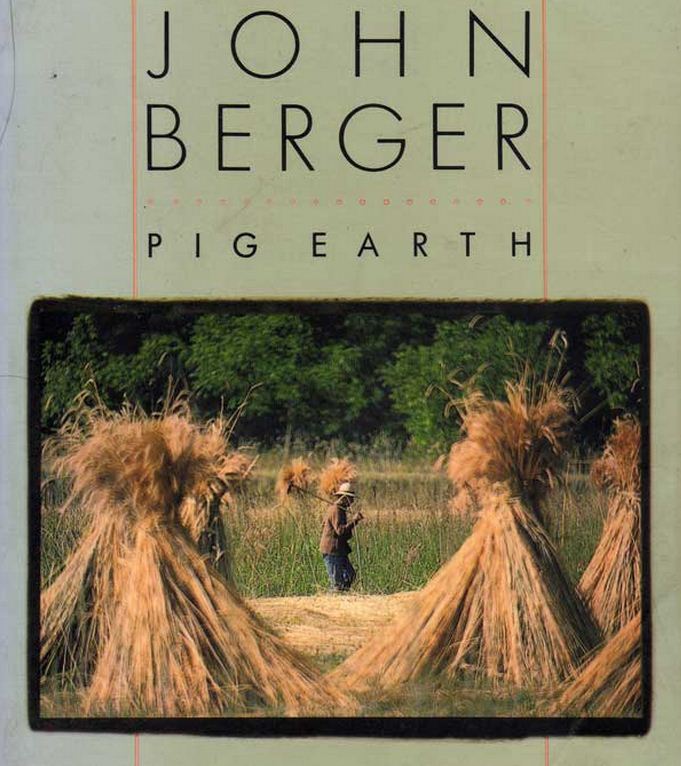
Stasis and disruption and the relation between people and their natural and urban surroundings are the themes John Berger writes about in his 1979 collection of essays, poems and short stories, Pig Earth.  Having moved from England, where he enjoyed considerable renown as an art critic and fiction writer, to the peasant villages of the French Alps, Berger settled into his role as an active participant in rural life, not only turning hay but observing and documenting the disappearance of a way of a once-pervasive mode of life.  Pig Earth was one result of his labors, the first book of a trilogy that took some fifteen-odd years to complete, a moving but not uncritical account of humanity’s struggle to conquer nature by symbiosis.

Maybe symbiosis isn’t the proper term if we agree that humanity is part of nature’s whole, but Berger juxtaposes the frailty of humanity with the earth’s uncaring and often violent strength.  Survival for the family of the subsistence farmer depends upon that family’s ability to tend to the needs of the plant and animal world (as well as more than a little bit of luck).  In the collection’s first true story, “A Calf Remembered,” a baby cow is delivered on a dark winter’s night. Here, Berger stresses the protections that nature and man have designed to ensure the survival of a young, vulnerable animal:  mucus, barn, salt, and sense.  The human spends his night in the barn protecting his property because it provides him not only with sustenance in the forms of milk and meat, but also companionship and a sense of duty.  When daily living requires acts that might mean life or death, the conscious and the instinct converge.

He sat on a milking stool in the dark.  With his head in his hands, his breathing was indistinguishable from that of the cows. The stable itself was like the inside of an animal.  Breath, water, cud were entering it:  wind, piss, shit were leaving.

Pig Earth is a book worth studying as people attempt to make sense of a world transitioning from one type of living to another and fuss over the sources of their own limited strength and vitality. Berger may not have been looking to pioneer a slow-living locavore lifestyle, but his subjects worry about their increasing isolation from the circles of power and industry.  They fret over the pointlessness of passing their knowledge to their children who need entirely different skills to survive in the rapidly encroaching urban wage economy.  In “The Value of Money” a father refuses a tractor, branded “The Liberator” by the manufacturer, that his son has purchased for him because it will render his faithful work-horse obsolete.  This same farmer kidnaps local tax officials because they want to confiscate the products of his labor without compensation for value that he exclusively created.  Unable to make them understand their wrongdoing, he sets them free because “you can only take revenge on those who are your own.”

The final story, “The Three Lives of Lucy Cabrol,” is the lengthiest and perhaps most poignant narrative in the book. It follows the life of a bright, tenacious, physically stunted woman as she grows from young girl to town outcast.  While Berger admired much of the life in the peasant village, he would fail in his duty as critic and chronicler if he ignored its darker sides. Berger often sets the title character’s pluck against the resignation and superstition endemic to village life. When life requires struggle, most people choose to hoard.  When poor choices may lead to death or family hardship, capitulation to those in power, whether those rulers be the town’s big man or Nazi collaborators, can often seem the only obvious choice.  Lucy shows us that cowardice, no matter the circumstances, only seems easy. Pig Earth is highly recommended.

Collected Prose — Paul Auster

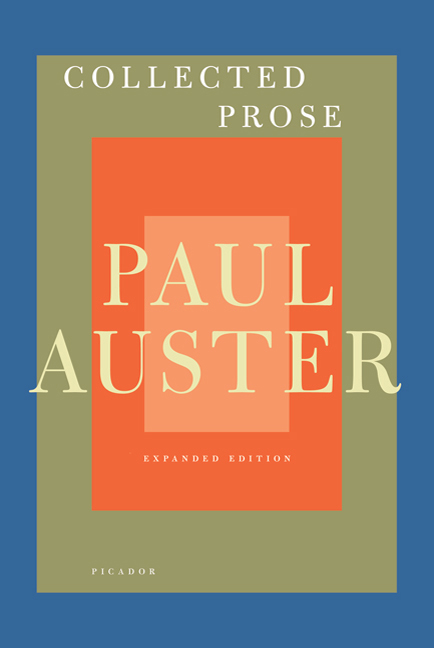
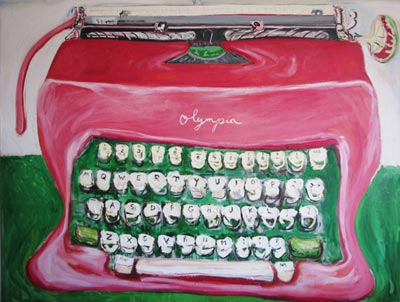
This month, the good folks at Picador are issuing an expanded edition of Paul Auster’s essays, memoirs, prefaces, true stories, anecdotes, and interviews. Inconspicuously titled Collected Prose and running to just under six hundred pages, the volume includes Auster’s début work The Invention of Solitude in its entirety. Solitude is a strange blend of personal memoir, an account of the young writer’s reaction to and relationship with the death (and life) of his father, as well as a philosophical meditation on the absurdity of family, art, and time. Collected Prose also includes the later memoir, Hand to Mouth, a reflective piece on Auster’s early failures as he tries to make it as a writer, including his time in Paris, his marriage to Lydia Davis, his hunger, and his poverty. While Solitude inaugurates many of the experimental structures and postmodern tropes that Auster would be identified with throughout his career as a novelist, the flatter, more direct style of Hand to Mouth is more indicative of the tone of much of Collected Prose. There’s a journalistic directness and keen earnestness to Auster’s essays that perhaps belie his postmodern bona fides. That’s a good thing, allowing Auster to communicate directly about his sometimes challenging subjects to a wider audience. Style aside, both of the book-length memoirs at the front end of Collected Prose neatly delineate the themes that preoccupy much of the rest of the book: art, language, writing, writers, poverty, absurdity, movement, New York City, and so on. And although the book turns away from Auster’s memoirs and true stories in its second half, presenting his essays, editorials, and prefaces, there’s still a sharp sense of Auster in each essay. These are personal essays. Auster writes about his friend Philippe Petite, the French high-wire artist; he writes about the literal hunger artists face, using Knut Hamsun and Franz Kafka as examples; he writes a vindication for Dada daddy Hugo Ball; he writes on over half a dozen relatively obscure poets to let us know why they matter. There are wonderful little moments, like “The Story of My Typewriter,” where Auster exclaims his love for his quiet Olympia (he buys 50 typewriter ribbons fearing the specie’s eventual extinction). The book reprints the Sam Messner paintings that originally accompanied Auster’s text (or, perhaps, vice versa).

Another great moment is the essay “Hawthorne at Home,” which takes a look at a little known piece by Nathaniel Hawthorne called Twenty Days with Julian & Little Bunny. Hawthorne’s piece is more or less a straightforward narrative account of Hawthorne alone with his five-year old son Julian and his pet rabbit for three weeks while wife Sophia visited the Peabodys. While Auster gives the reader a lesson on Hawthorne and his composition of The Scarlet Letter here, the essay focuses on the idyllic charm of a father and son, a rare subject in Hawthorne’s oeuvre. As a bonus, Herman Melville makes a cameo. “Hawthorne at Home” is the sort of essay that makes you want to go read the source material; it sent me hunting for a used copy of American Notebooks.

As one might imagine, Collected Prose is absolutely larded with writers, and lovingly so. Auster does not suffer from the inclination toward meanness that so many critics feel toward their peers, perhaps because he writes foremost from the perspective of an artist. Not that it’s difficult to praise Art Spiegelman (“The Art of Worry”) or pray for Salman Rushdie (um, “A Prayer for Salman Rushdie”) or speak to the genius of Samuel Beckett (“Remembering Beckett on His One Hundredth Birthday”) and Jim Jarmusch (“Night on Earth: New York”)–but Auster illuminates their work in a way that transcends the postmodern concerns of technique, place, and politics, and speaks directly to a certain aesthetic excellence. His love for storytellers extends beyond the pros, of course, evinced in his work with NPR’s National Story Project. He credits wife Siri with coming up with the idea of having NPR listeners write and submit their own original stories, but his enthusiasm for her idea resonates in his warm preface to the eventual book that collected the listeners’ submissions. Auster writes, “I learned that I am not alone in my belief that the more we understand of the world, the more elusive and confounding that world becomes.” The world becomes more “confounding” after the 9/11 attacks, of course, and like so many other writers Auster attempted to somehow measure the tragedy in words. “Random Notes–September 11, 2001–4:00 PM” is a scrap, a fragment, a shell-shocked missive that ends with the haunting words “And so the twenty-first century finally begins.”

It might be misleading to call Collected Prose a good introduction to Paul Auster’s nonfiction–can a work so comprehensive, so massive be a mere starting point?–but it is a great introduction, so there. It’s also a fantastic overview of critical, literary, and artistic theory, written from a deeply personal perspective. Let’s hope that fifteen years from now we’ll have another expanded edition of Auster’s prose; in the meantime, we can look forward to his new novel Sunset Park this November. Highly recommended.

“Books in the Age of the iPad” — Craig Mod

In his recent essay, “Books in the Age of the iPad,” Craig Mod distinguishes between “Formless” and “Definite” content:

Formless Content is is unaware of the container. Definite Content embraces the container as a canvas. Formless content is usually only text. Definite content usually has some visual elements along with text. Much of what we consume happens to be Formless. The bulk of printed matter — novels and non-fiction — is Formless.

Mod argues that the rise of e-readers like the Kindle and (presumably) the iPad are harbingers of a new age in reading, where both formless and, now, definite content might be readily (and easily) displayed. He makes a brash judgment:

The convenience of digital text — on demand, lightweight (in file size and physicality), searchable — already far trumps that of traditional printed matter.

Really? On demand? For whom? “On demand” here presupposes a number of conditions, first and foremost, that each person who wishes to enjoy this new medium has the economic means to do so. The projected retail cost of the iPad is currently $500, a price that does not include monthly ISP fees, let alone the prices of e-books and other e-texts. The Kindle retails now for about half the price of the iPad. Although these prices will certainly fall over time, it is difficult to imagine that the “convenience of digital text” will trump equitable access to “traditional printed matter” — particularly for families with multiple children (at least any time soon).

Mod makes some good points about the future of printed, physical books in the age of e-readers (or, the iPad, a device he seems to think will normalize the medium):

I propose the following to be considered whenever we think of printing a book:

  • The Books We Make embrace their physicality — working in concert with the content to illuminate the narrative.
  • The Books We Make are confident in form and usage of material.
  • The Books We Make exploit the advantages of print.
  • The Books We Make are built to last.

The result of this is:

  • The Books We Make will feel whole and solid in the hands.
  • The Books We Make will smell like now forgotten, far away libraries.
  • The Books We Make will be something of which even our children — who have fully embraced all things digital — will understand the worth.
  • The Books We Make will always remind people that the printed book can be a sculpture for thoughts and ideas.

Anything less than this will be stepped over and promptly forgotten in the digital march forward.

Goodbye disposable books.

Hello new canvases.

Books as aesthetic, durable objects — great idea. But books as relics, as things to recall the smell of “now forgotten, far away libraries”? Really? Libraries function as an important space in communities that transcend the mediums of information in those libraries. It’s almost downright scary to posit some kind of project-utopia where a library becomes “digitized.” Also — and again, much of what Mod suggests here is great — but also, who are “our children” who “have fully embraced all things digital”? In the current geopolitical climate, Mod’s line of thinking can only realistically apply to “First World” countries. Even in our own beloved United States, first among the “First World,” we have difficulty feeding all of our children or funding their educations. E-readers like the iPad or Kindle could presumably do much to ameliorate the burgeoning education gap, but recent efforts haven’t gained much momentum or praise.

It’s not that I disagree with (what I perceive to be) Mod’s overall thesis — that the iPad and successive e-readers will revolutionize how we read, access, and store information. I do, however, think that his rosy-toned enthusiasm has led to a number of blind spots in his article. Why should e-readers eliminate libraries? What, exactly, are “disposable books”? Who will have access to these “new canvases,” and in what capacity? Why the implicit presumption that digital storage of media is fail safe, easier than current methods, and more permanent?

Finally, my biggest problem with the piece is the simple assumption that any e-reader could be more comfortable than a paperback book. Mod addresses arguments like mine:

When people lament the loss of the printed book, this — comfort — is usually what they’re talking about. My eyes tire more easily, they say. The batteries run out, the screen is tough to read in sunlight. It doesn’t like bath tubs.

Mod responds to these arguments:

Important to note is that these aren’t complaints about the text losing meaning. Books don’t become harder to understand, or confusing just because they’re digital. It’s mainly issues concerning quality. One inevitable property of the quality argument is that technology is closing the gap (through advancements in screens and batteries) and because of additional features (note taking, bookmarking, searching), will inevitably surpass the comfort level of reading on paper.

While Mod’s point of meaning vs. quality (what I’d refer to as readability) is certainly right, his assumption that technology “will inevitably surpass the comfort level of reading on paper” is wholly unfounded and unsupported. It’s exactly the kind of teleological claim we see too often about technology — that technology always progresses to an inevitable, good, and superior end point. Still, Apple can feel free to send me an iPad and I’ll be sure to test my own assumptions on the issue, and redress them here if need be.

Bored Booksellers and Nauseated Novelists

Bored? Check out new(ish) WordPress blog Bored Bookseller Musings. Good writing on books, bookstores, rude customers, and other literary(ish) matters. In a recent(ish) post, the Bored Bookseller pointed our direction to a new(ish) essay by Zadie Smith, where the White Teeth author discusses “novel-nausea.” (Smith’s essay is really just a ploy to promote her new book of essays, Changing My Mind).

A Truth Universally Acknowledged — 33 Great Writers on Why We Read Jane Austen

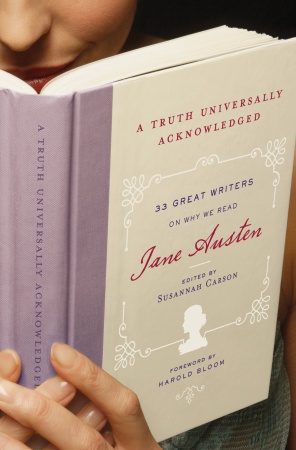
In A Truth Universally Acknowledged, editor Susannah Carson collects thirty-three short essays on Jane Austen. In her introduction, Carson notes that each “of these essayists has taken a shot at defining and explaining Austen’s place both in the literary canon and in the cultural imagination.” And while there’s no mention of Austen’s recent tangles with zombies and sea monsters, the collection does cover quite a route of the cultural imagination that Carson promises. How could it not? There are short (and longish) essays from E.M. Forster, W. Somerset Maugham, Martin Amis, and C.S. Lewis, all proffering different reasons why Austen rules. Contemporary writer Susanna Clarke scolds those of us who might mistake film and TV adaptations as authentic representations of the lady’s work: “Austen wasn’t a visual writer,” Clarke writes, ” Her landscapes are emotional and moral–what we would call psychological.” Harold Bloom goes as far as to suggest that, “Like Shakespeare, Austen invented us.” Bloom’s usual Oedipal anxiety manifests itself in a more palatable line: “Because we are Austen’s children, we behold and confront our own anguish and our own fantasies in her novels.” (Never fear, Bloom gets some axe-grinding in as well: “Those who read Austen ‘politically’ now are not reading her at all.” Thank you again, oh great master critic, for telling us how to read our books). Benjamin Nugent gets pragmatic, seeing Pride and Prejudice as something of a self-help book: “Young nerds should read Austen because she’ll force them to hear dissonant notes in their own speech they might otherwise miss, and open their eyes to defeats and victories they otherwise wouldn’t even have noticed.” One of our favorite writers, Eudora Welty, writes a loving appreciation of the marvel of just how Austen constructed the complex ironies of her works: “Each novel is a formidable engine of strategy.” Rebecca Mead’s “Six Reasons to Read Jane Austen” is both funny and convincing. Reason four: “Because we are made to in school.” Mead’s little essay would be a worthy primer for any high school senior dreading wading into Pride and Prejudice. The great American critic Lionel Trilling points out, as those high schoolers know, that Pride and Prejudice “is the one novel in the canon that ‘everybody’ reads.” He wants you to know that of “Jane Austen’s six great novels, Emma is surely the one that is most fully representative of its author.” He makes a good case for this argument as well, comparing it to the “difficult” books of Proust, Joyce, and Kafka–company that we don’t always associate with Austen. Indeed, many of the essays here focus on Austen’s lesser-read volumes–Mansfield Park, Northanger Abbey, Emma–and to a positive end: these essayists will make you want to read these books. And isn’t that what real literary criticism should aim to do anyway–make the reader read the book herself, think critically about it herself? While Austen is hardly in need of a revival, A Truth Universally Acknowledged does a lovely job of balancing academic criticism with a popular appeal. Like Austen’s own work, it tempers social critique with sharp humor. A Truth will, of course, appeal mostly to Austen fans (many of whom will surely find it indispensable), but it’s also the sort of volume that will find a place in the hearts of those who simply love to read great writers writing about great writers. Recommended.

A Truth Universally Acknowledged is new in hardback this month from Random House.

Wendell Berry on Mephistophilis, Limitless Animals, and the End of Cheap Oil

Yesterday, the discussion on my post last week on the rhetoric of environmentalism got a little heated. I was accused in the comments thread of proposing two conflicting ideas. I don’t think that’s true, and I’m not going to go back to the post and nitpick over my own rhetoric; I’ll let it stand on its own. Oddly enough though, last night I read novelist Wendell Berry’s essay “Faustian Economics” in the latest issue of Harper’s. Berry’s piece is simply beautiful and beautifully simple, and certainly the best essay I’ve read in a number of years. He discusses our propensity toward the illusion that we are “limitless animals,” reveals the etymological connection between free and friend, points out that we are in an “economy of community destruction” (not all of us unwittingly), and proposes that, “in confronting the phenomenon of “peak oil,” we are really confronting the end of our customary delusion of “more.”” For Berry, this is a good thing. Again, the essay is awfully compelling, and he makes a much more solid case for what I was trying to say in my previous post: existence costs.

Berry’s introduction:

The general reaction to the apparent end of the era of cheap fossil fuel, as to other readily forseeable curtailments, has been to delay any sort of reckoning. The strategies of delay have been a sort of willed oblivion, or visions of large profits to the manufacturers of such “biofuels” as ethanol from corn or switchgrass, or the familiar unscientific faith that “science will find an answer.” The dominant response, in short, is a dogged belief that what we call the American Way of Life will prove somehow indestructible. We will keep on consuming, spending, wasting, and driving, as before, at any cost to anything and everybody but ourselves.

This belief was always indefensible–the real names of global warming are Waste and Greed–and by now it is manifestly foolish. But foolishness on this scale looks disturbingly like a sort of national insanity. We seem to have come to a collective delusion of grandeur, insisting that all of us are “free” to be as conspicuously greedy and wasteful as the most corrupt of kings and queens. (Perhaps by devoting more and more of our already abused cropland to fuel production we will at last cure ourselves of obesity and become fashionably skeletal, hungry, but–thank God!–still driving.