The Rough Guide to Conspiracy Theories

There’s something fun-but-not-too-fun about James McConnachie and Robin Tudge’s The Rough Guide to Conspiracy Theories, a lovely little coffee-table encyclopedia that investigates everything from the strange death of playwright Christopher Marlowe to the disputed Apollo 11 moon landings to the sinister happenings at Bohemian Grove to the 9/11 attacks. The book is dubious and skeptical in all the right places, yet never snotty or wholly dismissive of the marginalized ideas it presents. Also, none of the lurid tabloid earnestness that marks the work of lifers like Alex Jones or David Icke can be found here (Icke does get his own five paragraph section, however). For the most part, the 450 or so pages of Conspiracy Theories are evenhanded, concise, and well-researched. A bibliography follows each section, and at the end of the book there’s a “Conspiracy Archive” suggesting books, websites, and films for those who can’t get enough paranoia. Conspiracy Theory devotes a good number of pages to recent events like Hurricane Katrina and the Iraq War, a choice that will perhaps date the book eventually–but of course, by that time we’ll need a new edition to record all the nefarious invisible acts committed by the Bilderberg Group, NWO, Masons, and, uh, reptilian beings posing as European royalty. Good stuff.

The updated U.S. edition of The Rough Guide to Conspiracy Theories is available this fall from Rough Guides.

“Some Principles of Democracy and Deconstruction—American or Otherwise” by A. S. Kimball

“Some Principles of Democracy and Deconstruction—American or Otherwise” by Sam Kimball.

1. Democracy and deconstruction name the namelessness of a we, the people in relation to this people’s unimaginable possibilities of collective self-identification to come.

2. For this reason democracy and deconstruction locate the we in a future that transcends any possible transcendence of time, and therefore that remains utterly contingent and extinguishable, able to be obliterated in an apocalypse of the name.

3. Democracy and deconstruction attempt to respond to a demand—untraceable to any face or mind, to any consciousness—for absolute justice.

4. To this end, and because “we are all heir, at least, to persons or events marked, in an essential, interior, ineffaceable fashion, by crimes against humanity” (Derrida, Of Cosmopolitanism and Forgiveness, 29), democracy and deconstruction demand of the citizen to come an attitude of radical forgiveness and hospitality.

5. To this same end, and for similar reasons, democracy and deconstruction also entail a radical affirmation—that is, they are ways of saying “Yes?” or “Who’s there?” in the absence of any determinate voicing.

6. This means that democracy and deconstruction respond to a call that comes from an unimaginable and indeterminate future.

7. For all these reasons as well as the fact that “all nation-states are born and found themselves in violence” (Of Cosmopolitanism and Forgiveness, 57), democracy and deconstruction are provisional names for an historically unrealized ideal.

8. Thus, democracy and deconstruction require an incessant work of critique.

9. Democracy and deconstruction are ways of working toward forms of community that must necessarily exceed, transgress, transcend, and therefore remark all political borders, most especially those that define the sovereignty of the nation-state.

10. The spirit of the spirit of democracy and deconstruction has no single emotional marker, cannot be contained within or encompassed by any single emotional apprehension, is not identifiable as an affective state.

11. Democracy and deconstruction are inseparable from the fictionalizing, virtualizing power of literature.

Underworld — Don DeLillo

Don DeLillo’s Underworld explores American culture and psyche throughout–and immediately after–the Cold War era. The book centers loosely on waste management exec Nick Shay, but diverges in constant achronological loops, employing dozens of different voices and viewpoints in order to handle a variety of themes and subjects that are, frankly, too massive to get a grip on. At all times though, Underworld seems aware of this inability to document its subject’s vastness, but, like Ishmael in Moby-Dick who attempts to systemize the unknowable whales, the characters in Underworld nevertheless try and try again to find order and meaning in a paranoid and increasingly disconnected world. The real center of the book is a baseball, the ball pitched by Brooklyn Dodger Ralph Branca to New York Giant Bobby Thomson, who won the game in a hit known as “The Shot Heard ‘Round the World.” However, this ball, this center, is repeatedly transferred, deferred, shifted, and even characters who claim to own the “real” ball understand that the validity or “realness” of the home run ball is always under question. DeLillo seems to suggest that finding fixed, stable meaning is an illusion; the best that people can hope for is to find solace in their family and friends in open, honest relationships.

By the time DeLillo had published Underworld in 1997, he had already established himself as a canonized saint of the American postmodern literary tradition, yet Underworld, in its massive size and scope (it weighs in at over 800 pages) seems primed to be the author’s “big book,” destined to fit neatly in the new canon of large and long American postmodern novels next to John Barth’s The Sot-Weed Factor, Robert Coover’s The Public Burning, Thomas Pynchon’s Gravity’s Rainbow, and David Foster Wallace’s Infinite Jest. Underworld utilizes nearly every postmodernist trope, including a nonlinear plot, myriad, discursive voices, and a willingness to engage historical figures. The novel also manages to contain a bulk of themes and devices DeLillo has employed throughout his body of work: find here the paranoid alienation of The Names, the shadow of assassination-as-spectacle from Libra, the intersection of art, violence, economics, and politics of Mao II, and the exploration of the new American religion, consumerism, that underpinned White Noise.

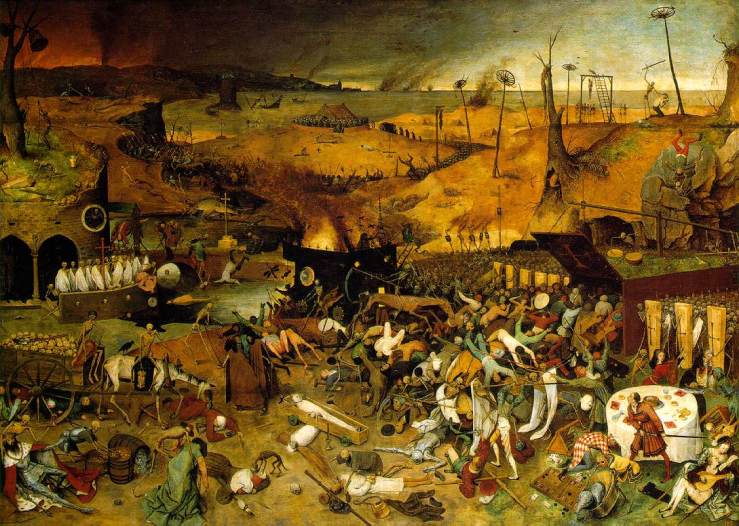
Ultimately, all of Underworld‘s themes–garbage, art, war, insulation, paranoia, drugs, death, secrets, baseball, identity, etc.–threaten to crush the narrative under their sheer weight. Unlike Pynchon, Barth, Coover, and DFW, DeLillo is rarely playful or even fun; most of the humor here serves to alienate rather than connect the reader to the characters. The book is masterfully written, and any number of the little vignettes, like the sad life of the Texas Highway Killer, or the Space-Age compartmentalization of a 1950s suburban family, expertly delineate DeLillo’s handling of concepts and motifs. However, the book’s prologue, “The Triumph of Death” (the title alludes to Bruegel’s painting), an account of the 1951 Dodgers-Giants pennant game is easily the most passionate, intense, and engaging moment of the novel. This assessment isn’t meant to suggest that the remaining 700 pages or so of Underworld aren’t as rewarding, they just aren’t as fun. Underworld is probably a work of genius, and the sum of its many, many parts do add up to more than the corpus, only that sum will probably leave a lot of readers feeling cold.

Brundibar — Maurice Sendak

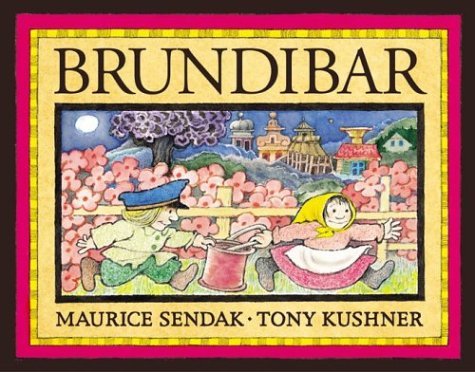
Adapted by playwright/screenwriter Tony Kushner and illustrated by Maurice Sendak, Brundibar retells Hans Krása’s children’s opera about a brother and sister who go on an adventure to get their ailing mother some fresh milk. The penniless pair decides to sing in order to earn milk money, but the cruel organ grinder Brundibar chases them away. However, they triumph with the help of a sparrow, a cat, a dog, and a cadre of helpful children.

The original opera was first performed by the children-inmates of a Nazi concentration camp in occupied Czechoslovakia. The symbolic overtones of the story are pretty straightforward, and Sendak emphasizes the point, marking his Brundibar with a Hitlerish mustache and a ridiculous Napoleon Bonaparte hat. Political symbolism aside, Brundibar is simply a great book, full of little songs, beautiful art, and a unique narrative style in which individual characters get their own speech bubbles and even street signs tell a story. This isn’t my one-year old daughter’s favorite book–yet–but it’s certainly one of my top picks from her little library. Good stuff.

On Rereading

So I just read Blood Meridian again. And–

Like many bibliophiles, I have a stack of books marked “to read,” both a physical and a mental one, a stack that only grows, one that my book-buying addiction feeds and that the reader in me can in no way deplete. The saddest thing in the stack–or about the stack, really (about is the proper preposition, not in) are all the books that I’m sure are just totally great (Atonement, The Sot-Weed Factor) and the ones that I’ve started at least half a dozen times yet never finished–yet (Gravity’s Rainbow, The Wind-up Bird Chronicles) that might not ever get read because of all the new books that get thrown on the stack.

The saddest thing though, is that we–and the “we” here is not editorial, folks, it refers to bibliophiles–we simply don’t reread enough. Because I teach high school, there are dozens of books that I get to reread every year. Every time I read Macbeth or Of Mice and Men or Their Eyes Were Watching God, I’m amazed by how rich and complex and just downright masterful these books are. Each new reading produces new insights, layers, new motifs unraveled, new details, once seemingly mere happenstances, reveal themselves as key to the whole ship and shebang. Rereading is good. And yet we don’t reread enough, precisely because of the stack, the insane egomaniacal compulsion to read all of the great books before, uh, death.

And so well and so thus I reread Blood Meridian. I read it a few months ago, put it down in a daze, read a few more books, all etiolated by comparison, and then, despite the stack I picked up Blood Meridian again, a strange ineffable compulsion forcing it into my hands; I didn’t want to reread the whole thing, just a few passages, and then, and then, well and then so well and thus I was just rereading the whole thing, a whole new book there under the book I thought I had read, had known, knew. I had experienced this before: when I first read Holden Caulfield, we were the same age; five years later I was five years older and he was a jerk. A decade passed and he was an alien (maybe I was a phony). Now, well, now I’m afraid to read the book

We can’t ever really know a book because we change. The book doesn’t change but the reading of the book changes. Because I get so much out of a rereading, because I know that reading in itself is not enough, the stack–which, I should probably emphasize, is a very real, physical presence, a little mound by my bed–because of this, there is a second distress, a pain of not only not being able to read all of the books, but also not being able to not reread many of them that deserve it.

So and well, after I reread Blood Meridian, I do something that I do after I finish every book–I go pick up a couple of books that I’m desperate to reread, as well as a few from the stack. The feeling is strange and breathless and giddy, and ultimately overwhelming. I uncover over old bookmarks, shocked that I made it so far on the last attempt, or stumble over the first five pages. I lie to myself, reading sections of Finnegans Wake, as if.

Right now I’m halfway through DeLillo’s masterpiece Underworld. It’s huge and unwieldy and really fucking good, and I will finish it–this time–but even as I read it I know that I’m missing half of it, that I can only really “get it” in the rereading. And yet and well this is a book that’s been in the stack for years. I have no solution, and I guess there’s no point to this post, only that I wish I had more time to read and then to read again.

Poster Making

If you had a million years to do it in, you couldn’t rub out even half the ‘Fuck you’ signs in the world. It’s impossible. –Holden Caulfield in The Catcher in the Rye

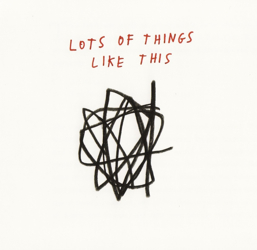
Royal Art Lodge piece from Lots of Things Like This, a slim volume of pictures with words (or words with pictures?) included with McSweeney’s #27 (two other books comprise the issue: a volume of short stories including pieces by Jim Shepard and Stephen King, and a really cool notebook of weird doodles and crazy thoughts by Art Spiegelman). Other artists represented in Lots of Things Like This include Magritte, Goya, Warhol, Raymond Pettibon, Jeffrey Brown, Leonard Cohen, David Mamet, David Berman, Basquiat, and more.

The Believer’s 2008 Reader Survey: (What Some Jokers Thought Were) The Best Books of 2007

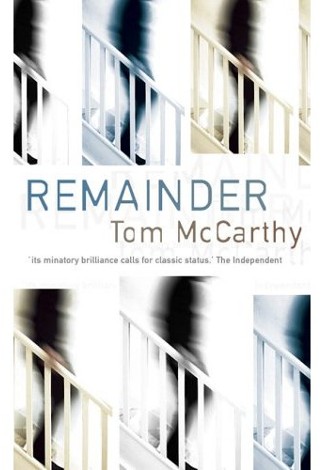
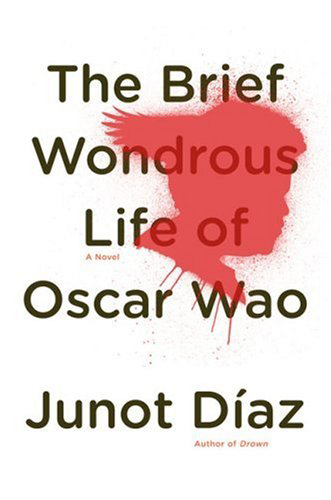
The current issue of The Believer features the results of the reader’s poll, as well as the editor’s top pick, for the best books published in 2007. The editors chose Tom McCarthy’s Remainder, which we haven’t read, and the readers picked Junot Díaz’s The Brief Wondrous Life of Oscar Wao, probably because the hero is such a nerd. The list follows with our comments; titles are linked to our reviews.

  1. The Brief Wondrous Life of Oscar Wao—Junot Díaz
  2. The Yiddish Policemen’s Union—Michael Chabon: We didn’t like this book and are frankly astounded at all the praise it’s garnered.
  3. The Savage Detectives—Roberto Bolaño: It’s in a stack waiting to be read. The stack is very big though, and the book is very big, so, who knows (in all likelihood it will beat out last year’s reader fave, Pynchon’s impossibly large Against the Day).
  4. Tree of Smoke—Denis Johnson: We loved it. Top pick of the year. Very divisive, strangely–just read through the Amazon reviews.
  5. Then We Came to the End—Joshua Ferris
  6. No One Belongs Here More Than You—Miranda July: Oh my gosh. Seriously? Really? I read half of this at a Barnes & Noble, no exaggeration. I sat and drank coffee and read it. I’m not saying that a book has to take a while to read in order to have weight or substance, but in this particular instance, no, nothing, fluff. This is the kind of thing that people who quit reading after high school mistake for literature.
  7. On Chesil Beach—Ian McEwan: The library has this on CD; I’ll listen to it this summer. I’ve grappled with the first five pages of Atonement too many times to bother, really. And then I saw the movie, and it sucked. So…
  8. Zeroville—Steve Erickson
  9. Like You’d Understand, Anyway—Jim Shepard
  10. Slam—Nick Hornby: We suspect that The Believer‘s readers are partial to Hornby; would they have given another Young Adult novel a nod? We doubt it.
  11. Divisadero—Michael Ondaatje: Also in the stack.
  12. Bowl of Cherries—Millard Kaufman: A pamphlet containing the first three chapters was published as an insert in an issue of McSweeney’s. It was pretty funny.
  13. Varieties of Disturbance—Lydia Davis
  14. The Absolutely True Diary of a Part-Time Indian—Sherman Alexie: This was fantastic. And it was YA! We rescind our Hornby complaint.
  15. The Abstinence Teacher—Tom Perrotta
  16. Call Me by Your Name—André Aciman
  17. After Dark—Haruki Murakami: Murakami is the writer we wished that we love but we just can’t get into. We remember reading some of his short fiction years ago, in Harper’s and other places, but even The Elephant Vanishes was a trial to get through.
  18. Darkmans—Nicola Barker
  19. Diary of a Bad Year—J. M. Coetzee
  20. Falling ManDon DeLillo: Dry, self-important, rarely engaging, and not nearly as good as it was pretending to be, Falling Man was only a step above its dark twin, Cosmopolis. Continue reading “The Believer’s 2008 Reader Survey: (What Some Jokers Thought Were) The Best Books of 2007”

Summer Reading List: Anthologies to Know and Love

No summer reading is complete without imbibing the variegated prose of an anthology. The following are the literary equivalents of skillfully-detailed mixtapes, made by a friend who wishes to communicate only that he or she has your best interest at heart.

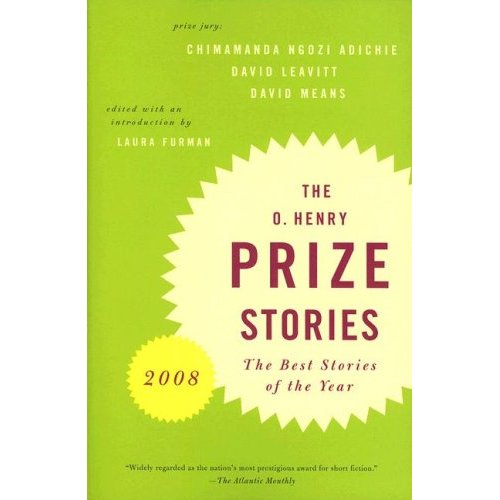
The 2008 O. Henry Prize Stories anthology is a great way to play catch up on all of the reading you missed last year. Culled from publications like Zoetrope, Harper’s, Granta, and Tin House, this anthology features established masters like William Gass and Alice Munro along with newer voices. There are plenty of highlights and no duds. Sharon Cain’s “The Necessities of Certain Behaviors” explores an amorphous world of gender-bending, while Stephen Millhauser’s “A Change in Fashion” imagines a new mode where women cover every inch of their flesh from the gaze of men. Lore Segal’s “Other People’s Deaths” perfectly captures the painful awkwardness and shame we experience when encountering, um, other people’s deaths. Similarly, the title of Tony Tulathimutte’s “Scenes from the Life of the Only Girl in Water Shield, Alaska” is spot-on, and Gass’s contribution, “A Little History of Modern Music,” is the funniest monologue we’ve read all year. But our favorite in the collection has to be Edward P. Jones’s “Bad Neighbors,” which examines the changing fortunes of an African-American neighborhood in Washington, D.C. A great collection, and if a story disappoints you, there’ll be three to make up for it.

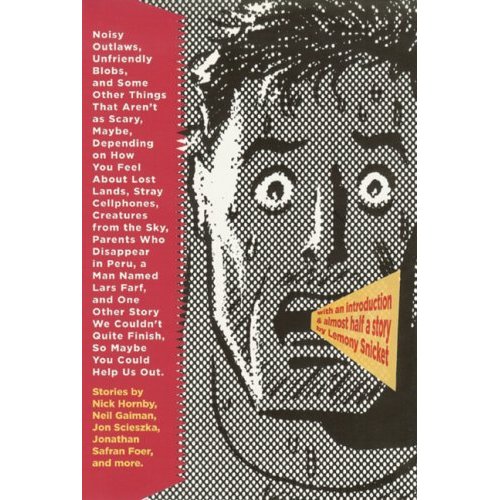
In the ultimate in lazy reviewing, we will let the title of McSweeney’s kids anthology Noisy Outlaws, Unfriendly Blobs, and Some Other Things That Aren’t as Scary, Maybe, Depending on How You Feel About Lost Lands, Stray Cellphones, Creatures from the Sky, Parents Who Disappear in Peru, a Man Named Lars Farf, and One Other Story We Couldn’t Quite Finish, So Maybe You Could Help Us Out stand as its own summary. However, this is a beautiful book with lots of lovely pictures, and the collection is worth it for Nick Hornby’s story alone. Good stuff.

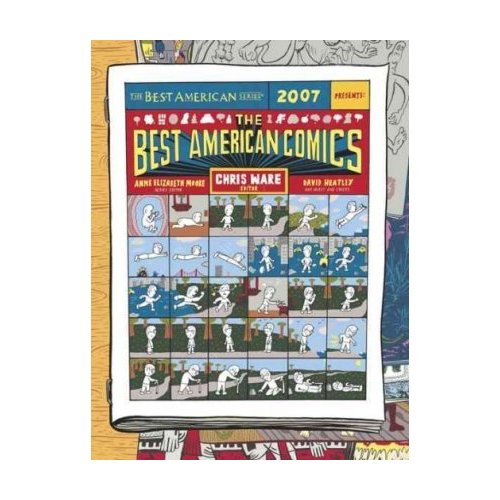
Edited by superstar Chris Ware, The Best American Comics 2007 serves as a delicious tasting menu of some of the best comix published in the past few years. Although hardcore comix fans will no doubt have already read the selections from Charles Burns’s Black Hole and Adrian Tomine’s Optic Nerve, there’s plenty here for aficionados and newbies alike.

Chances are you’ve read a number of the canonical texts in 50 Great Short Stories, but it’s also likely you haven’t read them in years. We’ve had this book for years, and have revisited often to indulge in old favorites for new inspiration. Classics like Shirley Jackson’s “The Lottery” and Hemingway’s “The Three-Day Blow” nestle up against lesser-reads like Edmund Wilson’s “The Man Who Shot Snapping Turtles” and Francis Steegmuller’s “The Foreigner.” And have you read Flannery O’Connor’s “A Good Man is Hard to Find” since high school? No? Shame on you! What about Carson McCuller’s “The Jockey”? Dorothy Parker? Kipling? Consider it a light crash course in great literature.

Summer Reading List: Tales of Romance

Summer lovin’: have a blast. You don’t have to read harlequin schlock to get romantically fulfilled on the beach this year.

Why not start with an overlooked, under-read classic from American Renaissance master Nathaniel Hawthorne. The Blithedale Romance is a fictionalized account of Hawthorne’s time on Brooke Farm–here called Blithedale–an attempt at a utopian commune founded by artists and free-thinkers. Free lovin’, amorous passions, and, uh, farming. Great stuff–and romance is right in the title.

For lighter yet still substantial fare, check out Lara Vapnyar’s Broccoli and Other Tales of Food and Love, a delicious collection of snack-sized short stories (please, please, please forgive this awful extended metaphor). Sly, smart, and occasionally sexy, Vapnyar’s tales of dislocated immigrants continue to linger on the palate long after they’ve been digested (sorry!). The recipe section at the end is the sweetest dessert (ok, I swear I’m done now).

If you like your love stories rougher around the edges, check out Charles Bukowski’s only masterpiece, Women. This rambling novel follows alter-ego Henry Chinaski’s late-in-life successful turn with the ladies. Ugly, unforgiving, honest, and hilarious, Women is one of my favorite books. Also, unlike Henry Miller’s Tropic books, you’ll actually finish this one.

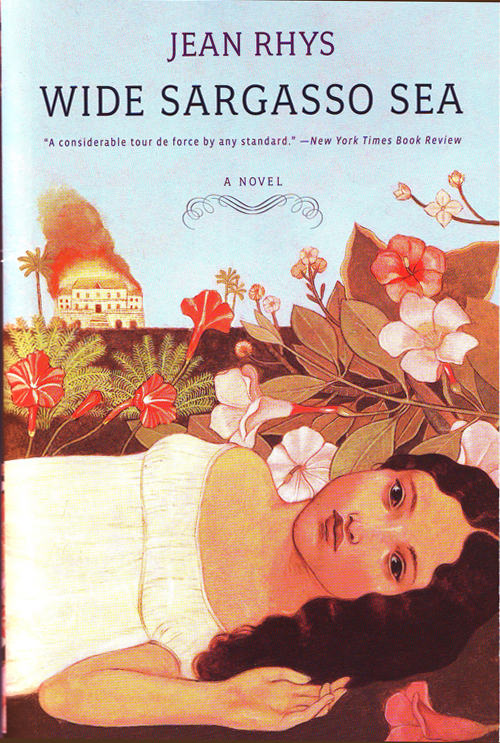
We finally read Charlotte Brontë’s Jane Eyre last summer, and believe it or not, the book is pretty great. Truly a romantic classic, but also a fine comment on gender, class, and social mores in general. And if you like it, check out Jean Rhys’s Wide Sargasso Sea, which tackles the back-story of a certain crazy lady in the attic who didn’t exactly get a voice in Jane Eyre.

Finally, if you want to get very specific, don’t hesitate to search the Romantic Circles website. Plenty of resources and lots of electronic texts: your source for all things Blake, Wordsworth, Coleridge, Shelley, Keats, and more. Good stuff.

Summer Reading List: Tales of Adventure

Indulge yourself this summer by taking a fantastic voyage–literary or literally. To help you get started, check out the following tales of adventure.

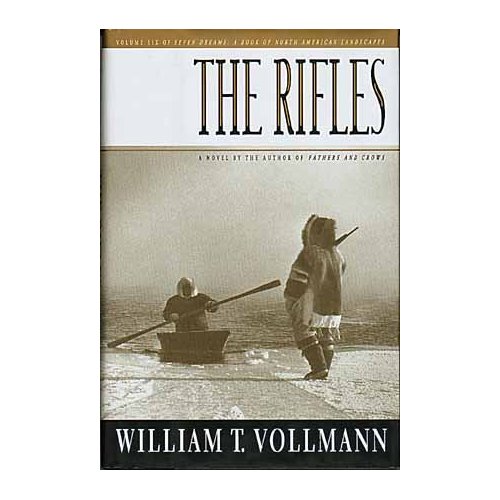
William Vollman’s The Rifles, part of his as-yet-unfinished Seven Dreams series is a brilliant engagement of history, colonialism, identity, and all of those Big Profound Issues that we so adore in our modern literature. It’s also a really cool adventure story, the tale of John Franklin’s nineteenth-century exploration of Inuit territory. Sad, beautiful, breathtaking.

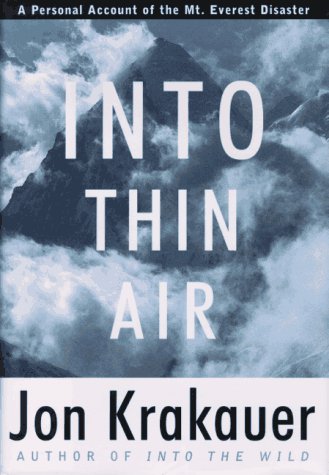
If you prefer your adventure tales uncomplicated by postmodern gambits, check out John Krakauer’s Into Thin Air, a journalistic account of the writer’s 1996 ascent of Mt. Everest, and the disasters that befell his expedition. The word “harrowing” fits well, gentle readers.

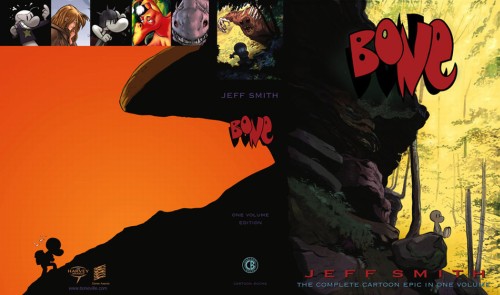
On the lighter-but-not-too-much-lighter side, Jeff Smith’s self-published comic Bone is fantastic; even better, you can get the entire 1300 page run of the whole series in Bone: One Volume Edition. We use the word “delightful” here in an absolutely unpejorative sense, friends: the adventures of Fone Bone, his cousins Phoney Bone and Smiley Bone, and Thorn, Granma Rose, and the Red Dragon are epic in scope yet retain an honest humor that will keep in the most cynical folks laughing. A major literary accomplishment that has been unjustly overlooked.

Also somewhat overlooked is Herman Melville’s Benito Cereno. In Bone, protagonist Fone Bone lugs around a massive copy of Melville’s masterpiece Moby-Dick everywhere he goes–and while that book is undoubtedly a desert island classic, Benito Cereno is an underappreciated gem of a tale. Revealing the strange secret at the heart of this book would spoil it, so suffice to say that the short novel enigmatically investigates slavery and colonialism in ways that beg for closer analysis. Good stuff.

Perhaps, though, you beg for the real thing. In that case, we recommend Ultimate Adventures (from Rough Guides) for all your camel-trekking-in-the-Sahara, rock-climbing-at-Joshua-tree, Pacuare-River-rafting needs. Beautiful photography and tantalizing descriptions are coupled with informative “Need to Know” sections that spell out the who-what-when-where-and-how that will help you get your adventure under way.

Also in the exploratory vein, Where to Go When: The Americas, from DK’s Eyewitness Travel, serves as a kind of travel almanac–the kind that makes you wish you were very, very rich with an excess of free time. If that were the case, you’d be spending nine days in May on the Amazon River, spotting pink river dolphins, gorgeous macaws, and darling squirrel monkeys instead of reading this blog right now. Even if you’re not excessively rich with nothing more pressing to do other than trek the Alaskan fjords, The Americas is fun daydreaming material–perhaps the realist response to Vollman’s Seven Dreams. In any case, Ultimate Adventures and The Americas both come out at the end of this summer, giving you plenty of time to plan that awesome adventure getaway for next year.

Summer Reading List: Primer–Beach Reading and School Reading

The end of the Memorial Day weekend marks the beginning of summer, and with it, summer reading. This week Biblioklept will offer up some swell reading suggestions that will both entertain you and make you a better human being (seriously). In advance of that, let’s start with a silly question: just what is “summer reading” and how is it different–or is it different–than any other type of reading?

We’ll divide summer reading into two distinct camps: there’s elective summer reading, which we will henceforth call beach reading (no beach need be involved, as we will soon see), and then there’s the summer reading forced upon young people, henceforth known as the mandatory summer reading list. Let’s look at mandatory reading first, and then quickly dismiss it.

The lists. Oh the lists. We imagine most of our audience has been through the whole mandatory summer reading drill: schlepping around Barnes & Noble (or B. Dalton, back in the day), diligent Mom with said list clutched in hand, the embarrassment of the whole thing summed up in the piles of A Raisin in the Sun and A Separate Peace displayed in the aisles, the sullen look of an emerging sophomore gripping various honeybee-colored editions of Cliff’s Notes, the indignant cries of younger siblings, also forced to read, your never-read copy of My Side of the Mountain foisted upon them. The list seems impossible: A Portrait of the Artist as a Young Man? The Aeneid? Tess of the D’Ubervilles? Christ on crutches! Almost everything else in the bookstore seems doubly alluring by comparison. We want to read what we want to read, not what you tell us we want to read

This isn’t to suggest that a codified summer reading list should be done away with, of course. Summer reading helps to keep young people’s minds engaged during a time when they’d otherwise, let’s face it, consume naught but the cotton candy fare of Grand Theft Auto and Flavor of Love. Without the rigors of summer reading, students would return to school in the fall with their mind-muscled atrophied, puny, impotent. Still, having someone mandate what you should read is never fun. We had to go back years later, on our own, to appreciate much of what was forced upon us in youth.

That said, summer is a fine time to go back to those very lists. Just because you didn’t “get” Don Quixote when you were fifteen (and really, why would you have?) doesn’t mean that you won’t find it hilarious now that you’re older and your frames of reference have so greatly expanded. Ditto Moby-Dick, The Turn of the Screw, Walden, et al. There’s no rule that what we are calling here “beach reads” have to be light and fluffy. Still.

Ideas of just what constitutes beach reading, are, of course varied. But for many of us, beach reading implies a book that we can read on the beach or by the pool or swaying in a hammock in our backyard. Beach reading is a book that we can still follow after three beers on the porch. Beach reading can be trashy and lurid; beach reading can be literary junk food. Beach reading is genre fiction in cheap mass produced paperbacks, the kind of books we’re happy to leave at the condo when we’re through with them. Someone else will find them, digest them along with a blender of margaritas. At the same time, for a lot of us beach reading is the time to play catch up with all those books that have been stacking up in the margins of our homes, neglected, unread. In any case, summer is a time that many of us put renewed energies into pursuing the endangered pastime of reading, and over the next week Biblioklept aims to aid the cause.

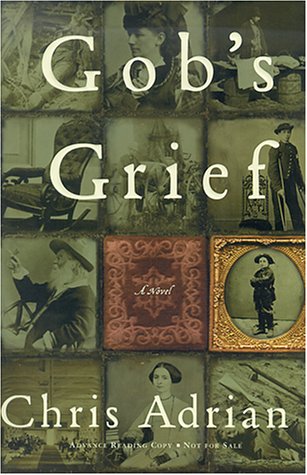
Gob’s Grief — Chris Adrian

It’s the greatest open secret, that death will take everyone, that every person is as transient as a shadow. Embracing this knowledge…was how sane people managed their grief.

In his debut novel Gob’s Grief, Chris Adrian explores the turbulent political, cultural, and social reforms of the immediate post-Civil War era through the lens of personal loss–specifically, the loss of dead brothers. Gob Woodhull, fictional son of agitating feminist Victoria Woodhull, suffers from intense grief and guilt after not running away to war with his twin brother Tomo, who dies at Chickamauga. Deciding that he must perform the impossible, Gob sacrifices his pinkie finger (and much more!) to a sinister, cave-dwelling magical being called the Urfeist, who takes young Gob on as an apprentice. Under the Urfeist’s tutelage, Gob begins designing and building a Frankenstein machine that will bring both his brother and all of the dead back to earth. Gob describes his machine and its purpose:

Don’t you understand? What’s grief if not a profound complaint? It’s what the engine will do; it will complain. It will grieve with mechanical efficiency and mechanical strength. It will grieve for my brother and for your brother and for all the six hundred thousand dead of the war. It will grieve for all the dead of history, and all the dead of the future. Man’s grief does nothing to bring them back, but just as man’s hands cannot move mountains, but man’s machines can, our machine will grieve away the boundaries between this world and the next.

The Urfeist agrees with Gob’s strange logic, explaining just what’s in it for the dead:

Unhappiness is the lot of the spirits. They are denied bodily delight, but they are creatures of desire. Desire is all that’s left to them. They want to live again! They want to be with you, all you desolate millions. How will you live without them? How will they continue without you? What sort of heaven can there be when brothers are apart?

Aiding Gob, often against their better judgment, are Walt Whitman (yes, that Walt Whitman), Will Fie, and Maci Truffant; both Will and Maci have also lost brothers in the Civil War, and these fraternal ghosts literally haunt them. Whitman too has lost a brother, but the poet more keenly misses Hank, a young man who Whitman becomes very attached to while volunteering at a hospital. Although Hank dies, his voice remains in Whitman’s head. Walt, Will, and Maci all make unique contributions to Gob’s bizarre machine. Maci serves as an engineer, Will as a visionary builder, and Walt, “the Kosmos,” serves as the battery that powers the strange, mansion-sized contraption. Added to the mix is Pickie Beecher, an unearthly little kid birthed during an early trial run of the machine.

The novel is divided into three distinct sections, each focusing on the different perspectives of Walt, Will, and Maci, and the most interesting moments of the narrative are when the events overlap, revealing the differences between these characters (the first section, focusing on Walt Whitman, is easily my favorite; it even made me go back and reread portions of Leaves of Grass). Adrian also employs interchapters focusing on young Tomo running away to the war and the Urfeist’s education of Gob. At times, this structure is fascinating, but it often gets in the way of characterization and detail: at nearly 400 pages, Gob’s Grief is a fairly long book, but it feels like it should be much longer. Adrian is fascinated with the cultural, economic, and social upheavals that preceded the Gilded Age, but much of the fine tuning seems edited away in favor of repeated descriptions of, uh, grief (at a certain point, I wanted to yell, “Okay–I get it! He’s mourning! He’s sad! Move on”). I also found the elements of magical realism, particularly the backstory of the Urfeist, to be underdeveloped, often overshadowed by a concern for the tropes of historical fiction.

Still, in Gob’s Grief, Adrian conveys a marvelous aplomb rare in debut novels, a promise he lives up to in his fantastic follow-up The Children’s Hospital (Pickie Beecher shows up again in that novel, and its main protagonist, Jemma Claflin, is a descendant of Woodhull). In all likelihood, Adrian will continue to perfect his craft. And while we’re waiting for his next great novel, we can read A Better Angel, a collection of short stories set to drop this August.

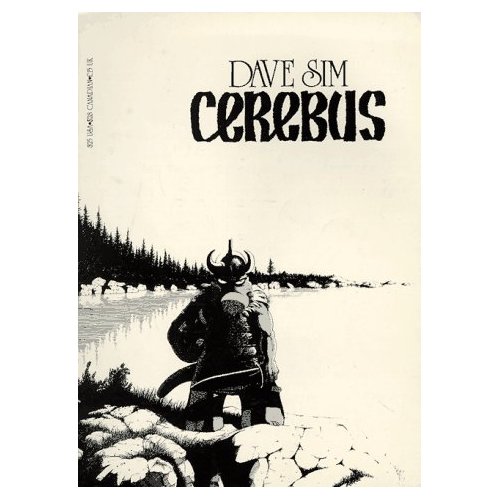
Cerebus — Dave Sim

Quick disclaimer:

What follows is a review of the first Cerebus graphic novel, not a review of the series as a whole. I initially contemplated such a feat, but handling Dave Sim’s (and Gerhard’s) 300-issue-long magnum opus in one post would result in either a really, really long post or a really, really inadequate handling of such fine (and troubled) material. Instead, I’ll review the series chronologically, covering one volume a month.

I suppose, also, that a quick primer or introduction may be necessary, so here goes–

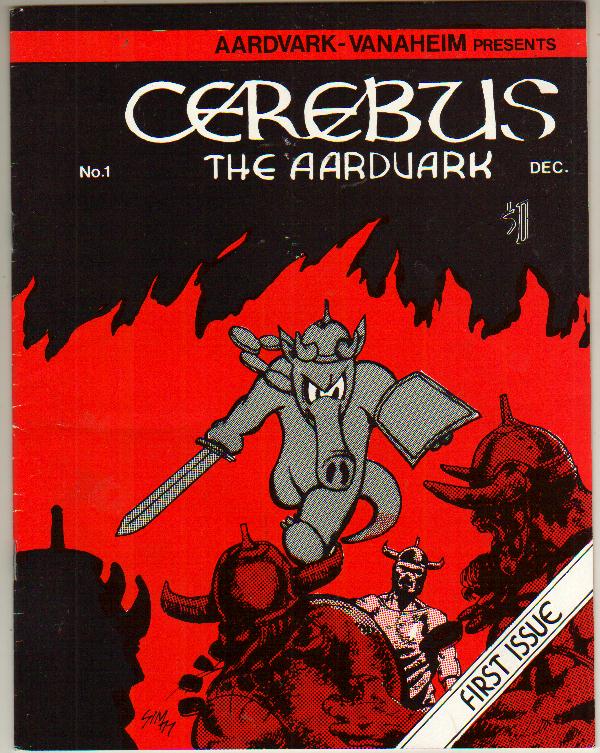
Cerebus is a 300 issue black and white comic book, conceived, written, and drawn by Dave Sim (with stunning background art by Gerhard in issues 66-300). Sim published the book himself via his Aardvark-Vanaheim imprint. The book follows the adventures (and non-adventures) of Cerebus the Aardvark, a surly barbarian who, as one of only three existing aardvarks in Estarcion, has a sort of catalytic power to influence major world events. It’s satire, it’s drama, it’s action, it’s art. The series contemplates politics, religion, literature, economics, and just about everything else under the sun. Only this is really not an adequate summary at all, so I’ll stop here, and get to the actual review. You can google “Cerebus” and “Dave Sim,” of course, and read all about Sim’s rise and fall (it gets spectacularly crazy, folks!); or, you can just wait until we get to the Reads book to learn all about Dave Sim, misogynist. But I’ve digressed before I’ve even begun. (The Cerebus Wikipedia page is pretty good; and this 2004 AV Club interview is also insightful).

Let’s start the review with yet another non-start: another disclaimer:

If you’re at all interested in Cerebus, Cerebus, the first graphic novel in the series, collecting issues
1-25, is not the place to start. If you really are interested in Sim’s work, start with the next collection, High Society. It’s much funnier, tighter, and Sim comes into his own as a draftsman by these issues (although there’s no denying that the art only gets better and better as the story progresses). Sim claims that he knew more or less from the beginning that Cerebus would have a scope of 300 issues (taking 27 years to complete), but the first 15 or so issues don’t really reveal anything that promising. Very early Cerebus is a silly funny animal Conan-Red Sophia parody. However, with issue 20, “Mind Games”–a comic Sim composed in interlocking images that when reconstituted created a new image (all right, that’s not a great description)–the book starts to get really interesting. By this point, Sim has already introduced my favorite character, Lord Julius, the anarchic Groucho Marx parody who wreaks havoc throughout the series; Sim further stirs things up by injecting the matriarchialist Cirinists into the chaos. The emerging Cirinists’ political/martial power becomes the conflict that will dominate the first half of the Cerebus series, and the larger issue of female power can rightly be named the Sim’s thematic obsession throughout the entire comic’s run. Before these themes come into their own, issues 1-17 or so of the book are stock fantasy tropes poked at with a stoner’s sense of humor. Like I said before, Cerebus–volume 1 of Cerebus–will be most enjoyed by those who’ve already had a taste of the good stuff–High Society and Church & State. Good stuff. More to come.

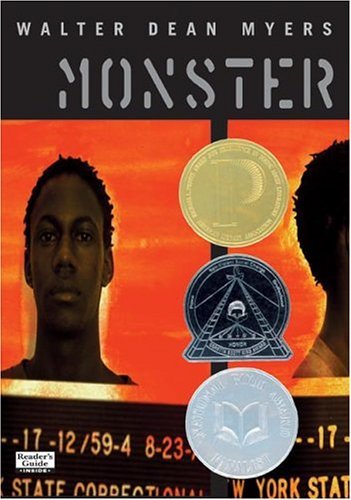
Monster–Walter Dean Myers

In Walter Dean Myer’s Monster, sixteen year-old Steve Harmon is on trial for felony murder in New York City. He participated in a robbery that went bad when the store owner was killed with his own gun. Only Steve wasn’t in the store at the time of the robbery/murder–he was playing the role of the lookout. In fact, he didn’t even send a signal of any kind, he just walked out of the store. Before he wound up in jail, Steve attended Stuyvesant High School, where he excelled in his film class. Steve, a sensitive kid from a stable home, despises the violence and cruelty of jail and feels utterly alienated from the reality of his trial. To avoid the intensity of his situation, he writes a diary where he records his feeling. These handwritten passages introspectively contextualize the rest of the narrative, which is composed of Steve’s screenplay of the events of the trial.

Walter Dean Myers (Scorpions, Fallen Angels) is one of the founding writers of the YA movement that emerged in the early seventies (other writers include S.E. Hinton, Robert Cormier, and Judy Blume), and Monster is written to appeal to high school kids. Although Myers always has his teen audience in mind, he never talks down to them, and even though Monster features a discussion of some “edgy” content (uh…prison rape) it’s always purposeful to the narrative and never lurid or used for the sake of crude shock value. I’ve used this novel in my 10th grade classroom for a few years now and it’s always a big hit (this year we’re reading it in conjunction with Antigone and a viewing of Lumet’s 12 Angry Men). The students generally love it–they get to read the parts in Steve’s film–and it provides a fantastic platform to discuss a number of relevant issues, including justice, prejudice, guilt and innocence, and how we perceive (and sometimes dehumanize) others. At the heart of the novel is Steve’s inward battle to see himself as human and resist the gaze of the prosecutor, jury, and judge, as well as his attempt to escape the way that jail will shape his personality. This psychological/ethical/perceptual dilemma dominates the novel and Myers is content to let moments of irresolution stand in place of easy, platitudinous answers or dogmatic moralizing. This is a great novel for the classroom, but I think adult readers would also enjoy it. Highly recommended.

The Biblioklept Interview: Mathias Freese

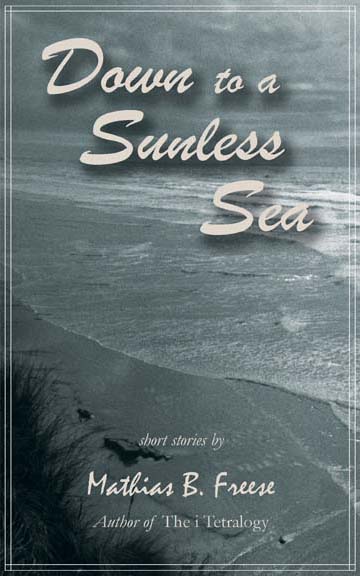
Mathias Freese, author of Down to a Sunless Sea and The i Tetralogy, was kind enough to answer a few questions for us. This interview took place over the course of several emails.


Biblioklept: Have you ever stolen a book? If so, could you tell us a little bit about that?

Mathias Freese: No, I’ve never stolen a book.

B: Have you ever borrowed a book without returning it–purposefully or not?

MF: The amount of guilt for both of these questions, as a young boy, would be too much to bear; and then obsessing about it enters the picture and I’d end up in central casting auditioning for a role in The Possessed.

B: What are you currently reading?

MF: Dan Wakefield’s, New York in the Fifties. Living in Arizona, a geriatric Disneyland, I remember well Brooklyn – Brighton Beach, Manhattan Beach, and Coney Island. I grew up in the Fifties and Wakefield evokes the literary times very well – Ginsburg, Kerouac, Mailer – as well as the cultural sensibilities of the time. I was too young for all this but reading about it evokes Greenwich Village, egg creams, and a great bialy.

B: What are you writing right now?

MF: I am editing a novel, my first, written more than two decades ago. Sojourner is a philosophical tale dealing with the emigration of a young Chinese farmer to the Mountain of Gold (California) as it was called.

B: Sojourner sounds interesting. Is it research-based historical fiction? (Perhaps you hate to classify what you write into a specific genre, of course). Tell us more.

MF: Sojourner began as a 30 page short story in the years 1969 to 1972; I was working on a federal project dealing with racial-ethnic relations in the town of Freeport, on Long Island, NY. I had met a Chinese-American librarian who had written on the emigration to Gum Shan, Mountain of Gold. I researched only details that would be useful for verisimilitude, such as Gum Shan, and began a short story about the subject. The book ultimately reflects my own philosophical needs and emotional cravings for meaning. When submitted to publishers as a novel for young adults almost all of them wrote that I had made an error, and that this fiction was serious and for adults. Who knew? I do believe that the writer is the last to truly appreciate his work. The i Tetralogy which began in 1996, is a more thoroughly researched book , and it is a historical fiction on the Holocaust based on my experiences as an American Jew. I had read a significant amount of the literature on the Holocaust with no intent of being a writer. If you read my “On the Holocaust” in the Pages section of my website, you will get a rather complete statement of my point of view.

B: The Marxist critic Theodor Adorno famously declared: “To write poetry after Auschwitz is barbaric.” How do you interpret this remark?

MF: Adorno’s comment was of its time. I feel what he means, how can we allow beauty in the presence of such unspeakable evil! However, it does not make sense. When you write you metabolize feelings – all kinds – thoughts, experiences and all the rest. When the ancients passed down Homer’s Odysseus orally, the words saturated the listener with meaning and continuity. We must write about the Holocaust until the end of time, although we face psychological resistance every step of the way. I have faced this with The i Tetralogy. One of the most significant gifts of Judaism to civilization is memory. We do not forget – and most assuredly, we do not “put it behind us,” one of the more inane “truisms” in this culture – re: Mel Gibson and Jesse Jackson. Adorno is dead wrong.

B: The back of your book, Down to a Sunless Sea, mentions that you worked for over twenty-five years as a social worker and psychotherapist. Several of the stories in the book seem to explore explicitly psychoanalytical themes, yet these themes are never overstated. Is this purposeful?

MF: I have been accused of being too clinical; I think that is unfair. I use my therapeutic insights when I can while integrating them with my psychological and emotional wisdoms (if that) and try to make a story. I recall covering for a teacher in an eleventh grade class. He was teaching Oedipus Rex. I asked him if I could treat it the way I wanted to. He agreed. In class, in a small review, the students told me that they were up to where Oedipus scratches out his eyeballs, consequently the interpretation was stressed that he chose not to see – and how very symbolic that was. I asked them if they were opened to another way of looking at it. I shared that to me it was a case of displacement. Duh! In effect, he was castrating himself. Titters and titters. I went on to say that they touch their eyes now and make an observation. Finally, one student said that they felt like balls. And away we go! The next day the teacher was bent out of shape because he had heard that I said that Oedipus ripped out his eyes, in effect, his balls. I am sure some students came away believing that balls evolve from eye sockets. Why should I give up insight (no pun intended) no matter where it comes from?

B: I teach eleventh-graders, actually. You never know what weird mutation of what you discussed that they will commit to memory forever. Do you enjoy being in a classroom? Have you ever taught fiction writing? What do you think of MFA programs?

MF: I was terribly misplaced in that career. The consensus was that I was a terrific teacher but I detested the rules, the administration and the deadness. You read “Nicholas.” He has it right. So I studied to become a therapist and it worked very well for me, my craft and my self. I have taught seminars on fiction writing and if you go to the site you will see a course description and in the Pages section there are short essays all dealing with writing. Go nosh. As to MFA programs I have a simple premise: if it is organized, go elsewhere. Same feelings I have about religion, et al. I cannot think of any world class writer who has a MFA. What about good old suffering and pain as a motivator?

B: Many of the stories in Down to a Sunless Sea utilize a very tight, condensed prose style. How much do you edit out of your work?

MF: I like this question in that it touches upon something I truly believe in. Some writers secrete out paragraphs per day. I can’t handle that anality. I write, let us say, 10 pages knowing full well I cut back to maybe 4. The art of writing is revise, revise and revise. I like pruning the story tree so that new growth is inaugurated. Like poetry, which I find, of course, the most condensed of writing, I believe stories should be very tight – let the reader infer rather than I tell. Indeed, one reviewer complained she couldn’t understand the stories, at least in her first reading. Good. Get back to it and reread it. I am not fooling around here and I deserve a better reading if you feel there is more to my stories than Oprahesque fluff.

B: When you re-read “Arnold Schwarzenegger’s Father Was a Nazi” now, do you consider it prescient? How do you think Arnie turned out?

MF: I had a sense about Arnie, of that tom tom in his character, that immigrant feeling that America can be tamed and domesticated to one’s own ends. I associate to Daniel Day-Lewis [in] There Will Be Blood, that tornadic energy to succeed, ambition on speed. In many ways Arnie is an athletic Algeresque character. I was not conscious of making any predictions, but it did feel to me, on a gut level, that he had other measures and goals to achieve and one of them is to marry into a famous family and all the rest. He is a delightful social climber who has denied, at least in the media, his background. I can write about Arnie because I don’t know him and that is the freedom of the writer. Give a writer one telling detail and the rest is extrapolation; think Kafka.

B: You maintain a website, www.mathiasbfreese.com. Do you write certain pieces specifically for the site? Corollary–How does your writing change when you write specifically for hypertext publishing?

MF: Blogging is new to me and I find it frustrating that so few people respond, given that I have had over 8400 hits; something is awry. Nevertheless, I enjoy writing every few days to keep my skills sharp. I am presently sharing a memoir about a fire on Mt. Lemmon in Tucson; it is filled with reflections, moods, sadnesses, and philosophy. Who cares if the reader is bored? I like it. I think the blog is excellent for short pieces, mini essays, faction. The reader gets bored with long pieces, but who knows in this new century of the Borg.


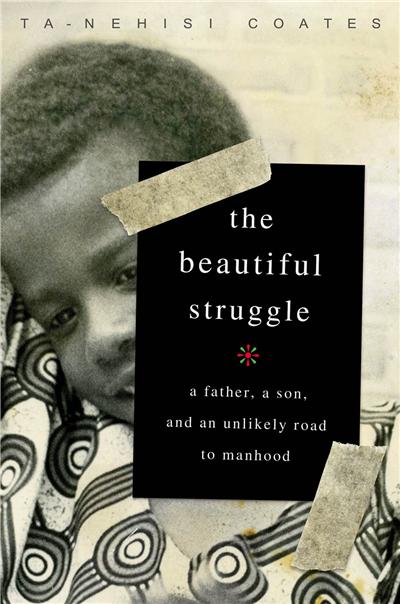
Ta-Nehisi Coates on Hip-Hop’s Daisy Age

Earlier this week, The Root published a fantastic excerpt from Ta-Nehisi Coates’s recent memoir The Beautiful Struggle. In “Hip-Hop’s Daisy Age,” Coates contextualizes a Golden Age–the arcadian summer of ’88–when a new “consciousness” movement in hip-hop brought together both the discordant militarism of Chuck D’s Public enemy and the neo-hippie soul of De La Soul. Although Coates grew up African-American in an economically-depressed Baltimore and I am white, and was living in Dunedin, New Zealand in the summer of ’88, we are roughly the same age. When he writes, “I was all X-Men, polyhedral dice, and Greek myths,” it’s not hard for me to imagine that we actually probably have at least a few things in common. And while I was clearly in a different cultural place, I owned and cherished most of the albums that Coates cites in his piece. I played them repeatedly, furtively listening in secret to the alien sounds on my Sony Walkman. I can’t help thinking of 3 Feet High and Rising without a warm tinge of nostalgia coupled with a sadness that something so fresh and vital and just plain different probably won’t come out of mainstream hip-hop again–or at least any time soon. Perhaps this is hip-hop’s legacy–20 years after its Golden Age, it’s earned the right to be as shitty, conformist, and downright stupid as any other commercial genre. But I’ve digressed. Coates’s piece is no lament. Instead, it’s a loving tribute to a particular moment, which, for him at least, seemed to transcend the space he was in and extend into all “the ghettos of the world, with their merchant vultures, wig stores, sidewalk sales, sub shops, fake gold, bastard boys, and wandering girls.” In the summer of ’88, I was living comfortably in a lovely harbor town, but the sentiment Coates expresses reached me nonetheless. As corny as it sounds, hip-hop in ’88 provided a cultural education for me, not just about the African-American experience specifically, but, more generally, as an expatriate, hip-hop told me something about what was new and fresh and vital in America. Now I realize that my own early love for hip-hop simply preceded the eventual mainstreaming, commercialization, and consequent dumbing-down of hip-hop. And honestly, I could never have the same spiritual attachment that Coates describes:

“…the rhyme-pad was a spell-book, it summoned asphalt elementals, elder gods, and weeping ancestors, all of whom had your back. That summer, I beheld the greatest lesson of 88, that when under the aegis of hip-hop, you never lived alone, you never walked alone.”

Where Coates experienced soul music, I heard punk rock. But for each of us, the hip-hop in ’88 was a new kind of rebel music. Looking back, it’s hard to believe that 20 years have passed. When I get home tonight, I’ll listen to EPMD’s Strictly Business and try to forget about Soulja Boy for 45 minutes.

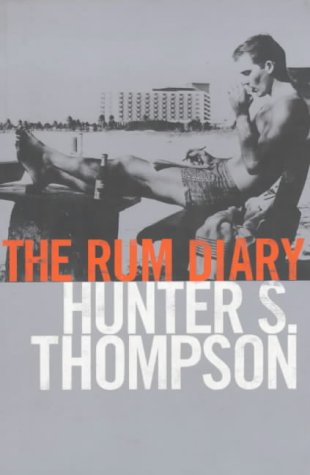
The Rum Diary–Hunter S. Thompson

Set in the 1950s, Hunter S. Thompson’s second novel The Rum Diary chronicles the drunken misadventures of Paul Kemp, a journalist who moves from New York City to Puerto Rico to write for a small newspaper. While there, Kemp gets involved with a crazy couple who fight all the time (he develops a serious crush on the girl), attends a rum festival, and winds up in jail. Along the way there’s enough drinking to put Hemingway’s characters to shame, and plenty of nude swimming to boot.

Although The Rum Diary was written in the early sixties, it wasn’t published until 1998, long after the infamous gonzo godfather had made his indelible mark on the American literary consciousness. Thompson was 22 when he wrote The Rum Diary, a significant eight years younger than his stand-in in the novel, jaded journalist Paul Kemp. And while it’s easy to imagine that HST was born a cranky old man, at times Kemp’s world-weariness reads more like an affected pose rather than an earned cynicism.

The novel works best when HST focuses on denigrating the cretins, phonies, perverts, and degenerates that are never in short supply in his sick universe. Where the average travel writer might see a joyous festival throbbing with life and humanity, HST finds dread and disgust, fear and loathing. His frenzied yet steady prose moves quickly, adding to the general manic tone of the novel, and, despite its 200+ pages, The Rum Diary is an easy weekend read. Additionally, HST’s reflections on American imperialism and tourism in general remain relevant and fresh over forty years later.

The Rum Diary is hardly the HST starting place, but this is quite obvious (if, dear reader, this is not obvious to you, get thee to a bookstore posthaste and obtain Fear and Loathing in Las Vegas). However, for casual fans The Rum Diary will make an interesting beach read. Apparently a movie featuring HST friend-alum Johnny Depp (as Paul Kemp) is slated to come out next year, so stay one step ahead of Hollywood by reading this now. Recommended.