To search for those copies or similar copies, the same font, the same layout, the same plot, the dark or bright syntax, somehow forces me to remember a time when I was young and poor and careless, though I know that the same copies, the exact same ones, will never be found, and to set myself to such a task would be like marching into Florida in search of El Dorado.
Even so, I often browse used bookstores, sorting through stacks of books left behind by others or sold in a dark moment, and in corners like these I try to find the books that I lost or forgot more than thirty years ago on another continent, with the hope and dedication and bitterness of those who search for their first lost books, books that if found I wouldn’t read anyway, because I’ve already read them over and over, but that I would look at and touch just as the miser strokes the coins under which he’s buried.
But books have nothing to do with greed, though they do have something to do with coins. Books are like ghosts.
The classics are the books of which we usually hear people say, “I am rereading . . . ” and never “I am reading . . . “
We use the words “classics” for books that are treasured by those who have read and loved them; but they are treasured no less by those who have the luck to read them for the first time in the best conditions to enjoy them
The classics are books that exert a peculiar influence, both when they refuse to be eradicated from the mind and when they conceal themselves in the folds of memory, camouflaging themselves as the collective or individual unconscious.
Every rereading of a classic is as much a voyage of discovery as the first reading.
Every reading of a classic is in fact a rereading.
A classic is a book that has never finished saying what it has to say.
The classics are the books that come down to us bearing the traces of readings previous to ours, and bringing in their wake the traces they themselves have left on the culture or cultures they have passed through (or, more simply, on language and customs).
A classic does not necessarily teach us anything we did not know before. In a classic we sometimes discover something we have always known (or thought we knew), but without knowing that this author said it first, or at least is associated with it in a special way. And this, too, is a surprise that gives much pleasure, such as we always gain from the discovery of an origin, a relationship, an affinity.
The classics are books which, upon reading, we find even fresher, more unexpected, and more marvelous than we had thought from hearing about them.
We use the word “classic” of a book that takes the form of an equivalent to the universe, on a level with the ancient talismans. With this definition we are approaching the idea of the “total book,” as Mallarmé conceived of it.
Your classic author is the one you cannot feel indifferent to, who helps you to define yourself in relation to him, even in dispute with him.
A classic is a book that comes before other classics; but anyone who has read the others first, and then reads this one, instantly recognizes its place in the family tree.
A classic is something that tends to relegate the concerns of the moment to the status of background noise, but at the same time this background noise is something we cannot do without.
A classic is something that persists as a background noise even when the most incompatible momentary concerns are in control of the situation.
Like most bibliophiles, I have a big ole stack of books — multiple stacks, really — lying around the house; that is, I have unshelved books in little intermediary piles that I am either always reading or planning to read “next,” which is to say, sometime in the near future. I’ve written before about books I’m always reading (and re-reading), so I’ll set that aside for the moment; also, there are those books of a somewhat fragmentary nature that I like to read slowly (fodder for a future post, perhaps) — but let’s set those aside as well, because they are not what I’m speaking of here.
I found a few years ago that the best way to finish a book, especially a challenging book, but really any novel worth reading, is to simply give it as much undivided attention as you can — to do your best to not let all those other books jump the queue. And for the most part, I’m pretty good at doing this.
So well anyway.
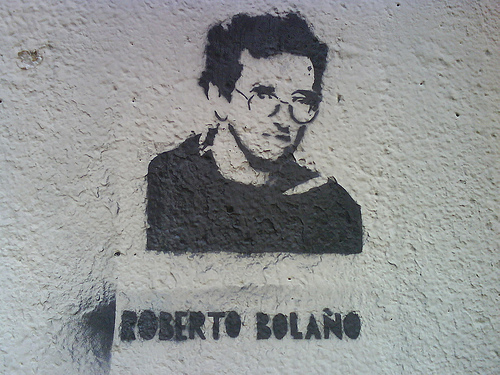
I finished Roberto Bolaño’s Amulet the night before last. I’ve had the book for a while, and though I had desired to read it, I hadn’t had the feeling of wanting to commit to this particular book; so, what I’m doing now, gentle reader, is distinguishing between these two things. We, that is bibliophiles, we all desire to read certain books (lots of certain books, no doubt), but that’s not the same as the feeling of wanting to commit to the particular book. Because generally a bibliophile knows that a great book, or at least a book worth reading, requires a certain level of commitment.
I picked Amulet out of the stack after reading Malcolm Lowry’s Under the Volcano. I don’t know why. There was no intellectual impulse in the choice, although a connection might easily be made between the two novels, both set in Mexico; indeed, Bolaño opens The Savage Detectives with a quote from Under the Volcano, and the heroine of Amulet shows up in The Savage Detectives — so there is some connection. But again, the decision to read Amulet next, instead of, say, Giuseppe Tomasi di Lampedusa’s The Leopard or Heinrich Böll’s The Train Was on Time or any of the other dozens of books cluttering up Biblioklept International Headquarters, was, or at least I believe was, more a matter of intuition and feeling than intellect.
So, as I mentioned, I finished Amulet the other night, and, during the course of reading that novel, another dead literary darling’s novel came out, David Foster Wallace’s The Pale King. Which I’ve been greatly anticipating. Which I’ve been very much desiring to read. Which I have absolutely no desire to commit to reading now, which is to say in that moment between books. Which is strange, I suppose, but perhaps easy to account for on several fronts. First, every day seems to bring some new, fully realized review of The Pale King to the internet, or some piece about Wallace’s “legacy” and The Pale King, or, even worse, some coverage about coverage of The Pale King (which, yes, I realize this post is now threatening to become). Another reason that might account for the fact that I have no feeling to commit to reading The Pale King now may be that it is Wallace’s last novel; maybe I want to wait a bit, give myself a bit of distance from the internet buzz, let anticipation build again. Divorce myself from the idea of having to read the book — especially in the context of Biblioklept, a maybe-literary blog.
To go back to my earlier point, the point of all of this (if this rambling can be said to have a point) is that I realize that I rarely choose to read the “next” book in an intellectual way — that is, the choice is almost always intuitive, born from some feeling that I don’t know how to name, except to say that it’s the feeling that I have when I’m in-between books. It’s a wonderful feeling, exhilarating and freeing and full of possibility, as corny as that sounds, but also a kind of anxiety, a feeling paradoxically tempered by the temporal messiness of being a reader, which is to say being a human, as if the limited time we have to read dampens — and thus defines — the edges of this particular exhilaration. I love the feeling because it opens a seemingly illimitable range of possibilities — the possibilities of new books, new narratives — even as the choice forecloses the possibility of another choice. Etymologically, the word “decide” means “to cut off.” But enough dithering. Time to riffle through the stack.
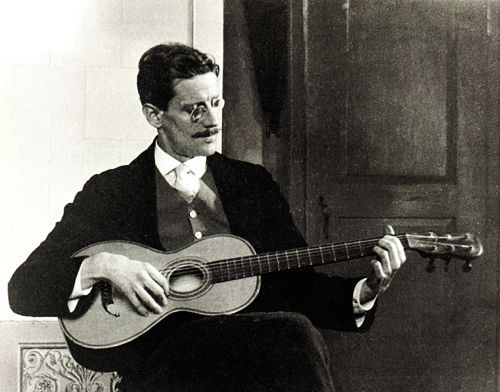
My third (complete) trip through James Joyce’s Ulysses finds me just as (or even more than) stunned as the previous two journeys, a bit (very much) unequal to properly reviewing the book, but this time with an easy out — I listened to an unabridged, full cast audio recording. The aforementioned “easy out” is resting on the received greatness and goodness (and evilness) of the book, which I will hardly contend with and heartily endorse (and do very little real critical work to support my endorsement). Ulysses is fantastic. But what about this audio recording?
First thing’s first — I listened to, absorbed, choked up at, guffawed about, cackled around, and generally loved RTÉ’s 1982 dramatized, soundtracked, sound-effected, lovingly detailed recording of Ulysses, a work crammed with voices to match (if perhaps not equal) Joyce’s big fat work. This recording is not as widely available as LibriVox’s (free) full cast production or Jim Norton’s Naxos reading, but, after sampling both, I’d argue that it’s better. The Irish players bring sensitivity and humor to their roles, but beyond that pathos, the energy of RTÉ’s troupe is what really makes the book sing. Leopold Bloom gets his own voice, as does Stephen Dedalus and Molly (and all the characters). This innovation propels the narrative forward with dramatic power, and clarifies the oh-so indirectness of Joyce’s free indirect style, making the plot’s pitfalls and pratfalls more distinct and defined. There are songs (and dances) and music (and musing) and humming (and hemming and hawing and reverb). There is chanting and chawing and brouhaha. There is chaos and calamity and confusion. There is brilliance and peace and transcendence. It’s all very good, great, wonderful.
So: Who is a full cast unabridged audio recording of Ulysses for? Say, for instance, can someone who’s never read Ulysses listen to this instead?
I don’t know.
Here’s what I think though: Ulysses begs to be read aloud, is musical, soundical. Beyond obvious chapters like episode 11, “Sirens,” an overtly musical interlude that actually hurt my throat the first (second?) time I read it (even though I read it that time silently) — beyond the obvious musicality of “Sirens,” Ulysses hums and thrums and bristles and thumps with lively, vocal, melodious, rhythmic energy, pulses in sound and vision. The full cast reading, to cling to a hoary cliché, brings this sound and vision to life, animating Joyce’s words with a just vitality. But I’ve tripped into details, put carts before horses — the prime advantage for an audio recording of Ulysses to newbies is probably how clearly (and audibly, ahem) it delineates the book’s plot. But —
At the same time, I think anyone reading the book for the first time will want to read it along with the audio recording. Read along as in literally read along with, or, more likely read first or after — chapter by chapter that is. Yes, I think, yes, that’s what I’d recommend (lagersoaked now as my brain might be) — read a chapter first, then listen, then read another (or reread). Rinse. Lather. Repeat.
The Cast at Work
Now I retreat to that ugly bastard of literary criticism, reader response shtick, the stuff of fellows who can’t make real claims on the work itself but rather hide behind how the book made me feel and think and blah blah blah. Sorry. I break myself against Ulysses. And it’s not even the book, truth be told (to trot out another hoary cliché) — I’ve reviewed books here that sought to rival Ulysses, books that undoubtedly contend with it — it’s more the critical tradition that accompanies Ulysses that daunts me. But enough. Anyone who wishes to read pages of graduate school work on the subject, written by moi, may apply below. Suffice to say for now that I loved loved loved listening to this audio recording.
Perhaps because I was so familiar (or familiar enough) with Joyce’s themes at this reading/auditing, I was able to relax during this odyssey through Joyce’s epic. To put it another way, I felt no need to be “on” — to pick up allusions, to grasp at threads — and trip over them. Instead, I found a human dimension to Joyce’s work, one I’d felt there before, but perhaps not fully experienced (I am not claiming that I have fully experienced Ulysses). I laughed. I angered. I spit. I snarled. I cried (yes, I cried; at the mention of Rudy at the end of “Circes,” and then, again, at the end of the novel, just a bit, when I felt (felt) Molly’s love for her husband). There might have been a stirring at the loins.
I found a confirmation of my favorite episodes: “Circe,” foremost, an apocalyptic carnival brought to a bristling boil in the Irish cast’s capable choir. The aforementioned “Sirens” sings of course; far more pleasant, really, to hear than read. “Telemachus,” sure, who can nay-say an opener like that, although it’s really just the opener to the prelude to the real opener “Calypso” — great stuff. What earthy joy to meet Bloom. “Hades” — a sad treat. “Aeolus” — a funny treat, windily rebounding in vim and vigor and vigorous vim. The library episode — “Scylla and Charybdis” — I’ve always thought of it as Hamlet and Stephen, or grandfathers and ghosts — becomes clearer in the voices of RTÉ’s cast. Clearer not in the sense of: “Now I understand what Stephen’s getting at,” but clearer in the sense: “Now I see where Stephen sees what he is not quite sure he is getting at.” That chapter on pig-headed closemindedness, “The Cyclops” — a triumph, a magnitude, a bold chuckle. And “Penelope.” Well, yes, great stuff.
It’s more remarkable, I suppose, the ways in which RTÉ’s recording illuminated those chapters I’d struggled with, those that had made me yawn. The first, tedious, purposefully clichéd half of “Nausica” tried my patience (get back to Bloom!) — but the actress who reads it highlights the chapter’s tedium, its commonplaces — even as it/she rushes to that juicy climax. “Proteus”: far more manageable than I’d remembered. And “The Oxen of the Sun” (aka that chapter that I never really read properly) — well, with a full band of nasty drunken med students, a bold narrator (and a sympathetic nurse), this stumbling rock becomes a springboard to the madness I so love (and have loved) in “Circe.” In the once-trying catechism of “Ithaca,” the actors find a rhythmic bounce, a dry crunching that explodes in the wet gush of “Penelope.” And didn’t I say, yes, great stuff.
What this audio recording does best is humanize Joyce’s characters. While there is never a doubt that they are set against their mythotypical forebears, I found in Joyce’s characters this time a deep specificity, a concreteness of place, a realness. I found no need to situate a Bloom-as-Odysseus correspondence. Molly did not have to be an earth goddess. Stephen was freed from the burden of Hamlet. Sure, metempsychosis was in play, but it was a backdrop, not a foregrounding, determining analytical program. I think the audio recording helped transmit this humanity, a humanity that was always there, obscured by the clutter of critical tradition.
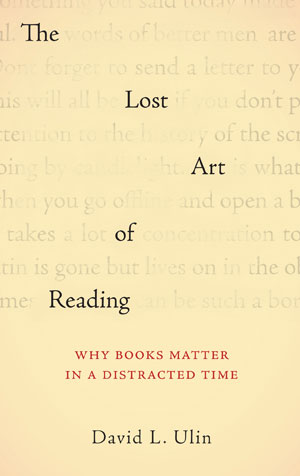
“One evening not long ago, my fifteen-year-old son, Noah, told me that literature was dead,” begins David L. Ulin’s new book-length essay, The Lost Art of Reading. Noah is not enjoying The Great Gatsby; or, perhaps more accurately, he’s not enjoying how his English teacher is having him analyze the book. Noah’s experience with Gatsby is probably not too different from many young readers who are told that they must appreciate a book, break it down, reckon and account for all of its subtleties — all in the context of a classroom, for a grade. Reading literature is just a means to an end then, a way to pass a class; unlike Ulin, who “frame[s] the world through books,” Noah’s “inner-life is entwined within the circuits of his laptop.” Noah’s pronouncement that literature is dead is fraught with cultural and technological significance. And while such declarations are hardly new, the idea that books — literary works in particular — not only do not hold the place they once did in our society, but now cannot hold a place of significance seems to hold more water than it did even ten years ago. Books are no longer the dominant media. Discourse is frenetic, fractured, shallow. Accordingly, Ulin subtitles his book Why Books Matter in a Distracted Time.
Gatsby — and Ulin’s conversations with his son about it — become organizing touchstones throughout the essay, along with Frank Conroy’s memoir Stop-Time, Faulkner’s obsession with time, and Thomas Paine’s Common Sense — a tract that Ulin points out might be “the most important book ever published in America.” It’s this consideration of Common Sense, along with his son’s declaration that lit is dead, that prompts Ulin to ask, “Could a book, any book, have this kind of impact in contemporary society? What about a movie or a website?” The questions continue–
How do things stick to us in a culture where information and ideas flare up so quickly that we have no time to assess one before another takes place? How does reading maintain its hold on our imagination, or is that question even worth asking anymore?
Ulin sets out to address these questions, drawing examples and analyses from a dizzying pool of books, websites, movies, and other media to do so. One of the highlights of The Lost Art of Reading is its confidence in defining reading as a meaningful art. Ulin tells us that–
Reading is an act of contemplation, perhaps the only act in which we allow ourselves to merge with the consciousness of another human being. We possess the books we read, animating the waiting stillness of their language, but they possess us also, filling us with thoughts and observations, asking us to make them part of ourselves.
And a few pages later–
This is what literature, at its best and most unrelenting, offers: a slicing through of all the noise and the ephemera, a cutting to the chase. There is something thrilling about it, this unburdening, the idea of getting at a truth so profound that, for a moment anyway, we become transcendent in the fullest sense. I’m not talking here about posterity, which is its own kind of fantasy, in which we regard books as tombstones instead of souls. No, I’m thinking more of literature as a voice of pure expression, a cry in the dark.
And yet Ulin admits to becoming, increasingly, a distracted reader, a reader who too quickly puts down his book to pick up his laptop or smart phone. This distraction seems endemic, environmental, even professionally necessary — and admittedly very, very familiar. The costs are also familiar–
. . . to read, we need a certain kind of silence, an ability to filter out the noise. That seems increasingly elusive in our overnetworked society, where every buzz and rumor is instantly blogged and tweeted, and it is not contemplation we desire but an odd sort of distraction, distraction masquerading as being in the know. In such a landscape, knowledge can’t help but fall prey to illusion, albeit an illusion that is deeply seductive, with its promise that speed can lead us to more illumination, that it is more important to react than to think deeply, that something must be attached to every bit of time. Here, we have my reading problem in a nutshell, for books insist we take the opposite position, that we immerse, slow down.
It’s key to note that Ulin is hardly a Luddite or a reactionary; when he writes “my reading problem” this is not a generalization — he is referring to his first-person experience as a reader. He is also open to the ways in which new media enhances literature. He writes, for example, of the ways in which Facebook and other websites create virtual platforms in which to honestly engage literature. He also discusses times when one habit of distraction — stopping to reference what he’s reading on YouTube or elsewhere on the net (a habit I fully identify with) — genuinely enriches his reading. However, Ulin’s greater fear is not so much his own personal distraction, but the costs of a permanently distracted populace–
This is how we interact now, by mouthing off, steering every conversation back to our agendas, skimming the surface of each subject looking for an opportunity to spew. We see it on blogs and in e-mails, on television talk shows, in public meetings and community forums; we are a culture that seems unable to concentrate, to pursue a line of thought or tolerate a conflicting point of view.
Wallowing through the comments section of any politicized news story is pretty much a recipe for depression, or at least a loss of faith in Americans’ ability, as Fitzgerald says ” to hold two opposed ideas in the mind at the same time, and still retain the ability to function.”
I should admit my bias — Ulin had little work to do to convince me that a decline in “deep” reading — and meaningful, reflective discussion about that reading — can only further contribute to an increasingly shallow, trivial, and openly anti-intellectual society. So what is at stake here?–
Stories, after all — whether aesthetic or political — require sustained concentration; we need to approach them as one side of a conversation in which we play a part. If we don’t, we end up susceptible to manipulation, emotional or otherwise. In February 1946, Hermann Goering told the judges of the Nuremberg tribunal, ‘Naturally the common people don’t war . . . But, after all, it is the leaders of a country who determine policy, and it is always a simple matter to drag people along, whether it is a democracy, or a fascist dictatorship, or parliament, or a communist dictatorship. All you have to do is tell them they are being attacked, and denounce the pacifists for lack of patriotism and exposing the country to danger. It works the same in every country.’ Such a statement is chilling on all sorts of levels, but nowhere more than in its recognition of the fact that we are complicit in our fate.
One solution for Ulin (and I’m apt to agree) is reading, “an act of resistance in a landscape of distraction, a matter of engagement in a society that seems to want nothing more than for us to disengage.” Best of all, Ulin’s book is the act of criticism — both cultural and literary — that makes one want to read. He reminds us that the currency of ideas is always open to us if we put in the effort, and that the moments of enlightenment, of transcendence that we might gain from literature are part of what makes a life worth living. Recommended.
The Lost Art of Reading is available now from Sasquatch Books.
Read an unpublished fragment of a story (or novel?) by David Foster Wallace at 454 W 23rd St New York, NY 10011-2157 (uh, that’s a blog, not, like, an actual physical address (although I guess it could be an actual physical address to. But, you don’t have to go there to read the story. Just click on the link. You know how the internet works, don’t you?)). Not sure who actually transcribed the piece (maybe the folks at 454?), but die-hard DFW fans will likely have heard the author read it himself. If you want to hear it, download it here (it also includes a hilarious reading (also unpublished) about a perfect boy who everyone hates). Here’s the first paragraph of the audio transcription–
Every whole person has ambitions, projects, objectives. This particular boy’s objective was to press his lips to every square inch of his own body. His arms to the shoulders and most of the legs beneath the knee were child’s play but after these areas of his body, the difficulty increased with the abruptness of a coastal shelf. The boy came to understand that unimaginable challenges lay ahead of him. He was six.
Musicologist Jan Swafford’s article “Why E-books Will Never Replace Real Books” at Slate makes a good case for why we’ll still want printed books in the age of the iPad and Kindle (not that I needed convincing). From the article:
So real books and e-books will coexist. That has happened time and again with other new technologies that were prophesied to kill off old ones. Autos didn’t wipe out horses. Movies didn’t finish theater. TV didn’t destroy movies. E-books won’t destroy paper and ink. The Internet and e-books may set back print media for a while, and they may claim a larger audience in the end. But a lot of people who care about reading will want the feel, the smell, the warmth, the deeper intellectual, emotional, and spiritual involvement of print.
Sam Lipsyte read live from his new novel The Ask last night at HTML GIANT’s Ustream channel. The reading was cool but the best part was the q&a session afterward. We asked Lipsyte the one question all true biblioklepts are dying to know (and the one question we ask every person we interview): “Have you ever stolen a book?”
Vodpod videos no longer available.
Here’s Lipsyte’s response, which you can hear/see at 31:25 in the video:
‘Have you ever stolen a book?’ There was one time when I stole a few books when I worked in a library; it was a university library and my job was to stick the metal strips into the spines of the books that would set off the alarm. And so if a particularly good book came through (and this only happened three or four times) I just wouldn’t–I don’t know if I’d call it stealing–but I wouldn’t put the strip in. And then once it was shelved I would take it.
That’s a pretty sophisticated operation. Kudos to Lipsyte for his candor.
The iPad is emphatically not a serious readers’ device: the only people who would genuinely consider it a Kindle killer are those for whom the idea of reading for pleasure died years ago; if it was ever alive. The people who will spout bullshit like “I read on screen all day” when what they really mean is “I read the first three paragraphs of the New York Times article I saw linked on Twitter before retweeting it; and then I repeat that process for the next eight hours while pretending to work.” That’s reading in the way that rubbing against women on the subway is sex.
In her recent essay “Texts Without Context,”New York Times book critic Michiko Kakutani argues that web two-point-oh innovations have led to a world where–
More people are impatient to cut to the chase, and they’re increasingly willing to take the imperfect but immediately available product over a more thoughtfully analyzed, carefully created one. Instead of reading an entire news article, watching an entire television show or listening to an entire speech, growing numbers of people are happy to jump to the summary, the video clip, the sound bite — never mind if context and nuance are lost in the process; never mind if it’s our emotions, more than our sense of reason, that are engaged; never mind if statements haven’t been properly vetted and sourced.
Kakutani’s piece seems to be prompted by David Shields’s recent “manifesto” Reality Hunger, which she points out is a symptom of “a culture addicted to speed, drowning in data and overstimulated to the point where only sensationalism and willful hyperbole grab people’s attention.” She continues–
Given the constant bombardment of trivia and data that we’re subjected to in today’s mediascape, it’s little wonder that noisy, Manichean arguments tend to get more attention than subtle, policy-heavy ones; that funny, snarky or willfully provocative assertions often gain more traction than earnest, measured ones; and that loud, entertaining or controversial personalities tend to get the most ink and airtime.
Kakutani keenly points out the stakes of such a facile media-land, even as she posits the real good that can come from technologies. In short, we seem to be heading into a future obsessed with immediacy to the point that sustained, analytical reading will not only no longer have place or merit with the general public, it will also be increasingly difficult as we learn to “read” new media in new ways. Put another way, we are becoming shallow.
I see this first-hand every day. I teach Advanced Placement high school English courses, mostly to kids aged 16-18. I’ve noticed that in the past seven years my students are less and less able to sustain concentration on challenging–or even particularly unchallenging pieces of rhetoric or literature in the classroom. My current students are less likely to read for pleasure than the kids I taught at the beginning of the last decade. They have all bought into the fiction of multitasking, the belief that one can frequently interrupt one’s reading of Shakespeare or Henry David Thoreau (or hell, even Stephen King or a Harry Potter book) with a quick text message, or, worse, a change of the channel (I have to literally begin each year by explaining to students that it is basically impossible to read something by a writer like Herman Melville or Cynthia Ozick with one eye on the television screen). You can imagine what how these shallow reading habits affect their research abilities. It’s not just my students though. Nationwide, the NCES reports that almost a third of high school graduates need reading remediation courses in college and that remediation classes are necessary for those students to earn college degrees. It’s pretty much an open secret in education that these numbers are drastically under-reported, with remedial classes often given euphemistic names to hide the appearance of shared institutional/student inadequacies. As Kakutani points out in her article, shallow attention spans, weak readers, and poor research skills could lead to drastic balkanization, cultural inertia, and just plain ole stupidity.
Kakutani’s article points to a future where “the blurring of news and entertainment” is normalized, so what better way to end than with an article from The Onion, published a week before “Texts Without Context.” The headline: “Nation Shudders At Large Block of Uninterrupted Text.”The first paragraphs:
Unable to rest their eyes on a colorful photograph or boldface heading that could be easily skimmed and forgotten about, Americans collectively recoiled Monday when confronted with a solid block of uninterrupted text.
Dumbfounded citizens from Maine to California gazed helplessly at the frightening chunk of print, unsure of what to do next. Without an illustration, chart, or embedded YouTube video to ease them in, millions were frozen in place, terrified by the sight of one long, unbroken string of English words.
“Why won’t it just tell me what it’s about?” said Boston resident Charlyne Thomson, who was bombarded with the overwhelming mass of black text late Monday afternoon. “There are no bullet points, no highlighted parts. I’ve looked everywhere—there’s nothing here but words.”
“Ow,” Thomson added after reading the first and last lines in an attempt to get the gist of whatever the article, review, or possibly recipe was about.

 My third (complete) trip through James Joyce’s Ulysses finds me just as (or even more than) stunned as the previous two journeys, a bit (very much) unequal to properly reviewing the book, but this time with an easy out — I listened to an unabridged, full cast audio recording. The aforementioned “easy out” is resting on the received greatness and goodness (and evilness) of the book, which I will hardly contend with and heartily endorse (and do very little real critical work to support my endorsement). Ulysses is fantastic. But what about this audio recording?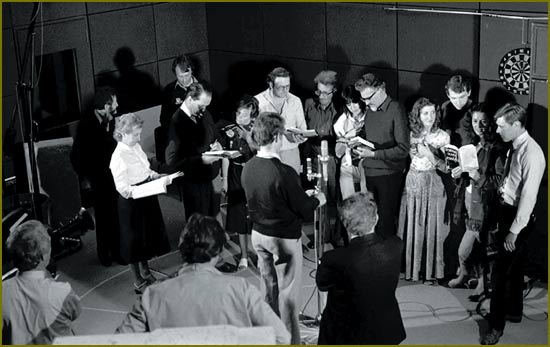
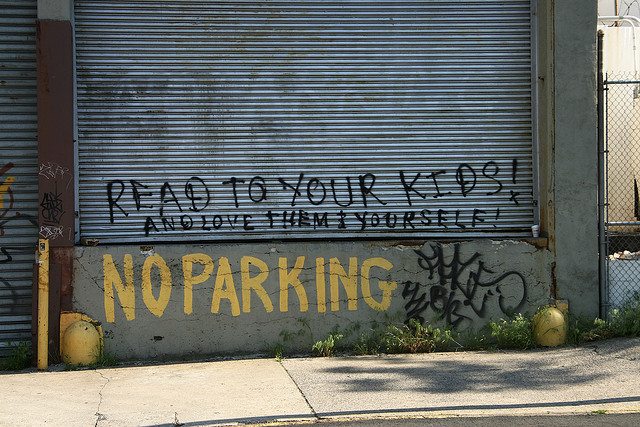 Seems like good advice.
 Biblioklept