Seven Fragmentary Novels That Aren’t The Pale King

I finished David Foster Wallace’s The Pale King the other night (don’t worry—I know that there’s been a terrible shortage of coverage for this obscure book, so I’ll post a review pretty soon review here). The Pale King unfolds as a series of fragments, some short as one page, many the length of long short stories, and one novella length piece. Characters recur, but themes, images, and motifs hold these pieces together rather than any linear plot. The better pieces can stand on their own as short stories, yet are much richer when read with/against the rest of the novel. The Pale King remained unfinished at the time of Wallace’s death, but his notes on the manuscript (published at the end of the book) suggest that fragmentation was always his intentional method.

The fragmentary novel is nothing new, but its particular powers have gained resonance against the backdrop of a world where authority, information, and communication are increasingly decentralized, scattered, and, well, fragmented. Fragmentary novels might have roots in the picaresque (those one-damn-thing-after-the-next novels like Don QuixoteCandide, Huckleberry FinnInvisible Man, Orlando, Blood Meridian . . .), but picaresque novels tend to have a shape, a trajectory, even if they seem to lack traditional plot arcs or characterization. What I’m talking about here are novels made of pieces, segments, or chapters that work fine on their own, and  may even seem self-contained, but when synthesized help reveal the novel’s greater project. So, seven fragmentary novels that aren’t The Pale King—

Steps, Jerzy Kosinski

There’s force and vitality and horror in Steps, all compressed into lucid, compact little scenes. In terms of plot, some scenes connect to others, while most don’t. The book is unified by its themes of repression and alienation, its economy of rhythm, and, most especially, the consistent tone of its narrator. In the end, it doesn’t matter if it’s the same man relating all of these strange experiences because the way he relates them links them and enlarges them. At a remove, Steps is probably about a Polish man’s difficulties under the harsh Soviet regime at home played against his experiences as a new immigrant to the United States and its bizarre codes of capitalism. But this summary is pale against the sinister light of Kosinski’s prose. Here’s David Foster Wallace: “Steps gets called a novel but it is really a collection of unbelievably creepy little allegorical tableaux done in a terse elegant voice that’s like nothing else anywhere ever. Only Kafka’s fragments get anywhere close to where Kosinski goes in this book, which is better than everything else he ever did combined.”

Speedboat, Renata Adler

Telegraphed in bristling, angular prose, Speedboat unwinds as a series of seemingly unrelated vignettes, japes, and jokes all filtered through the narrator’s ironic, faux-journalist sensibility. Adler’s novel eschews plot, conventional characters, and resolution—its contours are its center. Speedboat was published in the early 1970s, but it would seem ahead of its time even if it were published tomorrow.  Adler captures the deep existential alienation of modern life, converting dread into verve and despair into marvel.

2666, Roberto Bolaño

Bolaño’s opus bears considerable superficial comparison to Wallace’s The Pale King: both were published posthumously, both have endured a process of buzz and backlash, both are unfinished, and both are purposefully fragmented. 2666 comprises (at least five) parts, some connected explicitly, others tied loosely together, but all interwoven with themes of violence, darkness, art, and love. The book’s most notorious section, “The Part About the Crimes,” is itself a fragmented beast, a procession of murders and rapes, dead-end investigations, bizarre TV appearances, and other sinister doings. Prominent characters disappear into the violence of Santa Teresa never to return again; the great mystery of the book seems unsolved. But like Ariadne, Bolaño offers his readers a thread through the labyrinth, a layering of motifs, as words and images repeat throughout shifts in space and time.

Naked Lunch, William S. Burroughs

Naked Lunch’s cut-up origins are well-known and probably greatly exaggerated: the book is far more coherent than its reputation insists. Still, Burroughs’s infamous novel is all over the place (quite literally), moving through time and space and even to Interzone. Comic, rambling, lusty, and perverse, Naked Lunch’s satire is often overshadowed by its seedier, more sensational side. Burroughs claimed his novels were part of an antique literary pedigree: “I myself am in a very old tradition, namely, that of the picaresque novel. People complain that my novels have no plot. Well, a picaresque novel has no plot. It is simply a series of incidents.”

Vertigo, W. G.  Sebald

Vertigo blurs the lines between fiction, history, autobiography, and biography. The book comprises four sections. The first section tells the story of the romantic novelist Stendhal (or, more to the point, a version of Stendhal); the second section details two trips Sebald made to Italy, one in 1980, and one in 1987; the third section describes a trip Kakfa took to Italy near the end of his life; the final section describes the narrator hiking from Austria to visit the village where he was born in Bavaria. Underwriting and uniting these separate episodes is the narrator’s attempt to find a common thread between past and present, to find a unity in a Europe fractured by time and war. There’s also a deep, throbbing melancholy mixed with beauty and wisdom here.

Cloud Atlas, David Mitchell

Mitchell constructs Cloud Atlas like a doubled matryoshka doll, nesting narratives inside narratives that work their way to an apocalyptic future; once Cloud Atlas hits its middle mark, it works outward to the past, back to its own edges. With the exception of the middle piece, a nod to Russell Hoban’s Riddley Walker, Mitchell fragments each piece of Cloud Atlas at a key turning point, an old literary trick really, but one that pays off. The tales likely hold up on their own, but their intertextual play is the real delight of the novel, as Mitchell showcases a variety of styles and genres and forms that reflect the content and era of each tale. At its core,  Cloud Atlas explores Nietzschean themes of eternal recurrence and the will to power; its clever fragmented structure emphasizes the loops of history humanity finds itself caught in again and again, even as brave souls seek a new way of seeing, living, doing.

Go Down, Moses, William Faulkner

Faulkner always insisted that Go Down, Moses was a novel, although in its initial publication it was presented as a collection of short stories.  And granted, any of the stories can be read on their own. “Was” is hilarious homosocial hijinks, but read against the sorrow and anger in “The Fire and the Hearth” and “Pantaloon in Black,” or the prolonged majesty of “The Bear,” Faulkner’s project becomes much clearer—he is taking on a century in the lives of the Mississippi McCaslins. Go Down, Moses is strange and sad and funny and truly an achievement, a book that works as a sort of time machine, an attempt to undo or recover the racial and familial (and in Faulkner, these are the same) divides of the past.

Boy Bitten by Lizard — Caravaggio

See the Trailer for A Dangerous Method: David Cronenberg Does Freud and Jung

Parental Admonition — Gerard ter Borch

Int. Trailer. Night — Jim Jarmusch

“Remember That What We Call The Novel Is a Highly Artificial Form” — William Burroughs on the Picaresque Novel

In a fantastic 1974 interview with noted translator Philippe Mikriammos, William Burroughs discusses the picaresque novel (and much, much more)—-

PM: Have you been influenced by Celine?

WB: Yes, very much so.

PM: Did you ever meet him?

WB: Yes, I did. Allen [Ginsberg] and I went out to meet him in Meudon shortly before his death. Well, it was not shortly before, but two or three years before.

PM: Would you agree to say that he was one of the very rare French novelists who wrote in association blocks?

WB: Only in part. I think that he is in a very old tradition, and I myself am in a very old tradition, namely, that of the picaresque novel. People complain that my novels have no plot. Well, a picaresque novel has no plot. It is simply a series of incidents. And that tradition dates back to the Satyricon of Petronius Arbiter, and to one of the very early novels, The Unfortunate Traveler by Thomas Nashe. And I think Celine belongs to this same tradition. But remember that what we call the “novel” is a highly artificial form, which came in the nineteenth century. It’s quite as arbitrary as the sonnet. And that form had a beginning, a middle, and an end; it has a plot, and it has this chapter structure where you have one chapter, and then you try to leave the person in a state of suspense, and on to the next chapter, and people are wondering what happened to this person, and so forth. That nineteenth-century construction has become stylized as the novel, and anyone who writes anything different from that is accused of being unintelligible. That form has imposed itself to the present time.

“The Empty Room” — Jonathan Lethem

You can read “The Empty Room” by Jonathan Lethem in full at The Paris Review; the piece is part of the new summer issue, which is pretty great so far (Bolaño, William Gibson, poems, art, etc.). From “The Empty Room”—

Earliest memory: father tripping on strewn toys, hopping with toe outraged, mother’s rolling eyes. For my father had toys himself. He once brought a traffic light home to our apartment on the thirty-somethingth floor of the tower on Columbus Avenue. The light, its taxi yellow gone matte from pendulum-years above some polluted intersection and crackled like a Ming vase’s glaze where bolts had been overtightened and then eased, sat to one side of the coffee table it was meant to replace as soon as my father found an ­appropriate top. In fact, the traffic light would follow us up the Hudson, to Darby, to the house with the empty room. There it never escaped the garage.

William Gibson on Blood Meridian

At The GuardianWilliam Gibson says Cormac McCarthy’s Blood Meridian is his most memorable holiday read—

If that’s holiday as in “utterly removed from any sense of immediate surroundings”, my most memorable holiday reading is Cormac McCarthy’s Blood Meridian, which I started in the cab on the way to Vancouver airport, headed for a first trip to Berlin where I was doing something, I wasn’t sure what, with Samuel Delany and Wim Wenders at the Kunsthalle. I am uncertain as to the year, likely it was 1991, before the publication of All the Pretty Horses. I had recently read McCarthy’s astonishing The Orchard Keeper, and on the urging of the friend who had recommended that, I began Blood Meridian. I remember nothing else, door to door, between my home in Vancouver and the hotel room in which I finished the book in Berlin. I awoke from it as from some terribly potent dream, and found myself, quite unexpectedly, in a strange city. Being Berlin, and particularly then, it was a very strange city. A few nights later, over in the east, I continued to experience intense overlays of Blood Meridian. Indeed, I think those overlays helped me better comprehend what I was seeing, and not to panic. The Judge, I knew, would understand all of this.

A Poem for Father’s Day — Robert Hayden’s “Those Winter Sundays”

Robert Hayden’s poem “Those Winter Sundays”–

Sundays too my father got up early
and put his clothes on in the blueblack cold,
then with cracked hands that ached
from labor in the weekday weather made
banked fires blaze. No one ever thanked him.

I’d wake and hear the cold splintering, breaking.
When the rooms were warm, he’d call,
and slowly I would rise and dress,
fearing the chronic angers of that house,

Speaking indifferently to him,
who had driven out the cold
and polished my good shoes as well.
What did I know, what did I know
of love’s austere and lonely offices?

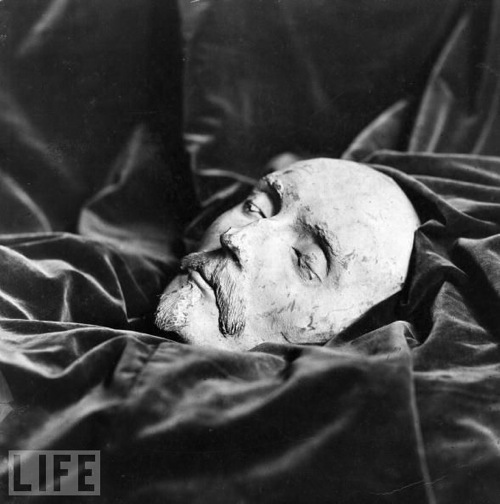
William Shakespeare’s Death Mask

Bad Dad

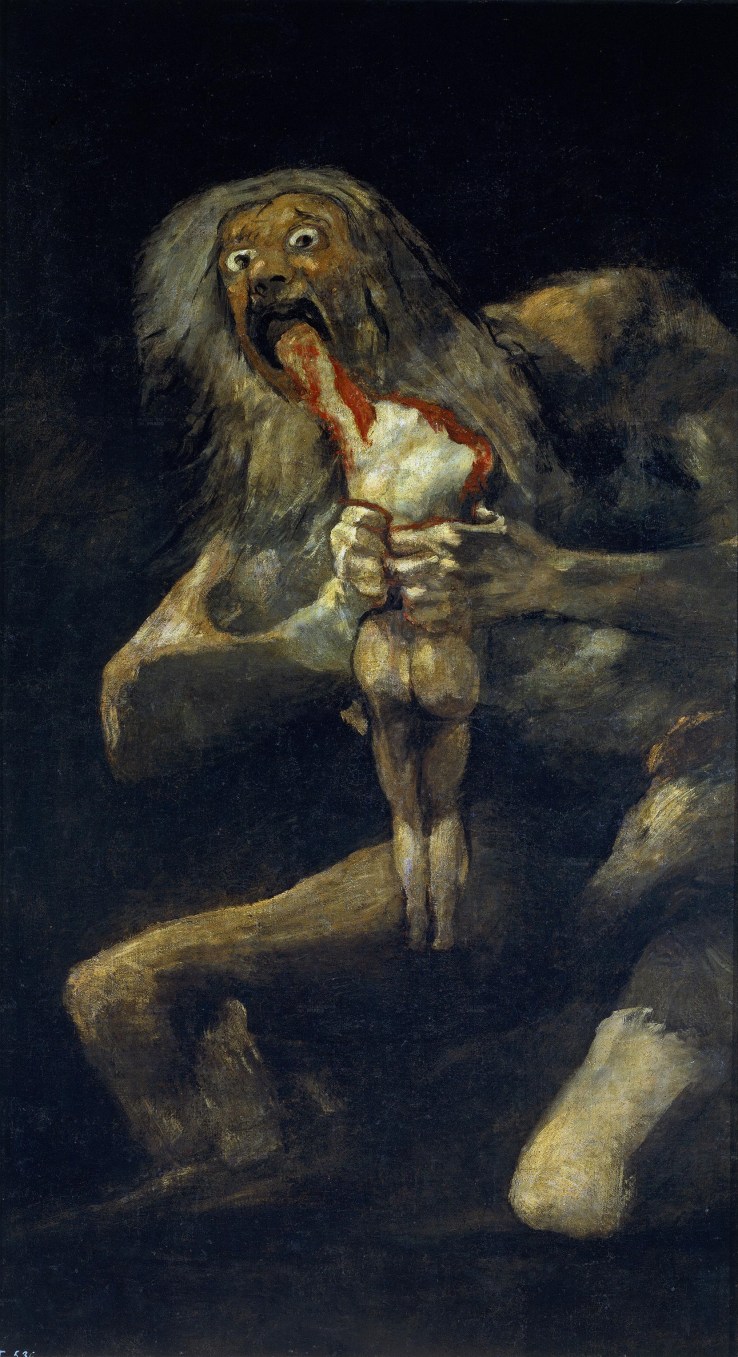
Saturn Devouring His Son -- Goya

Slavoj Žižek on Fatherhood

Biblioklept Interviews Novelist Ed Lynskey About Appalachian Crime Noir and His New Novel Lake Charles

Ed Lynskey’s new novel Lake Charles (new this month from Wildside Press) explores the seamy underbelly of a rural Tennessee community. The book balances traditional crime fiction tropes (fast plotting, hairpin turns, terse dialog, and good old-fashioned violence) with a strong evocation of setting. Lynskey’s novel should make a nice addition to anyone’s summer beach reading schedule. He was kind enough to talk to us over a series of emails about Lake Charles, archetypes vs. stereotypes, violence, and more.

Biblioklept: Your new novel Lake Charles is a crime thriller set in the backwoods of Tennessee in 1979, which you paint as a criminal hotbed riddled with police corruption, a huge marijuana operation, a young lady mysteriously disappeared, and all other sorts of dark intrigue. The setting seems intrinsic to the plot—did the novel originate as an evocation of place, or did the story come first? Or perhaps a mixture of both?

Ed Lynskey: The setting came first. I’ve carried the place inside me since I was a teenager visiting the Great Smoky Mountains in Tennessee. The real Lake Charles is a manmade body of water, not a natural one and that genesis alone corrupts it. The lake had enjoyed a glorious past when it was used for recreation and pleasure, but now the earthen dam is leaky, and the water is scummy, stagnant, and brackish. That’s how I pictured the unsavory setting, and then I molded the criminal elements around Lake Charles. The manmade lake used in James Dickey’s novel Deliverance was in the back of my mind though I’d only seen the film and didn’t read his novel until after Lake Charles got published. Reviewers have cited the native characters as “rednecks” and “hillbillies.” I view those handy labels as a shallow stereotypes. It’s true wild things go on in the boonies. On the other hand, I live in Washington, D.C., and every night on the local news I can see a galore of murders, mayhem, corruption, drug rings, and kidnappings. So the major crimes thrive and seethe everywhere.

Ed Lynskey

B: I’m from the South, and I often find myself feeling offended at certain portrayals of Southerners, which, if done incorrectly, tend to skew to the grotesque. I imagine that a writer never wants to produce a stereotype, but at the same time, certain genres necessitate particular archetypal figures to fulfill reader expectations (not to mention basic plot functions). When crafting a crime noir piece like Lake Charles, do you feel any tension between what is stereotypical and what is archetypal?

EL: The characters in Lake Charles hail from a small mountain town in Tennessee. Though they’re a little rough around the edges and turn violent if pushed enough, I don’t choose to view them as a stereotype. The challenge for the writer, as I see it, is to make the characters familiar enough to the readers but to also keep the characters’ personalities distinct and original. Stereotypes are here to stay. Rick Bragg tells the funny anecdote how his New York City editor wrote in the comment “doublewide what?” on his manuscript. Try hard as they might, they just don’t get it. But getting back to Lake Charles, I wanted a young protagonist, and an older guy who’s a war vet to serve as his mentor because the plot needed that dynamic to be set up. I believe the war vet is probably a flatter character, but the protagonist is coming of age, so I hope he’s a more complex character.

B: I like the relationship between Mr. Kuzawa, the archetypal wise (but gruff) older man, and Brendan Fishback, the protagonist who narrates Lake Charles. Brendan is definitely in over his head, but there’s a certain relief in his having Kuzawa as a mentor. Still, you put Brendan in a lot of trouble. When you were drafting the novel, did you have a clear trajectory for Brendan’s finding a way out of the mess he’s in? Or was it part of your writing process to ensnare your protagonist and see how he might extricate himself?

EL: Lake Charles has gone through numerous revisions, and I don’t recall what my original strategy was for creating Brendan as the protagonist. I knew he was in a heap of trouble, as they like to say down South, but I didn’t think he had the right savvy to find a way out of his sticky jam. If he figured it all out on his own, he’d come off as seeming unbelievable and less credible as the narrator. I’m not sure if Kuzawa is too much of a James Bondian know-it-all who steers Brendan through the wickets. He’s a bit larger-than-life. Sometimes you meet people who seem to suck all the air out of a room with their forceful personality.

B: Switching gears for a moment, Lake Charles isn’t your only novel being published this year, right? Can you tell us a little about your other new books?

EL: You bet. Thank you for asking, too. Quiet Anchorage coming out this spring is a small town cozy mystery featuring two senior amateur sleuths who’re sisters. Their favorite niece is falsely arrested for the murder of her boyfriend, and of course her aunts flew to her defense. I wrote QA to take a break from the noir and hardboiled arena and to have a little fun. The reviews have been generally upbeat and favorable. So, I hope I can publish the second title as a new series next year. The third book, The Zinc Zoo, is the next title in my PI Frank Johnson mystery series. Frank has moved to the suburbs but still manages to get into difficult cases with prickly clients. I’m not sure when TZZ will be out. The publisher has been dealing with a serious family illness since the start of the year. The snazzy front cover art has been finished, so hopefully things will pick up again soon.

B: Three books in a year (plus several novels in the past five or six years)—-that’s fairly prolific. Are you composing these novels simultaneously?

EL: Is it prolific? I never really thought of it that way, but I can see your point, sure. I can’t work on two books at the same time. The plots and characters cross-talk in my brain, and I get things mixed up. I just work steady on one project at a time. I usually woodshed a project for several months before I go back to revise it for presentation. For instance, Lake Charles took me ten years to write from a short story into a published novel. Plus when the economy first went (and still lags) south, I didn’t publish any books for over 18 months. Stuff was just in the pipeline waiting to come out. The erratic schedule makes it more difficult to promote the project because it means I drop whatever I’m working on and shift to do the marketing bit.

B: Clearly you’re having to do some marketing now—but what future projects do you have cooking?

EL: The two large projects looming immediately ahead for me are the second title in the small town cozy mystery series and the large mob novel set in Washington, D.C. But that’s how I envision things today. It’s a fluid situation not because so much is happening as I’m hustling the new projects here and there.

B:  Have you ever stolen a book?
EL: I don’t believe I’ve ever filched a new book from a store. I know there was a book swap in the Bermuda bed & breakfast where you left a book if you took one. I think I traded a baseball book for a mystery. That’s about as close as I can get to that situation.

Nine Classic Paintings Revisited — Peter Greenaway Lectures on Art, Education, and More

(Via the nice people of Open Culture).

Biblioklept Does Bloomsday

Bloomsday blah blah blah — (all links lead to Biblioklept posts (yeah, we’re solipsists around here))—

How to read Ulysses

James Joyce talks dirty

Filming Finnegans

William Faulkner’s Joyce anxiety

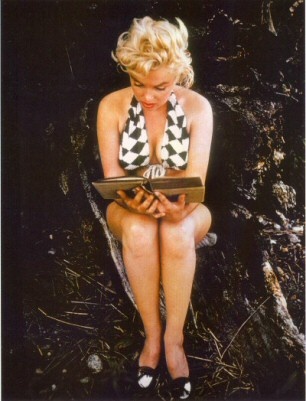
Marilyn Monroe reads Molly 

Biblioklept’s lousy review (the review is lousy, not the book) of Dubliners

Joyce’s entry on the 1901 Irish Census

Biblioklept’s review (not so lousy, the review) of a superior full-cast audio recording of Ulysses

James Joyce explains why Odysseus is the most “complete man’ in literature

Leopold’s Bloom’s recipe for burnt kidney breakfast

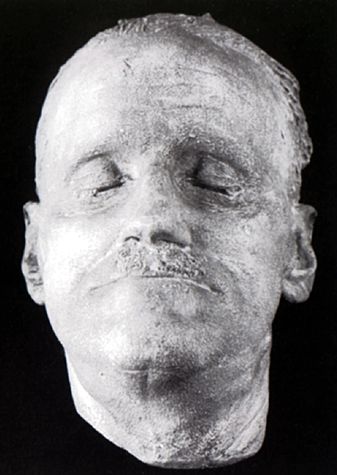
James Joyce’s death mask—


“Don’t Take Any Notice of What I’m Going to Say Because I Don’t Know What I’m Talking About” — Tom Stoppard on the Artist’s Bladder

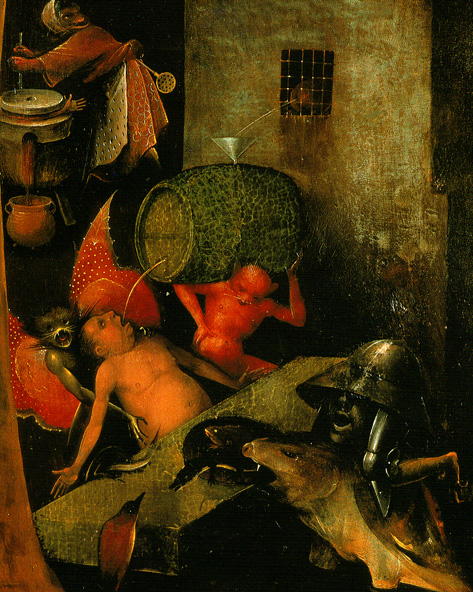
The Cask — Hieronymous Bosch