Is American Psycho Profound, Artistic Nihilism or Stupid, Shallow Nihilism? — Bret Easton Ellis vs David Foster Wallace

Bret Easton Ellis’s controversial novel American Psycho turns 20 this year. The folks at Vintage were kind enough to send me a copy of the book to promote the anniversary, and despite a mounding stack of review copies, I took a few hours to re-read parts of Ellis’s third novel.

I’ve only read two Ellis books and I remember the reading of them distinctly, precisely; I remember how I picked them up and where I was and what I was doing and all that jazz. The first was Ellis’s début Less Than Zero, a slim, ugly little novel that I read in one night. I was fifteen, spending a summer with my aunt and uncle, living in my cousin’s old bedroom. Less Than Zero was part of a cache of books that included Hunter S. Thompson’s Fear and Loathing in Las Vegas, Anthony Scaduto’s Bob Dylan biography, some Hemingway and Fitzgerald novels, One Flew Over the Cuckoo’s Nest, and a Kurt Vonnegut starter kit. In short, a life changing library, and most of it went home with me in my Jansport (somewhat surreptitiously, although I’m sure if I had asked I would have received). Only I didn’t take Less Than Zero, despite reading it all in one sick night, and then reading it again in pieces over the summer. The book hurt my stomach. The drugs were not the Looney Tunes business in HST’s book—they were the symptom of a blank nihilism I simply couldn’t identify with. The scene where the kids casually watch a snuff film horrified me. And the rape scene. Well. It was the first time I read something that genuinely disturbed me in a non-child, non-Grimm’s way — in a way where I felt moral outrage from an adult-psyche-type-position (whatever that means). The book genuinely concerned me; I was afraid such people existed.

I read American Psycho in 2002. I was traveling through Thailand for a month, trading books at guest houses and shops as I went, and the only book I remember being more ubiquitous than American Psycho was Alex Garland’s The Beach (which, yes, I also read there). I had seen and quite enjoyed Mary Harron’s 2000 film adaptation of American Psycho, which had the good sense to treat the whole matter as a piece of cartoonish black comedy. In Harron’s hands, the hyperbolic exploits of Patrick Bateman are considerably less ambiguous than the book’s depiction; Harron  clearly marks the narrative violence as Bateman’s internal fantasies. Of course, one of literature’s greatest tools is ambiguity, and Ellis’s American Psycho revels in it. In a sense, this is the book’s defining nihilism: its total unwillingness to make a definitive judgment about its protagonist’s violence. Instead, American Psycho’s claims to satire rely on the implicit force of the reader’s sense of humanity and morality; like Less Than Zero before it, we have a flat narrative, an utter lack of self-reflection or internal psychology. Ellis gives us only concrete contours, cocaine, hydrochloric acid, chainsaws, and a laundry list of brand names. These are novels without interiors.

American Psycho, utterly concrete, deeply ironic, and occasionally funny, is a strange beach read, but a beach read nonetheless (although all that gristle and blood (and oh the rat!) won’t go down easy for many folks). When I read it in 2002 I found it neither shocking or enlightening, just precise and ugly and grotesque, a numbing progression of concrete descriptions of clothes and restaurants punctuated by ridiculous violence. Its one-note satire would find a better home in a short story. A short short story. I’ve spent the past few days reading through its sections again, trying to reassess it against the backdrop of my current literary estimations of Bret Easton Ellis, which I hate to admit are largely informed not only by his own acerbic personality, but also by (or perhaps more accurately against) his agon with David Foster Wallace.

BEE vs. DFW is not exactly news. Ellis (b. 1964) and Wallace (b. 1962) both published their first novels in the mid-eighties. Less Than Zero made 21-year-old Ellis a star, a likely “voice of his generation.” The Broom of the System didn’t exactly go gangbusters for Wallace, but its voluminous scope, Pynchonian silliness, and its willingness to pick up the postmodern games that Ellis and the other new minimalists seemed to reject announced a major new talent who was willing to both think and feel—to go beyond the surfaces. Indeed, Wallace’s entire project might be defined as setting himself apart from the cool, detached irony that characterizes Ellis’s ethos. In a 1993 interview with Larry McCaffery,Wallace decries fiction that devotes
“a lot of energy to creating expectations and then taking pleasure in disappointing them. You can see this clearly in something like Ellis’s American Psycho: it panders shamelessly to the audience’s sadism for a while, but by the end it’s clear that the sadism’s real object is the reader herself.” I think this is an apt criticism. American Psycho is torture porn encased in a thin veneer of social satire with no interior substance. Here’s Wallace at length—

 I think it’s a kind of black cynicism about today’s world that Ellis and certain others depend on for their readership. Look, if the contemporary condition is hopelessly shitty, insipid, materialistic, emotionally retarded, sadomasochistic, and stupid, then I (or any writer) can get away with slapping together stories with characters who are stupid, vapid, emotionally retarded, which is easy, because these sorts of characters require no development. With descriptions that are simply lists of brand-name consumer products. Where stupid people say insipid stuff to each other. If what’s always distinguished bad writing—flat characters, a narrative world that’s cliched and not recognizably human, etc.—is also a description of today’s world, then bad writing becomes an ingenious mimesis of a bad world. If readers simply believe the world is stupid and shallow and mean, then Ellis can write a mean shallow stupid novel that becomes a mordant deadpan commentary on the badness of everything. Look man, we’d probably most of us agree that these are dark times, and stupid ones, but do we need fiction that does nothing but dramatize how dark and stupid everything is? In dark times, the definition of good art would seem to be art that locates and applies CPR to those elements of what’s human and magical that still live and glow despite the times’ darkness. Really good fiction could have as dark a worldview as it wished, but it’d find a way both to depict this world and to illuminate the possibilities for being alive and human in it. You can defend Psycho as being a sort of performative digest of late-eighties social problems, but it’s no more than that.

Four years before the interview—and two years before the publication of American Psycho—Wallace mocked Ellis’s void, vacuous characters in “Girl with Curious Hair,” a story about a yuppie on LSD at a Keith Jarrett concert.  With no affective life, Sick Puppy (as his low life punk rock friends call him) feels nothing. He cannot enjoy his wealth, his position—not even his acid trip. He can’t even enjoy sex unless he can burn his partner as he’s being fellated. As Marshall Boswell points out in his study Understanding David Foster Wallace, “the story eerily forecasts . . . American Psycho . . . in a grisly and hilarious pastiche of Ellis’ preposterously benumbed prose.”

Perhaps Wallace’s greatest critique of nihilism — greatest in that it escapes the confines of Ellis and his ilk’s literary purview — is Don Gately, erstwhile hero of Infinite Jest, a recovering Demerol addict and small time thief whose painful day-to-day existence figures as the existential struggle against bleak, overwhelming nothingness. Gately is the heart and spirit of IJ, a big sad throbbing heart that, to quote Wallace out of context (from above), is the writer’s way “to depict this [dark] world and to illuminate the possibilities for being alive and human in it.”

Ellis perhaps perceives a character like Gately and his illuminating possibilities as simply too affected. Last summer, at a reading in Hackney, England, Easton offered the following—

Question: David Foster Wallace – as an American writer, what is your opinion now that he has died?

Answer: Is it too soon? It’s too soon right? Well I don’t rate him. The journalism is pedestrian, the stories scattered and full of that Midwestern faux-sentimentality, and Infinite Jest is unreadable. His life story and his battle with depression however is really quite touching . . .

Then there was this cryptic tweet a few months ago—

I’m not sure what Ellis’s tweet meant, and attendees of the Hackney reading claim that he was more considered and measured in his tone than the actual words of his response seem to entail. His end of the agon with Wallace is also rife with its own set of problems—his contemporary is dead, horribly dead, a suicide, (the kind of death that makes an essay like this one, an essay that claims to find affirmation of life in DFW and empty nihilism BEE, particularly hard to swallow, I suppose)—making it all the harder to respond. I read his “too soon” remark from the Hackney reading to be in earnest.

But Ellis’s tweets are not part of his literary corpus (even though they can be entertaining), and Wallace’s suicide is not part of his text. So, I return to those texts—

Wallace’s last effort, The Pale King, contrasts strongly with American Psycho. Wallace’s novel is fractured, heteroglossic, crammed with ideas, and at times purposefully taxing on its reader’s attention. American Psycho is concise (even if its plot is messy and episodic), imagistic, lacks even the pretense of allowing a controlling voice other than Bateman’s into the narrative, and, in its fetishistic, sexualized violence, is a work designed to lock its reader’s attention in a sensationalized vice grip. It’s id-bait par excellence, seductive and stylish. Its greatest achievement may be to fool some readers into believing that its violence is simply part and parcel of its intention of being a scathing satire. The book then relies heavily — too heavily — on an exterior morality system to weigh its flat, static characters, characters who face incredible trauma and yet never process it (or even attempt to process it). And I am not just speaking of Bateman. Consider the dry cleaner who repeatedly removes bloodstains, or the maid  who mops up brain bits without a single question. Then there are the faceless, indistinguishable alpha males who populate Bateman’s yuppie corporate world, and their requisite fiancées and mistresses, weak watery women the narrative repeatedly condemns. These characters lack meaning or depth; they are essentially probable replicants of Bateman, the implication being that psychopathic tendencies lurk everywhere, that the modern condition preempts empathy or human understanding or plain old common decency. The savvy reader is supposed to admire Ellis’s satire of capitalist vacuity, and admittedly, there are some very funny riffs (Bateman’s bits on popular music like Huey Lewis and the News and Whitney Houston, replicated in the film version, still hold up well). But I think Wallace is correct when he asserts that the real violence is ultimately inflicted on the reader. Ellis’s violence is not the same as Flannery O’Connor’s, who used the shock of murder in her stories to explore the possibility of awe, transcendence, and revelation in a desacralized world. Wallace’s The Pale King tries to sanctify the costs of life (death and taxes and the deep existential crisis these costs entail) in a world that has largely abandoned the sacred, in a society where many people are incapable or unwilling to think empathetically about their relation to (via taxes and social institutions) other humans whom they do not personally know. Ellis’s American Psycho is a cartoonish, lopsided distortion of a descralized world. Its affective power is purely externalized, generated from the reader’s moral core. It replaces feeling with violence; it replaces ideas with the illusion of ideas. Its closest claim to art is its satirical power, which is ultimately puddle-shallow (did we really need Ellis to tell us that yuppies are uncaring, shallow and materialistic?) Writers need not be morally instructive, but good books are guided by a vision. Ellis’s vision is pure, bleak nihilism, abyssal and unreflecting, asking little from its reader other than to play voyeur to murder and giving back nothing in return.

“If I Were to Write for People in General, I Would Have to Drastically Lower My Estimation of the Intelligence of My Reader” — William Vollmann on Difficult Books

In a 1993 interview with Larry McCaffery, William Vollmann explains why he doesn’t worry about book sales—

LM: You Bright and Risen Angels is a long, difficult, obsessive work. Were you aware when you were writing it that it was going to be difficult for this book to attract a large audience? In other words, is audience much of a consideration for you when you’re starting out with something, or do you just write the book you feel compelled to write?

WV: I just make the best book that I can and try to not worry about audience or if it will sell. The odds are against you, so why abuse your talent for the sake of a chimera? The only real pleasure for me in writing comes from pleasing myself. What readers think is interesting and illuminating (and it may even be correct), but that is nothing compared to the excitement of seeing a world develop. Besides, even though I like most individuals I meet, I have a pretty low opinion of people in general. So if I were to write for people in general, I would have to drastically lower my estimation of the intelligence of my reader. Rather than doing that, I write the way it seems the book has to appear. I don’t think that’s egotistic. There are often things I would like to include in my books—things about me personally and other materials—that I feel I have to leave out because they aren’t relevant to the book. I’m fairly ruthless along those lines, because I try to let nothing come in the way of what’s best for the book. If that means that the book won’t sell or that a publisher won’t buy it, then that’s my problem. I’ll suffer for that, but I won’t let the book suffer for it.

HBS — Fensler

Jeremy Bentham’s Death Mask


(More dead Bentham).

Alejandro Jodorowsky Documentary (BBC, For One Week Only)

The AV Club Interviews Comix Journalist Joe Sacco

The AV Club interviews Biblioklept fave Joe Sacco, whose books Palestine and Safe Area Goražde should be required reading for any thinking person. Sacco explores some of the messiest, ugliest terrains in the world, plumbing disaster and war with heart, wit, and insight (read our post on Sacco for more, including links to shorter works). From the interview—

AVC: You got out of journalism school in 1981, so in addition to the shift in public perception about comics as an adult medium, your career has also spanned a profound shift in the journalism industry. Do you think in some ways you’ve been the beneficiary of that?

JS: As many problems as I have with the mainstream media and the way it goes about its business, I’d say at least journalists were, for the most part, trained in discrimination. I have my problems, mostly with editorial decisions in bigger cities, in editorial offices as opposed to with columnists or reporters. I realize that, as time’s gone by with the new media—I’m talking about the electronic media—you could see a shift to emphasis on visuals and on shorter attention spans. I’m sorry, in a way, if my work is a beneficiary of that. I would hope my work has other attributes that have led to a success. But I can’t know for sure, you know? I think the comics market is the only growing part of the publishing industry, of the book-publishing trade. It’s increasing its share as time goes by. I think it also has to do with the sheer weight of good work that’s out there now—obviously not just my work. There are many other great cartoonists working in fiction and other fields that are just really doing work that has to be looked at, that you cannot ignore.

The Four and Twenty Elders Casting Their Crowns Before the Divine Throne — William Blake

“Diplomacy” — Lafcadio Hearn

“Diplomacy” by Lafcadio Hearn

IHAD BEEN ORDERED that the execution should take place in the garden of the yashiki. So the man was taken there, and made to kneel down in a wide sanded space crossed by a line of tobi-ishi, or stepping stones, such as you may still see in Japanese landscape-gardens. His arms were bound behind him. Retainers brought water in buckets, and rice-bags filled with pebbles; and they packed the rice-bags round the kneeling man–so wedging him in that he could not move. The master came, and observed the arrangements. He found them satisfactory, and made no remarks.

Suddenly the condemned man cried out to him:

“Honored sir, the fault for which I have been doomed I did not wittingly commit. It was only my very great stupidity which caused the fault. Having been born stupid, by reason of my karma, I could not always help making mistakes. But to kill a man for being stupid is wrong–and that wrong will be repaid. So surely as you kill me, so surely shall I be avenged;–out of the resentment that you provoke will come the vengeance; and evil will be rendered for evil.”

If any person be killed while feeling strong resentment, the ghost of that person will be able to take vengeance upon the killer. This the samurai knew. He replied very gently–almost caressingly:

“We shall allow you to frighten us as much as you please–after you are dead. But it is difficult to believe that you mean what you say. Will you try to give us some sign of your great resentment–after your head has been cut off?”

“Assuredly I will,” answered the man.

“Very well,” said the samurai, drawing his long sword;–“I am now going to cut off your head. Directly in front of you there is a stepping-stone. After your head has been cut off, try to bite the stepping-stone. If your angry ghost can help you to do that, some of us may be frightened. . . . Will you try to bite the stone?”

“I will bite it!” cried the man, in great anger–“I will bite it!–I will bite–”

There was a flash, a swish, a crunching thud: the bound body bowed over the rice sacks–two long blood-jets pumping from the shorn neck;–and the head rolled upon the sand. Heavily toward the stepping-stone it rolled: then, suddenly bounding, it caught the upper edge of the stone between its teeth, clung desperately for a moment, and dropped inert.

None spoke; but the retainers stared in horror at their master. He seemed to be quite unconcerned. He merely held out his sword to the nearest attendant, who, with a wooden dipper, poured water over the blade from haft to point, and then carefully wiped the steel several times with sheets of soft paper. .. . And thus ended the ceremonial part of the incident.

For months thereafter, the retainers and the domestics lived in ceaseless fear of ghostly visitation. None of them doubted that the promised vengeance would come; and their constant terror caused them to hear and to see much that did not exist. They became afraid of the sound of the wind in the bamboos–afraid even of the stirring of shadows in the garden. At last, after taking counsel together, they decided to petition their master to have a Ségaki-service performed on behalf of the vengeful spirit.

“Quite unnecessary,” the samurai said, when his chief retainer had uttered the general wish. . . . “I understand that the desire of a dying man for revenge may be a cause for fear. But in this case there is nothing to fear.”

The retainer looked at his master beseechingly, but hesitated to ask the reason of this alarming confidence.

“Oh, the reason is simple enough,” declared the samurai, divining the unspoken doubt. “Only the very last intention of that fellow could have been dangerous; and when I challenged him to give me the sign, I diverted his mind from the desire of revenge. He died with the set purpose of biting the stepping-stone; and that purpose he was able to accomplish, but nothing else. All the rest he must have forgotten. . . So you need not feel any further anxiety about the matter.”

And indeed the dead man gave no more trouble. Nothing at all happened.

Herman Melville on Hawthorne and Shakespeare’s Darkness

A passage from Herman Melville’s appreciation of Nathaniel Hawthorne, “Hawthorne and His Mosses”

Now it is that blackness in Hawthorne, of which I have spoken, that so fixes and fascinates me. It may be, nevertheless, that it is too largely developed in him. Perhaps he does not give us a ray of his light for every shade of his dark. But however this may be, this blackness it is that furnishes the infinite obscure of his background,–that background, against which Shakespeare plays his grandest conceits, the things that have made for Shakespeare his loftiest, but most circumscribed renown, as the profoundest of thinkers. For by philosophers Shakespeare is not adored as the great man of tragedy and comedy.–“Off with his head! so much for Buckingham!” this sort of rant, interlined by another hand, brings down the house,–those mistaken souls, who dream of Shakespeare as a mere man of Richard-the-Third humps, and Macbeth daggers. But it is those deep far-away things in him; those occasional flashings-forth of the intuitive Truth in him; those short, quick probings at the very axis of reality:–these are the things that make Shakespeare, Shakespeare. Through the mouths of the dark characters of Hamlet, Timon, Lear, and Iago, he craftily says, or sometimes insinuates the things, which we feel to be so terrifically true, that it were all but madness for any good man, in his own proper character, to utter, or even hint of them. Tormented into desperation, Lear the frantic King tears off the mask, and speaks the sane madness of vital truth. But, as I before said, it is the least part of genius that attracts admiration. And so, much of the blind, unbridled admiration that has been heaped upon Shakespeare, has been lavished upon the least part of him. And few of his endless commentators and critics seem to have remembered, or even perceived, that the immediate products of a great mind are not so great, as that undeveloped, (and sometimes undevelopable) yet dimly-discernible greatness, to which these immediate products are but the infallible indices. In Shakespeare’s tomb lies infinitely more than Shakespeare ever wrote. And if I magnify Shakespeare, it is not so much for what he did do, as for what he did not do, or refrained from doing. For in this world of lies, Truth is forced to fly like a scared white doe in the woodlands; and only by cunning glimpses will she reveal herself, as in Shakespeare and other masters of the great Art of Telling the Truth,–even though it be covertly, and by

Blockhead Folly — Goya

Terry Gilliam Explains “Derivative” to a Child (by Dissing Roland Emmerich)

Hadji Murad — Leo Tolstoy

Like many readers of Leo Tolstoy’s final work, Hadji Murad, I read the novella based on Harold Bloom’s praise in his work The Western Canon, where he declares it “my personal touchstone for the sublime of prose fiction, to me the best story in the world, or at least the best I have ever read.” It wasn’t just Bloom’s praise that attracted me to Hadji Murad—I had just finished Jonathan Littell’s bizarre opus The Kindly Ones, which devotes a lengthy section to WWII’s Eastern front in the Caucus mountains; Littell’s chapter traces the fallout after decades of Russian incursions. Hadji Murad takes place in 1851 and 1852 as the Caucasian people resist the encroaching Russian Empire. Littell’s book piqued my curiosity about a part of the world that still seems strange and alien, a genuinely multicultural place that signals the traditional border of East and West.

I’ll also admit that I’ve never really read Tolstoy, and the prospect of beginning with a novella was intriguing.

Hadji Murad tells the story of the real-life Caucasian Avar general Hadji Murad who fought under Imam Shamil, the leader of the Muslim tribes of the Northern Caucuses; Shamil was Russia’s greatest foe. The story begins in media res as Hadji Murad and two of his lieutenants flee from Shamil’s camp. Because of a feud born from familial drama, Shamil decides that Hadji Murad must die. The Imam captures and imprisons the rebel’s family. Hadji Murad begins the process of going over to the Russians; he plans to defect and then head a Russian-backed army to defeat Shamil. This is the basic plot—I will spoil no more.

In his essay “Leo Tolstoy, Two Hussars” (collected in Why Read the Classics?), Italo Calvino suggests—

It is not easy to understand how Tolstoy constructs his narratives. What other fiction writers make explicit – symmetrical patterns, supporting structures, counterbalances, link sequences — all remain hidden in Tolstoy. But hidden does not mean non-existent: the impression Tolstoy conveys of transferring ‘life’ just as it is on to the page (‘life’, that mysterious entity to define which we have to start from the written page) is actually merely the result of his artistry, that is to say an artifice that is more sophisticated and complex than many others.

Although Calvino writes of Two Hussars, his remarks are equally true of Hadji Murad. Tolstoy’s radical realism at times so disorients that it becomes hard to pick up the themes of the novella. Tolstoy, the grand director, shifts the action from his hero Hadji Murad to train his camera on an apparently insignificant character—for example, Butler, a happy-go-lucky Russian soldier with a Romantic outlook and a gambling problem. Then Tolstoy might focus on Prince Vorontsov and his wife Maria, who command at the Russian fortress Vozdvizhenskaya. In a wonderful setpiece, Tolstoy shows us a state dinner bristling with gossip and mannered energy. In another section, Tolstoy lets his camera follow bulky Czar Nicholas I, a vain womanizer who cannot see how disconnected he is from his subjects. The Czar cannot fathom the visceral consequences of his decisions. Yet Tolstoy makes no effort to connect the bloodshed in a massacre of a Chechen village to the Czar’s ambivalence or the richness of the dinner party. These connections are left to the reader.

The novella is almost a puzzle: the chapters are distinct setpieces that the reader must connect in order to see a bigger picture. This analysis should not suggest, however, any murkiness or ambiguity in Tolstoy’s chapters (let alone sentences). Hadji Murad is lucid, clear, and very sober, even when it depicts violence, confusion, and drunkenness. As Calvino points out, Tolstoy’s art replicates the messiness of “real life” in a way that seems mimetically appropriate to “real life’s” complexity, and at the same time to allow the reader to intellectually engage the narrative. Calvino again—

That fullness of life which is so much praised in Tolstoy by experts on the author is in fact — in this tale as much as in the rest of his oeuvre — the acknowledgement of an absence. As in the most abstract of narrators, what counts in Tolstoy is what is not visible, not articulated, what could exist but does not.

Again, Hadji Murad should not be taken for a work of abstraction. It is crushingly literal and historically concrete. What Calvino refers to then is the abstraction of narrative construction, the apparent invisibility of motive and meaning. And this is why wise readers will enjoy Hadji Murad. It’s one of those texts that confronts its readers with a problem to puzzle out. It’s one of those books that one finishes, feels a little stunned—cheated even!—and then wakes up the next morning thinking about, possibly having dreamed about it that night. And what does one do then? Why, pick it up again of course. Highly recommended.

“I Don’t Usually Have Guests This Deep” — Werner Herzog Visits Stephen Colbert

Vodpod videos no longer available.

New in the Stack: Heinrich Böll, Vaclav & Lena, E.M. Forster, and Bob Mould

The stack overfloweth with new books—here are some of the more interesting ones:

Melville House continues reissuing Heinrich Böll’s books with the short novel The Train Was on Time (with a killer afterward by William Vollmann) and Irish Journal, an account of Böll’s travels in Ireland in the early 1950s. Compact, tense, and immediate, The Train Was on Time relates the journey of a young German infantryman traveling on a troop train to the Eastern Front. He realizes that the war is already lost, and that his trip is essentially the first step in a death sentence. Irish Journal is hardly so severe, yet it still bears the scars of WWII trauma. Like all the titles in The Essential Heinrich Böll, these books feature beautiful, elegant design.

Haley Tanner’s début novel Vaclav & Lena (new in hardback from The Dial Press) seems to pull off the tough act of balancing quirky romance and genuine depth. Tanner tells the tale of two Russian emigrés  who meet as kids in Brighton Beach. Verbose Vaclav dreams of becoming a magician; shy Lena soon becomes his assistant, finding comfort in his warm family—and his idealistic, romantic imagination. In a glowing review at The New York Times, Susannah Meadows writes—
Whimsical love stories are tough to pull off. But as in the film Eternal Sunshine of the Spotless Mind, vibrant characters, believable romance and dark undertones make for a moving tale. The book’s contrast between childhood fantasy and the grim world outside tamps down the cutesiness. It helps that Ms. Tanner is such a strong storyteller, and her distinctive voice — winsome without being dopey — engulfs you immediately.

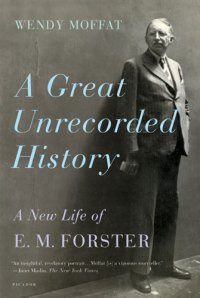
New in trade paperback from PicadorA Great Unrecorded HistoryWendy Moffat’s biography of E.M. Forster, examines the life of the great British writer through the lens of his homosexuality. Forster published five classic novels between 1905 and 1924, and even though he wrote biographies and essays until his death in 1970, he never released another novel in his lifetime. Maurice was published in 1971. The novel, which Forster composed over decades, relates a homosexual love affair; Forster was determined that, contrary to convention, the love story should not be a tragedy and should indeed have a happy ending. Part of Moffat’s project seems to be to make a case for Forster as a progenitor of queer writing. From her prologue—

Though he burned great bonfires of ephemera, Morgan [Forster’s middle name] carefully preserved the record of his gay life. Thousands of unpublished pages of letters, diaries, essays, and photographs tell the story of the life he hid from public view. Some of the pages are scattered in archives. Some have been coaxed out into the world from remarkable hiding places — a vast oak cupboard in a London sitting room, a shoebox humbly nestled among mouse turds in a New England barn. Many of Morgan’s surviving friends have told their stories for the first time. Only in 2008 were the final entries in his private diary, restricted from view since his death, opened to readers. All his long life Morgan lived in a world imprisoned by prejudice against homosexuals. He was sixteen when Oscar Wilde was sent to prison, and he died the year after the Stonewall riots.

Almost a century ago, Forster dedicated Maurice to “a happier year.” Perhaps that time is now.

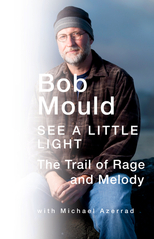
Bob Mould began playing his strange brand of frenzied, fuzzy punk rock in Hüsker Dü less than a decade after Forster’s death, and while it would be ridiculous to suggest that his life as a gay man (and teen) was easy, his new autobiography See a Little Light reveals that it is possible to work through pain, confusion, and negative public attitudes to a positive place. Mould’s homosexuality was an open secret, but he still felt protective of his personal life. However, a 1994 Spin magazine article by Dennis Cooper (yes, that Dennis Cooper) outed Mould. I’ll let him tell this part of the story—

For years I had lived in a fearful yet protective state. My parents were in a small town where people didn’t accept or understand homosexuality. I didn’t want to cause any undue stress in their lives by coming out. I remembered what happened to my high school acquaintance who ended up slaughtered in the woods. My coming out might create a hardship on my brother’s kids too—Syracuse, New York, where he now lived, was not a progressive bastion.

I had looped all the different possible fallouts and fears in my mind, a big one being that for fifteen years I had gender-neutralized my work so that it would be all-inclusive; as a result, my music was highly personal, and yet it affected a lot of people, whether they were gay or straight. But my fear was that 90 percent of my audience would have the meaning of my songs ripped out from underneath them. A song that straight people related to, now they find out it’s about two guys? The flip side, or what I now know to be the upside, was that I had a large audience who might not have known about my homosexuality, were very attached to the work, and could now see that love and loss and hope are universal emotions that can’t be owned, controlled, or denied by law or religion.

See a Little Light is not just a document of Mould’s struggles with homosexual identity, but that element is obviously indivisible from the rest of his life, which he writes about in deeply personal detail (with the aid of Michael Azerrad, who documented Hüsker Dü in a chapter of his book Our Band Could Be Your Life). There’s also plenty here on the Minneapolis-St. Paul scene, the early post-hardcore indie scene, analyses of Hüsker Dü songs, a history of Mould’s second band Sugar, thoughts on guitars, and touring, touring, touring. I’m hardly an unbiased reader here—Hüsker Dü and Sugar songs soundtracked a hefty chunk of my teen years and early twenties—but See a Little Light offers an emotional depth and level of insight absent from most musical biographies. See a Little Light is new in hardback from Little, Brown.

“Life Is Absurd” — The Sopranos on Existentialism

“Home” — George Saunders

From “Home,” a new George Saunders story in The New Yorker—-

Like in the old days, I came out of the dry creek behind the house and did my little tap on the kitchen window.

“Get in here, you,” Ma said.

Inside were piles of newspapers on the stove and piles of magazines on the stairs and a big wad of hangers sticking out of the broken oven. All of that was as usual. New was: a water stain the shape of a cat head on the wall above the fridge and the old orange rug rolled up halfway.

“Still ain’t no beeping cleaning lady,” Ma said.

I looked at her funny.

“Beeping?” I said.

“Beep you,” she said. “They been on my case at work.”

It was true Ma had a pretty good potty mouth. And was working at a church now, so.

We stood there looking at each other.

Then some guy came tromping down the stairs: older than Ma even, in just boxers and hiking boots and a winter cap, long ponytail hanging out the back.

“Who’s this?” he said.

“My son,” Ma said shyly. “Mikey, this is Harris.”

“What’s your worst thing you ever did over there?” Harris said.

“What happened to Alberto?” I said.

“Alberto flew the coop,” Ma said.

“Alberto showed his ass,” Harris said.

“I hold nothing against that beeper,” Ma said.

“I hold a lot against that fucker,” Harris said. “Including he owes me ten bucks.”

“Harris ain’t dealing with his potty mouth,” Ma said.

“She’s only doing it because of work,” Harris explained.

“Harris don’t work,” Ma said.

“Well, if I did work, it wouldn’t be at a place that tells me how I can talk,” Harris said. “It would be at a place that lets me talk how I like. A place that accepts me for who I am. That’s the kind of place I’d be willing to work.”

“There ain’t many of that kind of place,” Ma said.

“Places that let me talk how I want?” Harris said. “Or places that accept me for who I am?”

“Places you’d be willing to work,” Ma said.

“How long’s he staying?” Harris said.

“Long as he wants,” Ma said.

“My house is your house,” Harris said to me.

“It ain’t your house,” Ma said.

“Give the kid some food at least,” Harris said.

“I will but it ain’t your idea,” Ma said, and shooed us out of the kitchen.

“Great lady,” Harris said. “Had my eyes on her for years. Then Alberto split. That I don’t get. You got a great lady in your life, the lady gets sick, you split?”

“Ma’s sick?” I said.

“She didn’t tell you?” he said.

He grimaced, made his hand into a fist, put it upside his head.

“Lump,” he said. “But you didn’t hear it from me.”

Ma was singing now in the kitchen.

“I hope you’re at least making bacon,” Harris called out. “A kid comes home deserves some frigging bacon.”

“Why not stay out of it?” Ma called back. “You just met him.”

“I love him like my own son,” Harris said.

“What a ridiculous statement,” Ma said. “You hate your son.”

“I hate both my sons,” Harris said.

“And you’d hate your daughter if you ever meet her,” Ma said.

Harris beamed, as if touched that Ma knew him well enough to know he would inevitably hate any child he fathered.

Ma came in with some bacon and eggs on a saucer.

“Might be a hair in it,” she said. “Lately it’s like I’m beeping shedding.”

“You are certainly welcome,” Harris said.

“You didn’t beeping do nothing!” Ma said. “Don’t take credit. Go in there and do the dishes. That would help.”

“I can’t do dishes and you know that,” Harris said. “On account of my rash.”

“He gets a rash from water,” Ma said. “Ask him why he can’t dry.”

“On account of my back,” Harris said.

“He’s the King of If,” Ma said. “What he ain’t is King of Actually Do.”

“Soon as he leaves I’ll show you what I’m king of,” Harris said.

“Oh, Harris, that is too much, that is truly disgusting,” Ma said.

Harris raised both hands over his head like: Winner and still champ.

“We’ll put you in your old room,” Ma said.

Beethoven’s Death Mask