Allegory with Wolf and Eagle — Leonardo da Vinci

John Searle Talks About Wittgenstein (BBC, 1987)


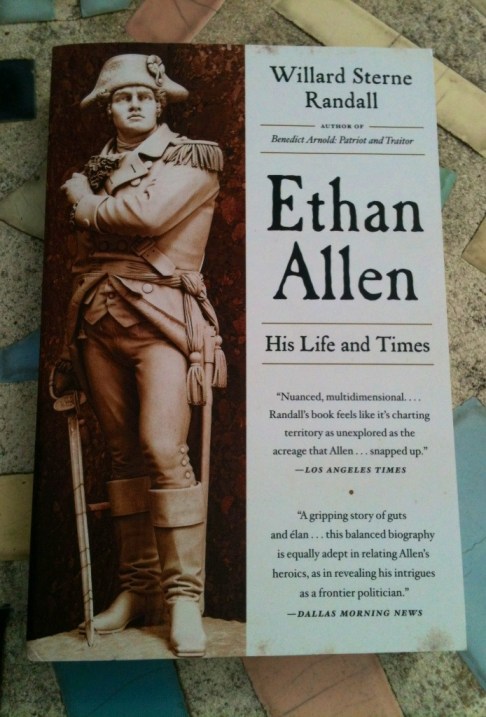
Ethan Allen (Book Acquired, Some Time Over the July 4th Holiday)

20120711-100435.jpg

Willard Sterne Randall’s biography of OG Green Mountain Boy Ethan Allen—pretty good stuff—is new in trade paperback. We’ll be running an interview with Randall about the book sometime next week. From publisher Norton’s blurb:

While Ethan Allen, a canonical hero of the American Revolution, has always been defined by his daring, predawn attack on the British-controlled Fort Ticonderoga, Willard Sterne Randall, the author ofBenedict Arnold, now challenges our conventional understanding of this largely unexamined Founding Father. Widening the scope of his inquiry beyond the Revolutionary War, Randall traces Allen’s beginning back to his modest origins in Connecticut, where he was born in 1738. Largely self-educated, emerging from a relatively impoverished background, Allen demonstrated his deeply rebellious nature early on through his attraction to Deism, his dramatic defense of smallpox vaccinations, and his early support of separation of church and state.

Chronicling Allen’s upward struggle from precocious, if not unruly, adolescent to commander of the largest American paramilitary force on the eve of the Revolution, Randall unlocks a trove of new source material, particularly evident in his gripping portrait of Allen as a British prisoner-of-war. While the biography reacquaints readers with the familiar details of Allen’s life—his capture during the aborted American invasion of Canada, his philosophical works that influenced Thomas Paine, his seminal role in gaining Vermont statehood, his stirring funeral in 1789—Randall documents that so much of what we know of Allen is mere myth, historical folklore that people have handed down, as if Allen were Paul Bunyan.

As Randall reveals, Ethan Allen, a so-called Robin Hood in the eyes of his dispossessed Green Mountain settlers, aggrandized, and unabashedly so, the holdings of his own family, a fact that is glossed over in previous accounts, embellishing his own best-selling prisoner-of-war narrative as well. He emerges not only as a public-spirited leader but as a self-interested individual, often no less rapacious than his archenemies, the New York land barons of the Hudson and Mohawk Valleys.

St. Jerome — Albrecht Durer

Calvino/Voltaire/Klee/Candide

Italo Calvino on one of my favorite books, Voltaire’s Candide (these are the first few paragraphs of the essay “Candide, or Concerning Narrative Rapidity,” from Calvino’s indispensable collection Why Read the Classics?):

Geometric characters, animated by a flickering mobility, stretch and twist in a saraband of precision and lightness: that was how Paul Klee illustrated Voltaire’s Candide in 1911, giving visual – and almost musical – form to the energetic brio which this book continues to communicate to today’s readers, above and beyond its thick network of references to its own epoch and culture.

What most delights us today in Candide is not the ‘conte philosophique’, nor its satire, nor the gradual emergence of a morality and vision of the world: instead it is its rhythm. With rapidity and lightness, a succession of mishaps, punishments and massacres races over the page, leaps from chapter to chapter, and ramifies and multiplies without evoking in the reader’s emotions anything other than a feeling of an exhilarating and primitive vitality. In the bare three pages of Chapter 8 Cunégonde recounts how having had her father, mother and brother hacked to pieces by invaders, she is then raped and disembowelled, then cured and reduced to living as a washerwoman, bartered and sold in Holland and Portugal, torn between two different protectors of different faiths on alternate days, and in this condition happens to witness the auto da fé whose victims are Pangloss and Candide himself whom she then rejoins. Even less than two pages of Chapter 9 are enough for Candide to find himself with two corpses at his feet and for Cunégonde to be able to exclaim: ‘How did you who were born so mild ever manage to kill in the space of two minutes a Jew and a prelate?’ And when the old woman has to explain why she has only one buttock, she starts by telling the story of her life from the moment when as the thirteen-year-old daughter of a Pope, she had experienced in the space of three months poverty, enslavement, and almost daily rape, before having to endure famine and war and nearly dying of the plague in Algiers: and all this before she can get to her tale of the siege of Azov and of the unusual nutrition that the starving Janissaries discover in female buttocks . . . well, here things are rather more leisurely, two whole chapters are required, something like six and a half pages.

The great discovery of Voltaire the humorist is a technique that will become one of the most reliable gags in comic films: the piling up of disaster on disaster at relentless speed. There are also the sudden increases in rhythm which carry the sense of the absurd almost to the point of paroxysm: as when the series of misfortunes already swiftly narrated in the detailed account is then repeated in a breakneck-speed summary. What Voltaire projects in his lightning-speed photograms is really a worldwide cinema, a kind of ‘around the world in eighty pages’, which takes Candide from his native Westphalia to Holland, Portugal, South America, France, England, Venice and Turkey, and this tour then splits in turn into supplementary whirlwind world tours by fellow protagonists, male and especially female, who are easy prey for pirates and slavers operating between Gibraltar and the Bosphorus. A huge cinema of contemporary world events most of all: villages wiped out in the Seven Years’ War between the Prussians and the French (the ‘Bulgars’ and the ‘Abars’), the Lisbon earthquake of 1755, the auto da fés organised by the Inquisition, the Jesuits of Paraguay who reject Spanish and Portuguese rule, the legendary gold of the Incas, and the odd snapshot of Protestantism in Holland, of the spread of syphilis, Mediterranean and Adantic piracy, internecine wars in Morocco, the exploitation of black slaves in Guyana, but always leaving a certain space for literary news, allusions to Parisian high life, interviews with the many dethroned kings of the time, who all gather at the Venice carnival.

“Genius of Love” — Tom Tom Club

Summer in the City — Edward Hopper

George Carlin Riffs on the Self-Esteem Movement (NSFW)

Books Acquired, 6.25.2012—Or, Here’s What’s New from Picador This Month

20120711-100508.jpg

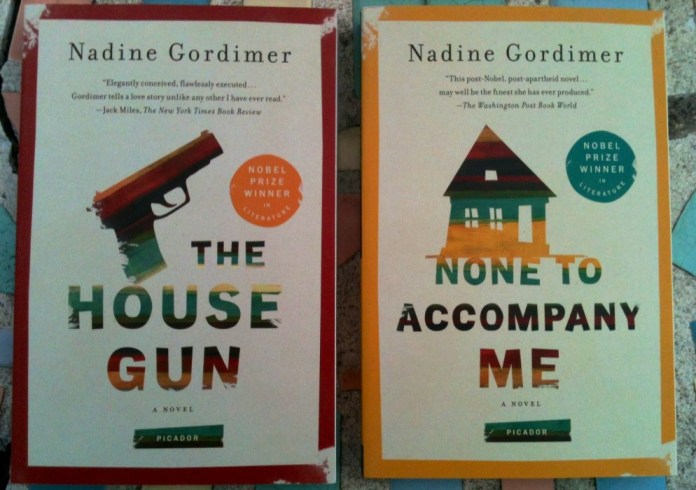
A nice stack from the good folks at Picador this month, including two new entries in their ongoing Nadine Gordimer reissues. I like the design on the series:
20120711-100530.jpg

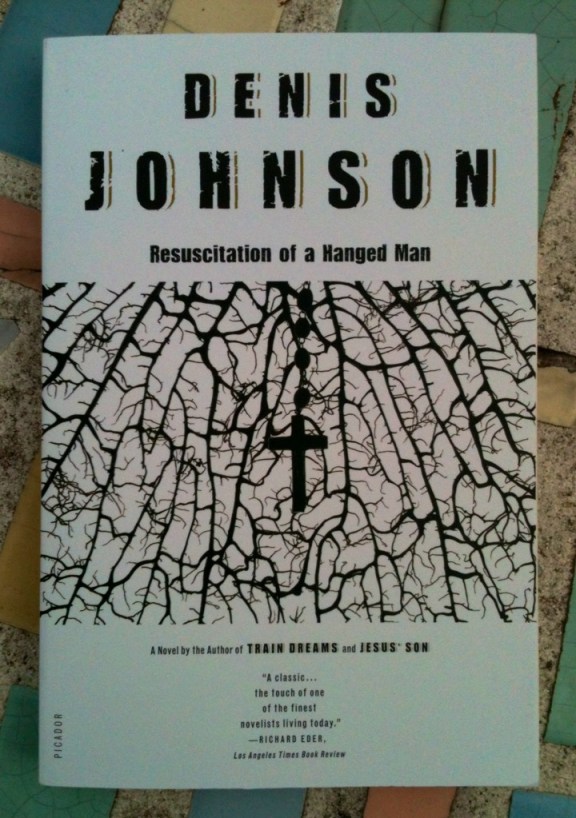
There’s also a reissue of Denis Johnson’s 1991 novel Resuscitation of a Hanged Man, which I haven’t read, but will read soon, because Johnson is just one of those writers I’ll end up reading everything by eventually. From a 1991 NYT review of the novel:

There has never been any doubt about Denis Johnson’s ability to write a gorgeous sentence. The author of “Angels,” “Fiskadoro” and “The Stars at Noon” has become increasingly musical in his prose, and his latest novel, “Resuscitation of a Hanged Man,” depends on such sentences as the primary unit of narrative motion. The novel seems, like a poem, to be written line to line. It is very much a book about one man, one sensibility.

At the outset of the novel, Leonard English, driving to the tip of Cape Cod in the off season, stops for a drink, then spins out of control, running his car onto a traffic island. He ends up taking a taxi to his destination, which is Provincetown. He has attempted suicide before the book’s beginning; now he is moving to the Cape to work for Ray Sands, a private investigator who also owns a small radio station. When we can see him most clearly, English seems very similar to the narrator of the short story — drifting, guilty, in a world of strangers, striving to connect with another person and with his God.
20120711-100537.jpg

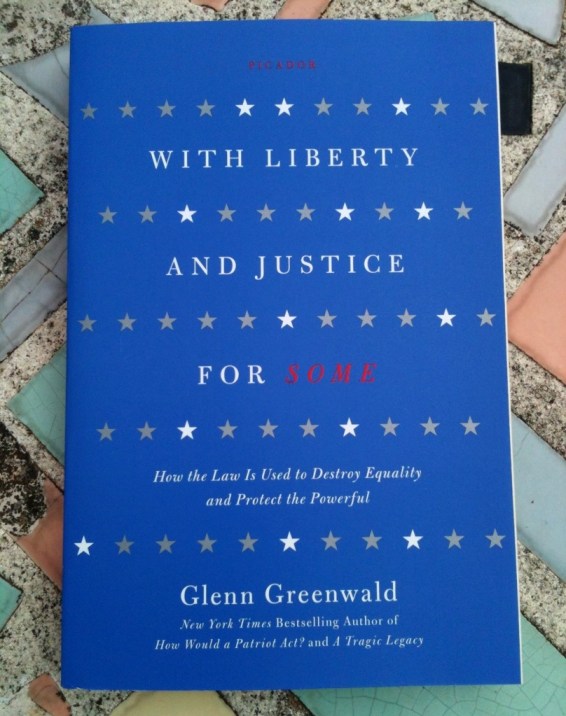
Last year’s With Liberty and Justice for Some is out now in trade paperback. If you are even slightly familiar Glenn Greenwald’s columns at Salon, you’ll likely know what to expect. For those of us predisposed to agree with his analyses, With Liberty and Justice for Some is likely to inspire outrage and a certain kind of fatigue.
20120711-100545.jpg

Here’s an excerpt from an interview between Harper’s Scott Horton and Greenwald:

American history is suffused with violations of equality before the law. The country was steeped in such violations at its founding. But even when this principle was being violated, its supremacy was also being affirmed: resoundingly and unanimously in the case of the founders. That the rule of law—not the rule of men—would reign supreme was one of the few real points of agreement among all the founders. Arguably it was the primary one.

There’s an obvious element of hypocrisy in this fact; espousing a principle that one simultaneously breaches in action is hypocrisy’s defining attribute. But there’s also a more positive side: the country’s vigorous embrace of the principle of equality before law enshrined it as aspiration. It became the guiding precept for how “progress” was understood, for how the union would be perfected.

And the most significant episodes of progress over the next two centuries—the emancipation of slaves, the ending of Jim Crow, the enfranchisement and liberation of women, vastly improved treatment for Native Americans and gay Americans—were animated by this ideal. That happened because “blind justice”—equality before law—was orthodoxy in American political culture. The principle was sacrosanct even when it was imperfectly applied.

The Ford pardon of Nixon changed that, radically and permanently. When President Ford went on national television to explain to an angry, skeptical citizenry why the most powerful political actor would be fully immunized for the felonies he got caught committing, Ford expressly rejected the rule of law. He paid lip service to its core principle—the “law is no respecter of persons”—but then tacked on a newly concocted amendment designed to gut that principle: “but the law is a respecter of reality.”

In other words, if—in the judgment of political leaders—it’s sufficiently disruptive, divisive, or distracting to hold powerful political officials accountable under the law on equal terms with ordinary Americans, then they should be exempt and the rule of law suspended, all in the name of political harmony, of “moving on.” But of course, it willalways be divisive and distracting, by definition, to prosecute the most powerful political leaders, so Ford’s rationale, predictably, created a template for elite immunity.

The rationale for Ford’s pardon of Nixon was subsequently legitimized, and it created a precedent for shielding the most powerful elites from the consequences of their lawbreaking. The arguments Ford offered are the same ones now hauled out over and over whenever it is time to argue why the most powerful among us should not be held accountable: It’s not just for the good of the immunized criminal, but in the common good, to Look Forward, Not Backward. This direct assault on the rule of law was pioneered by the pardon of Richard Nixon.

20120711-100609.jpg

Steve Sem-Sandberg’s The Emperor of Lies is a Swedish novel in English Translation by Sarah Death. Look, I’m generally dismissive of Holocaust fiction because 1) the sheer number of books that come in to Biblioklept World Headquarters that use the Holocaust as a milieu and 2) the tacky and generally lazy way that such books often attempt to manipulate their audiences. Still, The Emperor of Lies seems like it’s probably a sight better than most such books, and it’s gotten generally good reviews, including this one from The Independent (UK), which apparently thinks that a book review of five sentences is fine:

Any writer – let alone one from neutral Sweden – who sets out to place another brick in the vast wall of Holocaust fiction must be deluded or inspired. Astonishing to report: Sem-Sandberg belongs in the tiny second band.

Utterly involving, morally scrupulous, written with a verve and pace that belie its dreadful setting, The Emperor of Lies – in Sarah Death’s masterly translation – really does renew the genre.

Its portrait of resistance and survival in the ghetto of Lodz between 1940 and 1944 focuses on the monstrous enigma of Chaim Rumkowski, despotic overlord of his fellow-Jews. Sem-Sandberg catches his capricious charisma. Other characters, who record their fate or fight it, also shine, while their tragic destiny moves on at mesmerising speed.

Riding with Death — Jean-Michel Basquiat

Minor Works & Masterpieces — An Excerpt from Bolaño’s Novel 2666

Another stand-alone segment from Roberto Bolaño’s novel 2666—from “The Part About Archimboldi”:

Our hero Reiter (writer!)—who at this moment (or just before it, unbeknownst to the reader) adopts the ridiculous nom de thing Archimboldi (!!!)—secures a rented typewriter from a failed writer, an old man who takes the time to lecture on writing and camouflage and masterpieces and Jesus &c.—and writing as channeling (or maybe a type of divine madness), as a ventriloquist act (which I touched on here). (Perhaps I’m pushing the limits of copyright law here. Look, I think you should all buy and read this book and give copies to loved ones and enemies alike).

“I was a writer,” said the old man.

“But I gave it up. This typewriter was a gift from my father. An affectionate and cultured man who lived to the age of ninety-three. An essentially good man. A man who believed in progress, it goes without saying. My poor father. He believed in progress and of course he believed in the intrinsic goodness of human beings. I too believe in the intrinsic goodness of human beings, but it means nothing. In their hearts, killers are good, as we Germans have reason to know. So what? I might spend a night drinking with a killer, and as the two of us watch the sun come up, perhaps we’ll burst into song or hum some Beethoven. So what? The killer might weep on my shoulder. Naturally. Being a killer isn’t easy, as you and I well know. It isn’t easy at all. It requires purity and will, will and purity. Crystalline purity and steel-hard will. And I myself might even weep on the killer’s shoulder and whisper sweet words to him, words like ‘brother,’ ‘friend,’ ‘comrade in misfortune.’ At this moment the killer is good, because he’s intrinsically good, and I’m an idiot, because I’m intrinsically an idiot, and we’re both sentimental, because our culture tends inexorably toward sentimentality. But when the performance is over and I’m alone, the killer will open the window of my room and come tiptoeing in like a nurse and slit my throat, bleed me dry.

“My poor father. I was a writer, I was a writer, but my indolent, voracious brain gnawed at my own entrails. Vulture of my Prometheus self or Prometheus of my vulture self, one day I understood that I might go so far as to publish excellent articles in magazines and newspapers, and even books that weren’t unworthy of the paper on which they were printed. But I also understood that I would never manage to create anything like a masterpiece. You may say that literature doesn’t consist solely of masterpieces, but rather is populated by so-called minor works. I believed that, too. Literature is a vast forest and the masterpieces are the lakes, the towering trees or strange trees, the lovely, eloquent flowers, the hidden caves, but a forest is also made up of ordinary trees, patches of grass, puddles, clinging vines, mushrooms, and little wild-flowers. I was wrong. There’s actually no such thing as a minor work. I mean: the author of the minor work isn’t Mr. X or Mr. Y. Mr. X and Mr. Y do exist, there’s no question about that, and they struggle and toil and publish in newspapers and magazines and sometimes they even come out with a book that isn’t unworthy of the paper it’s printed on, but those books or articles, if you pay close attention, are not written by them.

“Every minor work has a secret author and every secret author is, by definition, a writer of masterpieces. Who writes the minor work? A minor writer, or so it appears. The poor man’s wife can testify to that, she’s seen him sitting at the table, bent over the blank pages, restless in his chair, his pen racing over the paper. The evidence would seem to be incontrovertible. But what she’s seen is only the outside. The shell of literature. A semblance,” said the old man to Archimboldi and Archimboldi thought of Ansky. “The person who really writes the minor work is a secret writer who accepts only the dictates of a masterpiece. Continue reading “Minor Works & Masterpieces — An Excerpt from Bolaño’s Novel 2666”

Harry Nilsson Plays the Smothers Brothers Show

St. Jerome Writing — Caravaggio

Four Studies of Snakes — Gustave Moreau

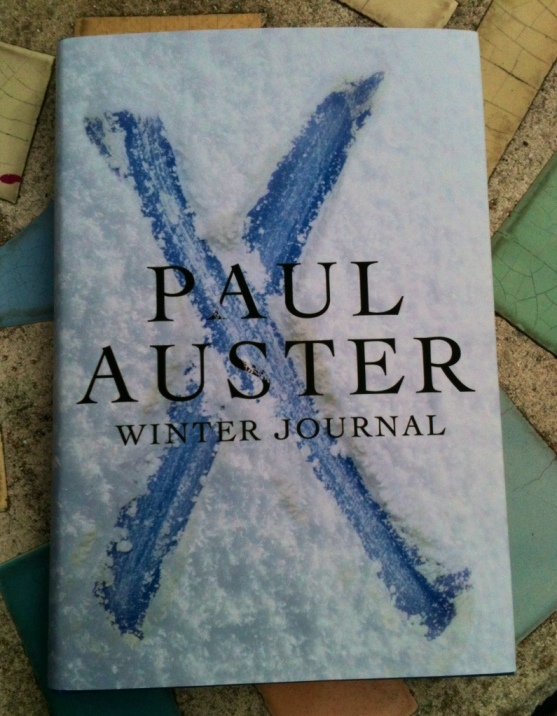
Paul Auster’s Winter Journal (Book Acquired Some Time Over the July 4th Holiday)

20120711-100349.jpg

I was pleasantly surprised to find Paul Auster’s forthcoming memoir Winter Journal in the mail after being away for a week. I had mixed feelings about Auster’s last novel Sunset Park, but I dig his nonfiction, and I opened Winter Journal randomly to an episode where the adolescent Auster loses his virginity to a hooker in a passage that’s both tender and funny, so this one seems promising. (It’s also written entirely in the second person pronoun).

Publisher Henry Holt’s blurb:

Facing his sixty-third winter, internationally acclaimed novelist Paul Auster sits down to write a history of his body and its sensations—both pleasurable and painful.

Thirty years after the publication of The Invention of Solitude, in which he wrote so movingly about fatherhood, Auster gives us a second unconventional memoir in which he writes about his mother’s life and death. Winter Journal is a highly personal meditation on the body, time, and memory, by one of our most intellectually elegant writers.

Parody of Manet’s Olympia with Junyer and Picasso — Pablo Picasso

“All These Beefy Caucasians with Guns!” (A Passage from Neal Stephenson’s Novel Snow Crash)

A passage from Neal Stephenson’s prescient 1992 cyberthriller Snow Crash:

All these beefy Caucasians with guns!  Get enough of them together, looking for the America they always believed they’d grow up in, and they glom together like overcooked rice, form integral, starchy little units.  With their power tools, portable generators, weapons, four-wheel-drive vehicles, and personal computers, they are like beavers hyped up on crystal meth, manic engineers without a blueprint, chewing through the wilderness, building things and abandoning them, altering the flow of mighty rivers and then moving on because the place ain’t what it used to be.

The byproduct of the lifestyle is polluted rivers, greenhouse effect, spouse abuse, televangelists, and serial killers.  But as long as you have that four-wheel-drive vehicle and can keep driving north, you can sustain it, keep moving just quickly enough to stay one step ahead of your own waste stream.  In twenty years, ten million white people will converge on the north pole and park their bagos there.  The low-grade waste heat of their thermodynamically intense lifestyle will turn the crystalline icescape pliable and treacherous.  It will melt a hole through the polar icecap, and all that metal will sink to the bottom, sucking the biomass down with it.