Lectern with Books — Albrecht Durer

I Review Neal Stephenson’s Zany, Prescient Novel Snow Crash (And Comment on the Impending Film Adaptation)

Neal Stephenson’s 1992 novel Snow Crash opens with an extended scene in which the book’s protagonist races to deliver a pizza on time for the mafia. The scene is thrilling and ridiculous, establishing the book’s frenetic, ironic tone and painting a rough outline of Snow Crash’s milieu. Like  many sprawling works of speculative fiction, Snow Crash is more interested in rendering its milieu in vibrant, hyperkinetic color than it is concerned with delivering plot and character development. Snow Crash’s plot is the sort of joyfully convoluted careening mess that makes a reviewer (okay, this reviewer) shudder at the thought of having to successfully paraphrase, so I’m not even going to make an earnest effort. Let’s get to that milieu and the cartoon characters who inhabit it.

Snow Crash is set in the early 21st century, primarily in Los Angeles, which is no longer part of the United States. Actually, there isn’t much of a United States to speak of, really—and not even a municipal Los Angeles, per se. Instead, the terrain is totally privatized. Privatized roads, privatized spaces. People (who can afford to) live in franchised burbclaves protected by hired mercenaries or private militias or robots that keep out the undesirables. (The white folks who live in New South Africa want “racial purity,” while some franchise nations, like Mr. Lee’s Greater Hong Kong are open to anyone who can trade information). Authority is for sale. Conditions are so laissez-faire that the Mafia is truly a Legitimate Business now (complete with their own CosaNostra Pizza University). In fact, all business is legitimate; several times in Snow Crash, a character will refer to “the old days when they had laws.” Without regulation, hyperinflation is the norm; the homeless use trillion-dollar bills to light their campfires.

There’s a hard-edged griminess to the world Stephenson conjures in Snow Crash, but the book is never grim or dour, and instead embraces the anarchic-capitalism it proposes. Perhaps this is because Stephenson’s heroes are such radically exceptional people. The book’s hero is named Hiro Protagonist, the kind of Pynchonian goof that characterizes Snow Crash’s zany tone. Hiro meets the book’s other protagonist, a fifteen year old blonde who goes by Y.T. (“Yours Truly,” although most of the folks tend to hear “whitey”). Y.T. is a Kourier, a skateboarding delivery person who harpoons vehicles to catch a free ride. She helps Hiro deliver that pizza in the opening scene and the two team up after Hiro gives her his business card. It reads: “Last of the Freelance Hackers  / Greatest swordfighter in the world  / Stringer, Central Intelligence Corporation. Specializing in Software related Intel. (Music, Movies & Microcode.)” Did I neglect to mention that Hiro carries two samurai swords with him wherever he goes?

Hiro’s pretty handy with those swords, but his real skill is hacking, and he spends a good deal of time in the Metaverse, a virtual reality-based internet space where avatars go to bars and chat and sell &c. It’s sort of like a mix between Facebook and World of War Craft. In 1992 (earlier, I suppose), Stephenson’s way ahead of the curve. Here, he describes avatars:

Your avatar can look any way you want it to, up to the limitations of your equipment.  If you’re ugly, you can make your avatar beautiful.  If you’ve just gotten out of bed, your avatar can still be wearing beautiful clothes and professionally applied makeup.  You can look like a gorilla or a dragon or a giant talking penis in the Metaverse.  Spend five minutes walking down the Street and you will see all of these.

There are plenty of passages like this, where Stephenson pegs some aspect of internet culture ten years before it actually happens. (I couldn’t help but think about Wikipedia during Hiro’s conversations with a program called Librarian). It’s probably fair to say that the Wachowskis lifted as much from Snow Crash as they did from William Gibson’s cyberpunk trilogies.

While I’m there, I might as well lazily point out that Snow Crash would fit neatly at home on a shelf with Neuromancer or Mona Lisa Overdrive. There’s also a heavy dose of Philip K. Dick weirdness in Snow Crash, particularly when the book settles into its major metaphysical plot about ancient Sumerian gods and goddesses and linguistic viruses and the Tower of Babel. Stephenson’s Snow Crash is zanier than William Gibson’s dark depictions or Dick’s mindmelted milieux, and it would hardly do to call what he does here light—but there is something joyful, playful about his satire. I invoked Pynchon earlier and I’ll do it again; parts of Snow Crash also reminded me of David Foster Wallace’s opus Infinite Jest. Both IJ and SC obsess over the minutest details of speculative technologies and how people might react to such technologies. This is often what sets Snow Crash heads and shoulders above run of the mill cyberpunk. In just one instance, Stephenson parodies the language of bureaucratic speech at length; Y.T.’s mom, who works for what’s left of the Federal Government, is subjected to a memo about toilet paper usage that goes on for pages. The passage is hilarious, and adds absolutely nothing to the plot development—it simply helps to flesh out the contours of the world that Stephenson has imagined.

All of this detailed imagining unfortunately comes at the expense of a plot that only coheres through massive exposition dumps. About a third of the way into the novel, the major conflict is finally established, but only through a dialog between Hiro and the Librarian that reads almost like a catechism. As the book reaches its climax, Hiro actually explains what’s going on to a few of the other major characters—and the reader, of course. It’s a cringe-worthy moment, the sort of rhetorical weakness that smacks of genre fiction; even worse, the plot’s action ultimately hangs on some fairly basic hoary old tropes that wouldn’t be unfamiliar to anyone who’s ever played a video game. The book lags under a juvenile obsession with weapons and badassery in general. And the book’s resolution . . . well, let’s just say that Stephenson sticks the ending, but it all feels too pat and too slight after the dazzling weight of the world that he’s established. Still, at its finest, Stephenson’s prose is zippy, shining, hilarious stuff, and his employment of multiple character perspectives moves the book with an addictive energy. Snow Crash is beach reading for folks who like some humor with their dystopia.

A film adaptation of Snow Crash is supposedly going into production soon, with British director Joe Cornish taking charge. I liked Cornish’s last film Attack the Block, and Snow Crash clearly has a highly-imagistic, cinematic feel to it—but I think a film is not the way to go. Simply put, Snow Crash is too big, too larded with characters and details (so many that I failed to touch on in this review) to translate well onscreen. I think an eight part miniseries on HBO (or a similar network) would be perfect, even if it came at the expense of special effects—-a miniseries would give the filmmakers time to build Stephenson’s nuanced world. I’m afraid otherwise we’ll get a travesty like the adaptation of The Golden Compass, or something like The Hunger Games film, where all but the most basic plot points are elided. But I suppose a miniseries is not as lucrative as a blockbuster film. I hope the filmmakers at least split the book in two. In any case, I’ll be interested to check out the results.
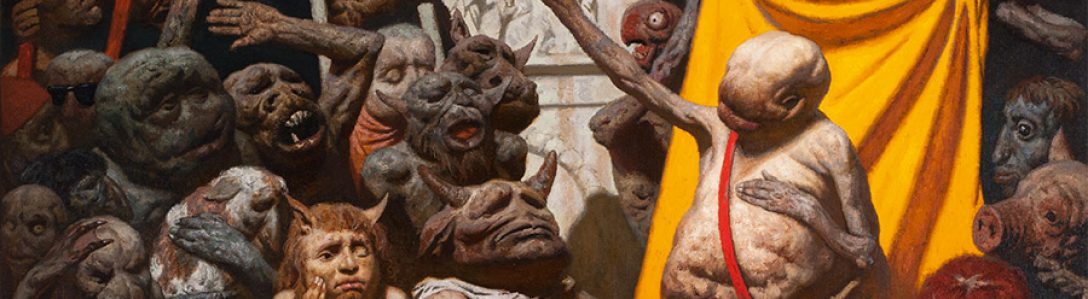
Massacre at Chios — Eugène Delacroix

RIP Mystery Writer Donald J. Sobol, Creator of Encyclopedia Brown

RIP Donald J. Sobol, who died last week at the age of 87.

Sobol is most famous for his Encyclopedia Brown series, featuring the eponymous boy detective.

I loved those books when I was a kid.

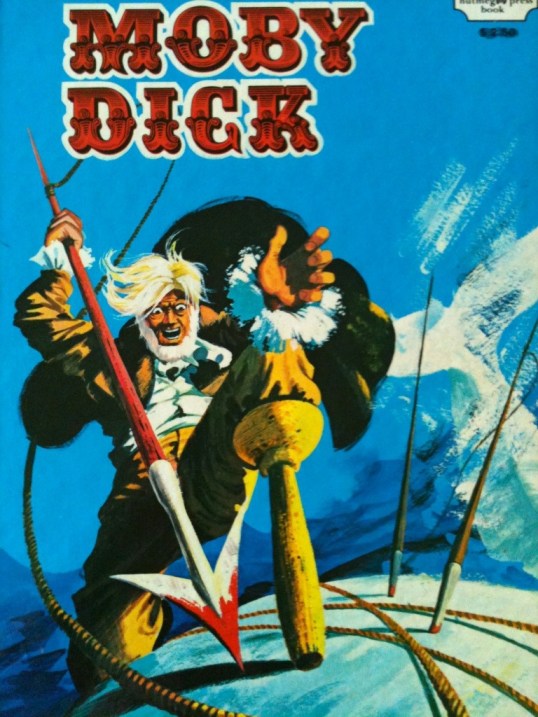
Moby Dick (Unhyphenated Kids Book Acquired 6.30.2012)

20120716-124132.jpg

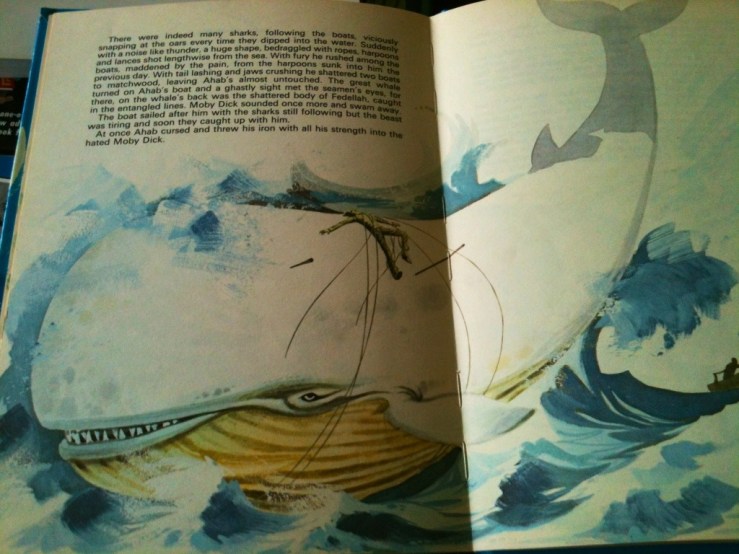
I picked this one up a few weeks ago to add to a small collection of Moby-Dick adaptations. It’s especially weird: I can’t find the name of an illustrator or author anywhere (it doesn’t even mention Herman Melville!). The adaptation is also kinda weird, lingering on the gold piece scene. Anyway. Some of the pics are cool, I guess.

20120716-124139.jpg

Two Hands Holding A Pair Of Books — Albrecht Durer

Derrida Speaks About Animals

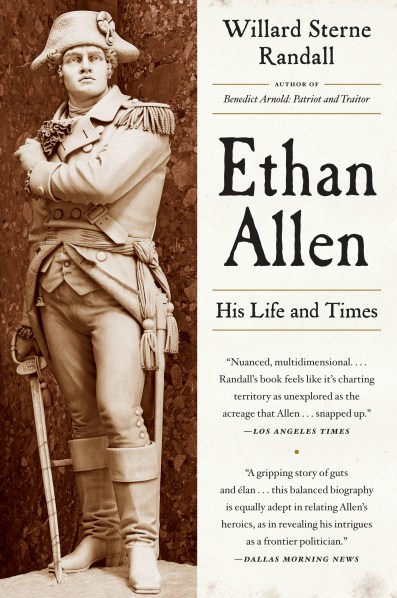
Historian Willard Sterne Randall Talks to Biblioklept About His New Biography of Ethan Allen

Ethan Allen is perhaps most noted for leading the Green Mountain Boys on a daring raid to take Fort Ticonderoga from the British. Willard Sterne Randall’s biography Ethan Allen: His Life and Times reveals and explores much more to the Vermont statesman than many fans of American history are likely aware of. Randall also makes good on the promise of the second part of his book’s subtitle, painting the Revolutionary and post-Revolutionary years in keen detail. Randall was kind enough to talk to me about his book (which is new in a trade paperback edition from Norton) via email.
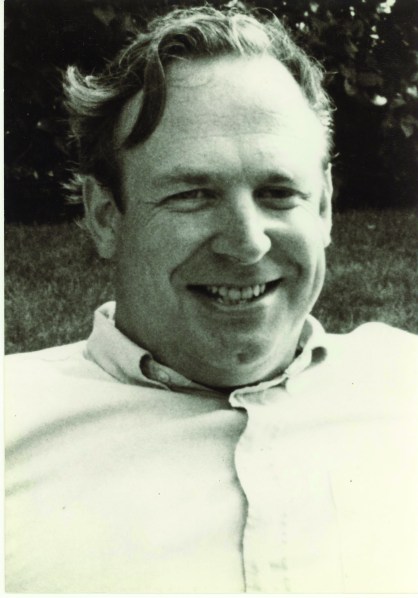
Randall has written many books on the American colonial and Revolutionary periods, including biographies of Thomas Jefferson, George Washington, Alexander Hamilton, and Benedict Arnold.  He lives in Vermont, where he teaches American history at Champlain College. Check out his website.

Biblioklept: You’ve written books about George Washington and Thomas Jefferson, figures who obviously bear considerable influence on American history. Ethan Allen is a less-remarked upon figure. What made you want to tell his story?

Will Randall: When I moved to Vermont thirty years ago after a journalism career, I ran into Ethan Allen’s name everywhereon a ferry, a federal firing range, an old cavalry fort, streets and highways, a bowling alleybut if you asked people what they knew about him, invariably it was with a chuckle and a sign of tippling or a wink and they’d say, “Ole Ethan, that drunk” or “that scoundrel.” Other than that, he knew he had captured a fort with the Green Mountain Boys (their names and his were always run together), but beyond one day at the beginning of the Revolution, they knew nothing.

As I worked on other biographies of more patrician and recognizable revolutionaries, I kept running into Allen’s name. The editors of a new compendium on the American Enlightenment asked me to do a profile of Allen as philosopher: turned out Allen was the first published American Deist philosopher. My son wrote a thesis in college on the precedents of the Union’s treatment of POW’s in the Civil War: turned out it was the treatment of Ethan Allen as a prisoner of the British in the Revolution. Treatment of the British: turned out Allen wrote a memoir of his captivity under horrible conditions for nearly three years as he was shunted by ship from Canada to England to Bermuda to Halifax to New York, etc., while George Washington laid down the law that, as Allen was treated, so would be British prisoners. That narrative turned out to be the second-best-selling book of the Revolution, only behind Tom Paine. And so it went, with virtually every Founding Father in one way or another interacting with Allen while he beat off, with four
volumes and scores of pamphlets of highly-charged words and weapons from clubs and daggers to the heavy artillery that drove the British out of Boston and saved Washington’s army, anyone who tampered with Vermont, which was virtually his creation. That, I decided, warranted a book.

Biblioklept: Allen often comes across as a sort of mythical frontiersman—you note in your prologue that he “projects himself as a populist frontier philosopher on horseback.” How accurate is this reputation?
WR: I think he fills his own bill. He was so popular that some 10,000 people braved February weather in Vermont to come to his funeral (out of a population of 80,000. He spoke for the poor who couldn’t make it in other more hierarchical New England colonies and, after revolting in Massachusetts, fled to Vermont, where he protected them. All his adult life, he took on, in person and in writing, the Puritan theocracy, selling virtually everything he had to attack their Old Testament religion in publishing 1,500 copies of a book, of which only about 200 copies survived the flames of a suspicious fire. While most other Founders prospered from the RevolutionMonticello, Mount Vernon, etc.Allen chose to live out his days in a one-and-a-half story log house with the best view of his beloved Green Mountains and Lake Champlain. There, giving Voltaire’s name to one of his sons, he raised cattle and scribbled away, signing himself, “Clodhopper Philosopher” that the philosophes of Paris read in their salons on the eve of the French Revolution. And what finally killed him: according to a toxicologist I consulted, too much applejack mixed with rum in a “flowing bowl” of punch he consumed liberally in one last party with his Green Mountain Boys.

Biblioklept: At the beginning of Ethan Allen, you point out that there are few books or credible biographies of your subject. I’m curious how this impacted the composition of the book—was it frustrating? Liberating?

WR: Actually, it was liberating. It forced me to employ all the investigative techniques I had learned and made me read as widely as I have with any other Founding Father, following the research wherever it led me.

Biblioklept: Have you ever stolen a book?

WR: Not yet, but they’re getting expensive!

Greed — Pieter Bruegel the Elder

“Half Man/Half Mole” — Chris Knox

Book Shelves #29, 7.15.2012

20120715-103934.jpg

Book shelves series #29, twenty-ninth Sunday of 2012

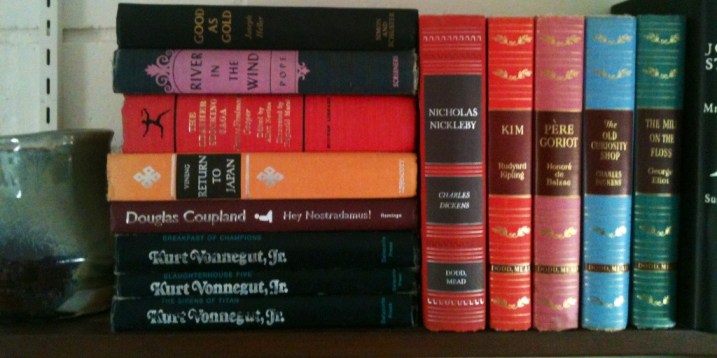
Lots of hardbacks on this long, long shelf. The Vonneguts above were particularly important to me when I was young. They were my father’s. I read them surreptitiously for years and then outright appropriated them at some point. The matching Dodd, Mead hardbacks were rescued from a school I worked at for years. My wife made the vase that serves as a bookend. The copy of Jonathan Strange and Mr. Norrell that doesn’t quite fit in the frame remains unread.

20120715-103943.jpg

The BFG: a classic. I reviewed Wabi Sabi. Next to the Crumb:

20120715-111742.jpg

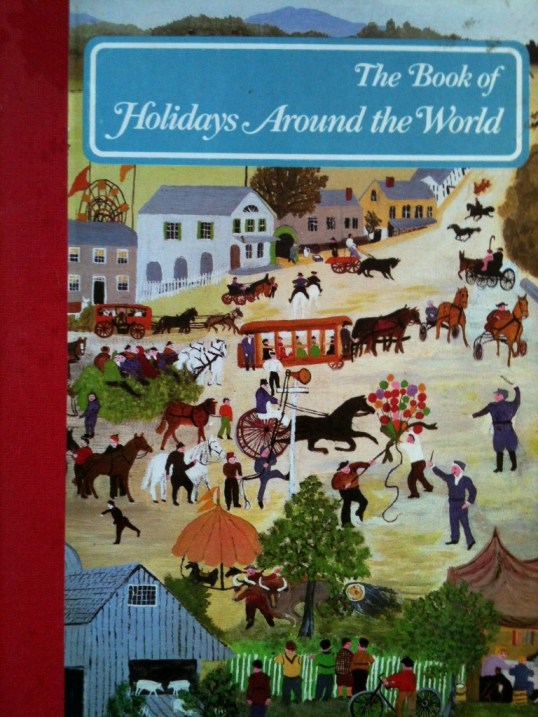
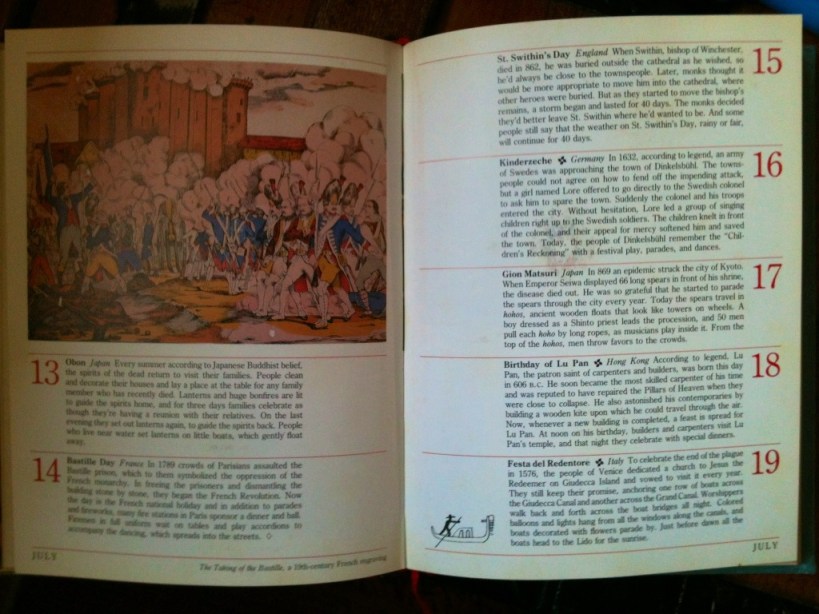
I found Holidays in a box of free books in a library lobby. Love it. Here’s this week’s schedule of holidays:

20120715-111749.jpg

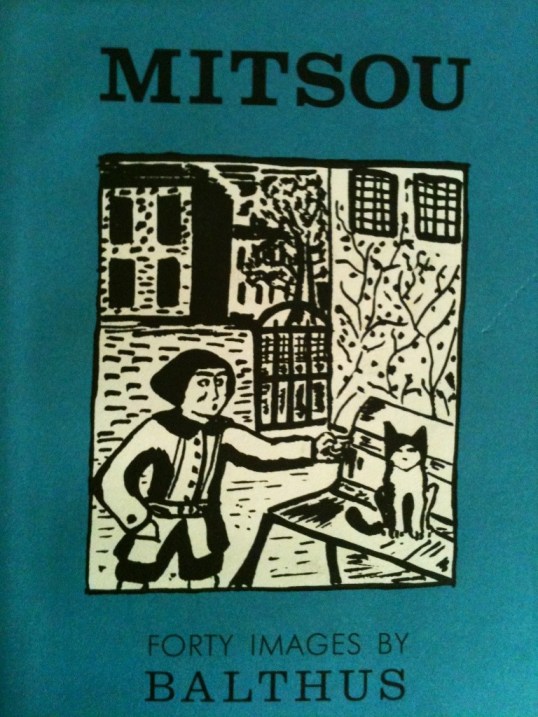
One of my favorite books ever is Mitsou, a book that Balthus did when he was like 10 or 12 or something:

20120715-104032.jpg

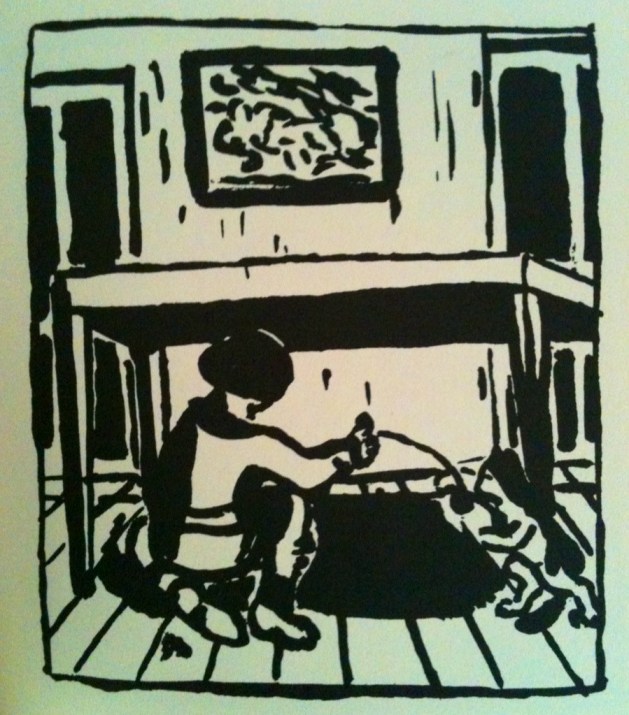
It’s about a young boy who gets a cat and loves the cat and then loses the cat. It’s heartbreaking. Image:

20120715-104040.jpg

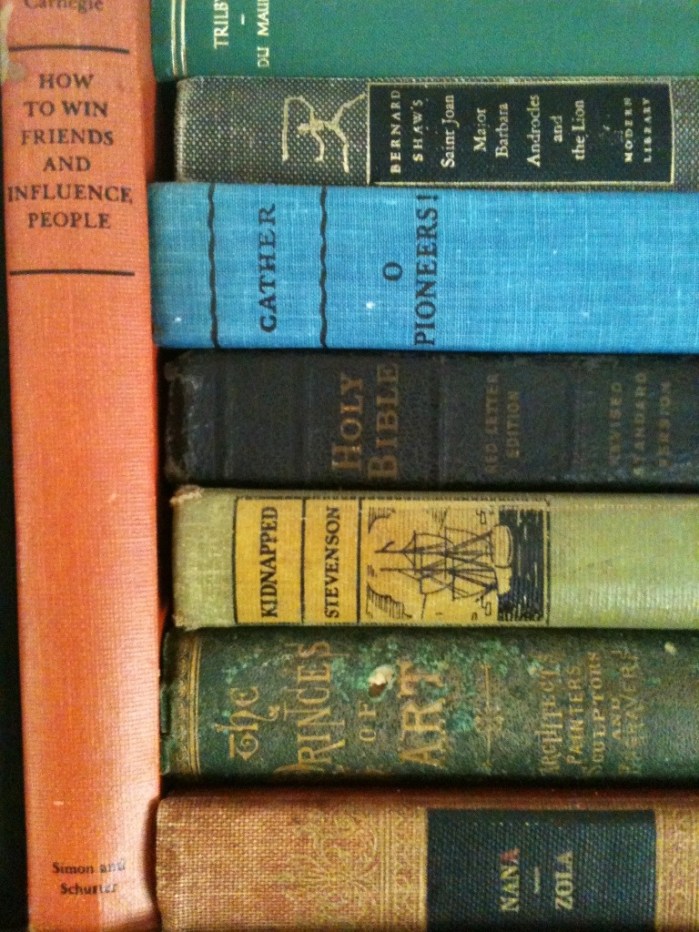
And next to this one:

20120715-104015.jpg

Shelf’s end:

20120715-112719.jpg

List of Lapsus Calami from Roberto Bolaño’s Novel 2666

A funny section from late in Roberto Bolaño’s novel 2666; lapsus calami is Latin for “slip of the pen,” indicating a mistake or miswriting (although, as the characters discuss later, some of these examples may be purposeful):

. . . . and then they started to talk about lapsus calami, many of them collected in a book published long ago in Paris and fittingly titled Le Musee des erreurs, as well as others selected by Max Sengen, hunter of errata. And one thing led to another and it wasn’t long before the copy editors got out a book (which wasn’t the French Museum of Errors or Sengen’s text), whose title Archimboldi couldn’t see, and began to read aloud a selection of cultured pearls:

“Poor Marie! Whenever she hears the sound of an approaching horse, she is certain that it is I.” Vie de Ranee, Chateaubriand.

“The crew of the ship swallowed up by the waves consisted of twenty-five men, who left hundreds of widows consigned to misery.” Les Cages flottantes, Gaston Leroux.

“With God’s help, the sun will shine again on Poland.” The Deluge, Sienkiewicz.

” ‘Let’s go!’ said Peter, looking for his hat to dry his tears.” LourdesZola.

“The duke appeared followed by his entourage, which preceded him.” Letters from My Mill, Alphonse Daudet.

“With his hands clasped behind his back, Henri strolled about the garden, reading his friend’s novel.” Le Cataclysme, Rosny.

“With one eye he read, with the other he wrote.” On the Banks of the Rhine, Auback.

“Silently the corpse awaited the autopsy.” Luck’s Favorite, Octave Feuillet.

“William couldn’t imagine the heart served for anything other than breathing.” Death, Argibachev.

“This sword of honor is the most beautiful day of my life.” Honneur d’artiste, Octave Feuillet.

“I can hardly see anymore, said the poor blind woman.” Beatrix, Balzac.

“After they cut off his head, they buried him alive.” The Death of Mongomer, Henri Zvedan.

“His hand was as cold as a snake’s.” Ponson du Terrail. And here there was no indication of the source of the lapsus calami.

The following unattributed quotes from Max Sengen’s collection were particularly notable:

“The corpse stared reproachfully at those gathered around him.”

“What can a man do who’s been killed by a lethal bullet?”

“Near the city there were roaming whole packs of solitary bears.”

“Unfortunately, the wedding was delayed fifteen days, during which time the bride fled with the captain and gave birth to eight children.”

“Three- or four-day excursions were a daily occurrence.”

And then came the commentary.

A Man Seated at a Table Covered with Books — Rembrandt

Bluebird — Albrecht Dürer

The World Within: C.G. Jung In His Own Words (1990 Documentary with Archival Footage)

Italo Calvino’s List of Reasons Why We Should Read the Classics

From Italo Calvino’s The Uses of Literature

  1. The classics are the books of which we usually hear people say, “I am rereading . . . ” and never “I am reading . . . “
  2. We use the words “classics” for books that are treasured by those who have read and loved them; but they are treasured no less by those who have the luck to read them for the first time in the best conditions to enjoy them
  3. The classics are books that exert a peculiar influence, both when they refuse to be eradicated from the mind and when they conceal themselves in the folds of memory, camouflaging themselves as the collective or individual unconscious.
  4. Every rereading of a classic is as much a voyage of discovery as the first reading.
  5. Every reading of a classic is in fact a rereading.
  6. A classic is a book that has never finished saying what it has to say.
  7. The classics are the books that come down to us bearing the traces of readings previous to ours, and bringing in their wake the traces they themselves have left on the culture or cultures they have passed through (or, more simply, on language and customs).
  8. A classic does not necessarily teach us anything we did not know before. In a classic we sometimes discover something we have always known (or thought we knew), but without knowing that this author said it first, or at least is associated with it in a special way. And this, too, is a surprise that gives much pleasure, such as we always gain from the discovery of an origin, a relationship, an affinity.
  9. The classics are books which, upon reading, we find even fresher, more unexpected, and more marvelous than we had thought from hearing about them.
  10. We use the word “classic” of a book that takes the form of an equivalent to the universe, on a level with the ancient talismans. With this definition we are approaching the idea of the “total book,” as Mallarmé conceived of it.
  11. Your classic author is the one you cannot feel indifferent to, who helps you to define yourself in relation to him, even in dispute with him.
  12. A classic is a book that comes before other classics; but anyone who has read the others first, and then reads this one, instantly recognizes its place in the family tree.
  13. A classic is something that tends to relegate the concerns of the moment to the status of background noise, but at the same time this background noise is something we cannot do without.
  14. A classic is something that persists as a background noise even when the most incompatible momentary concerns are in control of the situation.


Piles of Books — Hercules Seghers