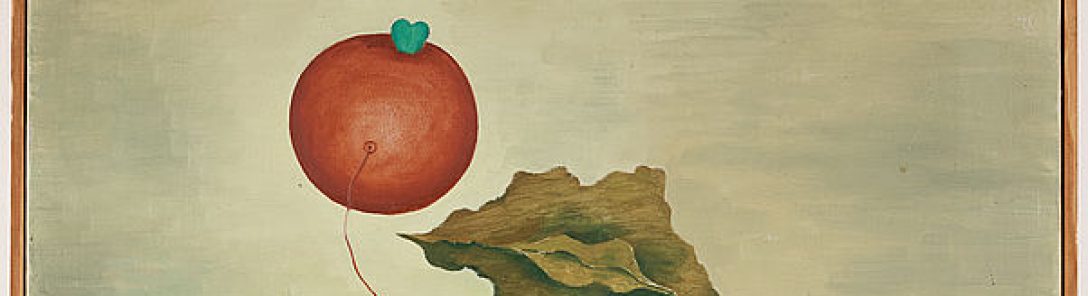
Evening and Sorrow — Gustave Moreau

Read Roberto Bolaño’s Short Story “Mexican Manifesto”

“Mexican Manifesto” by Roberto Bolaño (translation by Laura Healy):

Laura and I did not make love that afternoon. In truth, we gave it a shot, but it just didn’t happen. Or, at least, that’s what I thought at the time. Now I’m not so sure. We probably did make love. That’s what Laura said, and while we were at it she introduced me to the world of public baths, which from then on, and for a very long time, I would associate with pleasure and play. The first one was, without a doubt, the best. It was called Montezuma’s Gym, and in the foyer some unknown artist had done a mural where you could see the Aztec emperor neck-deep in a pool. Around the edges, close to the monarch but much smaller, smiling men and women bathe. Everyone seems carefree except the king, who looks fixedly out of the mural, as if searching for the improbable spectator, with dark, wide-open eyes in which I often thought I glimpsed terror. The water in the pool is green. The stones are gray. In the background, you can see mountains and storm clouds.

The boy who worked at Montezuma’s Gym was an orphan, and that was his primary topic of conversation. On the third visit, we became friends. He was only eighteen, and wanted to buy a car, so he was saving everything he could: tips were scant. According to Laura, he was a little slow. I thought he was nice.

In every public bath, there tends to be a fight from time to time. We never saw or heard any there. The clients, conditioned by some unknown mechanism, respected and obeyed every word of the orphan’s instructions. Also, to be fair, there weren’t very many people, and that’s something I’ll never be able to explain, since it was a clean place, relatively modern, with individual saunas for taking steam baths, bar service in the saunas, and, above all, cheap. There, in Sauna 10, I saw Laura naked for the first time, and all I could do was smile and touch her shoulder and say I didn’t know which valve to turn to make the steam come out.

(Read the rest of “Mexican Manifesto” at The New Yorker)

William Gaddis on the Pulitzer Prize: “The Ultimate Seal of Mediocrity”

In William Gaddis’s last novel Agapē Agape (2002), our embittered narrator excoriates the Pulitzer Prize:

. . . write what they want you’ll end up with a Pulitzer Prize follow you right to the grave. Maybe won the Medal of honor the George Cross even the Nobel but once you’ve been stigmatized with the ultimate seal of mediocrity your obit will read Pulitzer Prize Novelist Dies at whatever because they’re not advertising the winner no. No, like this whole plague of prizes wherever you look, it’s the prize givers promoting themselves, trying to rescue their thoroughly discredited profession of journalism. “The press is a school that serves to turn men into brutes,” Flaubert writes to George Sand “because it relieves them from thinking.” The prize winners? They’re just props, cartoonists, sports writers, political pundits, front page photos the bloodier the better for that instant of fame wrap the fish in tomorrow, good God how many Pulitzer Prizes are there? Over fifteen hundred entries, fourteen categories for journalists because if you started your bondage there you’re halfway home with that whole gang of sponsors, trustees, juries, God knows what who’ve survived that Slough of Despond and floated to the top. Just look at the next day’s New York Times, page after page bulging with self-congratulation with seven more categories to leech on, music, what they call drama and of course books where the Grey Lady finally got it both ways with their journalist who reviews books, like the misty-eyed ingenue but also destroys women writers and just for fairness crosses the gender line for an occasional assassination, give that lady a Pulitzer with oak leaf clusters! The books that are candidates are read by a jury whose decisions are passed up to the Olympian trustees with an eye to the multitude. We are thousands and they are millions, write the fiction they want or don’t write at all, ruling out Pound’s cry for the new, the challenging or what’s labeled difficult, so when Gravity’s Rainbow is being devoured by college youth everywhere and wins the National Book Award, its unanimous recommendation is overturned by the trustees for a double-talk spoof of academic vagaries by a bogus “Professor,” to everyone’s relief, and the author at peril escapes unblemished by the, no, no, no you can’t depend on it.

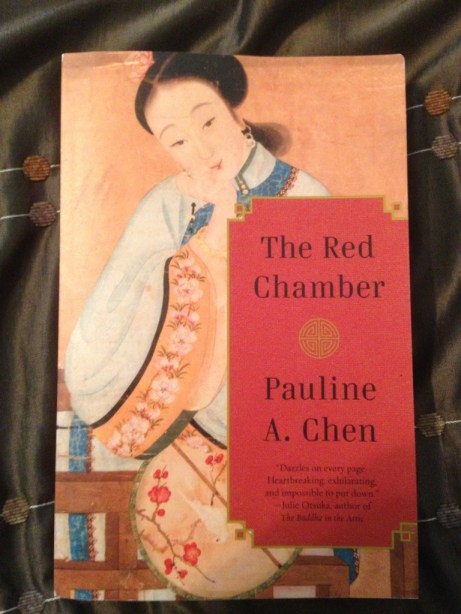
The Red Chamber (Book Acquired, Some Time Like Two Weeks Ago Maybe)

20130414-153312.jpg

A review copy of Pauline A. Chen’s The Red Chamber arrived at Biblioklept World Headquarters like maybe two weeks ago, but my wife snapped it up immediately and then I neglected to look at it until today. Publisher Random House’s blurb:

In eighteenth-century China, the beautiful orphan Daiyu leaves her home in the provinces to seek shelter with her mother’s family in Beijing. At Rongguo Mansion, she is drawn into a world of sumptuous feasts, silken robes, and sparkling jewels—as well as a complex web of secret rivalries and intrigues that threatens to trap her at every turn. When she falls in love with Baoyu, the family’s brilliant, unpredictable heir, she finds the forces of the family and convention arrayed against her, and must risk everything to follow her heart.

Based on the epic Dream of the Red Chamber—one of the most famous love stories in Chinese literature—this novel recasts a timeless tale for Western audiences to discover.


Something on Georges Perec’s La Boutique Obscure

georges-perec-la-boutique-obscure-124-dreams

1. Listening to someone’s dreams is usually pretty boring. Reading about someone’s dreams is even worse.

Except when it’s not, of course.

2. Perec, describing his dream journal La Boutique Obscure:

I thought I was recording the dreams
I was having; I have realized that it was
not long before I began having dreams
only in order to write them.

These dreams—overdreamed, overworked,
overwritten—what could I then
expect of them, if not to make them into
texts, a bundle of texts left as an o)ering
at the gates of that “royal road” I still
must travel with my eyes open?

3. La Boutique Obscure is new in English translation by Daniel Levin Becker, published by the good people at Melville House.

4. The dreams in La Boutique Obscure, rendered in fairly concrete prose (Perec avoids analysis), were recorded between 1968-1972.

5. I’ve been slowly reading the essays and riffs and lists collected in Perec’s Species of Spaces and Other Pieces over the past few years. There’s something wonderful about picking the book up at random and finding some little quip or note (or entire essay) that illuminates some fascinating aspect of what we might initially take to be a dull topic.

La Boutique Obscure works the same way.

6. Sample:

Capture

7. Many of the elements that we see in Dream No. 24 / “Cats” run throughout the collection: Friends, doors, streets, houses, apartments, disasters, performances, lists, etc. etc. Note also Perec’s refusal to analyze or contextualize or otherwise attempt to make meaning out of the dream.

8. My favorite pieces in the collection are the ones that convey more plot—adventures, chases, fragments of films and plays—but there’s also pleasure in Perec’s shortest pieces, which often resemble imagist poems—like “The stone bridge”:

Capture

9. A good review, a responsible review, might try to situate Perec’s dream journal against his role as Oulipo gamesmaster, or set the entries against Perec’s biography, or maybe compare it to other dream journals. Or maybe even try to tackle it as a novel, or a novelish book.

10. But I’m more interested in the aesthetic experience of reading La Boutique Obscure. The book is fun, distracting, and divergent. Perec’s refusal to interpret his dreams leaves plenty of space for the reader to make his own connection—and if need be, interpretations—but to be clear, the same banal anxieties that inform our own dreams are what Perec traces the contours of in La Boutique Obscure. The book’s greatest strength is its imagery, its evocation of place, space, movement. To fault it for lacking depth would be to entirely miss the point.

11. Reading La Boutique Obscure provides another nagging reminder that I have yet to read Life A User’s Manual.

12. Finally: Roman Muradov’s response to the book is better than any review:

tumblr_mkghmeCTMk1qzxelgo1_1280

False — Jean-Michel Basquiat

“On the Weather” — Jerome K. Jerome

“On the Weather” by Jerome K. Jerome

Things do go so contrary-like with me. I wanted to hit upon an especially novel, out-of-the-way subject for one of these articles. “I will write one paper about something altogether new,” I said to myself; “something that nobody else has ever written or talked about before; and then I can have it all my own way.” And I went about for days, trying to think of something of this kind; and I couldn’t. And Mrs. Cutting, our charwoman, came yesterday—I don’t mind mentioning her name, because I know she will not see this book. She would not look at such a frivolous publication. She never reads anything but the Bible and Lloyd’s Weekly News. All other literature she considers unnecessary and sinful.

She said: “Lor’, sir, you do look worried.”

I said: “Mrs. Cutting, I am trying to think of a subject the discussion of which will come upon the world in the nature of a startler—some subject upon which no previous human being has ever said a word—some subject that will attract by its novelty, invigorate by its surprising freshness.”

She laughed and said I was a funny gentleman.

That’s my luck again. When I make serious observations people chuckle; when I attempt a joke nobody sees it. I had a beautiful one last week. I thought it so good, and I worked it up and brought it in artfully at a dinner-party. I forget how exactly, but we had been talking about the attitude of Shakespeare toward the Reformation, and I said something and immediately added, “Ah, that reminds me; such a funny thing happened the other day in Whitechapel.” “Oh,” said they, “what was that?” “Oh, ’twas awfully funny,” I replied, beginning to giggle myself; “it will make you roar;” and I told it them.

There was dead silence when I finished—it was one of those long jokes, too—and then, at last, somebody said: “And that was the joke?”

I assured them that it was, and they were very polite and took my word for it. All but one old gentleman at the other end of the table, who wanted to know which was the joke—what he said to her or what she said to him; and we argued it out. Continue reading ““On the Weather” — Jerome K. Jerome”

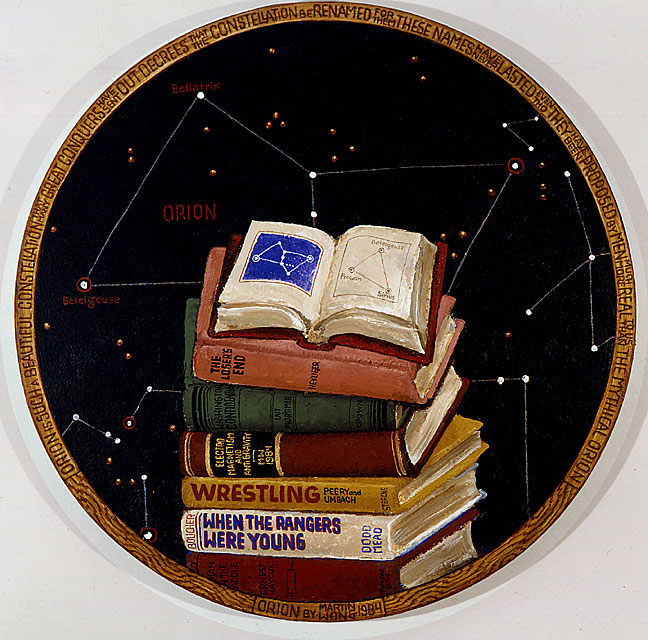
Orion — Martin Wong

02285