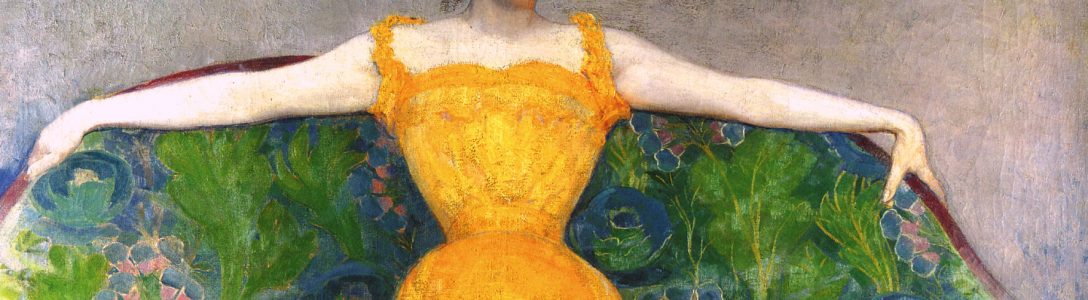
Lake Bride — Vangel Naumovski

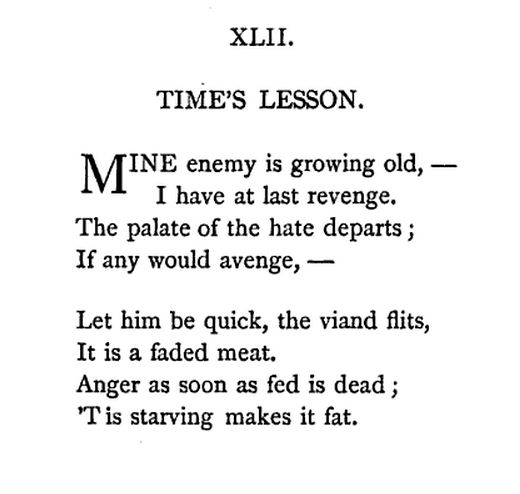
“Mine enemy is growing old” — Emily Dickinson

Capture

See the Trailer for Slavoj Žižek’s New Film, The Pervert’s Guide to Ideology

Poster

Raymond Pettibon: “I read as I write, write as I read”

Read a 1999 interview with Raymond Pettibon in BOMB. Excerpt:

I read as I write, write as I read. If it used to take me five minutes to read the whole newspaper, now, my mind wanders, and then five minutes later I wonder, Gee, did I read that? I used to take notes, and I have notebooks full of drawings and notes that were partly quotations, and I’ve done a lot of marginalia, writing in books. I’m usually reading a number of books at a time, and whether I get through an individual one is probably unlikely. I’ve lost interest in narrative. (sigh) At least in the sense of seeing how a story comes out at the end. There’s a type of reading where you get lost in the narrative and you become part of the story and you’re compelled to finish. I don’t really have any interest in that. For me, reading has become more microscopic, more about dissecting the work. It may start on the level of the novel, then go down to theme or style, then to a paragraph, and finally a sentence. Or the sentence itself becomes about structure, or the words in it. Probably the most obvious example of that kind of reading is James Joyce. It becomes a kind of disease. Every text becomes related to another one, even in a different language, down to each individual word, which then becomes a clue into the etymology of the word, and then that etymological tree. A different context, a different language…you’re just making these associations from one thing to another. I used to start out with a simple drawing that would begin as an idea, and then my writing would make some associations with something else. And then, you know, a day later, or a year later, or whenever, the whole page would be covered with small, finely written text. And it would become a lot of things that were meant to be just in one drawing, expanded into this while still part of my notes. Voluminous notes. You do actually get lost in that morass of associations.


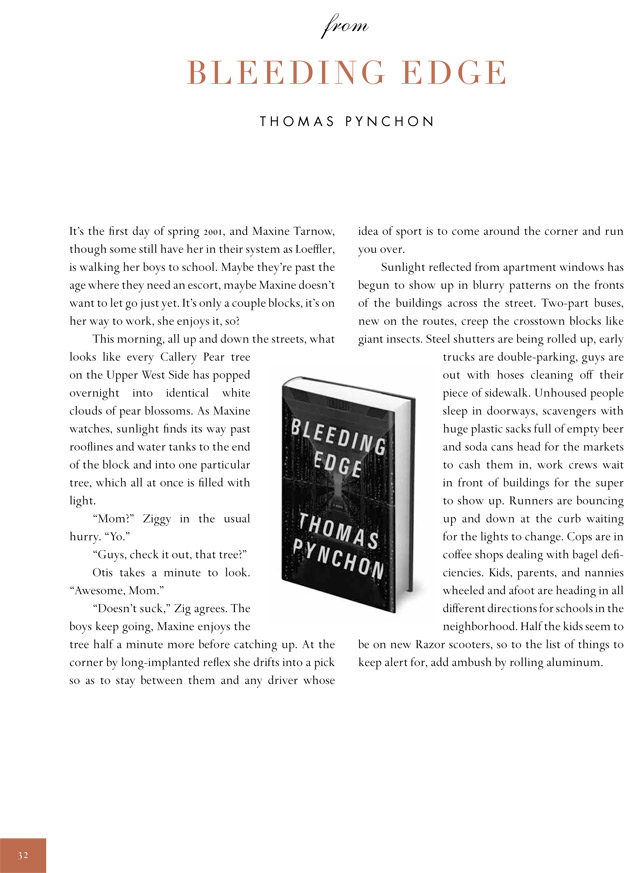
Read the First Page of Thomas Pynchon’s Forthcoming Novel, Bleeding Edge

41313pynchon1

(Via; via).


Tree of Hope, Remain Strong — Frida Kahlo

Adam Johnson Wins the 2013 Pulitzer Prize for Fiction

Adam Johnson won the 2013 Pulitzer Prize for fiction yesterday. He won for his 2012 novel The Orphan Master’s Son, which the jury notes is

an exquisitely crafted novel that carries the reader on an adventuresome journey into the depths of totalitarian North Korea and into the most intimate spaces of the human heart.

I gave the novel a somewhat mixed review—Johnson is a powerful prose-slinger and a fantastic storyteller, but The Orphan Master’s Son is overtly beholden to a standard of realism that the novel’s tone shifts cannot bear. I wrote—

The biggest problem though is the overwhelming suspicion that Johnson is simply out of his element in trying to inhabit the North Korean imagination. Although he’s clearly done his research, North Korea is essentially closed to the rest of the world. And Johnson is a U.S. American. I mean, there’s this whole other impossible-to-digest ball of wax here that makes Johnson’s admirable intent to write a novel about “propaganda” just way too complicated to suss out in a review, and I’ll admit that I tend to read like a reviewer, and that these notions just bugged the hell out of me as the novel progressed.

“A Transgression” — Anton Chekhov

“A Transgression” by Anton Chekhov

A COLLEGIATE assessor called Miguev stopped at a telegraph-post in the course of his evening walk and heaved a deep sigh. A week before, as he was returning home from his evening walk, he had been overtaken at that very spot by his former housemaid, Agnia, who said to him viciously:

“Wait a bit! I’ll cook you such a crab that’ll teach you to ruin innocent girls! I’ll leave the baby at your door, and I’ll have the law of you, and I’ll tell your wife, too….”

And she demanded that he should put five thousand roubles into the bank in her name. Miguev remembered it, heaved a sigh, and once more reproached himself with heartfelt repentance for the momentary infatuation which had caused him so much worry and misery.

When he reached his bungalow, he sat down to rest on the doorstep. It was just ten o’clock, and a bit of the moon peeped out from behind the clouds. There was not a soul in the street nor near the bungalows; elderly summer visitors were already going to bed, while young ones were walking in the wood. Feeling in both his pockets for a match to light his cigarette, Miguev brought his elbow into contact with something soft. He looked idly at his right elbow, and his face was instantly contorted by a look of as much horror as though he had seen a snake beside him. On the step at the very door lay a bundle. Something oblong in shape was wrapped up in something—judging by the feel of it, a wadded quilt. One end of the bundle was a little open, and the collegiate assessor, putting in his hand, felt something damp and warm. He leaped on to his feet in horror, and looked about him like a criminal trying to escape from his warders….

“She has left it!” he muttered wrathfully through his teeth, clenching his fists. “Here it lies…. Here lies my transgression! O Lord!”

He was numb with terror, anger, and shame… What was he to do now? What would his wife say if she found out? What would his colleagues at the office say? His Excellency would be sure to dig him in the ribs, guffaw, and say: “I congratulate you!… He-he-he! Though your beard is gray, your heart is gay…. You are a rogue, Semyon Erastovitch!” The whole colony of summer visitors would know his secret now, and probably the respectable mothers of families would shut their doors to him. Such incidents always get into the papers, and the humble name of Miguev would be published all over Russia….

The middle window of the bungalow was open and he could distinctly hear his wife, Anna Filippovna, laying the table for supper; in the yard close to the gate Yermolay, the porter, was plaintively strumming on the balalaika. The baby had only to wake up and begin to cry, and the secret would be discovered. Miguev was conscious of an overwhelming desire to make haste. Continue reading ““A Transgression” — Anton Chekhov”

Reader in Green — Pierre-Auguste Renoir