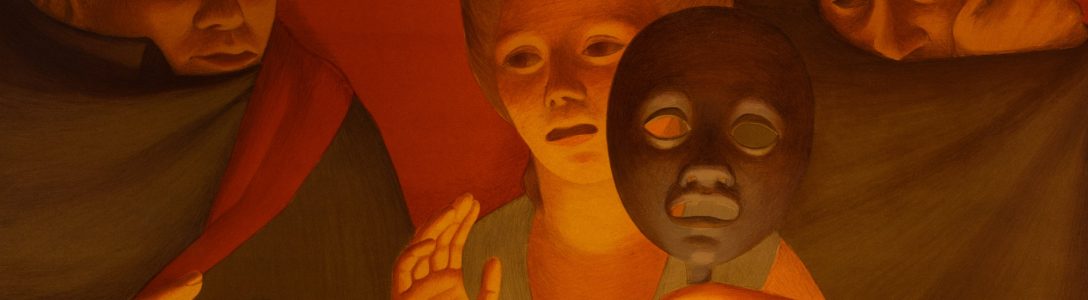
Hand Holding Book — Asa Ames

“Best films (not in order)” — Susan Sontag

Best films (not in order)

  1. Bresson, Pickpocket
  2. Kubrick, 2001
  3. Vidor, The Big Parade
  4. Visconti, Ossessione
  5. Kurosawa, High and Low
  6. Syberberg, Hitler
  7. Godard, 2 ou 3 Choses . . .
  8. Rossellini, Louis XIV
  9. Renoir, La Regle du Jeu
  10. Ozu, Tokyo Story
  11. Dreyer, Gertrud
  12. Eisenstein, Potemkin
  13. Von Sternberg, The Blue Angel
  14. Lang, Dr. Mabuse
  15. Anonioni, L’Eclisse
  16. Bresson, Un Condamne a Mort . . . 
  17. Grance, Napoleon
  18. Vertov, The Man with the Movie Camera
  19. Feuillade, Judex
  20. Anger, Inauguration of the Pleasure Dome
  21. Godard, Vivre Sa Vie
  22. Bellocchio, Pugni in Tasca
  23. Carne, Les Enfants du Pradis
  24. Kurosawa, The Seven Samurai
  25. Tati, Playtime
  26. Truffaut, L’Enfant Savage
  27. Rivette, L’Amour Fou
  28. Eisenstein, Strike
  29. Von Stroheim, Greed
  30. Straub, . . . Anna Magadalena Bach
  31. Taviani bros, Padre Padrone
  32. Renais, Muriel
  33. Becker, Le Trou
  34. Cocteau, La Belle et la Bete
  35. Bergman, Persona
  36. Fassbinder, . . . Petra von Kant
  37. Griffith, Intolerance
  38. Godard, Contempt
  39. Marker, La Jete
  40. Conner, Crossroads
  41. Fassbinder, Chinese Rouleette
  42. Renoir, La Grande Illusion
  43. Opuls, The Earrings of Madame de . . .
  44. Kheifits, The Lady with the Little Dog
  45. Godard, Les Carabiners
  46. Bresson, Lancelot du Lac
  47. Ford, The Searchers
  48. Bertolucci, Prima della Rivoluzione
  49. Pasolini, Teorema
  50. Sagan, Madchen in Uniform

[The list continues up to number 228, where SS abandons it].

—From a 1977 entry in one of Susan Sontag’s notebooks. The list is published as part of As Consciousness Is Harnessed to Flesh: Journals & Notebooks, 1964-1980.

“Head On” — Man Man

Cocktail Recipe: The Crocodile, a Traditional Anarchist Favorite (Thomas Pynchon’s Against the Day)

“I’ll be in the bar,” said Reef. Yzles-Bains was in fact one of the few places on the continent of Europe where a sober Anarchist could find a decent Crocodile—equal amounts of rum, absinthe, and the grape spirits known as trois-six—a traditional Anarchist favorite, which Loïc the bartender, a veteran of the Paris Commune, claimed to have been present at the invention of.

A cocktail recipe from Thomas Pynchon’s novel Against the Day. (More on trois-six here; good luck finding real absinthe).

Bonus recipe: Kit Traverse’s drink invention:

“‘Love in the Shadows of Pera,’ ” Kit said. “It’s just Creme de Menthe and beer.”

A Collaboration — Jean-Leon Gerome

Anarchists’ Golf (Maybe a Synecdoche of Thomas Pynchon’s Novel Against the Day)

THE NEXT DAY Reef, Cyprian, and Ratty were out on the Anarchists’ golf course, during a round of Anarchists’ Golf, a craze currently sweeping the civilized world, in which there was no fixed sequence—in fact, no fixed number—of holes, with distances flexible as well, some holes being only putter-distance apart, others uncounted hundreds of yards and requiring a map and compass to locate. Many players had been known to come there at night and dig new ones. Parties were likely to ask, “Do you mind if we don’t play through?” then just go and whack balls at any time and in any direction they liked. Folks were constantly being beaned by approach shots barreling in from unexpected quarters. “This is kind of fun,” Reef said, as an ancient brambled guttie went whizzing by, centimeters from his ear.

From Thomas Pynchon’s ginormous novel Against the Day, which I am almost finished with.

I won’t riff on this (very short) Anarchists’ Golf scene, other than to suggest that it perhaps functions as a condensation or synecdoche of the novel proper: the joy, the optimism, the phallic aggression, the disruption of order, the social angle, the nose-thumbing, the creativity, the synthesis—the anarchy.


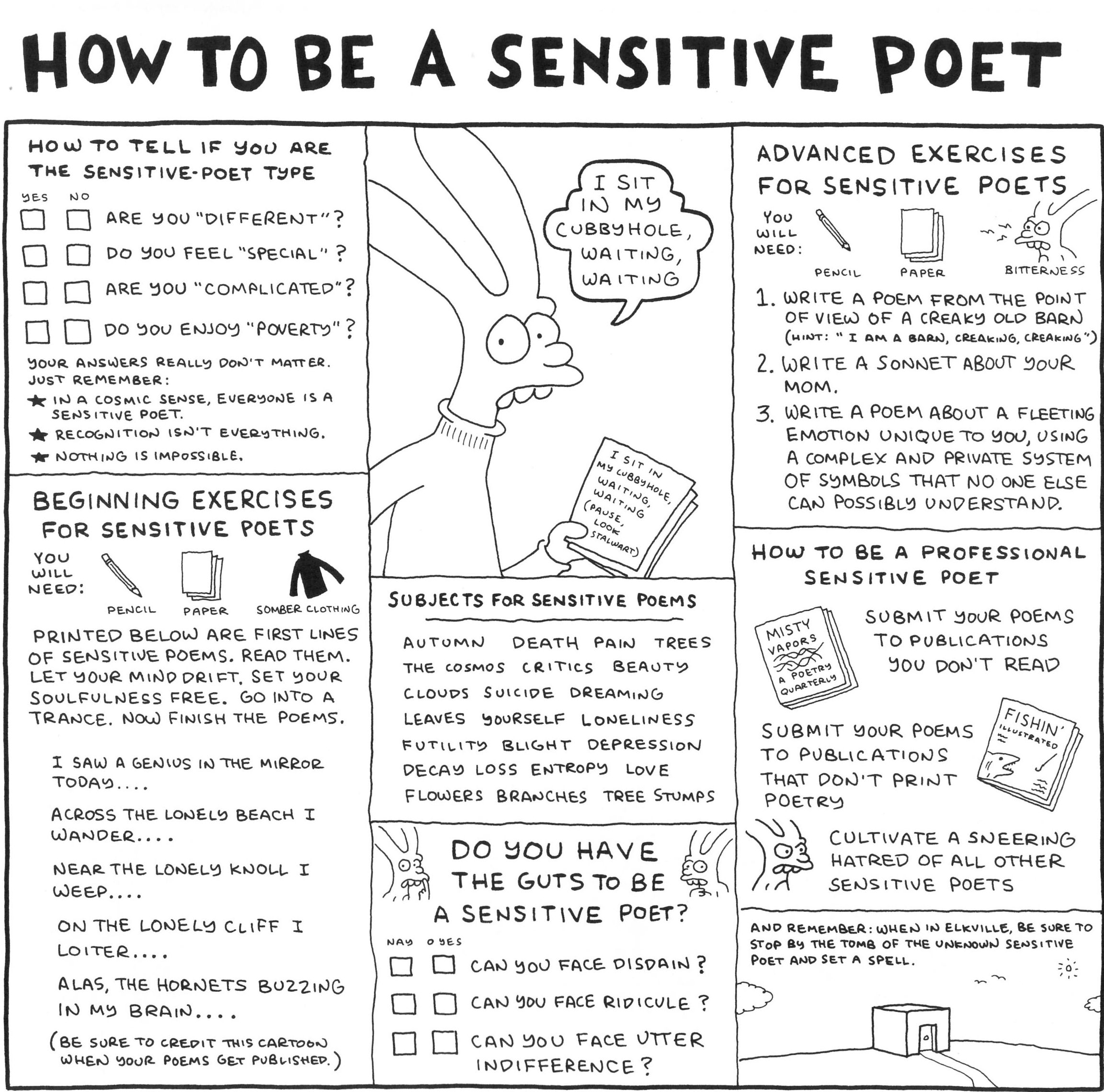
How to Be a Sensitive Poet (Life in Hell)

Sensitive Poet

“He reportedly owns many guns and a flame-thrower” and Other Extracts from William Vollmann’s FBI File

William T. Vollmann has an essay in the newest issue of Harper’s called “Life as a Terrorist.” In the essay, Vollmann details what he finds in his FBI files (after filing a Freedom of Information Act request, an appeal, and a lawsuit to actually get a hold of the thing). He finds out that he was one of the Unabomber suspects:

When I finally received my FBI file, such as it was — namely, two higgledy-piggledy batches of papers, out of order, padded with duplicates, some of which they had forgotten to redact — I learned that I had been Unabomber Suspect Number S-2047:

S-2047 William T. Vollman. Predicated on a referral from a citizen. Investigation has determined that Vollman, a professional author, is widely travelled, however, existing travel records for him do not eliminate him as a viable suspect.

A few more extracts from Vollmann’s FBI file:

  • While VOLLMANN’s appearance varies over the years, New Haven notes strong physical resemblance to UNABOMBER composites. New Haven provided color video prints of book jackets to Sacramento via referenced airtel.
  • UNABOMBER’s moniker FC may correlate with title of VOLLMANN’s largest work, novel Fathers and Crows. That novel reportedly best exemplifies VOLLMANN’s anti-progress, anti-industrialist theme/beliefs/value systems and VOLLMANN, himself, has described it as his most difficult work.
  • [An informant] suggests VOLLMANN has a death wish . . . Reportedly, at age 9, VOLLMANN’s younger sister (age 6) drowned in a backyard pond in New Hampshire while he was supposed to be watching over her. Guilt from that situation may have had a profound effect on VOLLMANN.
  • VOLLMANN’s meticulous nature, as described above, is consistent with manufacture of and presentation on UNABOM devices. Several witnesses have commented that UNABOM packages appeared “seamless” and “too pretty to open.”
  • By all accounts VOLLMANN is exceedingly intelligent and possessed with an enormous ego.
  • He revels in immersing himself in the seamy underside of life. He reportedly has used drugs (crack cocaine) extensively. He reportedly owns many guns and a flame-thrower.

“I would love to own a flamethrower,” Vollmann wryly adds to this last entry. And thus, new entries for the ongoing chronicles of The Myth of the Vollmann!

Vollmann discussed the article on NPR’s NPR’s Morning Edition with David Greene this morning.


Four Notes on the World from Samuel Butler’s Note-Books

  1. The world is a gambling-table so arranged that all who enter the casino must play and all must lose more or less heavily in the long run, though they win occasionally by the way.
  2. We play out our days as we play out cards, taking them as they come, not knowing what they will be, hoping for a lucky card and sometimes getting one, often getting just the wrong one.
  3. The world may not be particularly wise – still, we know of nothing wiser.
  4. The world will always be governed by self-interest.  We should not try to stop this, we should try to make the self-interest of cads a little more coincident with that of decent people.

—From Samuel Butler’s Note-Books.


An Enthralling Novel — Julius LeBlanc Stewart

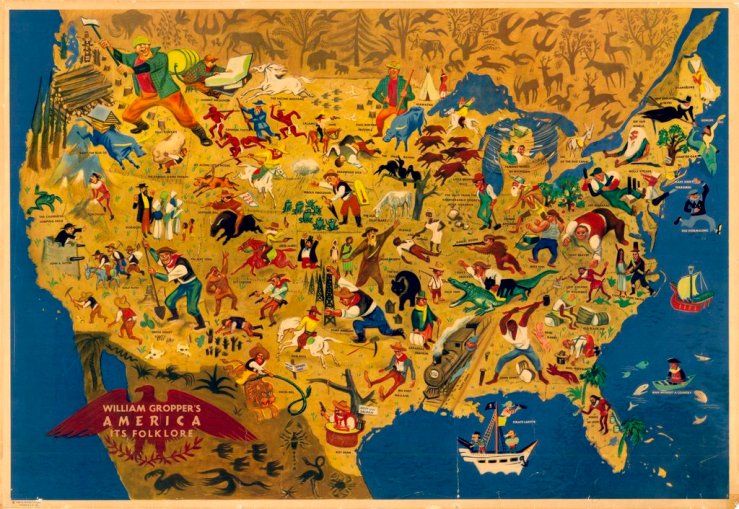
Map of American Folklore

map of folklore

(Via).

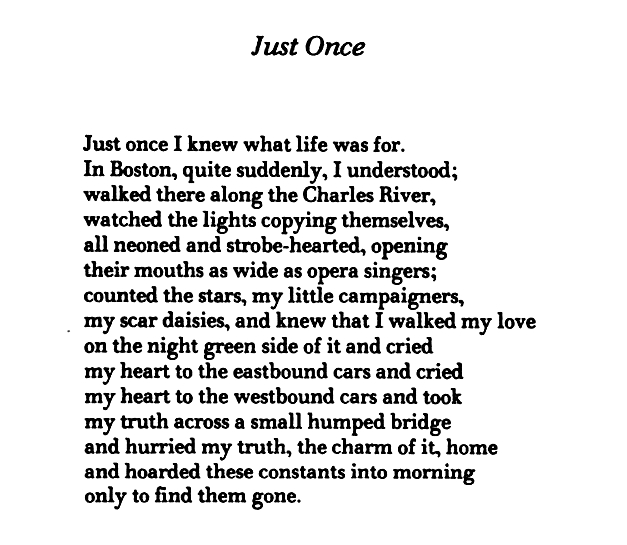
“Just Once” — Anne Sexton

as

“Cheese and Onions” — The Rutles

Palmettos, Florida — John Singer Sargent

Philip Roth on Franz Kafka

I am looking, as I write of Kafka, at the photograph taken of him at the age of forty (my age)—it is 1924, as sweet and hopeful a year as he may ever have known as a man, and the year of his death.His face is sharp and skeletal, a burrower’s face:pronounced cheekbones made even more conspicuous by the absence of sideburns; the ears shaped and angled on his head like angel wings; an intense, creaturely gaze of startled composure—enormous fears, enormous control; a black towel of Levantine hair pulled close around the skull the only sensuous feature; there is a familiar Jewish flare in the bridge of the nose, the nose itself is long and weighted slightly at the tip—the nose of half the Jewish boys who were my friends in high school.Skulls chiseled like this one were shoveled by the thousands from the ovens; had he lived, his would have been among them, along with the skulls of his three younger sisters.

Of course, it is no more horrifying to think of Franz Kafka in Auschwitz than to think of anyone in Auschwitz—it is just horrifying in its own way.But he died too soon for the holocaust.Had he lived, perhaps he would have escaped with his good friend Max Brod, who found refuge in Palestine, a citizen of Israel until his death there in 1968.But Kafka escaping?It seems unlikely for one so fascinated by entrapment and careers that culminate in anguished death.Still, there is Karl Rossmann, his American greenhorn.Having imagined Karl’s escape to America and his mixed luck here, could not Kafka have found a way to execute an escape for himself?The New School for Social Research in New York becoming his Great Nature Theatre of Oklahoma?Or perhaps, through the influence of Thomas Mann, a position in the German department at Princeton … But then, had Kafka lived, it is not at all certain that the books of his which Mann celebrated from his refuge in New Jersey would ever have been published; eventually Kafka might either have destroyed those manuscripts that he had once bid Max Brod to dispose of at his death or, at the least, continued to keep them his secret.The Jewish refugee arriving in America in 1938 would not then have been Mann’s “religious humorist” but a frail and bookish fifty-five-year-old bachelor, formerly a lawyer for a government insurance firm in Prague, retired on a pension in Berlin at the time of Hitler’s rise to power—an author, yes, but of a few eccentric stories, mostly about animals, stories no one in America had ever heard of and only a handful in Europe had read; a homeless K., but without K.’s willfulness and purpose, a homeless Karl, but without Karl’s youthful spirit and resilience; just a Jew lucky enough to have escaped with his life, in his possession a suitcase containing some clothes, some family photos, some Prague mementos, and the manuscripts, still unpublished and in pieces, of AmerikaThe TrialThe Castle, and (stranger things happen) three more fragmented novels, no less remarkable than the bizarre masterworks that he keeps to himself out of oedipal timidity, perfectionist madness, and insatiable longings for solitude and spiritual purity.

–From Philip Roth’s essay “ ‘I Always Wanted You to Admire My Fasting’; or, Looking at Kafka.” Read the entire essay.