Sheet with Studies after Antique Sculpture — Jan Gossaert

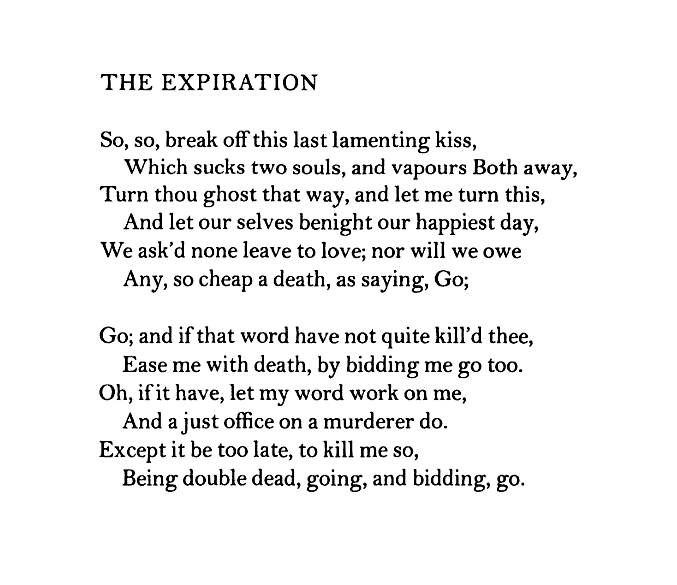
“The Expiration” — John Donne

Capture

Charlie Brown and His Dog Snoopy, As Rendered by Tony Millionaire

charlie millionaire

Hollywood at Night — Alexis Rockman

“A Worn Path” — Eudora Welty

“A Worn Path”

by

Eudora Wlety

It was December—a bright frozen day in the early morning. Far out in the country there was an old Negro woman with her head tied red rag, coming along a path through the pinewoods. Her name was Phoenix Jackson. She was very old and small and she walked slowly in the dark pine shadows, moving a little from side to side in her steps, with the balanced heaviness and lightness of a pendulum in a grand-father clock. She carried a thin, small cane made from an umbrella, and with this she kept tapping the frozen earth in front of her. This made a grave and persistent noise in the still air, that seemed meditative like the chirping of a solitary little bird.

She wore a dark striped dress reaching down to her shoe tops, and an equally long apron of bleached sugar sacks, with a full pocket: all neat and tidy, but every time she took a step she might have fallen over her shoelaces, which dragged from her unlaced shoes. She looked straight ahead. Her eyes were blue with age. Her skin had a pattern all its own of numberless branching wrinkles and as though a whole little tree stood in the middle of her forehead, but a golden color ran underneath, and the two knobs of her cheeks were illumined by a yellow burning under the dark. Under the red rag her hair came down on her neck in the frailest of ringlets, still black, and with an odor like copper.

Now and then there was a quivering in the thicket. Old Phoenix said, “Out of my way, all you foxes, owls, beetles, jack rabbits, coons and wild animals!. . . Keep out from under these feet, little bob-whites…. Keep the big wild hogs out of my path. Don’t let none of those come running my direction. I got a long way.” Under her small black-freckled hand her cane, limber as a buggy whip, would switch at the brush as if to rouse up any hiding things.

On she went. The woods were deep and still. The sun made the pine needles almost too bright to look at, up where the wind rocked. The cones dropped as light as feathers. Down in the hollow was the mourning dove—it was not too late for him.

The path ran up a hill. “Seem like there is chains about my feet, time I get this far,” she said, in the voice of argument old people keep to use with themselves. “Something always take a hold of me on this hill— pleads I should stay.” Continue reading ““A Worn Path” — Eudora Welty”

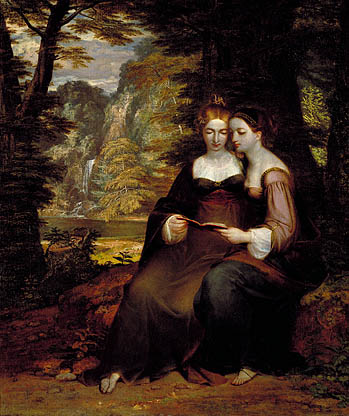
Hermia and Helena — Washington Allston

HermiaandHelena

Ingmar Bergman’s Persona (Full Film)

Melancholy — Lucas Cranach

Theory (Pessoa)

theory

Maps of Hell

Continue reading “Maps of Hell”

Polish Film Poster for The Big Lebowski — Andrzej Krajewski

Polish Poster

“Only the useless is pleasurable” and other notes from Chekhov

* * * * *

The hen sparrow believes that her cock sparrow is not chirping but singing beautifully.

* * * * *

When one is peacefully at home, life seems ordinary, but as soon as one walks into the street and begins to observe, to question women, for instance, then life becomes terrible. The neighborhood of Patriarshi Prudy (a park and street in Moscow) looks quiet and peaceful, but in reality life there is hell.

* * * * *

These red-faced young and old women are so healthy that steam seems to exhale from them.

* * * * *

The estate will soon be brought under the hammer; there is poverty all round; and the footmen are still dressed like jesters.

* * * * *

There has been an increase not in the number of nervous diseases and nervous patients, but in the number of doctors able to study those diseases.

* * * * *

The more refined the more unhappy.

* * * * *

Life does not agree with philosophy: there is no happiness which is not idleness and only the useless is pleasurable.

* * * * *

The grandfather is given fish to eat, and if it does not poison him and he remains alive, then all the family eat it.

* * * * *

A correspondence. A young man dreams of devoting himself to literature and constantly writes to his father about it; at last he gives up the civil service, goes to Petersburg, and devotes himself to literature—he becomes a censor.

* * * * *

–From Anton Chekhov’s Note-Books.

Gottfried Keller — Valerio Adami

Movies-Canton Island — Paul Sample

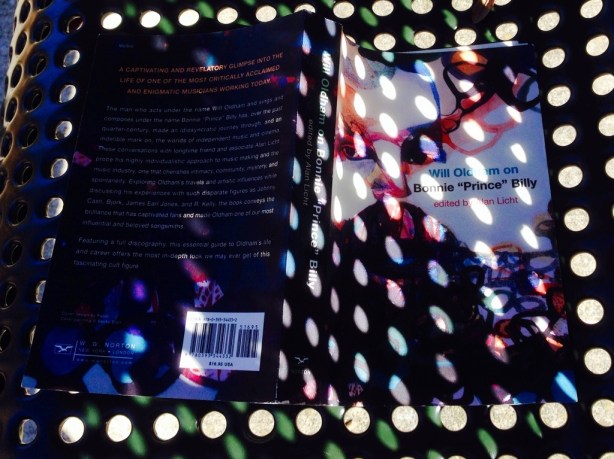
Will Oldham on Bonnie “Prince” Billy (Book Acquired 3.01.2014)

20140311-143148.jpg

Earlier this month, my good friend sent me Will Oldham on Bonnie “Prince” Billy, a book-length interview between Oldham and musician Alan Licht. In the book, Oldham parses his identity from Bonnie “Prince” Billy, the character he’s been performing (in different versions) for over a decade now. The book is fascinating stuff and strangely personal/weird for me—reading his oral history is bizarre, I guess, because I remember it all happening. Like, I remember buying the 7″s he talks about making; I remember puzzling over the early Palace LPs, trying to glean meaning from the covers, the personnel. Palace—Oldham—B”P”B—soundtracked so much of my high school and college days that I inevitably had a falling out with him/them/it—or maybe that’s not the right word…what is the term for the emotional intensity we feel toward certain albums, certain records imprinted in the back of our souls? (I used a line from “For the Mekons et al” for my Senior yearbook quote but the fucking yearbook staff fucked it up. But fuck a yearbook anyway). Ease Down the Road was the last Oldham record that I let get to me; intellectually, I realize that the stuff he did after is somehow superior—tighter, richer even—but it couldn’t sink in, I wouldn’t let it sink in, too many too-good memories already there, I don’t know. I saw him on the Superwolf tour; he deepthroated the mic during an R. Kelly cover, and after the show my wife remarked that he would never be welcome as a guest in our home. I thought that seemed harsh. I tried—years later, reading this book—to explain that it was just a character. No dice.

Thanks Nick.

The Banjo Lesson — Henry Ossawa Tanner