Pavement, Live in Frankfurt, ’94 (Full Show)

“Under the Young” — Tom Clark

IMG_3223

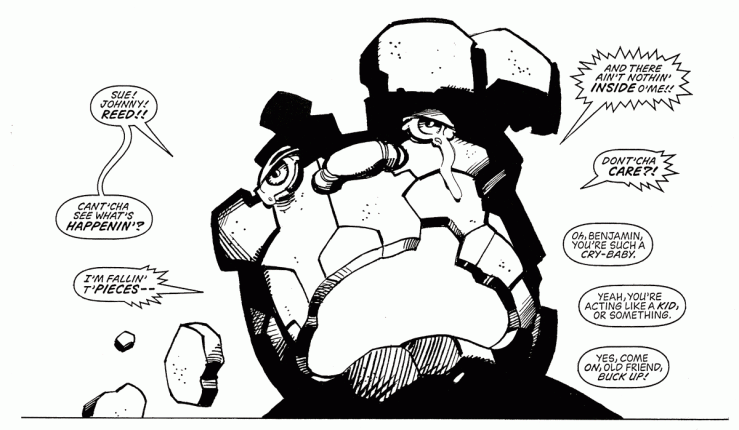
The Thing — Barry Windsor-Smith

tumblr_m0sr8aIN3A1qce9ueo2_1280

Krazy Kat (Book Acquired, 9.19.2014)

IMG_3463 IMG_3460

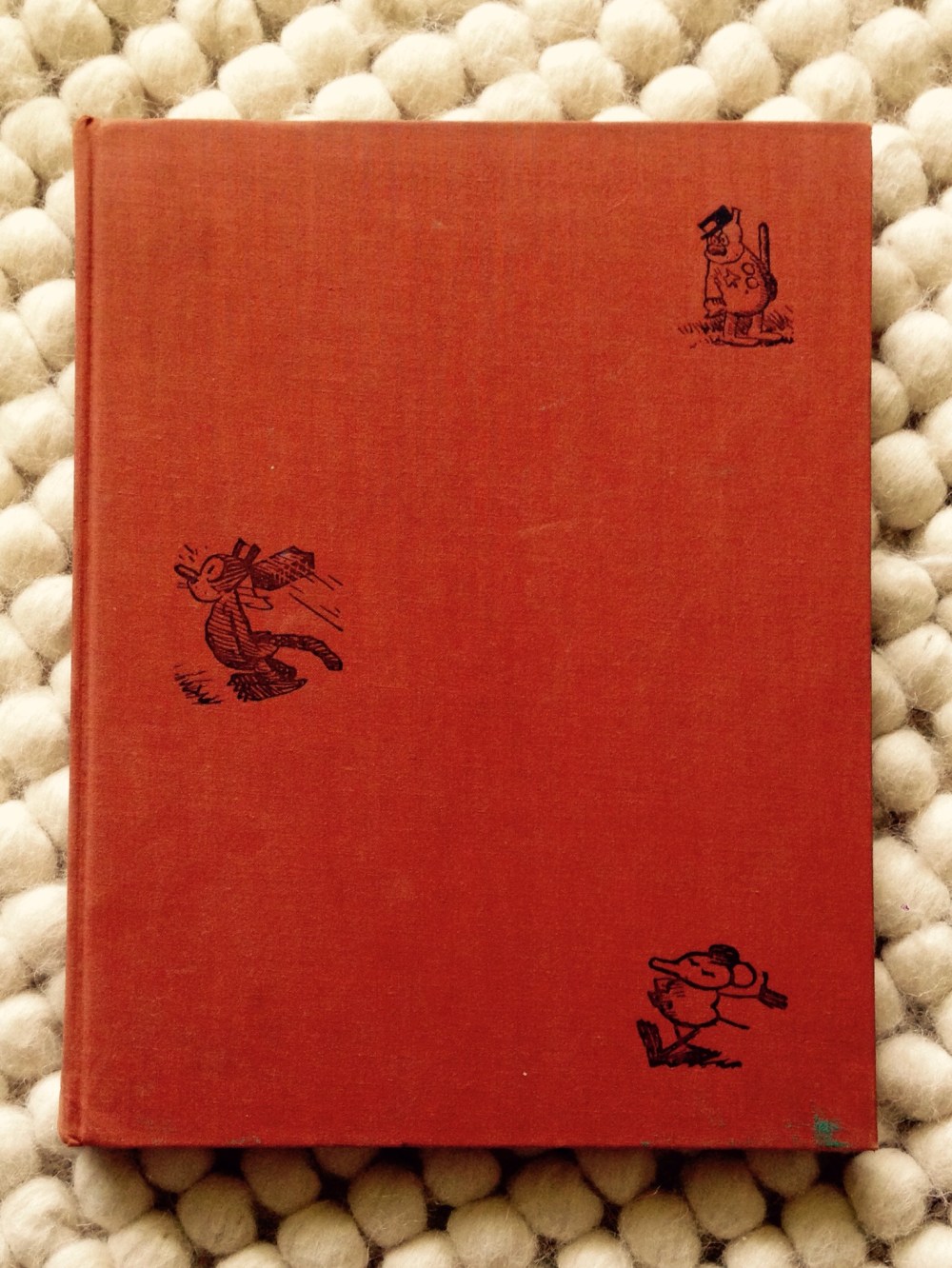
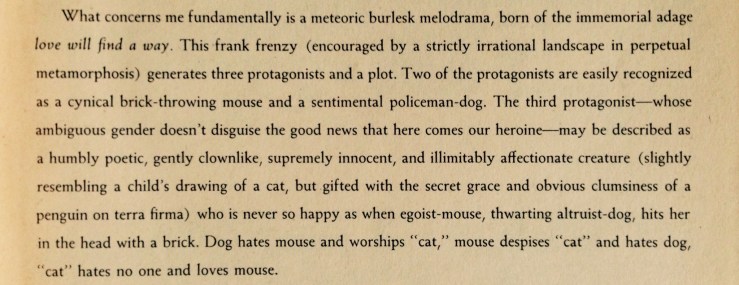
I picked up this first edition of the first collection of George Herriman’s Krazy Kat a few weeks ago. Not sure if there was originally a dust jacket (?). Anyway, there’s an essay-length introduction by e.e. cummings. From that intro:IMG_3449 IMG_3462 IMG_3454
IMG_3451

The New Book — Harold Harvey

8069374850_1796d6e30f_b

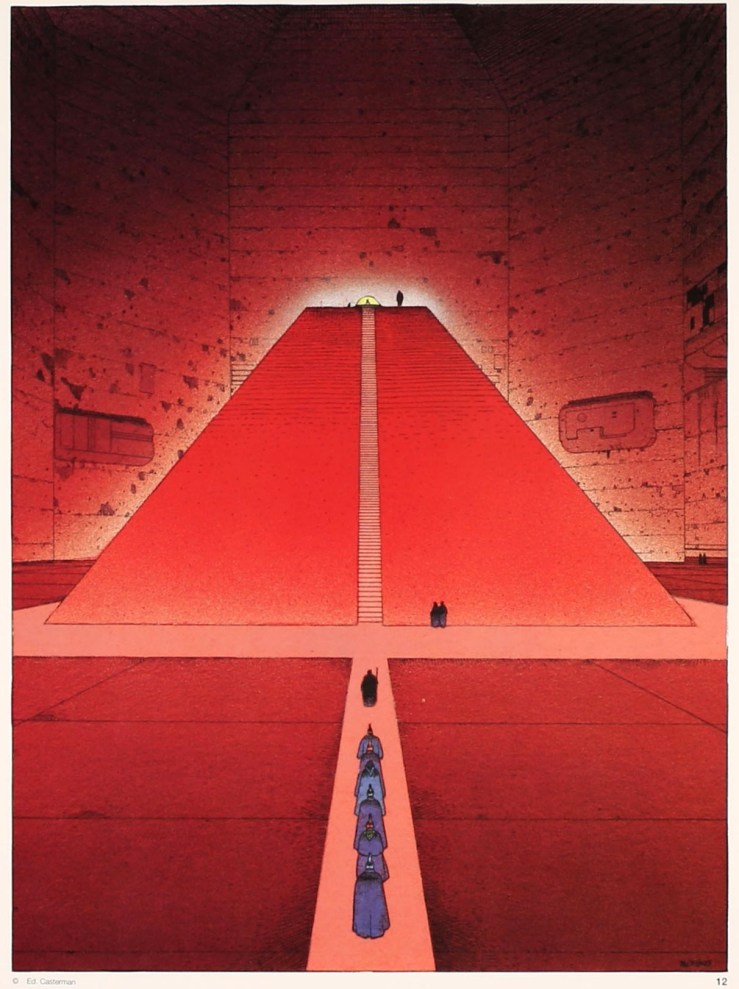
Pyramid — Moebius

tumblr_n5a8y8uvjw1rq3prxo1_1280

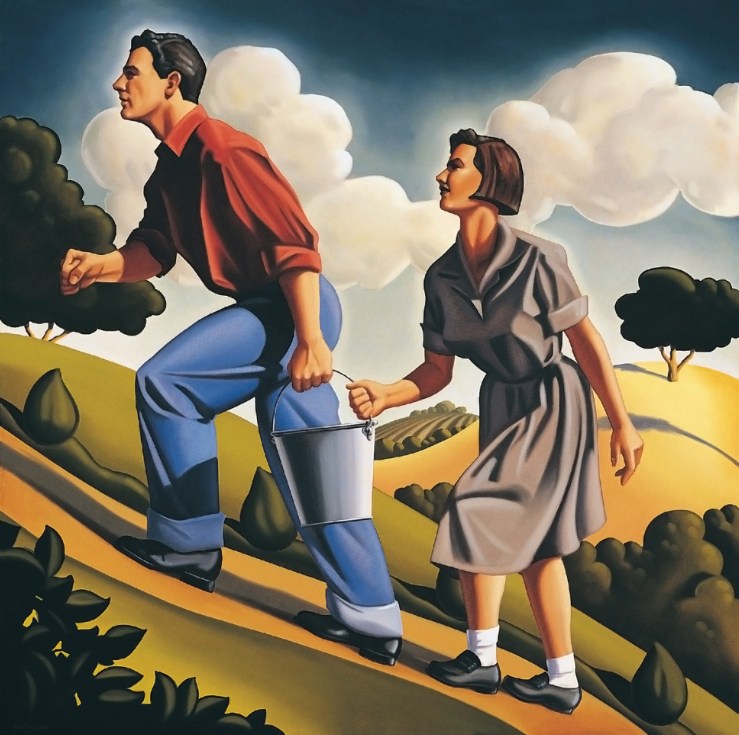
The Idealization of A Tragedy — Kenton Nelson

tumblr_n59vdwEmji1qg6tl3o1_1280

Nine Figments from Nathaniel Hawthorne’s Notebook

  1. An ancient wineglass (Miss Ingersol’s), long-stalked, with a small, cup-like bowl, round which is wreathed a branch of grape-vine, with a rich cluster of grapes, and leaves spread out. There is also some kind of a bird flying. The whole is excellently cut or engraved.
  2. In the Duke of Buckingham’s comedy, “The Chances,” Don Frederic says of Don John (they are two noble Spanish gentlemen), “One bed contains us ever.”
  3. A person, while awake and in the business of life, to think highly of another, and place perfect confidence in him, but to be troubled with dreams in which this seeming friend appears to act the part of a most deadly enemy. Finally it is discovered that the dream-character is the true one. The explanation would be–the soul’s instinctive perception.
  4. Pandora’s box for a child’s story.
  5. Moonlight is sculpture; sunlight is painting.
  6. “A person to look back on a long life ill-spent, and to picture forth a beautiful life which he would live, if he could be permitted to begin his life over again. Finally to discover that he had only been dreaming of old age,–that he was really young, and could live such a life as he had pictured.”
  7. A newspaper, purporting to be published in a family, and satirizing the political and general world by advertisements, remarks on domestic affairs,–advertisement of a lady’s lost thimble, etc.
  8. L. H—-. She was unwilling to die, because she had no friends to meet her in the other world. Her little son F. being very ill, on his recovery she confessed a feeling of disappointment, having supposed that he would have gone before, and welcomed her into heaven!
  9. H. L. C—- heard from a French Canadian a story of a young couple in Acadie. On their marriage day, all the men of the Province were summoned to assemble in the church to hear a proclamation. When assembled, they were all seized and shipped off to be distributed through New England,–among them the new bridegroom. His bride set off in search of him,–wandered about New England all her lifetime, and at last, when she was old, she found her bridegroom on his death-bed. The shock was so great that it killed her likewise.

From Nathaniel Hawthorne’s American Note-Books.

George Saunders Reads Stories by Grace Paley and Barry Hannah

At The New Yorker, George Saunders reads “Love” by Grace Paley and “The Wretched Seventies” by Barry Hannah:


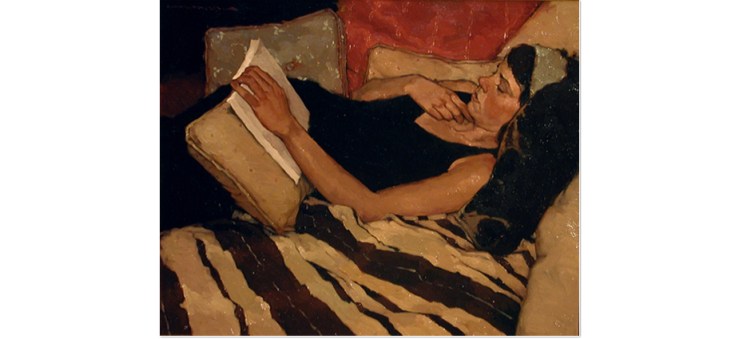
An Easy Read — Joseph Lorusso

gallery-figures-an-easy-read

Heart of Glass — Werner Herzog (Full Film)

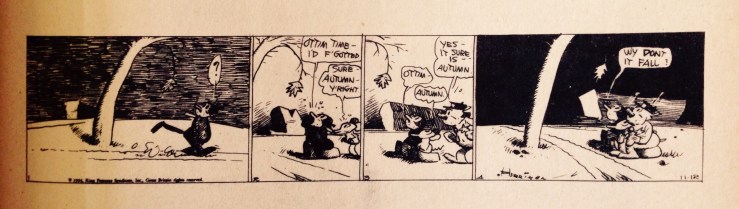
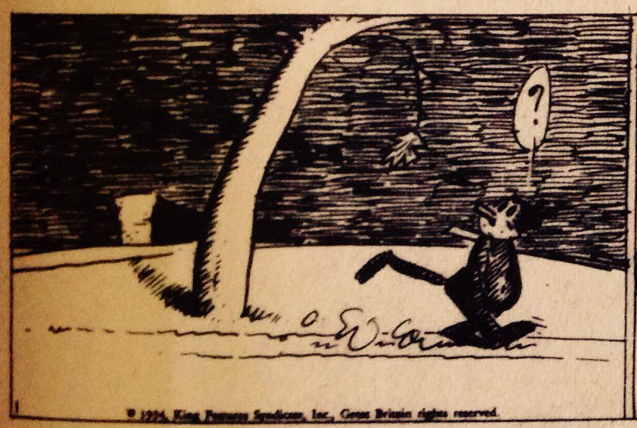
Autumn (Krazy Kat)

1 2 3

Pomegranates — Gustave Courbet

Will Oldham on Terrence Malick’s Badlands

It would just be dumb not to include this. I have been once accused of being irreverent above all, and I am in danger of proving that here when I say that I find most Malick 2.0 movies to be ridiculous. I do like To the Wonder because it’s pulpy. When I heard that Malick was making The Thin Red Line, I checked James Jones’s book out of the library and sat in my attic sublet poring over it in anticipation of what was to come, and when it came . . . gee whiz but what an overblown lint ball of homoerotic bluster and worthlessness. And: there’s nothing wrong with Badlands. Beautiful, great music, magical pace, great, great acting. An ultimate movie, so good that it’s understandable how the momentum from Badlands alone can propel boatloads of people to believe that The New World has content. Springsteen appropriated Badlands, using its power to artificially light his Nebraska. Tarantino and Tony Scott used it to make the best screwball romantic comedy of modern times, True Romance. Badlands is as close to a perfect movie as I can think of (though I don’t hold perfection as the most desirable of qualities in anything), one that holds something to draw in almost any audience. Even the brutality that might otherwise repel is balanced enough with gentleness and charisma that I wouldn’t squirm watching the movie with a grandparent. Well: children probably shouldn’t see it. Maybe probably.

Will Oldham put Terrence Malick’s film Badlands at number #3 on his Criterion Collection Top Fifteen list.

I have never written a novel (Thomas Bernhard)

JEAN-LOUIS DE RAMBURES: Why since 1975 have you set aside novel-writing in favor of autobiography?

THOMAS BERNHARD: I have never written a novel, but merely prose texts of greater or lesser length, and I’m going to take care not to describe them as novels; I don’t know what the word means.  I haven’t ever wanted to write an autobiographical work either; I have a genuine aversion to all things autobiographical.  The fact is that at a certain moment in my life I got curious about my childhood.  I said to myself, “I haven’t much longer to live.  Why not try to record my life up to the age of nineteen?  Not as it was in reality—there’s no such thing as objectivity—but as I see it today.”

When I was planning the book I envisaged it as a single slim volume.  A second one emerged.  Then yet another one…until the point when I started to get bored.  In the end childhood is always just childhood.  After the fifth volume I decided to call it a day. In the case of each my books I’m always torn this way and that between a passion and a loathing for my chosen subject.

Every time my second thoughts get the upper hand, I resolve to give up intellectual pursuits for good and dedicate myself instead to purely material tasks, for example to chopping wood or plastering a wall, in the hope of recovering my good cheer.  My dream is of a never-ending wall and never-ending good cheer.  But after a stretch of time of greater or lesser length, I once again start to loathe myself for being unproductive, and despair about this drives me to seek refuge in my brain.  Sometimes I tell myself my instability is something I’ve inherited from my ancestors, who were a very heterogeneous bunch.  This bunch included farmers, philosophers, laborers, writers, geniuses, and morons, mediocre petit-bourgeois types, and even criminals.  All these people exist within me, and they never leave off fighting each other.  Sometimes I feel like committing myself into the custody of the goose-keeper, at other times into the custody of the thief or the murderer.  Because you’ve got to make choices, and every choice means precluding other choices; this round-dance ultimately drives me to the brink of madness.  Such that if I make it to the end of my matutinal shaving routine without killing myself in front of the mirror, I have only my cowardice to thank for it.

Cowardice, vanity, and curiosity are the three basic and essential impetuses to life, the things that keep it moving along, even though every conceivable rational argument gainsays this movement.  At any rate, that’s the way it seems to me today.  Because it may very well happen that tomorrow I’ll think something completely different.

From an interview with Thomas Bernhard originally published in Le Monde. The English translation is by Douglas Robertson. You can read the entire translated interview at his blog.

Maiden Meditation — Charles West Cope

Early Autumn Wind, Lingering Memory of Summer — Shuichi Nakano