Read Kurt Vonnegut’s early story “2 B R 0 2 B”


“2 B R 0 2 B”

by

Kurt Vonnegut

Everything was perfectly swell.

There were no prisons, no slums, no insane asylums, no cripples, no poverty, no wars.

All diseases were conquered. So was old age.

Death, barring accidents, was an adventure for volunteers.

The population of the United States was stabilized at forty-million souls.

One bright morning in the Chicago Lying-in Hospital, a man named Edward K. Wehling, Jr., waited for his wife to give birth. He was the only man waiting. Not many people were born a day any more.

Wehling was fifty-six, a mere stripling in a population whose average age was one hundred and twenty-nine.

X-rays had revealed that his wife was going to have triplets. The children would be his first.

Young Wehling was hunched in his chair, his head in his hand. He was so rumpled, so still and colorless as to be virtually invisible. His camouflage was perfect, since the waiting room had a disorderly and demoralized air, too. Chairs and ashtrays had been moved away from the walls. The floor was paved with spattered dropcloths.

The room was being redecorated. It was being redecorated as a memorial to a man who had volunteered to die.

A sardonic old man, about two hundred years old, sat on a stepladder, painting a mural he did not like. Back in the days when people aged visibly, his age would have been guessed at thirty-five or so. Aging had touched him that much before the cure for aging was found.

The mural he was working on depicted a very neat garden. Men and women in white, doctors and nurses, turned the soil, planted seedlings, sprayed bugs, spread fertilizer.

Men and women in purple uniforms pulled up weeds, cut down plants that were old and sickly, raked leaves, carried refuse to trash-burners.

Never, never, never—not even in medieval Holland nor old Japan—had a garden been more formal, been better tended. Every plant had all the loam, light, water, air and nourishment it could use.

A hospital orderly came down the corridor, singing under his breath a popular song:

If you don’t like my kisses, honey,
Here’s what I will do:
I’ll go see a girl in purple,
Kiss this sad world toodle-oo.
If you don’t want my lovin’,
Why should I take up all this space?
I’ll get off this old planet,
Let some sweet baby have my place.

The orderly looked in at the mural and the muralist. “Looks so real,” he said, “I can practically imagine I’m standing in the middle of it.”

“What makes you think you’re not in it?” said the painter. He gave a satiric smile. “It’s called ‘The Happy Garden of Life,’ you know.”

“That’s good of Dr. Hitz,” said the orderly. Continue reading “Read Kurt Vonnegut’s early story “2 B R 0 2 B””

“You, Hart Crane” — Charles Olson

Screenshot 2015-04-20 at 8.30.25 PM

Peasant Burning Weeds – Vincent van Gogh

Poster for Stanley Kubrick’s Film The Shining — Tomer Hanuka

shining72coolB

People Join Together to Form Another Person — Utagawa Kuniyoshi

Cool color signature covers

book-The-Road

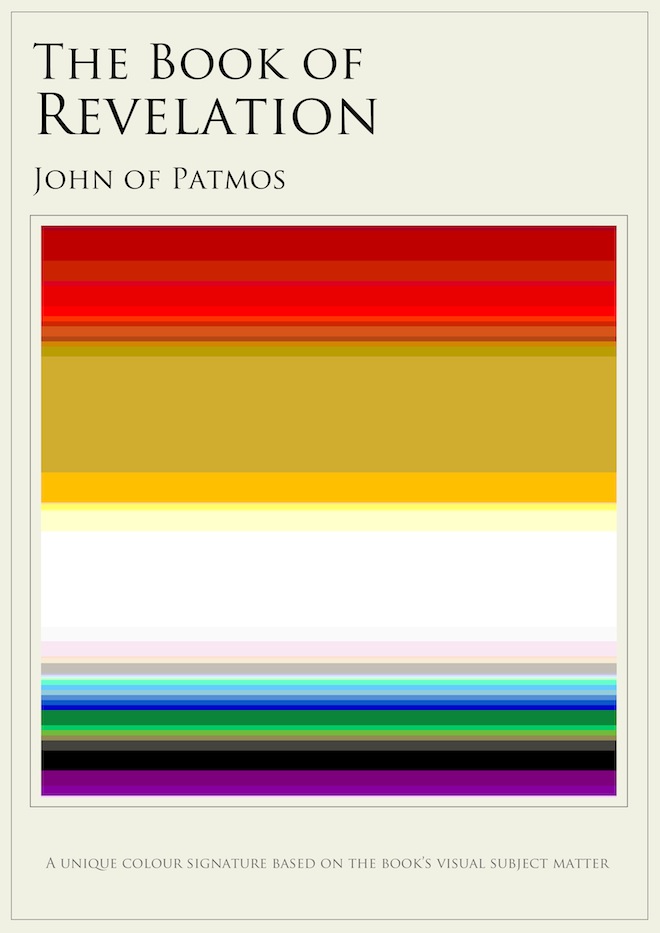
Cool article from Wired (yeah it’s a few years old now but hey) about artist Jaz Parkinson, who indexed the references to colors in various novels and created visual signatures of them. From the article

 Jaz Parkinson, an art student from England, was curious about how the written imagery in the work would translate into color, so she decided to chart the color signatures of some of her favorite books.

Using the color-related data pulled from novels, Parkinson visualized how famous books would look if you could only read them through a visual signature. “I think the charts are beautiful and informative, which is a very special mix of the subjective and the objective,” she says. “They reveal a new dataset which hasn’t been associated with the book before.”
book-The-Little-Prince book-Revelation

Subtraction from reality

At The Reading Experience, Daniel Green reviews David Winters’s Infinite Fictions. From the review:

Reckoning with literary qualities is something Winters does exceptionally well. Most of the books discussed in the first section of Infinite Fictions (“On Literature”) are complex, unconventional works of fiction, and Winters is painstaking in attempting to describe the strategies the author at hand seems to be using, to account for the effect of reading the work as registered in Winters’s own experience of it. As he says in the introduction to the book, “As a reviewer, all I can do is try to stay true to the texture of that experience. . . Strange as it sounds, each of these books briefly allowed me to subtract myself from reality. In this respect, when writing reviews, I’m less intent on making prescriptions than on exploring the space left by my subtraction.” Thus Winters attends to the specificity of the reading experience itself, something academic criticism generally abjures, while also avoiding the superficial approach of the most “trivial” kind of book reviews, the kind that aim merely to “make prescriptions.”

“Subtraction” from reality perhaps seems like a version of being “immersed” in a book, but I would presume Winters means something closer to what John Dewey called “pure experience,” which Dewey believed becomes most accessible to us as aesthetic experience.  According to Dewey, aesthetic experience is “experience freed from the forces that impede and confuse its development as experience; freed, that is, from factors that subordinate an experience as it is directly had to something beyond itself.” The reader truly receptive to the kind of experience art, in this case literary art, makes available is not in some kind of mystical trance but is fully engaged in an act of what Dewey calls “recreation,” perceiving the writer’s conceptual and expressive moves thoroughly enough that the reader in effect replays those moves. Literary criticism then becomes in part the attempt to communicate the tenor of this reading experience through the most felicitous description and analytical insight the critic can muster.

Evening Falls — Rene Magritte

tumblr_mgr7ztIxMW1rd3isso1_1280

Send Me to the ‘Lectric Chair, a short film by Guy Maddin

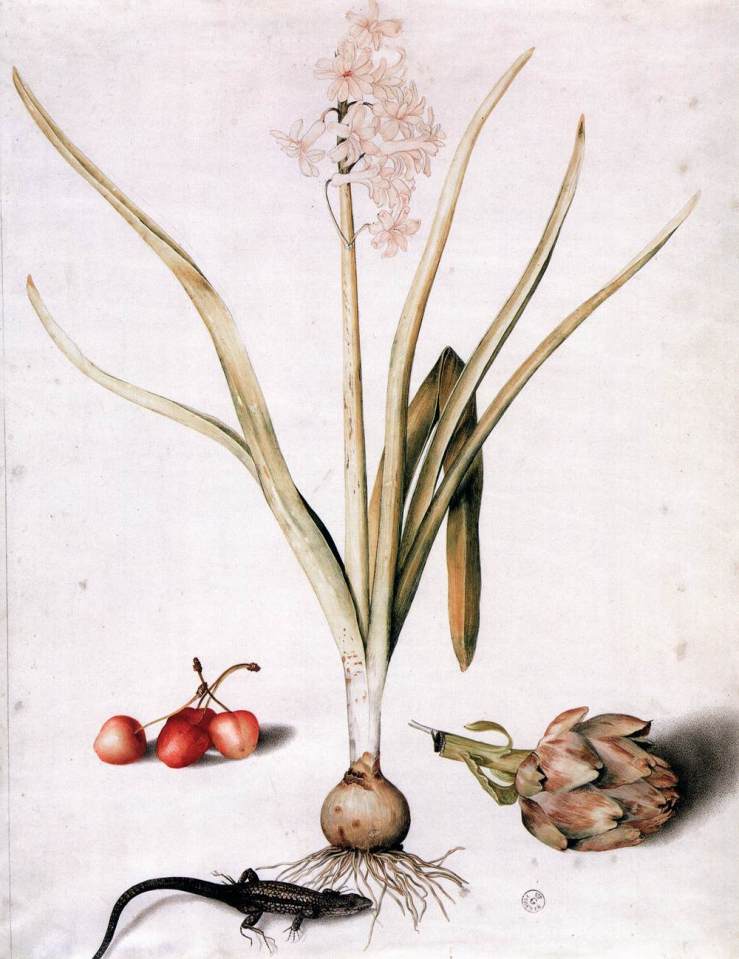
Hyacinth with Four Cherries, a Lizard, and an Artichoke — Giovanna Garzoni

four1

Disembodied Smile — Flannery O’Connor

0x600

Two Foxes (Painted Postcard from Franz Marc to Albert Bloch)

two-foxes

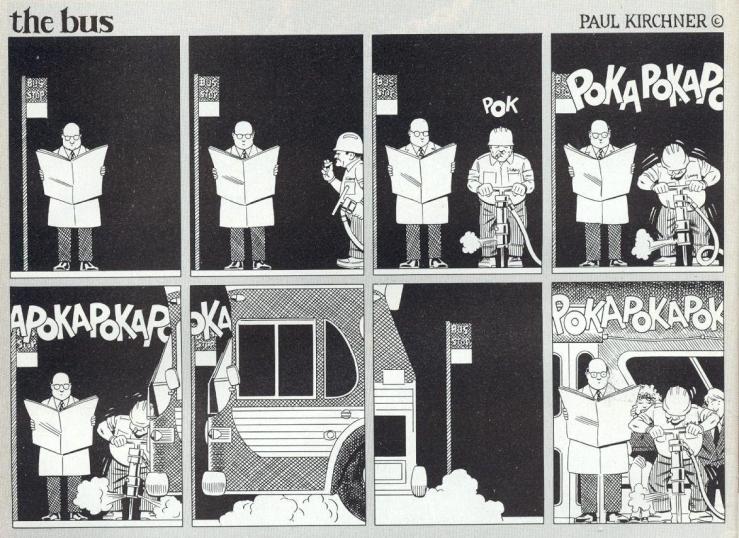
The Bus — Paul Kirchner

iW01JaL - Imgur

The Wedding Night – Wojciech Siudmak

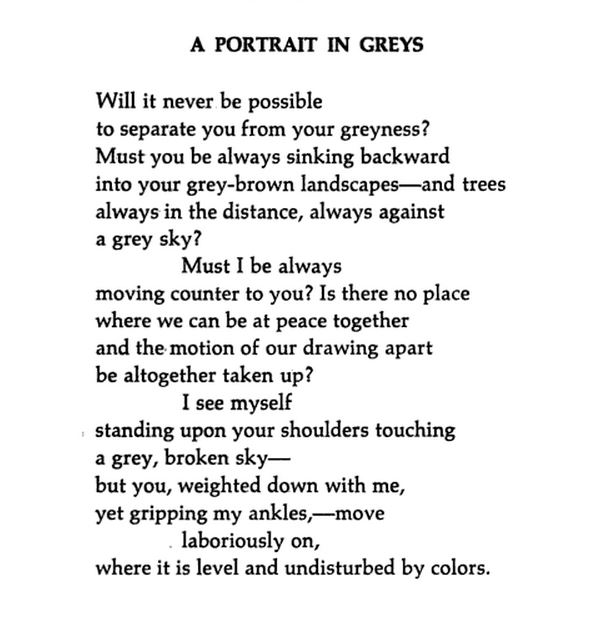
“A Portrait in Greys” — William Carlos Williams

Capture

Blood Wedding — Richard Pousette-Dart

The Wedding — Francisco Goya