Gorgeous madness | George Saunders on Thomas Pynchon

I don’t think anyone has gotten closer than Thomas Pynchon to summoning the real audacity and insanity and scope of the American mind, as reflected in the American landscape. I read Pynchon all out of order, starting with Vineland, and I still remember the shock of pleasure I got at finally seeing the America I knew—strange shops and boulevards, built over former strange shops and former boulevards, all laid out there in valleys and dead-end forests, heaped on top of Indian cemeteries, peopled with nut jobs and hustlers and moral purists—actually present in a novel, and present not only in substance but in structure and language that both used and evoked the unruly, muscular complexity of the world itself.

In Pynchon, anything is fair game—if it is in the world, it can go in the book. To me there is something Buddhist about this approach, which seems to say that since the world is capable of producing an infinity of forms, the novel must be capable of accommodating an infinite number of forms. All aesthetic concerns (style, form, structure) answer this purpose: Let in the world.

This is why Pynchon is our biggest writer, the gold standard of that overused word inclusiveness: No dogma or tidy aesthetic rule or literary fashion is allowed to prefilter the beautiful data streaming in. Everything is included. No inclination of the mind is too small or large or frightening. The result is gorgeous madness, which does what great literature has always done—reminds us that there is a world out there that is bigger than us and worthy of our utmost humility and attention.

I have often felt that we read to gain some idea of what God would say about us if someone were to ask Him what we’re like. Pynchon says, through the vast loving catalogue he has made, that we are Excellent but need to be watched closely. He says there is no higher form of worship than the loving (i.e., madly attentive) observation of that-which-is, a form of prayer of which Pynchon’s work is our highest example.

George Saunders on Thomas Pynchon. From the Summer 2005 issue of Bookforum.

The Fairy Feller’s Master-Stroke — Richard Dadd

The face of nature can never look more beautiful than now (May 23, 1851 entry from Nathaniel Hawthorne’s Note-Books)

May 23d.–I think the face of nature can never look more beautiful than now, with this so fresh and youthful green,–the trees not being fully in leaf, yet enough so to give airy shade to the woods. The sunshine fills them with green light. Monument Mountain and its brethren are green, and the lightness of the tint takes away something from their massiveness and ponderosity, and they respond with livelier effect to the shine and shade of the sky. Each tree now within sight stands out in its own individuality of hue. This is a very windy day, and the light shifts with magical alternation. In a walk to the lake just now with the children, we found abundance of flowers,–wild geranium, violets of all families, red columbines, and many others known and unknown, besides innumerable blossoms of the wild strawberry, which has been in bloom for the past fortnight. The Houstonias seem quite to overspread some pastures, when viewed from a distance. Not merely the flowers, but the various shrubs which one sees,–seated, for instance, on the decayed trunk of a tree,–are well worth looking at, such a variety and such enjoyment they have of their new growth. Amid these fresh creations, we see others that have already run their course, and have done with warmth and sunshine,–the hoary periwigs, I mean, of dandelions gone to seed.

From Nathaniel Hawthorne’s American Note-Books.

Kambara Station — Utagawa Kuniyoshi

Ishmael Reed . . . and more Pynchon (Books acquired, 5.22.2015)

So I finished my second full reading of Gravity’s Rainbow today. And then I read the last section three more times. And my brain feels fried. I was thinking about rereading V. after this, but I think a break will do nicely. So I picked up Ishmael Reed’s Mumbo Jumbo on Pynchon’s recommendation (“check out Ishmael Reed,” the narrator tells us on page 588 of Gravity’s Rainbow). A stroll through the lit crit section led to my spying (okay, looking for and finding) the 20th Century Views collection on Pynchon. So we’ll see how that reads.

Rotten (Calvin and Hobbes)

IMG_0236

Angels of the Apocalypse — Stanley Spencer

“What You Mean I Can’t Irony?” — Ishmael Reed

“What You Mean I Can’t Irony?”
by Ishmael Reed
A high-yellow lawyer woman
told me I ought to go to
Europe to “broaden your per
spective.” This happened at
a black black cocktail party
an oil portrait, Andrew Carnegie,
smiling down

St. Jerome and the Lion — Rogier van der Weyden

The Death of Cain — George Frederick Watts

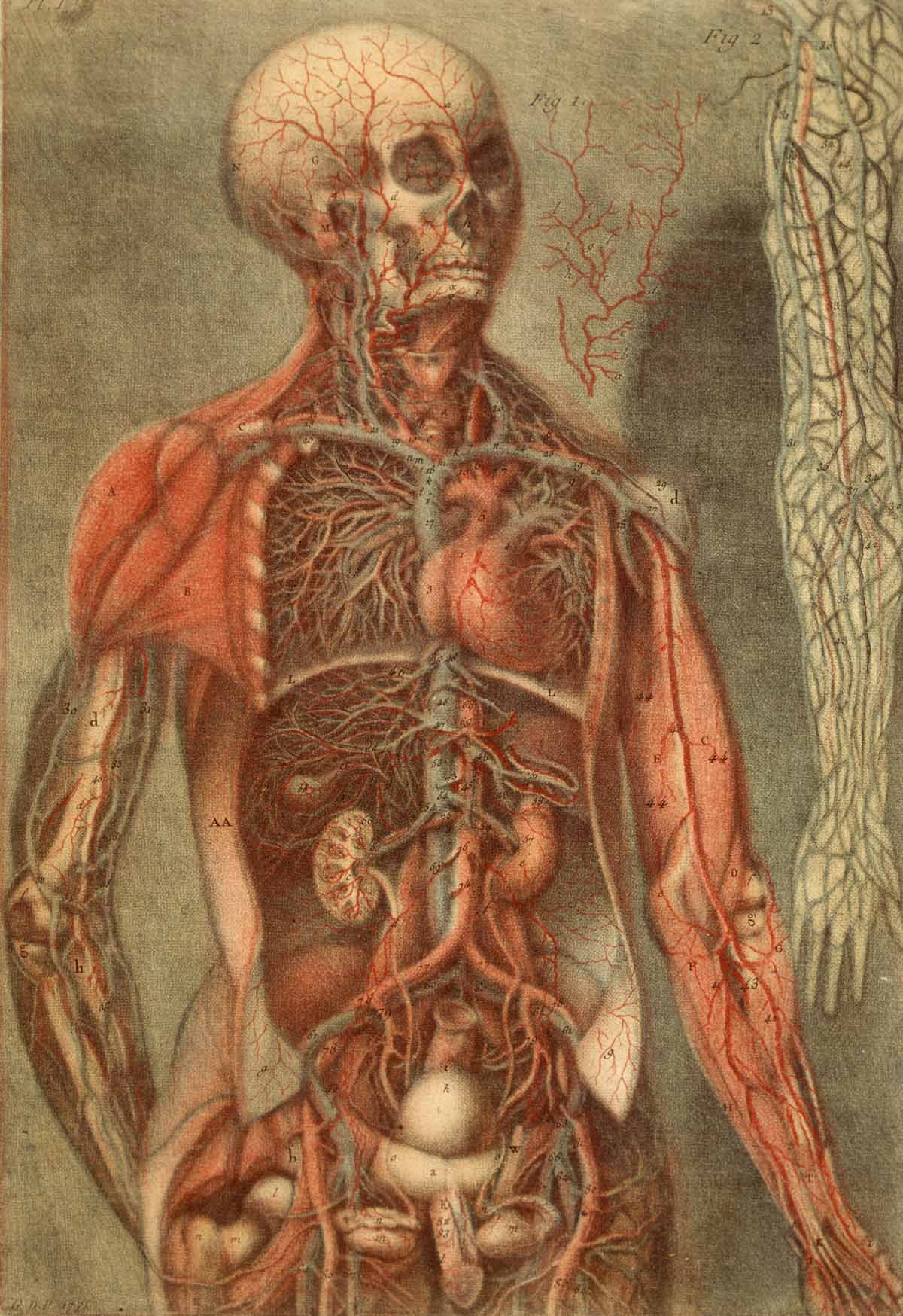
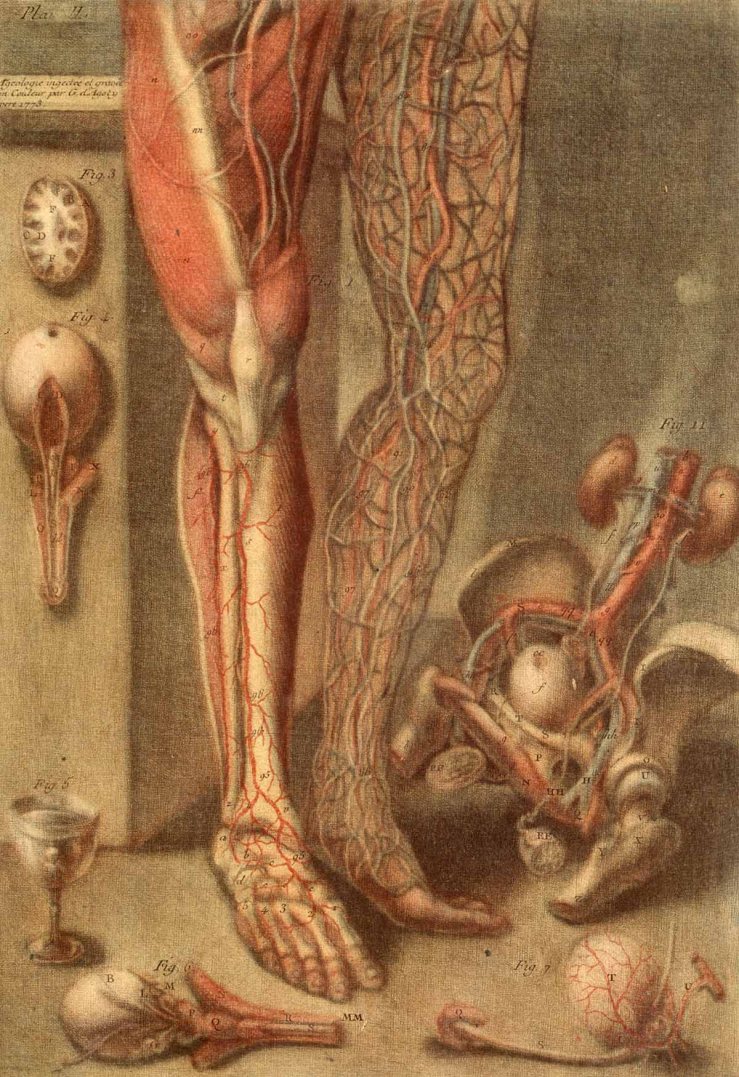
Anatomy of Man — Jacques Fabien Gautier D’Agoty

I-E-2-04a I-E-2-04b

Selections from One-Star Amazon Reviews of David Foster Wallace’s Infinite Jest

[Ed. note: I usually don’t preface these one-star Amazon selection riffs with much, other than to note the occasion for the post. In this case, the occasion is my coming to the end of a second reading of Pynchon’s novel Gravity’s Rainbow, a novel that is very much about the military-industrial-entertainment complex. And so well anyway, I keep thinking about Infinite Jest, which I have not read in full since 2002, but plan to reread later this summer. I expected Pynchon to show up a few times in the one-star reviews, but he’s present throughout, often obliquely referenced. Otherwise, the one-star reviews are typical: Rants against academia, “literary elites,” etc. The term “self-indulgent” appears again and again. Only one reviewer bothers to engage the plot though.]

***

slop

passably clever

completely pointless

superfluous logorrhea

spawn of PC Elitist writers

reads like a math textbook

This is the T.S. Eliot Effect

terminally adolescent drivel.

The footnotes have footnotes.

Big words and run-on sentences

utterly lacking in aesthetic merit

I only read the first 50 pages or so

wow, that’s a heck of a lot of words.

challenging, involving, and horrifying

A humorous book? – no. Absurd – Yes.

never made it to the end of chapter one.

I never did get through Gravity’s Rainbow

the magnum opus of American hipsterism.

the worst science fiction novel ever written.

If you like Pynchon, fine, go ahead, you’ll like this.

over a hundred pages of notes that serve no purpose

I pride myself on being an intelegent well read person

At least Pynchon, has humor, literary references, etc.

He probably sold more books on hype than on talent.

All in all, I suppose Wallace will just become a footnote.

this book(?) would not be worth the money if it was free

I trie d to think of Catcher in the Rye, but no comparison.

If you want to be warm, burn your overrated copy of Infinite Jest.

Wallace makes up words which does not help one reading a story.

I think it was in that book that I learned the word “omphaloskepsis.”

I’ll bet Dave had to beat off the nubile young co-eds after they read this one

obviously didn’t follow Elmore Leonard’s last tenet of his “10 Rules for Writing”

I suppose that some might consider Wallace a great writer, but was he popular?

It’s written in the first-person from the point of view of a mentally ill teenager.

he filled it with worthless footnotes that pretend to enlighten the victim of his prose

I just don’t understand how my fellow Amazon reviewers could have scored this book highly.

I realize that this book is considered to be “literature” but IMHO the internal ravings of mentally ill people isn’t literature.

It is called “INFINITE JETS” but there is not a single aircraft within, in fact the book is about people on land with drugs problems.

The book contains an anecdote plagiarized from the humorist, Gerard Hoffnung, who recorded it in the 1950s.

700 pages of clumsy sci-fi and the kind of smarty pants absurdist nonsense you’d expect from a precocious middle schooler

The premise for this novel derives from a Monty Python sketch in which the world’s funniest joke is also fatal.

Oh one other thing that drove me crazy: he started so many sentences with “And but so..” or “So but and…”

if Finnegans Wake was a rancid fart that was proudly left to rip, Infinite Jest is a weak one, lacking sound and odor.

Just a bunch of irrelevant words to set the scene…. not to mention he described everything into painful detail.

a kid thinks he’s going to the dentist but it’s really some sort of counselor and they have a long battle of wits to see which one of them is the bigger booger-eating nerd

DWF is desperately trying to emulate one of the century’s greatest authors, and utterly fails.

Put down the bong, go outside and get some real world experience before putting pen to paper.

Comparing Wallace to Pynchon is like comparing a kettle of sponges to Disney World

Academics also praise it as a badge of courage for (allegedly) reading it

It’s just the narrator’s interior thoughts about trying to buy drugs.

I was two pages in and started to feel confused, zoned out, and lost.

It reads like the stream of consciousness of a spoiled 10th grader.

What I read would have gotten an F in a freshman writing class.

The style is Pynchon. And by style, I mean, an exact duplication

At least, now I know where Dave Eggers ripped off his garbage

sorry Amazon,you definitely missed the boat with this one.

completely lacking in any kind of moral or ethical center

He and this book are simply silly, and a waste of pulp.

Book was a work of art, one I wasted my time viewing.

seems to spend forever talking about tennis and drugs

Characters are unbelievable and are over analyzed

Sure, he was making good points, for the 1990s!

Reading a thesaurus does not count as research.

Over 1000 pages of pseudo-subersiveness.

It’s the tyranny of the English Deparment

I only read about four percent of the book

For my taste, there were too many words

I think his suicide inflated his reviews.

I still feel awful thinking about it.

narcissistic garbage

wannabe Pynchon

Bad read no stars.

…is this an essay?

Generic Pynchon

Troglodyte.

Boring.

Skip it.

“All art constantly aspires towards the condition of something or other”

Montparnasse — Jury Annenkov

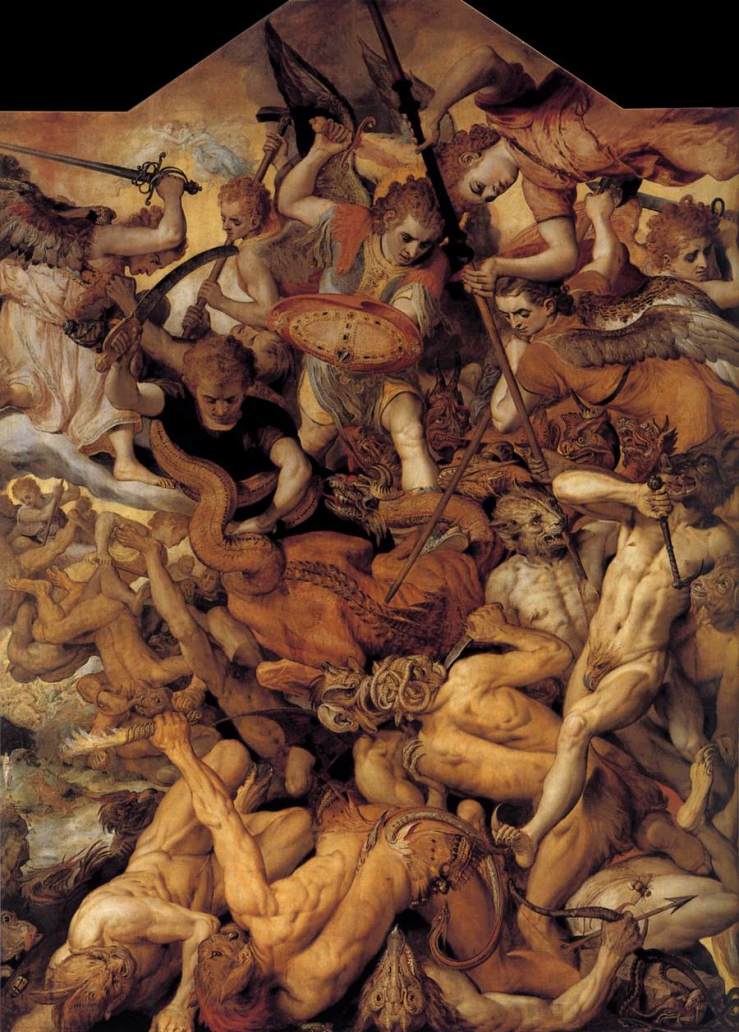
The Fall of the Rebellious Angels — Frans Floris

tumblr_llk0cyneN21qzix81o1_1280

The consciousness contained in any text (William H. Gass)

…the consciousness contained in any text is not an actual functioning consciousness; it is a constructed one, improved, pared, paced, enriched by endless retrospection, irrelevancies removed, so that into the ideal awareness that I imagined for the poet, who possesses passion, perception, thought, imagination, and desire, and has them present in amounts appropriate to the circumstances-just as, in the lab, we need more observation than fervor, more imagination than lust-there are introduced patterns of disclosure, hierarchies of value, chains of inference, orders of images, natures of things.

From William H. Gass’s essay “The Book as a Container of Consciousness,” published in his collection Finding a Form and available online as a pdf at Wilson Quarterly.