Let’s be clear from the get go — John from Cincinnati probably isn’t for most people. I liked it, despite its many, many flaws, but it’s pretentious, willfully weird, and hides its shakiness and lack of direction under opaque philosophical mumbo jumbo. It’s also frequently brilliant and occasionally transcendent TV, powered by David Milch’s trademark Shakespearean (or, more accurately, Shakespearean-by-way-of-Melville) dialog and a stellar ensemble cast, including Ed O’Neill, Rebecca De Mornay, Luis Guzman, and Bruce Greenwood.
So, what’s it about? Here’s Milch on Craig Ferguson, back in 2007 when the show debuted on HBO (right after the series finale of The Sopranos, a spot that probably helped to kill it at birth)—
If you don’t feel like watching the segment (and, if so, why not? –Milch is fascinating), here’s the takeaway: “I don’t know what it’s about…I don’t know the bottom line. But, uh, if God were trying to reach out to us, right, and if he felt a certain urgency about it, that’s what it’s about. And if God were trying to reach out to us and teach us something about the deepest nature of man, uh, he might use some drugged out surfers.”
Those drugged out surfers are the Yosts, a clan that takes its dysfunction three generations deep. Mitch Yost (Bruce Greenwood) is the young grandfather, a one-time surf star who retreats to his tree house after a bad knee injury. He and his wife Cissy (De Mornay) raise their grandson Shaun, a quiet and centered boy of 15 whose surfing career is just now emerging—much to the chagrin of Mitch. You see, Bruce and Cissy kind of fucked up with their only child, Shaun’s dad Butchie, a one time bad-boy superstar of the surf circuit who’s since degenerated into heroin addiction and alcoholism, living in a dumpster of a hotel, and barely seeing his son. Multimillionaire surf promoter Linc Stark (Luke Perry) is partly to blame for Butchie’s fate, and now he wants to sign Shaun to his company.
Against this backdrop of familial toil, a stranger — John from Cincinnati (uh, JC, if you will) arrives. John is seemingly childlike and naïve; he parrots back the words that others say to him and seems incapable of answering questions directly. He also possesses strange powers, powers that unfold throughout the series’s ten episodes and extend into the bizarre community of Imperial Beach. There are the Yosts themselves—Mitch begins levitating, Shaun comes back from the dead, and Butchie no longer craves dope—but J of C’s powers also influence those in the Yosts’ circle, like ex-detective, Bill Jacks, who fights the despair at losing his dead wife by communicating telepathically with a parrot. Jacks is played by Ed O’Neill in a performance that deserves something better than an Emmy or whatever bullshit they give actors for TV series. Ed O’Neill + David Milch = fucking gold. Seriously. Here’s five seconds of Ed O’Neill’s Bill Jacks, context unimportant—-
Jacks is the highlight of a strange circle of weirdos and grotesques that elliptically orbit the Yosts, including a number of ringers from Milch’s Deadwood (Dayton Callie, Paula Malcolmson, and Garret Dillahunt) as well as other fantastic character actors like Guzman, Paul Ben-Victor, and Willie Garson. Over nine days, J of C enters into the lives of these characters, transforming their dysfunction into a more unified, if still unstable community. This was the theme of Milch’s Deadwood, only in JfC it’s writ large and bold, if not obviously apparent.
Where Deadwood took a cold hard look at capitalism and our grand national myths, JfC explores the miraculous in the everyday. What would happen if we witnessed miracles? Could we credit them? Could we credit ourselves to understand them, or to even accept them—could we allow ourselves to be transformed by them? This is the dramatic thrust of JfC. The series is not so much about interpretation, then—it is not simply a reworking of the New Testament set in Southern California—rather it is a TV show about witnessing, what it would mean to see a miracle.
To this end, there are many, many scenes of characters witnessing and reacting to events that affect other characters in JfC. In any other world, such witnesses might be surrogates for the audience, allowing the producers to communicate their vision and meaning, but in JfC, witnessing is not a passive process, or even a matter of voyeurism: witnessing is just as important as the event that is witnessed; indeed, witnessing is what allows the event that is witnessed some measure of phenomenological reality. This is no small thing when set against the miraculous, against what our rational, scientific minds have told us to resist.
Because John from Cincinnati traffics in the inexplicable, it was bound to alienate its audience. The show was cancelled after one ten-episode run, and there’s a sense in the later episodes that the producers knew they would have to wrap up too much business without enough time. Thus: clunky exposition; new characters who show up for no reason and then disappear for no reason; major characters explained away with a simple voice over line or two; etc., etc., etc.
All of this is only frustrating though if one is seeking an explanation from JfC, when I think what the show is really offering is a view to a view of the inexplicable, to what it is to witness what we are told we cannot rationally witness. Like Twin Peaks, to which it bears considerable comparison, JfC is a study in dialog, mood, tone, and characterization. Those searching for story will likely be disappointed. That isn’t to say that JfC doesn’t have a good story—I think it does—but it hardly gels at the end. To put it another way, JfC lacks the central, galvanizing vision of Deadwood or other HBO shows like The Wire and Rome. Still, I think that fans of Milch’s dialog could hardly be disappointed with JfC, and the cast is marvelous (particularly Ed O’Neill). I’ll end by sharing what is likely the standout scene of JfC, an esoteric climax of sort from the sixth episode. It’s probably a riff on Jesus’ Sermon on the Mount—or maybe not—I don’t really want to analyze or interpret or even praise here—but it is a wonderful moment where Milch shows how community might happen. Recommended.
I finished the audiobook version of John Barth’s novel The Sot-Weed Factor last week. I’d tried to read the novel a few times in the past, never getting past page 56 of my Bantam mass market edition, which runs to 819 pages. That’s a long book. The unabridged audiobook runs just over 36 hours. That’s a long time. Too long, really, for what Barth has to offer here, but before I get into that, I’ll give a tip of the hat to the excellent production values and the wonderful voice talent of Geoffrey Centlivre, who is by turns expressive, wry, pathetic, bathetic, or understated, depending on what Barth’s prose calls for. He understands the novel and does an estimable job translating it.
The Sot-Weed Factor enjoys the reputation of being Barth’s finest work (although let me just go ahead and disagree with this generalized assumption that I’ve attributed to no one in particular and say up front that the novel is ultimately a boring overlong drag and anyone interested in Barth is better off starting with Lost in the Funhouse). The novel parodies a number of literary styles — Bildungsromans, picaresques, Künstlerromans, adventure stories, histories, romances, and serialized narratives in general. Adopting the language (diction, tone, syntax, form and all) of 17th century prose, Barth tells the story of Ebenezer Cooke, a real historical figure whose 1708 poem “The Sotweed Factor, or A Voyage to Maryland, A Satyr” is considered by some literary historians to be the first American satire.
Barth’s Ebenezer is an innocent soul à la Voltaire’s Candide (hero of another picaresque that has the decency to be funnier, sharper, and, ahem, much, much shorter), a would-be poet whose spurious claims to being “Poet Laureate of Maryland” come constantly under fire. Ebenezer attributes his artistic powers (which are dubious at best) to the metaphysical virtue of his virginity; one of the major conflicts of the plot of The Sot-Weed Factor is poor Ebenezer defending his cherry from the various whores and ne’er-do-well who populate the book. And there are a lot of these whores and ne’er-do-wells: rascals and pirates and pimps and thieves and slavers and sluts of every stripe shuffle through The Sot-Weed Factor, underscoring several of Barth’s themes — innocence versus experience, perception versus reality, virtue versus vice, and stability versus flux.
In my reading, this last theme — the instability of identity, particularly American identity — is the major thrust of The Sot-Weed Factor. But before going into this idea, I suppose I should share at least some of the plot, or at least try to summarize it, which is almost impossible, as it shifts and slants and reverses in every chapter. In the interest of making a (very) long story short, dear reader, and making my job a bit easier, I’ll borrow from Don D’Ammassa’s summary (he’s got a great Barth page for those inclined)—
The story is set during the 17th Century. Ebenezer Cooke is the son of a well-to-do British gentleman who owns property in the Maryland colony in the New World. Ebenezer and his sister are tutored by Henry Burlingame until his sudden dismissal while they are in their late teens. Ebenezer is sent off to boarding school, where he finds it difficult to form a bond between himself and his environment, eventually retreating into poetry. He is also afflicted by an extreme form of indecisiveness in which he is literally frozen in place, some times for hours on end, incapable of making a decision. His abstraction from the world is reminiscent of Jacob Horner and Todd Andrews, although exaggerated even further.
The plot grows rapidly more complicated. Ebenezer is apprenticed in London, where he fails to prosper. He becomes infatuated with a prostitute, despite his own militant virginity; his poor prospects are then conveyed to his father, who ships him off to the family holdings in the colonies. Ebenezer decides to request a commission from Lord Calvert, governor of Maryland, to become its official Poet Laureate, believes that he has been awarded that honor, and sets out for the new world. In the course of that journey, he rediscovers Henry Burlingame, who has taken on another identity, is kidnapped by pirates, walks the plank, and eventually reaches land.
The complexity and twisted humor that ensue cannot be adequately described in a few words. Secret identities are revealed, coincidences flourish, absurd situations follow in rapid sequence. Ebenezer is honored and disgraced, is captured by angry natives and threatened with death. He discovers pieces of a secret journal of the adventures of John Smith and Pocahontas, and helps Henry Burlingame discover the truth about his own origins. There is considerable bawdy content, much of it surrounding the mysterious process by which John Smith managed to sexually satisfy Pocahontas.
I’m impressed with D’Ammassa’s concision here—he neatly puts together the major elements of a sprawling, fat novel. As you may see from D’Ammassa’s summary, The Sot-Weed Factor is all about the instability of place, the lack of solid ground in swampy Maryland, the discontinuity of historical narrative, the inability of art to overcome reality, and the rapid reversals of fortune and identity that might occur in a New World. It’s all “assy-turvy,” to use one of the character’s terms. The Sot-Weed Factor here shows its post-modern bona fides; there’s a constant inconstancy, a doubling of people, places, things, and then a trebling. Ebenezer’s Old World romantic virtues—his insistence on the metaphysical value of his virginity and the power of his feeble poetry—are not just contested but obliterated (only poor Eb’s too blind to see this). Barth reworks American history, dismantling and satirizing the Pocahontas narrative, and emphasizing the plight of the native Americans, enslaved Africans, and indentured Europeans in this brave new world.
The book is also a dismantling of literary history, a jab at metaphysical poetry and identity narratives like Tom Jones or the work of Dickens. While Ebenezer spouts the loftiest supplications to his airy muse, Barth keeps his humor stuck sloppily in the toilet. The Sot-Weed Factor surpasses any ribald work I’ve ever read. The book is larded with dick jokes, fart jokes, jokes about diarrhea, jokes about sex and venereal diseases and so on—it culminates with (as D’Ammassa points out above) a riff on 17th century Viagra. In short, Bath focuses most of his keen literary powers on the kind of sophomoric japes that might keep Bevis and Butthead’s attention. Again, it’s all “assy-turvy.”
Barth’s toilet humor is at times funny, but it becomes tiresome over the book’s long duration, especially when it’s often the sole reward for long expanses of poorly-conceived exposition. I found myself bored to tears at times listening to The Sot-Weed Factor, and had to force myself to continue in its final third, a challenge that became easier when the narrative finally picked up a bit. Just a bit though. The book’s major problem is not its bloat though, or its saggy exposition, or even its redundant fart jokes. No, these feel more a symptom than a cause, and I think they are symptom of a too self-satisfied (or self-satisfying) author; over its 800+ pages (or 36+ hours), The Sot-Weed Factor reveals itself as the literary equivalent of a very bright writer jacking off to his own research. In what must be the worst case of unrestrained writing I’ve ever seen (or heard, I suppose), Barth allows two of his characters, catty women arguing, one English, one French, to trade insults with each other, all various euphemisms for “whore.” This process goes on for minutes in the audiobook version and for six goddamn pages in my Bantam edition and, like much of the details in this fat beast, does little or nothing to add to the narrative. It’s as if in his research Barth has dug up dozens and dozens of lovely little antiquated slurs and can’t bear to edit a single one. If the process rewards Barth, it does little for the reader.
But if literary diarrhea is the mode of the book, then I guess it mirrors one of The Sot-Weed Factor’s many rude motifs. Personally, I wish I had my time back. There’s great value in reimagining the origin of America (I think immediately of Terence Malick’s The New World or Toni Morrison’s A Mercy or even some of William Blake’s work), but Barth’s narrative seems too self-indulgent and unrewarding to make any real claims to democratic (or, if I’m feeling harsh, artistic) insight. Perhaps The Sot-Weed Factor is the kind of novel that remains indivisible from its form, and perhaps to a contemporary reader like me this form is just too flabby and flaccid to spark spirit. As I’ve tried to communicate here, Barth has a sharp intellect and he’s more than capable of performing a wry, wise, and often funny analysis of early American history. But he indulges too much in his own sophomoric games and winks too often at the reader. It’s amazing that such a long book could feel so hollow.
Wayne Koestenbaum’s Humiliation explores the ways that having a body (among other bodies, among a social body) might leave us humiliated or otherwise abject. To perform this exploration, Koestenbaum surveys a discursive range of subjects, including the humiliation of public figures, the sordid “private” lives of celebrities, the work of philosophers and cultural theorists, and the art, music, films, and writing of various artists and performers. The book’s central subject though is Koestenbaum himself, who shares his own humiliations in a way that surpasses ironic self-deprecation. The results are surprisingly moving, intelligent, and very funny. I’ll let Koestenbaum explain his project—
Not merely because I am tired, but because this subject, humiliation, is monstrous, and because it erodes the voice that tries to lay siege to its complexities, I will resign myself, in the fugues that follow, to set forth an open-ended series of paradoxes and juxtapositions. (I call these excursions “fugues” not only because I want the rhetorical license offered by invoking counterpoint but because a “fugue state” is a mentally unbalanced condition of dissociated wandering away from one’s own identity.) Some of my fugal juxtapositions are literal and logical, while others are figurative, meant merely to suggest the presence of undercurrents, sympathies, resonances shared between essentially unlike experiences. If there is any reward to be found in this exercise of juxtaposing contraries to detect the occasional gleam of likeness, that dividend lies in the apprehension of a singular prey: the detection of a whimpering beast inside each of us, a beast whose cries are micropitches, too faint for regular notation.
Koestenbaum composes these fugues, these thematized chapters of his book, in small blocks of text, numbered entries that range from single sentences to several pages. These are aphorisms, anecdotes, japes, jokes, riffs, prose poems, howls. The style recalls Nietzsche’s aphoristic work or Barthes’s short essays in Mythologies, although these comparisons seem inappropriately pretentious. In any case, Koestenbaum sets these short pieces against each other to achieve the fugue state he describes above, a willful wandering from topic to topic—all within the kingdom of humiliation.
So what is humiliation? Or, rather, how does Koestenbaum define humiliation? While the entire book addresses the subject, our author gives us a fairly succinct definition upfront—
Humiliation involves a triangle: (1) the victim, (2) the abuser, and (3) the witness. The humiliated person may also behold her own degradation, or may imagine someone else, in the future, watching it or hearing about it. The scene’s horror—its energy, its electricity—involves the presence of three. An infernal waltz.
Koestenbaum takes turns playing all three roles, both through personal, historical, and cultural memory, as well as through a profound imaginative capacity. It is worth remarking upon, or at least listing, some of his examples here: Joan of Arc, King Lear, Liza Minelli, Bill Clinton, Antonin Artaud, Jean Genet, Jean-Michael Basquiat, Larry Craig, American Idol, The Swan, Anita Bryant, Harriet Jacobs, Richard M. Nixon, various creeps trolling Craigslist for weird sex, the Marquis de Sade, Abu Ghraib, lynching postcards, Michael Jackson—and always Koestenbaum himself (as well as his family, his friends, his colleagues, his students . . . ). Koestenbaum shuffles through his subjects, looking at the various ways that they might fall into his triangle of humiliation, and even when he tries on the hat of the abuser, he modulates this position by keeping his subject’s agency within his critical purview. Indeed, one of the great warnings that Koestenbaum has to offer concerns what he labels “the Jim Crow gaze” — the propensity and capacity that each person holds within himself at all times to look at another human without recognition that that person is a human being, an agent of his or her own desires, emotions, and intellect. Koestenbaum readily admits his own failings, times he has turned the Jim Crow gaze on others, a look that goes past “othering” to actually desubjectify the gaze’s object. Koestenbaum’s project pays great dividends here; by moving discursively from a range of subjects (including himself), he reveals the limitations of first-person consciousness when coming into contact with the social, the cultural, the political, the historical. Put another way, Humiliation is one of the few works of cultural studies I’ve ever read to actively show why cultural studies matters. Here’s Koestenbaum again—
The humiliation of a derided performer on American Idol is immeasurably different from the humiliation of a Palestinian under Israeli occupation. One plight is chosen, the other is not. But isn’t there present, in both situations, an underlying coldheartedness, a rock-bottom refusal to believe the worthiness of the person whose reputation (or house, or land, or ego, or self-esteem) is stolen, trashed, occupied, razed? Isn’t there present, in both situations, an underlying will to deracinate and desubjectify this other person? And, most insidiously—isn’t there an insistence on considering this process of desubjectification (with my laughter I take away your humanity) an entertaining process, even a cathartic exercise, therapeutic and energizing, like calisthenics?
This willingness to connect American Idol to the Israeli-Palestinian conflict dramatically highlights the underlying psychological conditions lurking under the phenomenological apparatuses we see (or choose not to see) on a daily basis. And just as ridicule or schadenfreude may be posited as cathartic for the victimizer, Koestenbaum also finds that “the aftermath of humiliation can be paradoxically relaxing. Tranquilizing to have undergone humiliation and then emerge on the other side.” Perhaps it is toward some sense of release or tranquility then that Koestenbaum shares so much of his own humiliation with us—snubbings, embarrassments, accusations, disavowals, and, of course, his penis (he even apologizes for the “phallic” nature of the book).
Koestenbaum is willing to consider other penises too. Humiliation is very much a study of bodies in general: what it means to have a body, what it means for others to look at your body, how what your body looks like (its shape, its color, its gender, its parts, its excess, its lack) matters to others. Working from Julia Kristeva’s theory of the abject (see: Powers of Horror), Koestenbaum writes—
Humiliation involves physical process: fluids , solids, organs, cavities, orifices, outpouring, ingestions, excrescences, spillages. Humiliation demands a soiling. Even if the ordeal is merely mental, the body itself gets dragged into the mess.
Our most abject moments then are when we realize that our body is not the impermeable fortress of self that we might imagine, but rather a dripping mess with ill-defined borders. We are constantly leaking. Private shame always lurks, is always susceptible to public scrutiny. Koestenbaum again—
An object that should be private and unseen is suddenly visible . . . My unseen experience has been forcibly ejected—thrust outside. The judge hears my secrets. My inner rottenness lies exposed. My skin has been turned inside out. This fold (the self become a seam) is the structure of revulsion.
Yet going through these trials is part of forming an individual, subjective identity. “Humiliation, an educating experience, breeds identity,” writes Koestenbaum. Of course, this idea goes back to our oldest stories, yet it often remains unremarked (curiously, Koestenbaum does not write about Adam and Eve in Eden, that primal scene of triangular humiliation). And while Koestenbaum posits the educational (and even possibly therapeutic) dimensions of humiliation, he’s very clear about the deep pain repetitive, institutionalized humiliation can cause—
I presume that as moral individuals we should work toward minimizing humiliation, toward not inflicting it. We should practice an ethics of abstention. Vow: I abstain from deliberately humiliating others. When I find myself involved in this abhorrent practice, I will immediately desist and try to reverse the process and remedy the crime. And yet is a world without humiliation possible.? It’s disenchanting to write about a horrible situation. About this subject, I can’t rhapsodize.
I’m happy to rhapsodize about Humiliation more, but I fear that this review teeters on becoming overlong any word now. I’ve yet to remark on Humiliation’s humor, which is abundant, weird, occasionally dark, but always warm and deeply human. In the interest of time, perhaps you’ll trust the director John Waters, who provides the following blurb for the book: “This literary ‘topping from the bottom’ is the funniest, smartest, most heartbreaking yet powerful book I’ve read in a long time.” I agree completely with Waters, and looking over my review, I fear that I may have portrayed a very accessible, humorous, and loving book in terms that are too academic. Humiliation may be a work of philosophical inquiry, but it also functions as a sort of cultural memoir, and if it’s a narrative of pain and abjection, it also repeatedly offers solutions to this pain when it can, and consolation and sympathy when it cannot. Very highly recommended.
Humiliation, part of the BIG IDEAS // small books series, is new this month from Picador.
Everything was going so well, too—I seemed able to blather and drivel at will for a few weeks, dribbling out my noisome little posts on books or films or TV shows or what have you.
But now, nothing, which is terrible, because I have been reading up a storm—putting away half a Hemingway in a day (The Garden of Eden), flying through Donald Harrington’s epic comic masterpiece Architecture of the Arkansas Ozarks (still not finished), trudging through Breece D’J Pancake’s stories when I think I can take the sadness, and polishing off Wayne Koestenbaum’s Humiliation in three short sessions.
I kind of blame Koestenbaum’s book for the writer’s block. It’s always hard to write about a book that you love, that you think others should read too, but even harder when the book is about subjects and figures that most people would rather not think about, like abjection or vomit or gloryholes or the terrible pain of Liza Minelli or Antonin Artaud’s electroshock therapy or Jean Genet’s prison sex or lynching photographs or Michael Jackson’s penis. Plus, Koestenbaum repeatedly points out that the act of writing itself, particularly writing for publication, writing for others to read is an abject, humiliating process. Here’s Koestenbaum—
Writing is a process of turning myself inside out: a regurgitation. I extrude my vulnerable inner lining. I purge. And then I examine the contents—my expulsed interior—and begin the bloody interrogation. I ask whether it is filthy or clean, valuable or deplorable.
Koestenbaum goes beyond metaphorical vomiting to consider the literal act of regurgitation in his book. There’s a lot of vomit in Humiliation—other bodily expulsions too, but Koestenbaum singles vomiting as a primary site of abjection (this seems a little less intense or mordant than theorist Julia Kristeva—whose work Koestenbaum is surely working from—who finds the corpse the ultimate abject object).
Maybe I’ll try to work through my writer’s block by telling a vomit story. The story is made more germane (to what, though?), perhaps, in light of the fact that I had just read some of Koestenbaum’s vomit theory (or vomit prose, if you prefer) the night previous.
Here is the setting: it is a pediatrician’s waiting room. I am waiting with my son, who is 13 months old, who is to receive shots on this visit to protect him from disease. The waiting room is packed and the progress is unusually slow. The woman across from me makes idle chit chat with me and with her own son who is maybe 13 or 14 years old; he’s in marching band; he needs new shoes for marching band; jazz band will be discontinued due to budget cuts, but the teacher (a man who shares my last name, I hear by eavesdropping although how can it be eavesdropping when their conversation is so public and the room so small) will teach jazz band after school. These details are unimportant to the vomiting story, although they perhaps signal the teenager’s mother’s caring, involved nature in her son’s life.
Here is the climax of the story: to my right, another man is at the doctor’s with his son, waiting; the son is perhaps 3 or 4 years old. He doesn’t look well—he looks queasy. In fact, when I look at him (not directly of course, but glancingly, the way that people might in a waiting room or other such place where direct eye contact is unspokenly shunned), when I look at him, I internally remark his queasiness, his ill gills, his distraught angle; I also internally remark his father’s concern, the way his father slowly strokes the son’s back in impotent consolation. And at the same moment I remark on these details, it occurs to me that this queasy looking boy is in the wrong section, that there is a clearly marked, smaller room (not so much a room but an alcove or adjoined large cubby—no door separates the two) for “sick” patients, for patients who are not attending a regular “well” visit (like my own son). My reaction though was not fear or disgust or anger, but more mild annoyance that the father was either flouting a convention of the office (one that I didn’t really care about, knowing that, hey, really, is that smaller room really going to protect my health or my child’s? Because, no it’s not), or that the father simply failed to read a clear sign (I feel a similar annoyance when people at the grocery store where I shop treat the clearly-marked entrance as an exit and vice-versa).
Anyway, I promised a climax, and failed to deliver. How humiliating. So here is the climax: the man’s son up and vomited all over the floor, all over the man’s leg. It was not the tidy vomit that we might sometimes manage—the short, projectile aimed mass that usually conforms to a strict element, mostly solid or mostly liquid. No, this was a messy, mucusy, ill affair, the kind of vomit that hangs from the vomiter’s mouth and sticks to the floor (for me, the most abject, threatening detail). It was foul. And yet I felt no abject horror or humiliation for the man or his child—in short, none of the vomit-horror that Koestenbaum describes in his book (a description I know I have not described for you, dear reader). Instead, I felt immediate empathy and compassion for the man. The mother of the teenager responded even more demonstrably. She immediately located a garbage bin for the boy to continue vomiting in, alerted the staff, went to the bathroom for paper towels, and helped the man while speaking consolingly to the son. She did what I wished that I had did. She behaved like a good human.
The point of this vomit story is to try to address what Koestenbaum does not address in his fantastic book. This is not meant to be a slight or an attack or even a criticism. A book should never be attacked for what it doesn’t aim to do. But what Koestenbaum, in his wonderful analyses of vomit, of expulsion, of all the ways our bodies, the material facts of our bodies humiliate us, make us abject, what Koestenbaum doesn’t consider is that the loving parent’s relation to a helpless child’s body’s expulsions bears the possibility (the strong possibility) of not being abject, but instead a site of abjection’s flipside: grace, love, empathy and all that jazz. In short, no one in the waiting room where the child vomited shrank in disgust or showed any visible sign of shared humiliation—quite the opposite. The child’s demonstrable illness became a moment not of horror but of empathy, of understanding the child’s illness and the father’s worry and care and love for his ill child, a love that transcends humiliation’s gaze.
So there’s my vomit story, or one of my vomit stories. But I still don’t know how to review the book right now.
Woody Allen’s new film Midnight in Paris opens with a sumptuous montage of the City of Light, clearly establishing from the get-go that the movie is Allen’s love letter to Paris. The romantic overture idealizes Paris, just as the film’s protagonist Gil, played pitch perfect by Owen Wilson, idealizes the Lost Generation of writers and artists who populated the cafes and bars of Paris in the ’20s. Gil is on a working vacation with his fiancé and future in-laws; he’s a successful Hollywood screenwriter but dreams of becoming a great novelist. Only he’s struggling with his novel-in-progress, which features a protagonist who runs a nostalgia shop. Nostalgia, or the romance of nostalgia, is the primary idiom of Midnight in Paris, and Owen Wilson transcends the usual parameters of Woody-surrogate in bringing this idiom to life. Wilson’s breezy charisma propels the movie forward at all times; indeed, the entire plot rests on Wilson’s charm, which saves the film from falling into syrupy dreck or boring indie whimsy.
Midnight in Paris works to literally charm its viewers and its protagonist, transporting the narrative back into the ’20s via a magical motorcar, where Wilson’s Gil falls in with a host of notable writers, artists, dancers, and other personalities. There are Cole Porter and Salvador Dali, Man Ray and Luis Bunuel, Pablo Picasso and Josephine Baker—but the standouts are the Fitzgeralds, Gertrude Stein, and Ernest Hemingway. The Hemingway character is a marvelous parody of both Hemingway’s caricature and Hemingway’s prose—although I think the humor in his scenes was lost on more than a few of the audience members I watched the film with. On Hemingway’s advice, Gil submits his manuscript to Gertrude Stein for an honest critique. In the meantime, Gil engages in a romance with Adrianna, Picasso’s muse and mistress, who herself pines for the Belle Époque era. Through another magical transposition, Gil and Adrianna move again through time, heading back to the 1890s to meet Toulouse-Lautrec and Paul Gaugin. As Gil pursues a romance with Adrianna (and the nostalgia of an idealized past), his own fiancé seems to be spending a bit too much time with a windbaggish and pretentious American who is a visiting lecturer at the Sorbonne. The reality of this conflict pulls Gil into making dramatic choices about his own future.
Midnight in Paris falls squarely into Allen’s fantasy films like The Purple Rose of Cairo, A Midsummer Night’s Sex Comedy, Alice, and Shadows and Fog. The film has much to offer those who, like Gil, find themselves fascinated by the romance of the Lost Generation. Allen’s parodies of the Fitzgeralds, Hemingway, and the rest are loving and gentle, and will surely be appreciated by most English majors. At the same time, Midnight in Paris is a slight, ephemeral work, one that relies on beautiful cinematography and the charm of its lead character more than plot, insight, or even jokes. There is no risk or danger in Gil’s fantasy, no sense that his sanity is in jeopardy or that he might not come to realize the theme of the film, which he spells out clearly for the audience if they somehow missed it—the tendency to romanticize the past has more to do with a dissatisfaction with the present than with any objective evidence that the past was somehow better, and dissatisfaction with the present should be viewed positively, for dissatisfaction can be productive and meaningful if we engage it. Recommended.
1. The Sopranos is widely considered to be the best TV show of all time, but you already knew that, right? I watched all six seasons over the past few weeks; although I’d seen most of the episodes over the last decade, I was never a regular viewer, and I certainly didn’t evaluate the episodes I saw through any kind of critical lens. What follows is hardly an in-depth analysis, but rather my thoughts on the show. There are spoilers.
2.Tony Soprano is a vile character. Hard to relate to. He kills his friends and even family members; he lies to his family; he cheats on his wife. He’s a bad guy. He’s not a hero. He’s not an anti-hero. He’s both protagonist and villain of a series that begs us to identify with him, to see in him the expression of our own throbbing id. The gambit pays off at times, but over the duration of the series identifying with Tony becomes exhausting, painful, depressing.
3. I’ll go ahead and submit that I view the series as a study in existential nihilism against the backdrop of American-Dream-as-flow-of-capital. To put it in the series’ own terms, life is “all a big nothing.” In the series’ final scene in a diner, we’re reminded that the best we can hope for is to enjoy the “good times,” to focus on those moments of peace and happiness with our families. But ultimately, the series suggests nihilism, the “big nothing,” a void signaled in its famous closing shot of extended, abyssal blackness.
4. To be very clear, Tony dies at the end. I do not think that the ending is ambiguous. Any other reading is unsupported by the arc of not only the episode’s internal logic, but the arc of the sixth season, and indeed, the arc of the entire series. Any reading that allows Tony to live is wish fulfillment.
5. Pretty much everyone dies in The Sopranos. Again, “big nothing.”
6. There are lots of scenes of people eating sandwiches in The Sopranos.
7. The Sopranos is a commentary on and perhaps rejection of psychoanalysis as a mode of therapy, yet it uses the techniques of psychoanalysis to frame its stories.
8. The Sopranos is a Oedipal drama. I might submit that any drama about a family contains some kernel of Oedipal tension, but The Sopranos is formally Oedipal.
9. The Sopranos aired from 1999 to 2007. That’s a long time. When viewed successively over a short period, the series’ gaps and seams show prominently: characters appear from nowhere, story lines disappear, and key plot points often have to be explicated through clunky exposition.
10. A cultural value of The Sopranos: the series documents the Bush-era zeitgeist.
11. An easy criticism to make about The Sopranos: it’s ultimately an exercise in style and tone rather than plot and character development. Its themes and motifs build and simmer, but they are not enriched by this process. Rather, the series’ themes and motifs swell like thick plaster, obvious, concrete, depressing. Again, The Sopranos can only point to its own nihilism, to its “big nothing.”
12. The show is depressing. I mean, watching the show is a depressing process. It normalizes murders, lies, bullying, and violence—that’s pretty bad—but what becomes especially distressing is that the Sopranos are always fighting with each other. They are usually angry or sad. There aren’t really too many of those “good times” to remember.
13. TVs are always on in The Sopranos, usually tuned to documentaries about war or war movies.
14. Some favorite episodes: “College,” “I Dream of Jeannie Cusamano” (season one), “Commendatori,” “Funhouse” (season two), “Mr. Ruggerio’s Neighborhood,” “University,” “Pine Barrens” (season three), “Calling All Cars,” “Whitecaps” (season four), “Rat Pack,” “Irregular around the Margins,” “The Test Dream,” “Long Term Parking” (season five), “Join the Club,” “Mayham,” “Live Free or Die,” “Soprano Home Movies,” “Made in America” (season six).
15. For years, I thought that the Comorra enforcer Furio Giunta, played by Federico Castelluccio, was played by Brent Spiner, who played Data on Star Trek: The Next Generation. Looking at pics of these actors, I do not understand my previous confusion. This comment is in no way germane to this “review.”
16. I don’t know if I’ve ever hated a character as much as I hate Paulie Walnuts.
17. Chris Moltisanti, played by actor Michael Imperioli, is probably my favorite character on the show. He too is vile—a drug addict, a thief, a woman-beater—but he’s also tender and funny. Maybe I just like Imperioli.
18. Steve Buscemi’s run on The Sopranos was pretty great, although it was part of a trope that the series leaned on too often—the guy-gets-out-of-prison-and-now-what? storyline.
19. Buscemi directed what might be the best episode of the series, “Pine Barrens.”
20. It’s easy to forget or overlook or understate the impact that The Sopranos had on HBO shows in particular and TV shows in general, but that impact should be noted here. Its formal elements either influenced or paved the way for the superior shows Deadwood and The Wire. It’s hard to imagine Mad Men without The Sopranos.
21. The early episodes of The Sopranos look and feel surprisingly cheap, perhaps in part due to the heavy use of canned music and an emphasis on longer takes. Plus, the need for exposition and character grounding leads to a kind of clunkiness. These episodes compensate with graphic violence and nudity.
22. Lots of strippers on The Sopranos.
23. You could argue that The Sopranos is a study in patriarchy, in patriarchy-as-capitalism.
24. One of the major themes of The Sopranos traces how women attempt to find agency within this strict patriarchy, a patriarchy that repeatedly objectifies, dehumanizes, uses, and discards women. Carmella, in particular, seeks to find voice in freedom, and her plan to do so invokes, again, the American Dream—the accumulation and sale of property. The flow of capital is freedom.
25. As a way of closing, I’ll return to the series’ final scene, probably one of the most remarked-upon moments in TV history (I cringe now at having written the execrable and odious phrase “TV history”). For me, the ending is unambiguous—the cut to black is a POV shift into Tony’s consciousness at the precise moment that he loses that consciousness forever. The ending is neither cheap nor gimmicky, but a formal masterstroke that corresponds to the series’ overarching themes of nihilism. This nihilism perhaps prevents the series achieving the cohesion of, say, The Wire, an equally dark series that takes capitalism as its major subject. The Wire proposes struggle itself as raison d’être. The Sopranos makes no argument for that struggle, finds no honor or humanity in it, instead shifting philosophical emphasis to “focus on the times that were good” against the face of a “big nothing.” The end of The Wire is a beautiful montage that suggests that even though history may be cyclical, this fact alone does not foreclose human agency. It is difficult to call the end of The Wire “happy,” but the series conclusion nevertheless suggests generative possibility: there might not be space for the viewer in that particular world, but David Simon suggests that that world will nevertheless continue without the viewer. In metaphorical terms, it lives. The formal device of the cycle-montage at the end of The Wire would feel cheap or even hackneyed had the series not earned it by establishing its threads years in advance. The end of The Wire shows us everything; it gives us the future. It is big everything, the perfect end for a show that attempt to measure the everything of one particular place. Similarly, the final shot of The Sopranos is formally and thematically appropriate. It gives us that “big nothing” that the series has repeatedly promised is ours to collect. The black thematizes the profound moral failures of its characters and dramatizes the loss of enlightenment and moral vision that permeates the family members in the final season. It’s a clever, elegant, and ugly way to end a very depressing show.
Lars Iyer’s first novel Spurious (Melville House) is by turns, witty, sad, and profound, and garnered serious acclaim on its release earlier this year. Spurious originated in a blog of the same name. There are two sequels on the way—Dogma should be on shelves in early 2012, and Exodus the year after. Lars teaches philosophy at Newcastle University (so it’s no wonder that Spurious reads like a discursive philosophy course by way of the Marx brothers). Lars was kind enough to talk to Biblioklept in depth about his work and writing. In addition to his teaching, writing, and blogging, you will also find Lars on Twitter.
Biblioklept: Your novel Spurious began as a blog and then was published by Melville House, a thriving indie publisher that also began life as a blog. At a recent talk you gave at the HowTheLightGetsIn philosophy and music festival, you discuss the freedom blogging allows for writers to develop their “legitimate strangeness.” Why is “legitimate strangeness” important for writers, and how does blogging help facilitate it?
Lars Iyer: Sometimes it is necessary to depart. Sometimes it is necessary to leave it all behind. That’s how I understood the act of blogging, back when I started Spurious, the blog which shares thesame name as the novel.
As someone who had made some progress as an academic – a journey which implies valuable training as well as compromise and despair – I thought a kind of exodus was necessary, from existing forms of published writing. Leave it all behind!, I told myself. Leave the Egypt of introductory books and academic journals and edited collections behind. Leave the slave-drivers behind, and the sense you have of being a slave. Leave capitalism and capitalist relations behind. Leave behind any sense of the importance of career and advancement. Leave behind those relationships that are modelled on investment and return.
Sometimes a kind of solitude is necessary. You need to be alone, to regather your forces, to marshall your strength. But what is really necessary is a solitude in community. You’re on your own, depending on your own resources. But your solitude is lightened: because you know that there are others like you, who have likewise expelled themselves from captivity; because you know that others share your sense of disgust and self-disgust, that they too have gone out to the desert to do battle with the demons sent by capitalism into each of our souls; because there are others, like you, who see writing as both scourge and liberation, others who see it as a spiritual trial, others looking to destroy who they were and be reborn, and to keep themselves in rebirth.
In the end, the desert is paradise, and the world the blogger has left behind, with its whips and fleshpots, is the real desert.
Cultivate your legitimate strangeness: that was my mantra. ‘Cultivate’, because it is a struggle, a kind of asceticism. To drive the demons out, you have to know that they are there. A kind of self-knowledge is necessary – not the petty narcissism we find in the ‘misery memoir’, but a growing awareness of those forces that have constituted you, that have made you what you are. ‘Your legitimate strangeness’: ‘Your’, because it is yours, your space, the person you are, that you have become, even as you might alter this space, remake it. ‘Legitimate’ – that part of you that is not yet subsumed by capitalism, that free part of yourself that is not a slave. ‘Strangeness’ – because it must appear strange to the slaves and their masters, to everyone around you.
Why is this important to the writer? Some of us write because of our alienation. We have had no one to speak to, no friends, no conversations. There was no one around. Thoreau went to the woods to find himself. We went to our rooms. We went to literature, and philosophy, without knowing anything of literature and philosophy. We worked on our own.
There is something pathetic about this. Shouldn’t we have been fighting the world instead? Shouldn’t we have been ready on the barricades? But there were no barricades. There was no solidarity. We belonged to nothing, and had gone a little mad, a little reclusive, from belonging to nothing.
In one sense, since we lacked education, lacked culture, since our world was not one which valued the ideas and writers that we came to, our exodus was pathetic. We were imitators, play-pretending at being what we are not. We’d come too late; the party was over. We stood in the ruins, and the ruins mocked us. What could we have achieved, that had not been achieved to a much higher level before? What could we have made, that had not already been made, and much more competently, much more measuredly? We lacked the basic skills. We lacked the ability to write – even that. We lacked the breadth of culture, the breadth of scholarship.
But seen in another light, we discovered ourselves as outsiders, like those outsider artists who practiced their vocation outside of institutions. What we made was crude and simple, true — especially when compared to what went before – but it did have a certain power to affect. It had an urgency, a desperation, which might, perhaps, appeal to others. We were capable of only scraps and fragments, to be sure – dreck – but dreck marked by a moving sincerity.
I wondered – and this was the beginning of Spurious, the novel, and of its sequels – whether there was a way of folding this sense of posthumousness, of coming too late and lacking the old skills, into the practice of writing. Maybe it was time to come back from the desert, which had taught me only the extent and depth of my stupidity. Maybe it was time to write with a new kind of writing . . .
A Portrait of the Novelist as a Smiling Man
Biblioklept: That “sense of posthumousness, of coming too late” figures heavily in Spurious. Is Spurious the “new kind of writing” you are aiming for? While the book has a fragmentary, even elliptical quality, it also reminds me of novels in the picaresque tradition. What form does this new kind of writing you invoke take?
LI: Spurious is a book on its hands and knees. For me, it feels like the last book, the last burst of laughter before the world ends. But it also feels like the first one, because it has loosened the hold of the past. It says: a whole form of literary pretence is over.
Writing to a friend, in 1916, before the composition and publication of the work that would make him famous, the philosopher Franz Rosenzweig wrote, ‘My true book will appear only as an opus posthumum: I do not want to have to defend it or know about its “influence”’. He writes something similar, a year later, in another letter: ‘I will only truly speak after my death …, I place my entire life beneath the sign of that “posthumousness”’. Rosenzweig was confident that there would be a culture to evaluate his work. He was confident that there would be a place for his posthumous work among the greats – that there would still be greats, such that he might find his place among them. He was sure, in other words, that the old world would continue as it was; that there would still be master-works, still be the geniuses who wrote them, and still be the critics whose evaluations would be trusted by a general public.
A similar confidence in an author today would be a sign of delusion. Literature is one strand among many in our multi-braided culture. True, it retains something of its prestige; it is studied at universities, reviewed in serious newspapers — but it occupies an increasingly marginal role. The ‘great names’ are, for the most part, only cultural markers, ready for commercialisation (Kafka oven gloves in the tourist shop in Prague; the Brontë Balti House in Haworth; the Pride and Prejudice fully immersive interactive environment). But it is not only marginalisation that should be feared; recognition, too, should be. I think of the stupidity of documentary ‘infotainment’ on writers and artists, and rise of the vast, say-everything biography, that says nothing at all (as Mark Fisher has written, the biography is an end of history form, making the reassuring claim that ‘it was all about people’).
Literature continues. But it does so, in contemporary literary fiction, as a kind of empty form. As the anonymous blogger of Life Unfurnished has put it: contemporary literary fiction gives ‘the appearance alone of literature’; it is a genre ‘in which, for the writer, the sense of Writing Literature is dominant, and, for the reader, the sense of Reading Literature is dominant’.
Reviewing Jean-Luc Godard’s film Every Man For Himself, Pauline Kael writes, ‘I got the feeling that Godard doesn’t believe in anything anymore; he just wants to make movies, but maybe he doesn’t really believe in movies anymore, either’. Without agreeing with Kael’s assessment of Godard, I’d like to paraphrase her formulation: I think literary writers want to write literary fiction without believing in literature – without, indeed, believing in anything at all.
It seems to me that the literary gestures are worn out – the creation of character, plot, the contrivance of high-literary language and style as much as the avoidance of high-literary language and style, and the abandonment of most elements of the creation of character and plot. The ‘short, elliptical sentences’ of which the blogger of Life Unfurnished writes, the ‘absence of fulsome description’, the ‘signs of iconoclastic casualness’, the ‘colloquialisms’, the ‘lack of trajectory’, the ‘air of the incidental’: all are likewise exhausted.
What, then, is to be done? As writers, as readers, we are posthumous. We’ve come too late. We no longer believe in literature. Once you accept this non-belief, once you affirm it in a particular way, then something may be possible.
Witold Gombrowicz seems to advocating a return to older forms of literary insouciance: ‘Where are the good old days, when Rabelais wrote as a child might pee against a tree, to relieve himself? The old days when literature took a deep breath and created itself freely, among people, for people!’ But we cannot simply return to Rabelais, as Gombrowicz knew. Too much has happened! If a kind of self-consciousness is a distinguishing mark of the contemporary literary novelist, this is not something that can be relinquished altogether. The role of centuries of writing – of the rise of the nineteenth century bourgeois novel, of modernism and so on – must be marked.
But it can be marked by portraying our distance now from the conditions in which the great works of literature and philosophy were written. W. and Lars, the characters in Spurious, revere Rosenzweig. But this is also reverence for a culture that would deem Rosenzweig and his work important – a culture that is completely different from the one which W. and Lars occupy. True, they revere contemporary masters, too – the filmmaker Béla Tarr, for example – but Tarr lives far away, in very different conditions. W. and Lars occupy the world of the present, and the world that valued the ideas they value, the world that sustained those ideas and nurtured their production, has disappeared. Much of the humour of the book comes from the fact that its characters are men out of time – gasping in awe at Rosenzweig’s work at one moment, leafing through gossip magazines at another; proclaiming a great love of Kafka one minute, playing Doom on a mobile phone the next.
It is in this sense that there might appear to be an overlap between Spurious and novels in the picaresque tradition, which extends from sixteenth century Spain to the present day. Picaresque, it has been argued, appears as a result of a tension between an old world and a new one. The Spain of the first picaresque novels was in a period of difficult transition, from the stability of the medieval order to the age of a new, self-assertive individuality. Poverty and war were all around. The picaresque is produced in a world where human solidarity is lacking, and the individual no longer has a place in the world. The episodic journeys of the picaresque novel reflect the lack of coherence of its central characters, the lack of secure identity – a kind of cosmic loneliness.
Some picaresque features can be found in Spurious. The novel is episodic, and its characters lack a place in the world, even a place in history. W. and Lars play-pretend at various roles, trying on the mantle of the religious person or the philosophical thinker. W., in particular, yearns after friendship. But the characters are not roguish, as the picaro of a picaresque novel is supposed to be. W. is perfectly sincere. And picaros do not usually come in pairs.
Biblioklept: Speaking of your pair Lars and W., there’s a strong friendship there that strikes me as very realistic and actually quite moving. Reading Spurious I was reminded strongly of one of my own friendships, which is perhaps based on equal parts degradation and love. Lars and W. evoke both extreme pathos and a kind of deep existential anxiety that manifests in humor. Parts of Spurious read almost like verbal slapstick (if that metaphor can hold any water). How important is humor—what do you think the humor in Spurious is “doing”?
LI: Humour? I’m with Gilbert Sorrentino: ‘In a country such as ours we have reached a point at which there is hardly anything left to do but laugh or cry. It’s a kind of hysterical laughter, it’s strained and unreasoning laughter, or it is a morbid, bleak sobbing. I don’t think that anything is going to get changed in this country except that it’s going to become grimmer’.
Sorrentino’s referring to the USA, but he could just as well be referring to the UK. We lack the grounds for belief, for hope, for a future. There’s economic disaster — not simply the credit crunch, but neoliberalism in general: corporatisation, unemployment, job insecurity, casualisation, the privatisation of public utilities. Beyond this, there are the effects of climate change: drought and hunger, failure of whole nations, wars, migrants. The temptation of ‘morbid, bleak sobbing’ is extreme, as is the desire to drink oneself into oblivion like the barflies in Béla Tarr films.
Sometimes, it feels that there is an imposture in the very fact of being alive. It is as though getting out of bed in these terrible conditions were already an imposture, let alone trying to think or write. What can we do, really do, about the disaster? ‘To hope is to contradict the future’, Cioran says somewhere. Better to lie down and wait for the end. Better to give up before you begin.
‘I think joy is a lack of understanding of the situation in which we find ourselves’, Andrei Tarkovsky says, with marvellous ill-temper. And, on another occasion: ‘I accept happiness only in children and the elderly, with all others I am intolerant’. It’s true that joy and happiness seem ill-suited to our times, all the more in that joy and happiness are promoted in that ideology of positivity which is everywhere today. But perhaps there is a sense in which one might legitimately laugh at the apocalypse, albeit with what Sorrentino calls a ‘hysterical laughter’.
A sage in the Ramayana tells us that there are three things which are real: god, human folly, and laughter. ‘Since the first two surpass human comprehension’, he says, ‘we must do what we can with the third’. So we must laugh at folly, laugh at greed and smugness, opportunism and corruption, as eternal flaws in the human condition; laugh, and dream of a better world, knowing that it won’t come.
But this kind of laughter is too genial for me. It treats human folly as eternal, which I’m sure in many ways it is, but ignores suffering, dying, the real hell of our globalised world. And I worry that it also spares the one who laughs. True, you can laugh retrospectively at your own stupidities. What an idiot I was when I young!, you might say. But there is a broader sense in which we are, each of us, implicated in the present state of the world. It is our responsibility, in some important way. For me, to laugh sagely at one’s own foolishness is still too little.
What is the humour of Spurious doing, then? As many reviews of the novel have shown, the ‘verbal slapstick’ of the characters is part of a whole tradition of double acts and comic routines. I wanted W.’s insults of Lars to exhibit the same virtuosity as the physical humour of the Marx Brothers or Buster Keaton. I think there is a whole art of the insult. But I think something else is going in the novel, too.
Alenka Zupančič argues that comedies are never truly intersubjective. ‘[C]omedy is above all a dialogical genre’, she grants; but comic heroes are ‘extracted, by their passion, from the world of the normal intersubjective communication’. What they are really doing is seeking ‘to converse solely with their ‘it/id”’. Dialogues, in comedy, are really monologues; the hero is really only obsessed with his basic, chaos-ridden drives. As Zupančič suggests, ‘The comedy of such dialogues does not come from witty and clever exchanges between two subjects, or from local misunderstandings that make (comic) sense on another level of dialogue, but from the fact that the character is not really present in the dialogue he is engaged in’. On this account, the cruelty of the ‘verbal slapstick’ of the friendship in Spurious, which sees W. continually berating his poor friend, would actually be directed at W. himself. W., the only candidate for being the ‘comic hero’ of Spurious, would use Lars as merely the occasion for the continuation of his monologue.
But this interpretation doesn’t quite work for me, either. The ‘it’ that drives the exchanges of the characters is not only a feature of W.’s psychic makeup, of the chaos of his drives. Both characters are mesmerised by a real disaster. And both — particularly W. — are mesmerised by their partial responsibility for this disaster. The ‘strained and unreasoning’ laughter of Spurious is a response to the grimness of the world that is of our making.
Biblioklept: For me, that “strained and unreasoning” laughter is a big part of why I enjoyed the book—I identified with the characters. Spurious isn’t really, to borrow a phrase from David Shields, a “novelly-novel,” but it does have elements of a “novelly-novel” (including characters with whom some readers will strongly identify). At the same time, its short sections, fragmentary nature, and willingness to cite entire paragraphs of other texts point to a new kind of writing, one perhaps anchored in its origins as a blog. How did you compose Spurious? How does the novel differ from the blog?
LI: ‘A page is good only when we turn it and find life urging along …’, says one of Calvino’s characters in Our Ancestors. I hope that’s what a reader can find in Spurious: life urging along. I hope readers recognise something of their own friendships in that of W. and Lars. Spurious is not, I think, a ‘novelly-novel’. It’s new in some way – it has characters, some elements of plot, but it doesn’t resemble other books. And I think this is due to its origins. Blogging, and then combining different categories of posts, allowed me to discover, through editing, a new kind of novel.
Blogging demands immediacy. Telling the story of W. and Lars, I couldn’t rely on readers having followed it from the start. Every day, with my blog posts, I had to present these characters and their situation anew, and in a manner vivid enough to engage any potential reader. In doing so, I felt rather like the writer of a strip cartoon. Charles Schultz’s Peanuts had longer narrative arcs, but each sequence he published in daily newspapers had to stand on its own. Likewise with the posts at the blog. Each post had to have its own internal drama, a kind of ‘verbal slapstick’, even as it could be contained within a larger narrative arc.
My loyalty was, for a long time, to the readers of my blog, and I produced new material for them daily. But I thought some of the thematic strands developing at the blog – the trips to Freiburg and Dundee, for example, or the reflections on Kafka and on the Messiah – were being obscured by the quantity and disparateness of W. and Lars material. A selection had to be made. This is where the work of editing began, of the practice of literary montage that would lead to Spurious.
Tarkovsky, in his book about film, narrates the long process of assembling the various fragments that comprise the finished film, Mirror. ‘I am seeking a principle of montage which would permit me to show the subjective logic — the thought, the dream, the memory — instead of the logic of the subject’, he said. He was looking for a way to combine various elements – short narrative sequences, pieces of music and poetry, etc. – into a living whole.
I was doing the same thing, in my own way. Spurious is a hybrid of many elements of the blog. There was a story about W. and Lars, but also one about damp –– a real story, which I wrote about at the blog. I added quotations, too, as well as incorporating the narratives of the lives of various thinkers. And I edited until I felt that life was urging along.
Biblioklept: Have you ever stolen a book?
LI: I have thousands of pages of photocopies, which I made, full of ardour, during my first jobs as an academic. I thought I’d never get a permanent job, and wanted to make my own library of knock-off books in my rented room. Perse, Trakl, Tsvetayeva, Duras, and so many others: no printed book could mean as much to me as my annotated duplicates.
Terrence Malick’s beautiful, moving new film The Tree of Life explores humanity’s need to find metaphysical, spiritual, or psychological solace in a physical, natural, phenomenal world whose God remains silent, if not absent. The film begins by quoting the Book of Job: “Where were you when I laid the earth’s foundation . . . while the morning stars sang together and all the sons of God shouted for joy?” The line is God’s rejoinder to Job’s despair, a non-answer that recalls God’s response to Moses in Exodus when Moses asks his name and he replies: “I am that I am.” God is tautological; there is no analogy, no metaphoricity for God. Similarly, as in Job, it is not for us to understand God’s creation; rather, we are part of its mystery, and part of that mystery is to find meaning against a Darwinian backdrop. Malick’s project in The Tree of Life is to find meaning—but not explanation—through the beauty, grace, and the glory of nature, even as the film acknowledges the violence, injustice, and inconstancy of the natural world, a world that will never directly answer existential questioning.
The film begins with the O’Briens learning that one of their three sons has died. He is only nineteen years old, and the grief of his early death overwhelms his parents; it also casts an ever-present existential gloom over his brother Jack, who will become the ersatz protagonist of the film. Jack (portrayed as an adult by Sean Penn) is an architect in a big city. On a day that seems particularly freighted with significance—perhaps his brother’s birthday or deathday—he is unable to communicate with his wife or colleagues. Through Malick’s trademark interior-monologue whispers, Jack questions God again and again, trying to find meaning in his brother’s death.
In what may or may not be a daydream of Jack’s, the film then undertakes representing the creation of the universe, the expansion of galaxies, the formation of our own planet, and the subsequent life that evolves there. The segment is breathtaking, overwhelming, and worth the price of admission alone. In one shot, a giant dinosaur lies beached; the camera pans to reveal his side bloodied and bitten. The film then cuts to a shot of hammerhead sharks swarming in the deep. This Darwinian depiction is echoed and then contrasted in another shot, as one dinosaur finds another, of a different species, dying on a riverbed. The first dinosaur places his foot over the second’s neck, but then chooses not to kill the dying dinosaur, who struggles for life. There are perhaps two attitudes here toward life, one which is essentially a Nietzschean will-to-power, and the other Jesusian, an impulse born of empathy, identification, and ultimately radical love.
These contrasting ideals are embodied in Mr. and Mrs. O’Brien, and showcased in the next segment of the film, which is likely part of Jack’s memory, or maybe more accurately the idea of Jack’s memory. In a rushing flow of images and music, Malick captures the deep beauty, excitement, and confusion of early life. The episode might find a literary analogy in the early chapters of Joyce’s A Portrait of the Artist as a Young Man, which also attempts to show what early consciousness might be like. Malick’s syntax is typically Malickian, yet it fits its subject better here than it did in The New World or The Thin Red Line. The life of the young family is overwhelming in its natural beauty; however, the context of one of the boy’s impending death begins to throw shadows over the beauty. Thus we have the central apparent philosophical problem of the phenomenal world—what does it mean to die? This question in turn entails another—what does it mean to live?
For Mr. O’Brien, life is a Darwinian contest: “You can’t be too good,” he admonishes his boys. He keeps an ever-present stern hand around the back of Jack’s neck. The gesture is deeply ambiguous: it is at once a loving father’s guiding hand and at the same time a choking, killing noose. Mr. O’Brien dreams of becoming a big man, a successful man, a wealthy man. He is strict with the children, and instructs them toward a philosophy of self-reliance that is more Nietzsche than Thoreau. In contrast, Mrs. O’Brien takes a loving, playful, relaxed approach to her children (and life in general). She evokes something of a nature spirit, an earth mother able to recognize the beauty and glory in each transient moment. Where Mr. O’Brien grieves the could-have-been and pines for the will-be, Mrs. O’Brien finds meaning in the evanescent inconstancy of life.
These contrasting views come to a head as Jack approaches puberty. The film slides into an understated Oedipal drama. After a friend of the boys drowns, Jack wonders why he should be good if God isn’t. The Oedipal drama is thus capitulated not just at Jack’s parents, but at Jack’s internalization of a God-figure, which he dallies with rejecting, or at least defying. He becomes cruel at times to his brothers. He assaults an animal. He breaks windows. He sneaks into a neighbor’s house and (implicitly) masturbates over a piece of lingerie, after which shame and anger drives him to flee. In a painful, short scene, he acknowledges that he’s changed, that he can no longer talk to his mother. Jack pines for his lost innocence (“Why can’t I be like them again?” he asks God, presumably referring to his younger brothers), realizing that his isolation and loneliness is part of a larger existential dilemma.
Malick here complicates the earlier innocent joy of his film, acknowledging and dramatizing the deeply ambiguous, confusing, and painful realities of growing up. At the same time, The Tree of Life does not exactly grow dark during these scenes: Malick works to show the beauty of the natural world, of each moment in life, even as those moments are profoundly complicated by morality and personal perspective. Malick’s portrayal of the O’Brien family’s life in Waco, Texas in the late ’50s is rich, detailed, and intricately nuanced. It is real, and much of the credit must be given to the naturalistic performances of the boys (which elide all surfaces of “performance” as such), as well as outstanding turns by Jessica Chastain as Mrs. O’Brien and Brad Pitt as Mr. O’Brien. The real star of the film though might be the cinematographer, Emmanuel Lubezki, who deserves great praise for bringing vibrant life to Malick’s vision.
I have already over-summarized here, when what I really mean to say is: Go see The Tree of Life. Go see it in a theater. It’s beautiful. I will summarize no further, and only add that the film concludes with a metaphysical vision that testifies memory’s ability to give meaning to both life and death. The Tree of Life ultimately suggests that we should love our lives, love our families, and do our best to love existence despite life’s difficulty and inconstancy, despite an apparently indifferent God who will never respond directly to our questions. The filmdoes not attempt then to deflect the grief or explain it away or even to understand it, but rather to show us that suffering is part of grace and glory, and that there could be no grace and glory without suffering. Like Frank Capra’s masterpiece It’s a Wonderful Life, which it strongly recalls, The Tree of Life is able to deliver such an apparently simple—and potentially facile—message in a way that genuinely communicates the underlying complexity of such a message. Our lot in life is always Job’s lot; we are always on the path to or from grief—and yet this grief is deserved and appropriate precisely because life is glorious in the first place. Very highly recommended.
Literature has a unique power to echo not just from the past into the future, but also backwards through time—later works can somehow cast shadows on earlier ones, and later details of a writer’s biography sometimes seep into fiction that the writer produced earlier. Take for example Edgar Allan Poe. He published his long poem “The Raven,” about a man mourning his lost love, two years before the death of his wife, yet the autobiographical detail nevertheless freights the work with deeper emotional weight. Poe was a hero to Roberto Bolaño (“The honest truth is that with Edgar Allan Poe we would all have more than enough good material to read”), whose own early death seems to haunt the writing that came before it. In turn, the late opus 2666 seems to cast a huge shadow over the rest of Bolaño’s fiction, which of course preceded it. I’ve argued before that 2666 is the labyrinthine culmination of the Bolañoverse, a mirror-world of dread and paranoia and violence and literary criticism and strange beauty. The Third Reich, one of Bolaño’s earliest novels, now in its second part of a four-part serialization from The Paris Review, continues to show Bolaño gesturing toward the beast that would become 2666.
The Sleep of Reason Produces Monsters -- Goya (1797)
If 2666 impossibly haunts The Third Reich from the future, then paranoid Poe haunts it from the past. Last time we checked in, Udo Berger and his beautiful girlfriend Ingeborg had made tentative friends with another German couple while spending the summer at a seaside resort in Spain. Through this pair, they meet up with two nefarious locals, the Wolf and the Lamb; Udo also begins obsessing over a man named El Quemado, a burn victim who rents paddle boats to tourists. For Udo, the holiday is meant to be a working vacation—he’s a wargame enthusiast, and he plans to write a defining strategy for a new game called “The Third Reich” (implicitly, he plays the Nazi’s side). In the meantime, he’s also taken with the hotel’s owner, Frau Else, a German transplant who mysteriously disappears to take care of an ill husband who no one seems to see.
The first part of The Third Reich (published in the Spring ’11 issue) set the stage for dread, mystery, and extreme paranoia—all while on a sunny seaside holiday. The set-up recalls the seemingly innocuous first section of 2666, “The Part About the Critics,” where four European literature professors spend a vacation of sorts in sunny Mexico while ostensibly searching for a mysterious author. The Third Reich showcases the same sinister tension, describing—but never explaining—the stress between differing cultures, the radical alterity of “being on holiday,” of “vacating,” of being in a different place for a different purpose than what is usual, normal.
The second part of The Third Reich (in the new Summer ’11 issue) increases the dread and paranoia, all with a strange, mordant humor. The novel’s conceit is that the writing is Udo’s holiday’s journal; as such, he controls not only perspective and tone, but what details we learn—or don’t learn. It’s what Udo leaves out that becomes increasingly distressing and fascinating. Indeed, at a crucial point in the novel, Udo fails to explain to us why he remains in Spain after his holiday should be over, even as Ingeborg returns to Germany. There is an ostensible explanation—Charly has disappeared and Udo perhaps wants an answer to the mystery (I will withhold further details for fear of spoiling the plot). It seems more likely that Udo remains to work out his strategy for “The Third Reich”; he finds an unlikely gaming partner in El Quemado. Indeed, the wargame begins to define Udo’s perspective at all times—
When I saw from the balcony that the bathers were beating a mass retreat toward the hotels and campgrounds, I went down to the beach. It’s a sad time of day, and the bathers are sad: tired, sated with sun, they turn their gazes toward the line of buildings like soldier s already sure of defeat; with tired steps they cross the beach and the Paseo Maritimo, prudent but with a hint of scorn, of arrogance in the face of remote danger, their peculiar way of turning down side streets where they immediately seek out the shade leading them directly—they’re a tributue—toward the void.
German nihilism on holiday! Still, Udo finds perverse joy in his gaming sessions with El Quemado; in these episodes, his tone escalates to a manic pitch, reminiscent of some of Poe’s crazies (the narrator of “The Tell-Tale Heart” comes to mind in particular), as well as the mounting insanity of Oscar Amalfitano in 2666. And, just as in the early parts of 2666, The Third Reich begins to buzz with rumors of rape. Udo hints at these rumors, but is unwilling to explore them. Also mysterious is the identity of Frau Else’s husband, a pointedly Gothic conceit, of course, that nonetheless may be the beating heart of horror at the center of the story. He haunts Udo’s sleep—
I dreamed that someone was knocking at the door. It was nighttime and when I opened the door I saw someone slipping down the hall. I followed. Unexpectedly we came to a huge dark room filled with the outlines of heavy old furniture. The smell of mildew and dampness was strong. On a bed a shadowy figure was twisting and turning. At first I thought it was an animal. Then I recognized Frau Else’s husband. At last!
I’ve done my best to omit some of the sharp twists in this section of The Third Reich for fear of spoiling the book, but I will add that Part II ends with something of a subtle cliffhanger (as I write the term “subtle cliffhanger” I realize that it is pure oxymoron; mea culpa). In any case, I’m enjoying the serialization very much and look forward to reading Part III.
Jessica Yu’s 2007 documentary Protagonist chronicles the lives of four men to reveal how absolute certainty is a form of psychological blindness that can entail devastating consequences. In a spare, Errol Morriseque approach, Yu sticks mostly to upper-body shots of the men, who tell their stories directly to the camera, beginning with childhood and extending into their formative traumas and the consequent fallout of these traumas. Yu uses film or video of the men from outside sources at times (news reports, surveillance video, home video, cable access shows, etc.), but the major conceit for dramatizing or reenacting the men’s stories comes from her use of wooden puppets. These wooden puppets are dressed in ancient Greek theater garb, including two-faced masks; the puppet segments are set in a miniature Greek theater. In addition to the puppets who play act parts of the interviewee’s stories, there is a Greek chorus which introduces each chapter of the film by reciting lines from Greek tragedies that correlate directly to the men’s lives. While these lives never directly intersect, Yu deftly crafts her film to show how each person, as the protagonist of his own life, must course a trajectory against the curse/blessing of family, history, and social conditioning. While the men share certain phenomena in their pasts—abusive parents, strict religious upbringings, early childhood traumas—it’s their search for ultimate, authoritative certainty that most unites them. Each man quests for identity, and along the way is challenged, experiences epiphany, dreams of apotheosis, and achieves eventual catharsis. The search for certitude eventually blinds each man; as the film concludes, each subject recounts how absolute certainty—the absence of doubt—is precisely what leads to unthinking, inhumane actions. The film ends with one interviewee paraphrasing Socrates’ famous dictum: I only know that I know nothing.
I’ve omitted so far exactly what specific details make these men’s lives so hideous, so odious, so fascinating, so redemptive—so worth watching. Namely: What did these four dudes actually, like, do in their lives that is worth 90 minutes of your time? I was lucky enough not to know such details going in to the film, and I think that there couldn’t be a better way to see it. Each man tells his life story, beginning in youth; the stories become increasingly shocking as they progress. With this in mind, I strongly recommend you see Protagonist and skip the rest of the review, which contains SPOILERS.
In one of the notes at the end of David Foster Wallace’s incomplete novel The Pale King, the author writes, “Plot a series of set-ups for stuff happening, but nothing actually happens.” This is a fairly precise summary of The Pale King—if you take “nothing actually happens” to mean an absence of recognizable character arcs defined through readily identifiable conflicts progressing along a linear narrative. The Pale King is not a traditional novel. Hell, it’s not even really a novel, unless you decide to really stretch your definition of what a novel is. Which is all fine and good and dandy. Infinite Jest is not a traditional novel either, but it is, I believe, clearly identifiable as a novel: it coheres; it completes; it concludes—which The Pale King does not.
You know the context of The Pale King, and if you don’t you can look it up—there’s a glut of hand-wringing and buzz and backlash out there (out there=internet) that I’ve spent the past three or four months doing my best to ignore. And while I haven’t read a review of The Pale King yet (I’ll read Tom McCarthy’ s write up in The New York Times as soon as I finish my piece), I would have to be deaf dumb blind not to have missed all the headlines, the links, the tweets, the weight people have sought to attach to this book. Anyway, I’m approaching hand-wringing here myself, which is not my aim. I want to try to review the book. But, like I said, there’s all that context. It’s unfinished. Incomplete. Posthumous.
We know the context. You know it’s incomplete, I know it’s incomplete, we know that going in. Which is why it’s a far more satisfying read, I believe, to treat The Pale King as a fragmentary piece, a novel-in-stories, a collection of themes, riffs, dialogues and monologues, vignettes, bits and pieces. It’s closer in many ways to Brief Interviews with Hideous Men or Oblivion than it is to Infinite Jest, although there are plenty of novelly-novel elements. There’s a setting: mostly a sweaty Peoria, Illinois in the mid 1980s, and although much of the novel centers around an IRS regional center there, there are also bits in Chicago, various college classrooms, suburban homes, sad motels, crowded highways, fringe communities, surveillance vans, bars, psych wards, etc. There are recurring characters, all of them IRS employees.
Perhaps a bit on those characters: Some of the best moments of the book center on the bizarre mind of Claude Sylvanshine, a fact psychic who can’t control the flow of data that surges into his mind. Sylvanshine works with his partner and sometime rival Reynolds to help lay the groundwork for the arrival of Merrill Errol Lehrl in Peoria, where Lehrl will continue to machinize the IRS or something like that. There’s Toni Ware, easily the coolest character in the book. There’s not enough Toni Ware in The Pale King. There’s Leonard Stecyk, a person so impossibly good that he drives everyone to despair. There’s Lane Dean, a Christian who may or may not be slowly losing faith. There’s Chris Fogle, who tells us basically his life story in a 100 page novella that may or may not be the center of the book (there is no center though). There’s David Wallace, who claims to be writing a memoir, who claims to be, like, the David Foster Wallace, the author, who claims that he worked for the IRS for a few years between other gigs. As if to prove he’s the real David Wallace, his sections are crammed with diverting, annoying footnotes that repeatedly interrupt any rhythm the reader (or this reader anyway) could get going. It’s difficult to summarize or even describe the relations between the characters, who are defined repeatedly not just through their own telling, but through each others’ eyes, which makes it even more difficult to unpack the plot of The Pale King.
The conflict of the book, or at least the surface conflict, the plot-level conflict, seems to be (or seems to have intended to have been) about a movement within the IRS to essentially change its mission from one of service, of doing a job that no one wants to do that nevertheless has to be done for the greater good of democracy, to a more nefarious and machine-like agency bent on generating revenue—like a corporation. Thus humanity vs. bureaucracy, religious-type calling vs. mercenary machinery, selfless duty vs. selfish will, etc. etc. etc. Chapter 19 (§19, in the book’s terms) lays out these themes beautifully in a civics lesson (the chapter is set in a stuck elevator, I think). The civics lesson has even more resonance in these times of rampant Teabaggery. Here’s a taste—-
Corporations aren’t citizens or neighbors or parents. They can’t vote or serve in combat. They don’t learn the Pledge of Allegiance. They don’t have souls. They’re revenue machines. I don’t have any problem with that. I think it’s absurd to lay moral or civic obligations on them. Their only obligations are strategic, and while they can get very complex, at root they’re not civic entities. With corporations, I have no problem with the government enforcement of statutes and regulatory policy serving a conscience function. What my problem is is the way it seems that we as individual citizens have adopted a corporate attitude. That our ultimate obligation is to ourselves. That unless it’s illegal or there are direct practical consequences for ourselves, any activity is okay.
The IRS gives Wallace a perfect backdrop to explore the tension between civic virtue and the American right to be a selfish asshole, but it’s the book’s themes of boredom and attention that have been remarked upon the most. Simply put, the theme is pervasive, perhaps overdetermined within the narrative, and at once both obvious and complex. Infinite Jest explored the consequences and existential fallout of a society conditioned to believe that it had to be entertained at all times; The Pale King seems to respond to the same existential problem in kind, only from a different angle. There’s so much of this theme of boredom and attention throughout the book that I’ll lazily go to Wallace’s end notes again, where he concisely lays it bare for us (or not for us really but probably for himself)—
It turns out that bliss—a second-by-second joy + gratitude at the gift of being alive, conscious—lies on the other side of crushing, crushing boredom. Pay close attention to the most tedious thing you can find (tax returns, televised golf), and, in waves, a boredom like you’ve never known will wash over you and just about kill you. Ride these out and it’s like stepping from black and white into color. Like water after days in the desert. Constant bliss in every atom.
Wallace finds a kind of transcendental out in the ability to concentrate attention on tasks of despair-invoking boredom. This type of attention obviously recalls the intensity of fervent, even monastic prayer (indeed, the IRS agents are often implicitly compared to monks), yet the Midwest America of The Pale King is deeply desacralized. Although Lane Dean provides a figure of religion in crisis (underexplored for the perhaps obvious reason that the book is unfinished), for the most part The Pale King presents a post-Nietzschean world without an authorizing center. Wallace’s work then is to find some kind of metaphysical solace in a world where God seems absent at best, and he finds it in paying close attention to the tedium of life. For me, it’s The Pale King’s strange metaphysical moments that are the most intriguing (and frustrating) then. We have the aforementioned Sylvanshine, a fact psychic who can parse data, but cannot glean real meaning from it—
The fact psychic lives part-time in the world of fractious, boiling minutiae that no one knows or could be bothered to know even if they had the chance to know. The population of Brunei. The difference between mucus and sputum. How long a piece of gum has resided on the underside of the third-row fourth-from-left-seat of the Virginia Theater, Cranston, RI, but not who put it there or why. Impossible to predict what facts will intrude. Constant headaches.
In a world of information-overload, attending deeply and meaningfully to data becomes prohibitively difficult, if not impossible. Sylvanshine’s blessing/curse dramatizes the paralyzing post-20th century crisis of too much information (and therefore too many choices). The Pale King’s metaphysical elements manifest again in the ghosts Garrity and Blumquist, who kinda-sorta haunt the IRS center in Peoria; one of them shows up to explain the etymology of the word “boring” to Lane Dean. There’s a boy whose devotion to kissing every square inch of his body (clearly an impossible feat) takes on a spiritual dimension. There’s Chris Fogle, who experiences a religious-type epiphany in an accounting class. There’s also a “fierce infant” who seems to have some metaphysical powers, although I don’t know why I’m lumping him in here. Like I said, (didn’t I say?) I don’t really know how to review this book (I’ve also had a few beers at this point). The infant is one of those threads that goes nowhere, that fails to cohere, that might have a missing piece somewhere else, somewhere unwritten. A more complete picture of the transcendental bliss that prolonged attention might hold comes late in the book, in a longish piece (§46) that details a tête-à-tête between Meredith Rand, who is too-pretty, a little crazy, and ultimately both boring and alienating to almost any guy she actually talks to, and Drinion, an asexual man I take to be autistic. Drinion pays absolute, intense, true, human attention to Meredith Rand’s story of being admitted to a psychiatric hospital in her teens for cutting herself; there she meets her future husband. During their conversation, Drinion begins to levitate—via his attention, he literally transcends gravity. And yet the catch of it all is that Drinion’s autism and aesexuality somehow make it easier for him to attend others, to truly connect to this beautiful woman who simultaneously bores and alienates most of the men she bothers to speak with.
Still, Wallace posits in Drinion—and elsewhere in the book, but hey, let’s face it, this is getting pretty long for a blog review—Wallace posits some kind of answer to existential despair and boredom, an answer that goes beyond a trite commonplace like “empathy,” in that empathy is ultimately about self-identification: the answer in The Pale King seems to be selfless identification, in the most literal sense. There’s no cheat here—the narrative bits with Toni Ware especially dramatize the brutal ugliness of life, its essential Darwinian unfairness, the random cruelty that might be there. This is a book about death and taxes, and Wallace works to sanctify these costs of life, to make them count in a in a world that has largely abandoned the sacred, in a society where many people are incapable or unwilling to think empathetically about their relation to (via taxes and social institutions) other humans whom they do not personally know.
The Pale King is not as rich or funny or sad as Infinite Jest; it has nothing to match Don Gately nor does it have a Prince Hal Incandenza. But why hold that against it? It is, after all, an unfinished thing, but as incomplete as it may be, its ends not just loose but frayed, it is still a marvel of heart and intellect. Highly recommended.
Putting together a review of David Foster Wallace’sThe Pale King right now, I realize I have no place to put , nor anything intelligent or even thoughtful to say, about an observation I made about its opening lines (you know, that sentence you halfway paid attention to on some dude’s tumblr), which seem to echo the opening of Leo Tolstoy’s Hadji Murad, which said observation I only observed because I read the books at the same time, and in fact read the opening chapters on the same day. Anyway.
First lines of The Pale King—
Past the flannel plains and blacktop graphs and skylines of canted rust, and past the tobacco-brown river overhung with weeping trees and coins of sunlight through them on the water downriver, to the place beyond the windbreak, where untilled fields simmer shrilly in the a.m. heat: shattercane, lamb’s‑quarter, cutgrass, sawbrier, nutgrass, jimsonweed, wild mint, dandelion, foxtail, muscadine, spinecabbage, goldenrod, creeping charlie, butter-print, nightshade, ragweed, wild oat, vetch, butcher grass, invaginate volunteer beans, all heads gently nodding in a morning breeze like a mother’s soft hand on your cheek.
First lines of Hadji Murad—-
I was returning home by the fields. It was midsummer, the hay harvest was over and they were just beginning to reap the rye. At that season of the year there is a delightful variety of flowers —red, white, and pink scented tufty clover; milk-white ox-eye daisies with their bright yellow centers and pleasant spicy smell; yellow honey-scented rape blossoms; tall campanulas with white and lilac bells, tulip-shaped; creeping vetch; yellow, red, and pink scabious; faintly scented, neatly arranged purple plaintains with blossoms slightly tinged with pink; cornflowers, the newly opened blossoms bright blue in the sunshine but growing paler and redder towards evening or when growing old; and delicate almond-scented dodder flowers that withered quickly.
I’m not suggesting that Wallace is consciously following Tolstoy here, although the structures of the openings are remarkably similar, and in each case, the flora imagery is ultimately ironized by the narrative that follows.
I can’t unpack William Faulkner’s novel Light in Augusthere. There’s too much in it. It’s too thick. Faulkner piles on his sentences in a gelatinous mass, smearing words on top of words into a deep swamp of meaning, motif, and symbol. The novel is archaeological, a deep dig into the South’s abject wounds. It is the most Faulkneresque Faulkner novel I have read, a heady strange brew that tries to suss out racism, misogyny, fear of paternity, the scars of the plantation system, the fallout of the Civil War, the cold comfort of religion, and so much more. Like any good modern text, you could say it’s about a quest for identity, and how the quester must come into conflict with the codes and terms of the dominant social order to find that solid identity. But in Faulkner there is no stable identity, and Light in August dramatizes this problem, even as it points to a possible inherent payoff.
A book review should give some sense of what happens in the book, but as in much of Faulkner’s work, explaining “what happens” in a Light in August would spoil the puzzle, the synthesis, the game, the shock of it all. But some outlines should suffice. The novel is set in the Jim Crow South, mostly in Jefferson, seat of Yoknapatawpha County, the Faulknerverse. It opens with Lena Grove walking “all the way from Alabama” into Mississippi; she’s in her third trimester of pregnancy and still has no ring on her finger, a sign that every Southerner knows how to read. Lena is looking for the father’s child, Lucas Burch; she hears tell that a Burch might work at the planing mill. It’s not Burch though, but Byron Bunch, who falls for Lena right away, plays Joseph to her Mary. Meanwhile, Lucas Burch is around—only the rascal’s taken up the false name Joe Brown. He’s also taken up with the novel’s tragic anti-hero, Joe Christmas, helping that strange man bootleg whiskey out of old servant quarters adjoining a decaying plantation house. Joe Christmas, an abandoned orphan, may have black blood in him. In Jim Crow Mississippi this makes him black, even worse than black—an unknown, unknowable something. Christmas (is there a more overdetermined name in fiction?) is accused of killing the woman who lives the old plantation house, a woman the community of Jefferson shunned for her family’s abolitionist, carpetbaggin’ past, yet now the community must exact the only kind of justice suitable for a black man accused of killing a white woman in Mississippi in the 1920s. JC, always estranged, must now keep on the run to avoid being lynched.
In any other novel, the two protagonists would have to meet, but Faulkner never allows a scene between Christmas and Lena. Yet they are undeniably tied together: somehow he is both the metaphysical father of her child and the child itself, Faulkner’s answer to the inescapable violent fatalism that curses the South. There is no exit from the wounded past, but there might be new possibilities, and we might find them in Lena’s baby. Lena provides a feminine antidote to Christmas’s abject fear of women, his utterly Faulknerian despair of genitalia and menstruation; at the same time, Christmas becomes the sacrificial lamb for the South’s sins, the totem whose ritualistic dismemberment will at once reaffirm the dominant social patriarchal order of the plantation system at the very same time it reveals that system’s deep hypocrisy and radical instability.
In Light in August, Faulkner shows us a world where social codes are rigid, inflexible, immutable, unspoken, and bear absolutely no relation to the concrete reality of the phenomenal, external world they pretend to govern. It’s the primal sin of the plantation system, which paradoxically separated and joined blacks and whites; which said that miscegenation was abomination yet created the optimal circumstances for racial mixing; which proscribed the very concept of a multiracial family while enforcing the Darwinian circumstances that would necessitate such a collective. It is a world where nothing fits together, nothing connects, yet Faulkner finds a place for his misfits, although he must find it by mixing up the system.
Here’s Lena talking to Hightower, the defrocked minister and ersatz medicine man (I will not even begin to discuss Hightower). Lena’s concern is over Christmas’s grandmother, who through a bizarre series of events is present at the baby’s birth—-
“She keeps on talking about—–She is mixed up someway. And sometimes I get mixed up too, listening, having to . . . . . . .” Her eyes, her words, grope, fumble.
“Mixed up?”
“She keeps on talking about him like his pa was that—–that one in jail, that Mr Christmas. She keeps on, and the I get mixed up and it’s like sometimes I can’t——like I am mixed up too and I think that his pa is that Mr—–Mr Christmas too—–” She watches him; it is as though she makes a tremendous effort of some kind. “But I know that aint so. I know that’s foolish. It’s because she keeps on saying it and saying it, and maybe I ain’t strong good yet, and I get mixed up too. But I am afraid . . . . . . .”
“Of what?”
“I don’t like to get mixed up. And I am afraid she might get me mixed up, like they say how you might cross your eyes and then you can’t uncross . . . . . . .”
But the eyes and the I’s (both are ways of seeing, of course) do get crossed in Light. Faulkner mixes up the system, crosses the wires as a way out of the ugly circuit, even as he paradoxically reconfirms the circuit’s contours. This is not a writer who flinches from history and all its despair, even as he tries to find a metaphysical answer outside of religious doctrine and conventional morality.
I feel like I’ve made, at best, some very broad, superficial scratches into the surface of a very dense, thick book; even worse, I’ve barely provided even a hint of Faulkner’s astounding prose. Mea culpa. I’ll take a second, more specific shot at Light in August in an upcoming post. For now: Very highly recommended.
I finished David Foster Wallace’s The Pale King the other night (don’t worry—I know that there’s been a terrible shortage of coverage for this obscure book, so I’ll post a review pretty soonreview here). The Pale King unfolds as a series of fragments, some short as one page, many the length of long short stories, and one novella length piece. Characters recur, but themes, images, and motifs hold these pieces together rather than any linear plot. The better pieces can stand on their own as short stories, yet are much richer when read with/against the rest of the novel. The Pale King remained unfinished at the time of Wallace’s death, but his notes on the manuscript (published at the end of the book) suggest that fragmentation was always his intentional method.
The fragmentary novel is nothing new, but its particular powers have gained resonance against the backdrop of a world where authority, information, and communication are increasingly decentralized, scattered, and, well, fragmented. Fragmentary novels might have roots in the picaresque (those one-damn-thing-after-the-next novels like Don Quixote, Candide, Huckleberry Finn, Invisible Man, Orlando, Blood Meridian . . .), but picaresque novels tend to have a shape, a trajectory, even if they seem to lack traditional plot arcs or characterization. What I’m talking about here are novels made of pieces, segments, or chapters that work fine on their own, and may even seem self-contained, but when synthesized help reveal the novel’s greater project. So, seven fragmentary novels that aren’t The Pale King—
There’s force and vitality and horror in Steps, all compressed into lucid, compact little scenes. In terms of plot, some scenes connect to others, while most don’t. The book is unified by its themes of repression and alienation, its economy of rhythm, and, most especially, the consistent tone of its narrator. In the end, it doesn’t matter if it’s the same man relating all of these strange experiences because the way he relates them links them and enlarges them. At a remove, Steps is probably about a Polish man’s difficulties under the harsh Soviet regime at home played against his experiences as a new immigrant to the United States and its bizarre codes of capitalism. But this summary is pale against the sinister light of Kosinski’s prose. Here’s David Foster Wallace: “Steps gets called a novel but it is really a collection of unbelievably creepy little allegorical tableaux done in a terse elegant voice that’s like nothing else anywhere ever. Only Kafka’s fragments get anywhere close to where Kosinski goes in this book, which is better than everything else he ever did combined.”
Speedboat, Renata Adler
Telegraphed in bristling, angular prose, Speedboat unwinds as a series of seemingly unrelated vignettes, japes, and jokes all filtered through the narrator’s ironic, faux-journalist sensibility. Adler’s novel eschews plot, conventional characters, and resolution—its contours are its center. Speedboat was published in the early 1970s, but it would seem ahead of its time even if it were published tomorrow. Adler captures the deep existential alienation of modern life, converting dread into verve and despair into marvel.
Bolaño’s opus bears considerable superficial comparison to Wallace’s The Pale King: both were published posthumously, both have endured a process of buzz and backlash, both are unfinished, and both are purposefully fragmented. 2666 comprises (at least five) parts, some connected explicitly, others tied loosely together, but all interwoven with themes of violence, darkness, art, and love. The book’s most notorious section, “The Part About the Crimes,” is itself a fragmented beast, a procession of murders and rapes, dead-end investigations, bizarre TV appearances, and other sinister doings. Prominent characters disappear into the violence of Santa Teresa never to return again; the great mystery of the book seems unsolved. But like Ariadne, Bolaño offers his readers a thread through the labyrinth, a layering of motifs, as words and images repeat throughout shifts in space and time.
Naked Lunch, William S. Burroughs
Naked Lunch’s cut-up origins are well-known and probably greatly exaggerated: the book is far more coherent than its reputation insists. Still, Burroughs’s infamous novel is all over the place (quite literally), moving through time and space and even to Interzone. Comic, rambling, lusty, and perverse, Naked Lunch’s satire is often overshadowed by its seedier, more sensational side. Burroughs claimed his novels were part of an antique literary pedigree: “I myself am in a very old tradition, namely, that of the picaresque novel. People complain that my novels have no plot. Well, a picaresque novel has no plot. It is simply a series of incidents.”
Vertigo, W. G. Sebald
Vertigo blurs the lines between fiction, history, autobiography, and biography. The book comprises four sections. The first section tells the story of the romantic novelist Stendhal (or, more to the point, a version of Stendhal); the second section details two trips Sebald made to Italy, one in 1980, and one in 1987; the third section describes a trip Kakfa took to Italy near the end of his life; the final section describes the narrator hiking from Austria to visit the village where he was born in Bavaria. Underwriting and uniting these separate episodes is the narrator’s attempt to find a common thread between past and present, to find a unity in a Europe fractured by time and war. There’s also a deep, throbbing melancholy mixed with beauty and wisdom here.
Mitchell constructs Cloud Atlas like a doubled matryoshka doll, nesting narratives inside narratives that work their way to an apocalyptic future; once Cloud Atlas hits its middle mark, it works outward to the past, back to its own edges. With the exception of the middle piece, a nod to Russell Hoban’s Riddley Walker, Mitchell fragments each piece of Cloud Atlas at a key turning point, an old literary trick really, but one that pays off. The tales likely hold up on their own, but their intertextual play is the real delight of the novel, as Mitchell showcases a variety of styles and genres and forms that reflect the content and era of each tale. At its core, Cloud Atlas explores Nietzschean themes of eternal recurrence and the will to power; its clever fragmented structure emphasizes the loops of history humanity finds itself caught in again and again, even as brave souls seek a new way of seeing, living, doing.
Go Down, Moses, William Faulkner
Faulkner always insisted that Go Down, Moses was a novel, although in its initial publication it was presented as a collection of short stories. And granted, any of the stories can be read on their own. “Was” is hilarious homosocial hijinks, but read against the sorrow and anger in “The Fire and the Hearth” and “Pantaloon in Black,” or the prolonged majesty of “The Bear,” Faulkner’s project becomes much clearer—he is taking on a century in the lives of the Mississippi McCaslins. Go Down, Moses is strange and sad and funny and truly an achievement, a book that works as a sort of time machine, an attempt to undo or recover the racial and familial (and in Faulkner, these are the same) divides of the past.
Ed Lynskey’s new novel Lake Charles (new this month from Wildside Press) explores the seamy underbelly of a rural Tennessee community. The book balances traditional crime fiction tropes (fast plotting, hairpin turns, terse dialog, and good old-fashioned violence) with a strong evocation of setting. Lynskey’s novel should make a nice addition to anyone’s summer beach reading schedule. He was kind enough to talk to us over a series of emails about Lake Charles, archetypes vs. stereotypes, violence, and more.
Biblioklept: Your new novel Lake Charles is a crime thriller set in the backwoods of Tennessee in 1979, which you paint as a criminal hotbed riddled with police corruption, a huge marijuana operation, a young lady mysteriously disappeared, and all other sorts of dark intrigue. The setting seems intrinsic to the plot—did the novel originate as an evocation of place, or did the story come first? Or perhaps a mixture of both?
Ed Lynskey: The setting came first. I’ve carried the place inside me since I was a teenager visiting the Great Smoky Mountains in Tennessee. The real Lake Charles is a manmade body of water, not a natural one and that genesis alone corrupts it. The lake had enjoyed a glorious past when it was used for recreation and pleasure, but now the earthen dam is leaky, and the water is scummy, stagnant, and brackish. That’s how I pictured the unsavory setting, and then I molded the criminal elements around Lake Charles. The manmade lake used in James Dickey’s novel Deliverance was in the back of my mind though I’d only seen the film and didn’t read his novel until after Lake Charles got published. Reviewers have cited the native characters as “rednecks” and “hillbillies.” I view those handy labels as a shallow stereotypes. It’s true wild things go on in the boonies. On the other hand, I live in Washington, D.C., and every night on the local news I can see a galore of murders, mayhem, corruption, drug rings, and kidnappings. So the major crimes thrive and seethe everywhere.
Ed Lynskey
B: I’m from the South, and I often find myself feeling offended at certain portrayals of Southerners, which, if done incorrectly, tend to skew to the grotesque. I imagine that a writer never wants to produce a stereotype, but at the same time, certain genres necessitate particular archetypal figures to fulfill reader expectations (not to mention basic plot functions). When crafting a crime noir piece like Lake Charles, do you feel any tension between what is stereotypical and what is archetypal?
EL: The characters in Lake Charles hail from a small mountain town in Tennessee. Though they’re a little rough around the edges and turn violent if pushed enough, I don’t choose to view them as a stereotype. The challenge for the writer, as I see it, is to make the characters familiar enough to the readers but to also keep the characters’ personalities distinct and original. Stereotypes are here to stay. Rick Bragg tells the funny anecdote how his New York City editor wrote in the comment “doublewide what?” on his manuscript. Try hard as they might, they just don’t get it. But getting back to Lake Charles, I wanted a young protagonist, and an older guy who’s a war vet to serve as his mentor because the plot needed that dynamic to be set up. I believe the war vet is probably a flatter character, but the protagonist is coming of age, so I hope he’s a more complex character.
B: I like the relationship between Mr. Kuzawa, the archetypal wise (but gruff) older man, and Brendan Fishback, the protagonist who narrates Lake Charles. Brendan is definitely in over his head, but there’s a certain relief in his having Kuzawa as a mentor. Still, you put Brendan in a lot of trouble. When you were drafting the novel, did you have a clear trajectory for Brendan’s finding a way out of the mess he’s in? Or was it part of your writing process to ensnare your protagonist and see how he might extricate himself?
EL:Lake Charles has gone through numerous revisions, and I don’t recall what my original strategy was for creating Brendan as the protagonist. I knew he was in a heap of trouble, as they like to say down South, but I didn’t think he had the right savvy to find a way out of his sticky jam. If he figured it all out on his own, he’d come off as seeming unbelievable and less credible as the narrator. I’m not sure if Kuzawa is too much of a James Bondian know-it-all who steers Brendan through the wickets. He’s a bit larger-than-life. Sometimes you meet people who seem to suck all the air out of a room with their forceful personality.
B: Switching gears for a moment, Lake Charles isn’t your only novel being published this year, right? Can you tell us a little about your other new books?
EL: You bet. Thank you for asking, too. Quiet Anchorage coming out this spring is a small town cozy mystery featuring two senior amateur sleuths who’re sisters. Their favorite niece is falsely arrested for the murder of her boyfriend, and of course her aunts flew to her defense. I wrote QA to take a break from the noir and hardboiled arena and to have a little fun. The reviews have been generally upbeat and favorable. So, I hope I can publish the second title as a new series next year. The third book, The Zinc Zoo, is the next title in my PI Frank Johnson mystery series. Frank has moved to the suburbs but still manages to get into difficult cases with prickly clients. I’m not sure when TZZ will be out. The publisher has been dealing with a serious family illness since the start of the year. The snazzy front cover art has been finished, so hopefully things will pick up again soon.
B: Three books in a year (plus several novels in the past five or six years)—-that’s fairly prolific. Are you composing these novels simultaneously?
EL: Is it prolific? I never really thought of it that way, but I can see your point, sure. I can’t work on two books at the same time. The plots and characters cross-talk in my brain, and I get things mixed up. I just work steady on one project at a time. I usually woodshed a project for several months before I go back to revise it for presentation. For instance, Lake Charles took me ten years to write from a short story into a published novel. Plus when the economy first went (and still lags) south, I didn’t publish any books for over 18 months. Stuff was just in the pipeline waiting to come out. The erratic schedule makes it more difficult to promote the project because it means I drop whatever I’m working on and shift to do the marketing bit.
B: Clearly you’re having to do some marketing now—but what future projects do you have cooking?
EL: The two large projects looming immediately ahead for me are the second title in the small town cozy mystery series and the large mob novel set in Washington, D.C. But that’s how I envision things today. It’s a fluid situation not because so much is happening as I’m hustling the new projects here and there.
B: Have you ever stolen a book?
EL: I don’t believe I’ve ever filched a new book from a store. I know there was a book swap in the Bermuda bed & breakfast where you left a book if you took one. I think I traded a baseball book for a mystery. That’s about as close as I can get to that situation.
Bret Easton Ellis’s controversial novel American Psycho turns 20 this year. The folks at Vintage were kind enough to send me a copy of the book to promote the anniversary, and despite a mounding stack of review copies, I took a few hours to re-read parts of Ellis’s third novel.
I’ve only read two Ellis books and I remember the reading of them distinctly, precisely; I remember how I picked them up and where I was and what I was doing and all that jazz. The first was Ellis’s début Less Than Zero, a slim, ugly little novel that I read in one night. I was fifteen, spending a summer with my aunt and uncle, living in my cousin’s old bedroom. Less Than Zero was part of a cache of books that included Hunter S. Thompson’s Fear and Loathing in Las Vegas, Anthony Scaduto’s Bob Dylan biography, some Hemingway and Fitzgerald novels, One Flew Over the Cuckoo’s Nest, and a Kurt Vonnegut starter kit. In short, a life changing library, and most of it went home with me in my Jansport (somewhat surreptitiously, although I’m sure if I had asked I would have received). Only I didn’t take Less Than Zero, despite reading it all in one sick night, and then reading it again in pieces over the summer. The book hurt my stomach. The drugs were not the Looney Tunes business in HST’s book—they were the symptom of a blank nihilism I simply couldn’t identify with. The scene where the kids casually watch a snuff film horrified me. And the rape scene. Well. It was the first time I read something that genuinely disturbed me in a non-child, non-Grimm’s way — in a way where I felt moral outrage from an adult-psyche-type-position (whatever that means). The book genuinely concerned me; I was afraid such people existed.
I read American Psycho in 2002. I was traveling through Thailand for a month, trading books at guest houses and shops as I went, and the only book I remember being more ubiquitous than American Psycho was Alex Garland’s The Beach (which, yes, I also read there). I had seen and quite enjoyed Mary Harron’s 2000 film adaptation of American Psycho, which had the good sense to treat the whole matter as a piece of cartoonish black comedy. In Harron’s hands, the hyperbolic exploits of Patrick Bateman are considerably less ambiguous than the book’s depiction; Harron clearly marks the narrative violence as Bateman’s internal fantasies. Of course, one of literature’s greatest tools is ambiguity, and Ellis’s American Psycho revels in it. In a sense, this is the book’s defining nihilism: its total unwillingness to make a definitive judgment about its protagonist’s violence. Instead, American Psycho’s claims to satire rely on the implicit force of the reader’s sense of humanity and morality; like Less Than Zero before it, we have a flat narrative, an utter lack of self-reflection or internal psychology. Ellis gives us only concrete contours, cocaine, hydrochloric acid, chainsaws, and a laundry list of brand names. These are novels without interiors.
American Psycho, utterly concrete, deeply ironic, and occasionally funny, is a strange beach read, but a beach read nonetheless (although all that gristle and blood (and oh the rat!) won’t go down easy for many folks). When I read it in 2002 I found it neither shocking or enlightening, just precise and ugly and grotesque, a numbing progression of concrete descriptions of clothes and restaurants punctuated by ridiculous violence. Its one-note satire would find a better home in a short story. A short short story. I’ve spent the past few days reading through its sections again, trying to reassess it against the backdrop of my current literary estimations of Bret Easton Ellis, which I hate to admit are largely informed not only by his own acerbic personality, but also by (or perhaps more accurately against) his agon with David Foster Wallace.
BEE vs. DFW is not exactly news. Ellis (b. 1964) and Wallace (b. 1962) both published their first novels in the mid-eighties. Less Than Zero made 21-year-old Ellis a star, a likely “voice of his generation.” The Broom of the System didn’t exactly go gangbusters for Wallace, but its voluminous scope, Pynchonian silliness, and its willingness to pick up the postmodern games that Ellis and the other new minimalists seemed to reject announced a major new talent who was willing to both think and feel—to go beyond the surfaces. Indeed, Wallace’s entire project might be defined as setting himself apart from the cool, detached irony that characterizes Ellis’s ethos. In a 1993 interview with Larry McCaffery,Wallace decries fiction that devotes
“a lot of energy to creating expectations and then taking pleasure in disappointing them. You can see this clearly in something like Ellis’s American Psycho: it panders shamelessly to the audience’s sadism for a while, but by the end it’s clear that the sadism’s real object is the reader herself.” I think this is an apt criticism. American Psycho is torture porn encased in a thin veneer of social satire with no interior substance. Here’s Wallace at length—
I think it’s a kind of black cynicism about today’s world that Ellis and certain others depend on for their readership. Look, if the contemporary condition is hopelessly shitty, insipid, materialistic, emotionally retarded, sadomasochistic, and stupid, then I (or any writer) can get away with slapping together stories with characters who are stupid, vapid, emotionally retarded, which is easy, because these sorts of characters require no development. With descriptions that are simply lists of brand-name consumer products. Where stupid people say insipid stuff to each other. If what’s always distinguished bad writing—flat characters, a narrative world that’s cliched and not recognizably human, etc.—is also a description of today’s world, then bad writing becomes an ingenious mimesis of a bad world. If readers simply believe the world is stupid and shallow and mean, then Ellis can write a mean shallow stupid novel that becomes a mordant deadpan commentary on the badness of everything. Look man, we’d probably most of us agree that these are dark times, and stupid ones, but do we need fiction that does nothing but dramatize how dark and stupid everything is? In dark times, the definition of good art would seem to be art that locates and applies CPR to those elements of what’s human and magical that still live and glow despite the times’ darkness. Really good fiction could have as dark a worldview as it wished, but it’d find a way both to depict this world and to illuminate the possibilities for being alive and human in it. You can defend Psycho as being a sort of performative digest of late-eighties social problems, but it’s no more than that.
Four years before the interview—and two years before the publication of American Psycho—Wallace mocked Ellis’s void, vacuous characters in “Girl with Curious Hair,” a story about a yuppie on LSD at a Keith Jarrett concert. With no affective life, Sick Puppy (as his low life punk rock friends call him) feels nothing. He cannot enjoy his wealth, his position—not even his acid trip. He can’t even enjoy sex unless he can burn his partner as he’s being fellated. As Marshall Boswell points out in his study Understanding David Foster Wallace, “the story eerily forecasts . . . American Psycho . . . in a grisly and hilarious pastiche of Ellis’ preposterously benumbed prose.”
Perhaps Wallace’s greatest critique of nihilism — greatest in that it escapes the confines of Ellis and his ilk’s literary purview — is Don Gately, erstwhile hero of Infinite Jest, a recovering Demerol addict and small time thief whose painful day-to-day existence figures as the existential struggle against bleak, overwhelming nothingness. Gately is the heart and spirit of IJ, a big sad throbbing heart that, to quote Wallace out of context (from above), is the writer’s way “to depict this [dark] world and to illuminate the possibilities for being alive and human in it.”
Ellis perhaps perceives a character like Gately and his illuminating possibilities as simply too affected. Last summer, at a reading in Hackney, England, Easton offered the following—
Question: David Foster Wallace – as an American writer, what is your opinion now that he has died?
Answer: Is it too soon? It’s too soon right? Well I don’t rate him. The journalism is pedestrian, the stories scattered and full of that Midwestern faux-sentimentality, and Infinite Jest is unreadable. His life story and his battle with depression however is really quite touching . . .
Then there was this cryptic tweet a few months ago—
I’m not sure what Ellis’s tweet meant, and attendees of the Hackney reading claim that he was more considered and measured in his tone than the actual words of his response seem to entail. His end of the agon with Wallace is also rife with its own set of problems—his contemporary is dead, horribly dead, a suicide, (the kind of death that makes an essay like this one, an essay that claims to find affirmation of life in DFW and empty nihilism BEE, particularly hard to swallow, I suppose)—making it all the harder to respond. I read his “too soon” remark from the Hackney reading to be in earnest.
But Ellis’s tweets are not part of his literary corpus (even though they can be entertaining), and Wallace’s suicide is not part of his text. So, I return to those texts—
Wallace’s last effort, The Pale King, contrasts strongly with American Psycho. Wallace’s novel is fractured, heteroglossic, crammed with ideas, and at times purposefully taxing on its reader’s attention. American Psycho is concise (even if its plot is messy and episodic), imagistic, lacks even the pretense of allowing a controlling voice other than Bateman’s into the narrative, and, in its fetishistic, sexualized violence, is a work designed to lock its reader’s attention in a sensationalized vice grip. It’s id-bait par excellence, seductive and stylish. Its greatest achievement may be to fool some readers into believing that its violence is simply part and parcel of its intention of being a scathing satire. The book then relies heavily — too heavily — on an exterior morality system to weigh its flat, static characters, characters who face incredible trauma and yet never process it (or even attempt to process it). And I am not just speaking of Bateman. Consider the dry cleaner who repeatedly removes bloodstains, or the maid who mops up brain bits without a single question. Then there are the faceless, indistinguishable alpha males who populate Bateman’s yuppie corporate world, and their requisite fiancées and mistresses, weak watery women the narrative repeatedly condemns. These characters lack meaning or depth; they are essentially probable replicants of Bateman, the implication being that psychopathic tendencies lurk everywhere, that the modern condition preempts empathy or human understanding or plain old common decency. The savvy reader is supposed to admire Ellis’s satire of capitalist vacuity, and admittedly, there are some very funny riffs (Bateman’s bits on popular music like Huey Lewis and the News and Whitney Houston, replicated in the film version, still hold up well). But I think Wallace is correct when he asserts that the real violence is ultimately inflicted on the reader. Ellis’s violence is not the same as Flannery O’Connor’s, who used the shock of murder in her stories to explore the possibility of awe, transcendence, and revelation in a desacralized world. Wallace’s The Pale King tries to sanctify the costs of life (death and taxes and the deep existential crisis these costs entail) in a world that has largely abandoned the sacred, in a society where many people are incapable or unwilling to think empathetically about their relation to (via taxes and social institutions) other humans whom they do not personally know. Ellis’s American Psycho is a cartoonish, lopsided distortion of a descralized world. Its affective power is purely externalized, generated from the reader’s moral core. It replaces feeling with violence; it replaces ideas with the illusion of ideas. Its closest claim to art is its satirical power, which is ultimately puddle-shallow (did we really need Ellis to tell us that yuppies are uncaring, shallow and materialistic?) Writers need not be morally instructive, but good books are guided by a vision. Ellis’s vision is pure, bleak nihilism, abyssal and unreflecting, asking little from its reader other than to play voyeur to murder and giving back nothing in return.
Like many readers of Leo Tolstoy’s final work, Hadji Murad, I read the novella based on Harold Bloom’s praise in his work The Western Canon, where he declares it “my personal touchstone for the sublime of prose fiction, to me the best story in the world, or at least the best I have ever read.” It wasn’t just Bloom’s praise that attracted me to Hadji Murad—I had just finished Jonathan Littell’s bizarre opus The Kindly Ones, which devotes a lengthy section to WWII’s Eastern front in the Caucus mountains; Littell’s chapter traces the fallout after decades of Russian incursions. Hadji Murad takes place in 1851 and 1852 as the Caucasian people resist the encroaching Russian Empire. Littell’s book piqued my curiosity about a part of the world that still seems strange and alien, a genuinely multicultural place that signals the traditional border of East and West.
I’ll also admit that I’ve never really read Tolstoy, and the prospect of beginning with a novella was intriguing.
Hadji Murad tells the story of the real-life Caucasian Avar general Hadji Murad who fought under Imam Shamil, the leader of the Muslim tribes of the Northern Caucuses; Shamil was Russia’s greatest foe. The story begins in media res as Hadji Murad and two of his lieutenants flee from Shamil’s camp. Because of a feud born from familial drama, Shamil decides that Hadji Murad must die. The Imam captures and imprisons the rebel’s family. Hadji Murad begins the process of going over to the Russians; he plans to defect and then head a Russian-backed army to defeat Shamil. This is the basic plot—I will spoil no more.
In his essay “Leo Tolstoy, Two Hussars” (collected in Why Read the Classics?), Italo Calvino suggests—
It is not easy to understand how Tolstoy constructs his narratives. What other fiction writers make explicit – symmetrical patterns, supporting structures, counterbalances, link sequences — all remain hidden in Tolstoy. But hidden does not mean non-existent: the impression Tolstoy conveys of transferring ‘life’ just as it is on to the page (‘life’, that mysterious entity to define which we have to start from the written page) is actually merely the result of his artistry, that is to say an artifice that is more sophisticated and complex than many others.
Although Calvino writes of Two Hussars, his remarks are equally true of Hadji Murad. Tolstoy’s radical realism at times so disorients that it becomes hard to pick up the themes of the novella. Tolstoy, the grand director, shifts the action from his hero Hadji Murad to train his camera on an apparently insignificant character—for example, Butler, a happy-go-lucky Russian soldier with a Romantic outlook and a gambling problem. Then Tolstoy might focus on Prince Vorontsov and his wife Maria, who command at the Russian fortress Vozdvizhenskaya. In a wonderful setpiece, Tolstoy shows us a state dinner bristling with gossip and mannered energy. In another section, Tolstoy lets his camera follow bulky Czar Nicholas I, a vain womanizer who cannot see how disconnected he is from his subjects. The Czar cannot fathom the visceral consequences of his decisions. Yet Tolstoy makes no effort to connect the bloodshed in a massacre of a Chechen village to the Czar’s ambivalence or the richness of the dinner party. These connections are left to the reader.
The novella is almost a puzzle: the chapters are distinct setpieces that the reader must connect in order to see a bigger picture. This analysis should not suggest, however, any murkiness or ambiguity in Tolstoy’s chapters (let alone sentences). Hadji Murad is lucid, clear, and very sober, even when it depicts violence, confusion, and drunkenness. As Calvino points out, Tolstoy’s art replicates the messiness of “real life” in a way that seems mimetically appropriate to “real life’s” complexity, and at the same time to allow the reader to intellectually engage the narrative. Calvino again—
That fullness of life which is so much praised in Tolstoy by experts on the author is in fact — in this tale as much as in the rest of his oeuvre — the acknowledgement of an absence. As in the most abstract of narrators, what counts in Tolstoy is what is not visible, not articulated, what could exist but does not.
Again, Hadji Murad should not be taken for a work of abstraction. It is crushingly literal and historically concrete. What Calvino refers to then is the abstraction of narrative construction, the apparent invisibility of motive and meaning. And this is why wise readers will enjoy Hadji Murad. It’s one of those texts that confronts its readers with a problem to puzzle out. It’s one of those books that one finishes, feels a little stunned—cheated even!—and then wakes up the next morning thinking about, possibly having dreamed about it that night. And what does one do then? Why, pick it up again of course. Highly recommended.
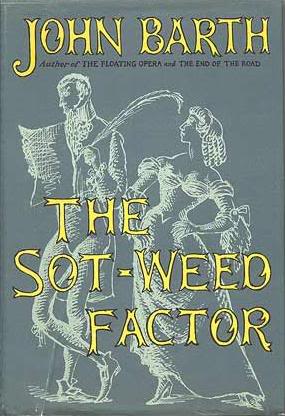
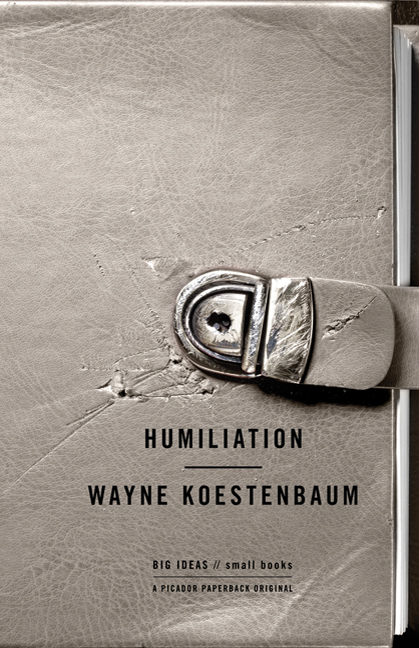
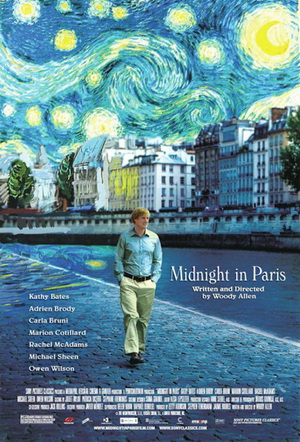
 Lars Iyer’s first novel Spurious (


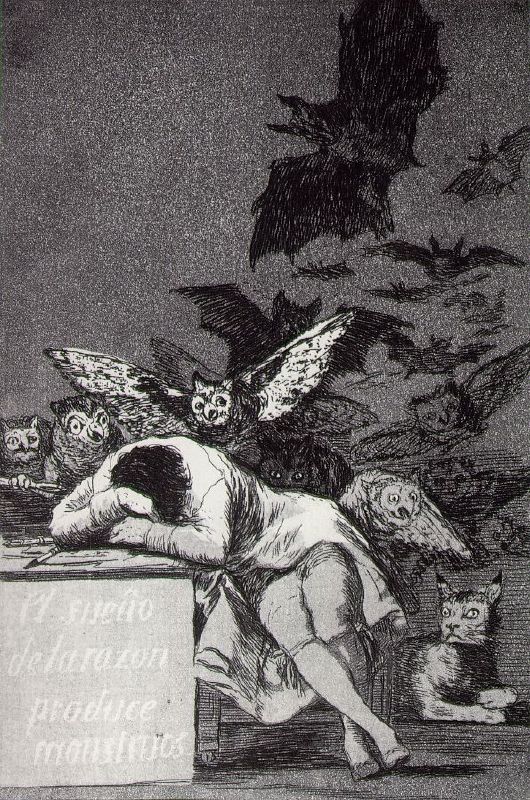
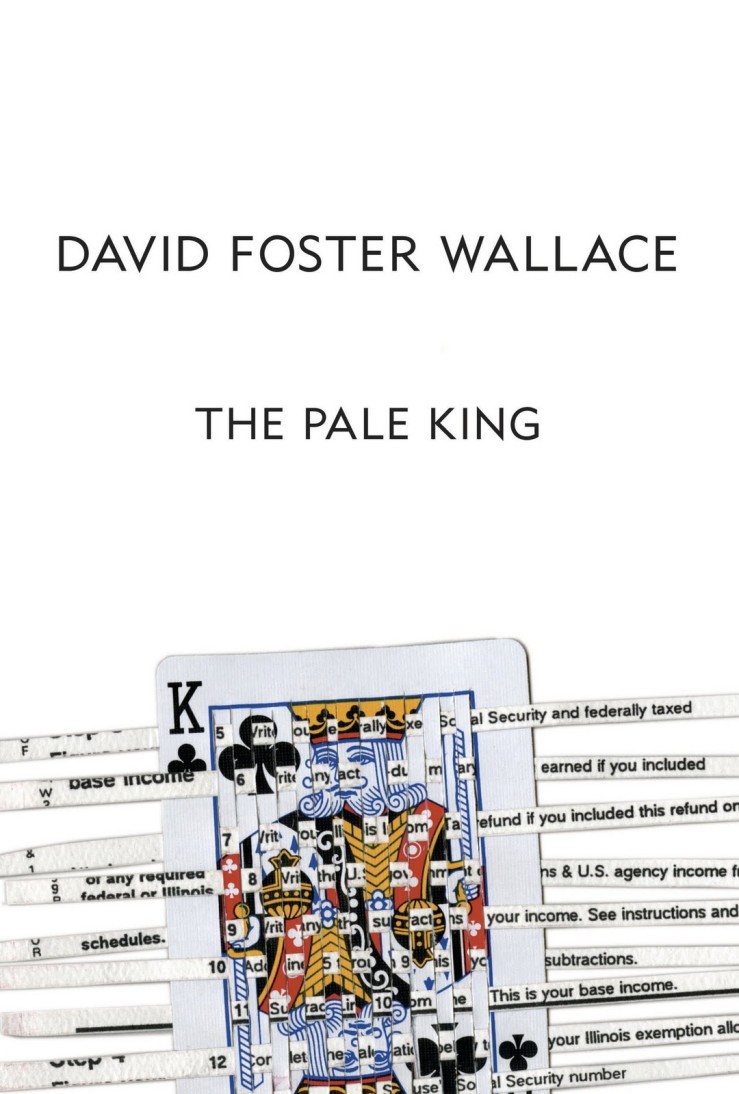


 I’m not sure what Ellis’s tweet meant, and attendees of the Hackney reading claim that he was more considered and measured in his tone than the actual words of his response seem to entail. His end of the agon with Wallace is also rife with its own set of problems—his contemporary is dead, horribly dead, a suicide, (the kind of death that makes an essay like this one, an essay that claims to find affirmation of life in DFW and empty nihilism BEE, particularly hard to swallow, I suppose)—making it all the harder to respond. I read his “too soon” remark from the Hackney reading to be in earnest.
