Untitled — Eduardo Nery

untitled-1980-1

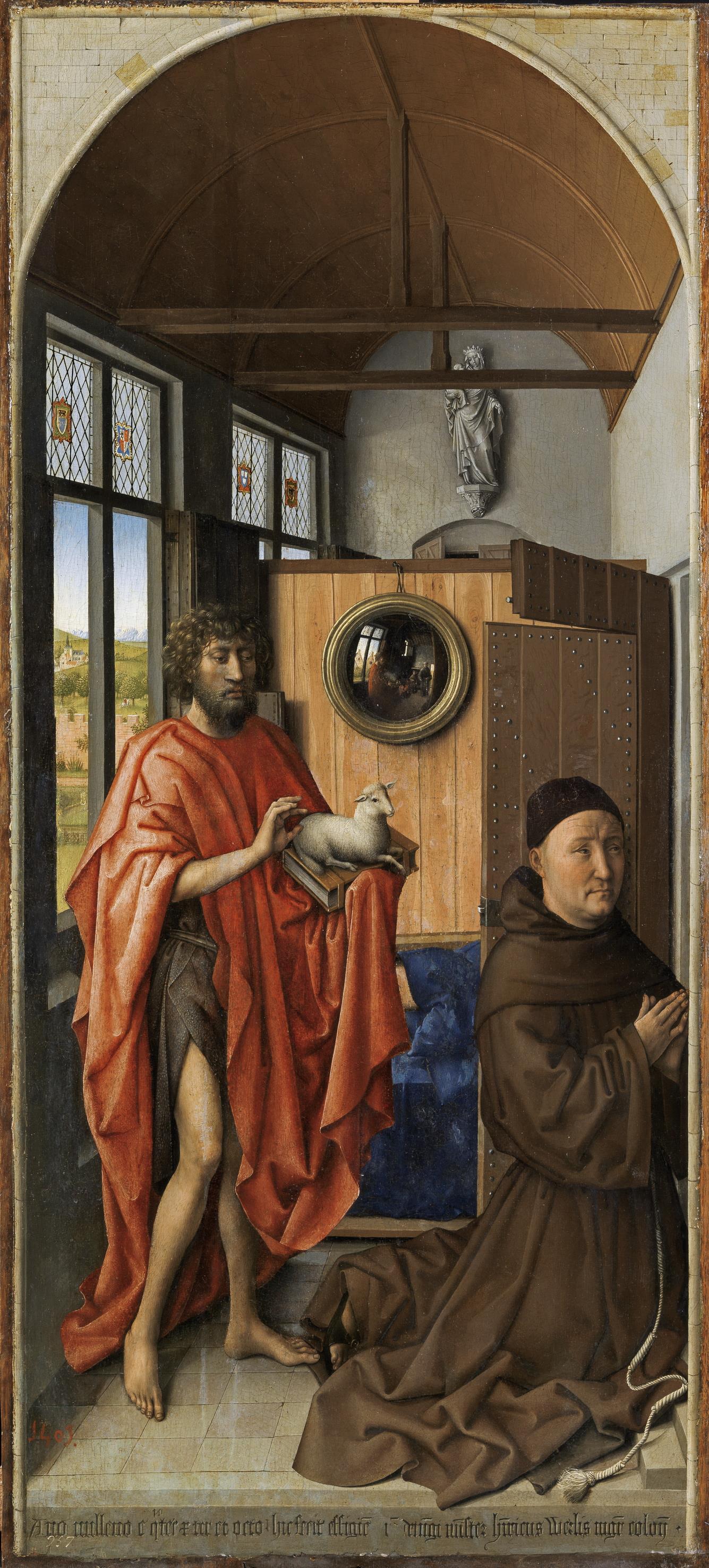
The Werl Triptych (detail) — Robert Campin

d

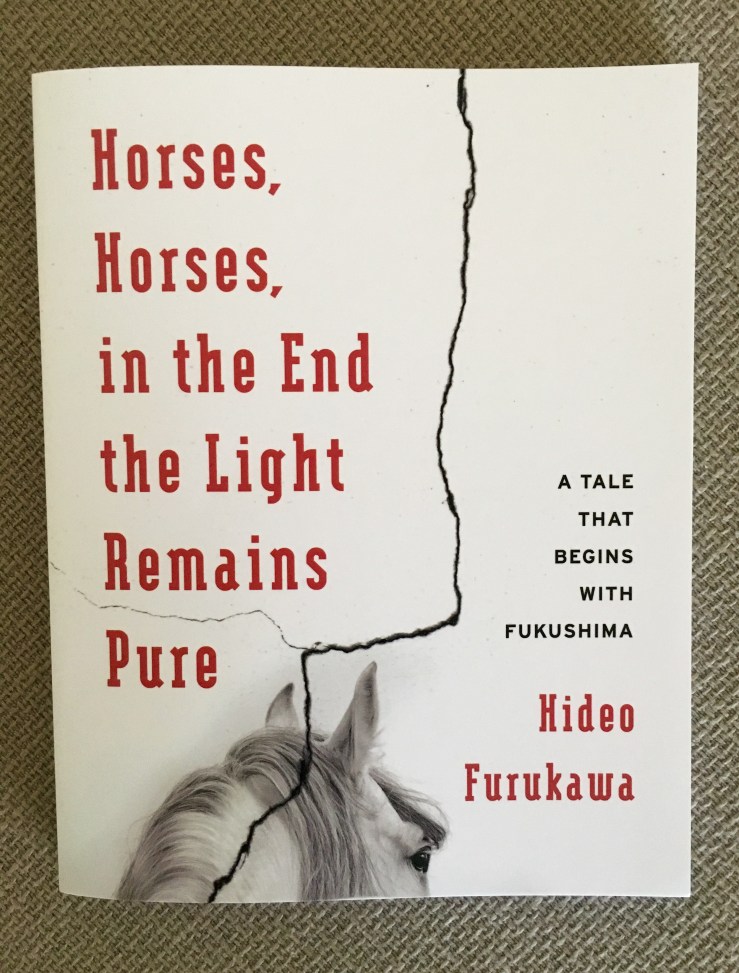
Horses, Horses, in the End the Light Remains Pure (Book acquired, 2.22.2016)

img_1653

I’m pretty excited about Hideo Furukawa’s Horses, Horses, in the End the Light Remains Pure (new this month from Columbia University Press in English translation by Doug Slaymaker with Akiko Takenaka). Columbia UP’s blurb:

Horses, Horses, in the End the Light Remains Pure is a multifaceted literary response to the earthquake, tsunami, and nuclear meltdown that devastated northeast Japan on March 11, 2011. The novel is narrated by Hideo Furukawa, who travels back to his childhood home near Fukushima after 3/11 to reconnect with a place that is now doubly alien. His ruminations conjure the region’s storied past, particularly its thousand-year history of horses, humans, and the struggle with a rugged terrain. Standing in the morning light, these horses also tell their stories, heightening the sense of liberation, chaos, and loss that accompanies Furukawa’s rich recollections. A fusion of fiction, history, and memoir, this book plays with form and feeling in ways reminiscent of Vladimir Nabokov’s Speak, Memory and W. G. Sebald’s The Rings of Saturn yet draws its own, unforgettable portrait of personal and cultural dislocation.

Read an excerpt here.

The Werl Triptych (detail) — Robert Campin

c

A Lady with a Drawing of Lucretia — Lorenzo Lotto

about 1530-2

Big power laying still somewhere in the dark (Faulkner)

I be dog if hit don’t look like sometimes that when a fellow sets out to play a joke, hit ain’t another fellow he’s playing that joke on; hit’s a kind of big power laying still somewhere in the dark that he sets out to prank with without knowing hit, and hit all depends on whether that ere power is in the notion to take a joke or not, whether or not hit blows up right in his face like this one did in mine.

I just read William Faulkner’s “A Bear Hunt” for the first time in years…like most of Faulkner’s stuff, there’s a second narrative (or even third or fourth) going on under the surface tale. In the case of “A Bear Hunt,” the surface tale is about a man whose unrelenting hiccups are ruining a hunting party. The underlying plot revolves around race and revenge and human dignity. I love the citation above, which suggests that pranking one’s fellows is in some ways a gesture of cosmic impotence. The story is pretty easy to find online.

Untitled (Los Alamos) — William Eggleston

04-eggleston_untitledplane

Three Books

img_1668

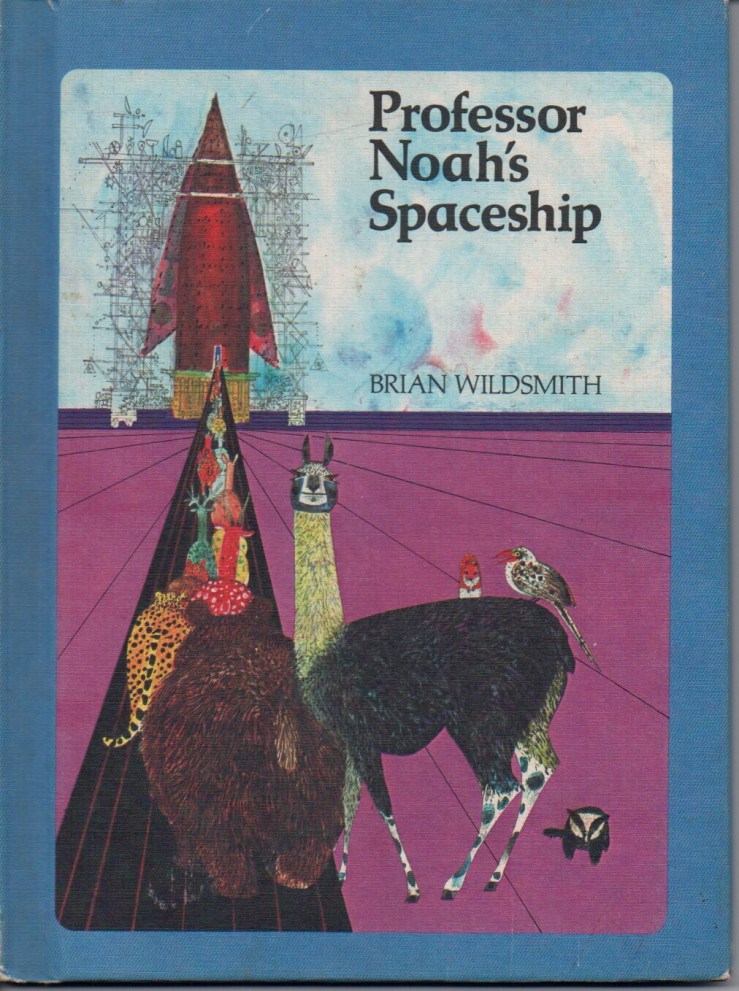
Professor Noah’s Spaceship by Brian Wilsdsmith. First edition hardback by Oxford University Press, 1980; distributed through Macmillan Book Clubs. Design, cover, and art by Brian Wildsmith. This book is too beautiful.

img_1666

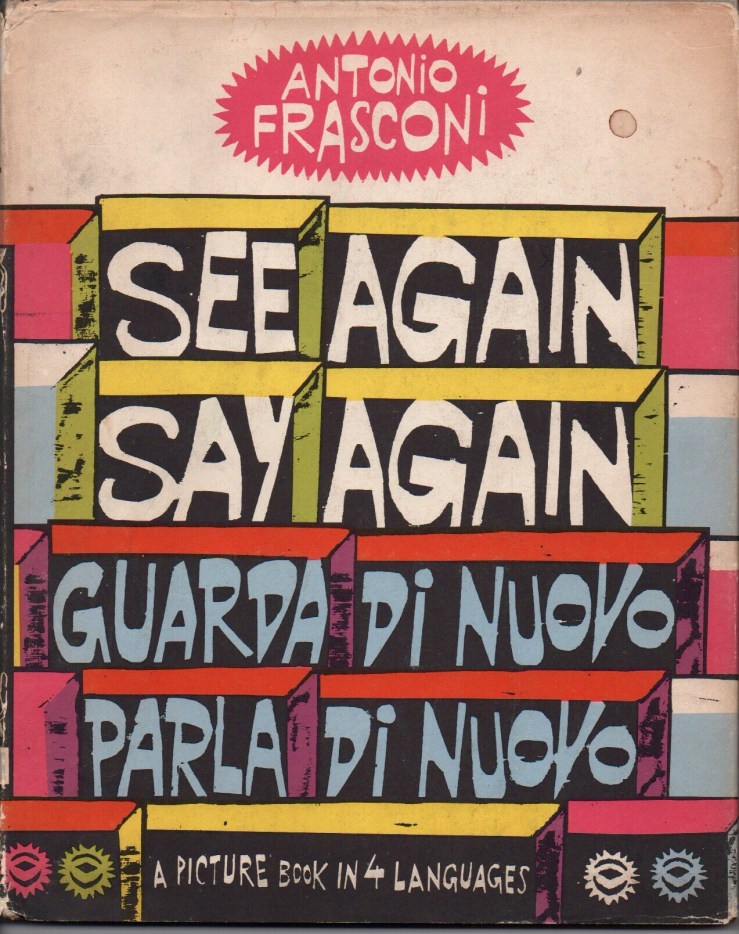
See Again, Say Again by Antonio Frasconi. First edition oversized hardback published by Hacourt, Brace and World, 1964. Cover design, fonts, and woodcuts by Antonio Frasconi.

img_1667

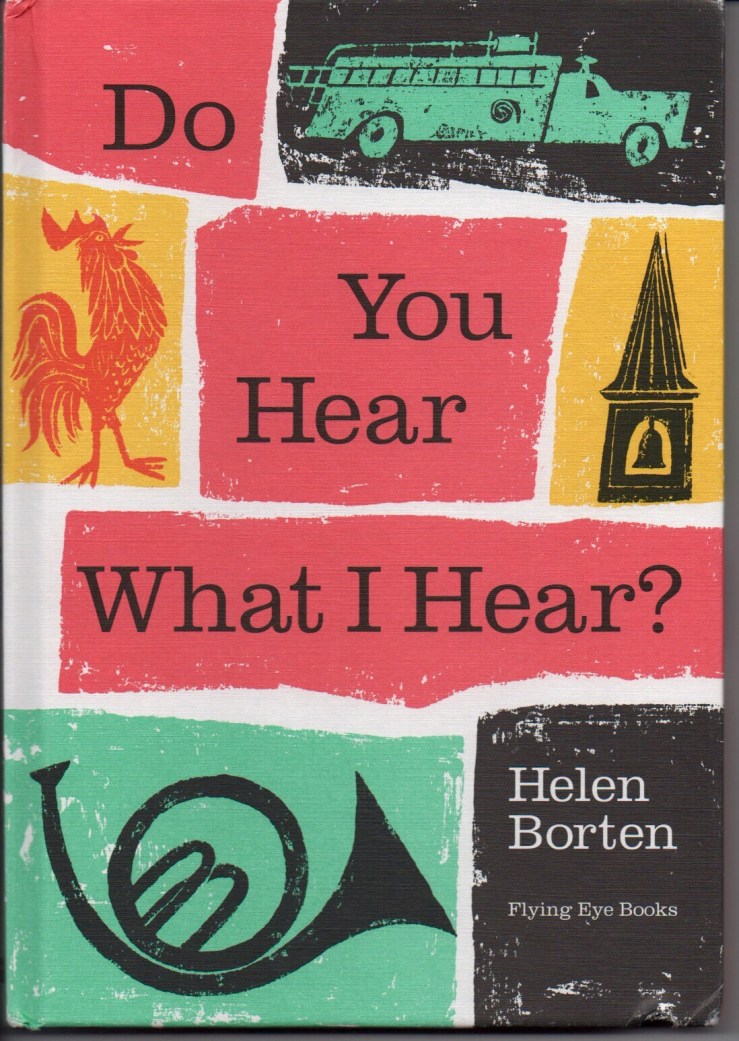
Do You Hear What I Hear? by Helen Borten. First edition hardback reprint by Flying Eye Books, a division of Nobrow; the book was originally published in 1960. Illustration and design by Helen Borten. Nowbrow kindly sent me a copy of Do You Hear What I Hear?—the book is beautiful, the text is lovely—Borten’s technique is to represent sound—or rather the feeling of sound (which is to say, the feeling of the feeling of sound) through language and art. Like any great children’s book, Do You Hear What I Hear? is best read out loud, and my five-year-old son loved it so much that I had to read it again to him immediately after the first reading. We’ve read it a few times since then. Great stuff.

Snake Curling around a Bamboo Stalk with a Sparrow on It — Katsushika Hokusai

snake-curling-around-a-bamboo-stalk-with-a-sparrow-on-it

The Werl Triptych (detail) — Robert Campin

b

No great book is explicable (William Gass)

No great book is explicable, and I shall not attempt to explain this one. An explanation–indeed, any explanation–would defile it, for reduction is precisely what a work of art opposes. Easy answers, convenient summaries, quiz questions, annotations, arrows, highlight lines, lists of its references, the numbers of its sources, echoes, and influences, an outline of its design–useful as sometimes such helps are–nevertheless seriously mislead. Guidebooks are useful, but only to what is past. Interpretation replaces the original with the lamest sort of substitute. It tames, disarms. “Okay, I get it,” we say, dusting our hands, “and that takes care of that.” “At last I understand Kafka” is a foolish and conceited remark.

From “William Gaddis and His Goddamn Books” by William Gass. Originally published as the introduction to the Penguin Classics edition of The Recognitions, and also published (and repurposed and expanded) in A Temple of Texts—which is where I went looking for it—or rather, went looking for some of Gass’s language on J R, which I re-read last month, and was going to, I don’t know, try to write about (something beyond: J R is not nearly as difficult as you may think it is, and it is a very funny and important and tragic and entertaining novel). Anyway, this section leapt out at me—Yes, how wonderful!, thought I. And as I went to transcribe it here, to share, reader, I realized that of course I had done so already back in 2009. Ah! Why not share again. Isn’t J R about recycling, about language as a kind of detritus, redirected, repurposed? Isn’t it?

Lingam — Claudio Bravo

6758dbb2-0e9d-4855-96eb-c89c42a7fd32_g

Bitter pill

cummings

e.e. cummings, 1926

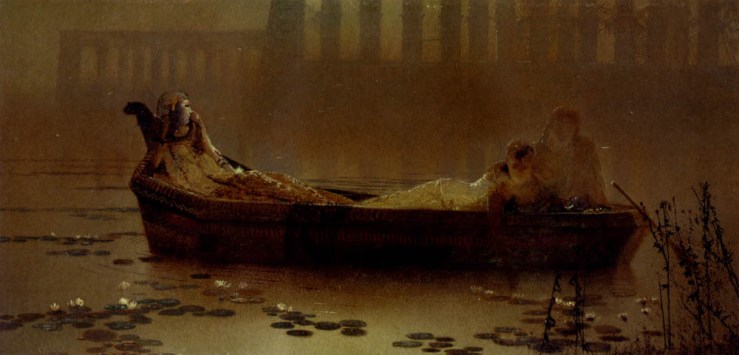
The Lotus Gatherers — John Atkinson Grimshaw

the-lotus-gatherers-1874

He Wants (Book acquired, some time in February 2016)

img_1651

British author Alison Moore’s novel He Wants is getting a release on this side of the Atlantic from Canadian publisher Biblioasis.

From novelist Rachel Cusk’s review of He Wants two years ago in The Guardian:

Following her Booker-shortlisted The Lighthouse, Alison Moore’s artistically pleasing second novel is a sort of Midlands Death in Venice, a story of ageing and thwarted desire in which a man drifts away from his moorings into Dionysian impulses, after a lifetime spent serving the values of the humdrum contemporary community in which he lives.

He Wants evokes a world that is purposefully pedestrian – the Dionysian impulses pertain to halves of shandy and the desire to taste a Swiss liqueur called Goldschläger – but its themes of self-realisation, identity and mortality are grand enough. Moore’s protagonist, a widower RE teacher who is approaching retirement, is intimately captured in the midst of a disintegration brought about by the loss of the structures that have thus far formed and maintained his personality: work, marriage and certain relationships that have created or reinforced his sense of existence.

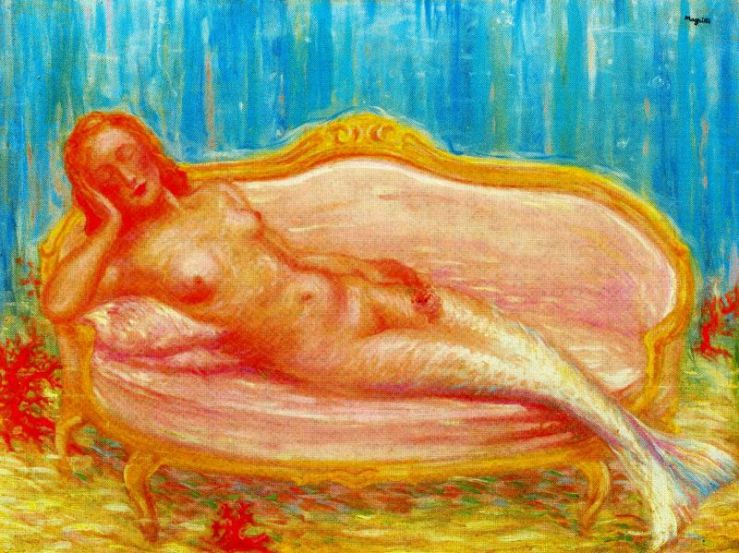
The Forbidden World — Rene Magritte

the-forbidden-world-19491