Literature is a point outside of our hodiernal circle through which a new one may be described (Ralph Waldo Emerson)

Literature is a point outside of our hodiernal circle through which a new one may be described. The use of literature is to afford us a platform whence we may command a view of our present life, a purchase by which we may move it. We fill ourselves with ancient learning, install ourselves the best we can in Greek, in Punic, in Roman houses, only that we may wiselier see French, English and American houses and modes of living. In like manner we see literature best from the midst of wild nature, or from the din of affairs, or from a high religion. The field cannot be well seen from within the field. The astronomer must have his diameter of the earth’s orbit as a base to find the parallax of any star.

Therefore we value the poet. All the argument and all the wisdom is not in the encyclopaedia, or the treatise on metaphysics, or the Body of Divinity, but in the sonnet or the play. In my daily work I incline to repeat my old steps, and do not believe in remedial force, in the power of change and reform. But some Petrarch or Ariosto, filled with the new wine of his imagination, writes me an ode or a brisk romance, full of daring thought and action. He smites and arouses me with his shrill tones, breaks up my whole chain of habits, and I open my eye on my own possibilities. He claps wings to the sides of all the solid old lumber of the world, and I am capable once more of choosing a straight path in theory and practice.

From Ralph Waldo Emerson’s essay “Circles.”

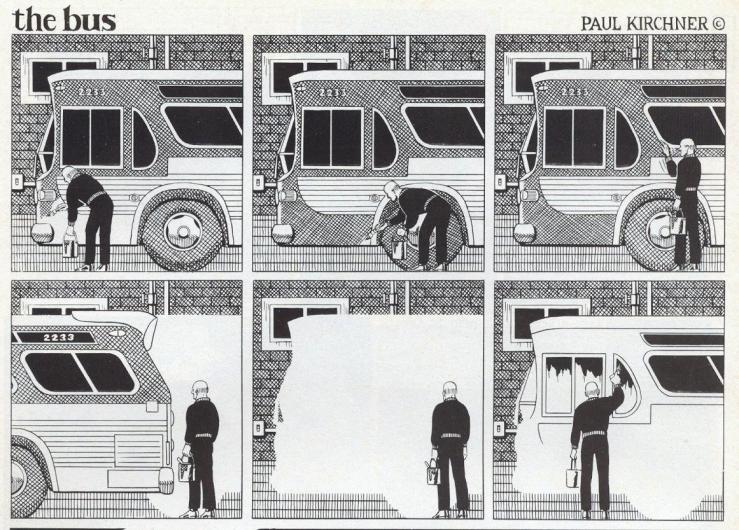
The Bus — Paul Kirchner

v94KOl8

The Premature Burial — Antoine Wiertz

Wiertz_1968dig_small_large@2x

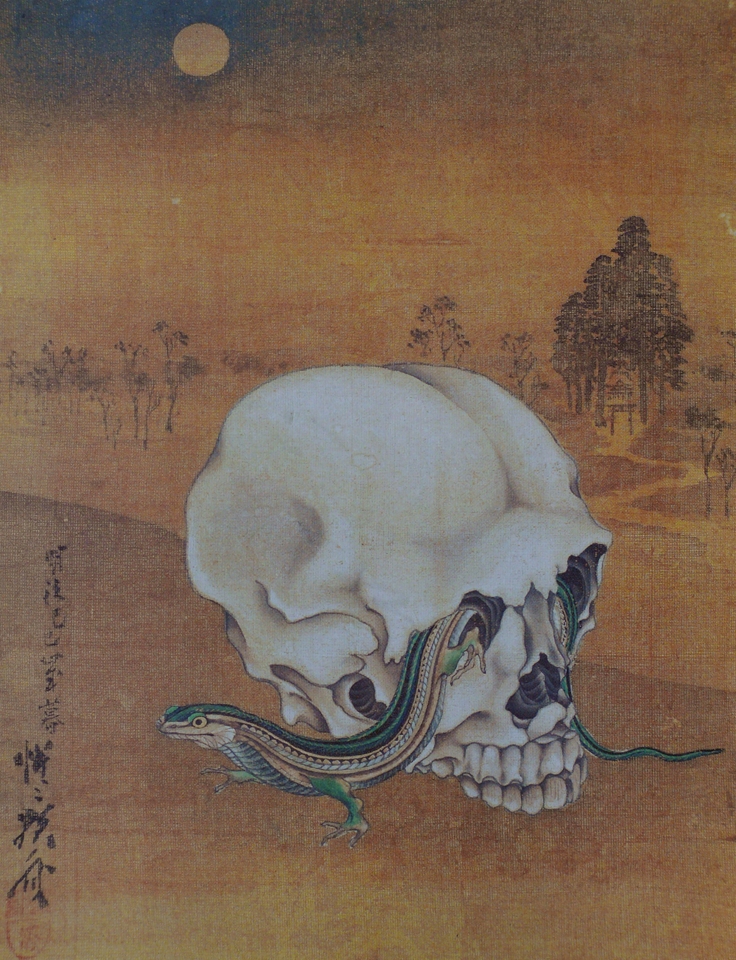
Skull — Kawanabe Kyōsai

tumblr_me28cxYDR91r4hzrvo1_1280

“In the New Garden, In All the Parts” — Walt Whitman

a

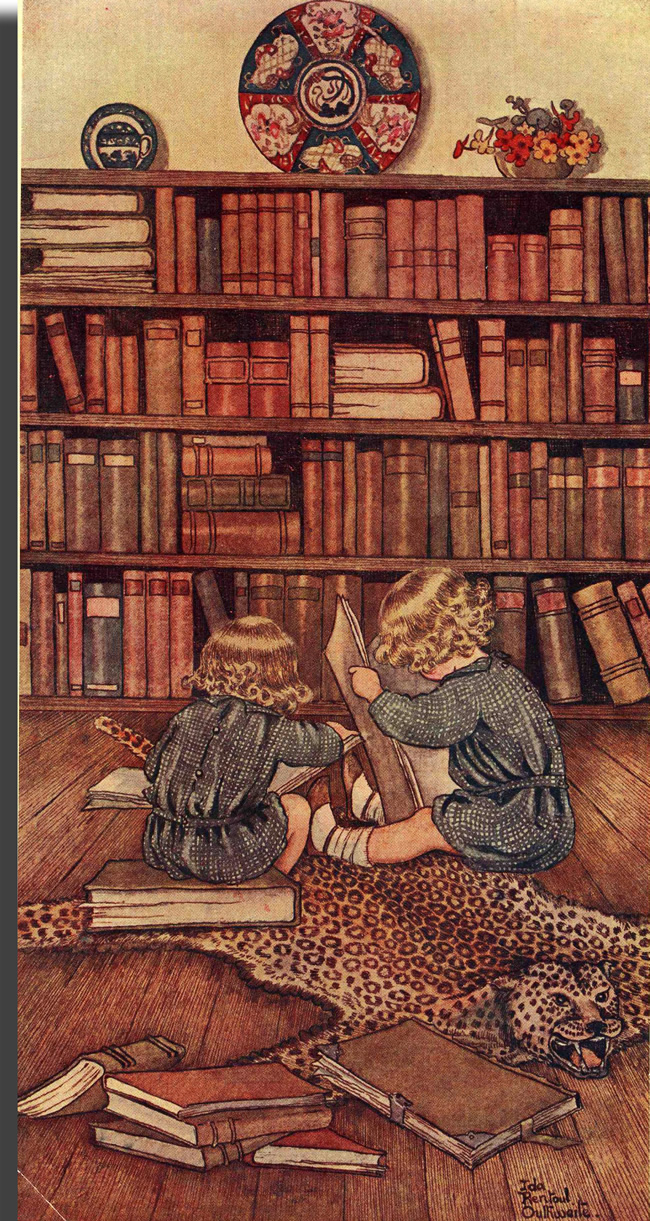
From Elves & Fairies — Ida Rentoul Outhwaite

img001-large

Seated Woman — Egon Schiele

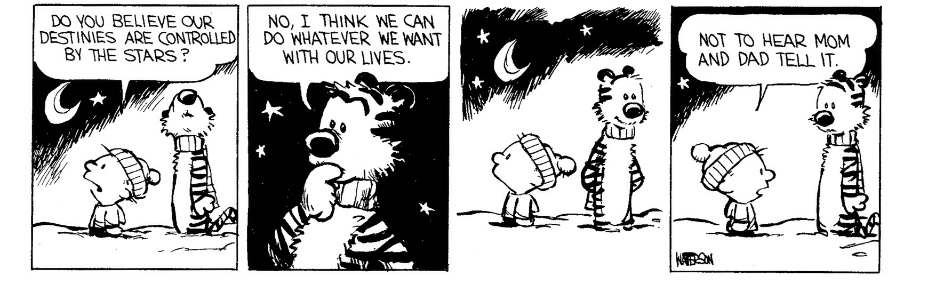
Destinies (Calvin and Hobbes)

IMG_0135

John the Evangelist — Carlo Crivelli

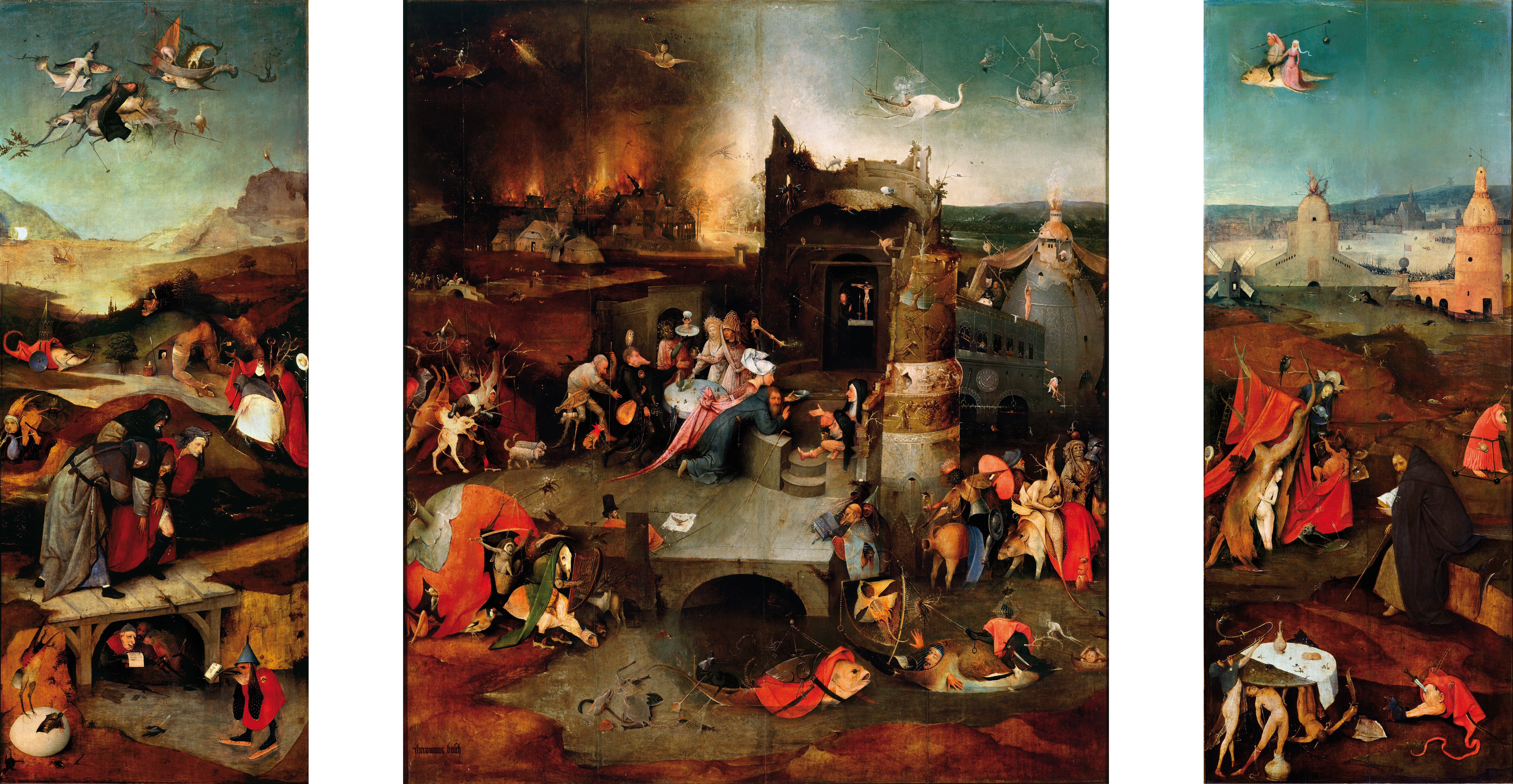
The Temptation of St. Anthony (Detail) — Hieronymus Bosch

19

“Civilization” — Tom Clark

a

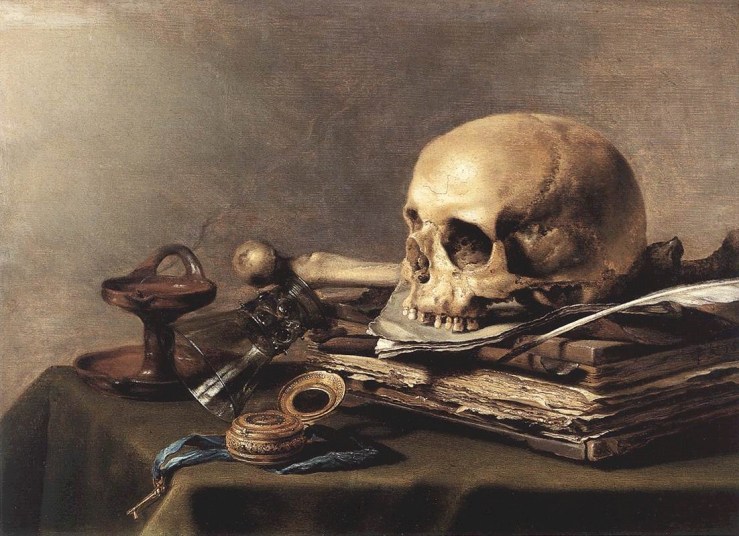
Vanitas — Pieter Claesz

tumblr_ltm1vlfhl01r5569zo1_1280

Read “The Storm,” a short story by Kate Chopin

“The Storm”

by

Kate Chopin

I

The leaves were so still that even Bibi thought it was going to rain. Bobint, who was accustomed to converse on terms of perfect equality with his little son, called the child’s attention to certain sombre clouds that were rolling with sinister intention from the west, accompanied by a sullen, threatening roar. They were at Friedheimer’s store and decided to remain there till the storm had passed. They sat within the door on two empty kegs. Bibi was four years old and looked very wise.

“Mama’ll be ‘fraid, yes, he suggested with blinking eyes.

“She’ll shut the house. Maybe she got Sylvie helpin’ her this evenin’,” Bobint responded reassuringly.

“No; she ent got Sylvie. Sylvie was helpin’ her yistiday,’ piped Bibi.

Bobint arose and going across to the counter purchased a can of shrimps, of which Calixta was very fond. Then he retumed to his perch on the keg and sat stolidly holding the can of shrimps while the storm burst. It shook the wooden store and seemed to be ripping great furrows in the distant field. Bibi laid his little hand on his father’s knee and was not afraid.

II

Calixta, at home, felt no uneasiness for their safety. She sat at a side window sewing furiously on a sewing machine. She was greatly occupied and did not notice the approaching storm. But she felt very warm and often stopped to mop her face on which the perspiration gathered in beads. She unfastened her white sacque at the throat. It began to grow dark, and suddenly realizing the situation she got up hurriedly and went about closing windows and doors.

Out on the small front gallery she had hung Bobint’s Sunday clothes to dry and she hastened out to gather them before the rain fell. As she stepped outside, Alce Laballire rode in at the gate. She had not seen him very often since her marriage, and never alone. She stood there with Bobint’s coat in her hands, and the big rain drops began to fall. Alce rode his horse under the shelter of a side projection where the chickens had huddled and there were plows and a harrow piled up in the corner.

“May I come and wait on your gallery till the storm is over, Calixta?” he asked.

Come ‘long in, M’sieur Alce.”

His voice and her own startled her as if from a trance, and she seized Bobint’s vest. Alce, mounting to the porch, grabbed the trousers and snatched Bibi’s braided jacket that was about to be carried away by a sudden gust of wind. He expressed an intention to remain outside, but it was soon apparent that he might as well have been out in the open: the water beat in upon the boards in driving sheets, and he went inside, closing the door after him. It was even necessary to put something beneath the door to keep the water out.

“My! what a rain! It’s good two years sence it rain’ like that,” exclaimed Calixta as she rolled up a piece of bagging and Alce helped her to thrust it beneath the crack.

She was a little fuller of figure than five years before when she married; but she had lost nothing of her vivacity. Her blue eyes still retained their melting quality; and her yellow hair, dishevelled by the wind and rain, kinked more stubbornly than ever about her ears and temples.

The rain beat upon the low, shingled roof with a force and clatter that threatened to break an entrance and deluge them there. They were in the dining room the sitting room the general utility room. Adjoining was her bed room, with Bibi’s couch along side her own. The door stood open, and the room with its white, monumental bed, its closed shutters, looked dim and mysterious.

Alce flung himself into a rocker and Calixta nervously began to gather up from the floor the lengths of a cotton sheet which she had been sewing.

lf this keeps up, Dieu sait if the levees goin’ to stan it!” she exclaimed.

“What have you got to do with the levees?”

“I got enough to do! An’ there’s Bobint with Bibi out in that storm if he only didn’ left Friedheimer’s!”

“Let us hope, Calixta, that Bobint’s got sense enough to come in out of a cyclone.”

She went and stood at the window with a greatly disturbed look on her face. She wiped the frame that was clouded with moisture. It was stiflingly hot. Alce got up and joined her at the window, looking over her shoulder. The rain was coming down in sheets obscuring the view of far-off cabins and enveloping the distant wood in a gray mist. The playing of the lightning was incessant. A bolt struck a tall chinaberry tree at the edge of the field. It filled all visible space with a blinding glare and the crash seemed to invade the very boards they stood upon. Continue reading “Read “The Storm,” a short story by Kate Chopin”

Geological Evolution — Salvador Dali

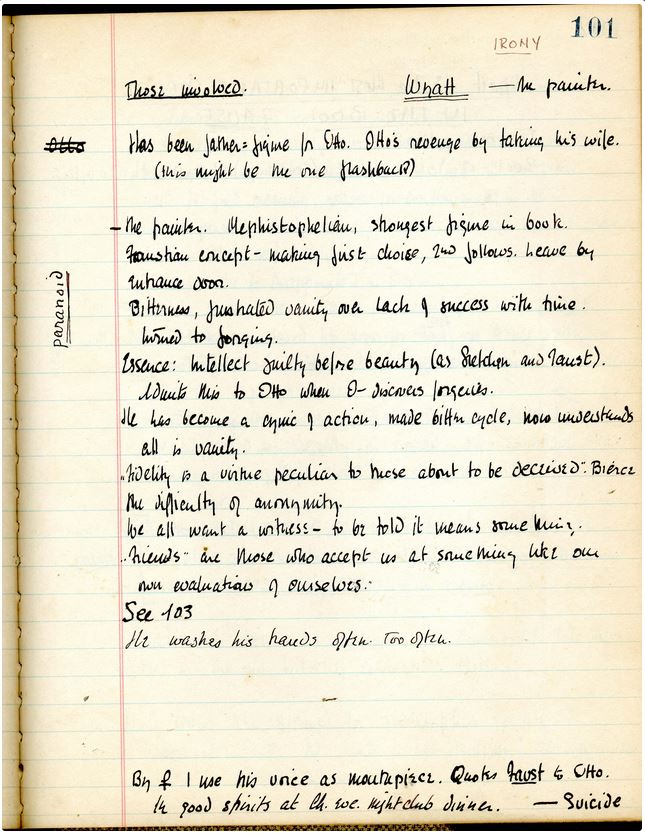
“Those involved. Wyatt — A painter” — William Gaddis’s autograph notes for The Recognitions

irony

More great stuff from Washington University’s Modern Literature Collection.


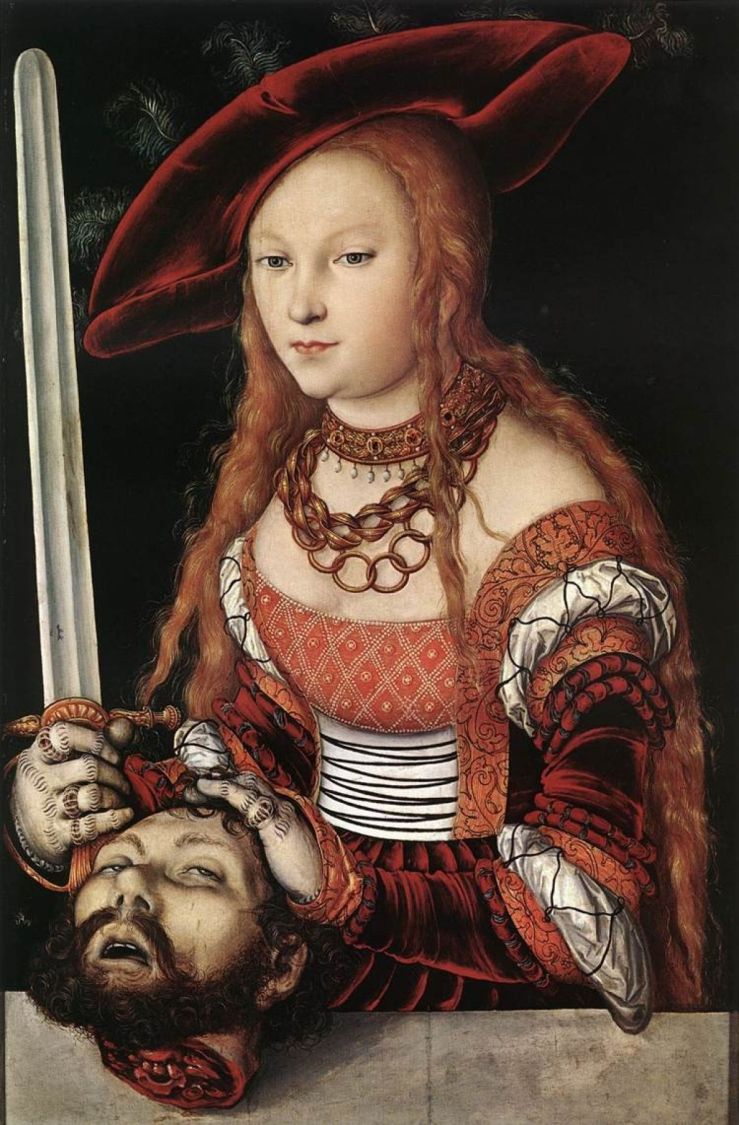
Judith with the Head of Holofernes — Lucas Cranach the Elder

10550_tumblr_vp_kdu_rto_oo

“I was simply trying to write about people” — Faulkner on the origins of “A Rose for Emily”

William Faulkner: Yes, sir.

Unidentified participant: Sir, it has been argued that “A Rose for Emily” is a criticism of the North, and others have argued saying that it is a criticism of the South. Now, could this story, shall we say, be more properly classified as a criticism of the time?

William Faulkner: Now that I don’t know because I was simply trying to write about people. The writer uses environment—what he knows—and if there’s a symbolism in which the—the lover represented the North and the—and the—the woman who murdered him represents the South, I don’t say that’s not valid and not there, but it was no intention of the writer to—to say, “Now let’s see, I’m going to write a piece in which I will—will use a symbolism for the North and another symbol for the South,” that he was simply writing about people, a story which he thought was—was tragic and true because it—it came out of the—out of the human heart, of human aspiration, the human—the conflict of—of conscience with—with glands, with the Old Adam. It was a conflict not between the North and South so much as between, well, you might say, God and Satan.
Yes, sir.

Unidentified participant: Sir, just a little more on that thing. You say it’s a conflict between God and Satan. Well, I don’t quite understand what—what you mean there. Who is—did one represent the […]?

William Faulkner: The conflict was—was in Miss Emily, that she knew that you do not murder people. She was—she had been trained that—that—that you do not take a lover, you marry. You don’t take a lover. She had broken all the—the—the laws of her tradition, her background, and she had finally broken the law of God, too, which says you do not take human life. And she knew she was doing wrong, and that’s why her—her own life was wrecked. Instead of having murdered one lover, and then to go on and—and take another and when she used him up to murder him, she was expiating her crime.
Yes, ma’am.

Unidentified participant: But can’t a person like Miss Emily, though she did do all the things that she had been taught not to, and being a sensitive sort of a woman, it was sure to have told on her, but do you think it’s fair to feel pity for her because, in a way, she made her adjustment, and it seemed to have wound up in a happy sort of a way—certainly tragic—but maybe it suited her just fine.

William Faulkner: Yes, it may have, but then I don’t think that—that one should withhold pity simply because the—the subject of the pity, object of the pity, is pleased and satisfied. I think the—the pity is in—in the—the human striving against its own nature, against its own conscience. That’s what deserves the pity. It’s not the fate of the individual. It’s man in conflict with his heart or with his fellows or with his environment. That’s—that’s what deserves the pity. It’s not that the man suffered or that he fell off the house or was run over by the train. It’s that he was—that man is trying to do the best he can with his—his desires and impulses, against his—his own moral conscience and the— the conscience of—the social conscience of—of his time and his place, the—the little town he must live in, the family he’s a part of.

Via/audio.