
The problem of the novelist who wishes to write about a man’s encounter with this God is how he shall make the experience—which is both natural and supernatural—understandable, and credible, to his reader. In any age this would be a problem, but in our own, it is a well-nigh insurmountable one. Today’s audience is one in which religious feeling has become, if not atrophied, at least vaporous and sentimental. When Emerson decided, in 1832, that he could no longer celebrate the Lord’s Supper unless the bread and wine were removed, an important step in the vaporization of religion in America was taken, and the spirit of that step has continued apace. When the physical fact is separated from the spiritual reality, the dissolution of belief is eventually inevitable.
The novelist doesn’t write to express himself, he doesn’t write simply to render a vision he believes true, rather he renders his vision so that it can be transferred, as nearly whole as possible, to his reader. You can safely ignore the reader’s taste, but you can’t ignore his nature, you can’t ignore his limited patience. Your problem is going to be difficult in direct proportion as your beliefs depart from his.
When I write a novel in which the central action is a baptism, I am very well aware that for a majority of my readers, baptism is a meaningless rite, and so in my novel I have to see that this baptism carries enough awe and mystery to jar the reader into some kind of emotional recognition of its significance. To this end I have to bend the whole novel—its language, its structure, its action. I have to make the reader feel, in his bones if nowhere else, that something is going on here that counts. Distortion in this case is an instrument; exaggeration has a purpose, and the whole structure of the story ‘or novel has been made what it is because of belief. This is not the kind of distortion that destroys; it is the kind that reveals, or should reveal.
Author: Biblioklept
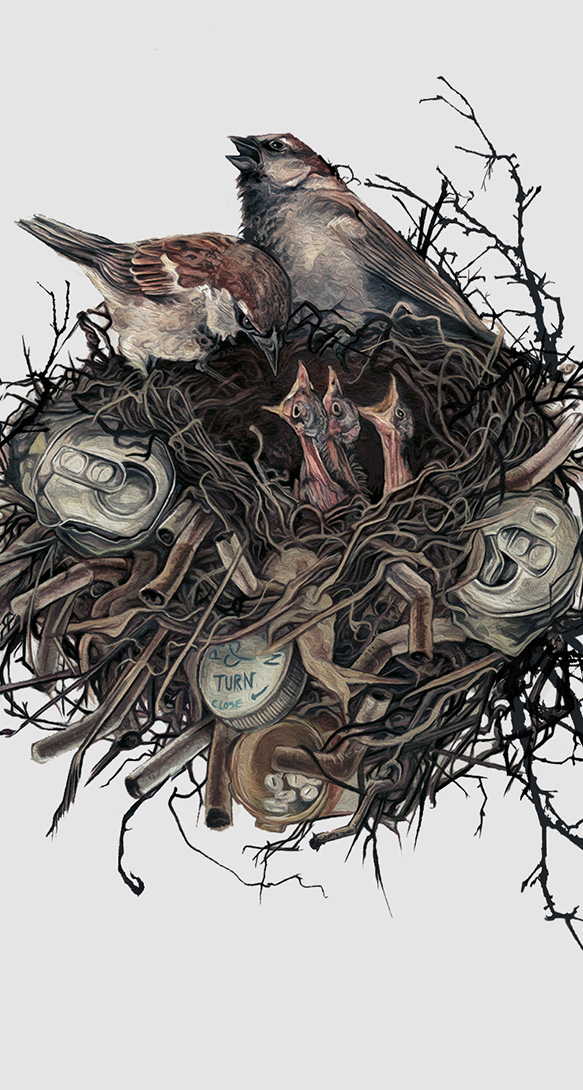
Modern Family — AJ Frena
The Three Graces — Raphael

Gloom/Gravity (Pound/Sterne)

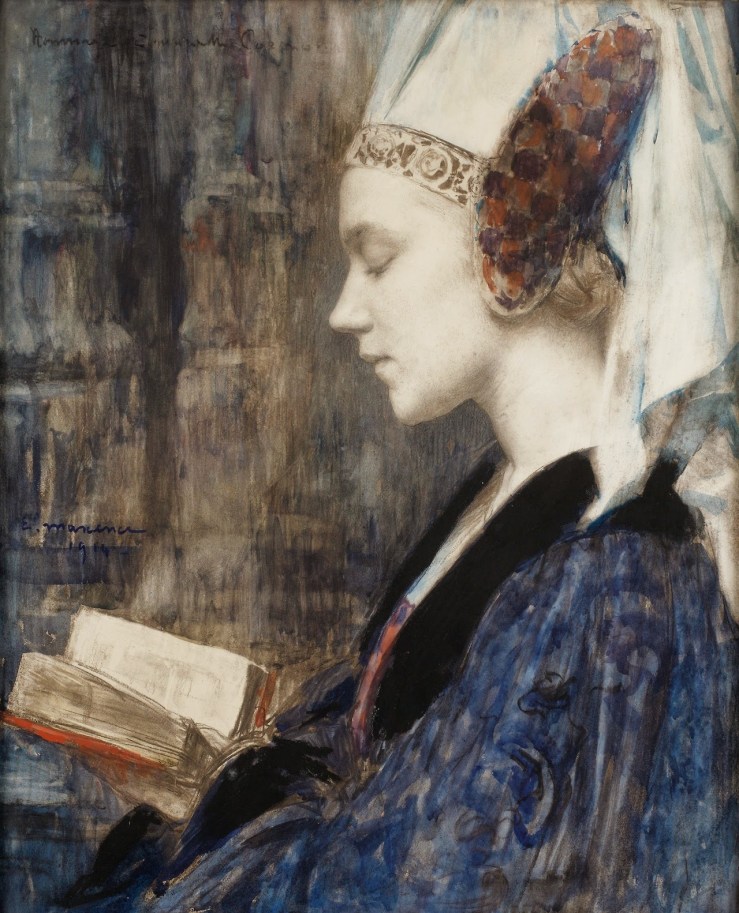
Woman Reading (Profile) — Edgar Maxence
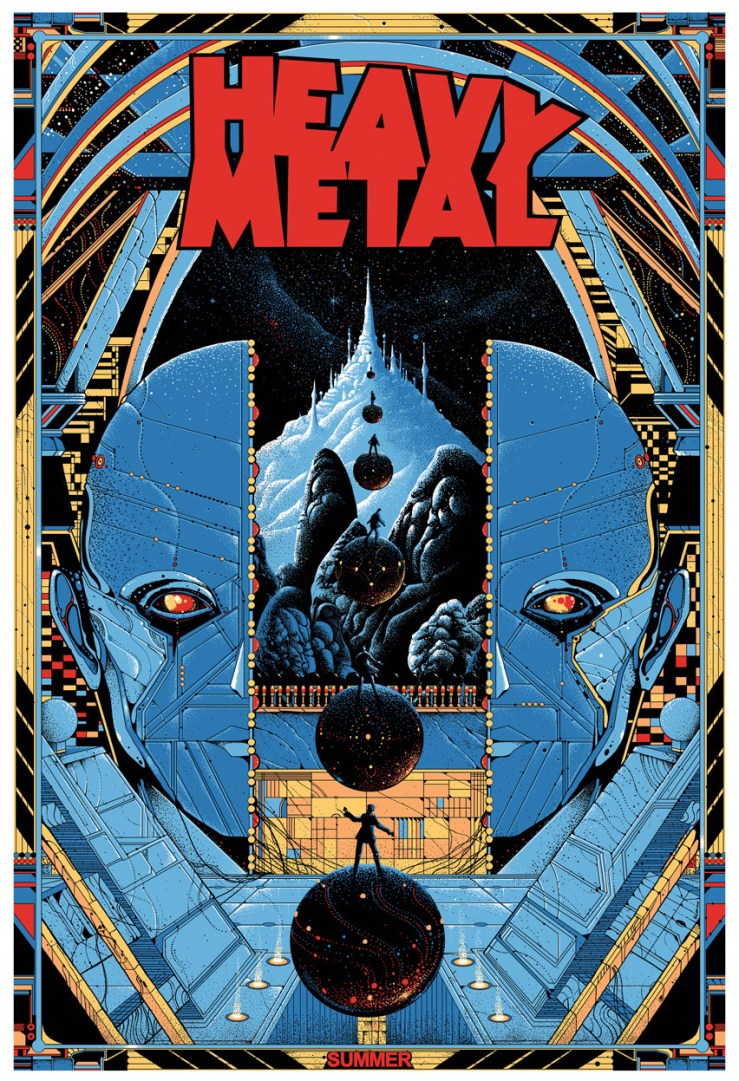
Heavy Metal — Kilian Eng
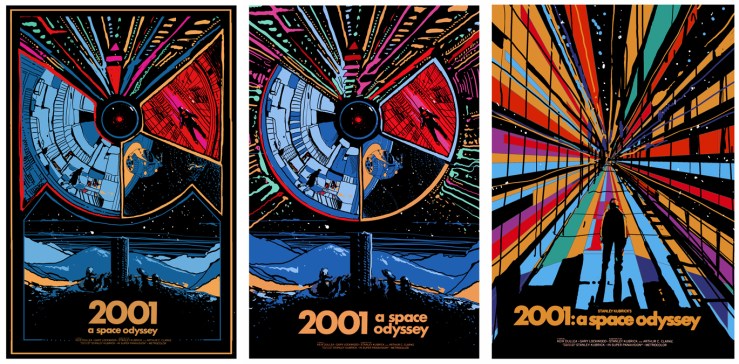
2001: A Space Odyssey Posters by Kilian Eng
Read a new short story by Evan Lavender-Smith
Husband and wife’s children finally grown, starting their own families, etc. Out of the house at long last.
Life is all good.
Husband returns to his home improvement projects, etc., wife returns to her writing, etc.
Finally socializing again, etc.
Life is pretty good.
Life becoming less good.
Life worsening with each passing week. Husband and wife grow bored.
With each other? With monogamy? Maybe.
Go see a marriage counselor, like they did way back when. Same counselor, now older, wiser, or, at least, more confident.
Marriage counselor insists on vacuum created by kids’ absence, etc. Makes silly suggestions re how to fill vacuum. Gives them worksheets, etc.
Husband and wife diligently follow suggestions, complete worksheets. Obviously in love, or, at least, obviously committed to the idea of being in love, they try their best to make it work.
Go on vacation? A cruise? Yes.
Still bored.
Have a threeway? Maybe? No.
Still bored, etc.
Read the rest of Evan Lavender-Smith’s “Short Story Idea (The Macaque)” at BOMB.
Nude — Albrecht Durer

Meditation on the History of Italy — Francesco Hayez

“All art constantly aspires towards the condition of music”
“The Snow Man” — Wallace Stevens
“The Snow Man” by Wallace Stevens
One must have a mind of winter
To regard the frost and the boughs
Of the pine-trees crusted with snow;
And have been cold a long time
To behold the junipers shagged with ice,
The spruces rough in the distant glitter
Of the January sun; and not to think
Of any misery in the sound of the wind,
In the sound of a few leaves,
Which is the sound of the land
Full of the same wind
That is blowing in the same bare place
For the listener, who listens in the snow,
And, nothing himself, beholds
Nothing that is not there and the nothing that is.
Cold — Remedios Varo

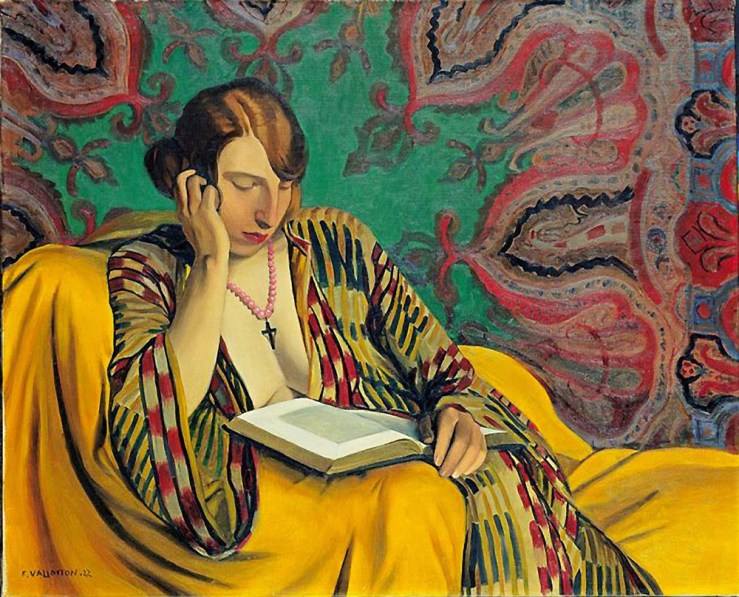
Woman Reading — Felix Vallotton
The final test of truth is ridicule (H.L. Mencken)
The final test of truth is ridicule. Very few religious dogmas have ever faced it and survived. Huxley laughed the devils out of the Gadarene swine. Dowie’s whiskers broke the back of Dowieism. Not the laws of the United States but the mother-in-law joke brought the Mormons to compromise and surrender. Not the horror of it but the absurdity of it killed the doctrine of infant damnation…. But the razor edge of ridicule is turned by the tough hide of truth. How loudly the barber-surgeons laughed at Harvey—and how vainly! What clown ever brought down the house like Galileo? Or Columbus? Or Jenner? Or Lincoln? Or Darwin?… They are laughing at Nietzsche yet…
From H.L. Mencken’s Damn! A Book of Calumny.
While the real peach spoils (William H. Gass)
A dedicated storyteller, though – a true lie-minded man – will serve his history best, and guarantee its popularity, not by imitating nature, since nature’s no source of verisimilitude, but by following as closely as he can our simplest, most direct and unaffected forms of daily talk, for we report real things, things which intrigue and worry us, and such resembling gossip in a book allows us to believe in figures and events we cannot see, shall never touch, with an assurance of safety which sets our passions free. He will avoid recording consciousness since consciousness is private – we do not normally “take it down” – and because no one really believes in any other feelings than his own. However, the moment our writer concentrates on sound, the moment he formalizes his sentences, the moment he puts in a figure of speech or turns a phrase, shifts a tense or alters tone, the moment he carries description, or any account, beyond need, he begins to turn his reader’s interest away from the world which lies among his words like a beautiful woman among her slaves, and directs him toward the slaves themselves. This illustrates a basic principle: if I describe my peach too perfectly, it’s the poem which will make my mouth water…while the real peach spoils.
“When I Have Fears That I May Cease to Be” — John Keats

 Biblioklept