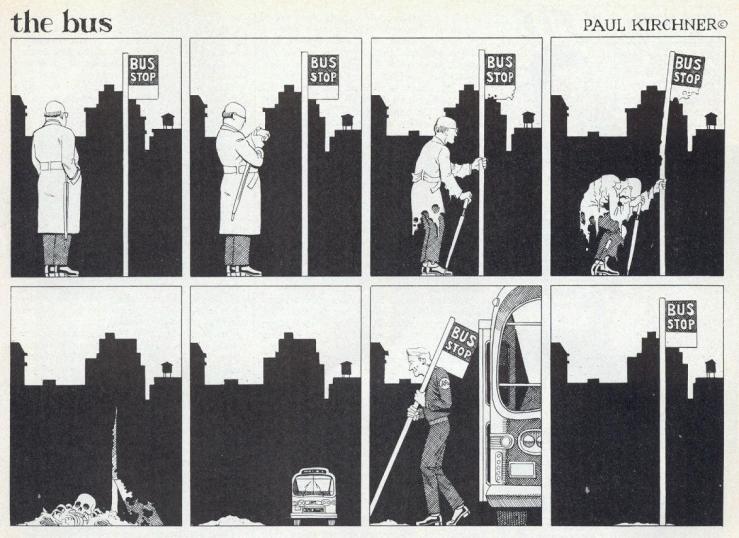
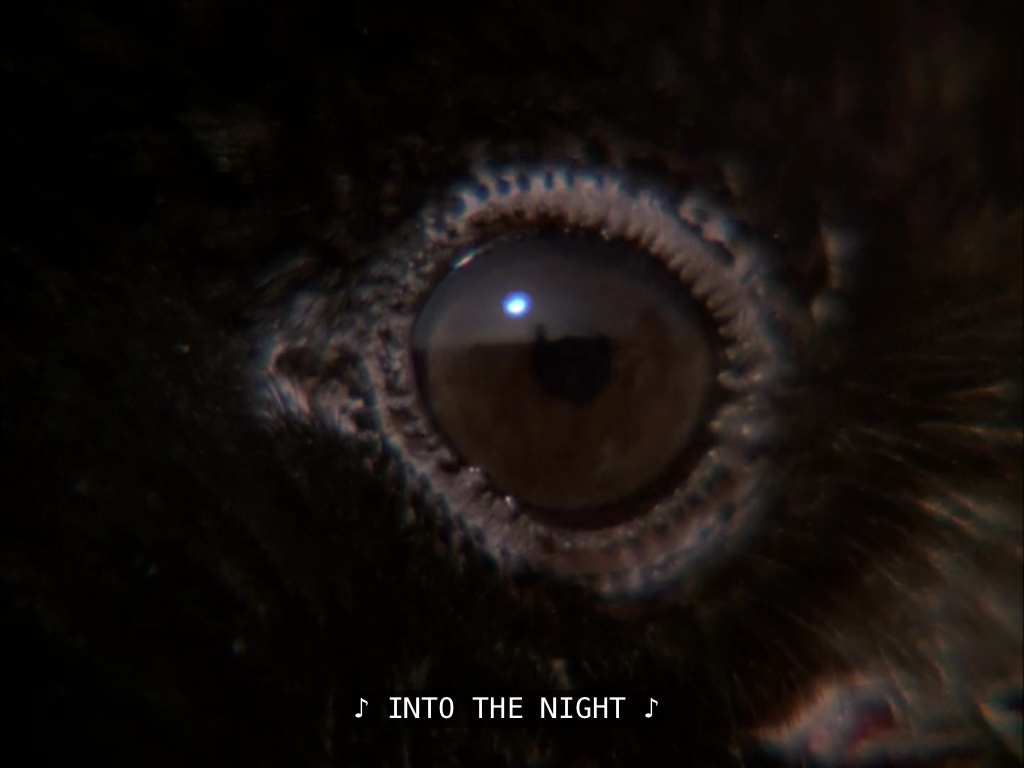
The Bus — Paul Kirchner

hQiAqo0

The Cotter’s Saturday Night — David Wilkie

Fudoh: The New Generation — Takashi Miike (Full Film)

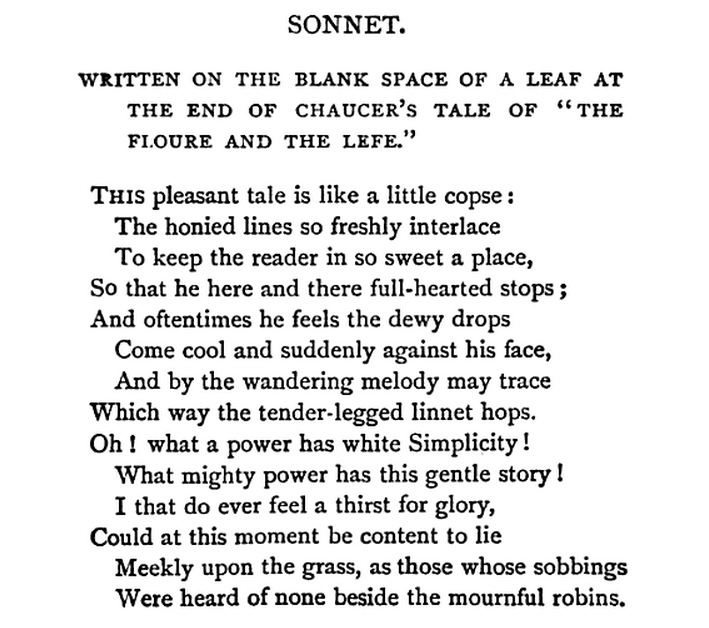
“Written on the Blank Space of a Leaf at the End of Chaucer’s Tale of ‘The Floure and the Lefe'” — John Keats

jk

Lovers (Bone Music) — Piroska Szanto

Read an excerpt from Denis Johnson’s forthcoming novel, The Laughing Monsters

In Arua we took rooms at The White Nile Palace Hotel. Here was the palace, but we’d crossed the Nile twenty kilometers ago. We arrived at night and formed no impression of the surrounding neighborhood except by its sounds—goats and cattle, arguments and celebrations. Surveying the parking area and later the tables in the café, I judged we’d come among missionaries and relief workers—Médecins sans Frontières sorts of people with good, big SUVs and clean hiking shoes. The grounds were well-kept and our quarters were comfortable. I hadn’t quite expected that.


At dinner Michael was nowhere in evidence. Davidia and I shared a table with an elderly, exhausted French woman of Arab descent who told us she studied torture. “And once upon a time before this, I spent years on a study of the Atlantic slave trade. Angola. Now it’s an analysis of the practices of torture under Idi Amin. Slavery. Torture. Don’t call me morbid. Is it morbid to study a disease? That’s how we find the cure for it. What is the cause of man’s inhumanity to man? Desensitization. The numbness of the perpetrator. Whether an activity produces pleasure, pain, discomfort, guilt, joy, triumph—before too long the soul grows tired and stops feeling. It doesn’t take long. Not too long at all, and then man becomes the devil, he laughs at his former scruples, he enslaves and tortures without compunction.” The woman’s taut, quivering neck, her mouth opening and closing . . . Halfway through her dessert of ice cream with chocolate sauce, without a word, she got up and left the table.

Read the rest of the excerpt at FS&G’s blog Work in Progress.

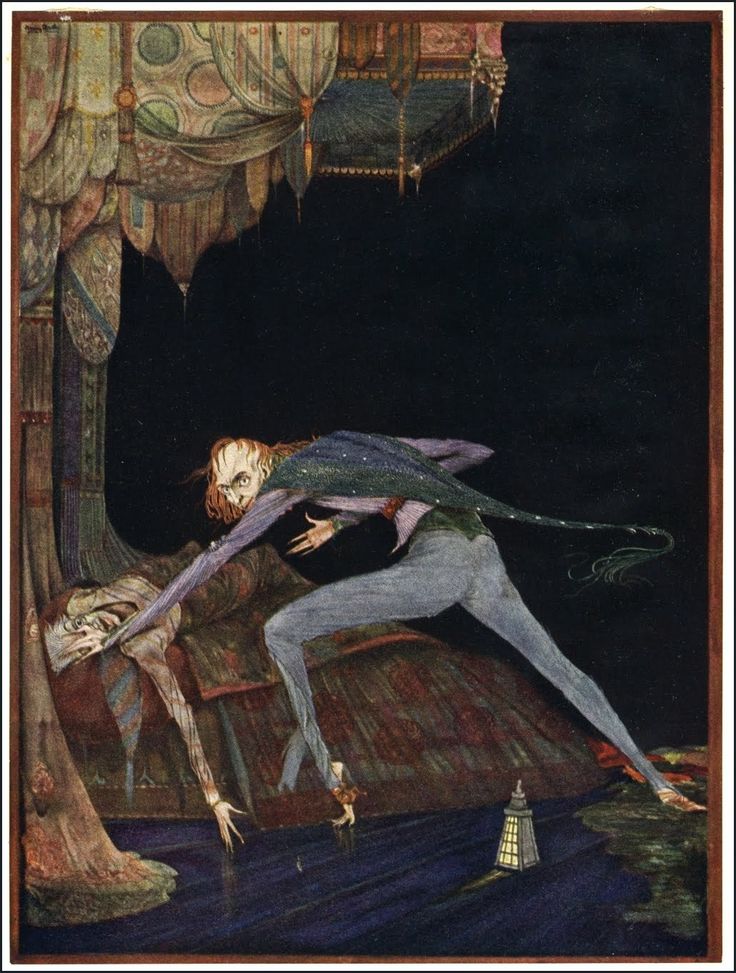
“The Tell-Tale Heart” by Edgar Allan Poe

harryclarke

“The Tell-Tale Heart”

by

Edgar Allan Poe

(Illustration by Harry Clarke)

TRUE!—nervous—very, very dreadfully nervous I had been and am; but why will you say that I am mad? The disease had sharpened my senses—not destroyed—not dulled them. Above all was the sense of hearing acute. I heard all things in the heaven and in the earth. I heard many things in hell. How, then, am I mad? Hearken! and observe how healthily—how calmly I can tell you the whole story.

It is impossible to say how first the idea entered my brain; but once conceived, it haunted me day and night. Object there was none. Passion there was none. I loved the old man. He had never wronged me. He had never given me insult. For his gold I had no desire. I think it was his eye! yes, it was this! He had the eye of a vulture—a pale blue eye, with a film over it. Whenever it fell upon me, my blood ran cold; and so by degrees—very gradually—I made up my mind to take the life of the old man, and thus rid myself of the eye forever. Continue reading ““The Tell-Tale Heart” by Edgar Allan Poe”

Young Girl Reading — Magnus Enckell

Enckell, Magnus - Jeune fille lisant, 1921-22

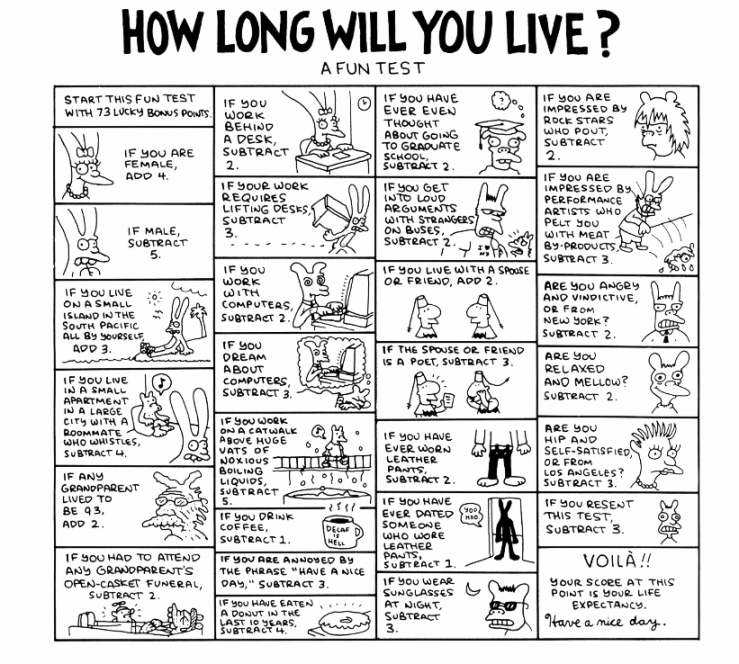
How Long Will You Live? (Life in Hell)

IMG_0111

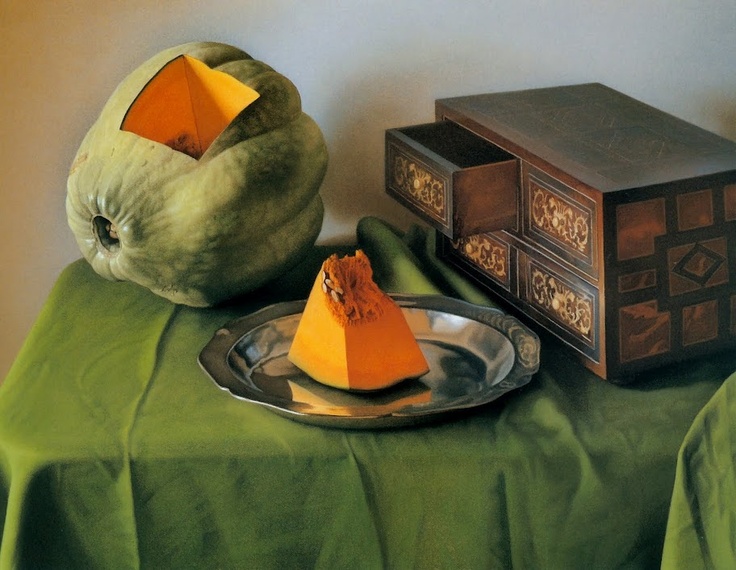
Pumpkin and Renaissance Box — Claudio Bravo

281fa6eb014b8b1e213b22e9561279f0

“All art constantly aspires towards the condition of music”

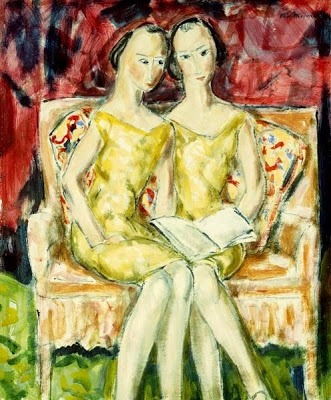
Flappers — Alfred Henry Maurer

flappers

Still Life (Iron Kettle and Onions) — Emil Carlsen

uh-94-mp-990x1102

Watch Discovering Electronic Music, a 1983 Documentary about Synthesizers and Sampling

Ivan Tsarevich Riding the Grey Wolf — Viktor Vasnetsov

“The Company of Wolves” — Angela Carter

“The Company of Wolves”

by

Angela Carter

One beast and only one howls in the woods by night.

The wolf is carnivore incarnate and he’s as cunning as he is ferocious; once he’s had a taste of flesh then nothing else will do.

At night, the eyes of wolves shine like candle flames, yellowish, reddish, but that is because the pupils of their eyes fatten on darkness and catch the light from your lantern to flash it back to you–red for danger; if a wolf’s eyes reflect only moonlight, then they gleam a cold and unnatural green, a mineral, a piercing colour. If the benighted traveller spies those luminous, terrible sequins stitched suddenly on the black thickets, then he knows he must run, if fear has not struck him stock-still.

But those eyes are all you will be able to glimpse of the forest assassins as they cluster invisibly round your smell of meat as you go through the wood unwisely late. They will be like shadows, they will be like wraiths, grey members of a congregation of nightmare; hark! his long, wavering howl … an aria of fear made audible.

The wolfsong is the sound of the rending you will suffer, in itself a murdering.

It is winter and cold weather. In this region of mountain and forest, there is now nothing for the wolves to eat. Goats and sheep are locked up in the byre, the deer departed for the remaining pasturage on the southern slopes–wolves grow lean and famished. There is so little flesh on them that you could count the starveling ribs through their pelts, if they gave you time before they pounced. Those slavering jaws; the lolling tongue; the rime of saliva on the grizzled chops–of all the teeming perils of the night and the forest, ghosts, hobgoblins, ogres that grill babies upon gridirons, witches that fatten their captives in cages for cannibal tables, the wolf is worst for he cannot listen to reason.

You are always in danger in the forest, where no people are. Step between the portals of the great pines where the shaggy branches tangle about you, trapping the unwary traveller in nets as if the vegetation itself were in a plot with the wolves who live there, as though the wicked trees go fishing on behalf of their friends–step between the gateposts of the forest with the greatest trepidation and infinite precautions, for if you stray from the path for one instant, the wolves will eat you. They are grey as famine, they are as unkind as plague. Continue reading ““The Company of Wolves” — Angela Carter”